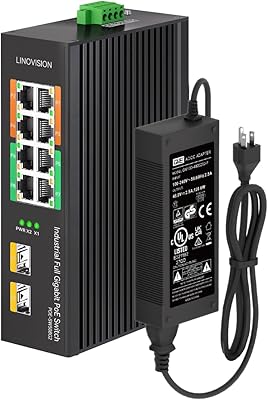
keepLiNK KP-9000-54XGPM-X6-ACR 48-Port PoE Switch

Overview
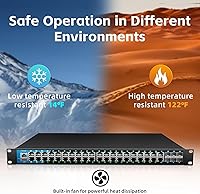
The keepLiNK KP-9000-54XGPM-X6-ACR 48-Port PoE Switch is built for network installers who need real horsepower, not just port count. Underneath the metal shell sits a 216Gbps switching fabric pushing 160.7Mpps, which is plenty for a fully loaded rack of cameras and access points. Six 10G SFP+ slots give you serious uplink headroom once your edge traffic starts piling up, and the chassis can mount in a rack or sit on a desk depending on your setup. Fan-assisted cooling keeps things stable across a wide -10°C to 50°C range, useful in closets that don't always get climate control. There's no cloud dashboard baked in, though MQTT support means it can slot into an existing cloud management system if you already run one.
Features & Benefits
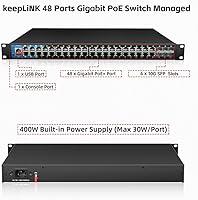
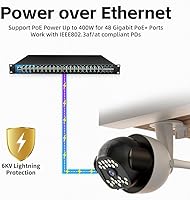
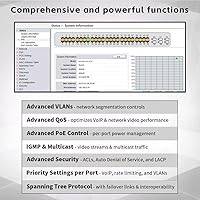
Power delivery is the headline feature here: 48 Gigabit PoE+ ports can each push up to 30W, backed by a 400W total budget that's enough to run a serious mix of cameras, phones, and access points without juggling separate injectors. On the management side, this PoE switch covers L2, L2+, and L3 functions, including static routing and IGMP snooping for cleaner multicast handling on video networks. Security is layered rather than an afterthought, with VLAN tagging, ACLs, port security, DHCP snooping, and 802.1X authentication all available. Link aggregation and LACP let you bond uplinks for redundancy, while the 32K MAC address table comfortably handles a mid-size office or campus segment without breaking a sweat.
Best For
This 48-port switch makes the most sense for installers wiring up multi-camera surveillance systems that need a deep PoE budget rather than scraping by on a handful of injectors. It's also a strong fit for offices or small campuses rolling out dozens of wireless access points across multiple floors, where per-port power and uplink bandwidth both matter. IT admins who want basic Layer 3 static routing without paying enterprise-switch prices will appreciate what's on offer, and the rack-mount option means it slots neatly into a server room alongside other gear. If you'd rather manage things locally through a browser instead of paying for a cloud subscription, that local-only web interface starts to look like a genuine selling point instead of a limitation.
User Feedback
Most buyers who've put this managed switch into a real install come away impressed with the PoE headroom, especially anyone running a dozen-plus cameras that used to strain a smaller unit. The web management interface gets mixed reactions; some find it perfectly functional for day-to-day VLAN and port tasks, while others wish the menus felt a bit more modern. A few users have mentioned the cooling fans are audible up close, which matters if the switch lives in an open office rather than a closet or rack. Compared to bigger-name networking brands, the price-to-feature ratio tends to draw praise, though some buyers note they'd like more visibility into firmware update frequency and long-term support before fully trusting it in mission-critical deployments.
Pros
- Hefty 400W total PoE budget comfortably powers dozens of cameras or access points
- 216Gbps switching fabric handles heavy traffic loads without choking
- Six 10G SFP+ slots give real uplink headroom as your network grows
- Full L2/L2+/L3 feature set including static routing rarely found at this tier
- Layered security options like 802.1X and DHCP snooping suit business networks
- Metal chassis and wide operating range hold up in non-climate-controlled spaces
- Flexible desktop or rackmount design fits different installation environments
- Strong price-to-feature ratio compared to bigger-name managed switches
- LACP and link aggregation support add real uplink redundancy
Cons
- No built-in cloud management platform unless you already run an MQTT system
- Web interface feels functional but somewhat dated compared to modern competitors
- Active cooling fans are noticeable in quiet office environments
- Limited public track record makes long-term reliability hard to confirm
- Firmware update frequency and support history are not well documented
- Overkill in power and port count for small home networks
- Brand lacks the broader recognition of established enterprise networking names
- Setup may require more networking knowledge than plug-and-play consumer switches
Ratings
Our AI rating engine analyzed verified buyer feedback from across the web for the keepLiNK KP-9000-54XGPM-X6-ACR 48-Port PoE Switch, filtering out spam, bot activity, and incentivized reviews to surface what real installers and IT admins actually experienced. The scores below reflect both the strong points and the rough edges, so you can judge fit before committing rack space and budget to it.
PoE Power Delivery
Switching Performance
Port Density & Uplinks
Managed Feature Set
Network Security
Build Quality
Cooling & Noise
Web Management Interface
Remote & Cloud Management
Installation & Setup
Value for Money
Brand Trust & Support
Suitable for:
The keepLiNK KP-9000-54XGPM-X6-ACR 48-Port PoE Switch makes the most sense for network installers and IT admins handling real deployments rather than home setups. If you're wiring a building full of security cameras, this switch's deep 400W PoE budget means you won't be rationing power across ports or adding injectors halfway through the job. Offices and small campuses rolling out large batches of wireless access points will also benefit from the combination of port count and managed Layer 3 features. It suits admins who want static routing and VLAN segmentation without paying for a full enterprise switch line. The rack-mount option and metal chassis make it a natural fit for server rooms that already house similar gear. Anyone who prefers handling network management locally through a browser, rather than depending on a cloud subscription, will also feel at home here.
Not suitable for:
This isn't the right pick for casual home users who just need a few extra ports for a router and a couple of devices. The keepLiNK KP-9000-54XGPM-X6-ACR 48-Port PoE Switch is sized and priced for commercial-scale jobs, so the 48-port format and 400W power budget will be overkill if you're only running five or six PoE devices. Buyers who want a polished cloud management app out of the box should also look elsewhere, since this unit relies on local web management unless you already have an MQTT-compatible platform to connect it to. People sensitive to fan noise in shared living or working spaces may want a fanless or quieter alternative. Anyone needing strong brand-name support history or a long public track record might hesitate, given the more limited reputation compared to established networking brands.
Specifications
- Port Count: The switch provides 48 Gigabit PoE+ RJ45 ports alongside 6 dedicated 10G SFP+ slots for uplinks.
- PoE Standard: PoE delivery follows the 802.3af and 802.3at standards, supplying up to 30W on each individual port.
- PoE Power Budget: Total power available for connected devices across all ports is capped at 400W.
- Switching Capacity: The internal switching fabric handles up to 216Gbps of aggregate throughput.
- Forwarding Rate: Packet forwarding is rated at 160.7Mpps under standard test conditions.
- Management Tier: The switch supports Layer 2, Layer 2+, and Layer 3 managed functions including static routing.
- Routing Support: Up to 32 static routes are supported for both IPv4 and IPv6 addressing.
- MAC Table Size: The MAC address table can hold up to 32,000 entries.
- Security Features: Built-in security includes 802.1Q VLAN tagging, ACLs, port security, DHCP snooping, and 802.1X authentication.
- Link Aggregation: LACP and static link aggregation are supported for combining ports into higher-bandwidth trunks.
- Management Interface: Configuration is handled through a local web-based management console rather than a dedicated cloud app.
- Cloud Integration: The switch can connect to an existing third-party cloud platform using the MQTT protocol.
- Cooling System: Heat dissipation is handled through a vented metal enclosure combined with internal cooling fans.
- Operating Temperature: The unit is rated to operate reliably between -10°C and 50°C (14°F to 122°F).
- Chassis Material: The housing is constructed from metal for durability in rack or desktop installations.
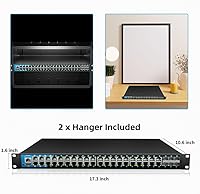
- Mounting Options: The switch can be installed as a standalone desktop unit or mounted in a standard equipment rack.
- Dimensions: The chassis measures 17.3 inches long by 10.6 inches wide by 1.6 inches high.
- Weight: The switch weighs 8.8 pounds (4 kg) without external cabling.
- Input Power: The unit accepts AC input voltage between 100V and 240V at 50/60Hz.
- Included Accessories: The package includes the switch unit, a power cable, and a printed user manual.
Related Reviews
YuLinca 6-Port Gigabit PoE Switch with 4 PoE+ Ports
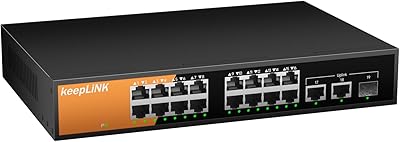
keepLiNK 16-Port Gigabit PoE Unmanaged Switch
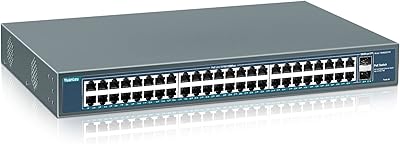
YuanLey YS4802GS-P8 48-Port Gigabit PoE Switch
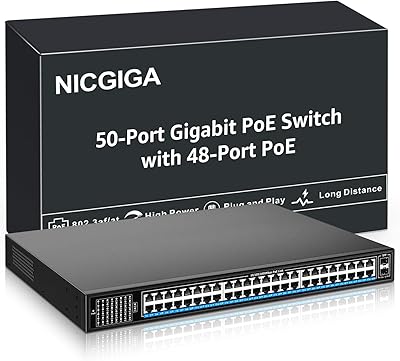
NICGIGA GS4802P 48-Port Gigabit PoE+ Switch
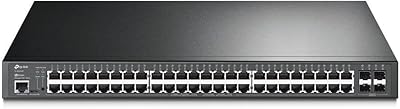
TP-Link TL-SG3452P 48-Port Managed PoE Switch
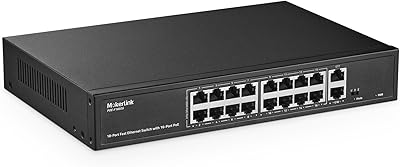
MokerLink POE-F1602G 16-Port PoE Switch
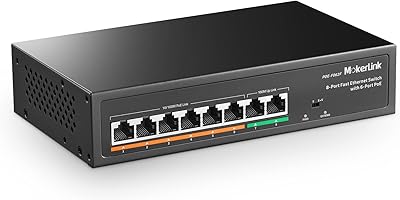
MokerLink POE-F062F 8-Port PoE Switch
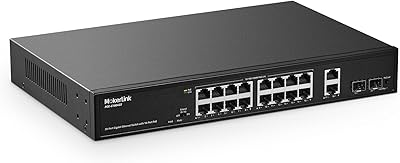
MokerLink POE-G1604GS 20-Port Gigabit PoE Switch
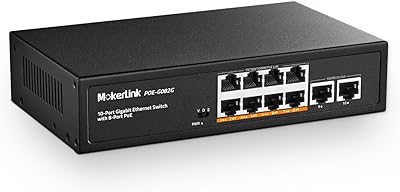
MokerLink POE-G082G 10-Port Gigabit PoE Switch