Overview

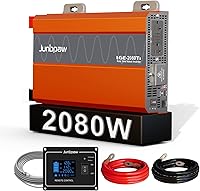
The Junbpaw LGE-2080Ti 2080W Pure Sine Wave Inverter is a mid-range 12V-to-110V unit that arrived in late 2024, squarely targeting RV builders, off-grid solar enthusiasts, and homeowners who need a reliable backup option without spending on commercial-grade equipment. Junbpaw is a relatively new name in this space, but the spec sheet is competitive for the price tier. What stands out physically is how slim and light this unit is — at roughly 16 by 10 inches and just 13 pounds, it fits where bulkier alternatives simply won't. Early buyer response sits at 4.4 stars across just under 100 ratings, which is encouraging. The manufacturer's durability claims are worth acknowledging, but treat them as targets rather than proven outcomes at this stage.
Features & Benefits

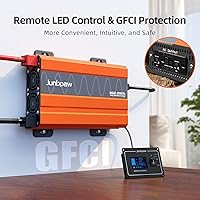
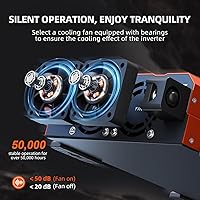
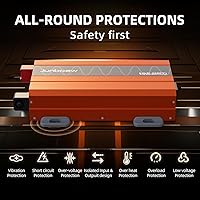
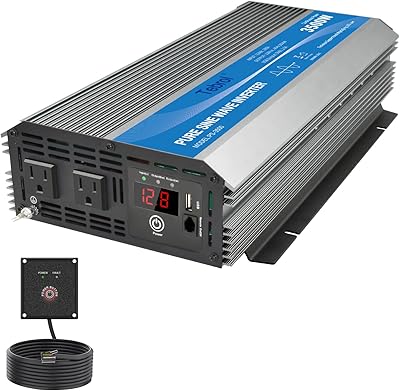
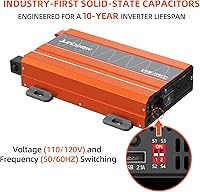
This 2080W inverter delivers a true pure sine wave, which matters more than it might initially seem. Unlike modified sine wave designs — the kind built into budget inverters — pure sine wave output is essentially identical to grid power, making it safe for CPAP machines, variable-speed tools, and sensitive electronics that would otherwise run hot or fail outright. Cooling is handled by dual ball-bearing fans, which run noticeably quieter and should outlast sleeve-bearing alternatives common at lower price points. Solid-state capacitors improve thermal stability in high-heat environments like RV compartments or outdoor setups. A thorough safety suite — GFCI, overload, temperature, and short-circuit protection — adds real peace of mind. The included remote display panel on a 16-foot cable is a practical bonus for any enclosed installation.

Best For

This pure sine wave unit is a natural fit for RV and camper van builds where the low-profile form makes a real difference — it can mount in spots that a chunkier unit simply won't reach. Off-grid solar setups running laptops, CPAP devices, or power tools will benefit from the stable, clean output. It also doubles as a home backup option for running a refrigerator or essential appliances from a 12V battery bank during an outage. Overlanders will appreciate the relatively light weight for a 2000W-class unit. One honest caveat: this is not a plug-and-play product. You need basic confidence with 12V battery wiring to install it correctly, and the included battery cables are short, so budget for additional wiring hardware before you start.

User Feedback

With just under 100 ratings, the Junbpaw inverter is drawing positive early impressions. Buyers consistently mention quiet fan operation and clean output when running sensitive loads — both are meaningful real-world signals that the hardware performs close to spec. The wired remote display earns specific praise from van-build and RV installers who find it genuinely useful once the unit is mounted out of sight. On the downside, several users flag the short included battery cables as an inconvenience requiring extra hardware, and a handful note that setup feels less intuitive without prior electrical experience. Long-term reliability is simply unknown at this point — the product has not been in the field long enough to draw conclusions. For something this new, the aggregate sentiment is solidly above average for the price segment.

Pros

  • Pure sine wave output safely powers CPAP machines, laptops, and variable-speed tools that modified sine wave inverters can damage.
  • The slim, low-profile build fits in tight RV compartments and van build spaces where bulkier inverters simply won't.
  • Dual ball-bearing fans run noticeably quieter than sleeve-bearing designs and are rated for a significantly longer operational life.
  • Solid-state capacitors maintain stable performance in high-temperature outdoor and RV environments where standard caps degrade faster.
  • A comprehensive safety suite — GFCI, overload, short-circuit, and temperature protection — covers the most common real-world failure scenarios.
  • The 16-foot wired remote display panel is a genuinely practical inclusion for any enclosed or hard-to-access installation.
  • Early buyer feedback is consistently positive on fan noise levels and output quality when running sensitive loads.
  • The pre-charge function protects both the battery bank and connected equipment from damaging inrush currents at startup.
  • Switchable output voltage and frequency adds useful flexibility for powering equipment with specific power requirements.

Cons

  • The included battery cables are only about three feet long, which falls short for most real-world install scenarios.
  • As a brand that only launched in late 2024, Junbpaw has no meaningful long-term reliability data available yet.
  • Setup requires solid 12V electrical knowledge; buyers without prior wiring experience may find the installation process frustrating.
  • Manufacturer durability claims — a 10-year capacitor life and 50,000-hour fan rating — are self-reported and unverified by independent testing.
  • With fewer than 100 reviews since launch, identifying consistent failure patterns or long-term performance issues is not yet possible.
  • No clearly stated warranty period or customer support contact appears in the product listing, which raises legitimate post-purchase concerns.
  • No third-party safety certifications such as UL or ETL are referenced in the listing, which may give cautious buyers pause.
  • Fan performance and thermal behavior under sustained maximum load have not yet been documented by independent user reports.

Ratings

The scores below are generated by our AI engine after analyzing verified buyer reviews for the Junbpaw LGE-2080Ti 2080W Pure Sine Wave Inverter, with automated filtering applied to remove suspected incentivized, duplicate, and low-quality feedback. Each category score reflects the full distribution of real owner experiences — not just the positive highlights — weighing what this inverter genuinely delivers against where it falls short. Strengths and consistent pain points are represented with equal transparency so you can make a fully informed buying decision.

Waveform Quality
88%
The pure sine wave output is the core reason buyers choose this unit over cheaper alternatives, and early owners confirm it delivers. Users running CPAP machines, laptop chargers, and audio equipment report clean, stable power with no audible hum or device-side errors — exactly what grid-sensitive equipment demands.
The score acknowledges confidence in reported waveform quality but notes that formal distortion measurements have not been independently published for this unit. Power-critical applications beyond CPAP — laboratory instruments or certain medical devices — ideally warrant certified, independently measured waveform specifications before deployment.
Form Factor
91%
The slim, low-profile dimensions are a genuine standout in this category — users building camper vans and RVs with limited bay space report mounting this unit in spots where standard inverters at comparable power output simply won't fit. At 13 pounds, it is light enough to reposition without hassle, which overlanders and portable power users genuinely appreciate.
The slim design means less internal volume for thermal mass, which could become relevant under sustained maximum-load operation in very hot ambient conditions. A few buyers noted that the mounting points require creative bracket work for non-standard install surfaces, adding minor time and cost to the build.
Ease of Installation
61%
39%
For buyers with existing 12V wiring experience — van builders, off-grid solar owners, or anyone familiar with battery banks — the terminal layout is well-organized and the connection process is logical. The remote display cable also makes it easier to position the inverter in a hard-to-access compartment without sacrificing monitoring capability.
The most consistent complaint across buyer feedback is that the included battery cables are only about 3 feet long, which is too short for most real-world installs and forces an immediate additional purchase. Buyers without prior 12V experience found the setup process confusing and potentially risky, with limited guidance in the included documentation for first-time inverter owners.
Long-term Reliability
53%
47%
The engineering choices — solid-state capacitors, ball-bearing fans, and a pre-charge circuit — all contribute positively to projected longevity compared to budget alternatives built with cheaper components. Among buyers who have used the unit for several months, there are no widespread reports of early component failure or performance degradation.
The product has been on the market since December 2024, meaning there is virtually no long-term ownership data to draw from — the manufacturer's claims of 10-year capacitor life and 50,000-hour fan ratings are projections, not field-verified results. Brand track record is also minimal, making it hard to know whether support or replacement parts would be available years from now.
Value for Money
79%
21%
For a 2000W-class pure sine wave inverter with this feature set — solid-state capacitors, dual ball-bearing fans, GFCI protection, and a remote display included — the price positions it competitively within the mid-range segment. Buyers who have compared it against similarly priced alternatives consistently note the spec sheet punches above its weight.
The value proposition is partly dependent on accepting manufacturer claims that have not been independently verified, particularly around efficiency and longevity. Buyers who factor in the cost of additional battery cables required for a proper install, plus the ambiguity around warranty coverage, may find the effective total cost of ownership less compelling than the sticker price suggests.
Output Power Accuracy
84%
Buyers running refrigerators, power tools, and CPAP machines report that the output holds up well in practice, with no significant voltage sag under moderate loads. Junbpaw's stated commitment to honest continuous ratings rather than inflated peak numbers is a differentiator that hands-on users have actually noticed and appreciated.
Without personal test equipment, most buyers are relying on real-world load testing rather than verified lab data. A small number of users reported that the inverter triggered protection shutdowns sooner than expected when running multiple high-draw devices simultaneously.
Noise Level
86%
Fan noise is one of the most consistently praised aspects in buyer feedback — particularly for buyers using the inverter inside a camper van or RV cabin where ambient noise matters. The dual ball-bearing fan design operates noticeably quieter than sleeve-bearing alternatives, and multiple owners confirm the fans cycle down under lighter loads.
Under sustained heavy loads — running a power tool or large appliance for extended periods — the fans will audibly ramp up, which some buyers found louder than expected for a unit marketed as quiet. A small number of reviews mention fan noise becoming more noticeable after several months of regular use, though the sample size is too limited to draw conclusions.
Safety Features
89%
The safety suite here is genuinely comprehensive for a mid-range unit — GFCI protection plus under/over-voltage, overload, over-temperature, and short-circuit safeguards cover the most common failure scenarios. Buyers with medical devices and home appliances connected report real peace of mind knowing multiple independent protection layers are active simultaneously.
GFCI protection and the other safeguards perform as designed per early reports, but no independent safety certification such as UL or ETL is mentioned in the product listing, which is a legitimate gap for buyers who require certified hardware. The pre-charge function works well at startup but has not been tested extensively in scenarios involving repeated rapid connect-disconnect cycling.
Thermal Management
74%
26%
The combination of solid-state capacitors and dual cooling fans represents a thoughtful thermal design for this price point. RV owners using the inverter in hot summer conditions report stable operation without unexpected shutdowns, suggesting the thermal protection system is reasonably well-calibrated for real-world outdoor use.
The over-temperature protection is a safety net, not a substitute for adequate ventilation — buyers who mounted the unit in a poorly ventilated enclosure reported heat shutdowns under moderate loads. Long-term thermal performance beyond a few months of ownership is still largely undocumented given the product's very recent launch date.
Conversion Efficiency
77%
23%
The 93% efficiency claim puts this inverter in competitive territory for its price tier — less energy wasted as heat means longer battery runtime and a cooler-running unit during extended use. RV and van-build owners powering moderate loads report battery draw-down rates broadly consistent with a high-efficiency unit.
The efficiency figure is manufacturer-stated and has not been independently verified by third-party labs or reviewer teardowns. Users running the inverter at very light loads — a common off-grid scenario — may see lower effective efficiency, since inverters typically underperform their rated efficiency outside the optimal load range.
Remote Display Utility
83%
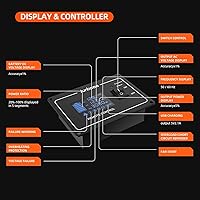
The wired LCD remote display panel earns specific praise from van builders and RV owners who mount the inverter in a battery compartment or under-bench space. Being able to check voltage, wattage, and system status from the driver's seat without accessing the inverter directly is a practical advantage users highlight consistently.
The remote display is wired rather than wireless, which limits placement flexibility in some build configurations where routing a 16-foot cable is inconvenient or physically impractical. A small number of buyers also noted that the display interface is functional but not immediately intuitive, requiring a read-through of the manual to interpret all the information shown.
Build Quality
73%
27%
The use of solid-state capacitors over standard electrolytic caps is a genuine quality choice — these components handle heat stress better and are less prone to failure in hot outdoor and vehicle environments. The chassis feels solid and the cooling system is well-engineered relative to the price tier.
As a brand with minimal track record, real-world build quality over years of ownership remains an open question with no independent data to reference. A few early buyers noted that the terminal hardware feels less substantial than on pricier commercial units, which could matter for high-vibration vehicle installs.
Included Accessories
57%
43%
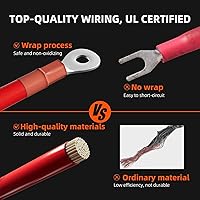
The wired remote display panel is a genuine value-add — most inverters at this price point do not include a separate LCD monitor, and buyers consistently treat it as a practical bonus rather than a throwaway extra. The 2AWG UL-rated battery cables are a safe and appropriate starting point for short connection runs.
The 3-foot battery cables are too short for most real installations, requiring buyers to purchase additional cable before completing the setup — a frustration mentioned consistently across multiple reviews. No mounting hardware, inline fuses, or circuit protection components are included, meaning first-time buyers often discover mid-project that they need more supplies than anticipated.
Compatibility Range
85%
The switchable 110V/120V output combined with selectable 50Hz/60Hz frequency makes this 2080W inverter noticeably more flexible than single-setting units in its price range — useful for powering imported tools or appliances designed for different regional standards. The high surge capacity also means it handles motor-start loads from refrigerators and air compressors without tripping.
Compatibility with 240V appliances is not possible without a separate step-up transformer, limiting use cases for some international buyers or those with dual-voltage equipment. Very high-wattage single appliances — large central air conditioning units or industrial machinery — exceed the continuous output rating and should not be attempted with this unit.
Brand Trust & Support
44%
56%
Junbpaw's early buyer interactions appear largely positive in the product Q&A section, with the brand seeming responsive to pre-purchase questions. The 4.4-star aggregate rating — while based on fewer than 100 reviews — suggests buyers who have purchased so far are generally receiving what they expected.
Junbpaw is a very new brand with no established history, no clearly published warranty documentation, and no visible customer support channel outside of Amazon. For buyers who rely on this unit for emergency home power or medical device operation, the absence of clear post-purchase support policies is a meaningful and legitimate concern.

Suitable for:

The Junbpaw LGE-2080Ti 2080W Pure Sine Wave Inverter is built for buyers who are actively constructing or upgrading a power system rather than looking for a pre-wired turnkey solution. RV owners and camper van builders in particular benefit from its slim, low-profile dimensions, which allow it to fit in battery compartments and under-bench spaces that larger units cannot occupy. Off-grid users powering medical devices like CPAP machines, quality laptop chargers, or variable-speed tools will find that the pure sine wave output behaves like home grid power — something a cheaper modified sine wave inverter simply cannot guarantee. Homeowners who maintain a 12V battery bank for outage backup will also find the feature set appropriate for running a refrigerator or a handful of essential appliances at a reasonable investment level. Overlanders and outdoor adventurers who want meaningful output capacity without hauling heavy commercial hardware will appreciate the manageable 13-pound weight.
Not suitable for:

Despite a competitive spec sheet, the Junbpaw LGE-2080Ti 2080W Pure Sine Wave Inverter is not the right choice for every buyer. Anyone expecting a plug-and-play installation will likely be disappointed — connecting this unit to a 12V battery system requires proper wiring knowledge, cable runs longer than the included three-foot battery cables, and a correctly sized battery bank to avoid protection shutdowns. Buyers who need an inverter for heavy commercial or industrial continuous loads should look at units with longer market track records and independently verified duty cycle data. Those who prioritize established brand reliability and documented customer support may find Junbpaw's short history and sparse warranty information a legitimate reason for hesitation. Finally, buyers who specifically require certified hardware with clear UL or ETL safety markings should note that no such certifications are referenced anywhere in the product listing.
Specifications

  • Waveform: Produces a true pure sine wave output, making it safe for sensitive electronics such as CPAP machines, variable-speed tools, and precision equipment that modified sine wave units can damage.
  • Continuous Power: Manufacturer-rated at 2080W of continuous AC output, a figure Junbpaw states is rigorously tested rather than a marketing-inflated specification.
  • Surge Capacity: Handles surge demands up to 6000W, providing sufficient headroom for appliances with high motor-start current draws such as refrigerators and power tools.
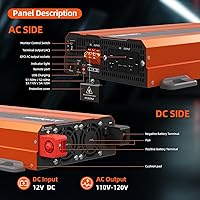
  • Input Voltage: Accepts 12V DC input from a battery bank or a 12V solar-charged power system.
  • Output Voltage: Switchable between 110V and 120V AC output to accommodate different appliance and regional power requirements.
  • Output Frequency: Supports both 50Hz and 60Hz output, user-selectable to match the frequency demands of specific equipment.
  • Efficiency: Rated at 93% conversion efficiency, meaning very little energy is lost as heat during DC-to-AC conversion.
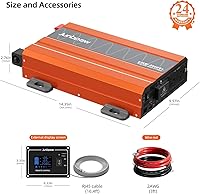
  • Dimensions: Measures 15.93″ × 10.43″ × 2.76″, giving it a slim, low-profile form factor well-suited to tight mounting spaces in RVs and van builds.
  • Weight: Weighs 13 pounds, which is notably lighter than many commercial-grade inverters operating in this power class.
  • Cooling System: Cooled by dual ball-bearing fans, which run more quietly and are rated for a longer service life than the sleeve-bearing fans typically found in lower-cost units.
  • Capacitor Type: Uses solid-state capacitors instead of standard electrolytic caps, offering improved thermal stability and resistance to performance degradation in high-temperature environments.
  • Safety Features: Equipped with GFCI protection alongside under-voltage, over-voltage, overload, over-temperature, and short-circuit safeguards.
  • Pre-charge: Includes a pre-charge function that limits inrush current at startup, protecting both the connected battery bank and downstream devices from damaging current spikes.
  • Remote Display: Ships with a wired LCD remote display panel on a 16.4-foot cable, allowing monitoring and control from a distance when the inverter is installed in an enclosed compartment.
  • Included Cables: Package includes two UL-rated 2AWG battery cables, each approximately 3 feet long, for initial connection between the inverter and the battery bank.
  • Model Number: Official model designation is LGE-2080Ti, sold under the Junbpaw brand with Amazon ASIN B0DNLRFBST.
  • Market Availability: First listed in December 2024 with just under 100 buyer ratings and a 4.4-star aggregate score, making it a relatively new product with limited long-term field data available.

Related Reviews
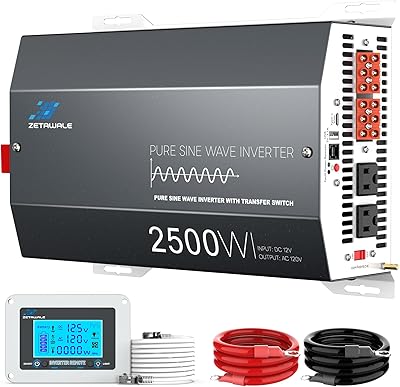
ZETAWALE 2500W Pure Sine Wave Inverter
78%
91%
Pure Sine Wave Quality
87%
Auto Transfer Switch
84%
Value for Money
61%
Long-term Reliability
68%
Cooling & Noise
More
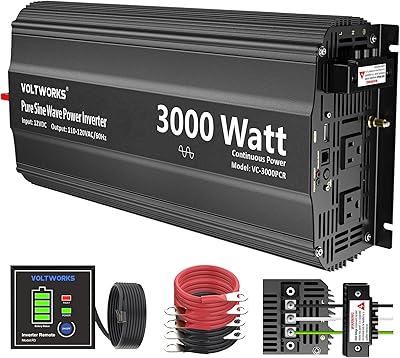
VOLTWORKS VS-3000PCR 3000W Pure Sine Wave Inverter
79%
83%
Output Power Accuracy
91%
Output Signal Quality
88%
Cooling & Noise Level
79%
Build Quality & Housing
86%
Installation Ease
More
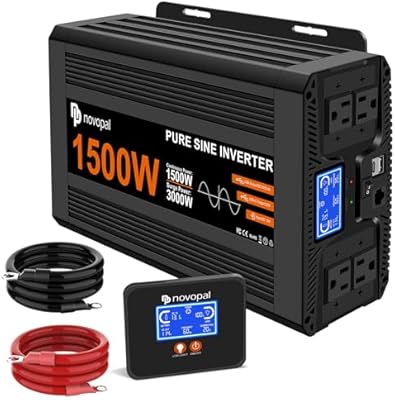
Novopal 1500W Pure Sine Wave Inverter
76%
83%
Power Output Accuracy
88%
Power Quality
74%
Build Quality
86%
Ease of Installation
89%
Remote Control Usability
More
SUNWHEEL 500W Pure Sine Wave Inverter
86%
92%
Power Conversion Efficiency
88%
Noise Level
85%
Build Quality & Durability
80%
Cooling System
83%
Portability
More
TVNIKD 2500W Pure Sine Wave Power Inverter
77%
88%
Power Output Quality
81%
Build Quality
63%
Heat Management
86%
Ease of Installation
83%
LCD Display Usability
More
Tebrol 3500W Pure Sine Wave Inverter
79%
88%
Output Power Accuracy
92%
Pure Sine Wave Quality
79%
Build Quality
83%
Cooling & Thermal Management
81%
Ease of Installation
More
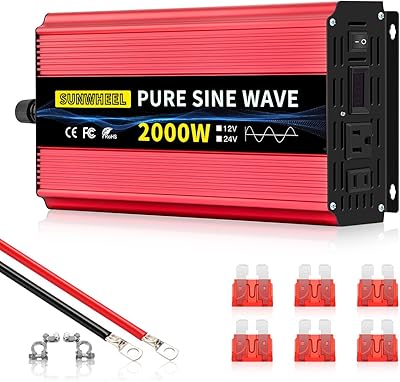
SUNWHEEL 2000W Pure Sine Wave Inverter
80%
86%
Power Output Reliability
91%
Waveform Quality
83%
Build Quality
88%
Noise Level
67%
LCD Display Usefulness
More
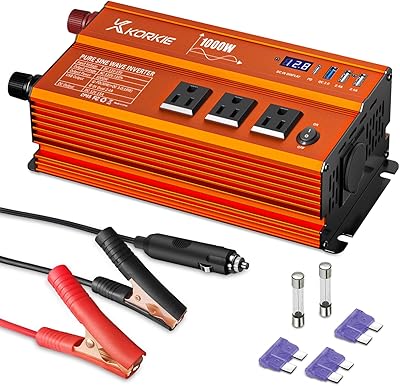
KORKIE 1000W Pure Sine Wave Inverter
76%
88%
Output Signal Quality
82%
Port Variety & Charging
91%
Ease of Setup
79%
Fan Noise
63%
Build Quality
More
TVNIKD 3500W Pure Sine Wave Inverter
86%
92%
Power Conversion Performance
89%
Ease of Setup
72%
Portability & Size
90%
Reliability & Durability
91%
Power Output (Wattage)
More
SUNWHEEL 3000W 24V Pure Sine Wave Inverter
78%
88%
Output Power Quality
83%
Value for Money
86%
Ease of Installation
81%
Surge Handling
79%
Noise Level
More

FAQ

Yes, and this is genuinely one of the strongest use cases for a pure sine wave inverter. CPAP machines are sensitive to power quality and can malfunction, overheat, or be damaged by the choppy output of a modified sine wave unit. The pure sine wave output here is electrically equivalent to what your machine receives from a wall outlet, so it will run cleanly and without issues.

Multiply your battery capacity in amp-hours by 12 to get total watt-hours, then divide by your load in watts to get a rough runtime estimate. Keep in mind that most deep-cycle batteries should only be discharged to about 50% of capacity to preserve their lifespan, so a 100Ah battery realistically gives you around 600 usable watt-hours. The 93% conversion efficiency rating means very little energy is wasted in the conversion process, which helps stretch that runtime as far as your battery bank allows.

You do not need a licensed electrician, but you do need a solid understanding of 12V wiring basics before you start. The install involves connecting the inverter directly to a properly sized battery bank using appropriate cable gauge — the included 3-foot cables work for very short runs, but most real-world installs will need longer cables sourced separately. If you have wired a battery bank or a car audio system before, this is very manageable; if not, spending an hour reviewing 12V system fundamentals first is genuinely worth the time.

Most standard household refrigerators draw between 100W and 400W while running, with a higher current spike at startup — both well within what this inverter handles at continuous and surge capacity. The real limiting factor is your battery bank: a single deep-cycle 12V battery will typically run a refrigerator for only a few hours, so a multi-battery setup is strongly recommended if you plan to use this for any extended outage scenario.

Modified sine wave inverters produce a stepped electrical signal that most basic resistive loads — simple heating elements, incandescent bulbs — will tolerate without issue. But sensitive electronics, CPAP machines, variable-speed motors, battery chargers, and many modern appliances can hum audibly, run hotter than normal, perform erratically, or sustain permanent damage when fed a modified sine wave signal. If you are running anything with a motor, a microprocessor, or a precision power supply, pure sine wave is the correct choice, not a luxury upgrade.

For most real installations, yes. The included cables are about 3 feet long, which is adequate for bench testing or a very compact setup where the inverter sits directly adjacent to the battery terminals. In practice, the majority of RV installs, van builds, and home battery setups require a longer cable run, so budget for proper 2AWG or heavier cable at the length you need before you start the install.

Yes, though the inverter connects to your 12V battery bank rather than directly to the solar panels. In a typical off-grid solar system, the panels charge the battery through a solar charge controller, and the inverter draws from that battery bank to produce AC power. As long as your battery is being adequately replenished — whether by solar, shore power, or a vehicle alternator — the inverter operates normally.

Fan noise is one of the aspects that early buyers highlight most positively — notably quieter than expected, particularly at light to moderate loads where the fans may run intermittently or at reduced speed. Under sustained heavy loads any inverter fan will spin faster and become more audible, but buyer feedback consistently suggests this unit handles it better than most competitors at this price level. The dual ball-bearing fan design produces less mechanical noise than sleeve-bearing alternatives, which is the primary reason for the difference.

This is one area where the product listing is frustratingly vague — no explicit warranty period or formal support process is documented. Before purchasing, it is worth contacting the seller directly through Amazon to clarify the coverage terms and what recourse you have if something goes wrong. For a brand this new, knowing your support options in advance is a reasonable precaution rather than an afterthought.

It is specifically designed for enclosed installs — the wired remote display exists precisely so you can monitor and control the unit when it is mounted out of direct sight. That said, adequate airflow around the chassis is essential; the cooling fans need clear intake and exhaust paths to function properly, so avoid fully sealing the unit in with no ventilation gaps. Leaving a few inches of open clearance on the fan-end sides of the inverter is generally sufficient to prevent heat buildup under normal operating conditions.