Overview

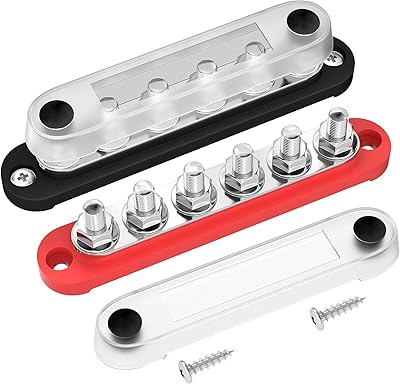
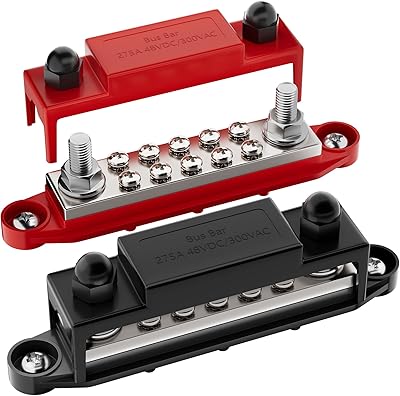
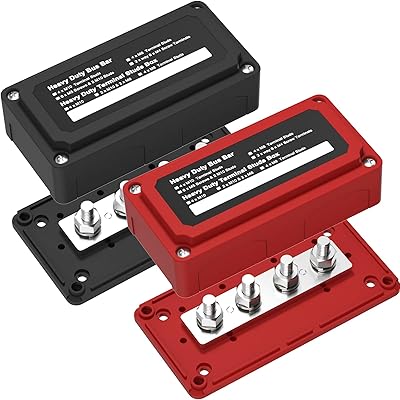
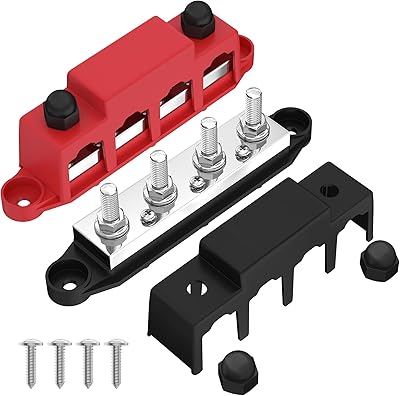
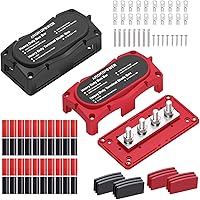
The Jamgoer 300A 4xM8 Power Distribution Bus Bar is a mid-range DC distribution solution covering 12V through 48V systems — a solid pick for anyone building out a boat, RV, or off-grid solar setup without the premium price tag of established marine brands. It comes as a matched red-and-black pair, each block carrying four M8 studs rated for up to 300A continuous current. A fitted protective cover handles splash and dust exposure reasonably well, though it should not be treated as fully submersible. Jamgoer has only been on the market since mid-2023, so it lacks the decades-long track record of Blue Sea or Victron, but the specs and build quality hold up well for the price tier.
Features & Benefits

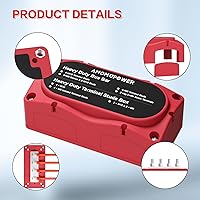
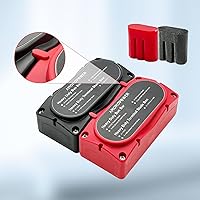
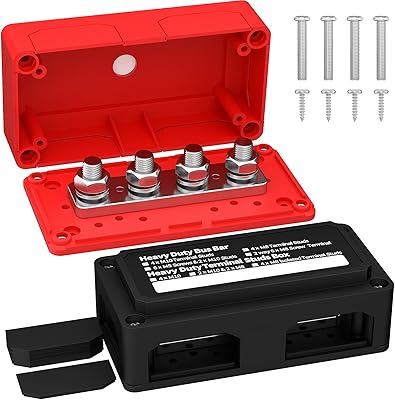
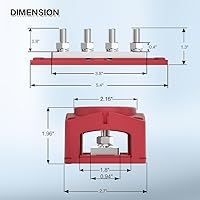
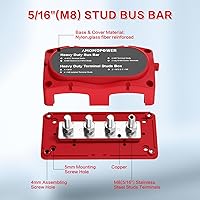
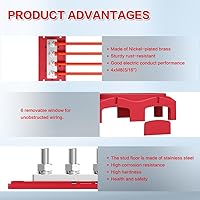
The bus bar's construction starts with nickel-plated copper rails, which resist oxidation far better than bare copper — important if this is going into a bilge area or under an engine hood where moisture and heat are constant. The base uses flame-retardant nylon fiberglass rather than plain plastic, a meaningful difference when routing high-current wiring nearby. Stainless steel M8 studs handle thick 2/0 or 4/0 AWG cable that most marine and solar builds require. The removable transparent windows on the cover let you route wires without pulling the whole cover off — genuinely handy during a tight install. At 138 x 69 x 44.5 mm, it slides into most enclosures without a fight.

Best For

This power distribution block is a natural fit for DIY solar builders who need a clean way to centralize positive and negative connections from multiple battery strings. It works equally well on a sailboat or motorboat, where corrosion resistance and a snug dust cover matter more than aesthetics. Camper van and RV converters running 12V or 48V house banks will appreciate the organized dual-terminal layout. That said, it is less suited for anyone who needs more than four circuits per polarity, or for industrial installs demanding certified ratings. If you would otherwise spend two to three times as much on a Blue Sea Systems block, this jamgoer distribution block is a reasonable, copper-built alternative.

User Feedback

With a 4.7-star average from 65 reviews, buyer sentiment is consistently positive. The most common praise centers on installation simplicity — screw on your lugs, clip on the cover, done. Multiple buyers note the block feels more solid than expected, which tracks given the copper bus and stainless hardware. On the downside, a few installers flag that no torque specification is included for the M8 studs, which matters when landing heavy cable. Some buyers also mention the cover fit feels marginally loose, a consideration if the install location sees heavy moisture. The 300A rating is widely accepted at face value; real-world load testing data is absent from the reviews.

Pros

  • Genuine nickel-plated copper construction at a fraction of what Blue Sea Systems charges for comparable hardware.
  • Four M8 studs per polarity handle heavy 2/0 and 4/0 AWG ring terminals without crowding or clearance issues.
  • Removable transparent windows let you route cables and inspect connections without pulling the entire cover off.
  • Flame-retardant nylon fiberglass base is a meaningful safety upgrade over standard plastic in hot or marine installs.
  • Compact 138 x 69 mm footprint fits into tight van panels, battery boxes, and under-console boat compartments.
  • Compatible with 12V, 24V, and 48V DC systems, making it versatile across a wide range of DIY energy builds.
  • Red and black color coding makes polarity identification instant, even in poorly lit bilges or engine bays.
  • 4.7-star average across verified buyers signals consistently positive real-world install experiences since launch.

Cons

  • No torque specification is provided for the M8 studs, a genuine gap for anyone following marine electrical best practices.
  • No nuts, washers, or mounting hardware included — expect an extra parts run before the install is complete.
  • Cover retention relies on friction fit rather than clips or screws, which can loosen over time in vibration-heavy environments.
  • The 300A continuous rating is unverified by any independent test data or third-party certification in the listing.
  • Brand history is short with no accessible warranty service, which is a real concern for permanent or hard-to-reach installs.
  • Only four circuits per polarity — complex solar or multi-load systems may need a second block sooner than expected.
  • Mounting hole pattern does not align with standard Blue Sea or Victron footprints, requiring new holes when upgrading.
  • Cover provides splash and dust resistance only — it is not suitable for bilge areas with standing water or full submersion risk.

Ratings

The Jamgoer 300A 4xM8 Power Distribution Bus Bar earns a strong overall reception among DIY installers and tradespeople alike — our AI-generated scores are drawn from verified buyer reviews worldwide, with spam, incentivized, and bot-flagged feedback actively filtered out before analysis. The ratings below reflect both what this power distribution block genuinely does well and where real buyers have run into friction, giving you an honest picture before you commit.
Build Quality
83%
Buyers consistently note that the nickel-plated copper bus bars feel noticeably solid for the price point — heavier and more substantial than similarly priced competitors they had previously used in camper van and RV builds. The stainless steel studs show no early signs of corrosion even after months of exposure in engine bays.
A handful of installers point out that the cover plastic, while functional, has a slightly hollow feel when pressed. For a bilge-area install or anything subject to vibration, a few buyers wished the cover latched more firmly rather than relying on friction fit alone.
Value for Money
88%
Most buyers arrive here having priced out Blue Sea Systems or Victron alternatives and find this jamgoer distribution block lands at roughly a third of the cost while still using actual copper construction. For a one-off DIY solar or boat wiring project, the math is hard to argue with.
A small number of buyers who needed long-term reliability in commercial or liveaboard marine settings felt the savings were offset by uncertainty about the brand's longevity and after-sale support. If you need a warranty you can actually call someone about, the value equation shifts.
Ease of Installation
91%
This is the category where the jamgoer distribution block draws the most enthusiastic feedback. The removable transparent windows mean you can route thick 2/0 AWG cables without wrestling the cover completely off, which matters a lot in a tight electrical panel or under-seat battery compartment.
No torque spec is included in the packaging or documentation, which is a genuine gap for anyone installing with a torque wrench — standard practice in marine electrical work. A few first-time builders also noted the instructions are minimal, relying on the install being self-evident.
Waterproofing & Weather Resistance
71%
29%
For splash zones, under-hood placement, and dusty off-road environments, the fitted cover performs well enough that most buyers report no corrosion or moisture intrusion after extended use. Marine installers in moderate-exposure areas — like a cabin boat's electrical compartment — report satisfactory results.
The cover is splash and dust resistant, not submersible, and a few buyers learned this the hard way in bilge-adjacent installs after heavy rain. The cover fit is described by multiple reviewers as slightly loose, which undermines confidence in any application where water ingress is a real concern.
Current Handling & Electrical Performance
78%
22%
For standard 12V house bank setups, solar charge controller connections, and automotive high-draw accessories, this power distribution block handles load without any reported heating issues at moderate current draws. The nickel-plated copper construction gives it a credible electrical foundation.
The 300A continuous rating is taken largely on faith — no reviewer in the available feedback documents a real-world 200A-plus draw test. Buyers using this in high-demand scenarios like large inverter installations are essentially trusting the spec sheet, which is a reasonable but unverified assumption.
Corrosion Resistance
82%
18%
The nickel plating on the copper bus bars is a meaningful upgrade over bare copper in humid or salt-air environments. Several marine buyers who installed this bus bar on trailered fishing boats reported clean, oxide-free contacts after a full season of use.
Nickel plating is durable but not infallible — aggressive saltwater environments will eventually test its limits. Buyers installing in open cockpit areas with regular spray exposure may want to apply a corrosion inhibitor as additional insurance, something the product documentation does not mention.
Terminal & Stud Quality
79%
21%
The M8 stainless steel studs handle heavy-gauge ring terminals cleanly, and buyers fitting 4/0 AWG lugs report a snug, rattle-free connection. The stud spacing is generous enough to accommodate most commercially available lugs without crowding.
The absence of any included hardware — no nuts, no washers, no lock washers — catches buyers off guard, particularly beginners. For experienced electricians this is a non-issue, but for a first-time solar builder it means an extra parts run before the install can proceed.
Included Hardware & Accessories
54%
46%
The bus bar itself arrives well-packaged and protected, and the protective cover with its removable windows is included out of the box, which does add genuine value compared to bare-rail alternatives in the same price range.
Beyond the cover, the package is spartan. No mounting screws, nuts, washers, or cable management accessories are included. Multiple buyers flag this as a frustration, especially since the product is marketed toward automotive and marine applications where hardware selection is not always straightforward.
Mounting & Fitment
76%
24%
The compact 138 x 69 mm footprint fits neatly into standard DIN rail enclosures, van electrical panels, and factory-style automotive fuse block locations. Buyers doing custom battery box builds appreciate that the dimensions are easy to plan around.
The mounting hole pattern is not a standard DIN or Blue Sea footprint, so buyers upgrading from a known brand cannot do a direct swap without drilling new holes. A few reviewers also note that mounting hardware is not included, which compounds the friction for new installers.
Label Clarity & Polarity Markings
73%
27%
The red-and-black color coding is immediately intuitive and consistent with standard DC wiring conventions. Buyers working quickly in low-light spaces like bilges or van undercarriage areas appreciate that polarity is visually obvious at a glance.
Beyond the color coding, there are no embossed or printed labels on the terminals themselves. For complex multi-circuit builds where multiple bus bars are in close proximity, a few installers wished for numbered or labeled studs to simplify troubleshooting later.
Brand Trust & Documentation
62%
38%
Jamgoer has accumulated a respectable review volume in a short time since its 2023 launch, and the 4.7-star average suggests real buyers are not experiencing widespread quality failures. The product page is reasonably detailed with specs that are at least internally consistent.
The brand is young and has no established service infrastructure, no certifications visible in the listing, and no published test data to back the 300A claim. For buyers who have previously relied on Blue Sea or Victron for mission-critical installs, this trust gap is a genuine obstacle.
Compact Size & Versatility
86%
At under 140 mm in length, this power distribution block fits where many 6-stud or 8-stud alternatives simply will not. Buyers building compact lithium battery banks in motorcycles, small watercraft, and camper van conversions repeatedly call out the size as a deciding factor.
The compact design is a feature for small builds but a limitation for larger ones — four studs per polarity fills up fast in a complex solar system with multiple charge sources and loads. Buyers planning to expand their system later may find themselves needing a second block sooner than expected.
Cover Fit & Protective Seal
67%
33%
The transparent windows are a thoughtful detail that most buyers genuinely appreciate — being able to visually inspect connections and route cables without full disassembly saves real time during installation and periodic maintenance checks.
The cover retention relies on a press fit rather than screws or clips, and multiple buyers describe it as looser than expected fresh out of the box. In vibration-heavy environments like truck engine bays or off-road vehicles, the cover can work itself partially loose over time.

Suitable for:

The Jamgoer 300A 4xM8 Power Distribution Bus Bar is a well-matched choice for DIY builders who need a dependable, copper-built distribution point without the premium price tag of established marine brands. It fits naturally into off-grid solar setups running 12V, 24V, or 48V battery banks, where a clean central junction for multiple charge controllers, inverters, and loads is essential. RV converters and camper van builders will appreciate the compact footprint and dual-polarity design, which keeps wiring organized in spaces where every centimeter matters. Boat owners doing a cabin or console rewire — particularly on trailered vessels that are not constantly submerged — will find the splash-resistant cover and nickel-plated bus bars adequate for the environment. Automotive enthusiasts consolidating accessory circuits or upgrading a factory fuse block will also get solid value here, especially those comfortable sourcing their own nuts and ring terminals.
Not suitable for:

Buyers with mission-critical or commercial-grade requirements should look elsewhere before committing to this power distribution block. The brand launched in mid-2023 and carries no visible independent certifications, published load-test data, or accessible customer support infrastructure — factors that matter when this block is the single point of failure in a liveaboard boat or off-grid cabin. The four-stud-per-polarity layout fills up quickly in complex systems with multiple charge sources and independent load circuits, meaning serious solar or marine builds may outgrow it faster than expected. The cover retention is friction-based rather than mechanically secured, which is a real concern in high-vibration environments like truck engine bays or off-road vehicles. Anyone needing true waterproof submersion protection, standardized mounting compatibility with existing Blue Sea or Victron hardware, or a unit backed by a verifiable warranty should budget up to a more established alternative rather than relying on the Jamgoer 300A 4xM8 Power Distribution Bus Bar for those scenarios.
Specifications

  • Max Current: Each block is rated for a maximum continuous current of 300A under normal DC operating conditions.
  • Max Voltage: The bus bar supports DC systems up to 48V, covering 12V, 24V, and 48V configurations.
  • Stud Size: Each block carries four M8 (5/16″) stainless steel terminal studs spaced to accept standard heavy-gauge ring terminals.
  • Bus Material: The current-carrying bars are made from copper with a nickel plating layer to resist oxidation and maintain conductivity over time.
  • Base Material: The mounting base is constructed from flame-retardant nylon reinforced with glass fiber, reducing fire risk in high-heat environments.
  • Terminal Material: All terminal studs are stainless steel, chosen for corrosion resistance in marine and outdoor installations.
  • Cover Material: A protective plastic cover with removable transparent windows is included, providing splash and dust resistance for the connection points.
  • Dimensions: Each single block measures 138 x 69 x 44.5 mm (5.43 x 2.72 x 1.75 in), making it suitable for compact enclosures.
  • Weight: A single block weighs approximately 367g (12.8 oz), and the pair ships together in one package.
  • Connector Type: All connections are made via screw-fastened ring terminals — no crimped or push-in connectors are used.
  • Polarity Layout: The set includes one red-coded positive block and one black-coded negative block for clear, standard DC polarity identification.
  • Stud Count: Each block provides four independent M8 terminal studs, giving a total of eight connection points across the positive and negative pair.
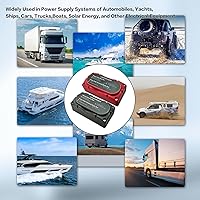
  • Compatible Systems: Designed for use in automotive, marine, RV, solar, and truck applications running on DC power systems.
  • Wire Gauge Support: The M8 stud size and spacing comfortably accommodates heavy-gauge wiring including 2/0 and 4/0 AWG ring-terminal lugs.
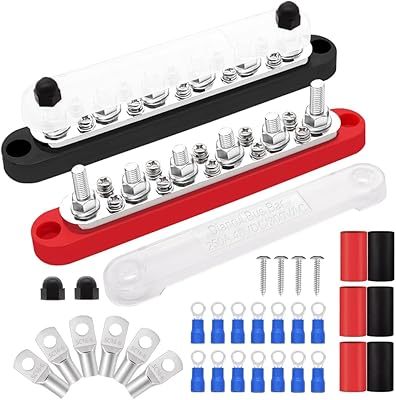
  • Included Accessories: The protective cover with removable windows is included; nuts, washers, and mounting screws are not supplied in the package.
  • Brand & Origin: Manufactured by Jamgoer, a brand that entered the distribution block market in mid-2023 targeting the DIY marine and solar segment.
  • Certifications: No independent third-party electrical certifications (such as UL, CE, or ABYC compliance) are listed or documented for this product.
  • Mounting Style: The base includes mounting holes for screw-fixed panel or enclosure installation; the mounting hole pattern is not a standard Blue Sea or Victron footprint.

Related Reviews

Joinfworld BB300 300A Power Distribution Block
75%
83%
Build Quality
88%
Current Handling Capacity
71%
Waterproofing & Weather Resistance
74%
Stud & Hardware Quality
62%
Cable Routing & Installation Ease
More
DAIERTEK 6-Stud 12V Power Distribution Bus Bar
78%
84%
Build Quality
89%
Value for Money
78%
Electrical Performance
86%
Installation Ease
67%
Cover & Protection
More
Dianrui 12V Bus Bar Power Distribution Block 250A
86%
92%
Build Quality & Durability
88%
Ease of Installation
84%
Versatility in Applications
90%
Performance in Harsh Environments
80%
Visibility & Maintenance
More
RVBOATPAT 275A 12-Terminal Power Distribution Bus Bar
79%
76%
Build Quality
68%
Terminal & Stud Quality
83%
Corrosion Resistance
81%
Safety & Protective Cover
88%
Ease of Installation
More
AMOMD 300A Bus Bar Box
85%
91%
Value for Money
94%
Build Quality
85%
Ease of Installation
92%
Current Handling Capacity
88%
Versatility (Marine, RV, Solar Systems)
More
Champion Power Equipment 201174 Power Distribution Box
85%
92%
Build Quality & Durability
89%
Safety Features
90%
Weather Resistance
85%
Ease of Setup
65%
Portability
More
AMOMD 400A 8-Stud Bus Bar
79%
88%
Build Quality
83%
Electrical Performance
91%
Ease of Installation
86%
Hardware & Fastener Quality
79%
Value for Money
More
Joinfworld 400A Power Distribution Block 12V
86%
91%
Performance
94%
Durability and Build Quality
88%
Ease of Installation
89%
Safety Features
92%
Value for Money
More
Rowe Electronics PDM60 Power Distribution Module
81%
93%
CAN/Bus Compatibility
78%
Installation Experience
88%
Build Quality
67%
Value for Money
82%
Circuit Capacity
More
Dial Power Berries Bar Soap 4oz 16-Pack
87%
95%
Cleansing Effectiveness
88%
Moisture Retention
90%
Berry Fragrance Appeal
92%
Lather Richness
87%
Skin Comfort
More

FAQ

You will need to source your own hardware. The package includes the two bus bar blocks and the protective covers, but no nuts, lock washers, or mounting screws are in the box. Pick up M8 stainless nuts and flat washers — they are inexpensive and worth having stainless versions if this is going into a marine or outdoor install.

Yes, the blocks are rated up to 48V DC, so a 48V lithium bank is within spec. Just make sure your total connected load stays within the 300A continuous current rating, and use appropriately sized fusing between the battery and the bus bar.

It is splash and dust resistant rather than waterproof in a submersion sense. The cover fits over the terminals and does a reasonable job keeping out spray and moisture in engine bays or boat cabins, but it should not be relied on in bilge areas where standing water is common or anywhere that sees regular flooding.

Most buyers land 4/0 AWG ring terminals on these studs without any issues, which is about as heavy as you would use in a 300A DC application. The stud spacing is generous enough that two large lugs on adjacent studs do not crowd each other significantly.

Blue Sea Systems products carry ABYC compliance ratings, published torque specs, and a long track record in commercial marine work — things that matter for liveaboard boats or professional installs. The Jamgoer 300A 4xM8 Power Distribution Bus Bar uses real copper construction and performs well for DIY solar, RV, and recreational boat builds, but it lacks independent certification and documented support infrastructure. For a weekend camper van project or a backyard solar setup, the value is hard to beat; for a boat you live on, the price difference for a certified brand is probably worth it.
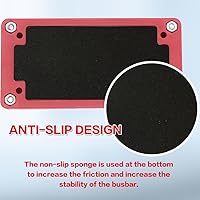
It stays put in most normal installs, but the cover relies on a friction fit rather than mechanical clips or screws. Several buyers in high-vibration applications like trucks and off-road rigs mention it can work itself partially loose over time. A small dab of silicone around the edge or a cable tie through the base can solve this if it becomes an issue.

The package includes two blocks: one red (positive) and one black (negative). They are sold and shipped as a pair, so you get a complete positive and negative distribution point in one purchase.

Unfortunately, no torque specification is published in the product documentation, which is a real gap. As a general reference for M8 stainless hardware in electrical applications, a torque in the range of 4 to 6 Nm is commonly used — enough to seat the lug firmly without stripping the threads. If you are doing a marine install, consider applying a small amount of anti-seize or corrosion inhibitor to the threads as well.

Yes, the mounting orientation is flexible. The base has mounting holes for panel or wall fixing, and the connection method is screw-terminal ring lugs, so gravity orientation does not affect performance. Just make sure your ring terminals are properly crimped so there is no risk of them rotating loose under their own weight over time.

The base material is glass-fiber reinforced and listed as flame-retardant, which puts it in a better category than plain nylon for under-hood use. That said, it should not be positioned directly against exhaust components or in areas where ambient temperatures consistently exceed what standard electrical enclosures are designed for. Mounting it away from direct heat sources with some airflow around it is the sensible approach.