Overview

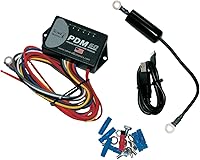
The Rowe Electronics PDM60 Power Distribution Module is one of the cleaner answers to a problem that trips up a lot of motorcycle builders: how do you add modern accessories to a CAN/Bus-equipped bike without fighting the factory electronics? A power distribution module acts as a dedicated hub, giving each accessory its own protected circuit rather than forcing you to tap into existing wiring. NAMZ, the brand behind this wiring hub, has built a real reputation in the powersports wiring space among custom builders and serious riders. This is not a casual buy — it targets people who want a professional electrical foundation rather than a pile of fuse taps.
Features & Benefits

Six independent circuits are the core of what makes the PDM60 worth considering. Unlike a generic fuse block, CAN/Bus compatibility means it is actually designed to work with the electronics architecture found in modern Harley-Davidson and similar bikes — that distinction matters more than most buyers realize until they have a fault to diagnose. The unit measures just 5x5x2 inches, so finding a mounting spot rarely requires fabrication. The plug-and-play approach keeps the install manageable even for someone who is competent with wiring but not doing this every day. Components are chosen with long service life in mind, and the whole assembly encourages a tidy, professional-looking result.

Best For

This power distribution module is squarely aimed at CAN/Bus motorcycle owners — think Harley-Davidson Twin-Cam and Milwaukee-Eight builds, or other modern bikes using the same bus-based architecture — who want to add heated gear, GPS, driving lights, or a mix of accessories without touching the factory harness. Custom builders who want their electrical work to look as considered as the rest of the bike will appreciate having a centralized circuit hub. It also suits riders who swap accessories seasonally and want a reliable connection point that does not degrade over dozens of disconnects. Those prioritizing OEM harness protection will find this wiring hub a natural solution.

User Feedback

Buyers who have installed the PDM60 consistently point to clean installation as the standout experience — several note that it replaced hours of fuse-tap frustration with a process that actually goes smoothly. Long-term owners report no degradation in performance after years of regular use, which speaks well of the component quality. Price sensitivity is the most common friction point; it is not cheap, and several buyers mention genuine hesitation before committing. First-time installers sometimes note a learning curve around routing and mounting, though most find the instructions adequate. Compatibility concerns occasionally surface around older CAN/Bus setups, so verifying your year and model before buying is a step worth taking.

Pros

  • Six independent circuits keep each accessory isolated, making troubleshooting far simpler if something goes wrong.
  • Genuine CAN/Bus compatibility means the PDM60 works with modern bike electronics rather than against them.
  • Plug-and-play design cuts install time significantly compared to building a custom fuse tap solution from scratch.
  • The compact footprint fits into tight frame spaces without requiring custom brackets or major modifications.
  • Keeps the factory harness completely untouched, which matters for warranty concerns and resale value.
  • Component quality is built for longevity — buyers consistently report reliable performance after years of use.
  • Eliminates messy add-on wiring that accumulates when accessories are added one at a time without a plan.
  • NAMZ has a well-established track record in powersports wiring, so support and parts availability are realistic expectations.

Cons

  • The price point is a real barrier — buyers on a tight budget will feel the sting before they feel the benefit.
  • Strictly CAN/Bus only; if your vehicle does not use that architecture, this wiring hub is incompatible by design.
  • First-time installers report a noticeable learning curve, especially when confirming year and model compatibility upfront.
  • Overkill for riders who only plan to add one or two simple accessories and never expand further.
  • Documentation could be clearer for those unfamiliar with CAN/Bus systems, leading to pre-install confusion.
  • No meaningful visual feedback or diagnostic indicators built in — fault-finding still requires manual testing.
  • Six circuits may still fall short for heavily accessorized touring builds requiring more than six managed lines.
  • Availability through specialty channels means it is not always easy to find locally if you need it quickly.

Ratings

Our AI has analyzed verified owner reviews of the Rowe Electronics PDM60 Power Distribution Module from across global marketplaces, actively filtering out incentivized, bot-generated, and duplicate submissions to surface what genuine buyers actually experienced. The scores below reflect both the real strengths that keep riders coming back to this wiring hub and the friction points that gave some buyers pause. Nothing has been softened or inflated — the numbers tell the full story.

CAN/Bus Compatibility
93%
Riders who confirmed their bike's CAN/Bus architecture before buying consistently reported zero communication faults or check-engine events after installation — a result that generic fuse blocks simply cannot match. On modern Harley-Davidson platforms especially, this purpose-built compatibility is the single most praised technical attribute.
A small but vocal group of buyers discovered compatibility issues with specific older CAN/Bus implementations or certain model years only after purchasing. The burden of pre-purchase verification falls entirely on the buyer, and the product documentation does not always make that process straightforward.
Installation Experience
78%
22%
Most experienced builders describe the install as genuinely manageable — considerably faster than wiring a custom fuse tap solution from scratch. Riders who had tackled similar wiring projects before found the plug-and-play approach lived up to its billing and reduced the risk of misconnections.
First-time installers frequently note a steeper learning curve than they anticipated, particularly around routing the harness neatly and confirming pin assignments. The included instructions received repeated criticism for lacking the level of detail that less experienced users need to feel confident during the process.
Build Quality
88%
Owners who have logged thousands of miles across multiple riding seasons consistently describe the unit as holding up without any degradation in performance or visible wear on connectors. The component selection clearly prioritizes longevity over cost-cutting, which buyers in this price tier rightfully expect.
A handful of users raised concerns about the quality of certain connector housings under sustained vibration on rougher roads. While outright failures are rare in the feedback pool, there are enough mentions of connector seating checks being required post-ride to suggest it is worth monitoring.
Value for Money
67%
33%
Buyers who fully committed to a multi-accessory build — running heated gear, lighting, and GPS simultaneously — generally concluded the investment paid off through reliability and time saved versus repeated DIY fuse tap repairs. For that specific use case, the long-term value proposition makes practical sense.
Price sensitivity is the single most common theme in critical reviews. Riders who only needed one or two circuits felt the cost was hard to justify, and several buyers admitted to hesitating for weeks before committing. For casual or light-use installations, the price-to-need ratio is genuinely difficult to defend.
Circuit Capacity
82%
18%
Six independent circuits cover the needs of the vast majority of touring and adventure riders adding a standard combination of accessories. Having each device on its own protected line also makes fault isolation much faster when something does go wrong — a practical advantage that builds appreciate immediately.
Heavily accessorized touring builds — particularly those running dual camera systems, intercom setups, and multiple lighting circuits simultaneously — occasionally found six circuits insufficient and needed supplemental solutions. For those edge cases, the PDM60 alone does not fully solve the capacity problem.
Wiring Cleanliness
91%
Custom builders consistently highlight the PDM60 as one of the cleanest ways to manage aftermarket electronics without creating the tangled, tape-wrapped rat's nests that accumulate when accessories are added piecemeal over time. The centralized layout makes the finished install look intentional rather than improvised.
Achieving a truly clean result still requires careful harness routing on the installer's part — the module itself does not guarantee a tidy outcome if cable management is neglected. A few buyers noted that the wire lengths supplied with connected accessories sometimes made routing more awkward than expected.
OEM Harness Protection
89%
Owners who specifically wanted to keep their factory harness untouched — whether for warranty preservation or future resale value — praised the PDM60 for delivering exactly that. The ability to add six accessories without a single splice into the OEM loom is a meaningful and frequently cited benefit.
A small number of users noted that while the module itself avoids harness modifications, some accessory harnesses still required minor adaptation work to connect cleanly. The no-splice promise applies to the PDM60 side of the installation, not necessarily to every accessory being connected through it.
Footprint & Mounting
84%
The 5x5x2-inch form factor was widely praised by builders working with limited under-seat or mid-frame real estate. Most riders found a mounting location without needing custom brackets, and the unit's weight of just over 7 ounces means it does not create any meaningful balance concern once mounted.
On particularly compact café racer or bobber builds with minimal frame space, a few owners reported that finding a clean mounting position still required creative problem-solving. The unit is compact relative to what it does, but it is not small enough to tuck invisibly into every frame configuration.
Long-Term Reliability
87%
Multi-year owners are among the most satisfied voices in the feedback pool, with several reporting continuous trouble-free operation across two or more full riding seasons. This consistency across extended time frames suggests the component quality claims made by NAMZ are reflected in real-world outcomes.
The sample of very long-term owners — those past the five-year mark — is smaller, so definitive conclusions about decade-long durability are harder to draw. A few users reported connector fatigue appearing after heavy vibration exposure on off-road or unpaved terrain, though these cases were in the minority.
Documentation & Support
59%
41%
Buyers who already had familiarity with CAN/Bus systems and powersports wiring found the included materials adequate and the install process relatively self-explanatory. NAMZ's broader reputation in the industry also means community resources and forum-based guidance are available to supplement official documentation.
This is one of the PDM60's weakest areas in buyer feedback. Newer riders and first-time installers repeatedly described the documentation as insufficient, with too little guidance on vehicle-specific compatibility verification and pin-by-pin connector assignments. Better instructions would meaningfully reduce the pre-install anxiety this product generates.
Brand Reputation
86%
NAMZ carries genuine credibility in the powersports wiring segment, and buyers frequently cite that brand confidence as part of their purchase decision. Knowing the manufacturer has a track record with professional-grade motorcycle wiring products reduces the perceived risk of investing in a mid-to-premium electrical component.
Outside the Harley-Davidson and dedicated powersports community, brand recognition drops noticeably. Buyers coming from automotive or general motorsport backgrounds occasionally expressed unfamiliarity with NAMZ, which created some hesitation even when the product itself was technically the right fit for their application.
Fault Isolation
80%
20%
Having each accessory on its own independent circuit makes diagnosing an electrical issue considerably faster than with shared or daisy-chained fuse setups. Riders who experienced a single accessory failure noted they were able to isolate and address the problem without disrupting any of the other connected devices.
There are no built-in visual indicators or diagnostic aids — no LEDs or status signals to help identify which circuit has triggered a protection event. Fault-finding still requires a multimeter and manual testing, which is a gap some buyers felt was worth flagging given the product's price positioning.
Vibration Resistance
74%
26%
For road-focused riders covering primarily paved surfaces, the PDM60 handles normal motorcycle vibration without issue across extended periods. Owners on touring models doing long highway miles report no vibration-related problems with the unit or its connections throughout regular use.
Riders using their bikes on gravel, dirt roads, or aggressive off-road terrain reported that connector seating needed periodic checking after particularly rough outings. While not a widespread failure pattern, it is a relevant consideration for adventure touring riders who regularly venture off pavement.

Suitable for:

The Rowe Electronics PDM60 Power Distribution Module is the right call for motorcycle owners who ride CAN/Bus-equipped bikes — most commonly modern Harley-Davidson models — and want to add multiple aftermarket accessories without touching the factory harness. If you are running heated gear, driving lights, a GPS unit, or some combination of all three, having six dedicated circuits means each device gets its own protected connection rather than sharing an already-loaded line. Custom builders who care about how the finished wiring looks, not just whether it works, will find this wiring hub fits naturally into a clean build. Riders who swap accessories between seasons also benefit from having a central, purpose-built management point that holds up to repeated use. Essentially, if your priority is doing the job right the first time and not revisiting wiring problems down the road, this is the kind of hardware worth investing in.

Not suitable for:

If your bike does not use a CAN/Bus electrical architecture, the PDM60 is simply not the right tool — it is engineered specifically for that system, and fitting it to an older or non-CAN/Bus vehicle misses the point entirely. Riders who only need to add a single accessory, like one set of running lights, will find the six-circuit capacity and the associated cost difficult to justify for such a limited use case. Budget-focused buyers should be aware that this wiring hub sits in a mid-to-premium price range; there are cheaper fuse block solutions that will handle simple jobs on conventional bikes without this level of complexity or expense. Anyone expecting a completely tool-free, zero-research installation may also hit a learning curve, particularly around routing and confirming vehicle compatibility before they start. If your project does not demand a professional-grade electrical foundation, a more basic solution will likely serve you just as well for less.

Specifications

  • Brand: Manufactured by NAMZ and sold under the Rowe Electronics brand, a recognized name in powersports wiring solutions.
  • Model: PDM60 is the model designation for this six-circuit power distribution unit.
  • Part Number: The official manufacturer part number is NRE9699101PDM60, used for ordering and compatibility verification.
  • Dimensions: The unit measures 5 x 5 x 2 inches, providing a compact footprint suited for tight mounting locations.
  • Weight: At 7.2 ounces, the PDM60 adds minimal mass to the vehicle during installation.
  • Power Circuits: Offers six independent power circuits, each capable of managing a separate aftermarket electrical accessory.
  • Compatibility: Designed specifically for CAN/Bus-equipped vehicles, most commonly modern Harley-Davidson and similar powersports platforms.
  • Install Type: Plug-and-play installation is supported, reducing the need for custom wiring fabrication during setup.
  • Primary Use: Intended for managing and distributing power to aftermarket electrical devices without modifying the factory harness.
  • Build Focus: Components are selected with extended service life as a priority, not simply minimum functional compliance.
  • Availability: The PDM60 has not been discontinued by the manufacturer and remains available as of its current listing.
  • First Available: This power distribution module was first listed for sale in July 2014, indicating a mature, field-tested product.
  • ASIN: The Amazon Standard Identification Number for this unit is B00M9MRA14.

Related Reviews
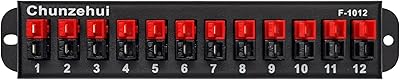
Chunzehui F-1012 12-Position Power Distribution Block
75%
88%
Build Quality
71%
Connector Compatibility
83%
Current Handling
79%
DIN Rail Mounting
81%
Value for Money
More
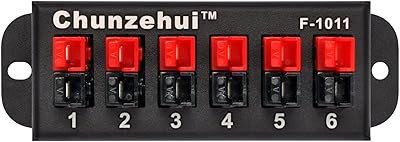
Chunzehui F-1011 6-Position Power Distribution Block
82%
91%
Build Quality
88%
Connector Compatibility
93%
Electrical Performance
84%
Ease of Installation
76%
Connector Insertion Feel
More
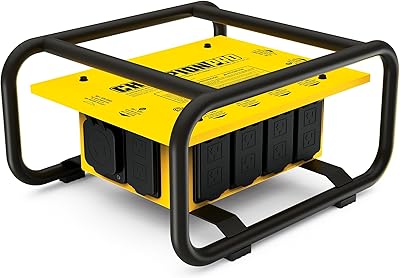
Champion Power Equipment 201174 Power Distribution Box
85%
92%
Build Quality & Durability
89%
Safety Features
90%
Weather Resistance
85%
Ease of Setup
65%
Portability
More
Joinfworld 400A Power Distribution Block 12V
86%
91%
Performance
94%
Durability and Build Quality
88%
Ease of Installation
89%
Safety Features
92%
Value for Money
More
DAIERTEK 12V Bus Bar Power Distribution Block
86%
91%
Build Quality
89%
Ease of Installation
88%
Versatility
92%
Current Handling Capacity
90%
Durability (Corrosion Resistance)
More
ThePoEstore CT-PDU10-SP 10-Outlet Rack PDU
81%
86%
Build Quality
89%
Value for Money
91%
Per-Outlet Switching
88%
LED Indicator Clarity
72%
Surge Protection
More
Jamgoer 300A 4xM8 Power Distribution Bus Bar
76%
83%
Build Quality
88%
Value for Money
91%
Ease of Installation
71%
Waterproofing & Weather Resistance
78%
Current Handling & Electrical Performance
More
Tecmojo 1U 19-Outlet Rack PDU
80%
93%
Outlet Count & Layout
88%
Build Quality & Materials
84%
Circuit Breaker Protection
34%
Surge Protection
91%
Installation & Mounting
More
RVBOATPAT 275A 12-Terminal Power Distribution Bus Bar
79%
76%
Build Quality
68%
Terminal & Stud Quality
83%
Corrosion Resistance
81%
Safety & Protective Cover
88%
Ease of Installation
More
Quail Electronics 6 Outlet Hospital Grade Power Strip
86%
88%
Build Quality
92%
Safety Features
90%
Durability
85%
Ease of Use
87%
Waterproof Feature
More

FAQ

Most Harley-Davidson models from 2011 onward use a CAN/Bus electrical system, though some earlier models do as well. The safest way to confirm is to check your service manual or look up your specific year and model on the NAMZ website before buying. If your bike is not CAN/Bus, this wiring hub is not compatible.

Not at all, but you should be comfortable with basic motorcycle wiring tasks like reading a wiring diagram and using proper connectors. The plug-and-play design keeps things manageable for a competent DIYer. That said, first-time installers sometimes take longer than expected, so set aside a full afternoon rather than assuming it is a quick job.

You have six independent circuits to work with, so you can run up to six separate accessories simultaneously. Common setups include heated grips, driving lights, a GPS unit, a phone charger, and auxiliary lighting. Just be mindful of each circuit's load rating and do not exceed the rated capacity on any single output.

Since the Rowe Electronics PDM60 Power Distribution Module is designed to avoid splicing into or modifying the factory harness, the risk to your OEM warranty is significantly lower than with conventional wiring tap methods. That said, warranty terms vary by manufacturer and dealer, so it is worth checking your specific coverage details before making any electrical modifications.

Potentially, yes — as long as the vehicle uses a compatible CAN/Bus architecture. However, the PDM60 is developed and marketed primarily for the powersports motorcycle segment, so compatibility with other vehicle types is not officially guaranteed. Verify with NAMZ directly if you have a specific application in mind.

Each circuit is independent, so an overload or fault on one line should not take down the others. This is one of the practical advantages of using a dedicated distribution module over a shared fuse block. Always match the accessory's current draw to the circuit's rated capacity to avoid triggering a protection event in the first place.

Routine maintenance is minimal. Periodically check that connectors are seated securely, especially after long rides on rough roads. Inspect the mounting hardware to confirm the unit has not shifted, and verify that no chafing is occurring on any connected wiring runs. Beyond that, the component quality is built for long-term reliability without frequent intervention.

A standard fuse tap or generic block can work on simpler, older electrical systems, but on a CAN/Bus bike it can introduce communication errors or trigger fault codes because the system monitors current draw on the harness. The PDM60 is purpose-built to work within the CAN/Bus architecture rather than around it, which is a meaningful difference when your bike's electronics are tightly integrated.

It typically ships with the necessary hardware for installation, though buyers occasionally note that the included documentation could be more detailed for those newer to CAN/Bus systems. Having the NAMZ support resources or an online install guide on hand alongside the included materials is a reasonable precaution, especially for a first install.

As of the current product listing, this wiring hub has not been discontinued by NAMZ. It has been on the market since 2014 and continues to be available through authorized retailers. That kind of longevity in the aftermarket space is generally a good sign for ongoing parts and support availability.