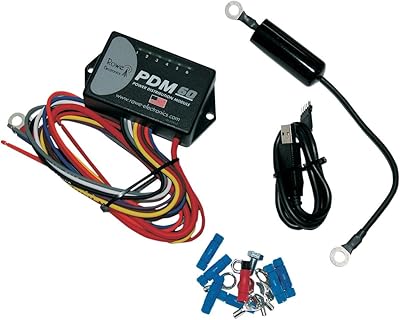
Joinfworld BB300 300A Power Distribution Block
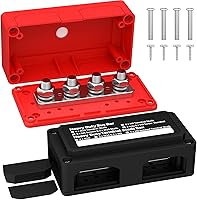
Overview
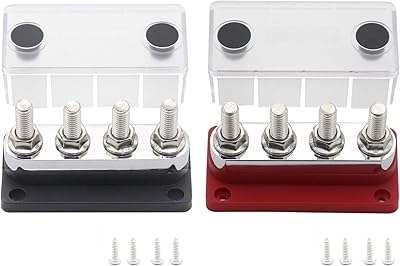
The Joinfworld BB300 300A Power Distribution Block is a mid-range enclosed bus bar built primarily for 12V DC systems, though it handles up to 48V DC and 300V AC as well. What sets this bus bar box apart from bare open-rail alternatives is the protective plastic housing — it keeps terminals shielded from accidental contact and moisture without costing significantly more. It ships as a matched positive and negative pair, which makes wiring a complete circuit far less complicated than sourcing bars separately. Joinfworld positions itself as a value-focused brand, and the product reflects that: solid enough for serious DIY solar, RV, and marine builds, but not intended as an industrial switchgear component.
Features & Benefits
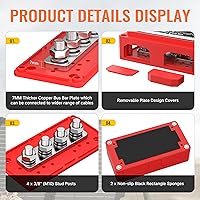
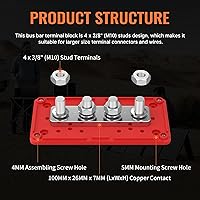
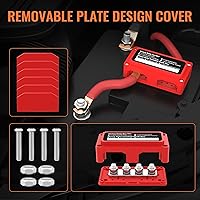
The copper bus bar plate runs 7mm thick, which makes a real difference at high current loads — thicker copper means lower resistance and less heat buildup over time. Each bar carries four 3/8″ M10 stainless steel studs, comfortably accepting lugs up to 4/0 AWG. That covers virtually any heavy-duty wiring scenario you would encounter in a solar or marine build. The removable side plates are a practical touch; pop one off, drill a clean entry hole to your preferred diameter, and feed cables through without wrestling the housing open. The enclosed design provides meaningful protection against splash and condensation, though it is not rated for submersion.
Best For
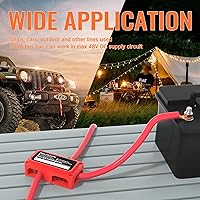
This distribution block earns its keep in a handful of specific scenarios. If you are wiring a DIY solar system with multiple charge controllers or battery banks feeding into a single point, the four-stud layout handles that neatly. RV and camper van builders will appreciate the compact footprint and enclosed housing, which keeps things tidy inside a confined compartment. On the marine side, the splash-resistant enclosure makes it a reasonable choice for above-deck or bilge-adjacent installations — just keep it away from direct water immersion. Car audio enthusiasts running several high-draw amplifiers will also find the positive-negative pair convenient for clean, organized power distribution without hunting for a separate ground bar.
User Feedback
Buyers consistently point to the copper bar thickness as a standout quality — it feels noticeably more substantial than what you find on cheaper open-rail options. That said, a few recurring criticisms are worth noting. Routing multiple 4/0 AWG cables simultaneously can be a tight squeeze; the enclosure lid may not close flush if several thick lugs are competing for space. Some users mention the supplied nuts are serviceable but not exceptional, and a small number wished for slightly longer studs to accommodate thicker lug stacks. Instructions are minimal — experienced installers will not miss them, but beginners should look up proper torque specs independently. Outdoor waterproofing generally earns positive marks for splash and humidity resistance.
Pros
- The 7mm thick copper bus bar handles sustained high-current loads without the heat buildup common in thinner alternatives.
- Comes as a matched positive and negative pair, so there is no separate ground bar to hunt down and order.
- Four M10 studs per bar accept lugs up to 4/0 AWG, covering virtually every heavy-gauge DIY wiring scenario.
- The enclosed housing meaningfully reduces the risk of accidental terminal contact compared to open-rail bus bars.
- Removable side plates make custom cable entry points easy to create with a standard drill — no specialist tools needed.
- Compatible with 12V, 24V, and 48V DC systems, so it grows with more ambitious solar and battery bank builds.
- Compact footprint fits into RV compartments, van builds, and engine bays where space is genuinely limited.
- Color-coded red and black bars make polarity immediately obvious, reducing wiring mistakes during installation.
- Stainless steel studs resist corrosion in humid and salt-air environments better than plated steel alternatives.
- Splash-resistant enclosure keeps connections protected in marine and outdoor RV installations where moisture is a constant concern.
Cons
- Fitting four 4/0 AWG cables simultaneously is a tight squeeze, and closing the enclosure lid cleanly can require real effort.
- Supplied nuts are thin and basic — many experienced installers swap them out immediately for higher-grade hardware.
- No printed torque specifications or wiring diagrams included, leaving first-time builders without critical installation guidance.
- Stud length becomes marginal when stacking multiple lugs on a single post, reducing effective thread engagement.
- The uncoated copper bus bar can show surface oxidation in prolonged high-humidity environments without dielectric grease.
- Four studs per bar is a hard limit — builds with five or more branch circuits will need an additional distribution point.
- The plastic enclosure lid tabs feel slightly fragile and can flex under pressure in vibration-heavy mounting locations.
- Small hardware components like nuts ship loose inside the box rather than in a separate bag, making it easy to miss pieces.
- Side plate cable entry holes must be drilled by the installer, which adds a step that budget-tier competitors sometimes skip with pre-punched knockouts.
- Not submersion-rated, so any marine installation below the waterline or in direct rain exposure requires additional sealing work.
Ratings
The ratings below for the Joinfworld BB300 300A Power Distribution Block were generated by our AI system after analyzing verified buyer reviews from multiple global markets, with spam, incentivized submissions, and bot activity actively filtered out. Scores reflect the real distribution of satisfaction and frustration across hundreds of documented installations — from off-grid solar setups to marine bilge wiring. Both the strengths that make this distribution block a popular pick and the recurring pain points that hold it back are represented honestly.
Build Quality
Current Handling Capacity
Waterproofing & Weather Resistance
Stud & Hardware Quality
Cable Routing & Installation Ease
Value for Money
Paired Positive & Negative Design
Wire Gauge Compatibility
Mounting & Physical Footprint
Voltage Versatility
Instruction Clarity
Corrosion Resistance
Aesthetic & Labeling
Packaging & Shipping Protection
Suitable for:
The Joinfworld BB300 300A Power Distribution Block is a strong fit for DIY builders who need a centralized, organized power hub without spending on a full commercial panel. Off-grid solar enthusiasts running multiple charge controllers or battery loads into a single distribution point will find the four-stud layout and 300A rating more than adequate for most residential-scale systems. RV and camper van converters benefit particularly from the enclosed housing, which keeps terminals protected inside tight compartments where accidental contact or vibration-loosened connections can cause real problems. Boaters and marine hobbyists doing above-deck or cabin electrical work will appreciate the splash-resistant design, as long as they understand it is not a sealed submersion-rated unit. Car audio builders running several high-draw amplifiers off a common battery tap will also find the paired positive and negative bars a practical, no-fuss solution compared to sourcing and mounting two separate bars.
Not suitable for:
The Joinfworld BB300 300A Power Distribution Block is not the right tool for anyone expecting industrial-grade build quality or a fully certified weatherproof enclosure. Installers planning to route four 4/0 AWG cables simultaneously should go in with realistic expectations — the interior is tight, and closing the lid neatly with a full complement of heavy lugs requires patience and sometimes a bit of creative cable management. If your build has five or more branch circuits that all need to share a single bus, the four-stud limit per bar will force you to add a secondary distribution point, which adds complexity and cost. Buyers who need detailed installation documentation or torque specifications printed in the box will be left hunting for that information themselves, which is a genuine barrier for first-time DIYers. Anyone planning a fully submerged or continuously wet installation — think below the waterline in a bilge or outdoor exposed to direct rain without additional sealing — should look for an enclosure with a proper IP67 or IP68 rating instead.
Specifications
- Current Rating: Rated at 300A continuous, suitable for high-demand electrical systems including solar, marine, and automotive applications.
- Voltage Range: Designed primarily for 12V DC systems but compatible with up to 48V DC and 300V AC.
- Stud Size: Each bar features four 3/8″ (M10) stainless steel stud posts for secure, corrosion-resistant terminal connections.
- Stud Count: Four studs per bar, with one positive (red) bar and one negative (black) bar included in each package.
- Max Wire Gauge: Accepts ring terminals and lugs up to 4/0 AWG, covering the heaviest wire gauges used in most DIY power builds.
- Bus Bar Material: Solid copper bus bar plate measuring 7mm thick, providing low electrical resistance and reliable heat dissipation under load.
- Housing Material: Enclosed box constructed from hard plastic with removable side plates that can be drilled for custom cable entry routing.
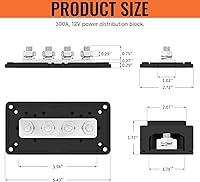
- Outer Dimensions: The complete enclosure measures 5.4″ wide by 2.7″ deep by 1.8″ tall, making it suitable for compact installation spaces.
- Weight: The complete unit weighs 1.65 pounds, light enough for overhead or sidewall mounting in RV and van builds.
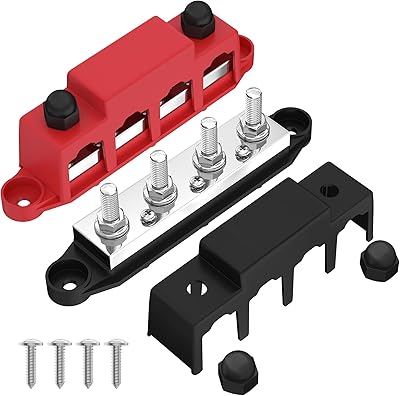
- Configuration: Ships as a matched pair consisting of one red positive bus bar and one black negative bus bar housed within a single enclosure.
- Mounting Type: Surface mount design with pre-positioned mounting points for straightforward installation on flat panels, walls, or framing.
- Connector Type: Screw-terminal connection method using threaded M10 studs and supplied nuts to secure ring-terminal lugs in place.
- Waterproofing: The enclosed housing provides splash and moisture resistance; it is not rated for submersion and requires additional sealing for fully exposed outdoor use.
- Side Plates: Four side panels are removable and can be drilled to create custom-diameter cable entry holes without the need for specialized tools.
- Number of Poles: Rated at 4 poles per bar, allowing up to four independent circuit connections on each positive or negative terminal block.
- Applications: Designed for use in automotive, marine, RV, boat, truck, solar wiring, and other 12V to 48V DC power distribution systems.
- Color Coding: The positive bus bar is finished in red and the negative in black, providing immediate visual polarity identification during and after installation.
- Stud Material: Studs are manufactured from stainless steel, offering improved resistance to corrosion compared to standard zinc-plated or brass hardware in humid environments.
Related Reviews
Joinfworld 400A Power Distribution Block 12V
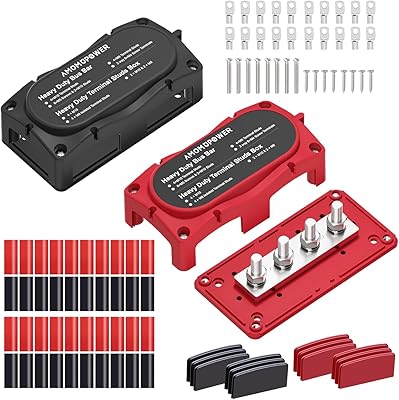
Jamgoer 300A 4xM8 Power Distribution Bus Bar
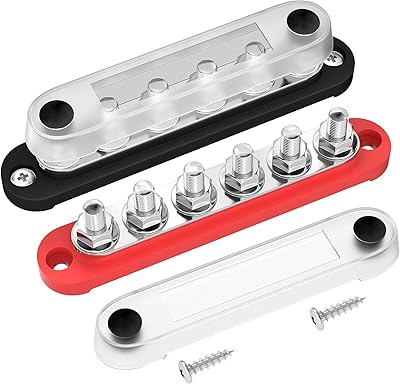
DAIERTEK 6-Stud 12V Power Distribution Bus Bar
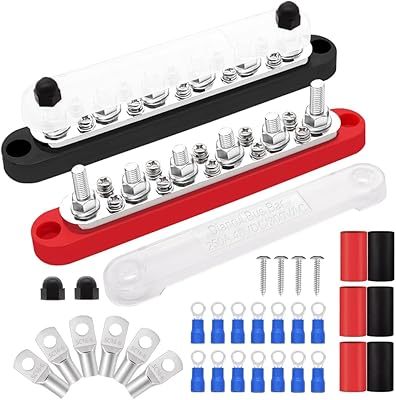
Dianrui 250A Marine Bus Bar
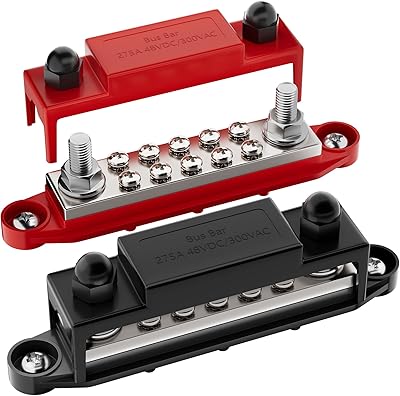
RVBOATPAT 275A 12-Terminal Power Distribution Bus Bar
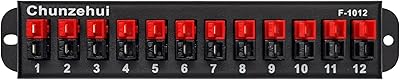
Chunzehui F-1012 12-Position Power Distribution Block
T Tocas 600A Busbar Power Distribution Block 12-48V DC
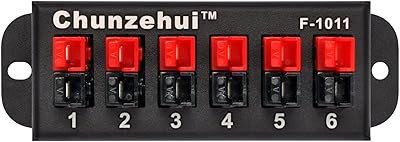
Chunzehui F-1011 6-Position Power Distribution Block
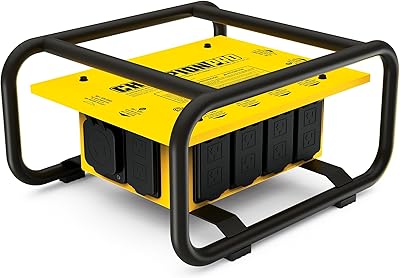
Champion Power Equipment 201174 Power Distribution Box