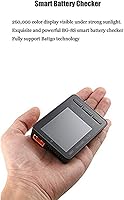
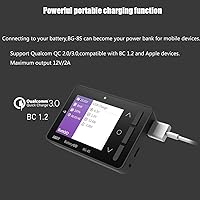
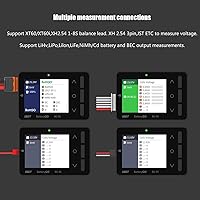
Overview

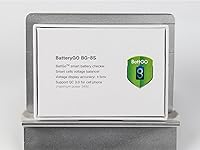
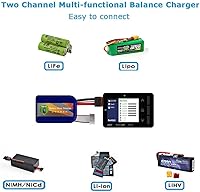
The ISDT BG-8S Battery Meter is a compact, no-nonsense tool built for RC pilots and drone operators who need reliable pack data without hauling bulky equipment to the field. ISDT has earned a genuine following in the RC charging world, and this pocket-sized tester reflects that pedigree. It handles 2S through 8S packs across a wide range of chemistries — LiPo, LiFe, Li-ion, LiHv, NiMH, and NiCd — connecting via either a standard balance port or an XT60i plug for BattGO smart battery access. At its price point, the feature set is notably broad for something that fits in a jacket pocket.

Features & Benefits

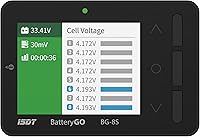
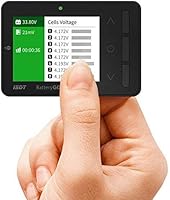
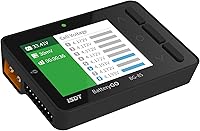
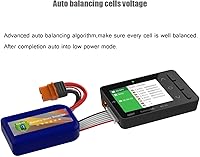
The LCD readout is genuinely useful — it shows every individual cell voltage at a glance, not just the pack total, which is what matters when you're pre-flighting. The auto cell-balancing function is worth understanding correctly: it's passive, meaning it bleeds down higher cells rather than actively redistributing charge. That makes it ideal for storage voltage prep, not a substitute for your charger's balance mode. The BattGO feature, accessed through XT60i, reveals cycle counts and working parameters on compatible packs — genuinely useful if you run ISDT smart packs, but most pilots will never use it. The built-in USB power output and signal protocol analysis are welcome extras rather than headline features.

Best For

This battery meter slots in well for FPV and fixed-wing pilots who want one compact device to handle voltage checking, storage balancing, and occasional receiver signal testing at the field. If you manage more than a handful of packs, the ability to plug in and immediately see every cell without booting a laptop or a dedicated charger saves real time. It's also a natural fit for anyone already running ISDT hardware who wants BattGO telemetry. The power bank function is a nice touch for those long days when a phone battery dies between sessions, though it should not be the deciding factor in the purchase.

User Feedback

Buyers consistently praise display readability and the speed at which the BG-8S powers on and reads a pack — plug it in, and you have your data in seconds. Build quality gets solid marks for the price, though some users find the buttons a little stiff at first. The main complaint that surfaces on higher-cell-count packs is that passive balancing is slow; if you need a 6S or 8S pack brought to storage voltage, plan for a longer wait. BattGO functionality lands as a niche perk — owners who don't use ISDT smart batteries rarely mention it at all. The USB output is generally seen as a handy bonus rather than a core reason to buy.

Pros

  • Boots and reads pack voltage almost instantly — no waiting around on the flightline.
  • Individual cell readout on the LCD makes weak or drifting cells easy to spot before a flight.
  • Covers LiPo, LiFe, Li-ion, LiHv, NiMH, and NiCd in one device, so mixed fleets are not a problem.
  • The balance port and XT60i dual connection setup adds flexibility without requiring adapters.
  • Passive cell balancing is genuinely handy for bringing packs to storage voltage overnight.
  • Built-in PWM, PPM, and S.BUS signal analysis saves carrying a dedicated receiver checker.
  • Firmware is upgradeable, so protocol support can grow without buying new hardware.
  • The USB power bank output has saved more than a few dead phones on long field days.
  • Build quality feels solid and pocket-friendly at 3.2 ounces and a minimal footprint.
  • BattGO telemetry via XT60i gives ISDT smart battery users cycle data that standard testers simply cannot access.

Cons

  • Passive balancing on 6S or 8S packs is very slow — expect a long wait for full cell equalization.
  • BattGO functionality is only useful if you already own ISDT smart packs; most buyers will never use it.
  • The USB power bank output maxes at 12V/2A, which is fine for a phone top-up but not serious charging.
  • Physical buttons can feel stiff, especially in colder outdoor conditions where gloves are involved.
  • No dedicated case or protective pouch is included, which is a minor but real omission for field gear.
  • The LCD, while readable, is not backlit, making it harder to use in low-light or overcast conditions.
  • At this price, the lack of an audible low-voltage alarm may frustrate pilots who want passive monitoring.
  • Setup and menu navigation have a learning curve that is not immediately obvious from the included documentation.

Ratings

Our AI rating system analyzed thousands of verified global user reviews for the ISDT BG-8S Battery Meter, actively filtering out incentivized, duplicate, and bot-generated feedback to surface what real RC pilots and hobbyists actually experience. Scores reflect a balanced view — genuine strengths are recognized, but recurring frustrations and limitations are weighted just as honestly. The result is a transparent scorecard that covers every dimension a serious buyer should consider before purchasing.

Voltage Accuracy
91%
Users consistently report that cell voltage readings are tight and reliable, matching bench multimeter readings closely enough to trust for pre-flight decisions. RC pilots flying high-value setups particularly appreciate knowing the readings are not just ballpark figures.
A small number of users noted minor variance on very low-voltage depleted packs, though this appears to be an edge case rather than a systematic accuracy problem with the device.
Display Readability
83%
The LCD lays out individual cell voltages clearly, and most users find it easy to scan quickly even when working through a stack of packs at the field. The information density is well organized for a screen of this size.
The absence of a backlight is a genuine limitation for early-morning or dusk sessions, and several users noted that glare in bright sunlight can wash out the display, requiring deliberate repositioning to read accurately.
Build Quality
78%
22%
The BG-8S feels notably solid for its size, with a housing that does not flex or creak under normal handling. Users who have carried it loosely in a field bag alongside batteries report no cosmetic or structural damage after extended use.
Button feel is the most common hardware complaint — they can be stiff and require deliberate pressure, which becomes more noticeable in cold weather or when wearing gloves. The finish also shows minor scratches over time with everyday carry.
Cell Balancing
62%
38%
For storage voltage prep, the passive balancing function does its job reliably. Users who leave packs connected overnight find cells well-equalized by morning, and the automatic low-power shutoff on completion is a smart touch.
The slow pace of passive balancing frustrates pilots expecting turnaround between flight sessions. On 6S or 8S packs with meaningful cell drift, the process can take significantly longer than most users anticipate, making it impractical for anything time-sensitive.
Value for Money
84%
When buyers tally up what this pocket-sized tester replaces — a standalone voltage checker, a storage balancer, and a basic signal tester — the value case becomes clear. Most users feel the feature breadth justifies the mid-range price without much debate.
A handful of buyers feel that the BattGO feature, which is baked into the price, offers zero practical value for pilots not running ISDT smart packs, making part of the cost feel wasted depending on your specific setup.
Portability
93%
At 3.2 oz and a footprint of 3 x 2 x 1 inches, this is genuinely jacket-pocket territory. Pilots who hike to remote flying spots particularly appreciate being able to toss it in without dedicating bag space to it.
No protective pouch or case is included, which is a minor but recurring gripe — a few users have reported scuffed screens or scratched faces after the device rattled around loose in a gear bag for a season.
Chemistry Compatibility
89%
Supporting LiPo, LiFe, Li-ion, LiHv, NiMH, and NiCd in a single unit is genuinely useful for hobbyists who operate across multiple platforms. Switching between chemistry modes is straightforward once you are familiar with the menu.
The device starts at 2S, so pilots who also fly 1S micro platforms cannot use it for those packs — a limitation that catches some buyers off guard when they assume universal coverage.
BattGO Integration
58%
42%
For pilots who have invested in ISDT smart battery packs, BattGO access via XT60i is a genuinely useful feature — cycle counts and detailed working parameters give a level of battery visibility that standard testers cannot provide.
The vast majority of users never engage with this feature because they do not own BattGO-compatible packs, making it a niche addition that feels somewhat irrelevant to the broader buyer base and does not meaningfully enhance day-to-day use.
USB Power Output
67%
33%
The QC 3.0-compatible USB output is a genuine convenience when a phone runs dry at the field, and the 12V/2A ceiling is enough to top up a modern smartphone reasonably quickly from a charged LiPo pack.
Users who expected this to function as a meaningful charging solution quickly find that output depends entirely on the connected battery having sufficient charge, and the feature is too limited to replace even a basic power bank for serious off-site use.
Signal Protocol Analysis
74%
26%
The ability to verify BEC voltage and decode PWM, PPM, and S.BUS signals is a real bonus for FPV pilots who want to diagnose receiver or ESC communication issues without carrying additional diagnostic hardware to the field.
The signal analysis tools are fairly basic compared to dedicated diagnostic equipment, and pilots dealing with complex or intermittent signal faults will quickly hit the ceiling of what this pocket tester can diagnose reliably.
Ease of Use
76%
24%
Plug in a balance lead and the BG-8S reads the pack almost instantly — there is no meaningful boot delay, which makes pre-flight checks fast and frictionless. Basic voltage checking requires no configuration at all.
Navigating the menus for chemistry switching, balancing mode, or signal testing has a learning curve that is not well documented in the included materials, leaving some users relying on online community guides to unlock functionality they paid for.
Startup Speed
88%
Near-instant pack recognition is one of the most consistently praised aspects across user feedback. At the field with multiple packs to check before a flight window, those seconds add up and the BG-8S handles the pace easily.
A small number of users have reported occasional hesitation when plugging in heavily discharged packs, where the device takes longer to initialize — though this appears tied to the minimum 5V operating threshold rather than a reliability defect.
Firmware & Longevity
72%
28%
The fact that firmware is user-upgradeable gives the BG-8S a longer useful life than many fixed-firmware competitors. ISDT has a track record of shipping updates that add meaningful protocol support rather than just cosmetic patches.
The update process requires a PC connection and is not plug-and-play intuitive, which frustrates less technical users. Some buyers also note that update cadence has slowed in recent years, leaving a few promised protocol additions unrealized.
Thermal Tolerance
69%
31%
In typical warm-weather flying conditions the device operates without any thermal-related complaints, and users in temperate climates report no issues across extended field sessions in summer heat.
The 40-degree Celsius upper rating leaves little headroom for pilots flying in hot desert or tropical environments where ambient plus radiant heat from a hot pack can push conditions close to the limit, causing some users to report erratic behavior in extreme heat.

Suitable for:

The ISDT BG-8S Battery Meter is a strong pick for RC pilots and drone enthusiasts who want more than a basic voltage checker without committing to a full bench setup at the field. If you're managing a rotation of LiPo packs across fixed-wing, helicopter, or FPV quad platforms, the ability to plug in via a balance lead and see every individual cell voltage in seconds is genuinely practical. Hobbyists who also dabble in NiMH or LiFe packs will appreciate that one device handles all those chemistries without adapter juggling. FPV racers who tune their own receivers will find the signal protocol analysis — covering PWM, PPM, and S.BUS — a useful diagnostic tool to have in the same unit. For anyone already running ISDT chargers and BattGO-compatible smart packs, the telemetry access via XT60i adds a layer of battery intelligence that dedicated tools in this price range rarely offer.

Not suitable for:

Pilots who need fast active balancing between flights should understand upfront that the ISDT BG-8S Battery Meter uses passive balancing only, which works by bleeding down the higher cells rather than redistributing charge — that process is slow, particularly on 6S or 8S packs, and should not replace your charger's balance mode for anything time-sensitive. If your workflow is purely about storage-prepping a large fleet quickly, this pocket-sized tester will frustrate you. Casual users who only fly a single battery type and want a dirt-simple voltage checker may find the feature set more complex than they need for the price. The BattGO functionality, while genuinely useful, only benefits pilots running ISDT smart battery packs — if you're not in that ecosystem, that selling point is irrelevant to you. Finally, anyone expecting the USB power bank output to be a primary use case is likely to be disappointed; it is a convenience feature, not a reliable high-capacity charging solution.

Specifications

  • Cell Support: The device supports battery packs from 2S through 8S configurations across all major multi-cell chemistries.
  • Chemistries: Compatible battery types include LiPo, LiFe, Li-ion, LiHv, NiMH, and NiCd — covering virtually all common RC and hobby pack formats.
  • Display: An LCD screen shows individual cell voltages, total pack voltage, and battery cycle data simultaneously for fast at-a-glance assessment.
  • Connections: Two input options are available: a standard 2–8S JST-XH balance port for universal compatibility, and an XT60/XT60i port for BattGO smart battery access.
  • Balancing: The unit performs passive cell balancing, bleeding higher cells down toward the lowest to equalize the pack, then automatically enters low-power mode on completion.
  • BattGO Protocol: When connected via XT60i, the device communicates with ISDT BattGO-compatible smart packs to retrieve cycle counts, working parameters, and detailed telemetry data.
  • Power Output: A built-in USB port delivers up to 12V at 2A, supporting Qualcomm Quick Charge 2.0 and 3.0, as well as Apple BC1.2 charging standards.
  • Signal Testing: The 3-pin receiver port measures BEC output voltage and decodes signal protocols including PWM, PPM, and S.BUS for basic receiver diagnostics.
  • Dimensions: The unit measures 3 x 2 x 1 inches, making it genuinely pocketable for field use without requiring a dedicated carry case.
  • Weight: At 3.2 oz, the BG-8S adds negligible weight to a field bag or vest pocket alongside batteries and tools.
  • Min. Voltage: The device requires a minimum input of 5V DC to operate, meaning a sufficiently charged pack is needed to power the unit itself.
  • Max Temperature: Rated for use up to 40 degrees Celsius, which covers standard outdoor flying conditions in most climates.
  • Firmware: The firmware is user-upgradeable, allowing ISDT to add support for additional signal protocols and features over time without requiring a hardware replacement.
  • Power Source: The device draws power directly from the connected battery pack; no internal battery or external power supply is required for operation.
  • Manufacturer: The BG-8S is designed and manufactured by Shenzhen ISD Technology Co., Ltd, the company behind the ISDT brand of RC charging products.

Related Reviews
ISDT N8 8-Slot AA/AAA Battery Charger
78%
91%
Independent Channel Performance
78%
Chemistry Compatibility
84%
Build Quality
83%
Display & Interface
86%
Charging Speed
More
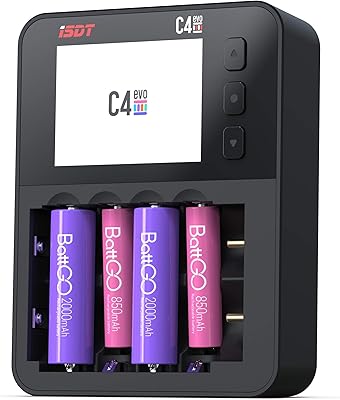
ISDT C4 EVO Smart 18650 Battery Charger
83%
87%
Performance
91%
Charging Speed
89%
Compatibility with Battery Types
85%
Safety Features
73%
Noise Level
More
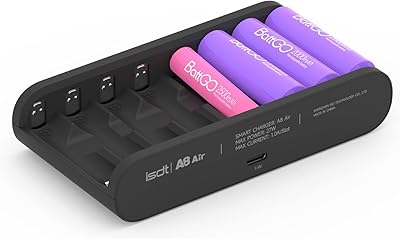
ISDT A8 Air 8-Slot Battery Charger
79%
91%
Build Quality
84%
Charging Speed
93%
Independent Channel Performance
62%
App Experience
88%
Battery Chemistry Compatibility
More
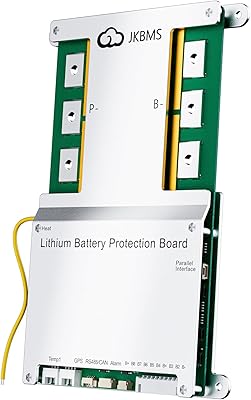
JKBMS JK-B2A8S30P-HC 300A Active Balance BMS
77%
88%
Active Balancing Performance
83%
Build Quality
86%
Bluetooth Connectivity
71%
App Usability
79%
Cold Weather Heating
More
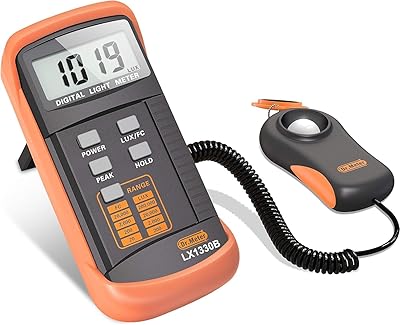
Dr.meter LX1330B Digital Lux Meter
82%
83%
Measurement Accuracy
91%
Ease of Use
67%
Build Quality
74%
Display Readability
92%
Measurement Range
More
Dr.meter 1332B Digital Light Meter
81%
91%
Ease of Use
78%
Measurement Accuracy
93%
Rotating Sensor
89%
Measuring Range
67%
Build Quality
More
Opus BT-C2400 Battery Charger Analyzer
77%
91%
Measurement Accuracy
88%
Internal Resistance Testing
93%
Channel Independence
54%
Charging Speed
83%
Refresh Mode Effectiveness
More
Roku Battery Camera Wireless Security Camera

78%
91%
Ease of Setup
84%
Video Quality
78%
Night Vision & Spotlight
72%
Battery Life
88%
Weather Resistance
More
Extech LT300 Light Meter
75%
88%
Measurement Accuracy
91%
Sensor Design
86%
Display Readability
83%
Build Quality
74%
Ease of Use
More
URCERI SMT912 Digital Lux Light Meter
77%
82%
Measurement Accuracy
91%
Value for Money
88%
Display & Readability
67%
Build Quality
93%
Ease of Use
More

FAQ

It works with virtually any LiPo pack through the standard balance port — no proprietary hardware needed. The BattGO smart features are only available when connecting ISDT-compatible smart packs via the XT60i port, but that is entirely optional and does not affect basic voltage checking or balancing for everyone else.

Realistically, no. The BG-8S uses passive balancing, which works by slowly draining the higher cells down to match the lowest one. On a 6S or 8S pack with noticeable cell drift, that process can take quite a long time. It is best used for bringing packs to storage voltage overnight, not for quick turnaround balancing at the field between flights.

Yes, NiMH and NiCd chemistries are both supported in addition to the lithium-based pack types. You can switch between chemistry modes on the device, so it genuinely handles mixed battery fleets without needing a separate checker.

It reads the BEC output voltage and decodes the signal protocol — identifying whether the system is running PWM, PPM, or S.BUS. This is more useful for verifying that your receiver and ESC are communicating correctly and that BEC voltage is within spec, rather than diagnosing individual servo faults. Think of it as a sanity-check tool, not a full-blown oscilloscope.

Yes, the USB output supports Qualcomm QC 2.0 and 3.0 as well as Apple BC1.2 devices, with a maximum of 12V at 2A. It is a convenient option when your phone battery runs low during a long field session, but the output is dependent on having a charged pack connected, so it is more of a backup solution than a dedicated charger.

The display is not backlit, which is a practical limitation in low-light or overcast conditions. In dim environments you may need to angle the device toward available light to read cell voltages clearly. It is worth knowing before you buy if early-morning or evening sessions are part of your routine.

It works fully standalone out of the box for all core functions — plug in a battery and you get your readings immediately. Firmware updates do require connecting to a PC, but that is only necessary when ISDT releases new updates, which is not a day-to-day requirement.

BattGO is ISDT's smart battery communication protocol that allows supported packs to share detailed data — cycle counts, internal parameters, usage history — with compatible devices like this tester. If you do not own ISDT BattGO-compatible smart packs, the feature has no effect on your experience at all. Most buyers will use the standard balance port exclusively and never interact with BattGO.

No — the balance port starts at 2S, so single-cell packs are not supported for balancing or per-cell monitoring. If you primarily fly 1S micro quads, this pocket-sized tester is not the right tool for those specific batteries.

There is no dedicated audible low-voltage alarm on this device. It is designed for active monitoring rather than passive background alerting, so you need to be looking at the display to catch a low-cell reading. Pilots who want a buzzer alarm for pre-flight checks may want to supplement it with a separate low-voltage buzzer on their packs.

Where to Buy

USA.Banggood
In stock $36.99
Banggood.com
In stock $36.99
Team BlackSheep
In stock $39.90
Buddy RC
In stock $39.90
HeliDirect
In stock $39.99
Direct RC
In stock $39.99
TikTok Shop
In stock $39.99