Overview

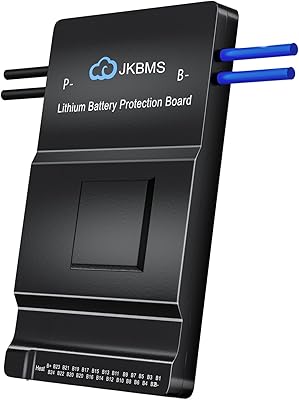
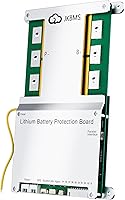
The JKBMS JK-B2A8S30P-HC 300A Active Balance BMS sits in a practical middle ground for DIY builders who need serious protection and cell management without stepping into industrial-grade complexity. It handles 4S through 8S configurations, making it compatible with both 12V and 24V lithium packs. The headline numbers are a 300A continuous current rating and a 2A active balancing current — both meaningful specs for anyone building a capable house bank or solar storage system. A built-in Bluetooth module lets you monitor and tweak settings from a phone, and the board also carries a built-in heating circuit for cold-weather charging scenarios. CAN and RS485 ports round out the connectivity story for those integrating with inverters or charge controllers.
Features & Benefits

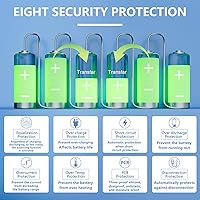
What separates this active balance BMS from cheaper passive boards is straightforward: instead of burning off excess cell energy as heat to force balance, it physically moves that charge from stronger cells to weaker ones at up to 2A. Over time, that matters a lot for pack longevity. The protection suite is thorough — over-voltage, under-voltage, overcurrent, short circuit, and thermal limits are all covered. The heating function deserves a practical note: it conditions cells before charging kicks in when temperatures drop below freezing, which prevents lithium plating damage. The JK BMS app pairs quickly over Bluetooth and gives you live cell voltages, state of charge, and adjustable thresholds. At roughly 6.9 by 5 inches, the PCB footprint stays manageable inside most DIY enclosures.

Best For

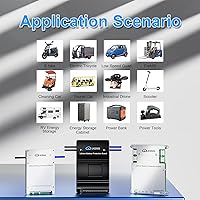
This JK balancing board is squarely aimed at hands-on builders, not plug-and-play consumers. It makes the most sense for anyone assembling a LiFePO4 house bank for an RV or off-grid setup, particularly where the pack will see heavy daily cycling. Solar storage systems that need to talk to an inverter via CAN or RS485 are another strong fit — the communication ports make integration with popular inverter brands straightforward once you know what you are doing. If you live somewhere that gets cold winters, the heating function is genuinely useful rather than a checkbox spec. That said, buyers should be comfortable working through a Bluetooth app-based configuration process, as this board rewards patience and familiarity with battery management basics.

User Feedback

With around 139 ratings averaging 4.2 stars, the JK smart BMS board earns its score without being flawless. RV and solar builders consistently praise the Bluetooth reliability and the app's real-time data readouts, and several reviewers note that build quality feels solid relative to the price point. The friction tends to show up in two places: the initial app configuration has a learning curve that frustrates less technical users, and the printed documentation leaves gaps that push buyers toward online forums. A handful of reviews mention unit variance, where one board behaves differently from another — worth knowing before purchase. Customer support responses are reported as generally helpful, though turnaround times vary. Overall, satisfied buyers clearly outnumber the disappointed ones.

Pros

  • Active 2A balancing keeps cells matched over time, meaningfully extending overall pack lifespan compared to passive designs.
  • The 300A continuous rating handles demanding loads without needing an external current shunt or relay workaround.
  • Built-in heating circuit allows safe cold-weather charging, a feature most competing boards at this price tier skip entirely.
  • Bluetooth connectivity is reliable and the JK BMS app gives genuinely useful live data including per-cell voltages and SOC.
  • CAN and RS485 ports make inverter integration practical for solar and off-grid setups without extra hardware hacks.
  • Compatible with LiFePO4, Li-ion, and LTO chemistries, so the board is reusable across different future pack builds.
  • Protection coverage is thorough: over-voltage, under-voltage, overcurrent, short circuit, and temperature are all actively monitored.
  • At roughly 6.9 by 5 inches, the PCB fits inside standard DIY enclosures without requiring custom mounting solutions.
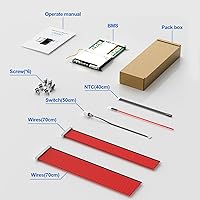
  • The package includes wires, an NTC sensor, a CAN cable, and a heating cable, reducing the number of separate purchases needed.
  • A 1-year support window gives buyers a reasonable fallback if problems surface after installation.

Cons

  • The printed manual leaves significant gaps, pushing users toward third-party forums to finish configuration.
  • App setup has a noticeable learning curve that catches less technical builders off guard during first install.
  • The RS485 converter is not included in the box, creating an extra purchase for anyone needing that communication interface.
  • A handful of user reports mention unit-to-unit variance in behavior, suggesting some inconsistency in quality control.
  • No passive fallback mode means a firmware or app issue could interrupt battery access until resolved.
  • The heating function only conditions cells for charging; it does not warm the pack during discharge in cold conditions.
  • Customer support response times appear inconsistent, with some users reporting slow turnaround despite the 1-year support promise.
  • At this price point, buyers on a tight budget may find the cost hard to justify for smaller or simpler pack builds.

Ratings

The JKBMS JK-B2A8S30P-HC 300A Active Balance BMS earns a generally strong reception across verified buyer reviews worldwide, with our AI scoring system filtering out incentivized and bot-generated feedback to reflect authentic user experiences. This active balance BMS board draws praise from RV builders and solar integrators while surfacing honest friction points around documentation and initial setup. Both the highs and the frustrations are represented transparently below.
Active Balancing Performance
88%
Buyers upgrading from passive boards consistently report noticeably better long-term cell matching after several weeks of cycling. In solar setups running daily charge and discharge cycles, users found their weakest cells drifting far less over time, which translated to sustained pack capacity that passive boards simply could not maintain.
The 2A balancing current means the board works best when cells have been reasonably matched before assembly. Users who started with badly mismatched cells reported that balancing took longer than expected to normalize the pack, and a few noted it never fully corrected severe pre-existing imbalances.
Build Quality
83%
Most buyers describe the PCB as solidly constructed with clean solder joints and no obvious corner-cutting in the component layout. For a board in this price tier, reviewers frequently noted it felt closer to professional-grade hardware than the budget alternatives they had previously used.
A recurring minority of reviews flag unit-to-unit variance, where some boards behaved differently from others in the same batch. A small number of buyers reported components that appeared inconsistently placed or protective coatings that were unevenly applied, suggesting quality control is not perfectly consistent.
Bluetooth Connectivity
86%
The Bluetooth pairing process is quick and the connection holds reliably during active monitoring sessions, which matters when you are checking cell voltages while the pack is under load inside an RV or solar shed. Android and iOS users both report stable connections without frequent drops during normal use.
Bluetooth range is limited to typical short-range distances, so monitoring from more than about 10 meters away becomes unreliable. Users who wanted to check pack status from a distance without a separate gateway device found this constraint frustrating, especially in larger installations.
App Usability
71%
29%
Once configured, the JK BMS app delivers genuinely useful real-time data including per-cell voltages, state of charge, and temperature readings that experienced builders use to fine-tune their systems. Users who invested time learning the interface appreciated how much control it gave them over protection thresholds compared to fixed-parameter boards.
The initial setup experience is the most common complaint across reviews. New users routinely report confusion around parameter naming, threshold settings, and navigating menus that were clearly designed with experienced BMS users in mind. Without supplementary video guides, getting the first configuration right takes considerably longer than it should.
Cold Weather Heating
79%
21%
Builders in northern climates who deal with sub-zero overnight temperatures found the heating circuit genuinely effective at enabling safe morning charges without manual intervention. The function works as described, conditioning cells before charge acceptance kicks in, which is a meaningful safety feature for year-round outdoor installations.
The heater addresses charging in cold conditions specifically and does not warm the pack during discharge, which some cold-climate users had hoped for. A few reviewers also noted the heating cable connection point in the package is short and required careful routing inside compact enclosures.
Protection Coverage
87%
The protection suite covers the scenarios that matter most in real installations: over-voltage during charging, deep discharge cutoff, overcurrent during heavy loads, short circuit response, and both over and under temperature thresholds. Reviewers running high-draw loads on RV house banks noted the overcurrent protection responded quickly without nuisance tripping.
Default protection thresholds are not always optimally set for every chemistry out of the box, and users who did not adjust them through the app sometimes experienced unexpected cutoffs. This is manageable for experienced builders but adds another configuration step that catches beginners off guard.
CAN Bus Integration
81%
19%
Solar integrators connecting to Growatt, Deye, and similar inverters reported that the CAN communication worked correctly once the appropriate protocol was selected in the app. For setups that need the inverter to read SOC directly from the BMS rather than estimating it independently, this feature works reliably when properly configured.
CAN compatibility depends heavily on the specific inverter model and firmware version, and the documentation does not provide a clear compatibility list. Several users had to rely on community forum knowledge to identify the correct CAN protocol settings for their particular inverter brand.
Documentation Quality
52%
48%
The physical package does include a printed user manual, and the parameter naming in the app is generally consistent with what the manual describes. For users who have worked with BMS boards before, the manual provides enough baseline reference to get started.
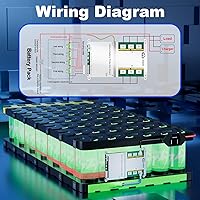
This is one of the weakest points buyers flag. The manual is thin, lacks wiring diagrams for common use cases, and does not explain parameter interactions clearly. A significant portion of buyers rely entirely on third-party YouTube guides and online forums to complete installation, which should not be necessary at this price point.
Value for Money
78%
22%
For a board that combines active balancing, built-in heating, Bluetooth monitoring, and CAN plus RS485 communication in a single unit, the price sits at a reasonable level compared to sourcing those capabilities separately. Experienced builders frequently note it would cost considerably more to replicate this feature set with individual components.
Budget-focused buyers who only need basic protection without active balancing or communication ports may find the price hard to justify for their simpler use cases. The missing RS485 converter also adds a hidden cost that is easy to overlook when comparing against competing boards that bundle it.
Package Completeness
74%
26%
The package covers most of what a builder needs to get started: the board itself, a wire harness, an NTC sensor, a CAN cable, a heating cable, and mounting screws are all present. Having those accessories pre-bundled saves time sourcing individually and reduces installation friction for straightforward builds.
The absence of an RS485 converter is a genuine gap for users who plan to use that interface. The included user manual is also widely considered inadequate, and the wire harness lengths, while workable for standard enclosures, constrain placement options in larger or more complex battery boxes.
Setup & Installation
67%
33%
Builders with prior BMS experience typically complete physical installation without major issues, and the included accessories reduce the number of extra parts needed. The Bluetooth app-based configuration approach means no laptop or USB connection is required during setup, which is a practical convenience.
For first-time BMS users, the setup process is genuinely difficult. Between the thin documentation, the app learning curve, and the parameter customization required for different chemistries, many reviewers estimate spending two to four hours on initial configuration. This is not a board you hand to someone without hands-on electrical experience.
After-Sales Support
66%
34%
Several buyers report receiving helpful responses from JKBMS support when they reached out through the order page, and the 1-year support window gives buyers a reasonable fallback if problems emerge post-installation. The brand appears to monitor feedback and engage with customer issues.
Response times are inconsistent, with some users waiting several days for replies during what appears to be peak inquiry periods. The support channel being tied to the purchase platform rather than a direct email or chat system also creates friction for buyers who need quick technical guidance during installation.
Thermal Management
76%
24%
The onboard temperature monitoring works in both directions, cutting off charging when cells get too hot and enabling the heating circuit when they are too cold. Users in climates with wide seasonal temperature swings found this dual-direction thermal protection genuinely reassuring for unattended solar installations.
The temperature sensor included in the package is a single NTC probe, which gives one measurement point for the entire pack. In larger packs with multiple cell groups, a single sensor may not accurately represent the thermal state of cells further from the probe placement point.
Compatibility Range
84%
Supporting LiFePO4, Li-ion, and LTO chemistries with configurable voltage thresholds makes this JK balancing board genuinely reusable across different future builds. Builders who regularly experiment with different cell types appreciated not having to source a different board for each chemistry.
The 4S to 8S range, while covering most common 12V and 24V DIY applications, excludes builders working on higher-voltage systems like 48V packs that require 16S configurations. Buyers with those requirements need a different model in the JK lineup.

Suitable for:

The JKBMS JK-B2A8S30P-HC 300A Active Balance BMS is built for DIY energy storage builders who know their way around a lithium pack and want a board that does more than just cut power when something goes wrong. It is a strong match for anyone assembling a 12V or 24V LiFePO4 house bank for an RV, a off-grid cabin, or a solar storage system where cells will be cycled hard day after day. The 2A active balancing is particularly valuable in these high-cycle applications because it keeps cells matched over hundreds of charge cycles rather than letting weaker cells drag down the whole pack. Builders in cold climates get a real practical benefit from the built-in heating circuit, which conditions cells before charging begins in freezing temperatures — a detail that passive boards simply cannot offer. If your setup involves a modern inverter or solar charge controller that speaks CAN or RS485, this board slots in cleanly once the wiring is sorted. Semi-professional integrators building battery modules for clients will also appreciate the Bluetooth app visibility and the breadth of configurable protection thresholds.
Not suitable for:

The JKBMS JK-B2A8S30P-HC 300A Active Balance BMS is not the right tool for buyers who want a simple, no-configuration drop-in solution. If you are new to lithium battery systems and uncomfortable reading cell voltage curves, interpreting state-of-charge data, or working through an app-based setup without hand-holding documentation, this board will frustrate you before it helps you. It is also not a great fit for low-current hobby projects or small packs where the 300A rating and active balancing hardware represent overkill and unnecessary cost. Buyers who need RS485 communication should note that the required converter is not included in the box, which adds an extra purchase and setup step that some will find annoying. Anyone expecting plug-and-play simplicity or near-perfect out-of-box documentation should look elsewhere, as the learning curve is real and the printed manual does not close all the gaps.
Specifications

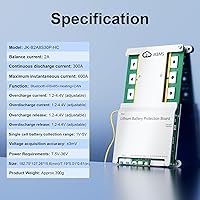
  • Model Number: The board carries the official model designation JK-B2A8S30P-HC, which identifies the specific variant with built-in heating and active balancing.
  • Cell Configuration: Supports series cell strings from 4S to 8S, covering nominal pack voltages of 12V through 24V.
  • Continuous Current: Rated for 300A of continuous charge and discharge current, suitable for high-demand RV and solar storage applications.
  • Balancing Current: Active balancer operates at up to 2A, redistributing energy between cells rather than dissipating it as waste heat.
  • Compatible Chemistries: Works with LiFePO4, Li-ion, and LTO lithium battery chemistries, allowing reuse across different pack builds.
  • Communication Ports: Equipped with CAN bus and RS485 interfaces for integration with compatible inverters, solar charge controllers, and energy management systems.
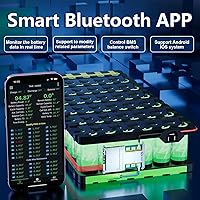
  • Wireless Connectivity: Built-in Bluetooth module pairs with the JK BMS app on Android and iOS devices for live monitoring and threshold configuration.
  • Heating Circuit: Integrated heating element activates before charging begins in sub-zero conditions to prevent lithium plating damage to cells.
  • Protection Features: Onboard protection covers over-voltage, under-voltage, overcurrent, short circuit, and both over-temperature and under-temperature conditions.
  • Dimensions: The PCB measures 6.87 x 5.01 x 0.69 inches, keeping the footprint compact enough for most DIY battery enclosures.
  • Weight: Complete board assembly weighs 13.6 ounces, which is manageable for permanent mounting inside a battery box.
  • Smartphone App: The JK BMS app is available for both Android and iOS and provides real-time cell voltages, state of charge, and adjustable protection thresholds.
  • Package Contents: Box includes the BMS board, a 70cm wire harness, a 50cm switch, a 40cm NTC temperature sensor, a 25cm CAN cable, a 16cm heating cable, six screws, and a user manual.
  • RS485 Converter: An RS485 to USB or RS485 to TTL converter is not included in the package and must be sourced separately if RS485 communication is required.
  • Warranty: JKBMS provides one year of after-sales support, accessible through the order page on the purchasing platform.
  • Manufacturer: Designed and manufactured by JKBMS, a brand focused on smart battery management solutions for DIY and semi-professional energy storage.
  • Release Date: This specific variant was first made available for purchase in September 2024, making it a relatively current revision of the JK BMS platform.

Related Reviews

JKBMS JK-B2A24S15P 150A Smart BMS
76%
88%
Active Balancing Performance
84%
Mobile App Experience
76%
RS485 Integration
86%
Protection Reliability
41%
Documentation & Setup Guidance
More
BeautyBio The Balance pH Balancing Facial Gel Cleanser 8oz
88%
88%
Skin Compatibility for Sensitive Skin
85%
Hydration Effectiveness
90%
Gentle Cleansing Performance
94%
Fragrance Sensitivity
87%
Texture & Feel
More
iS CLINICAL Active Peel System
85%
88%
Effectiveness in Reducing Acne
91%
Gentle Exfoliation for Sensitive Skin
86%
Improvement in Skin Texture
85%
Ease of Use and Application
82%
Reduction in Pore Size
More
Epionce Balancing Toner 118mL
87%
94%
Effectiveness for Sensitive Skin
90%
Hydration and Moisture Retention
92%
Gentleness and Non-Irritation
85%
Cleansing Power (Dirt/Oil Removal)
88%
Packaging and Dispensing
More
Torriden BALANCEFUL Cream 80ml
87%
88%
Hydration Effectiveness
91%
Soothing for Sensitive Skin
89%
Non-Comedogenic Performance
85%
Absorption Speed
92%
Skin Compatibility for Oily Skin
More
INCELLDERM Active Clean-Up Powder 90g
87%
88%
Effectiveness in Exfoliation
92%
Gentle on Sensitive Skin
91%
Ease of Use (Powder-to-Foam)
84%
Skin Softness & Smoothness
80%
Long-Term Skin Benefits
More
Amazfit Active 42mm Smartwatch
72%
91%
Battery Life
83%
GPS Accuracy
78%
Display Quality
76%
Fitness Tracking
71%
Sleep Tracking
More
BESTISAN SR16 Bookshelf Speakers
78%
74%
Sound Quality
81%
Build Quality
92%
Ease of Setup
88%
LED Input Indicator
71%
Bluetooth Performance
More
iS CLINICAL Active Serum 2.72oz
84%
88%
Effectiveness in Acne Treatment
85%
Anti-Aging Results
92%
Gentleness on Sensitive Skin
90%
Skin Texture Improvement
87%
Skin Tone Evenness
More
AIYIMA A70
AIYIMA A70
82%
88%
Sound Quality
86%
PFFB Implementation
82%
Build Quality
91%
XLR Balanced Input
83%
Subwoofer Output & 2.1 Integration
More

FAQ

Yes, it supports 4S through 8S cell configurations, which covers both 12V and 24V nominal pack voltages. Just make sure the number of cells in your series string falls within that range and you are good to go.

Passive balancing burns off excess energy from stronger cells as heat to bring them down to the level of weaker ones. Active balancing actually moves that energy from stronger cells into weaker ones, so nothing is wasted. Over hundreds of charge cycles, this keeps cells much more closely matched and helps the whole pack hold its capacity longer.

Not exactly. The heating circuit is designed specifically to warm the cells enough to accept a charge safely when ambient temperatures drop below freezing. It is not a space heater and will not dramatically warm a large enclosure. Its job is to prevent lithium plating damage during cold-weather charging, which it does well.

No, it is not. The package includes a CAN cable but the RS485 converter has to be purchased separately. If you plan to use RS485 for inverter communication, budget for that extra component before you order.

The JKBMS JK-B2A8S30P-HC 300A Active Balance BMS supports standard CAN communication protocols used by several popular inverter brands including Growatt, Deye, and SMA in certain configurations. That said, compatibility depends on the specific inverter model and firmware version, so it is worth confirming your inverter supports JK BMS CAN protocol before committing.
Honest answer: it takes patience. The JK BMS app is functional and gives you a lot of useful data, but the initial configuration is not self-explanatory. The printed manual leaves some gaps, so plan to spend time with online community resources like YouTube walkthroughs or the JK BMS user forums to get everything dialed in properly.

Yes, LiFePO4 is one of the primary supported chemistries. As long as your existing cells form a 4S to 8S series string, this JK balancing board will work with them. You will just need to configure the voltage thresholds in the app to match LiFePO4 charge and discharge curves.

The 300A figure is the continuous rating, not a brief peak allowance. That said, sustained high-current operation generates heat, and proper busbar sizing and enclosure ventilation on your end still matter for long-term reliability.

The board itself only has Bluetooth built in, so direct monitoring range is limited to typical Bluetooth distances. Some users bridge this gap by pairing the board with a Bluetooth-to-Wi-Fi gateway device, but that is not an included feature and requires a separate solution.

Yes, the protection circuits will disconnect the load or charger depending on the fault type. Over-voltage during charging, over-temperature, and short circuit conditions will all trigger a disconnect. Once the fault condition clears, the BMS can be reset either through the app or the physical switch included in the package.