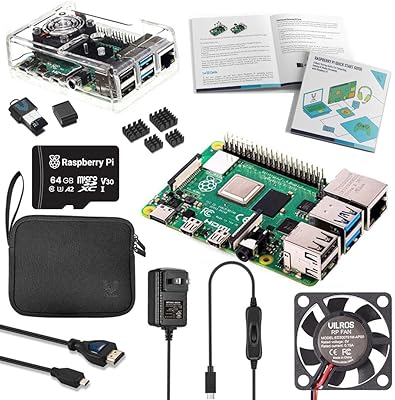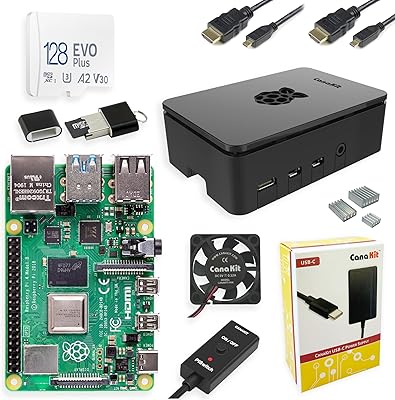
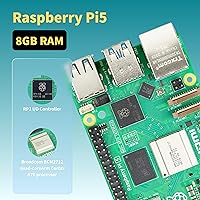
Overview

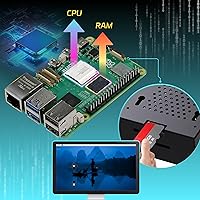
The iRasptek Pi 5 8GB/128GB Starter Kit enters a crowded field of single-board computer bundles with a clear proposition: everything you need, configured and ready to run. Unlike kits that ship bare boards with a handful of loose accessories, this one arrives with 128GB of pre-loaded storage and the OS already installed — a meaningful time-saver for anyone who has spent an afternoon chasing microSD imaging errors. The aluminum alloy case immediately sets it apart from plastic-housed competitors, giving it a noticeably more substantial feel. With generous RAM on a Cortex-A76 quad-core processor, it sits comfortably in the upper tier for hobbyists, developers, and educators. The bundled 27W USB-C power supply rounds things out properly.

Features & Benefits

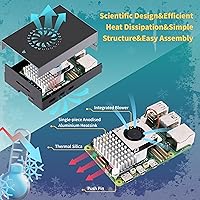
The pre-loaded Raspberry Pi OS is the feature buyers appreciate most on first boot — there is no flashing drives or partitioning to deal with. The aluminum case does double duty: it protects the board physically and assists with passive cooling between the active cooler's duty cycles. That active cooler pairs a PWM fan with an anodized aluminum heatsink, keeping the processor from throttling under sustained workloads like compiling code or running a lightweight container stack. The included power supply uses a heavy-gauge copper cable and delivers enough wattage to drive external USB storage comfortably, something cheaper bundles often shortchange. Cortex-A76 quad-core performance at this clock speed handles 4K video output and edge AI inference capably, though it is not a replacement for a full desktop machine.

Best For

This ready-to-run Raspberry Pi kit makes the most sense for people who want a functioning Linux machine in minutes, not hours. Developers building or testing lightweight applications will appreciate the generous RAM headroom without needing to source and configure components separately. It is also a natural fit for classroom or workshop settings where standing up multiple systems quickly matters. Home lab users running Pi-hole, Home Assistant, or a small media server will find the performance adequate and the thermal solution reassuring for always-on use. Makers planning GPIO-based projects benefit from having a stable, pre-configured base to build from. That said, if you already own peripherals and prefer hand-picking parts, the bundle math may not work in your favor.

User Feedback

Across several hundred verified ratings, the iRasptek bundle holds a strong 4.7-star average, and the recurring themes in positive reviews are consistent. Buyers highlight out-of-the-box usability and the quality of the metal enclosure, with several noting it feels more like a finished product than a typical DIY kit. Thermal performance under continuous load also draws steady praise, with most users reporting stable operation during extended sessions. On the critical side, a handful of buyers question whether the bundle price fully justifies the convenience over sourcing parts separately — a fair point for anyone with an existing parts collection. A few users mention the power supply performs reliably but wished the cable ran a bit longer for flexible desk setups.

Pros

  • Pre-loaded OS means the system boots to a working desktop with zero configuration required.
  • The aluminum alloy enclosure feels genuinely solid and protects the board far better than typical plastic shells.
  • Active cooling with a PWM fan keeps the processor running at full speed even during sustained workloads.
  • The included 27W USB-C power supply delivers enough headroom to power external USB drives without a separate hub.
  • 8GB of LPDDR4X RAM handles multitasking comfortably — browser, terminal, and background services running together without complaint.
  • Wireless connectivity covers modern Wi-Fi standards, so there is no need for a separate USB dongle in most setups.
  • 4K output works well for media playback and general desktop use on a compatible display.
  • The screw-fixed case design keeps everything secure and makes it easy to open if you need GPIO access later.
  • At this configuration tier, it covers most home lab and light development use cases without needing upgrades.
  • The compact footprint and low weight make it easy to mount, hide behind a monitor, or move between locations.

Cons

  • Buyers who already own Pi accessories will pay a convenience premium for components they do not need.
  • The power supply cable length may be restrictive depending on where your nearest outlet sits relative to your desk.
  • Performance ceiling is real — do not expect it to handle heavy compiling, large Docker stacks, or GPU-accelerated tasks.
  • The pre-installed OS is a single fixed choice; users wanting a different distribution need to reflash and lose the pre-load benefit.
  • No display, keyboard, or mouse is included, so new users still need to source peripherals separately before getting started.
  • Bundle pricing can be undercut by patient buyers who shop component sales individually over time.
  • The fan, while effective, does produce audible noise under load — it is not whisper-quiet in a silent room.
  • There is limited official documentation specific to this kit, so troubleshooting relies on broader Raspberry Pi community resources.

Ratings

The scores below reflect AI-synthesized analysis of verified global buyer reviews for the iRasptek Pi 5 8GB/128GB Starter Kit, with spam, incentivized submissions, and bot-pattern feedback actively filtered out before scoring. Each category is rated independently based on what real users consistently praised or struggled with — nothing is glossed over. Strengths and friction points are weighted equally so you can make a genuinely informed decision.

Ease of Setup
91%
The pre-loaded OS is the single most praised aspect of this Pi 5 starter kit across hundreds of verified reviews. Users consistently report going from unboxing to a working desktop in under ten minutes, with no card flashing, no partitioning, and no driver hunting required — a meaningful contrast to assembling a Pi from scratch.
A small number of buyers noted that a routine OS update on first boot introduced minor configuration prompts they were not expecting, which briefly disrupted the truly hands-free experience. For complete newcomers unfamiliar with Linux update dialogs, this created a moment of friction that contradicted the plug-and-play promise.
Build Quality
88%
The aluminum alloy enclosure consistently draws praise from buyers who have handled plastic-cased competitor kits — people describe it as feeling like a finished product rather than a hobbyist accessory. The screw-fixed assembly keeps everything snug, and several users noted zero flex or rattle even after being moved around repeatedly between desk setups.
A few reviewers found the screw assembly slightly tedious when they needed to access the board for GPIO work, since the case is not designed for frequent opening. The overall construction is solid, but it does favor users who plan to set it and forget it rather than those who regularly swap accessories or HATs.
Thermal Performance
86%
Under sustained workloads — running a media server overnight, compiling code, or keeping a container stack alive for hours — the active cooler with its PWM fan and anodized heatsink keeps the processor well below throttling territory. Home lab users running Pi-hole or Home Assistant around the clock consistently report stable temperatures without manual fan tuning.
At full fan speed, the cooler is audible enough to be noticeable in a quiet room, which bothers some users who positioned the kit on a desk near their workstation. It is not loud by any objective measure, but buyers expecting near-silent operation in an always-on setup may find the fan noise mildly irritating during late-night sessions.
Value for Money
71%
29%
For buyers starting from zero — no existing case, no power supply, no storage card — the iRasptek bundle delivers reasonable overall value by consolidating five components into one purchase with no compatibility headaches. The aluminum case and capable power supply alone would cost a meaningful amount separately from quality third-party sources.
Experienced Pi builders who already own decent peripherals see the bundle pricing as a premium they are paying for convenience they do not need, and that criticism is fair. When component prices are compared individually during sales periods, the gap widens enough that the value proposition weakens noticeably for anyone with a parts drawer already stocked.
Power Supply Quality
83%
The 27W USB-C supply with its heavy-gauge copper cable is consistently called out as a genuine upgrade over the underpowered adapters bundled with cheaper kits. Users running external USB hard drives report stable operation without the low-voltage warning icon that plagues Pi setups powered by generic phone chargers.
Several buyers mentioned the cable length is the primary limitation — in some desk configurations it simply does not reach the outlet comfortably without awkward routing. No one questioned the power delivery reliability itself, but the cord length drew enough repeated comments to register as a consistent minor grievance.
Performance
82%
18%
The Cortex-A76 quad-core processor with ample LPDDR4X RAM handles the everyday workloads this kit is designed for — 4K video playback, light web browsing, running a couple of background services — without any stuttering or slowdown in normal use. Developers using it as a lightweight Linux desktop for writing, testing scripts, and SSH sessions find it responsive enough for daily work.
Buyers who pushed the system toward heavier tasks — large Docker stacks, intensive compilation, or running multiple virtual machines — hit the performance ceiling faster than expected and came away feeling the hardware undersells itself in the marketing. It is a capable single-board computer, not a budget PC replacement, and the distinction matters for managing expectations.
Cooling Fan Noise
67%
33%
Under light to moderate loads the PWM fan throttles down to a low speed that most users in normal environments simply do not notice, and the aluminum case itself contributes some passive heat absorption that reduces how aggressively the fan needs to spin during routine tasks. For media center or living room use with background audio, it is effectively inaudible.
The fan becomes clearly audible during extended heavy workloads, and because the kit is compact and often placed on a desk rather than hidden in a rack, the noise is more exposed than it would be in a tower chassis. A handful of reviewers specifically wished for a silent passive cooling option, even at the cost of some peak performance.
Wireless Connectivity
78%
22%
The 802.11ac dual-band Wi-Fi on the Pi 5 board performs well enough for streaming, downloading updates, and general network tasks without needing a USB dongle, which removes a common frustration from earlier Pi generations where onboard wireless was notoriously sluggish. Users in typical home environments report consistent, stable connections at reasonable distances from their router.
In denser wireless environments or larger homes with signal interference, the onboard antenna shows its limits compared to dedicated network adapters, and throughput can drop noticeably. Buyers running bandwidth-intensive applications like a Plex transcoding server are better served connecting via the Gigabit Ethernet port rather than relying on Wi-Fi.
GPIO Accessibility
58%
42%
The full 40-pin GPIO header on the Pi 5 is physically present and electrically accessible, which matters for makers who plan to eventually wire up sensors, displays, or relay boards once their base system is configured and stable. For projects where GPIO is a secondary concern rather than the primary use case, the enclosed form factor is not a real obstacle.
The aluminum case design prioritizes enclosure and protection over convenient GPIO access, meaning users who need regular physical access to the header will find themselves unscrewing the lid repeatedly — a genuine inconvenience during active prototyping. Buyers whose core workflow centers on breadboarding and HAT stacking would be better served by an open-frame or GPIO-forward case.
Pre-installed Software
84%
Raspberry Pi OS 64-bit is a well-maintained, regularly updated distribution that covers the vast majority of use cases this ready-to-run Raspberry Pi kit is designed for, and having it pre-installed and pre-configured saves the setup time that catches out many first-time Pi users. The desktop environment is clean, and common productivity tools are accessible within minutes of first boot.
The pre-installed OS is a single fixed choice, and users who specifically want Ubuntu, DietPi, or another distribution gain no benefit from the pre-loaded card — they will reflash it immediately and the convenience advantage evaporates. The software selection is excellent for the right user but provides zero flexibility for anyone with different OS preferences.
Package Contents
80%
20%
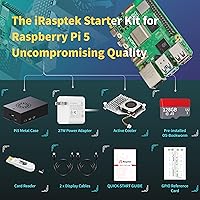
The kit includes every component needed to get the board running — case, cooler, power supply, and pre-loaded storage — which removes the multiple separate orders that typically accompany a Pi 5 build and ensures all parts are designed to work together without fitment surprises. Buyers new to the platform particularly appreciate not having to research compatibility across different brands.
Notably absent from the box are a display cable, keyboard, mouse, or any peripherals, which means genuinely new users still face additional purchases before they can interact with the desktop. The kit is complete in terms of the board ecosystem, but it is not complete in terms of everything needed to actually use it on day one for a first-time buyer.
Documentation
61%
39%
The broader Raspberry Pi community is one of the most active and well-documented ecosystems in single-board computing, so answers to nearly any setup or software question are readily available through official Pi Foundation resources and community forums. For experienced Linux users, the lack of kit-specific documentation is barely noticeable.
iRasptek provides limited kit-specific documentation beyond what ships in the box, which means buyers troubleshooting case assembly quirks or power supply edge cases are largely on their own. First-time Pi users who expected a dedicated setup guide tailored to this exact bundle found the experience more self-directed than anticipated.
Compact Form Factor
85%
The physical footprint of this Pi 5 starter kit is small enough to mount behind a monitor with a VESA adapter, tuck into a home entertainment unit, or deploy in space-constrained server closets without consuming meaningful real estate. The weight is low enough that adhesive mounting solutions hold reliably, which reviewers using it as a media center or thin client setup appreciated.
The compact size that makes it versatile for mounting also means it can feel cramped when multiple cables — power, HDMI, Ethernet, and USB peripherals — are all plugged in simultaneously, creating a small but noticeable cable management challenge around the board. This is an inherent Pi form factor trade-off rather than an iRasptek-specific design flaw.

Suitable for:

The iRasptek Pi 5 8GB/128GB Starter Kit is built for people who want to start using a Raspberry Pi 5 immediately, without spending an evening sourcing parts, flashing OS images, or troubleshooting power supply compatibility. It hits a sweet spot for developers who need a capable Linux environment on a compact board — the generous RAM means you can run a browser, a code editor, and a background service simultaneously without things grinding to a halt. Students and educators benefit most from the pre-configured setup, since a classroom full of these can be up and running in the time it would take to image a single SD card manually. Home lab enthusiasts running always-on services like network ad-blocking, home automation, or lightweight media serving will appreciate the active cooling solution, which keeps sustained workloads stable over long periods. Makers and hobbyists who plan to build on top of the platform also get a reliable foundation, since the aluminum case and robust power delivery mean the hardware side is already sorted before they write a single line of code.

Not suitable for:

The iRasptek Pi 5 8GB/128GB Starter Kit is a harder sell for experienced Pi builders who already own a good case, a reliable power supply, and know how to flash an OS in three minutes flat — for that group, the bundle premium buys convenience they do not need. It is also not the right choice for anyone expecting desktop-class computing performance; the Cortex-A76 processor handles light workloads and 4K video capably, but it will not replace a mid-range PC for heavy compilation jobs, gaming, or running demanding virtualization stacks. Buyers on a tight budget who are comfortable with DIY setup may find they can assemble equivalent components for less by shopping individually, especially during sales periods. Those who need a specific OS other than Raspberry Pi OS out of the box will face some reconfiguration, since the pre-loaded software is the official distribution and nothing else. Finally, users who need a longer power cable run or a specific enclosure form factor may find the included accessories do not fit their workspace setup.

Specifications

  • Processor: The board runs on an ARM Cortex-A76 quad-core processor clocked at 2.4GHz, which is the correct chip at the heart of the Raspberry Pi 5.
  • RAM: 8GB of LPDDR4X memory is installed, providing enough headroom for multitasking, running background services, and light development workloads simultaneously.
  • Storage: A 128GB microSD card comes pre-loaded with Raspberry Pi OS 64-bit, so the system is ready to boot without any additional setup.
  • Operating System: Raspberry Pi OS 64-bit is pre-installed and optimized for the Pi 5 hardware, covering desktop use, terminal work, and general Linux tasks out of the box.
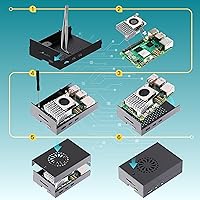
  • Case Material: The enclosure is machined from aluminum alloy, with a screw-fixed top cover and four-screw board mounting that adds both structural rigidity and passive thermal assistance.
  • Cooling System: An active cooler consisting of a PWM-controlled fan and an anodized aluminum heatsink manages processor thermals during sustained computational workloads.
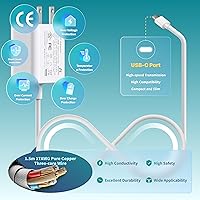
  • Power Supply: A 27W USB-C power supply is included, built around a UL2725 17AWG pure copper three-core cable rated to deliver stable current to the board and connected USB peripherals.
  • Wireless: The kit supports 802.11a/b/g/n/ac Wi-Fi across both 2.4GHz and 5GHz bands, along with Bluetooth as provided by the Raspberry Pi 5 board itself.
  • Display Output: The system supports a maximum resolution of 3840x2160 pixels, enabling 4K output over compatible display connections on the Pi 5 board.
  • Package Weight: The complete kit weighs 1.3 pounds as shipped, making it light enough to mount behind a monitor or integrate into compact installations.
  • Package Dimensions: The retail box measures approximately 6.06 x 5 x 3.82 inches, housing the board, case, cooler, and power supply in a single compact package.
  • CPU Core Count: The Cortex-A76 processor features four independent cores, enabling genuine parallel task execution across applications, services, and background processes.
  • Processor Brand: The processor is designed by ARM and manufactured under license as part of the official Raspberry Pi 5 silicon specification.
  • OS Compatibility: The system runs Linux natively; while the Pi 5 can technically run certain other experimental operating systems, Linux is the fully supported and pre-installed environment here.
  • Memory Type: The 8GB RAM uses LPDDR4X technology, which offers lower power consumption and higher bandwidth compared to earlier LPDDR4 implementations used on previous Pi generations.

Related Reviews
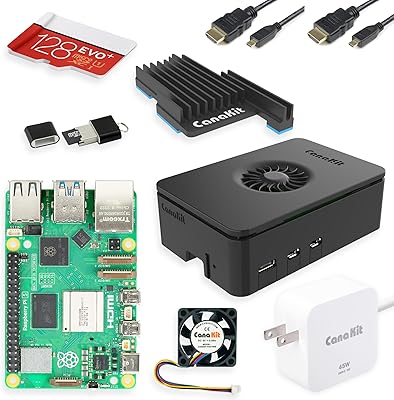
CanaKit Raspberry Pi 5 Starter Kit PRO (8GB RAM, 128GB)
87%
94%
Ease of Assembly
91%
Cooling Performance
93%
Processing Power & Speed
78%
Value for Money
96%
Multitasking Capability
More
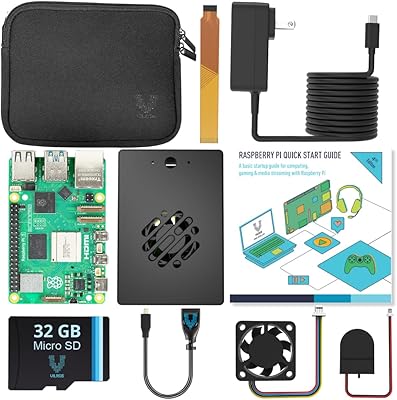
Vilros Raspberry Pi 5 8GB Starter Kit
80%
93%
Ease of Setup
89%
Thermal Performance
91%
Build Quality
67%
Value for Money
88%
Cooling System Design
More
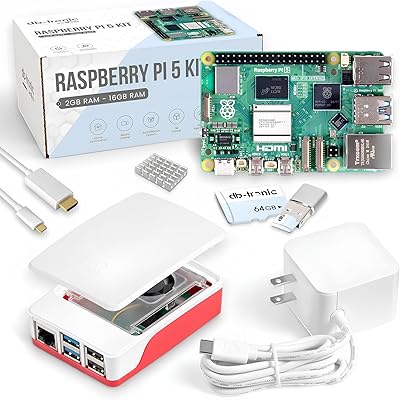
Raspberry Pi 5 8GB Starter Kit 64GB Edition
87%
88%
Performance
91%
Setup and Installation
83%
Cooling Efficiency
87%
Build Quality
92%
Value for Money
More
Vilros Raspberry Pi 5 4GB Starter Kit
82%
92%
Ease of Setup
89%
Cooling Performance
91%
Build Quality
84%
Value for Money
74%
RAM Adequacy
More
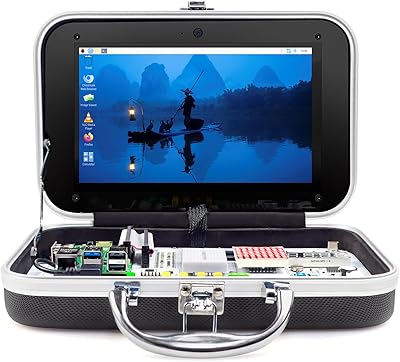
ELECROW CrowPi Pi 5 8GB Learning Kit
77%
88%
Build Quality
72%
Value for Money
79%
Out-of-Box Experience
81%
Lesson Content Quality
91%
Sensor Variety
More
Vilros Raspberry Pi 4 Starter Kit 8GB
82%
93%
Out-of-Box Readiness
88%
Value for Money
84%
Thermal Management
86%
Accessory Completeness
89%
Power Supply Quality
More
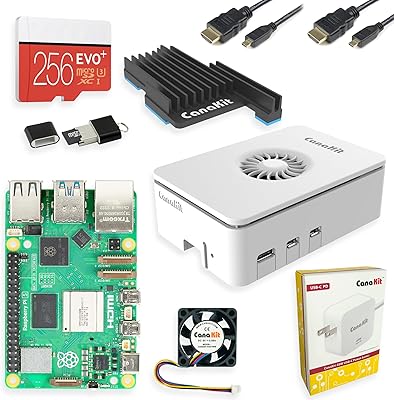
CanaKit Raspberry Pi 4 8GB Extreme Kit 128GB
84%
94%
Kit Completeness
91%
Thermal Management
93%
RAM & Multitasking Performance
71%
Storage — microSD Speed & Reliability
89%
Power Supply Quality
More
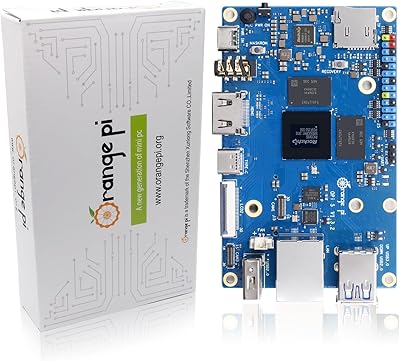
CanaKit Raspberry Pi 5 Starter Kit MAX 16GB 256GB
83%
93%
Bundle Completeness
78%
Value for Money
81%
Thermal Management
67%
Storage Performance
94%
Power Supply Quality
More
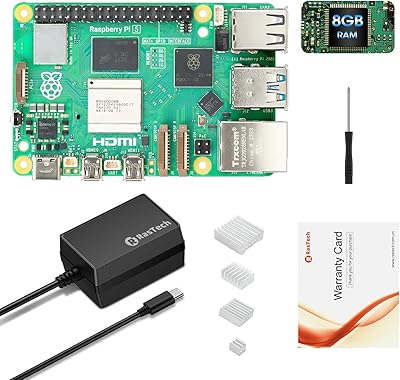
Orange Pi 5 8GB Single Board Computer
73%
91%
Raw CPU Performance
83%
AI & NPU Capability
88%
Storage & I/O Speed
47%
Connectivity & Wireless
62%
Thermal Management
More
RasTech Raspberry Pi 5 8GB Kit
84%
93%
CPU Performance
91%
Power Supply Compatibility
72%
Thermal Management
84%
Value for Money
88%
PCIe Expandability
More

FAQ

For most users, yes — you plug it in, connect a display and keyboard, and it boots straight to the Raspberry Pi OS desktop. The OS is pre-loaded on the included storage card, so there is no flashing or partitioning involved. You may want to run a software update shortly after first boot, but that is a one-command step, not a setup hurdle.

It depends on your situation. If you already own a Pi-compatible case, a reliable USB-C power supply, and know how to flash a card, you can probably build an equivalent setup for less. But if you are starting from scratch or want everything to arrive ready to run, the bundle saves real time and removes compatibility guesswork, which has genuine value for many buyers.

Yes, absolutely. The storage card is a standard microSD format, so you can reflash it with Ubuntu, DietPi, Kali, or any other Pi 5-compatible image using a card reader and a tool like Raspberry Pi Imager. You just lose the convenience of the pre-loaded setup when you do.

At idle or light loads, the PWM fan runs slowly and is barely noticeable in a quiet room. Under sustained heavy workloads — compiling code, running multiple containers — it spins up and becomes audible, though it is not disruptively loud. For a living room media setup where the TV is on, you would likely not notice it at all.

Both of those are well within what this ready-to-run Raspberry Pi kit handles comfortably. Home Assistant runs very efficiently, and a Plex server handling local media transcoding at moderate quality is also manageable. Just keep expectations calibrated — it is not a NAS replacement, but for a light single-user server it performs well.

The case is designed primarily as an enclosure rather than a GPIO-forward project chassis, so access to the full GPIO header is limited compared to an open-frame or HAT-compatible case. If GPIO access is central to your project from day one, it is worth checking the case design carefully before committing.

The 27W supply is more capable than the generic 15W adapters that often ship with cheaper kits, and the heavy-gauge copper cable helps maintain stable current delivery. Running one or two bus-powered USB drives is generally fine, but for multiple high-draw devices simultaneously, a powered USB hub is still a safer bet.

The Pi 5 board supports 802.11ac, which is the Wi-Fi 5 standard, so you can expect solid throughput on a modern 5GHz network for streaming, web browsing, and general network tasks. It is not the fastest wireless chip on the market, but for typical home lab or desktop use it performs well enough that most users do not bother with a wired Ethernet connection.

Not in any practical sense. While the listing mentions Windows compatibility in a spec table, that refers to software you might interact with from another computer — not Windows running natively on the Pi 5. The Raspberry Pi architecture does not support standard x86 Windows. Linux is the fully supported and pre-installed operating environment for this kit.

The active cooler on the iRasptek bundle is specifically designed for sustained operation, and buyer feedback consistently supports this. The combination of the PWM fan and aluminum heatsink keeps the processor from thermal throttling during continuous workloads, which makes it a reasonable choice for always-on use cases like home servers or automation hubs running around the clock.