
Overview
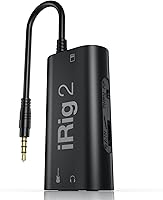
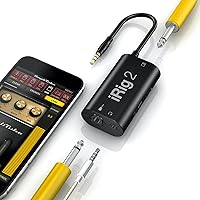
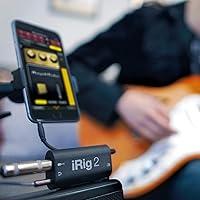
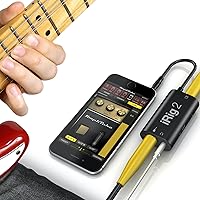
IK Multimedia iRig 2 provides a straightforward way for guitarists to enter the world of mobile recording. As a refined successor to the original analog interface, this compact adapter streamlines the connection between your instrument and your smartphone or tablet. It fits easily into any guitar case or gig bag, making it a reliable companion for musicians on the move. While it remains a simple piece of gear, it serves as a crucial bridge for anyone wanting to use apps like GarageBand or AmpliTube without a bulky setup. Keep in mind that users with modern Apple hardware will need a 3.5mm adapter, as this guitar interface relies on a traditional headphone jack connection. It stays true to its plug-and-play roots while offering much-needed hardware refinements.
Features & Benefits
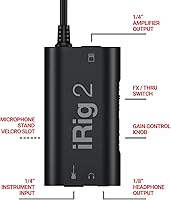
One of the most practical additions to this guitar interface is the integrated gain thumbwheel. This allows you to dial in the input level manually, preventing clipping before the signal even hits your software. It also features a dedicated 1/4-inch output specifically for an amplifier, which lets you use your mobile device as an effects processor in a live rig. The FX/Thru switch is equally handy, giving you the choice between sending a processed signal or a clean bypass to your monitor. Since the mobile link operates on passive analog circuitry, you never have to worry about batteries dying in the middle of a session. It pulls all necessary power directly from the host device, maintaining a low-profile and lightweight footprint.
Best For
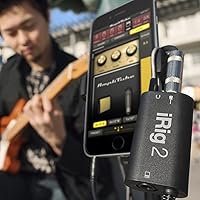
This compact adapter is a fantastic choice for guitarists and bassists who need a silent practice solution. If you find yourself in a hotel room or a late-night session, you can simply plug in your headphones and access a library of virtual amps. It also works well for keyboard players who want to record quick melodies into their tablets. Beginners will find the mobile link especially useful for exploring digital effects without investing in expensive hardware pedals. Because it is so small and requires no external power, it is ideal for traveling musicians sketching out song ideas during a commute or in a rehearsal space. It provides a low-cost, high-utility entry point for anyone curious about mobile music production and basic home recording.
User Feedback
Reliability and ease of use are common highlights in long-term reports, with many noting the sturdy plastic build holds up well to frequent travel. The addition of the physical gain control is frequently cited as a major step up from earlier models that relied solely on software sliders. However, because this is an analog connection, some players mention a noticeable noise floor when stacking high-gain virtual distortion pedals. While it might not replace a professional studio rack, the mobile link is highly regarded for its consistent performance in casual settings. Some users noted that the included Velcro strap is a surprisingly useful touch for securing the unit to a mic stand. It remains a balanced, affordable tool that trades some signal purity for immense convenience.
Pros
- The addition of a physical gain thumbwheel allows for quick input adjustments without diving into software menus.
- Its dedicated 1/4-inch output simplifies the process of connecting your mobile effects directly to a live amplifier.
- You never have to worry about finding a power outlet or replacing batteries during a session.
- The FX/Thru switch is a brilliant touch for toggling between a processed digital signal and a clean bypass.
- Its lightweight and compact frame makes the IK Multimedia iRig 2 incredibly easy to carry in any gig bag.
- The included Velcro strap is a small but thoughtful addition for mounting the unit to a microphone stand.
- It offers a very low-cost entry into the world of digital amp modeling and mobile recording.
- Compatibility with standard headset inputs ensures it works with a wide range of older laptops and tablets.
Cons
- As an analog interface, it is susceptible to electromagnetic interference and a higher noise floor than digital alternatives.
- The hardwired 1/8-inch connector is a potential fail point that cannot be replaced if the internal wiring frays.
- Users with USB-C or Lightning devices must manage additional adapters that aren't included in the box.
- The lightweight plastic housing can easily be dragged across a table by the weight of a heavy instrument cable.
- It lacks the ability to charge your phone or tablet while in use, limiting the length of your recording sessions.
- Feedback loops can occasionally occur when using high-output pickups and high-gain amp simulations simultaneously.
- The 1/8-inch output cable is relatively short, which can make positioning the device awkwardly close to your phone.
Ratings
To help you make an informed decision, our team analyzed thousands of global verified reviews for the IK Multimedia iRig 2, using advanced filtering to remove promotional fluff and bot activity. This scoring system provides a transparent look at real-world performance, highlighting where this guitar interface shines and where it might fall short in a professional studio setting.
Ease of Setup
Input Gain Control
Portability
Signal Purity
Live Rig Integration
Build Durability
Battery Efficiency
App Compatibility
Value for Money
Versatility
Suitable for:
The IK Multimedia iRig 2 is an excellent entry point for hobbyist guitarists and bassists who primarily want a friction-free way to practice silently or demo songs. It is particularly well-suited for traveling musicians who need to fit their entire rig into a jacket pocket for hotel room sessions. Beginners will appreciate how it turns an iPad into a versatile practice amp without requiring a massive upfront investment in hardware. Because it draws power directly from your phone, it is also ideal for capturing inspiration during a commute or in a rehearsal space.
Not suitable for:
Professional engineers or musicians seeking studio-grade audio quality should probably look elsewhere, as the IK Multimedia iRig 2 relies on an analog signal path that is prone to interference. Because it uses the headphone jack, users with the latest mobile devices will find the constant need for extra dongles frustrating and physically unstable. It is not the best choice for high-gain metal players who require absolute silence between notes, as the noise floor can become intrusive with heavy distortion. Furthermore, if you need to charge your device while recording for long periods, the lack of pass-through charging makes this a poor fit.
Specifications
- Input Connection: The unit features a single 1/4-inch (6.35mm) TS jack designed for guitar, bass, or other line-level instruments.
- Output Connection: An integrated 1/8-inch (3.5mm) TRRS cable connects the interface directly to the host device headphone jack.
- Amplifier Output: A dedicated 1/4-inch (6.35mm) output jack allows for simultaneous connection to an external guitar amplifier.
- Headphone Jack: The device includes a 1/8-inch (3.5mm) TRS output for private monitoring with standard headphones.
- Gain Control: A physical thumbwheel allows for manual adjustment of the input signal strength before it reaches the software.
- Signal Switch: A side-mounted toggle selects between a processed FX signal and a clean Thru bypass signal.
- Power Source: The interface is entirely passive and operates without the need for batteries or external power adapters.
- Weight: This lightweight mobile link weighs approximately 3.53 oz (100g).
- Dimensions: The main body of the adapter measures roughly 6.25 x 5.5 x 1.75 inches.
- Wiring Standard: The hardware is compliant with CTIA/AHJ wiring standards for broad compatibility with mobile headsets.
- Mounting Options: The package includes a Velcro strap designed for securing the interface to a microphone stand.
- Chassis Material: The exterior casing is constructed from durable, high-impact thermoplastic.
Related Reviews
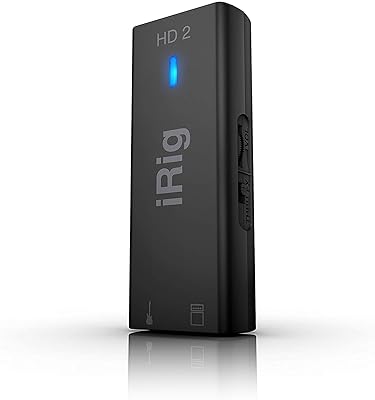
IK Multimedia iRig HD 2 Guitar Audio Interface
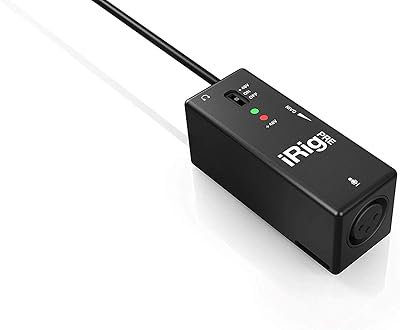
IK Multimedia iRig Pre Microphone Preamp
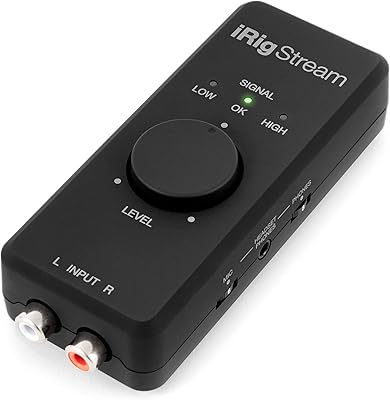
IK Multimedia iRig Stream
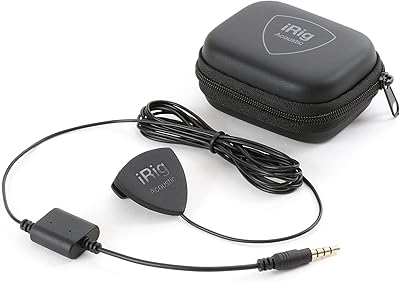
IK Multimedia iRig Acoustic Guitar Microphone Interface
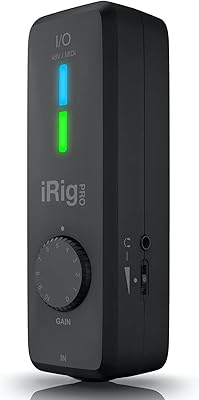
IK Multimedia iRig Pro I/O
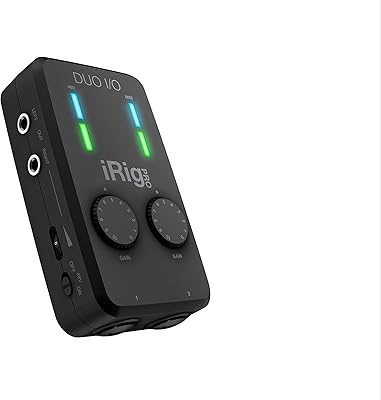
IK Multimedia iRig Pro Duo I/O
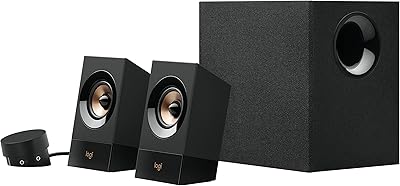
Logitech Z533
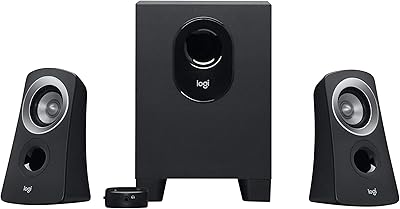
Logitech Z313 2.1 Speaker System
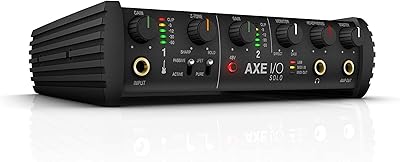
IK Multimedia AXE I/O Solo Audio Interface