Overview

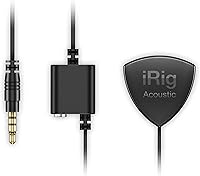
The IK Multimedia iRig Acoustic Guitar Microphone Interface arrived in 2015 as IK Multimedia's answer to a real guitarist problem: how do you capture a decent acoustic recording using nothing but the phone already in your pocket? The iRig Acoustic clips directly onto your guitar and connects straight to an iPhone or iPad — no extra hardware required. It sits at a price point that feels accessible without feeling disposable, and it ships with app support for AmpliTube Acoustic, GarageBand and Cubasis. It is a focused, purpose-built tool for mobile recording rather than a general-purpose audio solution.
Features & Benefits

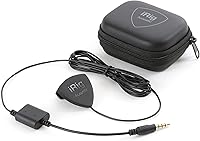
The clip-on design is where this mic earns its keep. It attaches to the soundhole or body of nearly any acoustic instrument and draws power from the connected device — no separate batteries needed. A 15 Hz to 20 kHz frequency response covers more ground than you might expect from something this small, catching the low-end warmth and brightness of an acoustic with reasonable accuracy. The integrated headphone output lets you monitor in real time, which is genuinely useful for live use. Worth noting: this model uses a Lightning connector, so owners of newer USB-C iPhones will need an adapter.

Best For

This clip-on guitar mic is best understood as a tool for musicians who prioritize speed and portability over pristine audio. Singer-songwriters who want to capture a chord progression before it slips away, buskers who need to monitor their sound through an in-ear setup, and travelers who refuse to pack a full interface rig will all find real value here. Beginners getting started in GarageBand or Cubasis will appreciate the plug-and-play setup — there is genuinely nothing complicated about it. Just know that if you are chasing polished, studio-quality results, this is the wrong tool for that job.

User Feedback

Across 251 ratings, IK Multimedia's mobile mic holds a 3.8 out of 5, which tells a fairly honest story. Buyers who use it for quick demos, traveling, or casual practice tend to walk away satisfied — they cite ease of use and surprisingly clean results given the compact size. The frustrations are worth noting: background hiss is a real complaint in quieter environments, and the clip does not fit every guitar body equally well. A handful of users also found the AmpliTube Acoustic app fairly limited without paying for additional content. Not a studio mic — but for on-the-go capture, it does the job.

Pros

  • Clips onto nearly any acoustic guitar and connects directly to an iPhone or iPad — zero setup friction.
  • No external power source needed; the iRig Acoustic draws power straight from the connected device.
  • Built-in headphone output enables real-time monitoring, a feature many competing clip-ons skip entirely.
  • Weighs just 3.2 oz and barely registers on the instrument during play.
  • Frequency response of 15 Hz to 20 kHz captures genuine tonal depth for a mic this compact.
  • Works across iOS, Android, and macOS, so it is not locked to a single device ecosystem.
  • Compatible with GarageBand and Cubasis out of the box — great for mobile DAW users.
  • A practical first microphone for beginners who want results without a steep learning curve.

Cons

  • Background hiss is a recurring complaint, particularly in quiet rooms or low-volume recordings.
  • The Lightning connector is outdated — USB-C iPhone owners will need a separate adapter.
  • Clip fit is inconsistent across guitar body styles; some instruments get a secure hold, others do not.
  • AmpliTube Acoustic app requires in-app purchases to unlock its more useful features.
  • Single-channel capture limits flexibility for anyone wanting to record guitar and vocals simultaneously.
  • Not well-suited for recordings that need professional polish without significant post-production work.
  • Room acoustics affect results noticeably — this clip-on mic is more sensitive to environment than a treated-room setup would be.
  • No carrying case or pouch included, making it easy to misplace between sessions.

Ratings

Our AI-generated scores for the IK Multimedia iRig Acoustic Guitar Microphone Interface are based on deep analysis of verified global buyer reviews, with spam, bot-generated, and incentivized feedback actively filtered out before scoring. Each category reflects both what real users genuinely praised and the pain points they could not overlook. The result is a transparent, balanced picture of where this clip-on mic earns its keep — and where it falls short.
Ease of Setup
93%
Nearly every reviewer who mentioned setup used some version of the phrase plug-and-play, and they meant it literally. There are no drivers, no configuration menus, and no learning curve — you clip it on, plug it into your iPhone or iPad, and your recording app sees it immediately. For beginners especially, this frictionless entry point is a genuine strength.
The one setup wrinkle that catches buyers off guard is Lightning connector compatibility. Owners of newer USB-C iPhones discover they need a separate adapter that is not included, which turns a one-step process into a two-step one and adds unexpected cost.
Portability
96%
At 3.2 oz and barely larger than a matchbox, this clip-on guitar mic disappears into a gig bag pocket or even a coat pocket without a second thought. Traveling musicians and buskers consistently called out the size as a genuine selling point — it is the kind of gear you actually bring with you because carrying it costs you nothing.
The compact form factor does mean the unit can be easy to misplace, and no carrying pouch or case is included in the box. A few users noted they lost the mic or damaged the connector simply because there was nowhere designated to store it safely between sessions.
Sound Quality
67%
33%
In a reasonably treated or quiet room, the iRig Acoustic delivers a surprisingly usable acoustic tone for its size. The wide frequency response captures low-end warmth and string brightness that you would not expect from a mic with this footprint, and several users were genuinely pleased with demo recordings made on an iPhone.
The noise floor is a recurring and legitimate complaint. Background hiss becomes noticeable in quieter passages or when recording in untreated spaces, and the mic is sensitive enough to pick up ambient room noise that a more directional setup would reject. This is not a studio mic, and the audio reflects that honestly.
Build Quality
71%
29%
The unit feels solid enough for regular mobile use — the plastic housing is reasonably sturdy and the clip mechanism has a satisfying tension to it. For a mic in this price range and size class, it does not feel cheap in the hand, and most users reported no hardware failures under normal use conditions.
Long-term durability is harder to assess, and some reviewers noted the connector junction feels like the most vulnerable point on the device. It is not the kind of build you would want to treat roughly on the road, and the cable strain relief is minimal at best.
Clip Fit & Stability
63%
37%
On standard dreadnought and concert-body acoustic guitars, the clip grips the soundhole rim firmly and stays put during normal playing. Most mainstream guitar owners found it secure enough for both stationary recording and light live use without any repositioning needed mid-session.
Players with classical guitars, acoustic-electrics with thinner body rims, or non-standard soundhole sizes reported inconsistent results. The clip can feel loose or sit at an angle on these instruments, which affects both sound capture and physical stability during playing.
Headphone Monitoring
88%
The built-in headphone output is one of the features that genuinely differentiates this mic from cheaper alternatives. Being able to plug earphones directly into the unit and hear your guitar in real time — without routing through an app or dealing with digital latency — is a practical advantage that buskers and practice-focused players specifically called out as useful.
The headphone output volume is device-dependent and a handful of users found it slightly lower than expected when using higher-impedance headphones. It is not a dealbreaker, but anyone accustomed to a dedicated headphone amp may find the output level underwhelming with certain earphones.
App Ecosystem
61%
39%
The compatibility with GarageBand is a strong practical pairing — it is free, well-designed, and most iPhone and iPad owners already have it installed. Cubasis integration also works well for users already in that ecosystem, and the basic tier of AmpliTube Acoustic adds some useful acoustic modeling on top of raw recording.
AmpliTube Acoustic's free tier is noticeably limited, and unlocking the more compelling amp models and effects requires in-app purchases that some buyers did not anticipate. A few reviewers felt the bundled app experience was more of a marketing funnel than a genuine value-add, particularly for users who just want to record clean audio.
Value for Money
74%
26%
For a guitarist who genuinely needs to record acoustic ideas on an iPhone with zero setup, the price-to-convenience ratio is reasonable. It replaces the need for a separate interface, a dedicated mic, and a cable run — and for casual demo recording and practice monitoring, that consolidation has real value.
Buyers who push it toward more serious recording quickly hit its ceiling, and at that point the cost starts to feel misaligned with the results. When you factor in a potential adapter for USB-C iPhones and in-app purchases for full AmpliTube functionality, the effective cost of ownership is higher than the sticker price suggests.
Noise & Hiss
54%
46%
In controlled environments with decent acoustic treatment — even something as simple as a bedroom with soft furnishings — the noise floor stays at a level that is workable for casual recordings. Users who recorded in quieter, carpeted rooms reported noticeably cleaner results than those in harder, more reverberant spaces.
This is arguably the most persistent technical complaint across reviews. Background hiss, sensitivity to HVAC systems, and room reflections all surface in recordings more than buyers expect. Mitigating this requires post-processing or a treated space, neither of which should be assumed at this price point.
Compatibility Range
78%
22%
Support for iOS, Android, and macOS gives the iRig Acoustic broader reach than many competing mobile mics that are locked to a single ecosystem. Android users in particular appreciated having a hardware option that works with their devices, even if the app support on that platform is less mature.
The Lightning connector is the compatibility bottleneck that keeps this score from being higher. With Apple having moved its entire iPhone lineup to USB-C, this mic is increasingly dependent on an adapter for full compatibility with current hardware — and that adapter gap will only widen over time.
Frequency Response
82%
18%
A 15 Hz to 20 kHz range is genuinely wide for a clip-on mic at this size and price tier. Users who tested it against built-in phone microphones consistently noted that the iRig Acoustic picks up more low-end body and cleaner high-end string definition, which makes a meaningful difference in how natural the guitar sounds in a recording.
Spec-sheet frequency range and real-world tonal character are not the same thing, and in practice the mic can sound slightly mid-heavy on certain guitar bodies. The stated range represents the outer limits of capture, not a flat or ideally balanced response across all those frequencies.
Instrument Versatility
69%
31%
The clip design is not exclusive to six-string guitars — ukuleles, mandolins, and other small-body acoustic instruments are workable targets, and several users reported good results on instruments beyond guitar. For musicians who play multiple acoustic instruments, this adds practical flexibility without any extra hardware.
The clip is optimized around standard acoustic guitar soundhole dimensions, so performance on other instruments is somewhat opportunistic rather than designed. Instruments with unconventional body shapes, no soundhole, or unusually thin rims may not allow a secure or well-positioned fit.
Real-Time Monitoring Latency
89%
Because the headphone output is physically on the mic unit rather than routed through the device digitally, monitoring through the iRig Acoustic is effectively latency-free. Performers who have been burned by digital monitoring delays through software interfaces specifically praised this aspect as a reason they kept coming back to this mic over other mobile solutions.
The zero-latency monitoring only applies when using the built-in headphone jack on the unit itself. If you try to monitor through the device's software output instead — via an app's playback channel — you will encounter the same digital latency you would get with any other interface, which is a source of confusion for some newer users.

Suitable for:

The IK Multimedia iRig Acoustic Guitar Microphone Interface is a smart pick for guitarists whose priority is capturing ideas fast without wrestling with gear. Singer-songwriters who frequently sketch out demos on an iPhone or iPad will find the clip-on format genuinely practical — there is nothing to set up, no driver installation, and no separate interface to carry. Buskers and gigging musicians who want real-time headphone monitoring during a live set will also appreciate having that built-in output, which removes the need for any additional monitoring hardware. Beginners taking their first steps into mobile recording will find the learning curve almost nonexistent, especially if they are already in the GarageBand ecosystem. Travelers and touring musicians with limited bag space will value the fact that the entire rig fits in a jacket pocket.

Not suitable for:

Anyone chasing studio-grade acoustic recordings should look elsewhere — the IK Multimedia iRig Acoustic Guitar Microphone Interface is a convenience tool, and its audio performance reflects that. If your recording environment is not reasonably quiet, background hiss can become a noticeable issue that requires post-processing to manage. Guitarists with newer USB-C iPhones should also check compatibility carefully before buying, as the Lightning connector means an adapter will likely be necessary and is not included. Players who want full access to the AmpliTube Acoustic app features without additional spending may find the out-of-the-box software experience underwhelming. If you already own a proper audio interface and a decent condenser mic, this clip-on offers little that your existing setup cannot do better.
Specifications

  • Brand: Manufactured by IK Multimedia, an Italian company specializing in mobile and desktop music production hardware and software.
  • Model Number: The official model number is IP-IRIG-ACOUSTIC-IN, identifiable on the packaging and product body.
  • Product Type: Single-channel clip-on condenser microphone with integrated audio interface functionality for mobile devices.
  • Frequency Response: Captures audio across a 15 Hz to 20 kHz range, covering the full audible spectrum of an acoustic instrument.
  • Connectivity: Connects to host devices via a wired Lightning connector, requiring no separate audio interface or adapter on compatible iPhones and iPads.
  • Channels: Single-channel (mono) input, designed for capturing one instrument source at a time.
  • Headphone Output: Features an integrated headphone output port on the unit itself, enabling real-time zero-latency monitoring through connected headphones.
  • Weight: The unit weighs 3.2 oz (approximately 91 g), making it light enough to clip on without affecting the balance or feel of the guitar.
  • Dimensions: Measures 1.3 x 0.3 x 1.3 inches (approximately 33 x 8 x 33 mm), small enough to fit in a shirt pocket.
  • Power Source: Draws power directly from the connected device via the Lightning connector; no internal battery or external power supply is required.
  • Compatible Devices: Works with iPhone, iPad, and iPod touch models equipped with a Lightning port; also supports select Android and macOS devices.
  • Supported OS: Compatible with iOS, Android, and macOS operating systems, offering cross-platform flexibility beyond Apple-only use.
  • Supported Software: Ships with compatibility for IK Multimedia AmpliTube Acoustic, Apple GarageBand, and Steinberg Cubasis; other Core Audio-compliant apps may also work.
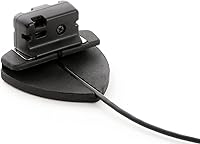
  • Mounting Method: Uses an adjustable clip mechanism that attaches to the soundhole rim or body of an acoustic guitar or similar instrument.
  • Instrument Fit: Designed to fit most standard acoustic guitar body styles, though clip compatibility may vary on non-standard or unusually thin-rimmed instruments.
  • User Rating: Holds an average rating of 3.8 out of 5 stars based on 251 customer ratings on Amazon.
  • Release Date: First made available for purchase on August 14, 2015, and remains an active product as of this review.
  • ASIN: The Amazon Standard Identification Number for this product is B014A1BVZM.

Related Reviews
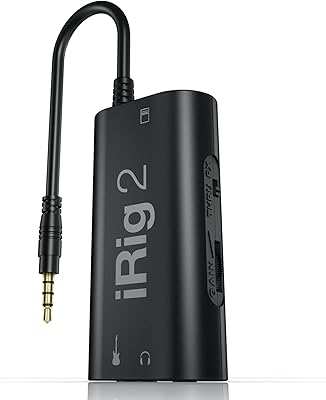
IK Multimedia iRig 2
87%
93%
Ease of Setup
88%
Input Gain Control
96%
Portability
67%
Signal Purity
82%
Live Rig Integration
More
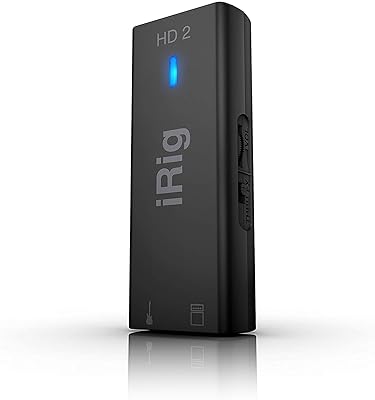
IK Multimedia iRig HD 2 Guitar Audio Interface
87%
92%
Audio Performance
89%
Portability
85%
Usability
88%
Build Quality
91%
Software Compatibility
More
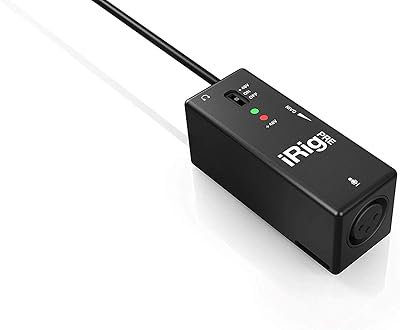
IK Multimedia iRig Pre Microphone Preamp
75%
93%
Ease of Setup
88%
Phantom Power Performance
67%
Audio Quality
72%
Build Quality
79%
Battery Life
More
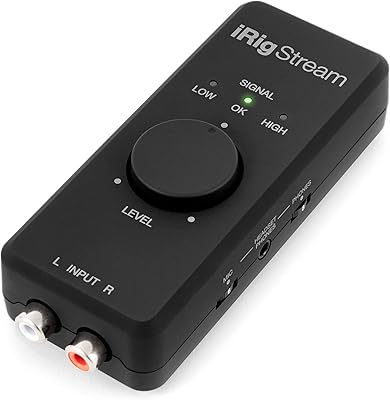
IK Multimedia iRig Stream
85%
93%
Stereo Input Quality
96%
Portability & Form Factor
91%
Ease of Setup
88%
Loopback Functionality
84%
Monitoring & Latency
More
IK Multimedia iRig Pro I/O
81%
93%
Audio Resolution
96%
Portability & Size
91%
Input Versatility
88%
Compatibility
84%
Phantom Power Performance
More
IK Multimedia iRig Pro Duo I/O
85%
94%
Portability
88%
Build Quality
86%
Preamp Performance
92%
Mobile Compatibility
83%
Power Versatility
More
IK Multimedia AXE I/O Solo Audio Interface
78%
93%
Guitar Tone Shaping
87%
Sound Quality
81%
Value for Money
63%
Ease of Setup
88%
Re-amping Capability
More
Blue Blueberry Cardioid Condenser Microphone
79%
93%
Tonal Character
91%
Vocal Performance
89%
Build Quality
94%
Capsule Quality
71%
Preamp Compatibility
More
Aston Microphones Stealth Condenser Microphone
79%
88%
Sound Quality
84%
Voice Mode Versatility
86%
Built-in Preamp
91%
Build Quality
83%
Value for Money
More
Neat Microphones Skyline USB Desktop Condenser Microphone
89%
94%
Audio Quality
91%
Ease of Use
89%
Build Quality
90%
Mute Button Functionality
92%
Value for Money
More

FAQ

Not directly out of the box. The iRig Acoustic uses a Lightning connector, so if your iPhone has a USB-C port (iPhone 15 or later), you will need an Apple Lightning-to-USB-C adapter. It is worth factoring that added cost and slight inconvenience into your buying decision.

No driver installation is needed. You simply clip the mic onto your guitar, plug it into your device, open your preferred recording app, and you are ready to go. It is genuinely plug-and-play, which is one of the reasons beginners tend to like it.

Yes, it is listed as compatible with Android in addition to iOS and macOS. That said, the primary app ecosystem — especially AmpliTube Acoustic — is most fully featured on iOS, so Android users may find the software side more limited depending on their device and OS version.

It depends on your expectations and environment. In a quiet room, the iRig Acoustic can produce clean, listenable recordings that are perfectly fine for demos, social media clips, or practice sessions. If you are aiming for polished, release-ready audio, you will likely notice limitations — particularly background hiss — that would require post-processing to clean up.

Yes, and this is one of the more useful features on this clip-on guitar mic. There is a built-in headphone output on the unit itself, so you can plug in your earphones and hear yourself in real time without any noticeable delay. It is handy for busking or practicing quietly without disturbing others.

It should fit most standard dreadnought and concert-style acoustic guitars without issue. Classical guitars and some acoustic-electric models can have slightly different soundhole or body rim profiles, and a handful of users have reported that the clip does not always grip as securely on those. It is worth checking your specific guitar's dimensions against the product specs before committing.

AmpliTube Acoustic is available as a free download, but several of the more useful amp models, effects, and features are locked behind in-app purchases. The base version is functional, but do not expect a fully unlocked experience out of the box. GarageBand, which is also free on iOS, is often the better starting point if you just want to record without spending more.

This is the most common complaint from real-world users, and it is worth being upfront about. In a reasonably quiet space, the noise floor is manageable. In noisier environments — a room with air conditioning, street noise, or other ambient sounds — the mic does pick up more than you might want. Treating your recording space or using noise reduction in post will help significantly.

No batteries or external power are required. The mic draws everything it needs from the device it is plugged into, whether that is an iPhone, iPad, or compatible Android phone. This is one less thing to worry about when you are on the road.

The clip-on design is flexible enough to attach to a range of acoustic instruments — ukuleles, mandolins, and similar instruments with a soundhole or body edge should work fine. The frequency response is wide enough to handle most acoustic timbres. Results will vary depending on how securely the clip fits and how the instrument projects sound, but it is not strictly limited to six-string guitars.