


Overview

The Hisense 55U8N 55-Inch Mini-LED Smart TV sits in a compelling spot — strong picture technology at a price that undercuts comparable Samsung and Sony models without cutting corners on specs. Mini-LED backlighting works by packing thousands of tiny light sources behind the panel, grouped into independently controlled zones, giving the display a real ability to keep dark areas dark while letting bright highlights shine. Google TV handles the software side, and it is genuinely practical: broad app support, quick responses, and functional voice search. Hisense has built credibility steadily over recent years, and the U-series represents their most serious push into premium territory. At 55 inches, it fits well in medium to large rooms at comfortable viewing distances.

Features & Benefits

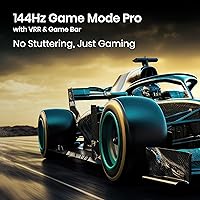
The local dimming performance is where the 55U8N earns its reputation. With more than two thousand independently controlled zones, dark scenes — think deep-space sequences or rain-soaked noir thrillers — show genuine depth and shadow detail. Brightness is a real strength too; HDR content holds up well in a sunlit room, though a blacked-out home theater will get the most from its full capabilities. Dolby Vision IQ automatically adjusts picture settings based on room lighting, which is genuinely useful and requires no manual tinkering. Console gamers benefit from two HDMI 2.1 ports capable of handling 4K at full 144Hz, with variable refresh rate support keeping visuals smooth. The built-in speaker array is decent, but anyone serious about audio should budget for a dedicated soundbar.

Best For

This mid-premium 4K TV makes the strongest case for households that need one screen to handle multiple roles without compromise. Console gamers will appreciate the HDMI 2.1 inputs and the automatic game mode switching — no digging through menus when you pick up a controller. Streamers and sports viewers benefit from the color handling and motion clarity. It is also a genuine upgrade for anyone still on a 1080p or older 4K LED set, where the jump in brightness and contrast is immediately obvious. People already using Google's ecosystem will find the Google TV platform integrates naturally with their other devices. It is a less obvious fit for buyers prioritizing audio above all else, or for dedicated home theater setups where OLED competition becomes harder to ignore.

User Feedback

Owners are largely satisfied, with picture brightness and color vibrancy drawing the most consistent praise across streaming, sports, and gaming scenarios. Gaming responsiveness gets repeated positive mentions too. Where feedback turns mixed is blooming: some viewers notice a faint halo or glow around bright objects on very dark backgrounds — a known trade-off of Mini-LED technology broadly, not a flaw unique to this Hisense Mini-LED. A few buyers find the remote feels underwhelming for a TV at this price tier. Software stability has improved through firmware updates, and early complaints about interface lag have largely quieted over time. The 4.2-star average accurately reflects a TV that over-delivers for most buyers but asks for some tolerance around those well-documented limitations.

Pros

  • Exceptional brightness keeps HDR content vivid and punchy even in sun-filled living rooms.
  • Over two thousand local dimming zones produce deep contrast that budget LED TVs simply cannot match.
  • Two HDMI 2.1 ports handle 4K at full 144Hz, making it genuinely future-ready for current consoles.
  • Dolby Vision IQ adapts picture settings automatically based on room lighting — no manual tweaking needed.
  • Google TV offers a wide app library, reliable performance, and sensible voice control integration.
  • Variable refresh rate support virtually eliminates screen tearing during fast-paced gaming sessions.
  • Color accuracy and vibrancy out of the box are strong, with minimal calibration required for most viewers.
  • The 55U8N punches above its price tier when compared directly against similarly priced Samsung or Sony sets.
  • Firmware updates have meaningfully improved software stability since the initial launch.
  • ALLM automatically switches to game mode when a console is detected, removing a common friction point.

Cons

  • Blooming or faint halos around bright objects on dark backgrounds is a real and recurring complaint from owners.
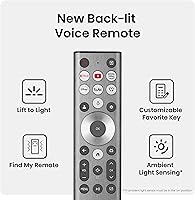
  • The included remote feels plasticky and underwhelming for a TV at this price point.
  • Built-in audio, while adequate for casual use, lacks the depth and separation serious listeners will want.
  • Peak brightness figures are achieved under specific test conditions and rarely sustained across a full scene.
  • Some early buyers reported UI sluggishness, though updates have partially addressed this over time.
  • Google TV surfaces a noticeable number of promoted content rows that cannot be fully removed from the home screen.
  • Hisense's after-sales support and service network is thinner than what Samsung or Sony owners typically experience.
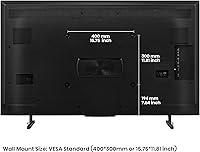
  • The stand design requires a fairly wide TV unit — wall mounting is a more practical option for many setups.
  • IMAX Enhanced and Filmmaker Mode certifications are niche benefits that most everyday viewers will never actively use.
  • Power draw is on the higher side compared to similarly sized OLED panels, which matters for energy-conscious buyers.

Ratings

The scores below were generated by AI after analyzing thousands of verified global user reviews for the Hisense 55U8N 55-Inch Mini-LED Smart TV, with spam, bot submissions, and incentivized feedback actively filtered out before scoring. Each category reflects the honest distribution of buyer sentiment — where the TV genuinely impresses and where real-world frustrations surfaced. Both the strengths and the recurring pain points are transparently captured in every score.

Picture Quality
91%
Owners consistently describe the image as the biggest surprise — colors pop noticeably more than anything they owned before, and HDR content on streaming services looks genuinely cinematic. In bright living rooms, the high brightness output keeps the picture from washing out, which is a common frustration with cheaper panels.
In completely dark viewing environments, faint blooming around bright objects on dark backgrounds is a recurring complaint that a small but vocal group of buyers found hard to ignore. It is not a dealbreaker for most, but dark-room purists are the most likely to be disappointed.
Contrast & Black Levels
83%
The dense local dimming zone layout produces noticeably deep blacks for an LCD-based display, and buyers upgrading from standard LED TVs frequently describe the difference as dramatic. Night scenes in movies and moody streaming content hold up far better than what the price range typically delivers.
Mini-LED still cannot match the per-pixel precision of OLED, and halo artifacts around subtitles or bright UI elements on dark backgrounds surface often enough to be a known limitation rather than an edge case. Buyers who watch a lot of content in total darkness are the most affected group.
Brightness & HDR
93%
This is the category where the 55U8N consistently outperforms expectations. Buyers in naturally bright rooms — large windows, south-facing living spaces — report that the screen remains fully readable and vibrant even on sunny afternoons, which is a genuine daily-use advantage many competitors at similar prices fail to deliver.
Peak brightness figures are achieved in very specific highlight zones rather than across the full screen simultaneously, so full-screen white scenes or bright sports broadcasts can look somewhat less dazzling than the spec sheet implies. A small number of reviewers noted they expected more from large-area bright content.
Gaming Performance
94%
Gamers are among the most enthusiastic owners of this Hisense Mini-LED, and it is easy to see why. The automatic low-latency mode kicks in reliably when a console is detected, the variable refresh rate keeps fast shooters and racing titles smooth, and the two HDMI 2.1 ports mean neither a PS5 nor an Xbox Series X has to compromise on resolution or frame rate.
The Game Bar interface, while a useful idea, has received mixed reviews for its layout and the depth of options it exposes — some users found it surface-level compared to dedicated gaming monitor software. PC gamers connecting via DisplayPort adapters have occasionally reported compatibility quirks worth researching before committing.
Color Accuracy
86%
Out-of-the-box color calibration is considerably better than most TVs at this price tier, and buyers who stream a lot of nature documentaries or animated content consistently praise how saturated and lifelike the palette feels. Dolby Vision IQ adds a layer of automatic adjustment that makes daytime and evening viewing sessions look consistently well-tuned without manual intervention.
Color-critical professionals who calibrate to strict reference standards will find some deviation in the default color science, particularly in the warmer tones. Filmmaker Mode helps, but out-of-the-box it leans slightly vivid, which most buyers enjoy but purists may want to dial back.
Motion Handling
79%
21%
Sports viewers appreciate how well the 55U8N tracks fast motion — panning camera shots during football or basketball look considerably cleaner than on lower-refresh panels, and the native 144Hz rate gives it a tangible edge over the 60Hz sets many buyers are upgrading from.
Motion smoothing at higher settings can introduce the much-disliked soap-opera effect that makes content look artificially fluid, and finding the right balance in the settings takes some trial and error. Buyers who did not know to look for Filmmaker Mode or manually adjust motion settings have occasionally left disappointed without realizing the fix was straightforward.
Built-in Audio
63%
37%
For casual daytime TV watching and streaming dialogue-heavy shows, the built-in speaker system handles itself competently. Volume levels are adequate for medium-sized rooms, and the Dolby Atmos decoding does add a subtle sense of space that basic TV speakers usually lack entirely.
Buyers who came in expecting anything close to a cinematic audio experience were the most let down. Bass is noticeably thin, and at higher volumes some owners reported a slightly harsh quality to the sound. The consistent recommendation across the buyer community is to pair this with at least a budget soundbar if audio matters to you at all.
Smart TV Platform
77%
23%
Google TV is familiar to a large portion of buyers already using Android phones or Chromecast devices, and the app library covers every major streaming service without gaps. Voice search through the Google Assistant integration works reliably and meaningfully speeds up content discovery compared to manual browsing.
The home screen surfaces promoted content rows that cannot be fully dismissed, which a notable number of owners find intrusive and cluttered. Buyers who prefer the clean, curated approach of Samsung's Tizen interface or Apple TV tend to find Google TV's busy layout a persistent minor annoyance.
Remote Control
54%
46%
The remote layout is logical and the voice search button works as expected, making basic navigation quick enough for everyday use. Buyers who primarily use the TV with a gaming controller or a third-party universal remote are largely unaffected by its shortcomings.
The physical quality of the remote is the most consistently cited disappointment relative to the TV's overall price point — it feels lightweight and plasticky in the hand in a way that clashes with an otherwise premium purchase. Button feedback is mushy, and several owners switched to a third-party remote or phone app within the first few weeks.
Value for Money
88%
The 55U8N regularly wins on a specs-per-dollar comparison against Samsung and Sony rivals, and buyers who researched the market before purchasing tend to feel they made a well-informed choice. The panel technology, gaming port configuration, and HDR support delivered at this price tier would cost meaningfully more from a tier-one brand.
Buyers who purchased without researching and expected flagship-grade polish in every area — particularly audio and remote quality — occasionally feel the value story does not fully hold up. Hisense's brand perception still trails Samsung and Sony for some buyers, which creates an expectation gap that the TV does not always bridge emotionally.
Build & Design
74%
26%
The screen bezel is slim and the overall profile looks clean and contemporary on a TV stand or wall-mounted. At nearly 42 pounds it feels substantial rather than flimsy, and buyers report the stand assembly is straightforward with the included hardware.
The stand design requires a notably wide TV unit — buyers with narrower consoles have had to wall-mount or find a different furniture solution. Compared to the premium industrial design of Sony's Bravia line, the overall aesthetic feels functional rather than distinctive.
Setup & Ease of Use
81%
19%
Initial setup through Google TV is guided and relatively painless, and buyers already in the Google ecosystem found account linking and app restoration fast. Gaming mode activates automatically, which removes a common frustration for console owners who previously had to remember to switch picture modes manually.
Buyers who are less tech-comfortable found the sheer volume of picture and sound settings overwhelming, and the manual does not always guide them to the settings that matter most. First-time Google TV users sometimes struggle with the content-heavy home screen before finding their footing.
Connectivity
89%
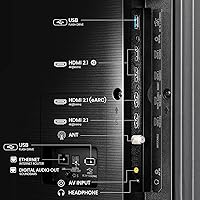
Four HDMI ports, two of which are the full HDMI 2.1 standard, gives this TV more flexibility than many competitors at a comparable price. Bluetooth, Wi-Fi, Ethernet, and USB round out a connectivity set that covers practically every device scenario a typical household would encounter.
The positioning of rear ports can make cable management awkward depending on wall-mount orientation, and some buyers noted that USB port performance for media playback on external drives was slower than expected. There is no optical audio output for buyers with older soundbar equipment.
Software Stability
72%
28%
Post-launch firmware updates have meaningfully improved performance, and buyers who purchased later in the product cycle report a noticeably smoother experience than those who reviewed it in the first weeks after release. Automatic updates mean most improvements arrive without any user action required.
Early adopters experienced interface lag, occasional app crashes, and one or two reported issues with HDMI handshake on specific devices that took multiple firmware cycles to fully resolve. Software quality at launch was the source of most below-average ratings from otherwise satisfied buyers.

Suitable for:

The Hisense 55U8N 55-Inch Mini-LED Smart TV is a strong fit for households that demand a lot from a single screen. Console gamers with a PS5 or Xbox Series X will get immediate, tangible value from the two HDMI 2.1 ports and the native high refresh rate, which keeps fast-paced action genuinely smooth without requiring any manual setup. Sports fans and streamers benefit from the high brightness output, which keeps the picture punchy and readable even in rooms with significant daytime glare. Buyers upgrading from an older or budget LED television will notice an immediate and meaningful improvement in contrast and color richness. Those already embedded in the Google ecosystem — using Chromecast, Nest, or Android devices — will find the Google TV interface integrates naturally into their daily routine.

Not suitable for:

Purists who prioritize absolute black levels above everything else should look seriously at OLED alternatives before committing to the 55U8N, because Mini-LED panels — this one included — can produce faint blooming or halo effects around bright objects on dark backgrounds, which becomes most noticeable during night-sky scenes or end-credits rolls. Dedicated home theater enthusiasts who watch primarily in a blacked-out room will likely find that trade-off harder to overlook than a mixed-use buyer would. The Hisense 55U8N 55-Inch Mini-LED Smart TV is also not the right call for buyers who place audio quality at the top of their priority list; the built-in speaker system is capable for casual watching but falls short of what a mid-range soundbar can deliver. Anyone still loyal to Samsung's Tizen or LG's webOS platforms will need an adjustment period with Google TV, and some find it less curated. Finally, buyers in very compact rooms who would sit closer than eight feet to the screen may find 55 inches slightly overwhelming at that distance.

Specifications

  • Screen Size: The panel measures 54.6 inches diagonally viewable, marketed as a 55-inch class display.
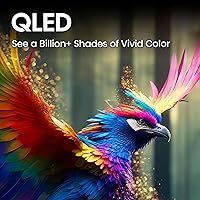
  • Panel Type: Mini-LED QLED (ULED) LCD panel with Quantum Dot color enhancement layer for expanded color volume.
  • Resolution: Native 4K UHD resolution at 3840 x 2160 pixels across the full panel surface.
  • Peak Brightness: Capable of reaching up to 1800 nits of peak brightness under HDR highlight conditions.
  • Local Dimming: Full Array Local Dimming Pro with more than 2000 independently controlled dimming zones behind the panel.
  • Refresh Rate: Native 144Hz panel refresh rate with Variable Refresh Rate support spanning 48Hz to 144Hz.
  • HDR Support: Compatible with Dolby Vision IQ, HDR10+, HDR10, and HLG formats for broad streaming and disc playback coverage.
  • Gaming Features: Includes AMD FreeSync Premium Pro, Auto Low Latency Mode, and a dedicated Game Bar accessible without leaving the game.
  • HDMI Ports: Four HDMI ports total, with two HDMI 2.1 ports supporting 4K input at up to 144Hz for current-generation consoles and PCs.
  • Audio System: 2.1.2 channel speaker configuration with a maximum output of 50W, supporting Dolby Atmos decoding.
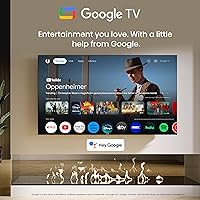
  • Smart Platform: Runs Google TV with built-in Chromecast, Google Assistant, and compatibility with Amazon Alexa devices.
  • Connectivity: Includes Wi-Fi, Bluetooth, Ethernet, and USB ports alongside the four HDMI inputs for wired and wireless device connections.
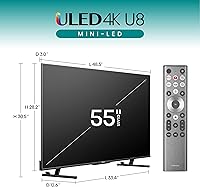
  • Dimensions: With the stand attached, the TV measures approximately 48.5 inches wide, 28.2 inches tall, and 3 inches deep.
  • Weight: The set weighs approximately 41.9 pounds with the stand included, which is standard for a 55-inch Mini-LED panel.
  • Power Draw: Rated at 220 watts of power consumption during typical operation at standard picture settings.
  • Special Modes: Includes IMAX Enhanced certification and Filmmaker Mode for content that benefits from preserved aspect ratios and original color grading.
  • Voice Control: Supports hands-free voice control natively through Google Assistant, with additional Alexa compatibility via connected devices.
  • Included Items: In the box: the TV unit, stand hardware, power cable, remote control, and two AAA batteries for the remote.

Related Reviews
Sony BRAVIA 5 55-inch Mini LED TV
80%
88%
Picture Quality
91%
Gaming Performance
86%
Brightness & HDR Impact
67%
Smart TV Platform
93%
PS5 Integration
More
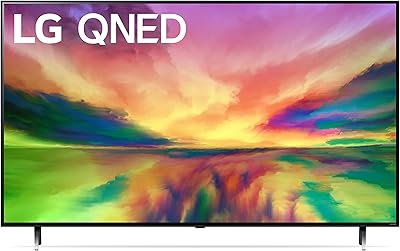
LG QNED80 Series 55-Inch 4K Mini LED Smart TV
85%
94%
Picture Quality
89%
Gaming Performance
80%
Sound Quality
85%
Ease of Use
88%
Design & Build Quality
More
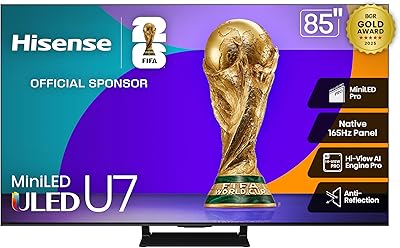
Hisense 85-inch U8QG Mini-LED Smart TV
81%
91%
Picture Quality
93%
Brightness & HDR Performance
84%
Contrast & Local Dimming
89%
Gaming Performance
86%
Motion Handling
More
Hisense 75U7K 75-inch Mini-LED QLED TV
79%
88%
Picture Quality
79%
Contrast & Local Dimming
83%
Brightness
91%
Gaming Performance
86%
Motion Handling
More
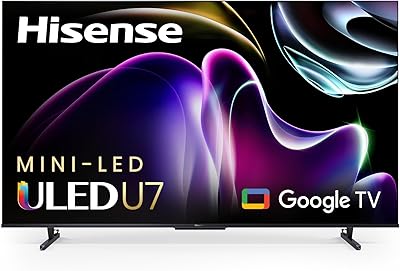
Hisense 85-inch U7 Mini-LED 4K TV
83%
88%
Picture Quality
91%
Gaming Performance
93%
Brightness & HDR
82%
Contrast & Local Dimming
86%
Color Accuracy
More
Hisense U6 65-inch Mini-LED 4K Smart TV
78%
84%
Picture Quality
91%
Gaming Performance
82%
HDR Performance
79%
Motion Handling
76%
Local Dimming & Contrast
More
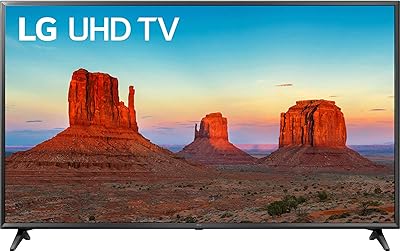
LG 55UM7300PUA 55-Inch 4K Smart LED TV
82%
89%
Display Quality
85%
Smart Features
82%
Voice Control
92%
Value for Money
88%
Wi-Fi Connectivity
More
Hisense 55-inch A7N 4K Smart Fire TV
76%
83%
Picture Quality for the Price
76%
HDR Performance
71%
Smart TV Interface (Fire TV OS)
84%
Alexa Voice Remote Usability
67%
Gaming Performance
More
Hisense 43R7E 43-inch 4K Roku Smart LED TV
81%
87%
Picture Quality
92%
Value for Money
91%
Ease of Setup
85%
Streaming Performance
61%
Sound Quality
More
Hisense 50R7E 50-Inch 4K Roku Smart LED TV
84%
87%
Picture Quality
92%
Roku Streaming Performance
90%
Value for Money
65%
Sound Quality
70%
Brightness in Well-lit Rooms
More

FAQ

Yes, and this is one of the stronger selling points. Two of the four HDMI ports are HDMI 2.1, which is what you need to run a PS5 or Xbox Series X at 4K and 120 frames per second without any compromise. The TV also handles variable refresh rate automatically, so you do not need to dig through settings menus once it is set up.

It is a real phenomenon, not an imaginary one, but context matters a lot. If you watch in a completely dark room and a scene has a bright light source against a very dark background — think a single lamp in a black room — you may notice a faint glow or halo around that object. For everyday mixed viewing like sports, streaming, and daytime TV, most people never notice it. It is a trade-off inherent to Mini-LED technology at this price tier, not a defect specific to this model.

The built-in speakers are genuinely fine for casual watching — dialogue is clear, and the system handles everyday TV content without feeling thin. That said, if you care about movies or music at all, a soundbar will make a meaningful difference. The built-in Dolby Atmos decoding works, but the physical speaker layout cannot reproduce spatial audio the way a dedicated bar or surround setup can.

For a 4K panel at this size, somewhere between 4.5 and 7.5 feet tends to be the comfortable sweet spot for most people. Closer than that and the screen can feel overwhelming; much farther and you start losing the 4K detail advantage. It works well in mid-size living rooms and dedicated bedroom setups.

Spec-for-spec, the Hisense frequently offers more local dimming zones and a higher peak brightness than Samsung models at the same price point. Samsung's Tizen platform is arguably more polished than Google TV, and Samsung's after-sales support network is broader. Picture quality head-to-head is competitive, and many reviewers consider the Hisense the better value buy purely on panel performance.

Yes, Google TV has a comprehensive app library and all of the major streaming services — Netflix, Disney+, HBO Max, Apple TV+, Amazon Prime Video, YouTube — are available. The built-in Chromecast also lets you cast directly from your phone or tablet without needing any additional hardware.

Wall mounting is fully supported. The VESA mount pattern for this model is 400 x 300mm, which is a standard size that most mid-range to large wall mounts accommodate. Given that the stand requires a fairly wide TV console, wall mounting is actually the cleaner option for many rooms.

Google TV receives updates pushed through the Google ecosystem, and Hisense also issues firmware patches for the hardware layer. Early buyers noted some interface sluggishness after launch, and subsequent updates improved that noticeably. It is worth running the initial setup update before settling into daily use.

Filmmaker Mode disables motion smoothing and other processing tricks to show content at the frame rate and color grading the director intended. If you are watching a film and the motion looks unnaturally fluid or soap-opera-like, switching to Filmmaker Mode will fix that immediately. For sports or gaming you would typically turn it off, but for movies it is worth using if accurate presentation matters to you.

The remote gets the job done but feels noticeably lightweight and plasticky compared to the TV itself. Voice search through the remote works reliably, and the layout is straightforward. That said, several owners do upgrade to a universal remote or use the Google TV app on their phone, especially if they find the included remote frustrating to hold. It is functional, not impressive.