Overview

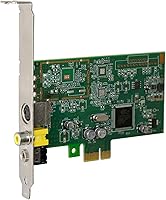
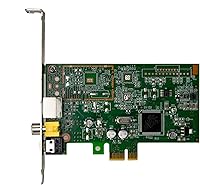
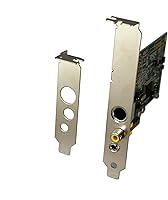
The Hauppauge ImpactVCB-e 1381 is a PCIe internal capture board built specifically for digitizing analog video from CCD cameras and similar sources. It's not a consumer-grade gadget — this is a focused, no-frills tool designed for reliable frame capture in professional workflows. This capture board routes incoming video directly into system RAM or VGA adapter memory, which keeps CPU load manageable during extended capture sessions. It ships with both full-height and half-height brackets, so it fits comfortably into standard towers and slim cases without requiring separate hardware. At its price point, it sits squarely in mid-range territory, aimed at prosumers and professionals who prioritize stability over feature bloat.

Features & Benefits

All video inputs on this capture board use BNC connectors, which is the right call for analog signal work — they lock in securely and resist the interference issues that plague cheaper RCA-based alternatives. It supports up to 1080p capture resolution, though your actual output quality is tied directly to what the source camera delivers. Data moves straight into system or VGA memory rather than through a software buffer first, meaning noticeably lower CPU overhead during sustained capture. Drivers ship with it, making initial Windows 7 setup straightforward. The compact 6 x 6 x 2-inch footprint poses no fitment issues in either ATX or micro-ATX builds, and the included bracket pair is a genuinely useful addition.

Best For

This PCIe video digitizer is built for environments where reliable analog signal capture actually matters — think machine vision systems, lab microscopy setups, or industrial inspection rigs running CCD cameras. It's also a solid pick for anyone digitizing legacy analog sources on a stationary workstation, provided Windows 7 compatibility aligns with your setup. The out-of-box driver installation makes it accessible without deep technical troubleshooting, which is appreciated in fast-moving professional environments. The dual-bracket inclusion matters most for builders working in compact cases — skipping a separate bracket hunt is a small but real time-saver. This is not the right pick for anyone expecting plug-and-play on a modern OS without doing some research first.

User Feedback

Across buyer reviews, the ImpactVCB-e earns consistent praise for clean driver installation and dependable performance in Windows 7 environments, where most users report few issues. The recurring concern is OS support beyond Windows 7 — several buyers note that getting it functional on Windows 10 required extra legwork, with inconsistent results. Signal quality through the BNC inputs draws generally positive responses from professional users, though some point out that its capture ceiling is only as good as the source hardware feeding it. Build quality is considered solid for the price tier. Hauppauge's customer support gets mixed marks — reliable for some buyers, but noticeably harder to reach when complex issues arise.

Pros

  • BNC connectors on all inputs deliver stable, interference-resistant analog signal handling professionals rely on.
  • Direct memory transfer keeps CPU load low during long, uninterrupted capture sessions.
  • Works reliably out of the box on Windows 7 systems with the included drivers.
  • Ships with both full-height and half-height brackets, covering most desktop case types.
  • Compact PCB fits cleanly into standard ATX and micro-ATX builds without clearance issues.
  • Solid long-term hardware reliability reported by users running it in continuous industrial deployments.
  • A practical choice for archiving legacy analog sources without overcomplicating the hardware setup.
  • The ImpactVCB-e holds its value well in niche professional contexts where alternatives are limited.

Cons

  • No official driver support for Windows 10 or Windows 11 — a serious barrier for modern workstations.
  • No bundled capture software; buyers must source, configure, and maintain their own applications.
  • Capture resolution is fully source-dependent; do not expect true 1080p from older analog cameras.
  • Customer support from Hauppauge is inconsistent and difficult to engage for complex technical issues.
  • No digital input options — HDMI, SDI, or USB sources are completely unsupported.
  • Community driver workarounds for newer OS versions are unreliable and carry no official backing.
  • Signal handling can be inconsistent when used with non-CCD analog sources like older composite devices.
  • Buyers outside the Windows 7 or industrial CCD ecosystem will struggle to justify the cost.

Ratings

The Hauppauge ImpactVCB-e 1381 has been evaluated by our AI system after parsing verified buyer reviews from global sources, with spam, bot activity, and incentivized feedback actively filtered out. The scores below reflect both the strengths that keep professionals coming back and the friction points that have frustrated users in real-world deployments. Nothing has been smoothed over — what you see is an honest composite of what the broader buyer community actually experienced.

Driver Installation
83%
For Windows 7 setups, the bundled driver makes getting up and running genuinely painless — most users report the board being recognized and functional within minutes of installation. In controlled lab or industrial environments still running Windows 7, this out-of-box readiness is a real operational advantage.
The story changes on Windows 10 and Windows 11, where users frequently report having to hunt down third-party drivers or community workarounds. For anyone not running a legacy OS, expect a non-trivial setup process with no guarantee of full functionality.
Analog Signal Quality
79%
21%
Users working with CCD cameras in inspection rigs and microscopy setups generally report clean, stable captures with minimal noise artifacts. The BNC input design earns specific praise from professional users who have dealt with signal degradation on boards using inferior connector types.
A subset of buyers noticed inconsistency in signal handling when switching between different analog source types, particularly older composite sources. The board performs at its best with purpose-matched CCD cameras; it is less predictable as a general-purpose analog digitizer.
OS Compatibility
51%
49%
Within its intended Windows 7 environment, compatibility is solid and well-documented. Organizations running legacy workstations for long-term industrial applications often find the board fits cleanly into their existing software stack without driver conflicts.
This is the single most cited pain point across buyer reviews. Modern OS support is inconsistent at best, and Hauppauge has not released official updated drivers for Windows 10 or 11. Buyers who discovered this post-purchase felt the product description did not adequately flag the limitation.
Build Quality
74%
26%
The PCB feels appropriately dense and well-manufactured for the price tier, and the BNC ports have a reassuring solidity to them. Several buyers working in vibration-prone industrial environments noted no physical failures over extended use periods.
A handful of users considered the overall component quality merely acceptable rather than impressive, particularly when comparing it to higher-end capture boards. The board does not feel premium, though most agree it meets expectations given its positioning.
CPU Overhead
81%
19%
The direct memory transfer architecture genuinely reduces processing load during continuous capture, which matters when the capture workstation is also running analysis or logging software simultaneously. Users in automated inspection pipelines specifically appreciated not needing to upgrade their host CPU to handle sustained capture.
The efficiency gains are most noticeable on older or mid-range hardware; on modern systems the difference is less dramatic. A few users running parallel capture and processing tasks still reported occasional frame drops under heavy system load.
Value for Money
68%
32%
For buyers who need exactly what this board delivers — reliable BNC-input analog capture on a legacy Windows platform — the price is defensible. The included dual-bracket bundle adds tangible practical value that competing boards at similar prices often skip.
The value proposition weakens considerably for anyone who needs modern OS support or broader software compatibility. Buyers who encountered Windows 10 driver issues felt the effective value dropped sharply once they factored in troubleshooting time and uncertainty.
Connector Quality
86%
BNC connectors across all inputs is the right engineering choice for analog professional work, and buyers consistently back this up. The locking mechanism holds securely even in setups where cables are routed under tension, which is common in fixed industrial installations.
For users coming from consumer video backgrounds, the BNC-only approach requires adapter cables if they are working with RCA or S-Video sources, which adds minor cost and a potential interference point that somewhat offsets the connector quality advantage.
Form Factor & Bracket Flexibility
88%
Shipping with both full-height and half-height brackets is a practical decision that pays off in real builds. Users deploying this capture board in compact industrial PCs or slim-case workstations avoided a common sourcing headache that plagues single-bracket alternatives.
At 6 x 6 inches, the board is not the smallest option on the market, and a few users in very compact mITX builds noted fitment was tighter than expected despite the included low-profile bracket.
Capture Resolution
63%
37%
When paired with a capable CCD source, the board handles high-resolution analog capture cleanly enough for professional inspection and archiving tasks. Users in scientific imaging noted that for their purposes, the resolution ceiling was not a limiting factor.
The 1080p spec is source-dependent, and several buyers felt it was overstated in marketing context. Analog signal chains rarely deliver true 1080p quality, and users expecting broadcast-level sharpness from older camera inputs were often disappointed by the real-world output.
Software Ecosystem
57%
43%
The board works reliably with third-party industrial capture and vision software when drivers are properly installed. For buyers in environments already standardized on compatible software packages, integration is relatively smooth.
There is no bundled capture application worth mentioning, and Hauppauge provides minimal software support beyond the base driver. Users expecting a turn-key software-plus-hardware solution will need to source and configure their own capture software independently.
Customer Support
54%
46%
Some buyers report positive experiences reaching Hauppauge support for straightforward compatibility questions, particularly for well-documented Windows 7 deployment scenarios. The brand has an established presence in the capture hardware space, which gives some buyers confidence.
The recurring pattern in reviews is that support becomes harder to engage meaningfully when issues involve newer operating systems or non-standard configurations. Response times and resolution quality are inconsistent enough that several buyers gave up and relied on community forums instead.
Installation Complexity
76%
24%
Physical installation is clean and uncomplicated — standard PCIe slot, sensible layout, and the dual-bracket hardware is easy to swap. Users with basic PC building experience reported no issues getting the board seated and connected.
The complexity score drops because driver and software configuration post-install can be unexpectedly involved, especially on operating systems beyond Windows 7. What starts as a simple hardware install can become an hour-long troubleshooting session for unprepared users.
Long-Term Reliability
77%
23%
Buyers who have run the ImpactVCB-e in continuous industrial capture roles over multi-year periods generally report stable operation with no hardware failures. The board appears to hold up well in the kind of always-on deployments common in lab and factory environments.
Long-term reliability is harder to assess for users on unsupported OS configurations, since driver instability can mimic hardware failure. A few buyers were unsure whether occasional capture dropouts were board-level issues or software-layer problems tied to unofficial driver builds.

Suitable for:

The Hauppauge ImpactVCB-e 1381 is purpose-built for professionals who need dependable analog video capture in controlled, stationary environments — think machine vision technicians, laboratory researchers running CCD-based microscopy rigs, or quality control engineers digitizing inspection camera feeds. If your workstation is running Windows 7 and your signal chain uses BNC-terminated CCD cameras, this board slots into that workflow with minimal friction. It also makes sense for archivists and media professionals transferring legacy analog footage to digital storage, where a stable, low-overhead capture path matters more than cutting-edge feature sets. Builders who need flexibility across different case sizes will appreciate the included full-height and half-height brackets, which eliminate a common sourcing headache. For organizations maintaining long-running industrial systems on legacy hardware, the ImpactVCB-e offers a reliable, field-proven option that does not demand constant driver maintenance or OS upgrades.

Not suitable for:

The Hauppauge ImpactVCB-e 1381 is a poor fit for anyone running a modern Windows 10 or Windows 11 system who expects out-of-box driver support — that experience simply does not exist here without significant community-sourced workarounds. Consumer users hoping to capture video from home cameras, gaming consoles, or HDMI sources will find this board has nothing to offer them; it is strictly an analog, BNC-input device with no digital input support whatsoever. Anyone expecting a bundled capture application or a polished software ecosystem will be disappointed, as the board ships with drivers only and leaves the rest to you. If your use case demands the highest possible capture fidelity from modern camera hardware, the source-dependent resolution ceiling of this analog chain will likely frustrate you. And buyers who need responsive, hands-on technical support should know that Hauppauge's customer service has earned a mixed reputation, particularly for non-standard configurations.

Specifications

  • Interface: The board connects to the host PC via a PCI Express (PCIe) slot, compatible with standard ATX and micro-ATX motherboards.
  • Video Input: Accepts analog video signals from CCD cameras and composite analog sources through onboard BNC connectors.
  • Connectors: All video inputs use BNC connectors, providing a secure, locking connection that resists signal interference common in industrial environments.
  • Max Resolution: Capable of capturing up to 1080p resolution, contingent on the output quality of the connected analog source camera.
  • Memory Transfer: Video data is transmitted directly into system RAM or the VGA adapter's memory, bypassing unnecessary software buffer layers to reduce CPU load.
  • Included Brackets: The board ships with both a full-height and a half-height PCIe bracket, covering standard tower and slim form-factor case installations.
  • Driver Support: Windows 7 drivers are included with the board; official driver support for Windows 10 or Windows 11 is not provided by the manufacturer.
  • Board Dimensions: The PCB measures 6 x 6 x 2 inches, fitting comfortably in most standard desktop enclosures without clearance conflicts.
  • Weight: The board weighs 5.3 oz, making it lightweight enough to seat and secure in any standard PCIe slot without bracket stress.
  • Brand & Series: Manufactured by Hauppauge under the ImpactVCB product series, a line focused on professional analog video capture applications.
  • Model Number: The official model number is 1381, used to identify this specific variant within the ImpactVCB product line.
  • Operating System: Officially supported on Windows 7; use on newer Windows versions requires user-sourced drivers and is not guaranteed to function fully.
  • Signal Processing: Incoming analog video is digitized using high-quality video sampling before being displayed in a capture window on the host PC.
  • Market Rank: Holds a Best Sellers Rank of #402 in the Internal TV Tuner and Video Capture Cards category on Amazon, reflecting steady niche demand.
  • First Available: This board was first made available for purchase in November 2011, indicating it is a mature, field-tested product with a long deployment history.
  • Manufacturer: Hauppauge is a US-based company with a long-standing reputation in the broadcast and professional video capture hardware market.
  • Discontinuation Status: As of the latest available data, this product has not been discontinued by the manufacturer and remains listed as an active product.

Related Reviews
LENRUE E-1103 Computer Soundbar
81%
97%
Ease of Installation
94%
Space Efficiency
91%
Value for Money
88%
Connection Versatility
84%
Mid-Range Clarity
More
Hauppauge WinTV-dualHD
71%
83%
Ease of Setup
61%
Signal Reception & Sensitivity
86%
Dual Tuner Performance
74%
WinTV v10 Software Quality
68%
Plex Media Server Integration
More
Sennheiser e 604
Sennheiser e 604
88%
94%
Build Quality & Durability
97%
High SPL Handling
88%
Mounting System Convenience
91%
Audio Clarity & Transient Response
93%
Form Factor & Positioning
More
Logitech C925e
Logitech C925e
82%
83%
Video Quality
74%
Low-Light Performance
86%
Autofocus Accuracy
71%
Microphone Quality
93%
Privacy Shade
More
PocketBook Era E-Reader 16GB
86%
91%
Display Quality
88%
Waterproofing
94%
Battery Life
85%
Storage Capacity
87%
Ease of Use
More
AmScope M158C-E Compound Microscope
84%
89%
Value for Money
93%
Ease of Use
87%
Image Quality
82%
USB Camera Performance
85%
LED Illumination
More
PocketBook Verse 6″ E-Reader
86%
94%
Battery Life
91%
Display Quality
89%
Portability
88%
Ease of Use
85%
Build Quality
More
MSI PRO A620M-E Motherboard
84%
91%
Value for Money
85%
Performance for Gaming
88%
Ease of Installation
93%
Memory Support
90%
Compatibility with AMD Ryzen 7000
More
Hauppauge WinTV-SoloHD 01589
80%
88%
Ease of Setup
74%
Signal Reception Quality
61%
Software (WinTV v8)
83%
Picture Quality
82%
Build Quality & Durability
More
Sennheiser E 845 Supercardioid Microphone
86%
91%
Sound Clarity
88%
Durability & Build Quality
94%
Feedback Rejection
90%
Performance in Live Sound
85%
Handling Noise Reduction
More

FAQ

Officially, no — the Hauppauge ImpactVCB-e 1381 only comes with Windows 7 drivers, and Hauppauge has not released updated drivers for modern operating systems. Some users have reported partial success using unofficial or community-sourced drivers on Windows 10, but results are inconsistent and there is no manufacturer support behind those workarounds. If your workstation runs Windows 10 or 11, factor in that troubleshooting time before purchasing.

The board uses BNC connectors exclusively, so you would need a BNC-to-RCA adapter to connect a standard composite source. Adapters are inexpensive and widely available, but adding one introduces a potential signal quality variable. For best results, this capture board is really designed to be paired with BNC-terminated CCD cameras rather than consumer-grade composite sources.

Not necessarily — the 1080p specification reflects the board's maximum processing capability, but the actual output resolution is entirely dependent on what your source camera delivers. Most analog CCD cameras used in industrial or lab environments do not output a true 1080p signal, so real-world capture quality will typically land below that ceiling. Manage expectations based on your camera's native resolution, not the board's stated maximum.

The board ships with drivers only — there is no bundled capture application included. You will need to source your own software, whether that is a third-party industrial vision application, an open-source capture tool, or proprietary software compatible with your workflow. This is standard practice for professional-grade capture hardware, but it is worth accounting for if you are setting up a new system from scratch.

Both the full-height and half-height brackets are included in the box as standard — you do not need to request or purchase the low-profile bracket separately. This is one of the more genuinely practical touches on this board, since many competing products ship with only one bracket and leave slim-case builders to source the other on their own.

Less than most software-buffer-based alternatives, because the ImpactVCB-e transfers video directly into system RAM or VGA memory rather than routing it through a software layer first. In practice, users running it in automated inspection or lab environments report that it leaves enough headroom to run analysis and logging software simultaneously without significant performance hits.

Yes, with the included half-height bracket swapped in, it fits standard slim desktop and micro-ATX builds. The PCB itself measures 6 x 6 inches, so confirm your case has adequate clearance before installing. The dual-bracket bundle genuinely takes the guesswork out of case compatibility for most standard form factors.

It is purpose-built for CCD cameras commonly used in industrial, scientific, and surveillance contexts — the kind you find mounted over conveyor belts, under microscopes, or at fixed inspection stations. It is not designed for consumer camcorders, webcams, or any digital camera output. If you are working with legacy analog video from that type of professional source, this board is a natural fit.

It is a mixed picture based on buyer feedback. For straightforward Windows 7 installation questions, support is generally reachable and helpful. Where things get harder is when users need assistance with non-standard configurations or modern OS compatibility issues — response times and resolution quality become less reliable there. For complex technical deployments, leaning on community forums alongside official support is probably a realistic strategy.

Hauppauge has not officially discontinued the board, and it remains listed as an active product. That said, it has been on the market since 2011, and the lack of updated driver support for modern operating systems suggests it is not receiving active development attention. For buyers deploying it in a stable legacy Windows 7 environment, that longevity is actually a mark of proven reliability rather than a concern.