Overview

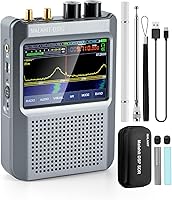
The GOOZEEZOO Malachite DSP2 SDR Receiver is not a radio for someone who wants to spin a dial and catch the evening news — it is serious kit built for hobbyists who already know what SDR means and care deeply about what it can do. The Malachite/Malahit DSP line has earned a loyal following among shortwave listeners and amateur operators across several versions, and the V2.4 iteration represents a meaningful step forward. What separates this portable SDR radio from a cheap USB dongle is straightforward: no laptop required. It runs standalone, covers 10kHz to 2GHz, and fits in a jacket pocket. At its price point, buyers rightly expect premium performance, and the hardware largely delivers.

Features & Benefits

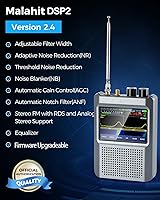
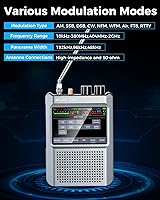
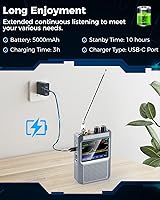
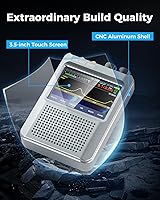
The range of demodulation modes is genuinely broad — AM, SSB, CW, NFM, WFM, Air band, NOAA, and even onboard FT8 and RTTY decoding without touching a PC. The DSP toolkit is equally capable: adaptive noise reduction, a noise blanker, AGC, and an automatic notch filter all work together to clean up cluttered or weak signals in a way that is actually audible, not just a checkbox on a spec sheet. The 3.5-inch touchscreen waterfall makes it easy to spot band activity at a glance. A temperature-compensated crystal oscillator keeps frequency drift minimal during long sessions, and dual antenna inputs add practical flexibility. The built-in 5000mAh battery and USB Type-C port for CAT, IQ, and audio output round the package out well.

Best For

This Malachite DSP2 receiver is squarely aimed at intermediate to advanced radio enthusiasts — people who already understand SDR and want a portable, self-contained unit rather than a laptop-and-dongle setup. SWL hobbyists chasing weak HF signals will appreciate the sensitivity and noise tools working in tandem. FT8 operators get something genuinely practical: onboard digital decoding that does not require WSJT-X running on a separate machine. Aviation monitors and weather watchers benefit from Air band and NOAA coverage in a unit that fits in a bag. For field work or travel, the battery capacity is a real advantage. Complete beginners, though, should honestly look elsewhere first and build some SDR familiarity before investing at this level.

User Feedback

Users who have spent real time with the Malahit DSP2 consistently praise the build quality and the improved touchscreen responsiveness compared to earlier Malachite hardware. The most common complaint — and it surfaces regularly — is the menu system. New owners often spend considerable time deciphering DSP parameter settings that experienced operators work through quickly. On HF, most report clean, strong reception; VHF and UHF performance is solid, though a handful of users note it does not quite match dedicated VHF hardware at a comparable price. Firmware updates have been reasonably frequent and mostly positive, though some buyers mention needing to reflash after an update introduced minor instability. For experienced operators, it largely meets the high bar this price point demands.

Pros

  • Covers an exceptionally wide frequency range from 10kHz all the way to 2GHz in a single handheld unit.
  • Onboard FT8 and RTTY decoding means no laptop or external software is needed for digital modes.
  • The layered DSP noise tools — NR, NB, AGC, and ANF together — produce clearly audible improvements on weak or cluttered signals.
  • A temperature-compensated crystal oscillator keeps frequency stable during long sessions, reducing annoying drift.
  • The 3.5-inch touchscreen waterfall display makes spotting band activity fast and intuitive.
  • Dual antenna inputs offer practical flexibility for different bands or antenna types without swapping connectors.
  • Built-in 5000mAh battery provides genuine portability for extended field use away from power sources.
  • USB Type-C connectivity allows CAT control, IQ streaming, and audio output to a computer when needed.
  • Build quality and touchscreen responsiveness are noticeably improved over earlier Malachite hardware versions.
  • Supports a broad range of modulation modes — AM, SSB, CW, NFM, WFM, Air, NOAA — in one device.

Cons

  • The DSP menu system has a steep learning curve that will frustrate anyone without prior SDR experience.
  • Real-world VHF and UHF sensitivity does not always live up to what the raw spec sheet implies.
  • Occasional firmware updates have introduced minor instability, requiring reflashing and troubleshooting.
  • At this price tier, buyers hold the hardware to a high standard that it does not always meet consistently.
  • No simplified beginner mode exists — new users are dropped straight into a technical interface.
  • The unit is bulkier than a basic dongle setup, making ultralight packing a consideration.
  • Initial setup and calibration can take considerable time before performance feels dialed in.
  • Support documentation and official guides are limited, leaving users reliant on community forums for help.
  • The gap in covered frequencies between 380MHz and 404MHz may occasionally matter depending on use case.
  • This portable SDR radio does not transmit, which may disappoint operators expecting a transceiver at this price level.

Ratings

The scores below for the GOOZEEZOO Malachite DSP2 SDR Receiver were generated by our AI after analyzing verified buyer reviews collected globally, with spam, bot-submitted, and incentivized feedback actively filtered out. Each category reflects the honest consensus of real hobbyists and amateur radio operators who put this unit through its paces in the field. Both the standout strengths and the recurring pain points are represented transparently, so you can make a fully informed decision.

Frequency Coverage
93%
Operators consistently describe the 10kHz-to-2GHz span as one of the widest they have encountered in a self-contained handheld unit. Being able to move from LW and shortwave all the way through VHF and into microwave-adjacent territory without swapping devices is a genuine advantage during field sessions.
The gap between 380MHz and 404MHz is a factual blind spot, and while it affects relatively few use cases, buyers who specifically need coverage in that slice of spectrum will be frustrated to discover it only after purchase.
Signal Sensitivity
81%
19%
On HF bands in particular, users report pulling in weak shortwave stations that simpler receivers completely miss, which speaks to meaningful real-world sensitivity rather than just favorable spec-sheet numbers. The 82dB dynamic range holds up well when strong and weak signals coexist on a crowded band.
VHF and UHF sensitivity does not always match what the headline 0.3uV figure implies in practice; a handful of experienced operators note that dedicated scanners in the same price range can edge it out on those specific bands, which is worth keeping in mind if UHF is your primary use case.
DSP Noise Reduction
88%
The combination of adaptive NR, noise blanker, AGC, and automatic notch filter working in concert produces results that are audibly noticeable rather than marginal — users consistently describe pulling intelligible audio from signals that were previously buried in static during portable outdoor sessions.
Getting the most out of the noise tools requires careful tuning of multiple interdependent parameters, and users who set aggressive noise reduction without understanding the interaction between NB and ANF sometimes introduce audio artifacts that are worse than the original interference.
Build Quality
84%
Compared to earlier Malachite hardware versions, reviewers note a meaningful step up in chassis rigidity and finish consistency, with the unit feeling solid enough to survive regular transport in a field bag without babying it. The improved charging circuit specifically receives positive mentions from users who had issues with prior iterations.
A small but vocal subset of buyers report minor fit-and-finish inconsistencies — primarily around button feel and connector tolerances — that feel out of place at this price tier, suggesting quality control is not perfectly uniform across production runs.
Touchscreen & Display
79%
21%
The 3.5-inch waterfall display is widely praised for making band activity immediately readable, and touchscreen responsiveness is noticeably better than on V1 Malachite units — users describe the interaction as snappy enough for practical field use rather than feeling like a frustrating afterthought.
Outdoor readability in direct sunlight is a recurring complaint; even at maximum backlight, the screen can wash out enough to make fine waterfall detail difficult to read, which is a real limitation for operators who do a lot of daytime field work.
Digital Mode Decoding
86%
Onboard FT8 and RTTY decoding without any external software dependency is genuinely practical — field operators describe being able to log FT8 contacts and monitor RTTY traffic during portable activations where running a laptop is not realistic.
The FT8 decoder has been reported to occasionally miss weaker decodes that WSJT-X running on a full PC would catch, so operators chasing very low signal-to-noise digital contacts may still prefer a PC-tethered setup for serious contesting work.
Frequency Stability
89%
The TCXO does its job well — users monitoring SSB and CW signals over extended sessions report minimal frequency drift even as the unit warms up, which makes a real difference when copying slow CW or tracking a single sideband conversation over time.
A small number of users report that certain firmware versions slightly degraded TCXO performance until a subsequent update corrected it, highlighting that frequency stability, while generally excellent, is partly tied to keeping firmware current.
Battery Life
77%
23%
The 5000mAh internal battery is genuinely sufficient for a full day of field listening at moderate DSP load, and most users report being able to get through a long portable activation or travel session without hunting for a power outlet.
Running the display at full brightness combined with intensive DSP processing drains the battery noticeably faster than casual use, and exact runtime figures are not published, leaving buyers to discover their real-world limits through trial and error.
PC Connectivity
74%
26%
The USB Type-C port for CAT control, IQ streaming, and audio output adds a useful hybrid dimension — operators who want standalone portability most of the time but occasionally want to pipe IQ data into SDR software on a computer appreciate having the option without any additional hardware.
Driver compatibility and IQ streaming stability when connected to a PC have generated mixed feedback, with some users reporting setup friction on certain operating systems that required community forum troubleshooting to resolve rather than official documentation.
Ease of Use
52%
48%
Operators with prior SDR experience — particularly those who have used other Malachite versions or similar DSP receivers — generally find the menu logic consistent and navigable once they invest time in the learning curve.
For anyone newer to SDR, the menu structure is genuinely steep; there is no guided setup, no beginner mode, and parameter labels assume prior knowledge that casual radio listeners simply will not have, making this one of the most commonly cited frustrations in user feedback across all experience levels.
Firmware & Updates
67%
33%
The fact that the DSP2 receives ongoing firmware updates at all is a meaningful positive — it signals that the platform is actively maintained, and several updates have introduced real capability improvements including better FT8 sensitivity and refined noise processing.
The update process has not been consistently smooth; some users describe applying an update and encountering new instability or behavior regressions that required reflashing to an older version, which is a frustrating experience at any price point.
Portability
83%
At 1.8 pounds with a built-in battery and self-contained operation, this portable SDR radio fits naturally into a daypack for hiking activations, travel, or emergency preparedness kits where a laptop-dependent setup is simply not practical.
It is noticeably larger and heavier than a basic RTL-SDR dongle, and buyers who prioritize absolute ultralight packing will feel that difference; it is portable, but not pocketable in any realistic sense.
Air Band & NOAA Performance
78%
22%
Aviation band monitoring and NOAA weather reception are both reliable in practice, and users who live near airports or want weather satellite audio find the Malahit DSP2 handles those use cases well without needing any additional hardware or software.
Aviation monitoring enthusiasts who compare it directly against dedicated airband scanners note that squelch behavior and audio clarity on AM air frequencies can feel slightly less refined, though it remains entirely functional for casual monitoring.
Value for Money
63%
37%
For experienced operators who will genuinely use the full breadth of demodulation modes, onboard digital decoding, and DSP tools, the feature set per dollar compares reasonably well against assembling a portable SDR kit from separate components.
At this price tier, buyers hold the unit to an exacting standard, and recurring issues around UI complexity, inconsistent VHF performance, and firmware instability make it harder to call it straightforward good value — this is a receiver you need to grow into to justify the cost.

Suitable for:

The GOOZEEZOO Malachite DSP2 SDR Receiver is built for amateur radio operators, shortwave listeners, and RF hobbyists who already have a working understanding of SDR and want a capable, self-contained unit they can take anywhere. Unlike a USB dongle that depends entirely on a laptop running SDR software, this portable SDR radio operates independently — which makes it genuinely useful for field work, travel, or any situation where dragging a computer along is not practical. SWL enthusiasts hunting weak HF stations will find the layered noise reduction tools meaningful rather than cosmetic. FT8 and RTTY operators get a real advantage from onboard digital decoding, eliminating the need for a separate computer running WSJT-X or similar software. Aviation watchers and weather monitoring hobbyists will appreciate Air band and NOAA support in a unit small enough to fit in a daypack, powered by a battery that lasts through extended listening sessions.

Not suitable for:

The GOOZEEZOO Malachite DSP2 SDR Receiver is a poor match for anyone new to software-defined radio or buying their first shortwave receiver. The DSP menu system is layered and technical — settings like noise blanker thresholds, RF gain curves, and filter bandwidths require prior SDR knowledge to use meaningfully, and there is no simplified beginner mode to fall back on. Casual listeners who just want to catch AM broadcasts or scan FM stations will find this hardware overwhelming and overpriced for that purpose. Buyers expecting dedicated VHF or UHF scanner performance at this price point may also find themselves disappointed, as reported real-world performance on those bands does not always match what pure spec numbers suggest. Finally, anyone who relies heavily on a single definitive setup guide should know upfront that firmware updates, while generally positive, have occasionally introduced instability that required some patience to work through.

Specifications

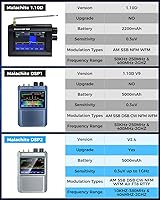
  • Frequency Range: Covers 10kHz to 380MHz and 404MHz to 2GHz, with a small gap between 380MHz and 404MHz.
  • Modulation Modes: Supports AM, SSB (LSB and USB), DSB, CW, NFM, WFM, Air band, NOAA Weather, FT8, and RTTY decoding.
  • Display: Features a 3.5-inch LCD touchscreen with adjustable backlight brightness and a real-time waterfall signal display.
  • Battery: Equipped with a built-in 5000mAh lithium-ion battery that is rechargeable via the USB Type-C port.
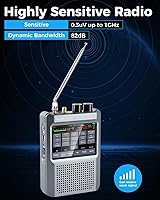
  • Sensitivity: Rated at 0.3uV sensitivity up to 1GHz, with an 82dB dynamic range for weak-signal reception work.
  • Oscillator: Uses a temperature-compensated crystal oscillator (TCXO) to maintain frequency stability and minimize drift during extended use.
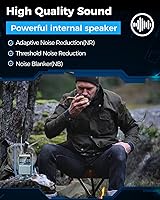
  • DSP Features: Includes adaptive noise reduction, threshold noise reduction, noise blanker (NB), automatic gain control (AGC), and automatic notch filter (ANF).
  • Connectivity: USB Type-C port supports CAT control, IQ data streaming, and audio output to a connected computer.
  • Antenna Inputs: Provides two independent antenna inputs, allowing different antennas to be configured for different frequency ranges.
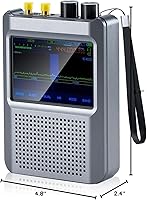
  • Dimensions: Measures 8.9 x 4.8 x 2.4 inches, making it compact enough for field use and travel packing.
  • Weight: Weighs 1.8 pounds, which is lightweight for a self-contained SDR receiver with a built-in battery.
  • Version: This is the V2.4 DSP2 generation of the Malachite platform, with updated firmware support and improved charging circuitry over prior iterations.
  • Audio Output: Delivers stereo FM audio with RDS support and includes a 3.5mm headphone jack for private listening.
  • Power Source: Operates entirely on its internal battery, with no requirement for an external power supply during standalone use.
  • Included Items: Ships with a Quick Start Guide; no external antennas, cables, or carrying cases are listed as included in the box.

Related Reviews
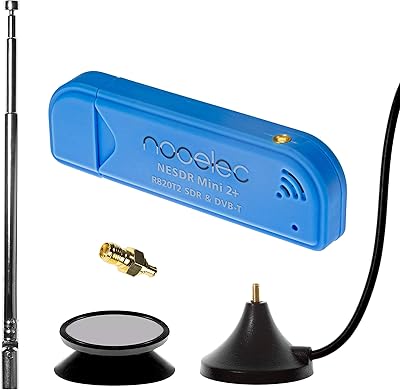
NooElec NESDR Mini 2+
82%
93%
Frequency Accuracy & Stability
91%
Value for Money
88%
Signal Reception Quality
54%
Stock Antenna Quality
67%
Ease of Setup
More
Donner MAMP5 Stereo Receiver
77%
88%
Value for Money
74%
Sound Quality
67%
Power & Amplification
91%
Connectivity & Inputs
82%
Bluetooth Performance
More
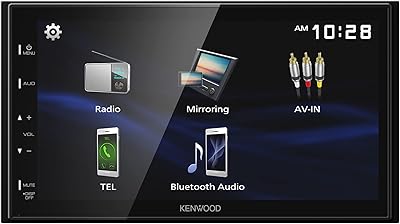
Kenwood DMX129BT
Kenwood DMX129BT
73%
88%
Touchscreen Responsiveness
84%
Bluetooth Performance
86%
Sound Quality
71%
Android USB Mirroring
79%
Value for Money
More
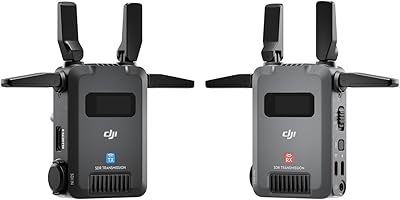
DJI SDR Transmission Wireless Video System
79%
83%
Transmission Range
91%
Signal Stability & Anti-Interference
88%
Video Quality & Latency
86%
Connectivity & Output Options
84%
Broadcast Mode Performance
More
Facmogu Si4730 FM Radio Receiver
79%
83%
Reception Quality
78%
Antenna Performance
86%
Build Quality
71%
Ease of Use
81%
Setup & Installation
More
Swiitech T1 Bluetooth Transmitter Receiver
75%
91%
Ease of Setup
83%
Connection Stability
74%
Latency Performance
52%
Device Compatibility
79%
Build Quality
More
Sony DSX-B700 Bluetooth Car Media Receiver
72%
88%
Bluetooth Connectivity
83%
Sound Quality
61%
Hands-Free Call Quality
81%
Siri Eyes Free Integration
74%
Ease of Installation
More
Yamaha R-S202 Stereo Receiver
75%
84%
Sound Quality
81%
Build Quality
88%
Value for Money
63%
Bluetooth Performance
91%
Ease of Setup
More
Onkyo TX-SR494 AV Receiver
85%
89%
Sound Quality
91%
4K Video Performance
87%
Ease of Setup
84%
Build Quality
83%
Bluetooth Connectivity
More
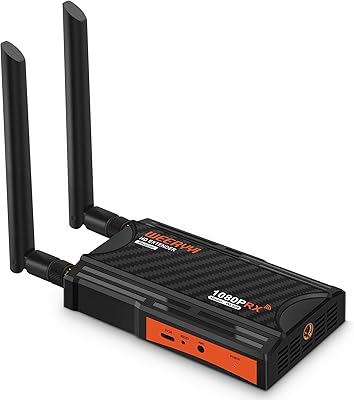
Weeryyi Wireless HDMI Extender Receiver
83%
91%
Value for Money
88%
Ease of Setup
85%
Signal Stability
83%
Range Performance
70%
Latency
More

FAQ

It works fully standalone — no computer, no dongle, no software installation required. The GOOZEEZOO Malachite DSP2 SDR Receiver runs its own firmware and handles all signal processing internally. You can optionally connect it to a PC via USB Type-C to stream IQ data or audio, but that is entirely up to you.

Honestly, probably not as a first radio. The menu system is built around DSP concepts like noise blanker thresholds, filter bandwidths, and RF gain curves that assume you already know what those things do. If you are brand new to SDR, it is worth starting with a simpler setup first and working your way up to this one.

It depends on what you want to listen to. For HF and shortwave, a long wire antenna or a dedicated HF whip will serve you well. For VHF and UHF, a telescoping whip or a small discone antenna is a practical choice. The unit has dual antenna inputs, so you can dedicate one to lower frequencies and one to higher frequencies without swapping cables constantly.

No external software is needed. The Malahit DSP2 handles FT8 decoding onboard, which is one of its more practical advantages over a basic SDR dongle. You tune to the appropriate FT8 frequency, activate the mode, and the decoder runs natively on the device itself.

Usage time will vary based on screen brightness and how hard the DSP is working, but a 5000mAh battery in a device this size typically supports several hours of continuous listening. Most users report comfortably getting through a long field session on a single charge, though exact runtime figures are not officially published.

For most users, no. That gap falls in a slice of spectrum that sees limited civilian use in most regions. Air band, weather satellites, amateur VHF, and most scanner-relevant frequencies fall outside that window. If your specific monitoring interest happens to sit in that gap, though, it is worth noting before you buy.

Firmware updates are available and the platform does receive them periodically. Most updates have improved functionality, but a small number of users have reported needing to reflash after an update introduced instability. It is generally safe, but worth reading community feedback on a specific firmware version before applying it.

HF performance is generally where this portable SDR radio shines most, with strong reports of clean reception on shortwave bands. VHF and UHF performance is competent but not exceptional — users who need top-tier VHF scanner performance sometimes find dedicated scanners edge it out at a similar price. It is a capable all-rounder, not a specialist VHF tool.

It is strictly a receiver — there is no transmit capability. If you need a transceiver for two-way communication, this is not the right device regardless of how capable it is on the receive side.

The core difference is self-sufficiency. An RTL-SDR dongle depends entirely on a laptop or PC running software like SDR#, and its frequency range and sensitivity are more limited. This portable SDR radio handles everything onboard — processing, display, decoding, and power — and covers a far wider frequency range with better dynamic range and noise handling. The tradeoff is cost and complexity; the dongle route is cheaper and more beginner-friendly, while this unit is built for operators who want capable, portable performance without dragging a computer along.