Overview

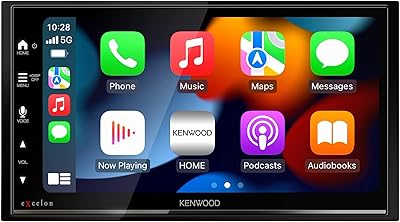
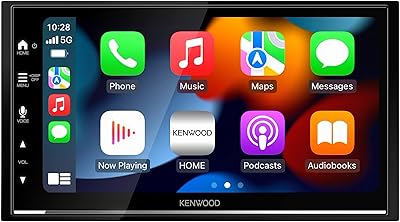
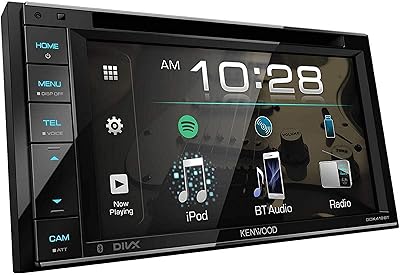
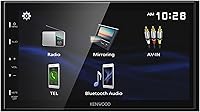
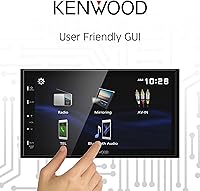
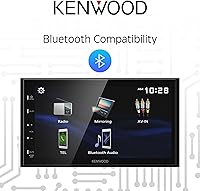
The Kenwood DMX129BT is a double-DIN multimedia receiver that landed in April 2023, sitting comfortably in the middle of Kenwood’s current head unit lineup — not stripped-down basic, not overloaded with features most drivers will never touch. If your factory stereo feels dated and you want a genuine upgrade without an overcomplicated budget, this head unit is built precisely for that gap. The 6.8-inch capacitive touchscreen is the obvious centerpiece, and it genuinely changes how you interact with audio controls while driving. Kenwood has been making car audio gear for decades, and that experience shows in how thoughtfully the interface is laid out.

Features & Benefits

The capacitive touch panel responds like a smartphone screen — quick and accurate — which is a real contrast to the sluggish resistive displays on many competing units in this price range. Bluetooth is built in, handling hands-free calls and audio streaming without dongles or adapters. Android users get USB Mirroring, so you can project your phone screen directly onto the display; it’s not Android Auto, but it covers the core use cases for most people. The 13-band equalizer with Digital Time Alignment lets you tune the sound to your specific cabin, and the 5-channel output gives you room to expand into an amplifier setup down the road. A rear camera input with parking guideline overlay rounds things out practically.

Best For

Daily commuters will probably get the most out of this Kenwood receiver — Bluetooth calling works reliably from day one, and the straightforward interface doesn’t require a steep learning curve. Android phone users specifically benefit from USB Mirroring, giving them navigation and media access on the bigger screen without paying extra for a platform subscription. Car audio hobbyists who want hands-on EQ control without buying a separate processor will also appreciate the depth of tuning on offer. That said, if Apple CarPlay or Android Auto is a non-negotiable for you, this head unit is not the right fit. It’s best suited to pragmatic upgraders who care more about solid audio output and a responsive display than app ecosystem integration.

User Feedback

With a 4.2-star average across over 130 ratings, this Kenwood receiver earns its score without much controversy. Buyers consistently call out the touch response and the noticeable improvement in sound quality over their old factory units. Bluetooth reliability also gets repeated praise — it pairs fast and stays connected. On the downside, a number of reviewers flagged installation as trickier than expected; if you’re not comfortable with car wiring, budgeting for a professional install is a smart move. The absence of Apple CarPlay and Android Auto comes up regularly, and that criticism is fair. A handful of users also mentioned a brief adjustment period with the menu layout. Overall, most buyers feel the value holds up well for what this unit delivers.

Pros

  • The capacitive touchscreen responds quickly and accurately, a real step up from resistive panels on rival units.
  • Built-in Bluetooth pairs fast and stays connected reliably throughout daily commutes.
  • The 13-band EQ with Digital Time Alignment delivers genuinely noticeable sound improvements inside the cabin.
  • Android USB Mirroring brings navigation and media apps to the bigger screen without extra subscriptions.
  • Rear camera input with parking guideline overlay works automatically when you shift into reverse.
  • The 5-channel output gives you a clear path to add an amplifier or subwoofer later without extra hardware.
  • Standard double-DIN form factor fits a wide range of vehicles with minimal modification.
  • Sound quality improvement over a stock factory stereo is immediate and obvious, even at modest volume levels.
  • The head unit retains EQ and audio settings between drives, so there is no need to reconfigure after every restart.

Cons

  • No Apple CarPlay or Android Auto support, a significant gap at this price point in 2024.
  • Installation is genuinely complex for buyers without prior car audio wiring experience.
  • USB Mirroring performance is inconsistent depending on Android version and phone model.
  • Screen brightness can fall short in strong direct sunlight, making visibility uncomfortable.
  • The built-in amplifier output clips under harder driving conditions without an external amp.
  • Menu navigation has a learning curve, and deeper settings like time alignment take time to locate.
  • iPhone users have no meaningful phone integration beyond basic Bluetooth audio streaming.
  • The plastic build quality feels noticeably mid-range when handling the unit up close.
  • No rear camera is included in the box, adding an unavoidable extra cost to the full setup.
  • Occasional slow initialization after a cold start has been flagged by a consistent subset of buyers.

Ratings

Our AI rating engine analyzed verified global buyer reviews for the Kenwood DMX129BT, actively filtering out incentivized, duplicate, and bot-generated feedback to surface what real drivers actually experience. The scores below reflect a transparent picture of where this head unit earns its praise and where it genuinely falls short. Both the highlights and the frustrations are represented honestly.

Touchscreen Responsiveness
88%
Buyers repeatedly single out the capacitive panel as a cut above what they expected at this price tier. Tapping through menus or adjusting volume while stopped at a light feels natural and quick, with almost no input lag reported during everyday commutes.
A small number of users noted that the screen can be harder to read in direct afternoon sunlight, and glare occasionally forces awkward viewing angles. Finger smudges also accumulate visibly on the glossy surface.
Bluetooth Performance
84%
Pairing is consistently described as fast and stable across both budget and flagship Android devices. Call audio quality comes through clearly on the receiving end, and music streaming holds a solid connection even during longer highway drives.
Some users reported that re-pairing is occasionally required after the vehicle sits unused for several days. A handful of reviews mentioned slight audio compression on streaming services compared to a wired connection.
Sound Quality
86%
The 13-band equalizer with Digital Time Alignment gives drivers real control over how music actually sounds inside their specific cabin, something most factory units never offer. Reviewers upgrading from OEM stereos notice an immediate and tangible improvement in clarity and depth.
At higher volumes, some buyers noted that the built-in amplification starts to lose composure, particularly in the low-mid range. Getting the best out of the EQ does require some time and patience to dial in correctly.
Android USB Mirroring
71%
29%
For Android users who do not need a full platform integration, USB Mirroring covers the practical bases well. Navigation apps and music players display cleanly on the larger screen, which is a genuine convenience during daily commutes without any subscription or compatibility requirement.
This is not Android Auto, and buyers who expected that level of polish are often disappointed. App compatibility can be inconsistent depending on the Android version, and the mirroring experience occasionally stutters on older phones.
Value for Money
79%
21%
Most buyers conclude that the DMX129BT punches fairly well for what it costs, especially when weighed against the features on offer: a large capacitive screen, built-in Bluetooth, EQ with time alignment, and camera input in a single unit.
The absence of Apple CarPlay and Android Auto is the single biggest value detractor for buyers who consider those features standard at this price point. For iPhone users especially, the value equation becomes harder to justify.
Installation Experience
53%
47%
Experienced DIY installers with basic wiring knowledge report a manageable process, and the standard double-DIN form factor means it fits a wide range of vehicles without custom brackets.
This is one of the most consistent pain points in user reviews. Buyers without prior car audio experience frequently describe the wiring harness and configuration process as frustrating and time-consuming. Professional installation is strongly recommended for novices.
Display Clarity
76%
24%
The WVGA resolution is adequate for displaying track info, rear camera feeds, and mirrored phone content. Colors are reasonably vivid for a head unit in this tier, and the screen size makes it easy to read at a glance.
The resolution does not match what smartphone screens have conditioned buyers to expect, and text can look slightly soft when mirroring certain apps. Brightness maxes out at a level that some drivers find insufficient on very sunny days.
Rear Camera Integration
81%
19%
The camera input with parking guideline overlay works reliably and switches automatically when reverse is engaged, which buyers in tighter parking situations find genuinely useful day to day.
The unit does not include a rear camera in the box, so buyers need to factor in that additional purchase. Image quality through the input is entirely dependent on the camera chosen, not the receiver itself.
Interface & Menu Navigation
67%
33%
Once familiar with the layout, most users find the menus logically organized and consistent. Frequently used functions like source switching and Bluetooth management are accessible within a couple of taps.
The learning curve draws criticism from first-time Kenwood buyers. Some settings, particularly EQ and time alignment configuration, are buried deep enough in submenus that several reviewers only discovered them weeks after installation.
Build Quality & Finish
74%
26%
The chassis feels solid and fits flush in standard double-DIN bays without noticeable flex. The matte black trim around the display holds up reasonably well to daily handling and does not show scuffs easily.
The overall plastic construction does not feel premium up close, and some buyers noted that the faceplate edges have a slightly uneven finish out of the box. It reads clearly as a mid-range unit in terms of tactile quality.
Audio Output & Expansion
82%
18%
The 5-channel output is a practical advantage for buyers who plan to add an external amplifier or a separate subwoofer channel later. Having that flexibility built in removes the need for a signal processor in a basic expansion setup.
The built-in power output is sufficient for modest listening levels but will not satisfy buyers who want to push door speakers hard without clipping. Serious audio builds will still need an external amp regardless.
Compatibility & Connectivity
73%
27%
USB, RCA, and HDMI connectivity covers a wide spread of accessory and device hookups, and the receiver works cleanly with most Android smartphones for mirroring purposes without additional adapters.
iOS users are notably underserved, with no CarPlay support and limited iPhone integration options beyond basic Bluetooth audio. Buyers heavily invested in the Apple ecosystem should look elsewhere.
App & Platform Integration
47%
53%
For Android users specifically, USB Mirroring does allow access to navigation and media apps on the head unit screen, covering the core use case without needing a more expensive platform-integrated receiver.
The lack of Android Auto and Apple CarPlay is a genuine limitation that buyers regularly cite as a dealbreaker. At this price point, many competing units now offer at least wireless Android Auto, making this omission increasingly difficult to overlook.
Ease of Daily Use
83%
Once set up, the day-to-day experience is largely frictionless for commuters. Bluetooth connects automatically on startup, preferred EQ settings are retained, and the screen wakes quickly when the ignition turns on.
Occasional software quirks — such as the unit taking a few extra seconds to initialize after a cold start — were mentioned by a small but consistent subset of reviewers. Nothing critical, but noticeable enough to flag.
Documentation & Setup Support
58%
42%
Kenwood provides a reasonably detailed manual, and the brand has a solid community of installers and enthusiasts online who have documented common install scenarios across popular vehicle models.
The included documentation assumes a baseline of car audio knowledge that many buyers simply do not have. First-time installers frequently turn to YouTube tutorials to fill in the gaps, suggesting the official materials fall short for the intended audience.

Suitable for:

The Kenwood DMX129BT is a strong pick for Android smartphone users who want to project their phone screen onto a proper in-dash display without paying for a platform-integrated unit. Daily commuters will get solid mileage out of the reliable Bluetooth calling, automatic camera switching when reversing, and the kind of touchscreen responsiveness that makes quick adjustments at a stoplight feel effortless. If your current car has a tired factory stereo and you want a meaningful audio upgrade without building a full aftermarket system, the 13-band EQ and Digital Time Alignment give you genuine tuning depth that most head units at this tier simply do not offer. Budget-conscious buyers replacing an aging double-DIN unit in an older vehicle will find the feature set punches well above the typical expectations for this price range. Car audio hobbyists who want a tunable foundation before adding an external amplifier later will also appreciate the 5-channel output that makes future expansion straightforward.

Not suitable for:

The Kenwood DMX129BT is not the right call for iPhone users or anyone who considers Apple CarPlay a baseline requirement — it is simply not supported, and no workaround changes that reality. Android Auto users should look elsewhere too, since USB Mirroring is a functional but noticeably less polished substitute that lacks the deep app integration drivers familiar with Auto have come to expect. Buyers who are uncomfortable with car wiring and expect a plug-and-play install experience may find the process genuinely frustrating; professional installation should be budgeted for rather than treated as optional. If you want a head unit that feels premium to the touch and rivals a smartphone display in resolution, this head unit will likely leave you underwhelmed — the WVGA screen and mid-range plastics reflect where the money was and was not spent. Drivers who frequently use streaming-heavy apps and expect the mirroring to behave flawlessly across all Android versions will also encounter inconsistencies worth knowing about before committing.

Specifications

  • Screen Size: The unit features a 6.8″ WVGA capacitive touchscreen display built into a standard double-DIN chassis.
  • Touch Panel: Capacitive touch technology is used, providing faster and more accurate input response compared to resistive panels.
  • Bluetooth: Built-in Bluetooth supports hands-free calling and wireless audio streaming directly from paired devices.
  • Phone Mirroring: USB Mirroring for Android allows compatible smartphones to project their screen onto the head unit display via a wired USB connection.
  • CarPlay / Auto: Apple CarPlay and Android Auto are not supported on this unit; USB Mirroring serves as the primary phone integration method.
  • Equalizer: A 13-band equalizer with Digital Time Alignment is built in, enabling precise tuning of audio frequency response and speaker timing.
  • Camera Input: A dedicated rear-view camera input supports an optional backup camera with on-screen parking guideline overlay when reversing.
  • Audio Output: Five-channel audio output supports front, rear, and subwoofer connections for expanded aftermarket speaker and amplifier configurations.
  • Audio Mode: The unit outputs in stereo surround sound mode, compatible with multi-speaker cabin setups.
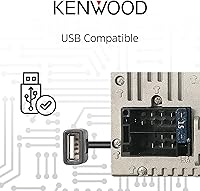
  • Connectivity: Physical connectivity includes USB, RCA, and HDMI ports for accessory and device hookups.
  • Video Encoding: MPEG-4 video encoding is supported for compatible media playback through connected sources.
  • Form Factor: Standard double-DIN form factor ensures compatibility with a wide range of vehicles that accept 2-DIN head unit installations.
  • Dimensions: The unit measures 6.3 x 7.2 x 8.9 inches, consistent with standard double-DIN installation bay requirements.
  • Weight: The receiver weighs 3.19 pounds, typical for a fully featured double-DIN multimedia unit.
  • Color & Finish: Finished in matte and gloss black, the unit blends with standard vehicle interior trim without a contrasting color profile.
  • Compatible Devices: Officially compatible with smartphones and external speakers, with primary functionality centered on Android device integration.
  • Model Number: The official Kenwood model designation is DMX129BT, released to market in April 2023.
  • Brand: Manufactured by Kenwood, a brand with decades of established presence in consumer and professional car audio equipment.

Related Reviews
Kenwood DMX709S Car Stereo
84%
88%
Display Quality
91%
Apple CarPlay & Android Auto Integration
83%
Sound Quality
74%
Ease of Installation
90%
Touchscreen Responsiveness
More
Kenwood KAC-M3001 Amplifier
87%
88%
Power Output
92%
Build Quality
91%
Ease of Installation
85%
Efficiency
89%
Size and Portability
More
Kenwood DMX8709S Car Stereo
83%
89%
Ease of Use
86%
Sound Quality
91%
Display Quality
84%
Wireless Connectivity
73%
Bluetooth Stability
More
Kenwood KDC-BT370U Car Stereo
85%
88%
Ease of Installation
91%
Bluetooth Performance
85%
Alexa Integration
80%
Sound Quality
70%
User Interface Usability
More
Kenwood KMR-M332BT Marine Stereo
86%
88%
Sound Quality
91%
Ease of Installation
85%
Build Quality/Durability
80%
Bluetooth Connectivity
87%
Weatherproof Performance
More
Kenwood DDX419 In-Dash Car Stereo
85%
88%
Display Quality
91%
Bluetooth Connectivity
85%
Ease of Use
87%
Audio Customization
67%
Touchscreen Responsiveness
More
Kenwood KDC-BT282U Car Stereo
83%
94%
Bluetooth Connectivity
88%
Sound Quality
85%
Ease of Use
92%
Value for Money
76%
Installation Ease
More
Kenwood DPX395MBT Digital Media Receiver
84%
87%
Value for Money
84%
Audio Quality
92%
Bluetooth Connectivity
91%
Ease of Installation
88%
Voice Control (Alexa Integration)
More
Kenwood KAC-D5101 Mono Amplifier
85%
91%
Bass Performance
85%
Ease of Installation
89%
Power Output
87%
Build Quality
88%
Compact Design
More
Kenwood DPX304MBT Digital Media Receiver
86%
93%
Bluetooth Connectivity
89%
Alexa Integration
91%
Ease of Setup
87%
Streaming Performance
90%
Interface & Display
More

FAQ

No, the Kenwood DMX129BT does not support either Apple CarPlay or Android Auto. Android users can use USB Mirroring to project their phone screen onto the display, but iPhone users are limited to Bluetooth audio and hands-free calling only. If CarPlay or Android Auto is a must-have for you, this unit is not the right fit.

It depends on your comfort level with car wiring. If you have installed a head unit before or are confident working with wiring harnesses, the process is manageable. That said, buyers without prior car audio experience consistently report that installation is more involved than expected, so budgeting for a professional install is a genuinely smart move if you are new to this.

No, a rear-view camera is not included. The receiver has a dedicated camera input with parking guideline overlay support, but you will need to purchase a compatible camera separately and run the wiring during installation.

You connect your Android phone to the head unit via a USB cable, and the receiver mirrors your phone screen directly onto its display. You can then interact with navigation and media apps from the unit. Keep in mind that compatibility can vary depending on your Android version and phone model, so it is worth checking your specific device before purchasing.

You can pair an iPhone via Bluetooth for hands-free calls and wireless music streaming, but that is essentially the limit of iPhone integration on this unit. There is no CarPlay support and no USB Mirroring for iOS devices. Android users get significantly more functionality out of this receiver.

The capacitive panel is genuinely responsive and does not require the deliberate hard presses that resistive screens demand. Most users find quick adjustments like source switching or volume control comfortable at a stoplight. That said, like any touchscreen head unit, it is safest to keep interactions minimal while the vehicle is moving.

Yes, the 5-channel audio output is designed with exactly this in mind. You can run front, rear, and subwoofer channels to an external amplifier using the RCA preamp outputs, making it a practical foundation for a more serious audio build down the road.

The 13-band equalizer combined with Digital Time Alignment gives you a level of tuning control that is uncommon at this price tier. Time Alignment in particular lets you compensate for the fact that your speakers are at different distances from your ears, which noticeably improves the soundstage when dialed in correctly. It does take some patience to set up well, but the payoff is real.

This Kenwood receiver uses a standard double-DIN form factor, which fits the vast majority of vehicles that have a 2-DIN dash opening. If your car currently has a single-DIN stereo, you would need a dash kit adapter, and some vehicles have proprietary dash configurations that require specific mounting kits. Checking a vehicle compatibility tool before ordering is always recommended.

The display holds up reasonably well under normal daytime conditions, but direct sunlight at certain angles can wash out visibility. It is not a dealbreaker for most drivers, but buyers who do a lot of driving with the sun facing the dash directly may find themselves adjusting the viewing angle more often than they would like.