Overview

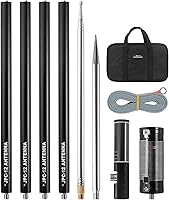
The GOOZEEZOO JPC-12 HF Vertical Ham Radio Antenna is a compact, field-ready multiband vertical covering eight amateur bands from 40m down to 6m, spanning 7 to 50MHz. At just 1.35kg and standing 4.1 meters tall when fully assembled, it packs into a carry bag and goes up in about five minutes without any help. The standout upgrade over older versions is the sliding regulator design, which replaces the fiddly screw-and-plug system that frustrated many operators in the field. Priced in the mid-range, this portable HF vertical competes seriously as a POTA, SOTA, or travel antenna for hams who need real performance without hauling a full station kit.
Features & Benefits

The sliding adjustment block is the headline change here, letting you shift the coil contact point with a thumb swipe rather than swapping plugs or wrestling with screws mid-activation. The reinforced spring inside the sensing coil keeps contact reliable across repeated setups and pack-downs. On 40m, expect an SWR below 1.3 straight out of the box; on other bands you can typically dial it to around 1.1, though a tuner can still help on band edges. The included 10-strand radial mesh and ground anchor provide a workable ground system, and adding supplemental radials will genuinely improve low-band performance. Power handling tops out at 100W SSB, covering most portable 50-ohm transceiver setups comfortably.

Best For

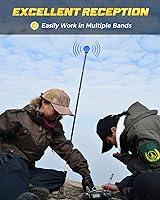
This multiband field antenna is a natural fit for POTA and SOTA activators who want one antenna covering most HF bands without hauling extra gear. Hams in apartments or HOA-restricted neighborhoods will find the compact footprint and tidy profile make balcony use surprisingly practical. Beginners can achieve solid SWR figures without an external analyzer, though some patience with the coil reference markings is needed early on. Travelers and remote operators who pack everything into a backpack will appreciate the lightweight build and included carry bag. If you are stepping up from a basic wire antenna and want something more structured and repeatable, the JPC-12 antenna is a logical next step.

User Feedback

Sitting at 4.6 stars across more than 230 ratings, the JPC-12 antenna ranks near the top of its category, and the recurring theme in reviews is that the sliding regulator is a genuine, meaningful improvement over older clip-style designs. Field signal reports have been encouraging, with operators logging solid contacts across multiple bands. The carry bag earns repeated praise as a practical bonus. On the downside, some buyers found the coil reference markings confusing at first — the tuning guidance requires a careful read before it fully clicks. A handful of operators also noted the stock radial set benefits from extra wires, especially on 40m. Worth knowing before your first activation.

Pros

  • Assembles solo in about five minutes with no tools, a genuine field advantage during activations.
  • The sliding regulator block makes band changes quick and far less fiddly than older clip designs.
  • Covers eight bands from 40m through 6m, handling the majority of popular HF operating scenarios.
  • At 1.35kg with a carry bag included, this portable HF vertical fits inside a hiking daypack.
  • SWR on 40m sits below 1.3 straight out of the box, without touching the adjustment block.
  • The reinforced coil spring solves a well-known contact reliability issue from the previous version.
  • Bundling the radial mesh and ground anchor means you can deploy immediately without sourcing extras.
  • Ranked in the top 100 radio antennas on Amazon with a 4.6-star average across real buyer reviews.
  • Compatible with virtually any 50-ohm transceiver, requiring no unusual adapters for standard rigs.
  • Field signal reports from operators suggest competitive on-air performance for a vertical of this size.

Cons

  • The coil reference markings have a real learning curve — read the guide carefully before your first field outing.
  • Stock radials are a functional starting point but supplemental wires noticeably improve 40m performance.
  • A tuner can still be necessary on certain band edges, so do not budget as if one is never needed.
  • The carry bag feels basic and its long-term durability under heavy repeated use is a valid question.
  • M10 base threads are less common than standard coax fittings, and an adapter may catch you off guard.
  • No coverage below 40m, which is a hard limitation for operators who regularly work 80m or 160m.
  • The coil contact shrapnel must land precisely on the correct winding — a slight slip causes confusing SWR spikes.
  • Instructions in the box are thin enough that new hams often turn to online forums to fill the gaps.
  • In loose or sandy soil, the ground anchor can shift in gusty conditions without supplementary guying.
  • Smaller plastic hardware components show wear for operators who pack and deploy the antenna very frequently.

Ratings

The GOOZEEZOO JPC-12 HF Vertical Ham Radio Antenna earns an overall 4.6-star standing across 234 verified purchases, and the scores below were generated by AI after systematically analyzing that global buyer feedback while actively filtering out incentivized, duplicate, and bot-pattern reviews. The results surface both what operators genuinely love about this portable vertical and the friction points that real users ran into in the field, on balconies, and during POTA activations — no spin, no omissions.

Ease of Assembly
91%
Most buyers managed a solo setup in well under ten minutes, even on their first attempt. The split aluminum tube system clicks together logically, and experienced field operators report they can be on the air faster with this antenna than with any comparable vertical they have used at a park activation.
A small number of users noted that the M10 threaded joints occasionally feel stiff in cold weather, requiring extra care to avoid cross-threading. First-timers may need one practice run at home before confidently deploying in a field setting.
SWR Performance
88%
On 40m the antenna routinely delivers an SWR below 1.3 without any adjustment, which is genuinely impressive for a portable vertical. On most other bands operators can slide the regulator block to hit around 1.1, giving clean output from typical 100W SSB rigs.
Band edges on a few of the higher bands can push SWR to less comfortable levels, and a handful of users found that a tuner remained useful for those situations. The antenna does not fully eliminate the need for a tuner in every operating scenario.
Tuning Mechanism
86%
The sliding regulator block is the upgrade buyers most consistently mention as a real-world improvement. Swapping between bands in the field now takes a thumb slide and a quick SWR check rather than digging through a bag for spare plugs or juggling small screws in the wind.
The reference markings printed on the coil require careful study before they become intuitive. Several users described a learning curve during their first activation, and the tuning guide could benefit from clearer visual indicators for each band.
Portability & Packability
93%
At 1.35kg and folding down to fit inside the included carry bag, this multiband field antenna travels in a backpack without dominating the load. SOTA and POTA operators specifically praise being able to combine the antenna kit with a radio and battery in a single day pack.
The carry bag, while convenient, is basic in construction and a few buyers questioned its long-term durability under repeated field use. The assembled height of 4.1 meters also means you need clear vertical space, which can be a constraint on crowded summit activations.
Build Quality & Materials
79%
21%
The aluminum tube sections feel solid and the stainless steel whip resists the kind of surface corrosion you expect after repeated outdoor deployments. The reinforced spring inside the coil is a tangible improvement over older iterations that operators who used the previous version immediately notice.
The carry bag and a few of the smaller hardware pieces feel less refined than the main antenna elements. Some buyers flagged that the coil housing, while functional, looks and feels less premium than the rest of the build at this price point.
Ground Radial System
71%
29%
The included 10-strand radial mesh and ground anchor give you a functional starting point that most competing antennas at this tier simply do not bundle in the box. For quick deployments on grass or packed earth, the stock system delivers workable low-angle radiation.
Experienced operators consistently note that the stock radials are the weakest link, particularly on 40m where a fuller ground plane makes a measurable difference in received signal reports. Supplemental radials are nearly essential for serious low-band operating, which adds cost and setup time.
Band Coverage
89%
Eight bands from 40m through 6m covers the bulk of what most portable HF operators actually use day to day. Having 30m, 17m, and 12m in the mix alongside the standard contest bands is a practical advantage for WARC band enthusiasts chasing DX during an activation.
The antenna does not extend below 40m, so operators who also work 80m or 160m will need a separate solution. Coverage tops out at 6m, leaving dedicated VHF operators without a dual-purpose option.
Signal Reception & Transmission
83%
Field reports and on-air signal comparisons with other portable verticals suggest the JPC-12 antenna punches reasonably well for its size and weight. Operators have logged intercontinental contacts running modest power, which builds confidence for remote and travel operating.
As a vertical without an extensive radial field, it picks up a fair amount of local noise in suburban environments. Operators near power lines or dense housing report needing to manage RFI more carefully than they would with a dipole at height.
Coil Contact Reliability
81%
19%
The reinforced spring mechanism keeps the shrapnel contact pressed firmly against the selected coil winding, which solves a well-documented intermittent contact issue on earlier versions. Operators who owned the older model specifically highlight this fix as the reason they upgraded.
The contact system still requires careful positioning to ensure the shrapnel lands squarely on the correct coil and not on an adjacent winding. A momentary slip during adjustment can produce unexpectedly high SWR readings that initially confuse newer operators.
Compatibility with Transceivers
92%
The standard 50-ohm impedance and M10 base thread mean this portable HF vertical connects cleanly to virtually every modern portable transceiver, from popular Japanese rigs to the growing range of QRP radios. No unusual adapters or pigtails are needed in most setups.
The M10 thread size is less common than PL-259 or SO-239 fittings, so operators will need a suitable adapter if their feed-line termination does not match. This is a minor but non-obvious requirement that catches some first-time buyers off guard.
Value for Money
84%
Relative to what you spend on a comparable portable multiband vertical from more established brands, the JPC-12 antenna delivers a surprisingly complete package including the carry bag, radial mesh, and ground anchor. For POTA and travel operators on a real-world budget, the math works out favorably.
It is not inexpensive enough to be an impulse purchase, and buyers who discover they still need supplemental radials and possibly a tuner for band edges may feel the total investment crept higher than expected. Managing those expectations upfront would reduce disappointment.
Setup Documentation
57%
43%
The box does include reference data for the main operating frequencies, and operators who take time to read and cross-reference the coil markings before their first outing generally get good results without outside help.
Multiple buyers described the printed instructions as sparse and the coil band markings as genuinely confusing without supplementary guidance. New hams in particular often turned to YouTube or online forums to fill in the gaps, which is a gap the manufacturer should close.
Durability Over Time
74%
26%
The aluminum and stainless steel construction resists corrosion well, and operators who have used this multiband field antenna across dozens of wet-weather activations report no significant degradation in structural integrity or electrical performance.
The smaller plastic and spring components have shown wear for operators who deploy and pack the antenna very frequently. A handful of long-term users reported needing to check spring tension periodically to maintain reliable coil contact after heavy use.
Stability in Wind
76%
24%
When the ground anchor is properly seated and the radial mesh is spread out flat, the antenna holds its position in moderate wind without needing guy wires. For most park and summit activations with typical weather, it stays upright and functional throughout the operating session.
In genuinely gusty conditions the 4.1-meter vertical can flex considerably, and a few operators reported the base anchor pulling loose in sandy or loose soil. Carrying a short length of cordage for guying in exposed locations is a practical precaution.

Suitable for:

The GOOZEEZOO JPC-12 HF Vertical Ham Radio Antenna is purpose-built for operators who need a capable multiband HF antenna that goes up fast and travels light. POTA and SOTA activators will find it particularly well matched to their workflow — one person can have it standing in roughly five minutes, which leaves more time actually operating. Hams who live in apartments or HOA-restricted neighborhoods will appreciate that its compact footprint and tidy profile make balcony deployment a realistic option rather than a compromise. Travelers and remote workers who want to stay on HF without checking a second bag will value the carry bag and the fact that the whole kit weighs under 1.5kg. Beginners upgrading from a basic wire antenna will get reasonably clean SWR figures on most bands without immediately needing a dedicated analyzer, making the learning curve gentler than with many field verticals at this tier.

Not suitable for:

Operators who work primarily on 80m or 160m will hit an immediate wall, as this multiband field antenna only reaches down to 40m and offers no straightforward path to extending that coverage. Hams who expect plug-and-play perfection on every band edge should also recalibrate their expectations — a tuner is still genuinely useful in some situations, and the stock radial system is a starting point rather than a finished ground plane. The printed tuning instructions are sparse enough that complete newcomers to HF may find themselves frustrated during their first activation without supplementary guidance from a club or online community. Anyone who needs an antenna rated above 100W SSB, or who operates digital modes near continuous duty cycles, will need to look at more robust options. Finally, buyers looking for a fixed home-station antenna with a long service life may find the lightweight construction and basic hardware feel less reassuring than a purpose-built permanent installation.

Specifications

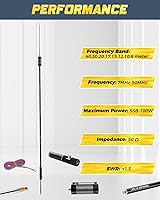
  • Frequency Range: The antenna operates across 7–50MHz, covering the full span from the 40m band down to the 6m band.
  • Band Coverage: Eight amateur bands are supported: 40m, 30m, 20m, 17m, 15m, 12m, 10m, and 6m.
  • Impedance: Input impedance is 50 ohms, matching the standard output of virtually all modern amateur HF transceivers.
  • Max Power: The antenna is rated to handle up to 100W in SSB mode; continuous duty digital modes may stress components beyond their design intent.
  • SWR Rating: SWR measures below 1.3 on 40m without adjustment and is tunable to approximately 1.1 on all other supported bands using the sliding regulator.
  • Assembled Height: When fully assembled, the antenna stands 4.1 meters (13.5 ft) tall, combining four aluminum tube sections with a stainless steel whip top.
  • Weight: Total system weight is 1.35kg, including all tube sections, the coil, and the ground anchor hardware.
  • Packed Dimensions: The complete kit packs down to approximately 14″L x 7.9″W x 2.4″H and fits inside the included carry bag.
  • Mast Material: The four lower sections are aircraft-grade aluminum tubing; the upper whip element is stainless steel for corrosion resistance.
  • Connector Thread: The base connector uses an M10 thread size, which requires an appropriate adapter if your feed line terminates in a PL-259 or SO-239 fitting.
  • Tuning Mechanism: Band tuning is performed via a sliding regulator block that repositions the shrapnel contact point along the multiband inductive coil without tools.
  • Ground System: The package includes a 10-strand radial mesh and a steel ground anchor spike designed for deployment in grass or compacted sand.
  • Coil Design: The multiband inductive coil features a reinforced spring mechanism that maintains reliable electrical contact between the shrapnel and the selected coil winding.
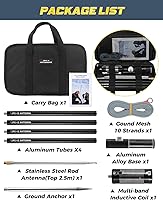
  • Package Contents: The kit includes four aluminum tube sections, one stainless steel rod antenna, one inductive coil, one aluminum alloy base, one ground anchor, one 10-strand radial mesh, and one carry bag.
  • Manufacturer: The antenna is designed and sold by GOOZEEZOO, a radio accessories brand offering this model under the JPC-12 product family.
  • Market Rank: The antenna holds a Best Sellers Rank of number 92 in the Radio Antennas category on Amazon at the time of this review.
  • First Available: The product was first listed for sale on February 9, 2023, making it a relatively recent entrant in the portable HF vertical segment.
  • User Rating: The antenna carries an average rating of 4.6 out of 5 stars based on 234 verified purchase ratings on Amazon.

Related Reviews

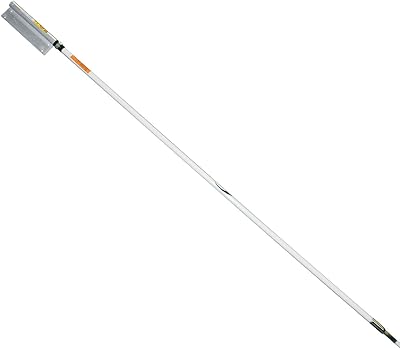
Hustler 5BTV 5-Band Vertical Ham Radio Antenna
75%
91%
Multiband Coverage
83%
Build Quality
62%
Installation Experience
58%
80-Meter Performance
86%
40-Meter Performance
More
Solarcon IMAX-2000 Vertical Base Station Antenna
77%
88%
Signal Performance
83%
Build Quality
79%
Ease of Assembly
63%
SWR Tuning
86%
Durability & Longevity
More
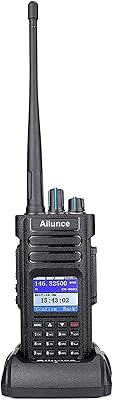
Ailunce HD1 Ham Radio
82%
93%
Durability & Build Quality
89%
Battery Life
75%
Ease of Use
90%
Range & Signal Performance
91%
Waterproofing
More
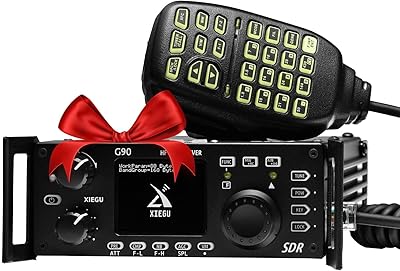
Xiegu G90 HF Amateur Radio Transceiver
80%
88%
Value for Money
91%
Built-in Antenna Tuner
89%
SDR Spectrum Display
92%
Portability & Form Factor
84%
Remote Head / Mobile Install
More
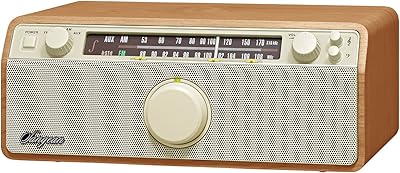
Sangean WR-12 AM/FM Radio
82%
88%
Sound Quality
91%
Build Quality
84%
Ease of Use
70%
Tuning Accuracy
79%
Connectivity
More
BAOFENG UV-17R Dual Band Ham Radio
73%
91%
Value for Money
63%
Ease of Setup
54%
Real-World Range
67%
Build Quality
61%
Audio Quality
More
Gabil GRA-7350TC HF Antenna
83%
92%
Portability
88%
Ease of Setup
86%
Durability in Outdoor Use
82%
Signal Performance
80%
Build Quality
More
TIDRADIO TD-H3 Ham Multi-Band Two-Way Radio
75%
91%
Value for Money
83%
Ease of Programming
88%
Battery Life
61%
Firmware Stability
67%
Build Quality
More
Xiegu X6100 HF Radio Transceiver 10W
86%
88%
Value for Money
85%
Performance
90%
Bluetooth Functionality
92%
Portability
89%
Ease of Use
More
Philips TAR3205/12 Alarm Clock Radio
80%
93%
Ease of Setup
91%
Alarm Reliability
88%
Gentle Wake Performance
86%
Sleep Timer Function
67%
FM Radio Quality
More

FAQ

Not necessarily, but it depends on which bands you plan to use and how precise you want your SWR to be. On 40m you can typically get on the air without touching anything, and on most other bands the sliding regulator gets you close enough for comfortable operation. That said, on certain band edges a tuner does help, so if you already own one it is worth keeping it in the bag rather than leaving it home.

Most operators land somewhere between five and ten minutes for a complete solo setup. The aluminum sections thread together logically, and once you have done it once or twice at home it becomes second nature. If you are deploying in soft ground, seating the anchor spike and spreading the radials adds a couple of extra minutes.

Yes, the 50-ohm impedance matches both of those rigs perfectly. The one thing to confirm is your coax connector type — the antenna base uses an M10 thread, so depending on your feed line you may need a short adapter to go from M10 to PL-259 or SO-239. That adapter is inexpensive and widely available.

Absolutely, and experienced operators strongly recommend it, especially on 40m. The included 10-strand mesh is a solid starting point, but laying out additional wire radials on the ground — even four to eight additional two-meter lengths — can produce a noticeable improvement in both transmitted signal and received noise floor. It is one of the easiest upgrades you can make.

The coil has color-coded reference markings, and the included guide lists approximate positions for the main bands along with how far to retract the whip element. It takes a little patience on the first read, but once you understand the logic — counting coil circles from a reference point and adjusting the whip length — it clicks. Many operators write their preferred settings on a small card and laminate it for field use.

It works reasonably well for that purpose. The ground anchor is intended for soil, so on a balcony you would need to improvise a base mount or tripod, and laying the radials flat across the balcony floor is a practical substitute for a ground plane. The compact packed size also means storing it indoors between sessions is not a hassle.

There is no official wind rating published, but real-world feedback suggests it handles moderate wind without issue when the anchor is properly seated. In genuinely gusty or exposed conditions — like an open summit — running a light guy cord from the mast to a stake or rock is a sensible precaution. The 4.1-meter height creates some leverage in strong gusts.

You can, but with some caution. The 100W rating is specified for SSB, which has a low average duty cycle. FT8 runs at a much higher continuous duty cycle, so most operators using this portable HF vertical for digital modes keep power at 50W or below to avoid stressing the coil and contact components over time.

A dipole at a reasonable height will often outperform any vertical on the same band, purely from a signal-to-noise perspective. The real advantage of this multiband field antenna is convenience — eight bands from one compact kit that one person can deploy in minutes, versus cutting and hanging separate wires for each band. For POTA or travel, that trade-off makes a lot of practical sense.

It is ready to deploy straight from the carry bag without any modifications. Adding supplemental radials and sourcing an M10 adapter if your coax needs one are the two most common first steps operators take, but neither is required to get on the air. Spending thirty minutes practicing assembly at home before your first activation is the most useful preparation you can do.