Overview

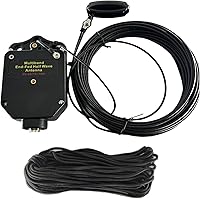
The GOOZEEZOO JYR4010 4-Band End Fed Antenna is aimed squarely at HF operators who want multiband coverage without dragging a tuner into the field. The heart of the design is a 1:64 balun, which transforms the high impedance at the feed point of an end-fed half-wave wire down to 50 ohms — meaning your radio connects directly, no matching box required. GOOZEEZOO is a relatively new name in the ham radio space, so you won't find decades of brand reputation behind it. At its mid-range price point, though, it competes credibly with DIY builds and entry-level offerings from more established suppliers.
Features & Benefits

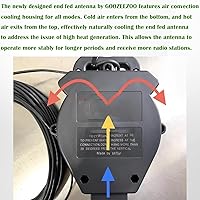
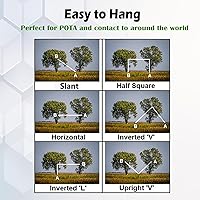
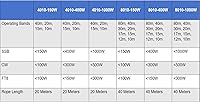
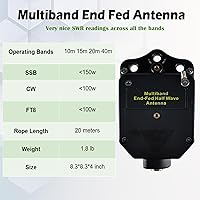
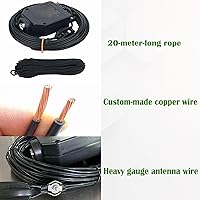
This end-fed antenna covers four HF bands — 40m, 20m, 15m, and 10m — without requiring a tuner, which is a genuine practical advantage when you're activating a park or setting up at a campsite. Power handling is 150W on SSB, but drops to 100W for CW and FT8; worth reading carefully before pushing the rig hard. The balun housing uses passive air convection to manage heat during longer sessions, a thoughtful detail at this price tier. Installation is flexible — horizontal, vertical, or sloped — and the included rope means you're not scrambling for rigging cord on arrival.

Best For

This EFHW kit is a strong fit for POTA and SOTA operators who need something that goes up fast and works across multiple bands without fuss. Home station operators squeezed for yard space will find it a reasonable workaround when a full dipole simply isn't practical. New HF licensees stepping up from a random wire will appreciate the improvement without needing deep technical setup knowledge. It also suits campers and overlanders making occasional contacts rather than serious contest operating. Low-to-mid power rigs like the Xiegu G90 or IC-705-class transceivers pair naturally with it.

User Feedback

Across more than 170 ratings, the JYR4010 balun antenna holds a 4.6-star average, and the breakdown reflects a satisfied but not uncritical user base. Operators frequently highlight ease of installation and the antenna's ability to land reasonable SWR figures on 40m and 20m without touching a tuner. Real-world reports of POTA activations and intercontinental contacts lend credibility to its HF performance. On the downside, a recurring concern involves connector durability — some users flagged the coax connection as a weak point under regular field use, and rope quality has drawn occasional criticism. Solid for the price, but not without trade-offs.

Pros

  • Covers four HF bands (40m, 20m, 15m, 10m) with no antenna tuner required — real convenience in the field.
  • The 1:64 balun design allows direct 50-ohm connection to most modern transceivers right out of the box.
  • Passive air convection cooling in the balun housing helps manage heat during extended operating sessions.
  • Flexible installation geometry — horizontal, sloped, or vertical — adapts well to constrained spaces.
  • Rope is included, which saves time on POTA activations where you just want to get on the air quickly.
  • Sits at #33 in Radio Antennas on Amazon with a 4.6-star average across 170-plus verified ratings.
  • Lightweight and compact enough for backpack-based portable ops without adding meaningful load.
  • Reports from real POTA activators confirm workable DX contacts across multiple bands.

Cons

  • Power limit drops to 100W on CW and FT8, which is easy to miss and can cause balun stress if ignored.
  • Connector quality at the feed point has been flagged by multiple users as a weak spot under regular use.
  • Included rope has drawn criticism for durability — may need upgrading before serious field deployments.
  • SWR on certain bands, particularly 15m, can be inconsistent depending on installation geometry and surroundings.
  • GOOZEEZOO has no established support history, so post-purchase help if something fails is uncertain.
  • The ABS housing feels adequate but not confidence-inspiring compared to machined metal balun enclosures.
  • No WARC band coverage limits its appeal for operators who regularly work 17m, 12m, or 30m.
  • Requires careful clearance from metal structures, which can be impractical in many real-world backyard setups.

Ratings

Our AI-generated scores for the GOOZEEZOO JYR4010 4-Band End Fed Antenna were produced by analyzing verified buyer reviews from multiple global markets, with spam, incentivized, and bot-flagged submissions actively filtered out before scoring. Each category reflects the honest distribution of real operator experiences — from first-time HF licensees to seasoned POTA activators — and neither the highs nor the frustrations have been smoothed over to flatter the product.
Multiband Performance
83%
Operators consistently report that this end-fed antenna delivers workable SWR across 40m and 20m without touching a tuner, which is the core promise and one it mostly keeps. Several POTA activators noted successful intercontinental contacts on 20m during field activations, lending real credibility to its HF capability.
Performance on 15m is noticeably less consistent, with some users reporting SWR figures that push the limits of what a radio's internal protection will tolerate. Results vary significantly based on installation height and surrounding environment, meaning your mileage on the upper bands genuinely depends on where and how you hang it.
Ease of Setup
91%
This is where the JYR4010 balun antenna earns its strongest marks — most operators report being on the air within 15 to 20 minutes of arrival at a field site. The included rope, flexible orientation options, and direct 50-ohm connection remove the usual friction points that slow down portable deployments.
First-time EFHW users occasionally struggle with understanding clearance requirements, particularly the 5m metal separation rule, which can be hard to achieve in a typical suburban backyard. Without reading the guidance carefully, early SWR readings can be misleading and cause unnecessary troubleshooting.
Balun Build Quality
67%
33%
The passive air convection cooling design is a genuinely thoughtful feature at this price point, and operators running extended FT8 sessions have noted the housing stays cooler than expected during moderate-duty use. The ABS shell is reasonably solid for casual handling and light weather exposure.
Compared to machined aluminum balun enclosures from more established brands, the ABS housing feels noticeably less robust, and a handful of users raised concerns about long-term UV resistance after extended outdoor deployment. The overall fit and finish is acceptable but not confidence-inspiring if you plan to leave this antenna up year-round.
Connector Quality
58%
42%
For users who install this antenna semi-permanently at a home station and rarely disconnect the feedline, the connector holds up without reported issues and provides a secure enough interface for regular operation. Casual campers who set up and break down occasionally have not flagged major problems either.
This is the most consistently flagged concern in negative reviews — the coax connector at the balun shows signs of wear for operators who do repeated rapid field deployments with frequent plugging and unplugging. Several reviewers specifically recommended immediately inspecting and optionally reinforcing the connection with self-amalgamating tape before first use.
Power Handling
76%
24%
At 150W SSB, this EFHW kit covers the needs of most operators running mid-power transceivers like the IC-7300 or FT-991A at typical station power levels, and the convection cooling system helps the balun manage that load better than a sealed housing would. For SSB voice operating, users running 100W or below report no thermal problems even during longer pile-up sessions.
The 100W hard ceiling on CW and FT8 catches a meaningful number of buyers off guard, particularly those who run FT8 at full legal barefoot power without reading the mode-specific ratings carefully. Operators who push past these limits have reported balun degradation, which is a predictable but avoidable outcome.
Value for Money
79%
21%
Relative to building a comparable EFHW from scratch — sourcing a toroidal core, wire, connectors, and housing — this kit lands at a price point that makes sense for operators who want to skip the workbench work. The fact that it sits at #33 in Radio Antennas on Amazon with a 4.6-star average across 170-plus ratings suggests the broader market finds the price-to-performance trade reasonable.
Experienced builders who are comfortable winding their own balun cores will almost certainly get more RF performance and better connector quality for similar or lower cost by going DIY. For that segment, the convenience premium this kit charges is harder to justify against the component-level quality it delivers.
Portability
88%
Weighing under 3 pounds with rope included, this end-fed antenna is genuinely backpack-friendly, and the compact balun housing does not add awkward bulk to a field kit. SOTA activators in particular have called out the weight and packability as a deciding factor in choosing it over heavier alternatives.
The rope — while included and appreciated — has been criticized for not being particularly durable under repeated knotting and exposure to UV and moisture. Operators doing frequent activations tend to replace it with better paracord fairly quickly, which adds a minor but real extra step to field readiness.
Rope and Rigging Kit
61%
39%
Having any rope included at all is a practical convenience that competitors at similar price points often skip, and for a first-time POTA operator who shows up without rigging supplies, it saves the activation. The length is sufficient for most single-tree or two-point suspension configurations.
The rope material itself has drawn consistent criticism for feeling thin and prone to tangling, and several users replaced it after the first outdoor session due to durability concerns. It functions as a get-you-started solution rather than a long-term rigging answer for operators who activate regularly.
SWR Consistency
71%
29%
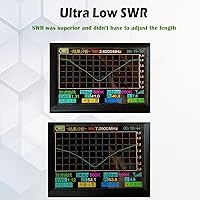
On 40m and 20m in a well-executed horizontal installation with adequate clearances observed, most users report SWR figures that sit comfortably within the 1.5:1 to 2:1 range without any tuner intervention — a solid outcome for a no-tune antenna in real-world conditions.
Achieving consistent SWR on 15m and 10m is more sensitive to installation geometry than the product positioning suggests, and operators in constrained urban environments frequently report needing to experiment with wire routing to get acceptable readings. For a truly plug-and-play experience on all four bands, results are less predictable than on 40m.
Installation Flexibility
84%
The ability to hang this antenna horizontally, vertically, or diagonally without retuning opens up a lot of real-world deployment options, particularly for home station operators dealing with property constraints or irregular tree placement. Field operators appreciate not being locked into a specific orientation when anchors are improvised.
The 5m metal clearance requirement is genuinely difficult to satisfy in many suburban backyards where gutters, fences, and vehicles are nearby, and failing to maintain it produces noticeably worse SWR results rather than a gradual degradation. This limits how truly flexible the installation can be for some buyers.
Cooling System Effectiveness
78%
22%
The passive convection housing design addresses one of the most common failure modes in budget balun enclosures — core overheating during sustained digital operation — and operators running FT8 at 80 to 100W have generally reported the housing temperature remaining reasonable after multi-hour sessions.
There is no independent thermal testing data available from the manufacturer, so the performance of the convection system under worst-case conditions — high ambient temperature, full-power FT8 operation — remains uncertain. Buyers operating in hot climates during summer should treat the 100W FT8 ceiling as a conservative starting point rather than a safe maximum.
Brand Reliability
62%
38%
Despite being a newer name, GOOZEEZOO has accumulated a meaningful review base in a short period, and the product listing reflects genuine iteration — the convection cooling housing and 1:64 transformer ratio indicate more than surface-level design effort for an entry brand.
Without a track record spanning multiple product generations or a documented warranty and support process, buyers are taking a degree of brand risk that they would not face with established manufacturers. Post-purchase support options remain unclear, which is a real concern if the balun develops a fault outside the return window.
Compatibility with Common Rigs
86%
The 50-ohm output and standard connector interface mean this end-fed antenna connects directly to virtually every modern HF transceiver without adapters, and low-to-mid power rigs in the Xiegu and Icom IC-705 class pair with it particularly well given the power ceiling. No additional interface hardware is needed for most setups.
Operators who run linear amplifiers above 150W have no headroom with this antenna and need to look elsewhere, and the mode-specific power limits require checking your transceiver settings before switching from SSB to a high-duty-cycle digital mode. For all-mode operators running at legal limit, this is simply not the right antenna.

Suitable for:

The GOOZEEZOO JYR4010 4-Band End Fed Antenna is a practical choice for HF operators who prioritize speed and simplicity over maximum RF performance. POTA and SOTA activators will appreciate that it covers 40m through 10m without requiring a tuner — one less piece of gear to carry, one less variable to troubleshoot in the field. Campers, overlanders, and travelers doing casual HF operating will find the flexible hanging options and included rope genuinely useful for temporary setups in tight or unpredictable environments. New HF licensees stepping up from a random wire antenna will notice a real improvement in usability and band access without needing to understand impedance matching in depth. Home station operators who simply lack the yard space for a properly spaced dipole can also make this work as a compact compromise solution.
Not suitable for:

Operators running high-power amplifiers should look elsewhere — the GOOZEEZOO JYR4010 4-Band End Fed Antenna is rated at 150W SSB and only 100W for CW and FT8, which is a hard ceiling that catches some buyers off guard. Serious contesters or DXers who depend on peak signal efficiency will find that a well-installed resonant dipole or Yagi simply outperforms any end-fed compromise antenna, and this one is no exception. The connector build quality has raised flags among field operators who put equipment through repetitive setup and teardown cycles, making it a riskier long-term pick for heavy daily use. If you need solid WARC band coverage — 17m, 12m, or 30m — this antenna does not deliver, which limits flexibility for operators who chase those bands regularly. Buyers expecting brand-name reliability and long-term support should also factor in that GOOZEEZOO is a newer manufacturer without an established track record in the ham radio community.
Specifications

  • Antenna Type: End-Fed Half-Wave (EFHW) wire antenna with an integrated 1:64 impedance-matching balun at the feed point.
  • Balun Ratio: The balun uses a 1:64 transformation ratio to match the high feed-point impedance of the half-wave wire down to 50 ohms.
  • Band Coverage: Covers four amateur HF bands: 40m, 20m, 15m, and 10m, with no external tuner required on any of these bands.
  • SSB Power Limit: Maximum continuous power input for SSB operation is 150W; exceeding this risks balun overheating and potential damage.
  • CW and FT8 Limit: For CW and FT8 modes, the rated power ceiling is 100W due to the higher duty cycle these modes place on the balun core.
  • Impedance: Feed-point output impedance is 50 ohms, compatible with standard coaxial feedlines and most modern transceiver outputs directly.
  • Balun Dimensions: The balun housing measures 8.3″ in length, 8.3″ in width, and 4″ in height.
  • Package Weight: The complete kit weighs 2.99 pounds as packaged, making it manageable for portable and field operations.
  • Shell Material: The balun enclosure is constructed from ABS plastic, which provides basic weather resistance and impact protection at this price tier.
  • Cooling System: The housing uses a passive air convection design, drawing cooler air in from the bottom and venting warmer air from the top to reduce core temperature during operation.
  • Rope Included: Depending on the variant selected, the kit includes either 20m (65.6ft) or 40m (131ft) of hanging rope for antenna wire support.
  • Installation Styles: The antenna can be installed horizontally, vertically, or diagonally sloped, with the balun position adjustable to suit available anchor points.
  • Clearance — Objects: A minimum clearance of 3m (9.8ft) from surrounding objects including vegetation is recommended to reduce signal absorption and SWR variability.
  • Clearance — Metal: A minimum clearance of 5m (16.4ft) from metal structures such as gutters, fences, or vehicles is required to prevent significant detuning.
  • Connector Type: The balun output uses a standard SO-239 (UHF female) connector for coaxial feedline attachment, though third-party verification of exact connector spec is advised.
  • Manufacturer: Designed and sold by GOOZEEZOO, a newer entrant in the ham radio accessories market with limited long-term brand history.
  • Amazon Ranking: Holds a Best Sellers Rank of #33 in the Radio Antennas category on Amazon as of the time of listing review.
  • User Rating: Carries an average rating of 4.6 out of 5 stars based on more than 170 verified customer ratings on Amazon.

Related Reviews
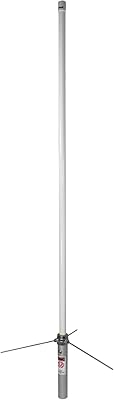
Diamond Antenna X30A Dual-Band Base Antenna
80%
91%
Signal Performance
88%
Build Quality
86%
Weatherproofing
84%
Ease of Installation
89%
SWR Consistency
More
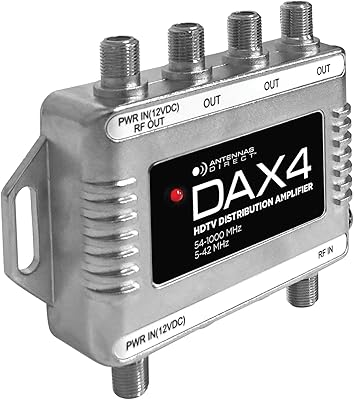
Antennas Direct DAX4 4-Output TV Antenna Distribution Amplifier
86%
87%
Signal Quality & Performance
91%
Ease of Installation
85%
Build Quality & Durability
92%
Value for Money
78%
Weather Resistance
More
GOOZEEZOO JPC-12 HF Vertical Ham Radio Antenna
82%
91%
Ease of Assembly
88%
SWR Performance
86%
Tuning Mechanism
93%
Portability & Packability
79%
Build Quality & Materials
More
Tram 1477 Dual-Band VHF/UHF Base Antenna
79%
91%
Ease of Setup
78%
RF Performance
83%
Build Quality
86%
Value for Money
67%
Connector Quality
More
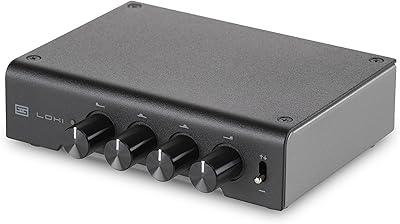
Schiit Loki Mini+ 4-Band Equalizer
81%
91%
Signal Transparency
93%
Passive Bypass Quality
88%
Build Quality
82%
Noise Floor
76%
Tonal Control Range
More
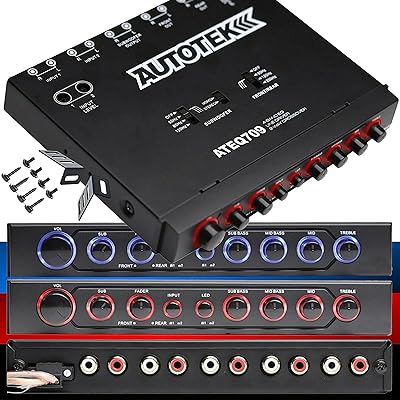
Autotek ATEQ709 4-Band Audio Equalizer with 2-Way Crossover
86%
85%
Sound Quality
92%
Ease of Installation
80%
Build Quality
87%
User Interface
88%
Audio Clarity
More
Supersonic SC-3201BT 4 Band Radio & Cassette Player Boombox
82%
92%
Value for Money
85%
Bluetooth Connectivity
88%
Portability & Size
70%
Sound Quality
81%
Cassette to Digital Conversion
More
Tram 1480 Dual-Band Fiberglass Base Antenna
76%
88%
Signal Performance
83%
Build Quality
86%
Weather Resistance
91%
Ease of Installation
89%
Connector Compatibility
More
Diamond X50A Dual-Band VHF/UHF Base Antenna
78%
88%
RF Performance
91%
Out-of-Box SWR
84%
Build Quality
79%
Weather Durability
76%
Ease of Assembly
More
weBoost Single-Band Yagi Antenna 700/800/900 MHz
87%
89%
Signal Performance
88%
Ease of Installation
90%
Build Quality
91%
Durability in Harsh Conditions
92%
Compatibility with Signal Boosters
More

FAQ

For the four covered bands — 40m, 20m, 15m, and 10m — the 1:64 balun is designed to present a usable SWR to your radio without a tuner in the line. That said, SWR results vary depending on your wire height, surroundings, and how carefully you follow the clearance guidelines. Most users report acceptable SWR on 40m and 20m straight away, while 15m can be a bit more finicky depending on installation geometry.

Yes, but just barely — the rated limit for FT8 and CW is 100W, which is right at the ceiling. FT8 runs a high duty cycle, meaning the balun is under sustained thermal load for longer periods compared to voice modes. Running at 80W or below on digital modes would give the balun more thermal headroom and reduce wear over time.

For a 40m EFHW, the resonant wire length is roughly 20m (about 66ft) for the fundamental, plus harmonic resonance on 20m, 15m, and 10m. The included rope in the 40m variant gives you plenty of support cordage, but the antenna wire itself should be the half-wave length for your lowest target band. Check the included documentation for the exact wire length shipped with the kit.

The ABS housing offers basic weather resistance but is not rated as waterproof. For occasional outdoor use it should handle light rain without issue, but leaving it permanently exposed through harsh winters or in a high-humidity environment may eventually degrade the connectors and housing integrity. If you plan a permanent outdoor installation, consider sealing the coax connection with self-amalgamating tape as a precaution.

Once you know the process, most operators get it up and running in 10 to 20 minutes depending on available trees or support structures. The included rope helps avoid scrambling for cord, and the flexible balun placement means you are not locked into a specific configuration. First-time setup might take a bit longer as you figure out wire routing and clearance requirements.

Yes, this end-fed antenna pairs well with rigs in the 10W to 100W range. Low-power digital operators and SSB casual users are squarely in the sweet spot this antenna targets. You do not need an internal or external tuner on most of these rigs when using this antenna on its four supported bands.

Not reliably without a tuner. The antenna is specifically designed around 40m, 20m, 15m, and 10m harmonic relationships. Outside those four bands, the SWR will likely be too high for direct connection, and running power into a badly mismatched antenna risks damaging your final amplifier stage or the balun itself.

It is worth taking seriously if you do repeated field deployments with lots of plug-and-unplug cycles. The concern tends to center on the coax connector holding up under mechanical stress rather than failing immediately. Handling the connection point carefully, avoiding strain on the cable, and inspecting it periodically should reduce the risk. If you deploy it semi-permanently at home, this is far less of a concern.

Yes — with an EFHW setup, the balun is always at the feed point, which is the end of the wire, not the center. The balun connects at one end, the wire extends out from there, and your feedline drops down to the radio. This is the standard configuration, and the flexible mounting options mean you can position the balun at a convenient anchor point and run the wire in whatever direction your space allows.

A DIY build using a quality toroidal core and quality wire will often outperform this one in terms of balun robustness and connector quality, especially if you source good components. The trade-off is time, tools, and basic winding skills. This JYR4010 balun antenna makes sense for operators who want something ready to use without a soldering iron involved, and the performance gap for casual use is small enough that most operators will not notice a meaningful difference on the air.