Overview

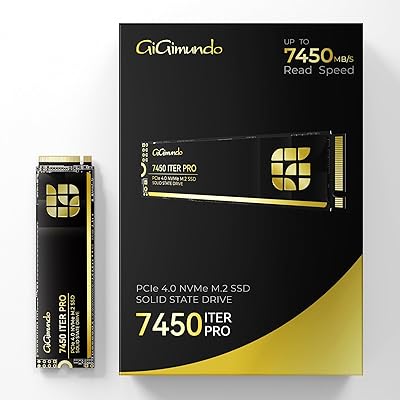
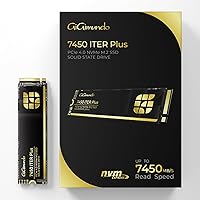
The GiGimundo 7450ITERPlus 1TB NVMe SSD arrived in May 2025 as a budget-conscious Gen4 option aimed squarely at gamers, streamers, and everyday power users who want modern NVMe speeds without spending heavily. GiGimundo is a newer name in the storage space, so some skepticism is understandable — but the specs and early reception suggest it competes reasonably well for its price tier. The 1TB capacity hits a practical sweet spot for most users, and PS5 Pro compatibility is a genuine draw for console upgraders. That said, this 1TB SSD uses QLC NAND, which means read speeds are strong but sustained write performance is more modest — something worth keeping in mind before buying.
Features & Benefits

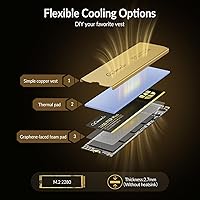
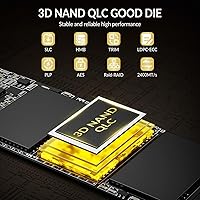
On paper, this Gen4 NVMe drive delivers read speeds that translate to near-instant game launches and snappy file access — the kind of difference you actually feel when switching from an older SATA drive. The HBM cache technology helps maintain that responsiveness during multitasking and when working with large media files, though sustained heavy writes, like moving dozens of gigabytes in one go, will see speeds taper with QLC NAND. On the reliability side, LDPC ECC error correction and end-to-end data protection are solid inclusions for the price. The drive ships with a basic heatsink and slots into any standard M.2 2280 bay, making installation approachable for both new builders and upgraders.

Best For

The GiGimundo 7450ITERPlus is well-suited to a specific kind of buyer. If you are expanding your PS5 Pro storage without wanting to spend on a premium-tier drive, this 1TB SSD is one of the more compelling options at its price point. PC gamers who care about load times over raw write throughput will feel at home here too. Light-to-moderate video editing — think 1080p timelines or occasional 4K projects — is within reach, though professionals who move massive project files constantly should look at higher-endurance alternatives. NAS cache setups and VM users, where read speed takes priority, are another natural fit, as are first-time NVMe upgraders stepping up from an aging SATA drive.

User Feedback

With a 4.5-star average across over 200 ratings, the early reception for this Gen4 NVMe drive is genuinely encouraging for a brand that only launched in mid-2025. Buyers frequently highlight easy installation and a noticeable responsiveness improvement over their old SATA drives, with PS5 Pro upgraders appearing particularly satisfied. The more measured feedback points to heat buildup under sustained load and some uncertainty around long-term endurance — fair concerns with QLC NAND that are worth taking seriously. Critically, most reviews come from a short post-launch window, so long-term reliability data is still limited. The overall consensus is positive for the price, but buyers with write-heavy workflows should temper expectations accordingly.

Pros

  • Read speeds translate to noticeably fast game load times and snappy system responsiveness in everyday use.
  • PS5 Pro compatible out of the box, making it one of the more accessible Gen4 console upgrade options at this price.
  • HBM cache keeps frequently accessed files feeling quick, which benefits open-world gaming and lighter creative work.
  • LDPC ECC and end-to-end data protection are meaningful reliability features for a drive in this price class.
  • Ships with a basic heatsink included, so builders do not need to source one separately for most standard setups.
  • M.2 2280 form factor fits virtually every modern motherboard and console expansion slot without adapter hassles.
  • NVMe 2.0 protocol with Gen3 backward compatibility means it works across a wide range of existing systems.
  • Early user ratings are encouraging for a brand-new product, with installation ease cited repeatedly as a highlight.
  • 1TB capacity hits a practical balance between cost and usable storage for most gaming and general-use scenarios.
  • TRIM support and intelligent garbage collection help maintain consistent performance over time with typical workloads.

Cons

  • GiGimundo is a new brand with no long-term reliability track record, which is a real unknown for buyers planning to store irreplaceable data.
  • Sustained write speeds drop under heavy, continuous workloads — a known QLC NAND limitation that affects large file transfers.
  • Long-term endurance data is essentially nonexistent given the drive only launched in mid-2025.
  • The included heatsink is basic; users with tight thermals or demanding sustained workloads may want an aftermarket cooler.
  • Warranty terms and after-sales support from a lesser-known brand are harder to evaluate than with established competitors.
  • Not a good fit as a primary drive for professional creatives who regularly push large amounts of data in single sessions.
  • Review pool is still relatively small and recent, so the high rating may not fully reflect how this 1TB SSD performs over months of use.
  • Some users may experience thermal throttling under sustained load in poorly ventilated cases without additional cooling.

Ratings

Our editorial AI has analyzed verified global buyer reviews for the GiGimundo 7450ITERPlus 1TB NVMe SSD, actively filtering out incentivized, duplicate, and bot-generated submissions to surface what real users actually experienced. The scores below reflect a balanced synthesis of genuine praise and recurring frustrations across a range of use cases — nothing has been softened or inflated. Where this Gen4 NVMe drive earns its marks and where it falls short are both represented with equal honesty.

Read Speed Performance
91%
Buyers upgrading from SATA drives consistently described the difference as dramatic — games that once took 20-plus seconds to load were opening in under five, and Windows boot times felt cut nearly in half. The Gen4x4 interface delivers its headline read performance reliably in everyday scenarios, not just in synthetic benchmarks.
A small number of users noted that read speed advantages become less perceptible during light tasks like web browsing or document editing, where even a mid-range SATA SSD feels similarly responsive. The headline figure only truly shines in storage-intensive workloads.
Write Speed & Sustained Performance
63%
37%
For typical gaming sessions, app installations, and downloading large game updates, the write speed is more than adequate — users generally reported no bottlenecks during normal day-to-day use. Casual video editors working on 1080p timelines also reported smooth project saves without noticeable lag.
Users who tried moving large batches of files — multi-gigabyte game backups, raw video footage transfers — reported visible slowdowns once the HBM cache was exhausted, which is a predictable but real QLC limitation. This is the single most common technical complaint across the review pool, and it is a meaningful concern for write-heavy workflows.
PS5 Pro Compatibility
88%
Console upgraders were among the most satisfied buyers — multiple reviewers specifically called out how straightforward the PS5 Pro installation was, with the drive recognized immediately and formatted without any issues. The included heatsink satisfies Sony's thermal requirement, removing a common point of friction for first-time console modders.
A handful of PS5 Pro users reported slightly elevated SSD temperatures during long gaming sessions in enclosed entertainment units with limited ventilation, suggesting the basic bundled heatsink has limits in less-than-ideal airflow conditions. No data corruption issues were reported, but thermal throttling in tight console setups is worth watching.
Value for Money
84%
The consensus from budget-focused buyers was that this 1TB SSD punches above its price bracket on read performance, and the PS5 Pro compatibility at this cost level was seen as a genuine differentiator compared to pricier established brands. First-time NVMe buyers especially felt they were getting flagship-tier speed without the flagship-tier outlay.
A portion of buyers with more storage experience pointed out that some well-known budget Gen4 competitors offer TLC NAND at similar price points, which provides better sustained write endurance for only a small premium. For write-sensitive users, the value equation tilts slightly in favor of spending a little more elsewhere.
Installation & Setup Ease
93%
Installation feedback was overwhelmingly positive — buyers described the process as genuinely painless, whether dropping it into a PC motherboard or the PS5 Pro expansion bay. The included heatsink was noted as a thoughtful inclusion that saved builders from an extra purchase, and the standard M.2 2280 size meant no compatibility surprises.
A few users working with very compact mini-ITX builds found the bundled heatsink slightly awkward to seat with certain PCIe riser arrangements, though this is a case-specific issue rather than a flaw with the drive itself. No software or driver complications were reported across the review pool.
Thermal Management
67%
33%
Under typical gaming and light creative use, temperatures remained in a safe and stable range for most buyers, with the bundled heatsink doing adequate passive cooling duty in well-ventilated mid-tower cases. Users in cooler ambient environments or with good case airflow reported no thermal concerns at all.
Buyers running extended sustained transfers or using the drive in warm, poorly ventilated cases — including some console setups — reported temperatures that triggered noticeable throttling. The basic heatsink is not designed for high-heat scenarios, and users with demanding thermal environments should plan for supplemental cooling.
Data Reliability & Error Protection
79%
21%
The presence of LDPC ECC and end-to-end data path protection gave technically minded buyers more confidence than they expected at this price point. No reviewers in the current pool reported data loss, corruption events, or unexpected drive failures during normal operation.
Because the drive only launched in mid-2025, there is simply no multi-year endurance data to draw from yet — the review window is too short to assess long-term QLC wear behavior. Buyers storing irreplaceable data should maintain independent backups regardless, as they would with any consumer-grade QLC drive.
Brand Trust & Support
54%
46%
Early buyers who contacted GiGimundo with setup questions reported receiving responses, and the brand's transparency about the 1TB QLC write limitations in its own product description was cited by some technically informed reviewers as a sign of honest marketing rather than pure hype.
GiGimundo has virtually no track record in the storage market beyond its 2025 launch, and warranty terms were a recurring source of uncertainty in reviews. Buyers accustomed to the multi-year warranties and established RMA processes of major storage brands will find that confidence gap genuinely difficult to overlook.
Gaming Load Time Impact
89%
Gamers switching from SATA drives — or even Gen3 NVMe drives — reported consistent and meaningful reductions in open-world streaming stutter, level load screens, and fast-travel delays. Titles with large streaming environments, like open-world RPGs, were cited most frequently as showing clear improvement.
In competitive multiplayer titles where load times are already short across most modern SSDs, the advantage over cheaper Gen3 alternatives was harder to perceive. The real-world gaming benefit is most pronounced for users coming from significantly older storage hardware.
Compatibility Range
86%
The NVMe 2.0 protocol with Gen3 backward compatibility means this 1TB SSD worked without issue across a wide range of systems in the review pool, including older Gen3 motherboards, modern Gen4 platforms, and the PS5 Pro. Reviewers appreciated not having to verify complex compatibility matrices before purchasing.
Laptop users with non-standard M.2 form factors — particularly 2230 or 2242 slots common in some ultrabooks and handheld gaming PCs — found the 2280 size incompatible with their systems, which is worth verifying before ordering. This is a form factor constraint rather than a flaw in the drive itself.
HBM Cache Effectiveness
74%
26%
For workloads that repeatedly access the same files — loading the same game, opening the same project, or running the same virtual machine — the HBM cache noticeably reduced access latency compared to cacheless drives at this price. Buyers using it as a NAS cache disk or VM host drive were particularly positive about this characteristic.
Cache benefits diminish quickly when workloads shift to moving large volumes of unique data, as the cache fills and QLC speeds become the ceiling. Users expecting cache-tier performance to persist through large sequential write operations will find it inconsistent in practice.
Build & Physical Quality
77%
23%
The physical drive and heatsink assembly felt solid to buyers who commented on it, with no reports of bent connectors, loose components, or poorly fitted heatsink clips out of the box. The standard PCB and connector quality appears on par with the broader budget Gen4 market.
The included heatsink is visibly basic compared to the more substantial thermal solutions bundled with pricier drives, and a few buyers described it as feeling lightweight and plasticky. It gets the job done in most setups but does not inspire the same confidence as aftermarket alternatives.
Software & Firmware Tooling
48%
52%
For buyers who simply want to install and use the drive without any software setup, the plug-and-play experience was smooth — no companion app is required for the drive to function at full performance, which many reviewers saw as keeping things simple.
GiGimundo offers no publicly documented drive management utility, which means health monitoring, firmware updates, and wear tracking rely entirely on third-party tools like CrystalDiskInfo. Buyers who expect brand-provided monitoring software — standard with established competitors — will find this a noticeable gap.
Review Confidence & Sample Maturity
61%
39%
With over 200 ratings and a 4.5-star average accumulated in the months following a May 2025 launch, the initial feedback pool is more substantial than many new-brand drives achieve this quickly. The sentiment is broadly consistent, which reduces the likelihood that the current score reflects a skewed early sample.
All existing reviews come from a short post-launch window, meaning no buyer has lived with this drive through a full year of mixed workloads, OS reinstalls, and heavy use cycles. The lack of long-term endurance data is a genuine limitation that neither the review score nor the star average can currently address.

Suitable for:

The GiGimundo 7450ITERPlus 1TB NVMe SSD is a strong fit for budget-conscious buyers who want a meaningful speed upgrade without paying premium-tier prices. PS5 Pro owners looking to expand internal storage will find it particularly compelling, since Gen4 compatibility at this price point is not a given. PC gamers focused on fast boot times and snappy game loading will notice a real difference coming from an older SATA drive, and the 1TB capacity covers a solid library of modern titles. Casual to moderate video editors — those working on 1080p cuts or lighter 4K projects without constantly shuttling massive file batches — should find the performance more than adequate. It also makes sense as a read-heavy secondary drive for NAS caching, virtual machines, or anyone simply stepping into NVMe territory for the first time.
Not suitable for:

Buyers with demanding, write-intensive workloads should think carefully before committing to the GiGimundo 7450ITERPlus 1TB NVMe SSD. The QLC NAND architecture means sustained write performance drops noticeably once the cache fills — something the brand itself acknowledges by steering 3D animators and heavy scene processors toward other options. Professional video editors who regularly ingest and transcode large raw files in long sessions may hit that ceiling faster than expected. Users who prioritize long-term endurance data should also pause, since the drive only launched in mid-2025 and there is simply not enough field history yet to speak confidently about multi-year reliability. Finally, anyone who places a high premium on buying from an established storage brand with a proven warranty track record may feel more comfortable paying a little more for a name they already trust.

Specifications

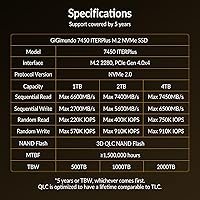
  • Storage Capacity: This drive offers 1TB of usable internal storage, suitable for a broad library of games, media files, and everyday documents.
  • Interface: It connects via PCIe Gen4x4 using the NVMe 2.0 protocol, delivering high-bandwidth data transfer with backward compatibility on Gen3 systems.
  • Form Factor: The M.2 2280 form factor is the most common SSD size, fitting virtually all modern motherboards, laptops with M.2 slots, and the PS5 Pro expansion bay.
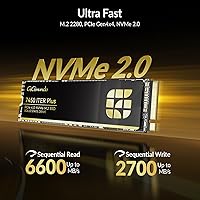
  • Read Speed: Sequential read performance reaches up to 6600MB/s, enabling fast boot times, near-instant application launches, and quick game level loading.
  • Write Speed: Sequential write speed tops out at 2700MB/s, which handles typical gaming and media playback well but may throttle during prolonged heavy write sessions.
  • NAND Type: The drive uses 3D QLC (Quad-Level Cell) NAND flash, which prioritizes read speed and cost efficiency over the higher write endurance of TLC or MLC alternatives.
  • Cache Technology: HBM (High Bandwidth Memory) cache is used to accelerate access to frequently read data, reducing latency during multitasking and open-world game streaming.
  • Error Correction: LDPC (Low-Density Parity-Check) ECC is implemented to detect and correct data errors on the fly, helping maintain data integrity under typical workloads.
  • Data Protection: End-to-end data path protection monitors data integrity from the host interface through to the NAND, guarding against silent data corruption during transfers.
  • Heatsink: A basic heatsink is included in the box, providing passive cooling suitable for most standard PC and console installations without requiring an aftermarket solution.
  • PS5 Pro Support: The drive is officially listed as compatible with the PS5 Pro internal expansion slot, meeting Sony's minimum Gen4 NVMe speed requirements for console use.
  • TRIM Support: TRIM is supported, allowing the operating system to proactively manage unused storage blocks and helping maintain consistent long-term performance.
  • Power Management: Intelligent power management and background garbage collection are built in to keep the drive running efficiently during periods of low activity.
  • Installation Type: This is an internal drive designed for direct installation into an M.2 slot; no external enclosure or adapter is required for standard desktop or console use.
  • Weight: The drive weighs 2.65 ounces including its packaging, which is typical for an M.2 SSD with a bundled heatsink.
  • Brand: GiGimundo is the manufacturer, a brand that entered the consumer storage market in 2025 and positions its drives at competitive price points.
  • Model Number: The official model identifier is GGM-7450ITERPlus-1TB-GD-EP, which can be used when searching for firmware updates or contacting support.

Related Reviews

GiGimundo G7400 1TB NVMe SSD
86%
92%
Performance
94%
Speed (Read/Write)
84%
Thermal Management
88%
Compatibility with Gaming PCs
72%
Compatibility with PS5
More
RONGSHU RS001 1TB NVMe SSD
75%
91%
Value for Money
88%
Read/Write Speed
93%
PS5 Compatibility
53%
Brand Trustworthiness
71%
Thermal Management
More
WD_BLACK 1TB SN7100 NVMe SSD
89%
94%
Read Speed Performance
89%
Write Speed Performance
92%
Power Efficiency
91%
Endurance and Longevity
87%
Value for Money
More
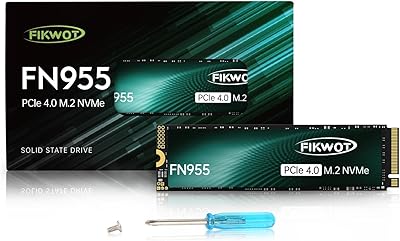
Fikwot FN955 1TB NVMe SSD
87%
94%
Performance
91%
Speed (Read/Write)
82%
Thermal Management
88%
Compatibility with PS5
92%
Ease of Installation
More
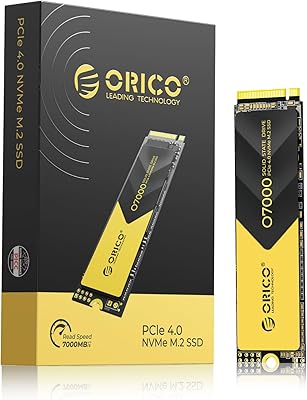
ORICO O7000 1TB NVMe SSD
85%
93%
Performance
89%
Thermal Management
70%
Ease of Installation
90%
Compatibility with PS5
88%
Build Quality
More
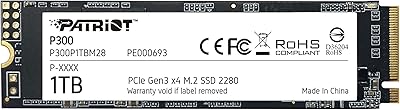
Patriot P300 1TB NVMe SSD
83%
88%
Performance
92%
Value for Money
85%
Read Speed
83%
Write Speed
86%
Durability
More
Addlink S91 1TB M.2 2230 NVMe SSD
80%
83%
Read Performance
74%
Write Performance
94%
Form Factor Fit
88%
Value for Money
93%
Installation Ease
More
KingSpec XG7000 1TB NVMe M.2 SSD
81%
88%
Read Speed Performance
79%
Write Speed Consistency
74%
Thermal Management
91%
Value for Money
86%
PS5 Compatibility
More
Crucial P5 1TB NVMe SSD
84%
91%
Read Performance
88%
Write Performance
86%
Random I/O Responsiveness
71%
Thermal Management
94%
Installation Ease
More
Crucial P3 1TB NVMe SSD
87%
88%
Sequential Read Performance
81%
Sequential Write Performance
79%
Random Read/Write IOPS
93%
Installation Ease
90%
Compatibility
More
OWC Envoy 1TB External SSD
83%
88%
Transfer Speed
91%
Build Quality
94%
Portability
93%
Mac & iPad Compatibility
71%
Value for Money
More

FAQ

Yes, the GiGimundo 7450ITERPlus 1TB NVMe SSD is listed as PS5 Pro compatible and meets Sony's Gen4 speed threshold. You will need to format it through the console's storage settings after installation, which takes just a couple of minutes. The included heatsink also satisfies Sony's requirement for a heatsink on expansion drives.

For gaming specifically, QLC is largely a non-issue. Game loading is almost entirely read-heavy, and this drive reads very fast. The write speed limitation only becomes relevant if you are constantly moving or copying large files — something most gamers rarely do in long, continuous bursts.

On raw sequential read performance, this 1TB SSD competes well with better-known budget Gen4 options. The honest difference comes down to brand confidence and endurance data — established names have years of field data behind them, while GiGimundo is too new to have that track record yet. If peak specs at a low price matter more to you than brand legacy, the performance gap is minimal.

GiGimundo has not publicly detailed a firmware update process as of launch. It is worth checking their official support channels using the model number GGM-7450ITERPlus-1TB-GD-EP after purchase. For most buyers doing standard gaming and everyday tasks, the drive should work correctly out of the box without any additional steps.

The basic heatsink included is low-profile and should fit in most cases that have an M.2 slot, including many smaller builds. That said, if your case or motherboard already has an integrated M.2 heatsink or cover, you may not need the bundled one at all — just use what came with your board.

It depends on your laptop. The M.2 2280 size fits most laptops, but some use the shorter 2242 or 2230 form factors, so check your manual first. The drive itself will perform well in a compatible laptop, though laptops with less aggressive cooling may see some throttling during sustained transfers — a normal behavior for any high-speed NVMe in a thin chassis.

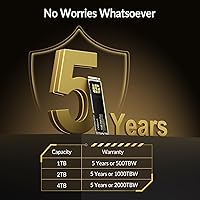
Warranty terms for GiGimundo products were not explicitly detailed in the product listing at the time of this review. This is one area where being a newer brand creates some uncertainty, and it is worth reaching out to GiGimundo directly before purchasing if warranty coverage is a deciding factor for you.

Absolutely. The Gen4 NVMe drive works perfectly as a primary Windows 11 boot drive. You will get noticeably faster boot times compared to a SATA SSD, and the NVMe 2.0 protocol is fully supported by Windows 11. Just make sure your motherboard's BIOS is configured to boot from NVMe if it is not already.

Gen4 NVMe drives do run warmer than their Gen3 counterparts, and this one is no exception. The included heatsink helps with passive thermal management, but in cases with limited airflow, temperatures under sustained load may climb and trigger throttling. If your system runs hot generally, a case with better airflow or a more substantial M.2 cooler is worth considering.

Yes, and probably more than you expect. The jump from SATA to Gen4 NVMe is substantial — applications open faster, large files copy in a fraction of the time, and game levels load with noticeably less wait. For everyday tasks like web browsing and document editing the difference is less dramatic, but anyone coming from SATA will feel the improvement in the right scenarios.