Overview

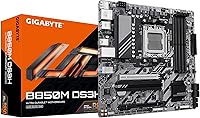
The GIGABYTE B850M DS3H mATX Motherboard arrived in early 2025 as a solid answer to a common builder dilemma: how do you land a modern AM5 platform without paying flagship prices? This AM5 motherboard punches well above its weight class, packing DDR5 support, PCIe 5.0, and a compact mATX footprint into a board built for smaller cases without gutting real-world connectivity. It is not engineered for pushing 200-watt CPUs to their thermal limits, and it does not pretend to be. What it does offer is a well-rounded everyday foundation for a capable build, backed by a 5-year warranty that is genuinely rare at this price tier.
Features & Benefits

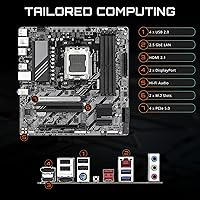
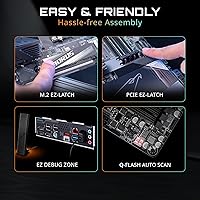
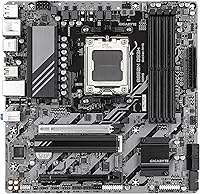
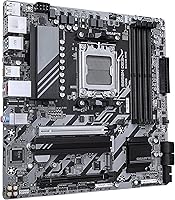
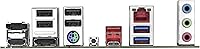
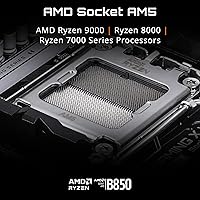
The B850M DS3H runs on AMD's B850 chipset, supporting the full Ryzen 7000, 8000, and 9000 CPU lineup through Socket AM5. Four DDR5 DIMM slots handle memory up to 5200 MHz natively, with headroom to push further via EXPO or XMP profiles. The PCIe 5.0 primary slot ensures your GPU or top-tier NVMe drive won't be bottlenecked by the board anytime soon. Two M.2 slots cover fast storage without eating into SATA availability, and the rear I/O brings a genuinely useful USB-C port plus 2.5GbE LAN — no add-in cards required. GIGABYTE's EZ-Latch system also makes dropping in M.2 drives and seating GPUs noticeably less frustrating.

Best For

This GIGABYTE mATX board is a natural fit for first-time AM5 builders trying to stay budget-conscious without landing on a board that feels compromised. The mATX form factor makes it ideal for compact case builds where a full ATX simply won't fit, yet it holds onto the features most builders actually care about. Those upgrading from AM4 will appreciate the forward compatibility — Ryzen 9000 support gives the platform real runway. It also suits home office and light workstation builds well, where built-in 2.5GbE LAN and USB-C rear I/O replace what once required dedicated expansion cards. If extreme overclocking is the goal, shop higher. If a dependable modern AM5 board at a reasonable price is, this fits well.

User Feedback

Across roughly 366 ratings, the B850M DS3H holds a 4.2-star average — a score that tells a fairly consistent story. Most buyers are satisfied, with the straightforward build experience, EZ-Latch convenience, and overall value density being the most repeated praise points. The 5-year warranty appears in reviews as a genuine reassurance rather than a footnote. On the critical side, some users flag that the VRM configuration is not well-suited to the most power-hungry Ryzen processors, and a handful mention needing a BIOS update before everything runs cleanly out of the box. Mid-range CPU pairings draw consistent approval, while builders pushing top-end chips occasionally hit limitations. The overall picture is a board that performs within its scope reliably.

Pros

  • Supports all current AMD Ryzen AM5 CPUs, including the latest Ryzen 9000 series, without needing a BIOS pre-flash on recent stock.
  • PCIe 5.0 primary slot means your GPU and top-tier NVMe drive won't outpace the board for years.
  • Four DDR5 DIMM slots with EXPO and XMP support give solid memory upgrade headroom.
  • Dual M.2 slots let you run two fast NVMe drives without touching your SATA connections.
  • Built-in 2.5GbE LAN and rear USB-C come standard, saving you from buying expansion cards.
  • EZ-Latch makes installing M.2 drives and seating GPUs noticeably faster and less fiddly.
  • The five-year warranty is a genuine standout at this price point and adds real long-term confidence.
  • Compact mATX dimensions fit a wide range of smaller cases without sacrificing core modern features.
  • The B850M DS3H holds a 4.2-star average from hundreds of real buyers, reflecting consistent satisfaction.
  • GIGABYTE's established AM5 BIOS update track record means firmware support is unlikely to be abandoned quickly.

Cons

  • The VRM configuration is not well-suited to sustained loads from top-end, high-TDP Ryzen processors.
  • Some buyers report needing a BIOS update out of the box before the system posts cleanly.
  • No integrated Wi-Fi means adding a separate adapter if wireless connectivity is required.
  • Rear USB port count is limited, which can feel tight in builds with multiple peripherals.
  • No Thunderbolt support, which matters for creative professionals using high-bandwidth external devices.
  • Overclocking headroom and BIOS granularity are noticeably behind higher-tier B850 and X870 boards.
  • The MOSFET heatsink coverage is modest, which may concern builders in poorly ventilated cases under sustained workloads.
  • Only two M.2 slots, which could feel restrictive for storage-heavy NAS-adjacent or content creation builds.

Ratings

The scores below were generated by our AI after analyzing verified global buyer reviews for the GIGABYTE B850M DS3H mATX Motherboard, with automated filtering applied to remove incentivized, duplicate, and bot-suspected submissions. The resulting ratings reflect a balanced picture — where this board genuinely delivers and where real buyers have run into friction — so you can make a clear-eyed decision before purchasing.

Value for Money
88%
Most buyers feel the B850M DS3H punches well above its price bracket, citing PCIe 5.0, dual M.2, USB-C, and 2.5GbE LAN as features they expected to pay considerably more for. The five-year warranty sweetens the deal further, making the overall package feel unusually well-rounded for its tier.
A small segment of buyers who compared it directly against similarly priced competing boards felt the absence of integrated Wi-Fi and a leaner rear USB selection slightly undercut the value argument, particularly for all-in-one desk setups where cable management matters.
Build Quality
79%
21%
The board feels solid in hand, with a well-anchored MOSFET heatsink and no flex complaints reported during installation. The dark brown PCB aesthetic is understated and inoffensive in most case builds, and the EZ-Latch components feel durable through repeated use.
A handful of buyers noted the rear I/O shield fit felt slightly loose compared to premium boards, and the overall component finish lacks the premium tactile quality found on higher-tier GIGABYTE models. It reads clearly as a cost-optimized product under close inspection.
Ease of Installation
91%
Installation feedback is consistently positive, with first-time builders specifically calling out how straightforward the process was. The EZ-Latch system eliminates the frustrating tiny M.2 screw that plagues so many budget boards, and GIGABYTE's printed quick-start guide covers the essentials clearly.
Some users who built in tighter mATX cases reported the rear I/O area felt slightly cramped when connecting multiple cables simultaneously. A few first-timers also needed to update the BIOS before their CPU was recognized, which added an unexpected early hurdle.
BIOS Experience
67%
33%
For straightforward builds with no overclocking ambitions, the BIOS is clean and functional. Most users report finding the memory XMP and EXPO toggle without difficulty, and the BIOS update process via Q-Flash is reliable once you know where to look.
Enthusiasts wanting granular voltage and frequency controls find the BIOS options noticeably thin compared to higher-end boards. Several buyers also reported needing a BIOS flash right out of the box to get Ryzen 9000 series CPUs to post, which caught first-time builders off guard.
CPU Compatibility
83%
The board handles mainstream Ryzen 7000, 8000, and 9000 series CPUs confidently, with particularly strong feedback from builders pairing it with mid-range chips like the Ryzen 5 7600 and Ryzen 7 9700X. Platform longevity across three CPU generations is a legitimate selling point.
Buyers who installed higher-TDP Ryzen 9 processors report that the power delivery runs warm under sustained all-core loads, with some noting performance throttling during extended rendering sessions. This board is clearly not optimized for flagship AMD CPUs.
Memory Performance
81%
19%
DDR5 at 5200 MHz works cleanly out of the box for most users, and EXPO profiles from major memory brands like G.Skill and Corsair activated without issues in the majority of reported builds. Four DIMM slots provide solid upgrade flexibility over time.
Pushing memory beyond 6000 MHz proved inconsistent for some users, with occasional boot failures requiring manual timings. The B850M DS3H is not the board to choose if chasing top-end DDR5 frequency records is part of the plan.
Connectivity & I/O
77%
23%
The inclusion of 2.5GbE LAN and a rear USB-C port are legitimately appreciated by buyers coming from older platforms where both required add-in cards. Home office builders in particular flagged the wired LAN speed upgrade as immediately noticeable for local network transfers.
The total rear USB port count feels lean for a 2025 board, and the absence of Wi-Fi means wireless users face an extra purchase. Power users with multiple external drives, dongles, and peripherals will likely reach for a USB hub within the first week.
Thermal Management
72%
28%
Under typical workloads with mid-range Ryzen CPUs, the MOSFET heatsink keeps VRM temperatures in a safe and stable range. Builders using the board for gaming or everyday productivity tasks report no thermal concerns during normal operation.
In warmer cases with limited airflow, or when paired with CPUs that draw more sustained power, VRM temperatures climb noticeably. Users running long compile jobs or content encoding workloads on higher-TDP chips should ensure their case has adequate front-panel airflow.
Overclocking Headroom
54%
46%
The AMD B850 chipset does technically unlock overclocking features, and users running modest EXPO memory profiles or mild CPU PBO (Precision Boost Overdrive) tuning report stable results with mainstream chips.
Serious overclockers will quickly hit the ceiling of what this board's power delivery and BIOS depth can support. It is not designed for pushing frequency limits, and buyers expecting X870-level tuning flexibility will be disappointed from their first session in the BIOS.
Storage Options
78%
22%
Two M.2 slots cover the needs of the vast majority of builds, and the PCIe 5.0 primary slot means a top-tier NVMe drive will not be bottlenecked by the board itself. SATA connectivity remains intact alongside both M.2 slots, which is not a given on all compact boards.
Builders planning large multi-drive storage configurations — such as NAS-adjacent setups or content archives — may find two M.2 slots and a modest SATA count limiting sooner than expected. There is no PCIe 5.0 M.2 slot specifically, which matters for the fastest current NVMe drives.
Software & Utilities
61%
39%
GIGABYTE's App Center provides basic fan control and system monitoring tools that most mainstream users find adequate for day-to-day oversight. The Q-Flash BIOS update tool is genuinely reliable and one of the cleaner implementations at this price point.
GIGABYTE's software suite has a dated interface and is considered bloated by more experienced users, with several background processes that install alongside the main utilities. Users who prefer clean, minimal software environments often skip the bundled tools entirely and rely on third-party alternatives.
Warranty & Support
86%
A five-year warranty is a genuine differentiator at this price tier and resonates clearly in buyer reviews as a long-term confidence factor. GIGABYTE's RMA process is described by most users as functional and reasonably responsive compared to the broader motherboard market.
A minority of users reported slower-than-expected RMA turnaround times, and support communication quality appears inconsistent depending on region. Warranty registration through the GIGABYTE portal is mandatory for the full coverage period, which some buyers missed initially.
Form Factor Versatility
84%
The mATX footprint hits a practical sweet spot — it fits a wide range of mid-tower ATX cases as well as dedicated mATX enclosures, giving builders genuine flexibility in case selection without sacrificing the core feature set most compact builds need.
Buyers wanting Mini-ITX builds are out of luck, as this board will not fit smaller cases. Those who later want to move to a full ATX board for expansion reasons will also need a different enclosure, which is a sunk cost worth considering during the planning phase.
Long-Term Reliability
76%
24%
Given the board's January 2025 launch date, long-term reliability data is still accumulating, but early returns are positive. GIGABYTE's track record on AMD platforms and the five-year warranty create reasonable confidence that the board will hold up well across a typical ownership cycle.
A small number of early adopters reported DOA units or instability that resolved after a BIOS update, which slightly clouds the out-of-box reliability picture. As with any new board launch, buyers who need maximum stability may benefit from waiting for a slightly later production batch.

Suitable for:

The GIGABYTE B850M DS3H mATX Motherboard is a strong choice for builders who want a capable, modern AMD platform without committing to premium-tier pricing. It is particularly well-suited to first-time AM5 builders who need reliable DDR5 and PCIe 5.0 support in a smaller footprint, and to anyone building inside a compact mid-tower or mATX case where full ATX boards simply will not fit. Those upgrading from an older AM4 system will find the jump worthwhile, since the board's Ryzen 7000, 8000, and 9000 series compatibility gives the platform meaningful longevity. Home office users and light workstation builders will especially appreciate the built-in 2.5GbE LAN and rear USB-C port, which eliminate the need for add-in cards. The five-year warranty also makes this a sensible pick for anyone who values long-term peace of mind from a trusted brand.
Not suitable for:

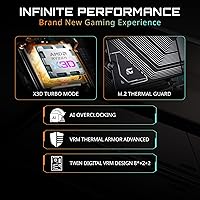
The GIGABYTE B850M DS3H mATX Motherboard is not the right pick for builders planning to push high-TDP processors like the Ryzen 9 9950X at sustained heavy loads, since the 8+2+2 phase power design and MOSFET heatsink are tuned for mid-range CPUs rather than power-hungry flagships. Enthusiast overclockers chasing maximum memory frequencies or fine-grained voltage control will find the BIOS feature set limiting compared to higher-end B850 or X870 boards. Anyone who needs extensive rear USB ports, Thunderbolt, or integrated Wi-Fi will need to budget for add-in solutions, as this board keeps connectivity lean to hit its price point. Full ATX cases with no mATX support will also make this board a non-starter on the physical fit side. If your build demands are firmly in the enthusiast or workstation-heavy category, a step up in chipset and board tier is worth the added cost.
Specifications

  • Form Factor: This board uses the mATX (Micro ATX) standard, measuring 9.6 x 9.6 inches, making it compatible with most mid-tower and compact mATX cases.
  • Chipset: Built on the AMD B850 chipset, which supports overclocking, PCIe 5.0, and the full current AMD AM5 CPU lineup.
  • CPU Socket: Uses Socket AM5 (LGA 1718), compatible with AMD Ryzen 7000, 8000, and 9000 series processors.
  • Memory Type: Supports DDR5 RAM exclusively across 4 DIMM slots, with a native base speed of 5200 MHz and higher speeds achievable via EXPO or XMP profiles.
  • PCIe Support: Features one PCIe 5.0 x16 primary slot for GPUs or high-speed NVMe adapters, ensuring compatibility with current and near-future hardware.
  • Storage Slots: Includes 2 M.2 slots for NVMe SSDs, with additional SATA ports available for traditional drives.
  • Networking: Equipped with onboard 2.5GbE LAN, providing faster wired network throughput than standard Gigabit Ethernet without requiring an add-in card.
  • Rear USB: The rear I/O panel includes a USB-C port alongside standard USB-A ports, covering modern peripheral and device connectivity needs.
  • Power Design: Runs an 8+2+2 phase power delivery configuration, supported by a MOSFET heatsink suited to mid-range Ryzen CPUs under typical workloads.
  • EZ-Latch: GIGABYTE's EZ-Latch system allows tool-free installation and removal of M.2 SSDs and the primary GPU, simplifying the build and upgrade process.
  • Wi-Fi: No integrated Wi-Fi module is included; a separate wireless adapter or PCIe Wi-Fi card is required if wireless connectivity is needed.
  • Warranty: Covered by a 5-year manufacturer warranty from GIGABYTE, which is notably longer than the industry-standard 3-year coverage common at this price point.
  • Dimensions: The board measures 9.6 x 9.6 inches (approximately 244 x 244 mm), fitting standard mATX case mounting configurations.
  • Weight: The board weighs 2.44 pounds, which is typical for an mATX motherboard with a MOSFET heatsink and standard I/O shield.
  • OS Support: Officially compatible with Windows 11, and also functions with Windows 10 and major Linux distributions on supported Ryzen platforms.
  • Launch Date: The board became available in January 2025, aligning with broader market adoption of the AMD AM5 platform and Ryzen 9000 series CPUs.
  • Brand: Manufactured by GIGABYTE, a well-established Taiwanese motherboard and hardware company with a long track record in AMD platform support.

Related Reviews
Gigabyte B550M DS3H Motherboard
85%
91%
Value for Money
87%
Performance in Gaming
90%
Stability and Reliability
89%
Power Delivery (VRM)
94%
LAN Connectivity (Speed & Stability)
More
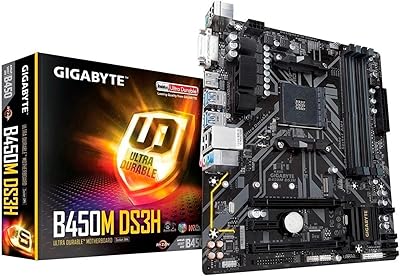
Gigabyte B450M DS3H Micro-ATX Motherboard
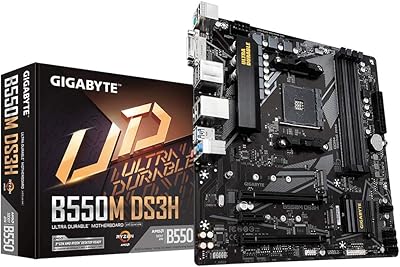
70%
88%
Value for Money
91%
Ease of Installation
87%
BIOS Experience
52%
VRM & Power Delivery
84%
Stability & Reliability
More
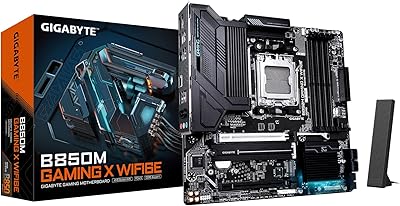
GIGABYTE B850M Gaming X WiFi 6E
81%
88%
Value for Money
91%
Installation & Build Experience
84%
BIOS Usability
67%
VRM & Thermal Performance
82%
DDR5 Compatibility
More
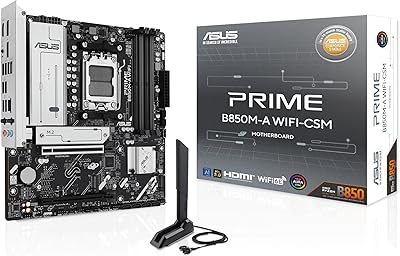
ASUS Prime B850M-A WiFi-CSM mATX Motherboard
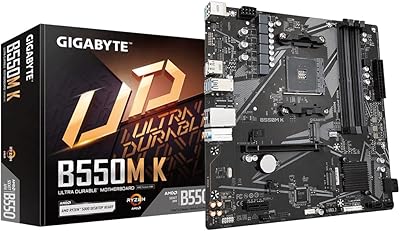
82%
91%
Platform Stability
89%
Connectivity Options
83%
BIOS Experience
81%
Value for Money
86%
Remote IT Management
More
GIGABYTE B550M Motherboard
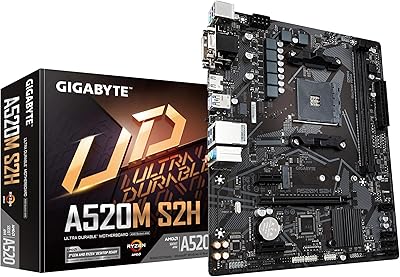
87%
89%
Performance
91%
Ease of Installation
85%
Build Quality
92%
Storage Performance (PCIe 4.0 & M.2 Slots)
87%
Compatibility with Ryzen Processors
More
Gigabyte A520I AC Mini-ITX Motherboard
71%
88%
Value for Money
84%
Wireless Connectivity
79%
Build Quality
86%
BIOS Experience
77%
Thermal Performance
More
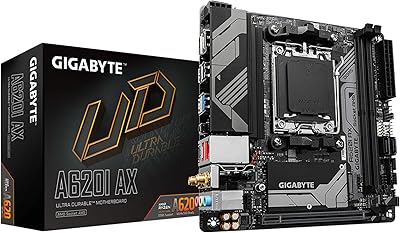
GIGABYTE A620I AX Mini-ITX Motherboard
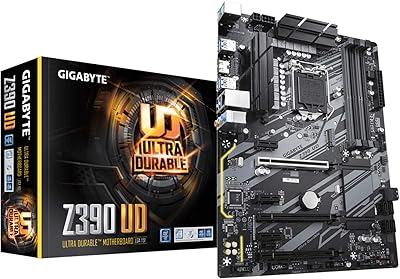
74%
83%
Value for Money
79%
Build Quality
88%
BIOS Experience
86%
Connectivity & Networking
67%
Thermal & VRM Performance
More
GIGABYTE Z390 UD ATX Intel Motherboard
72%
92%
PCIe Expansion
88%
Value for Money
86%
Long-term Reliability
83%
Build Quality
74%
VRM & Power Delivery
More
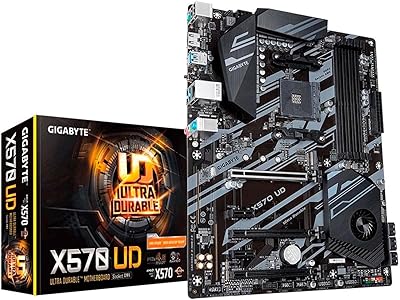
GIGABYTE X570 UD Motherboard
86%
87%
Performance
91%
Value for Money
88%
Build Quality
90%
Power Delivery
83%
Cooling Efficiency
More
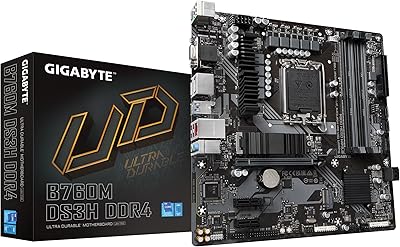
GIGABYTE B760M DS3H DDR4 Motherboard
78%
91%
Value for Money
83%
Build Quality
88%
BIOS Experience
86%
CPU Compatibility
61%
VRM & Power Delivery
More

FAQ

It depends on when the board was manufactured and what BIOS version it shipped with. Units produced after mid-2025 are likely to support Ryzen 9000 CPUs without any update needed, but earlier stock may require a BIOS flash first. If you do not have an older compatible Ryzen CPU to perform the update yourself, it is worth contacting the retailer to confirm the BIOS version before purchasing.

No, the B850M DS3H only supports DDR5 memory. The AM5 platform dropped DDR4 compatibility entirely, so you will need to budget for new DDR5 sticks if you are upgrading from an older system.

Yes, it is a solid match for mid-range Ryzen CPUs like those. The PCIe 5.0 slot handles current and upcoming GPUs without bottlenecking, and the board's power delivery is well-calibrated for CPUs in that thermal range. You won't be leaving performance on the table with a mainstream Ryzen pairing.

Technically the CPU will work, but the 8+2+2 phase power design is not built for sustained high-TDP loads. Under extended heavy workloads like video rendering or 3D simulation, the VRMs may throttle to protect themselves, reducing performance. For that class of CPU, a board with a more robust power stage is a smarter long-term investment.

There is no built-in Wi-Fi on this board. If you need wireless connectivity, you will need to add a USB Wi-Fi adapter or a PCIe Wi-Fi card. It is a common trade-off at this price point, so factor that in if wireless is important for your setup.

The board has 2 M.2 slots for NVMe SSDs and also provides SATA ports for traditional 2.5-inch or 3.5-inch drives. For most home builds, this is more than enough storage connectivity, though heavy storage configurations with four or more drives might feel limited compared to higher-tier boards.

EZ-Latch replaces the tiny traditional screw that holds M.2 drives in place with a tool-free clip mechanism. For the GPU slot, it makes releasing the graphics card much easier than wrestling with a standard retention lever in a cramped case. Builders who have fumbled with standard M.2 screws tend to appreciate it immediately, especially in tight mATX builds.

Yes, mATX boards fit in both mATX cases and full ATX mid-tower cases. The board will mount without any issues, though you will have more empty space in a full ATX enclosure. It will not fit in Mini-ITX cases, which require smaller boards.

GIGABYTE's warranty process involves registering the product through their website and going through their RMA process if a defect arises. The five-year coverage period is a genuine advantage over most competing boards at this tier, and GIGABYTE has a reasonably established support infrastructure. As with any manufacturer warranty, keeping your purchase receipt and registering the product promptly is strongly recommended.

Standard Gigabit LAN tops out at around 1 Gbps, while 2.5GbE delivers up to 2.5 Gbps over the same Cat5e or Cat6 cable you likely already have. For most home internet connections you won't notice the difference online, but for local network transfers — like moving large files to a NAS or another PC — the speed difference is real and noticeable. It is a meaningful upgrade for home office and content creation setups.