Overview

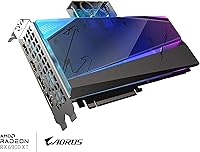
The GIGABYTE AORUS RX 6900 XT Waterforce GPU is not a card you buy on impulse — it is a purpose-built, water block-equipped flagship designed for builders who are already serious about custom loop cooling. Unlike air-cooled or AIO variants, a water block makes direct contact with the GPU die, VRAM, and VRMs all at once, meaning heat is pulled away far more aggressively than any fan-based solution can manage. Built on AMD's RDNA2 architecture, the card holds its own in demanding 4K gaming and GPU compute workloads. At launch it sat at the very top of AMD's lineup, and while newer generations have arrived, this water-cooled Radeon card still represents a compelling option for the right builder.
Features & Benefits

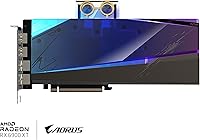
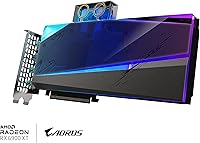
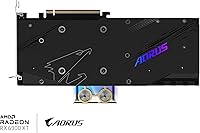
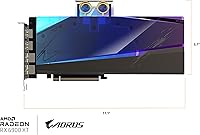
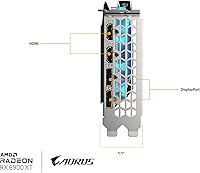
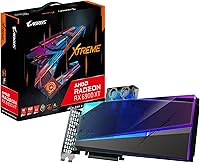
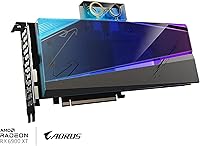
The AORUS Waterforce 6900 XT's standout feature is its full-coverage water block, which simultaneously draws heat from the GPU core, all VRAM chips, and the VRMs — components that standard coolers often ignore entirely. GIGABYTE also included a leak detection header that monitors the loop and triggers an alert if moisture appears, a genuinely useful safety layer in any open-loop system. The 16GB of GDDR6 on a 256-bit interface gives the card real texture bandwidth headroom for 4K assets and large 3D scenes. On the output side, DisplayPort and HDMI cover all modern display needs, and the compact PCB footprint is a quiet advantage when fitting into tight, densely packed custom rigs.

Best For

This water block GPU is aimed squarely at a narrow but specific type of builder. If you already have a custom water cooling loop in place — or are actively planning one — integrating this card is a natural fit. Overclockers will appreciate the thermal ceiling this setup provides; lower junction temperatures mean more stable clock speeds during extended sessions. Content creators working with large textures, high-poly 3D scenes, or GPU-accelerated rendering will find the 16GB buffer genuinely useful. It also suits compact high-performance builds where triple-fan air coolers simply will not fit. This is not a card for a typical gaming build, and that is entirely the point.

User Feedback

With 55 ratings and a 4.3-star average, the sample is modest — treat the consensus as directional rather than definitive. That said, the themes are consistent: owners running the AORUS Waterforce 6900 XT in an open loop report impressively low temperatures under sustained gaming loads, often well below what air-cooled builds achieve. The main friction is installation — setting up a water block card demands patience and prior loop experience, and a handful of buyers flagged that clearly. There are also occasional mentions of RGB Fusion quirks and GPU monitoring software not immediately detecting the card after install, though most describe these as minor inconveniences rather than persistent problems.

Pros

  • Full-coverage water block keeps GPU core, VRAM, and VRM temperatures significantly lower than any air-cooled alternative.
  • Near-silent operation under sustained 4K gaming loads is a genuine quality-of-life improvement.
  • The onboard leak detection header adds a meaningful safety layer that most water block GPUs omit.
  • 16GB GDDR6 gives content creators and 3D artists real headroom for high-resolution asset workloads.
  • Compact PCB dimensions make this water block GPU easier to fit into dense or small form factor custom loop builds.
  • RDNA2 architecture provides solid rasterization performance and respectable ray tracing capability at 4K.
  • RGB Fusion 2.0 integrates cleanly with other GIGABYTE AORUS components for a unified lighting setup.
  • Lower sustained temps create a stable thermal environment that benefits overclocking consistency.

Cons

  • Requires a fully built custom water cooling loop before the card is even functional — no fallback cooling included.
  • Installation complexity is substantially higher than a standard GPU swap, demanding prior loop-building experience.
  • Only 55 ratings on record, so the available user feedback is too limited to draw broad reliability conclusions.
  • RGB Fusion software has drawn occasional complaints around stability and initial GPU detection issues post-install.
  • The water block design locks you into loop compatibility planning — adding or changing components later requires loop teardown.
  • Newer GPU generations have launched since this card debuted, which affects its value proposition at its original price point.
  • Coolant compatibility and long-term loop maintenance are ongoing responsibilities that add hidden cost and effort over time.
  • The AORUS Waterforce 6900 XT has limited resale appeal outside the custom cooling enthusiast community.

Ratings

The scores below were generated by AI after analyzing verified purchaser reviews worldwide for the GIGABYTE AORUS RX 6900 XT Waterforce GPU, with automated filtering applied to remove incentivized, duplicate, and bot-generated submissions. Drawing from a modest but technically engaged reviewer pool, these ratings reflect both the real strengths enthusiast builders praise and the genuine friction points that affect the ownership experience. Nothing has been smoothed over — where buyers struggled, the scores show it.

Thermal Performance
96%
This is the card's most celebrated strength, and the feedback is remarkably consistent: builders running it in open loops report GPU core temperatures under heavy 4K gaming loads that air-cooled variants simply cannot match. Sustained sessions in demanding titles produce stable thermals without the thermal throttling spikes that plague blower and triple-fan designs.
A small number of users noted that achieving peak thermal results depended heavily on loop quality — a poorly balanced loop with inadequate radiator surface area will undercut the water block's potential significantly. The card itself is not the limiting factor in those cases, but buyers should budget appropriately for a capable loop to realize the full benefit.
Noise Levels
91%
With no onboard fans whatsoever, this water block GPU is essentially silent from a GPU perspective — all audible noise is offloaded to the loop's radiator fans and pump, which can be tuned to near-inaudible levels in a well-built system. Gamers who run long evening sessions particularly appreciated the absence of GPU fan ramp-up during intense scenes.
The silence claim comes with an asterisk: pump hum and radiator fan noise are real variables that depend entirely on the components the buyer chooses for the rest of the loop. Users who paired this card with a budget pump or high-static-pressure fans in a resonant case did not always achieve the quiet system they expected.
Gaming Performance
88%
At 4K resolution the AORUS Waterforce 6900 XT delivers strong, consistent frame rates across a wide range of AAA titles, and the 16GB GDDR6 buffer means texture-heavy games rarely hit a memory ceiling. Reviewers running titles at maximum quality settings at 3840x2160 were broadly satisfied with performance headroom.
Ray tracing performance, while hardware-accelerated on RDNA2, trails NVIDIA's contemporaries at equivalent price brackets — buyers who prioritize RT-heavy titles should factor that in. Additionally, newer GPU generations have since launched, so the raw performance-per-dollar equation has shifted noticeably since this card debuted.
Installation Complexity
38%
62%
For builders already experienced with custom water loops, the installation process is logical and the G1/4 port layout is sensibly positioned for tubing runs in most mid-tower and full-tower cases. Those familiar with water cooling found the block straightforward to mount once the loop was planned.
This is the most consistent pain point in the feedback. Builders underestimating the commitment involved — loop planning, pressure testing, coolant selection, and leak detection wiring — reported frustrating experiences that had nothing to do with the card's performance. It is genuinely not suitable for anyone without prior custom loop experience, and several reviewers flagged wishing the listing made that clearer upfront.
Build & Hardware Quality
89%
The water block construction drew consistent praise for its solid feel and tight fitment against the PCB. Reviewers noted that the contact plate showed no warping or uneven pressure points after extended use, and the block's finish held up well in loops running both distilled water and premixed coolants over many months.
A minor subset of users flagged that the mounting hardware, while functional, required careful torque management during installation to avoid uneven pressure on the GPU die. No widespread failure reports emerged, but the assembly process rewards patience over speed.
Overclocking Headroom
84%
The thermal ceiling provided by full-coverage water cooling gives this card meaningfully more overclocking stability than air-cooled 6900 XT variants. Enthusiasts pushing memory and core clocks beyond stock reported that the block kept temperatures flat enough to maintain stable tuned frequencies through extended benchmark runs.
The RX 6900 XT's silicon itself is already running close to AMD's architectural limits, so the gains from overclocking are real but incremental rather than dramatic. Buyers expecting transformative performance uplift through overclocking may find the headroom satisfying but not revelatory.
Memory & VRAM Capacity
87%
The 16GB GDDR6 buffer is a practical advantage for 4K gaming with high-texture packs loaded and for GPU-accelerated creative workloads like Blender rendering or large Photoshop canvases. Content creators in the reviewer pool specifically called out the VRAM headroom as a deciding factor in choosing this card.
While 16GB is generous for current workloads, the 256-bit memory bus is narrower than some competing high-end GPUs, which can limit peak bandwidth in the most memory-intensive scenarios. For most gaming and creative tasks this is a non-issue, but it is a technical constraint worth noting.
Leak Detection Feature
74%
26%
The inclusion of an onboard leak detection header is a genuinely useful feature that most water block GPU designs omit. Builders who wired it to a motherboard header or pump controller appreciated the added peace of mind during the critical first hours after a new loop fill.
A handful of reviewers reported occasional false positive triggers during initial loop fills when small air pockets passed through the block before the system fully bled. The detection system cannot distinguish between a genuine slow leak and a transient air bubble, which caused brief unnecessary alarm for some first-time loop builders.
Software & RGB
61%
39%
When RGB Fusion 2.0 functions correctly, the lighting synchronization across GIGABYTE AORUS components is clean and visually cohesive. Builders running an all-AORUS ecosystem found the integration satisfying and the per-zone customization options reasonably flexible.
This category drew the most software-related complaints in the feedback pool. Several users reported that GPU monitoring tools including GPU-Z did not detect the card correctly immediately after install, requiring driver reinstalls or software updates. RGB Fusion itself had occasional stability issues that required a fresh installation to resolve.
Compatibility & Fit
82%
18%
The more compact PCB dimensions compared to triple-fan air coolers made this water block GPU a practical choice for dense builds where a 330mm+ air-cooled card simply would not clear adjacent components or radiator mounts. Custom loop case builders particularly appreciated having predictable, standard G1/4 fittings.
Despite the compact PCB, the card's weight at 6.21 pounds means GPU sag is a genuine concern that requires either a support bracket or vertical GPU mounting. Builders who overlooked this reported visible slot deflection over time, particularly in horizontal motherboard orientations.
Value for Money
57%
43%
For the specific buyer this card targets — someone building a high-end custom loop system who wants the best possible thermals and noise profile from an AMD flagship — the premium over an air-cooled 6900 XT is defensible. The thermal and noise benefits are real and measurable, not just marketing positioning.
The value equation has weakened since launch as newer GPU generations arrived at competitive prices and the RX 6900 XT itself aged. Buyers evaluating this card today against current-generation alternatives will find the price-to-performance ratio harder to justify unless the water block form factor is a specific requirement for their build.
Display Output Options
78%
22%
DisplayPort and HDMI coverage handles the full range of modern high-refresh 4K monitors without any adapter requirements. Users running multi-monitor setups for productivity or sim racing found the output configuration practical and reliable.
The port selection is functional but not extensive by flagship card standards, and users wanting to drive more than two or three high-resolution displays simultaneously may find the output count limiting. No USB-C display output is present, which is a minor inconvenience for users with newer ultrawide or portable display options.
Long-Term Reliability
73%
27%
Owners who reported using the card for extended periods — over 12 months in loop — described stable performance with no degradation in thermal contact or coolant interaction with the block surfaces. The full-coverage design's contact with VRMs also reduces long-term stress on voltage components compared to air-cooled alternatives.
With only 55 ratings available, drawing broad reliability conclusions is premature. Long-term water loop ownership introduces variables — coolant maintenance, biocide refresh cycles, fitting integrity — that affect the card indirectly, and the feedback sample does not yet reflect enough multi-year ownership accounts to score this category with high confidence.

Suitable for:

The GIGABYTE AORUS RX 6900 XT Waterforce GPU was built for a specific kind of builder, and it delivers exceptionally well for that audience. If you are already running a custom open-loop water cooling system, or are committed to building one, integrating this card makes immediate practical sense — you get a full-coverage water block that handles the GPU core, VRAM, and VRMs in one loop rather than relying on a separate air cooler bolted to the PCB. Overclockers will particularly appreciate the thermal headroom this setup provides, as sustained low junction temperatures allow for more stable and aggressive clock speed tuning. For 4K gaming enthusiasts who find fan noise distracting during long sessions, the near-silent operation under load is a real, tangible benefit. Content creators and 3D artists working with large texture sets or GPU-accelerated render engines will also find the 16GB GDDR6 buffer genuinely useful rather than just a spec sheet number.
Not suitable for:

The GIGABYTE AORUS RX 6900 XT Waterforce GPU is a poor fit for anyone who is not already experienced with custom water cooling loops, and that rules out the majority of PC builders. This card ships with no cooler of its own beyond the water block — if you do not have a compatible loop ready, the GPU is simply unusable out of the box, which is a hard stop for casual upgraders. Builders on a budget or those who prefer simple plug-and-play upgrades should look at air-cooled or AIO-equipped variants of the 6900 XT instead. It is also worth noting that newer GPU generations have since launched, so buyers chasing absolute peak performance in current titles should evaluate where this card sits in today's hierarchy before committing. Anyone uncomfortable with loop maintenance, leak risk management, or coolant compatibility research will find the ongoing ownership experience more stressful than rewarding.
Specifications

  • GPU Architecture: Built on AMD's RDNA2 architecture, which underpins the full Radeon RX 6000 series and supports hardware-accelerated ray tracing.
  • GPU Model: The core processor is the AMD Radeon RX 6900 XT, AMD's flagship consumer GPU from the RDNA2 generation.
  • Memory Capacity: Equipped with 16GB of GDDR6 video memory, providing substantial headroom for 4K textures and GPU compute workloads.
  • Memory Interface: The memory runs on a 256-bit bus at 16 Gbps, delivering strong bandwidth for high-resolution rendering and content creation tasks.
  • Cooling System: Uses a full-coverage WATERFORCE water block that simultaneously cools the GPU die, all VRAM chips, and the voltage regulation modules.
  • Leak Detection: An onboard leak detection header monitors the water loop and triggers an alert signal if moisture is detected anywhere in the system.
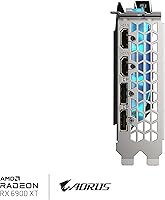
  • Display Outputs: The card provides DisplayPort and HDMI outputs, supporting configurations up to 4K resolution at high refresh rates.
  • Max Resolution: Officially supports a maximum output resolution of 3840x2160, commonly referred to as 4K UHD.
  • Card Length: The PCB measures 11.1 inches in length, which is more compact than most triple-fan air-cooled variants of the same GPU.
  • Card Dimensions: Full dimensions are 11.1 x 5.75 x 1.1 inches, making slot clearance planning straightforward for most standard ATX cases.
  • Card Weight: The card weighs 6.21 pounds, which is notable for a water block design and warrants the use of a GPU support bracket in most builds.
  • Lighting: RGB Fusion 2.0 provides addressable RGB lighting that synchronizes with other compatible GIGABYTE and AORUS components via GIGABYTE's software.
  • Model Number: The official model identifier is GV-R69XTAORUSX WB-16GD, which distinguishes this water block variant from standard air-cooled 6900 XT models.
  • Brand & Series: Manufactured by GIGABYTE under the AORUS Xtreme WATERFORCE sub-brand, which targets high-end enthusiast and overclocking builds.
  • Chipset Brand: The GPU chipset is designed and fabricated by AMD, with GIGABYTE handling the PCB design, power delivery, and cooling implementation.
  • Availability Date: This model was first listed for sale on December 18, 2020, coinciding with the broader Radeon RX 6900 XT launch window.

Related Reviews
GIGABYTE Radeon RX 9070 XT Gaming OC 16G
81%
93%
Gaming Performance
91%
Thermal Management
86%
Noise Level
94%
VRAM & Memory Capacity
67%
Driver Stability
More
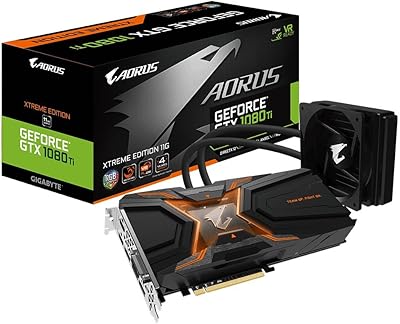
GIGABYTE AORUS Xtreme GeForce GTX 1080 Ti Waterforce 11GB
88%
94%
Gaming Performance
92%
Cooling Efficiency
89%
Overclocking Potential
87%
Value for Money
93%
Build Quality
More
Gigabyte AORUS WATERFORCE X 360 AIO Liquid CPU Cooler
86%
91%
Cooling Performance
89%
Noise Level
74%
Ease of Installation
87%
Aesthetic Customization
84%
Display Functionality
More
PowerColor Red Devil RX 6900 XT Graphics Card
78%
91%
Gaming Performance
89%
Thermal Management
84%
Noise Level
88%
Build Quality
93%
VRAM & Memory
More
GIGABYTE Radeon RX 6500 XT Eagle 4GB Graphics Card
83%
92%
Value for Money
88%
Gaming Performance (1080p)
90%
Cooling System Efficiency
63%
4K Performance
84%
Build Quality
More
GIGABYTE RX 7800 XT 16GB Graphics Card
78%
91%
1440p Gaming Performance
88%
Thermal Management
93%
VRAM & Future-Proofing
79%
Value for Money
61%
Driver & Software Experience
More
GIGABYTE RX 7600 XT 16GB Graphics Card
80%
88%
Value for Money
84%
1080p Gaming Performance
72%
1440p Gaming Performance
93%
VRAM Capacity
86%
Thermal Performance
More
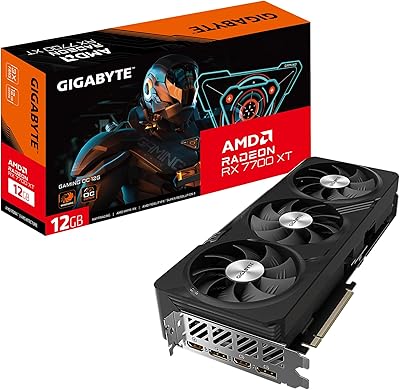
GIGABYTE RX 7700 XT 12GB Graphics Card
83%
88%
1440p Gaming Performance
91%
Thermal Performance
83%
Noise Level
93%
Build Quality
76%
Value for Money
More
GIGABYTE Radeon RX 6700 XT Gaming OC 12GB Graphics Card
87%
94%
4K Gaming Performance
91%
Cooling System Efficiency
88%
Installation and Setup
86%
Design and Durability
89%
Frame Rates in Demanding Games
More
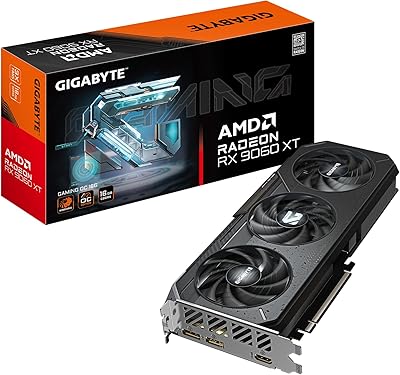
GIGABYTE Radeon RX 9060 XT Gaming OC 16G
83%
93%
1440p Gaming Performance
96%
Memory Capacity (VRAM)
89%
Thermal Management
84%
Acoustic Performance
87%
Build Quality & Materials
More

FAQ

You need a proper open-loop custom water cooling system — this is not compatible with closed-loop AIO coolers. The water block attaches to your loop's fittings, pump, radiator, and reservoir setup. There is no fan-based cooling on the PCB at all, so without an active loop, the card cannot operate safely.

The AORUS Waterforce 6900 XT water block uses standard G1/4 threaded ports, which are the most common fitting thread size in custom PC water cooling. That means it is compatible with the vast majority of fittings, barbs, and quick-disconnect adapters available from major cooling brands.

The onboard leak detection header connects to a sensor on the water block. If moisture is detected — indicating a seal failure or drip somewhere on the block — it sends a signal that can trigger a system alert or shutdown, depending on how you wire it to your motherboard or controller. It is a useful safety net, though it is worth noting that it detects leaks after they start, not before, so proper loop pressure testing before powering on remains essential.

Yes. FSR is a software-level upscaling technology that works across a wide range of AMD and non-AMD GPUs, and this card supports it fully. You can enable FSR in any compatible game title without any additional hardware requirements.

The PCB itself is relatively compact at 11.1 inches, which is a real advantage in dense builds. That said, the water block adds some thickness compared to a bare PCB, so check clearances between the GPU slot and any adjacent components or reservoir mounts. Most full-size and mid-tower cases designed for custom loops will accommodate it without issue.

Absolutely. The 16GB GDDR6 frame buffer is genuinely useful for GPU-accelerated render engines like Blender's Cycles, and the RDNA2 architecture has solid support for OpenCL workloads. It is worth noting that AMD's ROCm compute platform, used for machine learning frameworks, has historically had more limited software support compared to NVIDIA's CUDA ecosystem, so check compatibility with your specific tools before assuming it will drop in seamlessly.

The card has multiple DisplayPort and HDMI outputs, supporting multi-monitor configurations up to 4K per display. For exact port count and arrangement, refer to the physical card or GIGABYTE's product page, as output combinations can vary between PCB revisions.

For most users it does, but the user feedback pool for this water block GPU does include occasional mentions of RGB Fusion not detecting the card immediately after a fresh install, and minor software stability quirks. These were not widespread or persistent issues in most accounts, and a driver reinstall or software update typically resolved them. If you are not invested in the GIGABYTE RGB ecosystem, you can simply ignore the software side entirely.

The core GPU silicon is the same, but the differences are meaningful in practice. The water block variant runs significantly cooler under sustained load, which translates to lower fan noise (in your loop's case, pump and radiator fan noise instead), tighter thermal stability during overclocking, and a smaller physical footprint on the PCB. The trade-off is the substantial added complexity and cost of building and maintaining the water loop itself.

At 6.21 pounds, this is a heavy card, and GPU sag is a genuine concern — especially with a water block and fittings adding torque to the PCIe slot. A GPU support bracket or brace is strongly recommended. Many custom loop cases include vertical GPU mounting options as well, which eliminates sag entirely and can make tubing routing cleaner.