


Overview

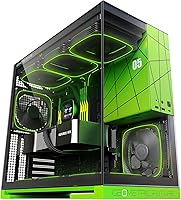
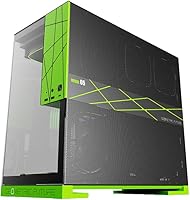
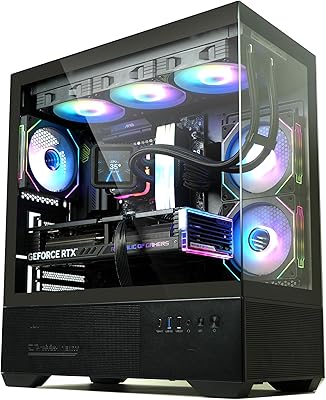
The Geometric Future M5 Mid Tower Gaming Case enters a genuinely competitive space — the $150 range is packed with solid options from brands builders already trust. Geometric Future is newer to the scene, which is worth acknowledging upfront: they don't have years of reputation to lean on. What they do offer is a compelling out-of-box experience. Five fans already installed means you're not immediately spending extra on airflow, and the black-and-green colorway is deliberately styled for themed builds rather than trying to please everyone. This review focuses on whether it works as a practical build platform, not just whether it photographs well.

Features & Benefits

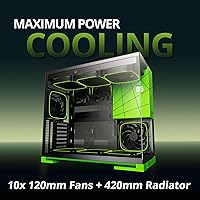
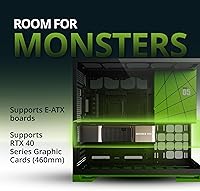
The five pre-installed 140mm ARGB PWM fans are the headline feature, and PWM control matters more than most buyers realize — it means fan speeds actually respond to system temps instead of running flat-out all day, which translates to noticeably quieter operation at idle. The tool-free glass panels are genuinely convenient during iterative builds when you're swapping parts repeatedly. Radiator support up to 420mm gives enthusiast-level liquid cooling room to breathe, and GPU clearance up to 460mm means even the largest current cards fit without drama. The PSU shroud window is mostly a style feature, but the steel frame construction feels more substantial than typical budget-tier options.

Best For

The M5 case makes the most sense for builders who are tired of buying fans separately just to make a case functional from day one. If you're planning a 360mm or 420mm AIO, the radiator clearance here saves you from compromising on cooling ambition. The green accent aesthetic isn't for everyone — but if you're deliberately building a green-themed rig, this mid-tower does the visual work without extra lighting strips. E-ATX users and those running multi-slot flagship GPUs will appreciate the generous interior clearances. It's also a reasonable pick for first-time builders who benefit from tool-less access to reduce the intimidation factor of the build process itself.

User Feedback

Across roughly 214 verified ratings, Geometric Future's M5 holds a 4.6-star average — encouraging for a newer brand, though the sample size is still modest and growing. Buyers frequently praise the out-of-box fan performance and note that ARGB sync works reliably with major motherboard ecosystems. Where criticism surfaces, it tends to center on cable management space feeling tighter than expected, and occasional comments about minor panel alignment inconsistencies — the kind of fit-and-finish variance that established brands have largely ironed out over years. A handful of reviewers draw favorable comparisons to pricier well-known options, while others recommend direct comparisons before committing. Satisfaction skews clearly positive overall.

Pros

  • Five pre-installed ARGB PWM fans deliver genuine out-of-box airflow value, with no extra fan purchases needed.
  • PWM speed control keeps noise low at idle and ramps up responsively only when system temps climb.
  • Supports radiators up to 420mm, giving serious AIO builders real headroom rather than a tight squeeze.
  • GPU clearance up to 460mm means even the most oversized current-generation cards install without drama.
  • Tool-free tempered glass panels make repeated access during iterative or upgrade-heavy builds genuinely convenient.
  • E-ATX compatibility removes a common constraint for enthusiast platform builders choosing a mid-tower chassis.
  • Front I/O includes USB Type-C, a practical and increasingly necessary addition many rivals at this price omit.
  • ARGB lighting syncs reliably with major motherboard ecosystems, avoiding the frustration of mismatched lighting software.
  • Steel frame construction feels noticeably more solid underhand than typical budget-tier cases in this segment.
  • The PSU shroud display window gives sleeved cable and custom PSU builds a clean, finished presentation.

Cons

  • Geometric Future lacks the established brand track record that gives buyers confidence in long-term support and consistency.
  • Cable management space can feel tighter than expected once a modular PSU and sleeved cables are in play.
  • Tempered glass panel alignment may vary slightly unit to unit, a fit-and-finish risk more common with newer manufacturers.
  • The bold black-and-green color scheme is deliberately specific — builders wanting a neutral look should shop elsewhere.
  • A 214-review sample, while positive, is still modest enough that production batch consistency is difficult to fully gauge.
  • The PSU shroud window is purely cosmetic and adds no meaningful functional value for builders who are not showcasing cables.
  • At roughly 25 pounds, this mid-tower is on the heavier end, which becomes noticeable if you transport your rig regularly.
  • Actual cooling results depend on component heat output and ambient conditions — pre-installed fans are a starting point, not a guarantee.

Ratings

The Geometric Future M5 Mid Tower Gaming Case has been evaluated using a dataset of verified buyer reviews collected globally, with our AI actively filtering out incentivized submissions, bot-generated ratings, and suspected spam before any scoring was applied. The category scores below reflect the full picture — genuine strengths that real builders consistently highlight alongside pain points that a meaningful portion of users encountered. No category has been inflated or softened; the numbers reflect where this mid-tower earns praise and where it falls short against its competitive segment.

Build Quality
78%
22%
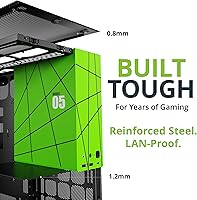
The steel frame, built to 0.8–1.2mm thickness, feels noticeably more substantial than budget-tier rivals when you handle the chassis. Builders who have wrestled with flimsy panels on cheaper cases will appreciate that the M5 does not flex or creak during assembly. Most users describe it as solid and confidence-inspiring for the price.
A portion of buyers note that quality consistency is not perfectly uniform across all units — occasional reports of slightly misaligned panel edges or minor stamping inconsistencies suggest production tolerances still have room to tighten. For a newer brand this kind of variance is not unexpected, but it is worth factoring in before purchasing.
Airflow & Cooling
83%
Five pre-installed 140mm PWM fans covering intake and exhaust positions means this mid-tower arrives ready to move air seriously on day one. Builders running high-TDP CPUs alongside multi-slot GPUs report that temperatures stay well-managed without adding extra fans, which is a genuine and tangible relief at this price point.
Actual cooling performance is not a fixed outcome — results depend heavily on component TDP, ambient room temperature, and whether buyers configure the PWM fan curve sensibly in their BIOS. A small number of users running extreme overclocked setups found the out-of-box fan configuration alone insufficient and had to supplement with additional cooling hardware.
Value for Money
89%
When you factor in five ARGB PWM fans, 420mm radiator support, E-ATX compatibility, and a tempered glass panel, the total bundled value here is genuinely difficult to beat at this price tier. Buyers repeatedly note that sourcing this feature set separately would cost considerably more, making the package a compelling argument on raw numbers alone.
The value equation depends partly on comfort with a lesser-known brand — established competitors with comparable specs command a premium some buyers feel is worth paying for peace of mind. A handful of reviewers also felt that minor finish inconsistencies they encountered in person dulled the overall value proposition relative to first impressions.
Aesthetic Design
86%
The black-and-green color scheme is bold and deliberate, giving themed gaming builds a cohesive identity that goes well beyond stuffing components into a generic black enclosure. Builders running green RAM, GPU accents, or matching peripherals consistently describe the case as completing their setup in a way few options at this price can.
The polarizing green accent narrows versatility considerably — buyers not committed to a themed build will find the color scheme an awkward fit compared to neutral-toned alternatives in the same price range. A minority of reviewers also felt the exterior finish did not feel quite as premium up close as the product imagery suggested.
Included Fan Quality
81%
19%
The included 140mm ARGB PWM fans are a legitimate step above the low-quality filler units many competing cases install just to tick a box. Buyers building their first ARGB rig appreciate that these fans sync reliably with mainstream motherboard lighting ecosystems and produce vibrant, consistent color output without requiring a separate controller.
Buyers who prioritize acoustic performance above all else found that the fans, while capable, are not the quietest units available at full speed — which matters in bedroom setups or quiet home office environments. Fan bearing longevity over multiple years also remains an open question given the brand's relatively short market history.
Ease of Assembly
88%
Tool-free tempered glass panel access is one of the most practically praised features by real users — especially first-time builders who dread screwdriver fumbling just to swap a component mid-build. The pre-installed fans remove a significant setup step, and most buyers report a straightforward, low-frustration assembly experience from start to finish.
The included documentation is minimal, and routing cables through available management cutouts while keeping the build tidy requires more trial and error than the tool-free branding implies. Users simultaneously mounting a large front AIO radiator and a full-length GPU also report that interior working space becomes genuinely tight during assembly.
Cable Management
62%
38%
Dedicated cable management cutouts and tie points give builders a workable framework for keeping the interior presentable. Builders running compact cable setups — short modular cables and minimal peripheral connections — report achieving a clean-looking result without excessive effort or custom cable work.
The space behind the motherboard tray is the most consistently criticized aspect among verified buyers — functional but tight, particularly when dealing with thick modular PSU cable bundles or sleeved custom cables. Builders who care deeply about cable presentation routinely flag this as the case's most notable weakness relative to competitors at this price tier.
Noise Levels
74%
26%
At idle and light workloads, the PWM fans are genuinely unobtrusive when running on a sensible curve — users gaming at moderate loads or working from home report a quiet baseline that does not intrude on the room. The 140mm fan diameter naturally generates lower noise per unit of airflow than smaller 120mm equivalents at comparable speeds.
Under sustained load — during long rendering sessions or extended gaming — fan speeds climb and noise output becomes clearly audible, particularly in quieter environments. Several users noted that at full speed the fans are louder than comparable cases with purpose-built noise dampening, suggesting acoustic comfort was not a primary design priority here.
Compatibility & Clearances
91%
The compatibility envelope is one of the strongest arguments for this mid-tower — E-ATX support, 460mm GPU clearance, and 420mm radiator room cover virtually every realistic high-performance build scenario a buyer at this price would plan. Users installing flagship triple-fan GPUs or 360mm AIOs consistently confirm a comfortable fit without improvised workarounds.
Edge cases do exist — RAM clearance when mounting a thick 420mm radiator can be tight depending on board layout and radiator depth, and some non-standard E-ATX implementations with wider board dimensions may fit more snugly than expected. Builders with highly unconventional component stacks should verify specific clearances individually rather than assuming a blanket fit.
Panel Fit & Finish
71%
29%
The tempered glass panel is clear and substantial enough to give finished builds a genuinely premium presentation, and from a normal viewing distance the case looks like it belongs in a higher price bracket. Most buyers report the panel seats securely on arrival and the overall visual impression of a completed build is impressive for the money.
Up close and on handling, a portion of buyers notice minor alignment gaps or slight play in the latch mechanism — not enough to affect function, but enough to signal that fit tolerances are not on par with premium-brand alternatives. Unit-to-unit variance makes this an inconsistent experience that is difficult to predict before purchase.
ARGB Lighting
84%
The ARGB implementation across five fans delivers a visually rich result once synced through a compatible motherboard header — buyers who configure their lighting profiles describe the output as vivid and consistent across all fan units. For a case at this price point, the lighting quality genuinely exceeds what most buyers expect going in.
Users on non-mainstream motherboards or those without a dedicated ARGB header report friction getting full sync working, and in some setups the fans default to a static mode that significantly limits the visual impact. A small number of buyers also flagged minor color consistency variation between individual fan units under certain dynamic lighting modes.
Interior Layout
76%
24%
The interior is logically organized for clearance-demanding builds — the PSU shroud keeps the bottom compartment clean, drive mounting is sensibly positioned, and the spatial planning works well for standard ATX configurations running a tower cooler or a front-mounted AIO. Builders prioritizing a tidy front-facing showcase particularly appreciate the dedicated radiator mounting zones.
The interior becomes noticeably congested when multiple large components are installed simultaneously — a triple-fan GPU, a 420mm front radiator, and a full cable bundle leave little room for hands during assembly. Builders who frequently reconfigure their setup will also find the tighter rear clearance a persistent frustration during routine component swaps.
Brand Reliability
63%
37%
Geometric Future's M5 has generated consistently positive early reception, and after-sale support responsiveness has been noted favorably in several reviews. The product reflects deliberate engineering choices rather than a rushed market entry, which suggests the brand is genuinely invested in building a reputation rather than chasing short-term volume.
Geometric Future does not yet carry the multi-year track record buyers rely on when assessing long-term durability and warranty follow-through — the review sample, while encouraging, is limited compared to established competitors. Buyers who have previously navigated warranty claims with newer brands understand firsthand how that experience can differ from dealing with a household-name manufacturer.
Front I/O Usability
79%
21%
The USB Type-C port on the front panel is a practical and forward-looking addition that many mid-towers at this price still omit — builders who regularly connect modern phones, external SSDs, or controllers appreciate not having to reach around to the rear I/O. The two USB 3.0 ports cover everyday peripheral needs without crowding.
The front I/O is functional but limited — some builders note the absence of a dedicated USB 2.0 front header is a minor inconvenience for older peripherals. A handful of buyers also flagged that the power button tactile feel is less satisfying than what similarly priced cases from established brands typically deliver.

Suitable for:

The Geometric Future M5 Mid Tower Gaming Case is a strong match for PC builders who want a visually complete, airflow-ready enclosure without padding their parts list with additional fans or lighting accessories. If you are planning a 360mm or 420mm AIO liquid cooling setup, the radiator clearance here is genuinely accommodating rather than a marketing exaggeration. Builders working with E-ATX motherboards or long flagship GPUs will find the interior dimensions forgiving without having to sweat over clearance math before committing. The black-and-green aesthetic makes it a natural fit for anyone building a color-coordinated gaming rig where the chassis is part of the visual story, not just a box that hides components. First-time builders also have reason to consider it, since tool-less panel access and pre-installed fans reduce two of the most common friction points in an early build. At this price tier, the level of out-of-box completeness it offers would typically cost noticeably more to replicate by sourcing fans and lighting separately.

Not suitable for:

Buyers who prioritize a proven brand with years of documented customer service history behind it may want to pause before committing — Geometric Future is newer to the market, and while its ratings are encouraging, the review sample is still smaller than what you'd find behind Fractal Design or Lian Li, making edge-case quality variance harder to predict. Builders who require generous cable management real estate may find the interior tighter than competing options at this price point, particularly when routing sleeved cables alongside a fully modular power supply. If the black-and-green color scheme does nothing for your build vision, there are more neutral mid-towers in this range that won't lock you into a specific aesthetic. Mini-ITX and Micro-ATX builders are also a poor fit, since the M5 case is sized for larger boards and the extra interior space offers no real benefit at those form factors. Finally, anyone expecting the fit-and-finish consistency of a premium-tier chassis from an established brand should calibrate expectations — minor panel tolerance variations are a realistic possibility with a newer manufacturer still refining its production process.

Specifications

  • Case Type: Mid Tower form factor designed to house ATX and E-ATX motherboards within a standard desktop footprint.
  • Motherboard Support: Natively compatible with E-ATX and ATX standards, covering a wide range of enthusiast and mainstream platform builds.
  • Pre-installed Fans: Ships with five 140mm ARGB PWM fans already mounted and wired, providing immediate out-of-box airflow performance.
  • Fan Control: PWM (Pulse Width Modulation) speed regulation allows fan RPM to adjust dynamically in response to motherboard temperature signals.
  • Fan Expansion: Total fan mounting capacity supports up to ten 120mm fans across all available positions for high-volume airflow configurations.
  • Radiator Support: Accommodates radiators up to 420mm in length, making the case suitable for triple-fan AIO and custom loop liquid cooling setups.
  • GPU Clearance: Supports graphics cards up to 460mm in length, covering virtually all current multi-slot flagship GPU designs without modification.
  • PSU Clearance: Accepts power supply units up to 160mm in length, compatible with the majority of standard and fully modular ATX PSU form factors.
  • Steel Thickness: The chassis frame is built from 0.8–1.2mm thick steel, offering structural rigidity above what is typical for entry-level enclosures.
  • Side Panel: Full-view tempered glass side panel uses a screwless, tool-free latch design for quick removal and reinstallation during builds.
  • Front I/O: Front panel connectivity includes one USB Type-C port and two USB 3.0 Type-A ports for high-speed peripheral access.
  • ARGB Sync: Integrated ARGB lighting system supports synchronization with major motherboard RGB control platforms for unified lighting management.
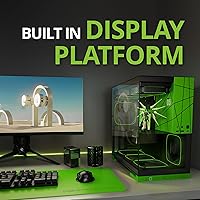
  • PSU Shroud: A dedicated PSU cover features a built-in display window to visually showcase the power supply unit or custom sleeved cabling.
  • Color: Available in a black chassis with green accent trim, designed for color-coordinated gaming builds and dual-tone themed setups.
  • Item Weight: The enclosure weighs approximately 11.45 kg (25.2 lbs) unboxed, consistent with its steel-heavy construction approach.

Related Reviews
HYTE Y70 Mid-Tower ATX Gaming Case
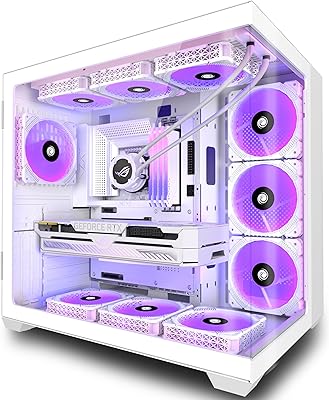
80%
93%
Build Quality
96%
Aesthetic Design
78%
Cooling Potential
91%
Vertical GPU Mounting
88%
Cable Management
More
SZSKYING CMSVB-1 Mid-Tower PC Gaming Case
74%
91%
Value for Money
88%
Included Fans
86%
Aesthetics & RGB
61%
Build Quality
74%
Airflow Performance
More
ANSAITE W9 Mid-Tower ATX PC Case
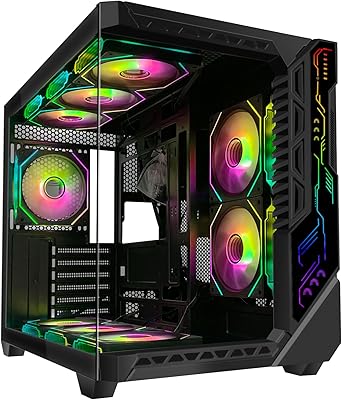
77%
88%
Value for Money
91%
RGB & Lighting Performance
74%
Airflow & Cooling Capacity
63%
Build Quality & Materials
84%
Cable Management
More
Zalman Chronix Mid Tower ATX PC Case
78%
88%
Aesthetic Design
74%
Build Quality
83%
Included ARGB Fans
86%
Cooling Potential
84%
Internal Clearance
More
Montech X5 ATX Mid-Tower PC Case
81%
88%
Airflow Performance
91%
Value for Money
79%
Build Quality & Materials
93%
GPU Compatibility & Support
84%
Cable Management
More
MOROVOL P5 Mid Tower ATX PC Case
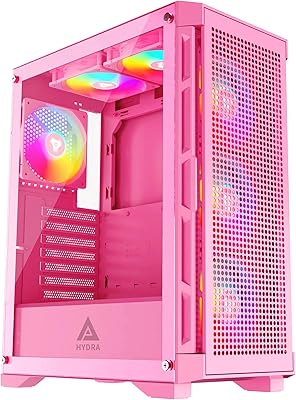
75%
83%
Airflow Performance
88%
Value for Money
71%
Build Quality
58%
Noise Levels
84%
Ease of Assembly
More
Apevia Hydra-PK Mid Tower Gaming PC Case
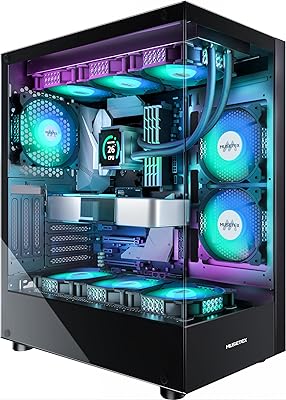
76%
88%
Value for Money
83%
Included Fan Quality
91%
Aesthetic & Finish
72%
Airflow Performance
74%
Build Quality
More
FOIFKIN F1 Mid-Tower Gaming PC Case
74%
83%
Cooling Performance
74%
Build Quality
61%
Cable Management
88%
Tempered Glass Panel
86%
ARGB Lighting
More
darkFlash DRX70 ATX Mid-Tower PC Case
74%
83%
Value for Money
78%
Airflow Performance
89%
Ease of Assembly
67%
RGB Lighting
71%
Build Quality & Materials
More
KEDIERS C570 ATX Mid Tower PC Case
76%
88%
Value for Money
84%
Airflow & Cooling
86%
Aesthetics & Design
73%
Build Quality
78%
Ease of Assembly
More

FAQ

Yes, the M5 case is built to support E-ATX boards natively and no tray modifications are needed. That said, E-ATX is not a perfectly uniform standard across all manufacturers, so it is worth double-checking your specific board's dimensions against the case interior before ordering — most will fit cleanly, but a few larger implementations can be tight.

They are genuinely functional. 140mm ARGB PWM fans are a solid choice for a case at this price tier, and the PWM feature means their speed responds to your motherboard's fan curve rather than running flat-out all day. Most buyers report them performing well out of the box, though actual thermal results will always depend on your specific components and how you configure the airflow setup.

The case does support a 420mm front radiator, which is one of its genuine strengths. However, RAM clearance with a thick front radiator mounted is not guaranteed — it depends on the specific radiator depth and your motherboard's DIMM slot positioning. Slim-profile radiators tend to clear most RAM configurations, but it is worth measuring before committing to a custom loop build.

It is a fair question and worth being honest about. Geometric Future is a newer brand without the established track record of names like Lian Li or Fractal Design, which means their long-term quality consistency and customer service responsiveness are still proving themselves. The current ratings are encouraging, but a smaller review pool means you have less data to draw on than you would with a more established manufacturer. If brand confidence is a top priority for you, that context matters.

At idle or light loads, users generally report the fans being quiet and unobtrusive when running on a reasonable PWM curve. At full speed they will produce audible noise, as any 140mm fan does — but the whole point of PWM is that full speed is rarely sustained unless your system is genuinely thermal-stressed. Setting a sensible fan curve in your BIOS or fan controller will keep day-to-day noise levels comfortable.

With up to 460mm of GPU clearance, this mid-tower should have no trouble fitting the vast majority of current triple-fan flagship cards. A small number of particularly long board partner designs push past 340–350mm, so always cross-check your specific card's published length against the clearance spec — but for most large GPUs on the market right now, it is a comfortable fit.

Most buyers report the sync working reliably with mainstream motherboard ecosystems. If you are on a major platform board from a well-known manufacturer, you should be in good shape. The main risk is with less common boards or non-standard ARGB header implementations — in those cases, checking the header type and pin layout before assuming plug-and-play compatibility is the smart move.

This is one of the more honest caveats worth flagging. Cable routing space exists but tends to feel tighter than expected once you factor in a thick modular PSU cable bundle alongside motherboard power cables. It is workable for most standard builds, but builders running heavily sleeved or custom cable setups may find it requires more patience and planning than a case that was specifically engineered around premium cable management.

The tool-free latch mechanism is genuinely convenient for frequent access. That said, some buyers have noted minor variation in how snugly the panel seats from unit to unit — not universally loose, but not always as precise as you might find on a higher-priced chassis from an established manufacturer. The glass itself is solid; the fit is the variable.

The value case here is real — five pre-installed fans, 420mm radiator support, and E-ATX clearance in one package is a competitive combination at this price point. What you are trading is some degree of brand confidence and the certainty that comes with a longer manufacturer track record. If the feature-to-price ratio is your primary decision driver, it is a strong contender. If brand trust and long-term support assurance matter more to you, spending somewhat more on an established name is a perfectly rational alternative.