Overview

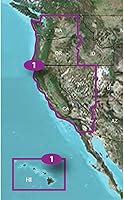
The Garmin Topo US 24K West Topographic Map Card is a regional data upgrade built for outdoor enthusiasts, overlanders, and anyone who takes western US navigation seriously. Think of the 1:24,000 scale like this: one inch on the map covers roughly 2,000 feet of real ground — the same standard used on USGS topo sheets, which experienced hikers and hunters have relied on for decades. This isn't a standalone GPS unit; it's a microSD card you slot into a compatible Garmin device to replace or extend its base maps. Coverage is specific to the western United States, which is exactly what makes it worth considering if that region is where your trips actually happen.
Features & Benefits

What separates this topo map card from a generic base map is how much usable terrain context it packs in. Rivers, wetlands, seasonal streams, and precise lake shorelines are all charted — handy when you're planning a water crossing or scouting a fishing access point. Routable trail networks mean your Garmin can actively guide you along backcountry paths rather than just rendering them as static lines. The elevation profile feature, available on compatible devices, lets you preview how demanding a ridge or canyon crossing will be before you commit to it. Searchable points of interest — campsites, summits, lakes, cities — make pre-trip planning noticeably more practical. The 8 GB card itself weighs almost nothing and swaps easily between devices.

Best For

Backcountry hikers and backpackers exploring the western US will get the most out of this map upgrade, particularly in areas where cell service disappears and trail apps become useless. Hunters working remote terrain benefit from the land contour accuracy and mapped stream locations that offline phone apps rarely match. Overlanders and off-road drivers with Garmin vehicle units gain better rural road detail than standard map packages provide. Kayakers and boaters will find the hydrographic data genuinely useful for shoreline navigation. If you already own a compatible Garmin handheld or in-vehicle GPS and want to push its capabilities further in western terrain, this card slots right into that need without requiring any new hardware.

User Feedback

The Garmin 24K West card holds a solid rating across a modest but telling review pool — the kind of score that comes from niche users who bought it knowing exactly what they needed. Most praise focuses on trail data accuracy in real field conditions and how cleanly the card integrates without any setup friction. Honest criticism does surface: some buyers report uneven coverage in very remote or lightly traveled areas, and a portion of rural road data strikes users as dated. Compatibility also comes up repeatedly — the card supports a wide range of Garmin devices, but checking your model against Garmin's compatibility list before purchasing is genuinely worth doing. A few reviewers called it more practical in the field than carrying paper topo maps.

Pros

  • Trail data accuracy in real field conditions is consistently praised by experienced hikers and hunters
  • Routable trail network allows active navigation, not just passive map viewing, on compatible devices
  • Hydrographic detail — streams, wetlands, shorelines — is far richer than standard Garmin base maps
  • Elevation profile support helps you judge terrain difficulty before committing to a route
  • Tiny MicroSD format makes it easy to swap between a handheld and a vehicle-mounted Garmin unit
  • Points of interest search covers summits, campsites, lakes, and towns for practical trip planning
  • Map detail matches USGS 1:24,000 topo standards — a real benchmark for serious field navigators
  • Works entirely offline with no subscription, cell signal, or data plan required
  • Buyers consistently describe this map upgrade as a meaningful step up from factory-installed Garmin maps
  • Compact and lightweight — adding it to your kit costs you essentially nothing in pack weight

Cons

  • Coverage gaps have been reported in extremely remote or lightly traveled backcountry zones
  • Some rural road data feels dated in select areas, which can frustrate overlanders on unfamiliar tracks
  • Requires a compatible Garmin device — there is no standalone use case for this card alone
  • Device compatibility is not universal across all Garmin models, requiring a verification step before buying
  • No coverage outside the western United States, limiting usefulness for multi-region travelers
  • Elevation profiling only works on certain compatible devices, not across all supported hardware
  • The modest review pool makes it harder to assess long-term reliability across diverse terrain types
  • Buyers who primarily use smartphones for navigation will find limited crossover benefit here
  • Map updates are not automatic and may require repurchasing a newer version as data ages
  • Higher price point is harder to justify for users who only take occasional, low-stakes day hikes

Ratings

The Garmin Topo US 24K West Topographic Map Card earns strong marks from a focused but experienced buyer base — hikers, hunters, overlanders, and boaters who know exactly what they need from a backcountry navigation tool. These scores were generated by AI after analyzing verified global user reviews, with spam, bot activity, and incentivized feedback actively filtered out. Both standout strengths and recurring frustrations are reflected transparently in each category below.

Map Data Accuracy
86%
Users consistently praise how closely the trail and terrain data matches what they find on the ground, particularly in well-documented western wilderness areas. Hikers report that contour lines and stream crossings align reliably with physical landmarks, which builds genuine confidence when navigating off-trail.
A subset of buyers working in truly remote zones — think rarely-visited high-desert or deep backcountry routes — have encountered sections where trail lines are missing or imprecise. The accuracy appears to thin out the farther you push beyond established recreation areas.
Trail Coverage Depth
79%
21%
The routable trail network is a clear step above what comes pre-installed on most Garmin devices. Buyers doing multi-day backcountry loops in the Sierras or Cascades find the card covers trails that simply do not appear on base maps, including lesser-known connector routes.
Coverage is not perfectly uniform across all western states. Some users in Nevada and parts of the inland Southwest report noticeably thinner trail data compared to what is available in more heavily recreated regions like Colorado or the Pacific Northwest.
Device Integration
91%
Plug-in and go is genuinely how this works for most buyers — insert the card, power on the Garmin, and the maps load without any configuration fuss. Users swapping the card between a handheld and a vehicle unit describe the process as completely painless.
Compatibility is not universal, and this trips up a meaningful number of buyers who assume any Garmin device will work. Older or entry-level Garmin models may not support the full feature set, and elevation profiling is locked behind device capability rather than the card itself.
Hydrographic Detail
88%
Kayakers, anglers, and boaters consistently highlight the shoreline and waterway data as one of the most practically useful aspects of this map upgrade. Seasonal streams, wetland boundaries, and lake shorelines are charted with a precision that phone apps and standard GPS maps rarely match.
A few users note that some seasonal stream layers reflect historical data rather than current conditions, which can occasionally mislead during drought years or after significant landscape changes. This is a data freshness issue rather than a structural flaw in the coverage approach.
Elevation Profile Utility
82%
18%
On supported Garmin devices, the elevation profile feature gives trail runners, backpackers, and ridge hunters a tangible planning advantage — being able to visualize cumulative gain before committing to a route reduces unpleasant surprises in the field. Buyers describe it as one of the most useful trip-planning tools they have used.
The feature is device-dependent, which frustrates buyers who purchase the card expecting full functionality only to discover their specific Garmin model does not support elevation profiles. This limitation is not always clearly communicated at the point of purchase.
Value for Money
74%
26%
Serious outdoor users — particularly hunters and long-distance backpackers — tend to view the price as reasonable given that it eliminates the need to carry printed topo sheets and meaningfully outperforms base maps in the field. The one-time cost with no subscription is a frequently cited advantage.
Casual hikers who mostly stick to popular, well-signed trails find the value proposition harder to justify, especially when free or low-cost phone apps cover their typical routes adequately. The cost becomes more defensible the deeper into backcountry you regularly travel.
Road & Rural Track Data
71%
29%
Overlanders and off-road drivers appreciate having rural tracks, forest service roads, and unimproved routes charted at a level that in-vehicle Garmin base maps do not provide. For trip planning through remote ranch and public land corridors, this additional layer makes a practical difference.
Several overlanding users flag that some rural road data feels outdated, with tracks appearing on the map that have been gated, washed out, or rerouted. Road data in rapidly developing rural areas also lags behind, occasionally placing navigational confidence where it should not be placed.
Points of Interest
77%
23%
The searchable POI database covers summits, lakes, established campsites, and nearby towns — categories that matter to the people buying this card. Being able to search for a named lake or peak and route to it from a trailhead is a feature that trip planners use repeatedly before and during outings.
POI density and accuracy vary noticeably by state and region. Some backcountry campsites and lesser-known summits are missing or listed under outdated names, which can create confusion for users who cross-reference the card against newer guidebooks or land management databases.
Physical Form Factor
93%
The MicroSD card format is about as unobtrusive as storage gets — it disappears into your device and adds no meaningful weight or bulk to a kit. Users who carry both a handheld and a vehicle-mounted Garmin appreciate being able to share the card between setups without any adapters beyond the included SD sleeve.
The card's small size is also its one physical liability: it is easy to lose during a device battery swap in poor conditions, and a few users report misplacing it in the field. There is no included storage case, which would be a practical addition given the price point.
Offline Reliability
94%
No cell signal, no problem — this is the core appeal for backcountry users, and it delivers without exception. Hunters in signal-dead mountain terrain and kayakers on remote river stretches consistently report that the maps load and respond exactly as expected regardless of connectivity conditions.
Because the card functions entirely offline, there is no mechanism for real-time data corrections or crowdsourced trail updates that some phone-based apps offer. What is on the card is fixed until you purchase a newer version, which can feel limiting as landscapes and land access change over time.
Setup & Ease of Use
89%
The lack of any required software, account login, or activation process is a genuine plus — experienced Garmin users report that setup takes under a minute. Even buyers who are not particularly tech-savvy describe the installation process as straightforward once they locate their device's card slot.
First-time Garmin users occasionally struggle to find where the MicroSD slot is on their specific device, and Garmin's own documentation is not always model-specific enough to guide them clearly. A brief physical setup guide included in the packaging would reduce a meaningful number of early frustrations.
Map Freshness & Updates
61%
39%
The static nature of the card means it is always ready to use without update prompts or connectivity requirements. For areas with stable trail infrastructure, the data holds up well across multiple seasons of use without feeling meaningfully out of date.
There is no mechanism to push map updates to an existing card, which means buyers eventually face the cost of repurchasing an updated version to stay current. In areas with active trail development or frequent land access changes, the data can begin to show its age within a couple of years.
Compatibility Transparency
58%
42%
For buyers who do their homework before purchasing — checking Garmin's device compatibility list — the card integrates without issues. The breadth of supported Garmin hardware is actually quite wide when users take the time to verify their model.
Too many buyers discover compatibility limitations after purchase, either because their device is not fully supported or because certain features like elevation profiling require hardware they do not have. Clearer compatibility information at the point of sale would prevent a disproportionate share of the negative reviews this card receives.

Suitable for:

The Garmin Topo US 24K West Topographic Map Card is purpose-built for outdoor enthusiasts who spend serious time in the western United States and need more than a basic GPS map to get around safely. Backcountry hikers and backpackers will find the 1:24,000 scale detail genuinely useful — it shows the kind of granular trail and terrain information that keeps you oriented when marked paths fade into ridgelines. Hunters working remote areas of the Rockies, Sierra Nevada, or Pacific ranges benefit from the mapped stream locations, elevation contours, and land features that most phone-based trail apps simply cannot replicate without cell service. Overlanders and off-road drivers using compatible Garmin vehicle units get meaningfully better rural road and track coverage than factory-installed base maps provide. Kayakers and boaters also stand to gain from the hydrographic detail, which charts shorelines, wetlands, and waterway features with a level of precision that matters when navigating unfamiliar water. If you already own a compatible Garmin handheld or in-vehicle GPS, this map upgrade slots into your existing setup without requiring new hardware or a steep learning curve.

Not suitable for:

Buyers who do not already own a compatible Garmin GPS device will find that the Garmin Topo US 24K West Topographic Map Card delivers no value on its own — it is strictly a data card, not a navigation device, and requires a supported Garmin unit to function. Anyone planning trips primarily in the eastern United States should look at Garmin's separate eastern or national coverage options, since this card covers only the western US and does not extend beyond that boundary. Casual hikers who stick to well-marked, popular trails and rely on their smartphone with a downloaded app may find the investment hard to justify, especially if cell coverage is reliable in their usual areas. Users expecting perfectly complete coverage in the most remote and lightly traveled terrain should temper their expectations — some buyers report patchiness in truly off-the-grid areas and occasional outdated rural road data. Finally, anyone hoping this card will work across all Garmin devices should verify compatibility with their specific model before purchasing, as not every Garmin unit in circulation supports this format or takes full advantage of features like elevation profiling.

Specifications

  • Brand: Manufactured by Garmin, a well-established name in GPS navigation hardware and digital mapping software.
  • Model Number: The official Garmin model number for this card is 010-C1129-00.
  • Map Scale: Topographic data is rendered at 1:24,000 scale, equivalent to the detail level found on standard USGS topo sheets.
  • Coverage Area: Maps cover the western United States, including states such as California, Oregon, Washington, Nevada, Utah, Colorado, and surrounding western region states.
  • Map Type: Topographical mapping with contour lines, terrain shading, hydrographic features, trails, and routable road networks.
  • Storage Format: Comes on a MicroSD card with a full-size SD adapter included, compatible with both MicroSD and SD card slots.
  • Storage Capacity: The card provides 8 GB of onboard storage dedicated to the preloaded western US topographic map data.
  • Card Weight: The physical card weighs 0.88 ounces, adding negligible weight to any pack or gear kit.
  • Hydrographic Data: Includes detailed mapping of coastlines, lake and river shorelines, wetlands, and both perennial and seasonal stream layers.
  • Trail Network: Contains routable trail data covering backcountry paths, rural roads, neighborhood streets, major highways, and interstate routes.
  • Points of Interest: Searchable POI database includes summits, campsites, lakes, rivers, cities, and other landmarks relevant to outdoor navigation.
  • Elevation Profiles: Supports elevation profile generation on compatible Garmin devices, allowing users to preview terrain gain and difficulty before a route.
  • Device Compatibility: Designed for use with compatible Garmin handheld GPS units and select Garmin vehicle-mounted navigation devices that accept MicroSD or SD cards.
  • Connectivity: Bluetooth connectivity is device-dependent and handled through the host Garmin unit rather than the card itself.
  • Offline Use: All map data is stored locally on the card and functions entirely without cell signal, Wi-Fi, or any data connection.
  • First Available: This product was first made available for purchase in June 2016 and has not been discontinued by the manufacturer.
  • In the Box: Package includes one preloaded map MicroSD card and a full-size SD card adapter for devices with standard SD slots.
  • Subscription: No ongoing subscription or activation fee is required; the map data is permanently accessible once the card is inserted into a compatible device.

Related Reviews
C-MAP M-NA-Y214-MS Reveal Inland US Lakes South East Chart Card
87%
92%
Mapping Detail
89%
Navigation Accuracy
94%
Ease of Use
90%
3D Bathymetric Data
85%
Custom Depth Shading
More
Humminbird LakeMaster Midsouth States Plus V3 Digital GPS Maps Micro Card

87%
92%
Mapping Accuracy
88%
Ease of Use
90%
Visual Quality
85%
Shading for Shallow Water
95%
Compatibility with Humminbird Devices
More
FOSA M5015 SAS SATA RAID Controller Card
68%
83%
Value for Money
78%
Compatibility
66%
Firmware Flashing Experience
61%
Build Quality
69%
Drive Detection Reliability
More
Garmin Forerunner 165 Running Smartwatch
81%
93%
Display Quality
76%
GPS Accuracy
91%
Training & Coaching Features
71%
Battery Life
68%
Heart Rate Monitoring
More
Garmin Vívoactive 5 GPS Smartwatch
77%
88%
Display Quality
91%
Battery Life
74%
Health Tracking Accuracy
78%
GPS Performance
83%
Sleep Tracking
More
Garmin inReach Explorer+ Satellite Communicator
76%
93%
Satellite Reliability
88%
Two-Way Messaging
96%
SOS & Emergency Response
78%
Navigation & Mapping
61%
Value for Money
More
Garmin GT15M Transducer
87%
91%
Performance at High Speeds
89%
Ease of Installation
94%
Accuracy of Depth Readings
88%
Hull Compatibility
85%
Build Quality
More
Garmin Forerunner 735XT Multisport GPS Watch
79%
91%
GPS Accuracy
73%
Heart Rate Accuracy
88%
Battery Life
86%
Multisport Mode Functionality
84%
Build Quality & Durability
More
Garmin dezl OTR620 6-Inch Truck GPS Navigator

76%
88%
Display Quality
82%
Truck Routing Accuracy
58%
App Dependency
79%
PrePass Integration
84%
BirdsEye Satellite Imagery
More
Garmin Striker Cast Castable Sonar Fish Finder
79%
91%
Ease of Setup
71%
App Performance & Stability
84%
Sonar Accuracy
78%
Wireless Range
88%
Battery Life
More

FAQ

It depends on the specific model you own. The card is compatible with a wide range of Garmin handheld and vehicle GPS units that accept MicroSD or SD cards, but not every Garmin device qualifies. Your best move before purchasing is to check Garmin's official compatibility list for this map product, which you can find on their website using the model number 010-C1129-00.

This card covers only the western United States. If your trips take you through the eastern half of the country, you would need a separate Garmin topo map product that covers those regions. Garmin sells both eastern and national coverage options, so it is worth matching the card to where you actually travel.

No, and that is one of the main reasons people buy this type of card. All the map data lives directly on the MicroSD card, so your Garmin device reads it locally without any cell signal or Wi-Fi. It works just as well in a canyon with zero reception as it does in your backyard.

Most compatible Garmin handhelds have a small MicroSD slot, usually under the battery cover or along the side of the unit. You slide the card in, power the device on, and the maps typically load automatically. If you have a device with a full-size SD slot instead, the included adapter handles that. No software installation or computer connection is needed.

Essentially yes, at the same scale. The 1:24,000 scale matches standard USGS topographic quadrangle maps, which means the contour intervals, trail lines, and terrain features are drawn at the same level of precision you would find on a printed government topo sheet. Several buyers have noted it is more convenient to navigate with than folding paper maps in wet or windy conditions.

The card itself is a physical item you can move between devices, so you can swap it from your handheld to a vehicle unit as needed. However, it can only be actively used in one device at a time since it is a single physical card. Some Garmin accounts allow map licenses to be shared across devices — check Garmin's current licensing terms to see what applies to your situation.

Map data currency varies and Garmin periodically releases updated versions of their topo cards. The data on the card you receive reflects what was current at the time of production. There is no automatic over-the-air update for this card; if Garmin releases a significantly updated version, you would generally need to purchase the newer edition.

Not on every compatible device — elevation profile generation is a feature that depends on the host Garmin unit supporting that function. Most of Garmin's more recent outdoor handhelds support it, but older or more basic models may display the maps without offering the elevation profile view. Check your device's feature list if this is important to your use case.

For the vast majority of established trails across the western US, coverage is solid and well-regarded by experienced users. The gaps tend to show up in extremely remote or lightly traveled terrain where even USGS source data is sparse. If you regularly travel routes that are barely on any map, no single digital product will be perfect — but this card performs as well as or better than most alternatives for backcountry navigation.

For casual use on major trails, the base maps may be sufficient. But if you spend meaningful time in remote western terrain — hunting, backpacking, overlanding, or paddling — the difference in detail is real and practical. The base maps lack the hydrographic precision, routable trail networks, and terrain granularity that this topo map upgrade provides, and most buyers who make the switch say they notice the improvement quickly.