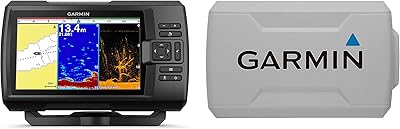
Overview

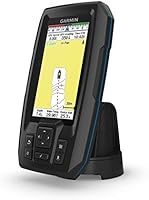
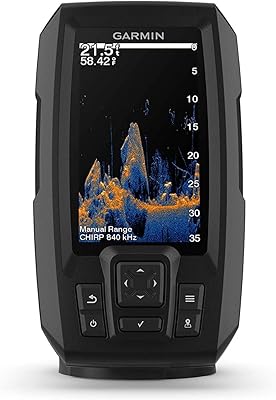
The Garmin Striker Plus 4 Fishfinder sits in a practical sweet spot for anglers who want reliable sonar without overcomplicating their setup. It ships with both a dual-beam transducer and a protective cover included, which is genuine value at this price tier. The 4.3-inch QSVGA LED display is sharp enough to read comfortably on the water, even in bright midday sun. What this Garmin fishfinder is not, though, is a chartplotter. There is no GPS, no mapping, no navigation overlay. If you fish familiar water and simply need to know what is below the hull, that trade-off rarely matters.

Features & Benefits

The Striker Plus 4 runs on CHIRP sonar technology, which does a noticeably better job separating fish returns from bottom clutter compared to older pulse sonar designs. The dual-beam transducer gives you both a wide cone for covering more water and a narrow cone for pinpointing fish holding tight to structure — genuinely useful when you are working drop-offs or creek channel edges. A built-in flasher mode means this sonar unit pulls double duty on the ice come winter. Battery life is rated up to 70 hours, though real-world figures will vary with backlight brightness and sonar ping rate. The button-only interface is straightforward enough that most anglers navigate menus confidently within the first hour on the water.

Best For

This Garmin fishfinder is built for anglers who fish light and mobile. Kayak and canoe paddlers in particular appreciate the sub-3-pound weight and the freedom of battery-powered portability — no boat wiring, no complicated installation. Freshwater anglers chasing bass, crappie, or walleye along structure will find the dual-beam coverage useful for reading depth transitions before committing to a cast. Ice fishermen get a bonus with the built-in flasher mode, making this a year-round tool. It is also a logical first step for anyone upgrading from a basic depth finder who is not yet ready to spend significantly more on GPS-integrated units. You are paying for proven sonar quality, not features you may never use.

User Feedback

Owners consistently point to display clarity in sunlight as a standout strength — a detail that genuinely matters when you are reading a screen mid-cast on a bright afternoon. Fast power-on time and reliable depth lock also earn repeated praise. On the critical side, buyers who expected GPS or chart overlay functionality tend to be disappointed, so it is worth setting those expectations clearly before purchasing. A handful of users on larger vessels found the transducer cable slightly short for their specific installation. Durability holds up well across seasons, with multiple reviewers noting the unit handled water spray without problems. Nearly 300 ratings averaging 4.6 stars reflects a unit that largely delivers on what it honestly promises.

Pros

  • The 4.3-inch display reads clearly in direct sunlight, which is a real advantage during midday fishing.
  • CHIRP sonar produces clean, well-separated fish arches rather than a muddled blob at depth.
  • Battery-powered operation makes installation on kayaks and car-top boats genuinely simple.
  • The dual-beam transducer is included in the box — no separate purchase needed to get on the water.
  • Built-in flasher mode extends the Striker Plus 4 into a capable ice fishing unit.
  • The unit powers on quickly and locks onto depth readings almost immediately after launch.
  • Button-based controls are intuitive enough that most users are comfortable within a single outing.
  • Protective cover is included, which helps during transport and storage between trips.
  • Durable construction holds up well to water spray and repeated seasonal use reported by long-term owners.
  • Strong brand reliability from Garmin, with parts and support widely available.

Cons

  • No built-in GPS means you cannot mark waypoints, track routes, or navigate back to productive spots.
  • Transducer cable length can run short on larger boats, requiring an extension for clean installation.
  • Actual battery life varies noticeably depending on backlight settings and sonar ping frequency.
  • No side-imaging or down-imaging capability for anglers who want a more detailed underwater picture.
  • The 4.3-inch screen, while readable, feels cramped when trying to distinguish fine detail in complex sonar returns.
  • No wireless connectivity — there is no app pairing, no data logging to a phone or tablet.
  • Panel-mount design limits installation flexibility for anglers who prefer a portable or clamp-on setup.
  • No depth alarm or temperature sensor built into the base unit, features common on competing models.
  • Not well suited to saltwater or offshore use where more robust, waterproof-rated units are the norm.

Ratings

Our AI rating system analyzed verified global buyer reviews for the Garmin Striker Plus 4 Fishfinder, actively filtering out incentivized, duplicate, and bot-generated feedback to surface what real anglers actually experience on the water. Scores reflect a balanced view across the unit's strongest capabilities and its genuine limitations — nothing is glossed over. The breakdown below covers the categories that matter most when choosing a fishfinder at this tier.

Sonar Performance
88%
CHIRP sonar consistently draws clean, well-separated fish arches even at moderate depths, which anglers targeting structure notice immediately. Buyers switching from older single-frequency units frequently comment on how much less cluttered the returns look, especially when working timber or rocky channel edges.
At greater depths — beyond 100 feet in particular — some users report the image becoming noisier and harder to interpret, especially at higher boat speeds. The dual-beam setup covers the basics well, but it is not a substitute for down-imaging or side-scanning technology that competing units at a higher price offer.
Display Readability
86%
Sunlight readability is a consistent high point in user feedback, with many anglers noting the screen holds up well during midday hours on open water when glare is a real problem. The 4.3-inch QSVGA panel delivers enough contrast to pick out fish returns and depth readings at a glance without needing to cup the display.
The screen size itself becomes a mild limitation when you want to run split-screen views — sonar and flasher simultaneously, for instance — since the image on each side shrinks considerably. A handful of users with weaker eyesight flagged that text and depth numbers can feel small in certain display modes.
Ease of Setup
91%
First-time fishfinder owners specifically call out how little friction is involved in getting the Striker Plus 4 running — the transducer mounts straightforwardly, the menus are logically organized, and most anglers report useful readings within the first hour on the water. No special tools or wiring knowledge are required for a basic kayak or small-boat install.
Panel mounting on a flat, accessible surface is simple, but routing the transducer cable on vessels with longer or more complex hull layouts takes more patience. Users who want a temporary or portable clamp-on setup will find the included mounting system is not built for that kind of flexibility.
Battery Life
74%
26%
For a typical day trip — four to eight hours on the water — the battery performance is more than adequate, and the freedom from wiring the unit into a boat's electrical system is genuinely appreciated by kayak anglers who charge it overnight and go. Casual freshwater fishermen rarely find themselves cutting a day short due to power.
The 70-hour ceiling is a best-case figure that assumes conservative backlight settings and moderate sonar activity; real-world runtime often lands noticeably lower when the screen brightness is turned up on a sunny day. Anglers on multi-day trips or those who fish long hours should plan around carrying spare batteries rather than assuming the rating holds.
Build Quality
83%
Owners who have used the Striker Plus 4 across two or more fishing seasons consistently describe it as holding together well under routine field conditions — water spray, temperature changes between ice fishing and open-water use, and the general jostling of transport have not produced widespread reports of failure. The included protective cover clearly helps preserve the display during off-season storage.
The unit does not feel premium in hand — the plastic housing has a functional rather than refined feel — and it lacks the full submersion rating that more expensive marine electronics carry. Dropping it into the water, which is a realistic accident on a kayak, would likely end the unit's life.
Value for Money
84%
The bundle — unit, dual-beam transducer, and protective cover — represents genuine value for what is included at this price level, and buyers who fish primarily freshwater consistently feel the purchase is justified. The Garmin name also carries weight here; owners express more confidence in long-term reliability and parts availability compared to no-name alternatives at a similar price.
Buyers who discover after purchase that GPS and waypoint-marking are absent sometimes feel the price point should have included at least basic location features, particularly given what competing brands offer in the same range. If you fish large, unfamiliar bodies of water and GPS matters to you, the value calculation shifts unfavorably.
Portability
89%
Under 3 pounds and battery-powered, this sonar unit moves between fishing locations without any real inconvenience — kayak to ice shanty to a friend's aluminum boat requires no rewiring or complex reinstallation. Anglers who fish multiple bodies of water across a season find this adaptability particularly valuable compared to permanently wired units.
The panel-mount design, while secure, does mean that moving the unit between boats is not instantaneous — it requires unmounting and remounting rather than the click-and-go experience a RAM-mount or magnetic base system would provide. Frequent switchers may want to invest in a secondary mounting bracket for each vessel.
Ice Fishing Usability
79%
21%
The built-in flasher mode gives this unit genuine credibility as a year-round tool, and ice anglers appreciate not having to invest in a separate dedicated ice flasher. The battery-powered operation is particularly well suited to ice fishing, where running a power cable to a portable unit is often impractical.
Experienced ice fishermen accustomed to dedicated flashers — which update in near real-time and have refined gain controls — note that the Striker Plus 4 flasher mode, while functional, does not fully replicate that experience. In fast-bite situations where jig movement needs immediate feedback, the refresh rate can feel slightly behind purpose-built ice units.
Transducer Quality
77%
23%
The included dual-beam transducer performs reliably for standard freshwater applications — bass fishing along drop-offs, crappie over submerged brush, walleye on hard bottom — without requiring any additional purchase. The wide and narrow beam options give a useful range of coverage depending on water depth and target species.
Cable length is a recurring complaint among users trying to install the unit on boats larger than roughly 14 to 16 feet, as the stock cable often falls short of a clean transom routing. The transducer is also not compatible with down-imaging or side-imaging display modes, which limits the upgrade path without purchasing an entirely different unit.
User Interface
82%
18%
The button-driven control scheme is approachable for beginners and remains usable with wet or gloved hands — a genuine practical advantage over touchscreen units in cold or rainy conditions. Menu depth is shallow enough that the learning curve does not intimidate anglers who are new to sonar technology.
Long-time users of more advanced fishfinders may find the interface limiting when trying to fine-tune sonar sensitivity or switch modes quickly mid-session. There is no quick-access shortcut system, so navigating between standard and flasher mode during active fishing requires a few button presses that can feel interrupting.
GPS & Navigation
21%
79%
There is essentially nothing to praise here by design — the unit intentionally excludes GPS to keep the price accessible, which is a deliberate trade-off rather than an oversight. Anglers who fish familiar local water and have no interest in electronic waypoint-marking will never miss this capability.
The complete absence of GPS means no waypoint marking, no track logging, no return-to-launch navigation, and no chart overlay of any kind — features that are standard on many competing units in the same price bracket. This is the single most common source of post-purchase disappointment based on buyer feedback, particularly among anglers exploring new water.
Connectivity & Smart Features
18%
82%
The lack of wireless connectivity keeps the unit simple and removes any dependency on smartphone pairing, app updates, or Bluetooth reliability issues — which some anglers in older demographics genuinely prefer. There is nothing to configure, sync, or troubleshoot beyond the unit itself.
No Bluetooth, no Wi-Fi, no app integration, and no data logging to an external device means this sonar unit is entirely isolated from the connected ecosystem that modern marine electronics increasingly offer. Anglers who want to log trips, share sonar screenshots, or pair with a chartplotter app are looking at the wrong unit entirely.
Startup Speed
87%
Quick power-on time is mentioned frequently and positively — the unit initializes and displays a depth reading within seconds of powering on, which matters when fish are actively feeding and every moment counts. Buyers used to units that take a minute or more to stabilize appreciate the near-instant readiness.
There is little to criticize here, though a small number of users note occasional false depth readings during the first few seconds in very shallow or weedy water before the sonar stabilizes. This is a minor and common characteristic of fishfinders generally rather than a specific weakness of this model.
Durability Over Time
81%
19%
Multi-season owners — particularly those using the unit across both open-water and ice fishing — report that the hardware holds up without significant degradation in performance or display quality. Water spray resistance appears reliable under typical fishing conditions, and the button contacts remain responsive even after extended outdoor use.
A minor portion of long-term users report that display brightness can appear slightly diminished after two or more years of heavy use, though this is not a widespread complaint. Replacement parts and service support, while available through Garmin, are not always easy to access quickly for anglers in rural areas.

Suitable for:

The Garmin Striker Plus 4 Fishfinder is a strong match for anglers who fish light, move often, and do not need a unit to double as a navigation system. Kayak and canoe paddlers benefit most here — the sub-3-pound weight and battery-powered operation mean you can mount it, charge it overnight, and head out without running a single wire to a boat battery. Freshwater anglers targeting bass along submerged timber, crappie suspended over creek channels, or walleye hugging hard bottom transitions will find the dual-beam CHIRP sonar genuinely useful for reading what is happening below them before making a presentation. Ice fishermen get real added value from the built-in flasher mode, making this a unit that earns its keep across two seasons rather than sitting in a garage for half the year. It also makes practical sense as a first sonar display for anyone upgrading from a basic depth finder — the button-driven interface is approachable, and there is very little setup friction to getting useful readings on the water.

Not suitable for:

The Garmin Striker Plus 4 Fishfinder is simply not the right tool if you fish unfamiliar water and rely on charts, waypoints, or GPS track-back to navigate safely. There is no built-in GPS, no mapping capability, and no way to mark productive spots electronically — limitations that matter far more on a large reservoir or open bay than on a local pond you know by heart. Saltwater anglers running larger center consoles or bay boats will likely find the transducer cable too short to route cleanly, and the panel-mount form factor may not suit every hull configuration without additional hardware. Anglers who regularly fish at night or in low-light conditions may want a unit with finer backlight control than this sonar unit offers. If you are already fishing with a mid-to-high-end combo unit that includes GPS and side imaging, stepping down to the Striker Plus 4 would feel like a significant regression rather than a practical choice.

Specifications

  • Display Size: The unit features a 4.3-inch LED screen with QSVGA resolution, offering enough detail to read fish arches and bottom structure clearly while out on the water.
  • Display Type: QSVGA LED technology provides bright, high-contrast visuals that remain readable in direct sunlight without significant washout.
  • Transducer: A dual-beam transducer is included in the box, supporting both a wide-angle cone for broad coverage and a narrow cone for focused, deeper scanning.
  • Sonar Technology: CHIRP sonar continuously sweeps a range of frequencies, producing sharper target separation and cleaner fish returns compared to traditional single-frequency sonar.
  • Sonar Modes: The unit supports standard sonar display and a dedicated flasher mode designed for vertical ice fishing presentations.
  • Power Source: The device runs entirely on battery power, eliminating the need for a wired connection to a boat electrical system.
  • Battery Life: Rated at up to 70 hours of operation, though real-world runtime will vary depending on backlight intensity and sonar ping frequency settings.
  • Weight: At 2.72 pounds total, the unit is light enough for kayak and canoe mounting without adding meaningful load to a small vessel.
  • Dimensions: The unit measures 6.9 x 3.9 x 0.01 inches, making it a compact panel-mount option suited to tight mounting spaces on small boats or kayak decks.
  • Mounting Type: Designed for panel mounting, the unit attaches securely to a flat surface and includes hardware for a stable, low-profile installation.
  • Protective Cover: A fitted protective cover is included with the unit to shield the display during transport and storage between fishing trips.
  • User Interface: Navigation and settings are handled entirely through physical buttons, with no touchscreen, keeping operation straightforward in wet or cold conditions.
  • GPS Capability: This unit does not include a built-in GPS receiver and does not support waypoint marking, chartplotting, or navigation functions.
  • Connectivity: There is no wireless connectivity — the unit does not support Bluetooth, Wi-Fi, or smartphone pairing of any kind.
  • Water Resistance: The unit is designed to withstand water spray and splash typical of open-boat and kayak fishing environments, though it is not rated for full submersion.
  • Brand: Manufactured by Garmin, a company with a long-established track record in consumer marine electronics and GPS devices.
  • Model Number: The official model identifier for this unit is GRSTRIKER4PLRB, useful when searching for compatible accessories or replacement parts.
  • Category Rank: Ranked #92 in the Fish Finders and Depth Finders category on Amazon, reflecting consistent buyer interest and satisfaction over time.

Related Reviews
Garmin Striker 4 3.5-inch GPS Fishfinder
84%
91%
Sonar Performance
88%
GPS Accuracy
93%
Ease of Use
61%
Display Quality
84%
Build Quality
More
Garmin Striker Plus 9SV Fish Finder
79%
93%
Sonar Image Quality
88%
Display Readability
86%
GPS Accuracy
84%
Ease of Use
81%
Value for Money
More
Garmin Striker Vivid 4cv Fish Finder
80%
88%
Sonar Clarity
83%
Display Quality
74%
GPS Accuracy
92%
Ease of Setup
89%
Ease of Use
More
Garmin Striker Vivid 7cv 7-inch Fishfinder
80%
88%
Display Clarity
84%
Sonar Performance
91%
GPS Accuracy
83%
Quickdraw Contours Mapping
79%
Ease of Setup
More
Garmin STRIKER Plus 7cv Fish Finder
81%
88%
Sonar Image Clarity
91%
GPS Performance
86%
Display Quality
83%
Transducer Quality
67%
Ease of Use & Menu Navigation
More
Garmin STRIKER Plus 5cv Fish Finder
80%
88%
Sonar Performance
91%
Display Quality
84%
GPS Accuracy
89%
Ease of Setup
82%
Build & Durability
More
Sabrent 1TB Rocket 4 Plus NVMe 4.0 SSD
88%
94%
Performance
88%
Installation Ease
92%
Value for Money
70%
Thermal Management
91%
Compatibility
More
Sabrent Rocket 4 Plus 4TB NVMe SSD
85%
93%
Sequential Read Performance
91%
Sequential Write Performance
89%
Thermal Management
92%
Installation Experience
67%
Value for Money
More
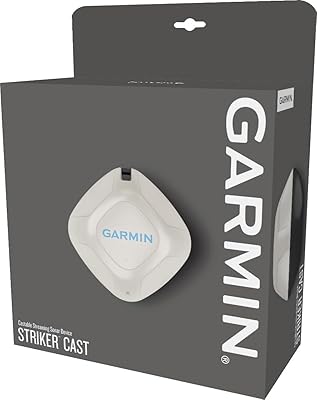
Garmin Striker Cast Castable Sonar Fish Finder
79%
91%
Ease of Setup
71%
App Performance & Stability
84%
Sonar Accuracy
78%
Wireless Range
88%
Battery Life
More
Garmin STRIKER Vivid 9sv Fishfinder
83%
93%
Sonar Image Clarity
91%
Display Quality
88%
GPS Accuracy
86%
Sonar Coverage Range
84%
Ease of Installation
More

FAQ

Everything you need for basic operation comes in the box — the unit itself, a dual-beam transducer, mounting hardware, and a protective cover. You will need to supply your own batteries, but beyond that, there is no additional purchase required just to get on the water.

It is genuinely well-suited to kayak use. The unit weighs under 3 pounds, runs on batteries with no wiring to a boat electrical system, and the compact dimensions fit neatly on a kayak's forward deck or side mount. Many kayak anglers specifically choose this model for exactly those reasons.

No, this sonar unit does not include GPS or any waypoint-marking capability. If saving locations, tracking your route, or navigating back to productive spots is important to your fishing style, you would need to step up to a different unit in Garmin's lineup that includes integrated GPS.

Screen visibility in direct sunlight is one of the most consistently praised aspects of the Striker Plus 4 among owners. The QSVGA LED display has enough brightness and contrast to remain readable on open water during midday conditions, which is something cheaper units often struggle with.

It works for ice fishing. The built-in flasher mode is specifically designed for vertical presentations through an ice hole, giving you a real-time circular display of what is happening below the jig. A number of owners use this sonar unit across both open-water and ice seasons without issue.

Garmin rates it at up to 70 hours, but that figure assumes fairly conservative settings. With the backlight turned up higher — which you will likely want on a sunny day — and active sonar pinging, real-world runtime tends to land somewhere below that ceiling. Most day anglers find a single battery charge more than covers a full outing, but it is worth keeping a spare set on hand for extended trips.

This is a known limitation that some owners have flagged. The included transducer cable works fine for kayaks and smaller vessels, but on a larger boat it may not reach from a typical mounting position to the transom without an extension cable. If you are rigging this on anything over 14 to 16 feet, measure your routing distance before assuming the stock cable will cover it.

Not at all. The button-based interface is simple and logical, and the unit does not throw you into a deep menu system right away. Most first-time sonar users report getting useful readings within the first hour on the water. The learning curve is about understanding what the display is telling you — the unit itself is not the hard part.

Owners who have used the Striker Plus 4 across multiple seasons generally report it holds up well to water spray, temperature swings, and the routine bumps of fishing life. It is not rated for submersion, so dropping it overboard would be a problem, but in normal open-water and ice fishing conditions it appears to be a durable unit.

The sonar itself will function in saltwater, but this unit is not really designed with saltwater anglers in mind. Saltwater environments are corrosive, and the unit lacks the more robust sealing and corrosion-resistant materials you would want for regular inshore or offshore saltwater use. It is best suited to freshwater applications, and that is clearly the primary audience Garmin built it for.