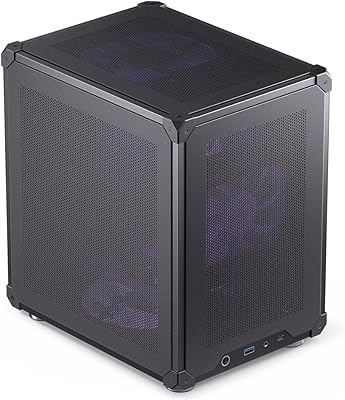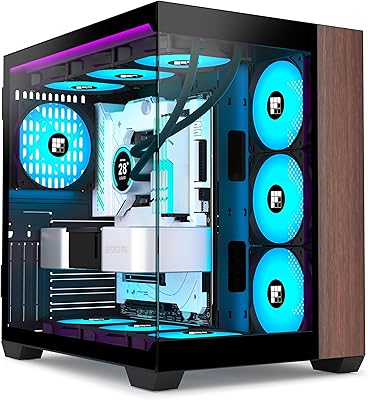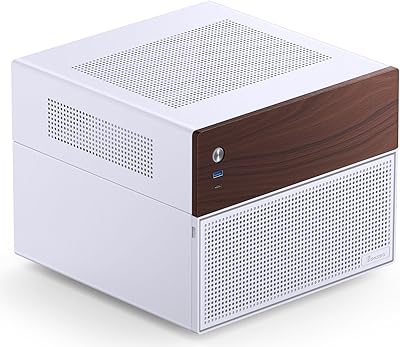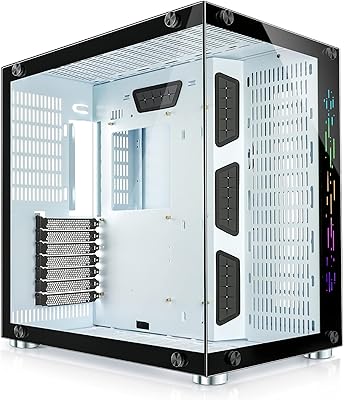

Overview

The G.SKILL LT1 mATX PC Case is an interesting move from a brand that built its reputation on RAM kits and SSDs rather than chassis design. At its mid-range price point, it competes in a crowded space, but it brings a few genuine surprises. The compact mATX footprint keeps things manageable on a desk, while the hardware clearances inside are more generous than you might expect from something this small. The front grill isn't purely decorative — it's there to actually move air. If you're building a capable system without spending a fortune on the enclosure, this compact chassis is worth a serious look.

Features & Benefits

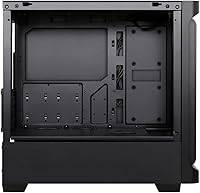
The 4mm tempered glass side panel is thicker than what you find on many cases at this price — it feels solid when handled and gives a clear, unobstructed view of your components. Three magnetic dust filters covering the top, front, and bottom vents mean you spend less time clearing out accumulated debris. More impressive is the 280mm AIO radiator support packed into an mATX frame, which opens up liquid cooling options that smaller cases often rule out. GPU clearance stretches to 360mm, so even triple-fan cards fit without issue. PSU placement flexibility — bottom or rear mount — gives builders useful options depending on their cable routing preferences.

Best For

This mATX case makes the most sense for builders who need a smaller footprint but refuse to compromise on GPU size or cooling headroom. It's a practical pick for first-time builders — the layout is straightforward, and mATX boards are forgiving for beginners. Home office setups that double as light gaming rigs will appreciate the clean aesthetic and manageable dimensions. Budget-conscious builders pairing it with a mid-range mATX or mini-ITX board get a lot of case for the money. Anyone chasing a tempered glass look without spending heavily on a showpiece enclosure will find this compact chassis hits a reasonable sweet spot.

User Feedback

Across buyer reviews, the LT1 enclosure earns consistent praise for build quality perception at its price — the glass panel in particular gets called out as noticeably sturdier than expected. Assembly feedback is mostly positive, with manageable standoff placement and a decent manual. That said, a recurring frustration is the limited included fan count; most builders end up purchasing extras to actually use the airflow potential the chassis offers. Cable management space is workable but tight, and a few buyers have flagged that front panel connectors can be a stretch depending on motherboard layout. Opinions on the G.SKILL branding are genuinely mixed — some appreciate it, others feel case-building is new territory for the brand.

Pros

  • The 4mm tempered glass panel feels noticeably sturdier than panels found on competing cases at this price.
  • Magnetic dust filters on three sides make routine maintenance genuinely quick and painless.
  • GPU clearance up to 360mm means even triple-fan flagship cards will fit without modifications.
  • AIO radiator support up to 280mm is a rare and welcome feature in a chassis this compact.
  • Flexible PSU mounting options give builders real freedom in planning their cable routing layout.
  • The front grill design contributes to actual airflow rather than just looking industrial.
  • Front I/O with two USB 3.0 ports covers the practical needs of most daily-use setups.
  • Mini-ITX and mATX board compatibility makes this compact chassis versatile across two popular form factors.
  • The overall build quality perception consistently exceeds what buyers expect at this price point.

Cons

  • Included fans are minimal — most builders will need to purchase additional case fans separately.
  • Internal cable management space is tight, which can frustrate builders aiming for a clean finished look.
  • Front panel connectors may not reach all motherboard layouts comfortably, depending on board design.
  • PSU fitment can be awkward in certain configurations, requiring extra patience during installation.
  • G.SKILL has limited history in case manufacturing, which makes long-term durability harder to predict.
  • The assembly manual quality is adequate but leaves some steps less clearly explained than veterans expect.
  • Radiator mounting can involve minor friction during installation, especially for builders newer to AIO setups.
  • No RGB or fan hub integration means enthusiasts wanting lighting control must source their own solutions.

Ratings

The scores below for the G.SKILL LT1 mATX PC Case were generated by our AI rating engine after analyzing verified purchaser reviews from global marketplaces, with spam, incentivized, and bot-flagged submissions actively filtered out. Each category reflects real patterns across hundreds of buyer experiences — not marketing claims — so both the strengths and the friction points you see here are grounded in what actual builders reported. The result is an honest, nuanced breakdown to help you decide whether this compact chassis belongs in your next build.

Build Quality
78%
22%
For its price tier, the LT1 enclosure genuinely surprises builders with how solid it feels in hand. The steel panels have minimal flex, and the 4mm tempered glass side panel is thick enough that it doesn't rattle or feel at risk during installation — something buyers upgrading from budget cases specifically call out.
Some users notice that smaller details like the front panel plastic trim and interior standoff threading feel less refined than the outer shell suggests. It is not a premium-grade chassis by any stretch, and a few builders reported minor fit inconsistencies on panel alignment out of the box.
Value for Money
84%
Buyers consistently feel they get more than they paid for, particularly when comparing GPU clearance and radiator support to competing cases in the same price range. The inclusion of magnetic dust filters at this price is a feature most rivals charge more to offer, and that detail resonates strongly with budget-conscious builders.
The value calculation shifts if you factor in the cost of additional fans, which most builders end up purchasing separately. Once you add two or three decent fans to actually run the airflow design as intended, the total spend climbs noticeably above the sticker price.
Airflow & Cooling
71%
29%
The front grill design and three-sided magnetic dust filter layout create a chassis that is genuinely set up for good airflow — when properly populated with fans. Builders running a 240mm or 280mm AIO alongside a couple of case fans report solid thermal results for a compact mATX system.
The case ships with minimal fan coverage, which means out-of-the-box airflow is underwhelming without immediate upgrades. Builders who expected a plug-and-play thermal setup were disappointed, and the fan mounting positions, while logical, leave limited flexibility for unconventional cooling configurations.
GPU Compatibility
91%
Supporting graphics cards up to 360mm in length is a standout trait for this chassis size, and buyers building around RTX 4070 Ti or RX 7900 XT class cards confirm the clearance works as advertised. This is the single specification that most often tips purchase decisions in favor of this compact chassis.
Clearance for GPU width and thickness is less discussed in the documentation, and a handful of builders with particularly bulky triple-slot cards flagged tighter-than-expected side clearance. Card length is covered well, but extra-wide cards may require a quick manual check before committing.
Cable Management
59%
41%
The routing cutouts are sensibly placed for an mATX build, and builders using modular power supplies report manageable results with some patience. For a first build where perfection is not the goal, the space is workable enough to get a clean-looking result with basic Velcro ties.
The gap behind the motherboard tray is noticeably narrow, which becomes a real frustration with thicker cable bundles or non-modular PSUs. Experienced builders who care about showcase-level tidiness tend to find this compact chassis limiting, and more than a few reviews mention spending extra time forcing covers closed.
Assembly Experience
76%
24%
The overall layout is logical and beginner-friendly, with clearly positioned standoffs and enough interior room to maneuver components without feeling cramped. First-time builders in particular mention that the process felt approachable compared to smaller ITX cases they had considered.
The included manual covers the basics but leaves some installation steps underexplained, particularly around radiator mounting orientation and PSU bracket swapping. Builders who hit fitment questions during the build found themselves relying on third-party video guides rather than the documentation.
Dust Filtration
88%
The magnetic dust filters are one of the most consistently praised aspects across buyer reviews, and for good reason — removing, rinsing, and re-attaching them takes under two minutes with no tools required. Builders who have owned cases with clip-in or screw-fixed filters specifically appreciate how low-effort ongoing maintenance becomes.
Filter mesh density is adequate for general use but may not satisfy builders in particularly dusty environments who want finer filtration. A small number of buyers noted that the bottom filter can slip slightly if the case is moved frequently, though it reseats easily.
Front I/O
73%
27%
Having two USB 3.0 ports on the front panel covers the practical needs of most daily-use setups, whether that means plugging in a headset dongle, a flash drive, or a controller. The inclusion of both headphone and microphone jacks is a small but appreciated touch for desk-based gaming and work setups.
The USB 2.0 port feels like a concession that slightly undermines an otherwise solid front panel, and the connector cables inside can be a tight reach to some motherboard headers depending on board layout. A dedicated USB-C port on the front is absent, which is increasingly a sticking point for newer peripherals.
Tempered Glass Panel
86%
The 4mm glass is thick enough to feel genuinely premium for the price, and buyers moving from acrylic windowed cases are notably impressed by how much clarity the panel offers. The latch mechanism holds securely without requiring tools, making component swaps and upgrades straightforward.
The glass panel only covers one side, so builders hoping for a full showcase effect from multiple angles will be limited. A few buyers also noted that the panel picks up fingerprints visibly, which matters for anyone keeping the case on an open desk rather than tucked under it.
AIO Radiator Support
82%
18%
Fitting a 280mm radiator in a case this size is not a given, and builders running Corsair H115i or NZXT Kraken X63 class coolers confirm that installation is feasible without major clearance drama. This spec opens up meaningful liquid cooling options that many competing mATX cases at this price simply cannot offer.
Radiator installation requires careful sequencing — mounting the radiator before seating the motherboard is strongly advisable, and the manual does not make this clear. Some builders reported minor friction getting the radiator bracket aligned correctly, adding unexpected time to what should be a straightforward process.
PSU Flexibility
79%
21%
The option to mount the power supply in either a bottom or rear position is a practical touch that gives builders real control over cable routing strategy and interior visual layout. Builders using shorter modular PSUs in the bottom position consistently report cleaner results with airflow and aesthetics.
PSU clearance in the rear-mount position is more restricted, and longer power supplies can create tight fits that complicate cable management further. Buyers with extended PSU units over 160mm in depth should measure carefully, as installation in certain configurations requires more effort than expected.
Noise Levels
69%
31%
With a well-chosen fan setup, the LT1 enclosure runs at acceptable noise levels for a home office or bedroom gaming setup. The front grill design allows fans to pull air without excessive restriction, which helps keep fan speeds — and therefore noise — moderate under typical workloads.
The case ships with no acoustic dampening material whatsoever, so noise performance depends entirely on the fans you choose to install. Builders pairing this compact chassis with high-RPM budget fans or aggressive cooling profiles found the result louder than they wanted without investing in quieter fan models.
Aesthetics
81%
19%
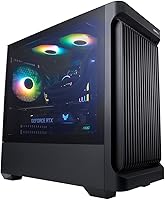
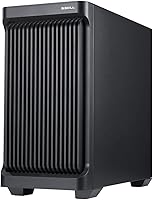
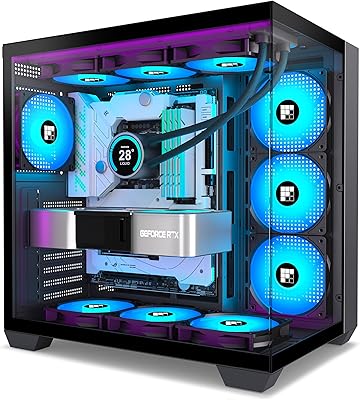
The blacked-out exterior with a mesh front grill and clean tempered glass panel gives this mATX case a restrained, functional look that works well for both gaming setups and home office environments. Buyers who prefer understated builds over heavily RGB-branded enclosures find the visual result quietly satisfying.
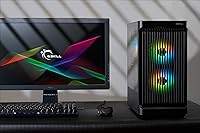
There is no integrated RGB lighting and no front panel lighting diffuser, so buyers expecting any out-of-the-box visual flair will need to add their own components. The front grill aesthetic is industrial rather than striking, which suits some tastes but reads as plain to buyers who want a more dramatic-looking build.

Suitable for:

The G.SKILL LT1 mATX PC Case is a strong fit for builders who want a compact tower without giving up compatibility with modern, power-hungry hardware. If you're planning a desk-friendly gaming rig or a home office machine that moonlights for gaming, the generous GPU and radiator clearances mean you won't have to downgrade your component choices to fit the chassis. First-time builders will appreciate the straightforward layout — mATX cases in this size range are generally more forgiving to assemble than true small-form-factor ITX builds, and this one doesn't overcomplicate things. Budget-conscious builders who want tempered glass visibility and a clean aesthetic without spending heavily on a flagship enclosure will find the value proposition genuinely reasonable. It's also a practical pick for anyone upgrading from an aging mid-tower who wants to reclaim desk space without sacrificing their next GPU purchase.

Not suitable for:

The G.SKILL LT1 mATX PC Case is not the right choice for builders who expect a fully fan-equipped, ready-to-run airflow setup straight out of the box — you will almost certainly need to budget for additional case fans to take full advantage of the ventilation design. Enthusiasts chasing elite cable management or the kind of pristine interior presentation seen in premium showpiece builds will likely find the internal space a bit tight for fussy routing work. If you're planning a large ATX motherboard build, this chassis simply isn't compatible — it tops out at mATX. Power users running dual-radiator liquid cooling loops or highly complex custom water cooling setups will hit hard limitations here. And if brand pedigree in case manufacturing matters to you — the kind of trust built over decades by dedicated chassis makers — G.SKILL's newcomer status in this category may give you pause worth taking seriously.

Specifications

  • Form Factor: This is a micro-ATX tower case designed to house mATX and mini-ITX motherboards in a compact footprint.
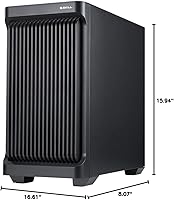
  • Dimensions: The chassis measures 16.61 x 8.07 x 15.94 inches (L x W x H), keeping the desktop presence relatively modest for a tower.
  • Weight: The case weighs 11.2 pounds (5.09 kg) unloaded, reflecting a sturdy steel and glass construction without being unwieldy.
  • Side Panel: A 4mm tempered glass side panel is fitted on the left side, providing a clear view of installed components.
  • GPU Clearance: The interior supports graphics cards up to 360mm in length, accommodating most full-size modern GPUs including triple-fan models.
  • Radiator Support: A liquid cooler radiator of up to 280mm can be mounted, enabling meaningful AIO cooling options within this compact form factor.
  • Motherboard Fit: Compatible with both micro-ATX and mini-ITX motherboard standards; ATX and larger formats are not supported.
  • PSU Mounting: The power supply can be mounted in either a bottom or rear position, giving builders flexibility in cable routing and layout planning.
  • Dust Filters: Magnetic dust filters are included for the top, front, and bottom ventilation areas, allowing tool-free removal and cleaning.
  • Front I/O Ports: The front panel provides 2x USB 3.0 ports, 1x USB 2.0 port, a 3.5mm headphone output, and a 3.5mm microphone input.
  • Cooling Method: The case is designed primarily for air cooling, with fan mounts accommodating standard case fans for intake and exhaust airflow.
  • Material: The enclosure is constructed from steel with a tempered glass side panel and a mesh-style front grill for airflow optimization.
  • Color: Available in black with a consistent finish across the steel body, front grill, and framing of the tempered glass panel.
  • Model Number: The official model designation is GC-TKGW1-LT1, manufactured by G.SKILL International Enterprise Co., Ltd.
  • Included Fans: Fan inclusion is minimal at stock; builders should verify the current retail package and plan to add fans to fully utilize the ventilation design.
  • Drive Bays: The case includes storage mounting positions typical for mATX builds, supporting standard 2.5-inch and 3.5-inch drive configurations.
  • Expansion Slots: The chassis provides the number of PCIe expansion slots standard for mATX builds, supporting multi-card and full-length card configurations.
  • First Available: This model was first listed for sale on March 28, 2022, representing G.SKILL's early entry into the PC chassis market.

Related Reviews
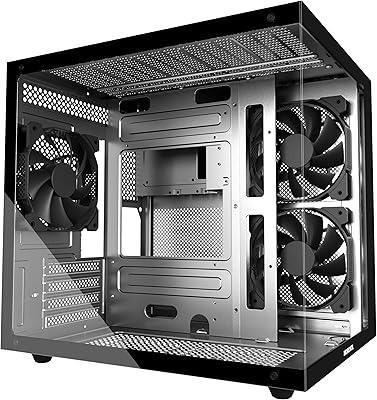
MOROVOL V3 Micro-ATX Tower PC Case
78%
88%
Tempered Glass Quality
76%
Airflow & Thermal Performance
61%
Cable Management
73%
Build Quality & Materials
91%
Value for Money
More
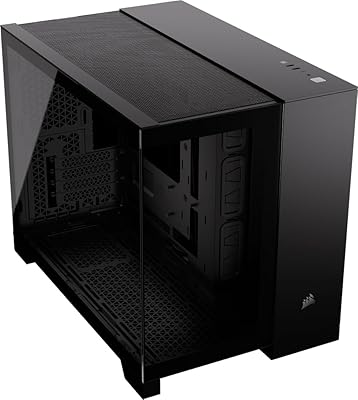
Jonsbo C6 Mini MATX Mesh PC Case
84%
91%
Airflow Performance
95%
Ease of Assembly
87%
Build Quality
88%
Cooling System Customization
65%
Cable Management
More
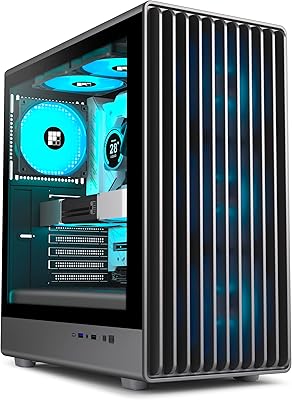
Corsair 2500X mATX PC Case
82%
91%
Build Quality
93%
Cable Management
88%
Cooling Flexibility
89%
Tempered Glass Panels
86%
Reverse Motherboard Compatibility
More
FOIFKIN K6 ATX Mid-Tower PC Case
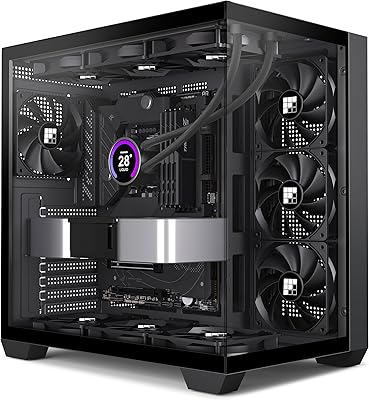
73%
88%
Value for Money
66%
Build Quality
83%
Cooling Performance
54%
Cable Management
81%
Ease of Assembly
More
FOIFKIN F600
FOIFKIN F600
77%
91%
Value for Money
78%
Airflow Performance
74%
Build Quality
93%
Aesthetics & RGB Lighting
63%
Cable Management
More
FOIFKIN F300 2025 ATX Mid-Tower PC Case
76%
88%
Value for Money
91%
Aesthetic Design
79%
Cooling Performance
86%
Hardware Compatibility
58%
Cable Management
More
FOIFKIN M9 ATX Mid-Tower PC Case
76%
93%
Aesthetic Design
88%
Value for Money
76%
Cooling Performance
71%
Build Quality
58%
Cable Management
More
AsiaHorse Perseus Mid-Tower ATX PC Case
75%
94%
Aesthetic Design
91%
Component Visibility
83%
Build Quality
86%
GPU Compatibility
82%
Interior Spaciousness
More
KEDIERS H3 Mid Tower ATX PC Case
76%
88%
Aesthetic Design
71%
Build Quality
74%
Cooling Performance
67%
Fan Noise Level
59%
Cable Management
More
Jonsbo N4 NAS PC Case
73%
83%
Build Quality
91%
Aesthetic Design
88%
Storage Flexibility
84%
Hot-Swap Functionality
47%
CPU Cooler Clearance
More

FAQ

GPU clearance goes up to 360mm in length, which covers most triple-fan RTX 4080 models comfortably. Some RTX 4090 cards push past 360mm depending on the manufacturer, so double-check the exact length of the specific card you're buying before committing.

Yes, the LT1 enclosure supports AIO radiators up to 280mm, which is genuinely good for an mATX chassis. A 240mm or 280mm unit should mount without issue, though you should confirm radiator thickness compatibility with your specific cooler before purchasing.

Fan inclusion is limited at stock configuration, and most builders end up adding their own fans to take advantage of the available mounts. Budget for at least two or three additional fans if you want solid airflow through the front and top vents.

Yes, standard ATX PSUs are compatible — you can mount the power supply in either a bottom or rear position depending on your preference and cable lengths. Just measure your PSU length against available clearance if you're running an extended or modular unit.

The 4mm thickness is noticeably more substantial than the thin panels you get on cheaper cases. It feels solid during handling and installation, and buyer feedback consistently calls it one of the better glass panels at this price point. That said, treat it with the usual care — it's still glass.

It's workable, but the space behind the motherboard tray is not especially generous. Experienced builders can get a clean result, but if you're new to the hobby, expect to spend some time managing longer cables. Modular PSUs help considerably here.

Yes, this compact chassis explicitly supports mini-ITX boards in addition to mATX, so you have flexibility there. The extra internal space from the larger chassis can actually make mini-ITX builds feel less cramped than a dedicated ITX case.

The filters on the top, front, and bottom panels attach magnetically, so removal is genuinely tool-free — just pull them off, rinse or dust them off, and snap them back in. It takes about two minutes and makes routine maintenance much less of a chore compared to cases with clip-in filters.

No, this case only supports mATX and mini-ITX form factors. A standard full ATX board will not fit — if you're building around an ATX motherboard, you'll need to look at a mid-tower with the appropriate clearance.

G.SKILL built its reputation on RAM and storage products, so cases are relatively new territory for them. The LT1 enclosure has reviewed well for its price and the build quality holds up better than skeptics expected, but it doesn't have the long manufacturing track record of dedicated case brands like Fractal or Lian Li. For a budget-to-mid-range build, it's a reasonable bet — just go in with realistic expectations rather than assuming flagship-tier refinement.