Overview

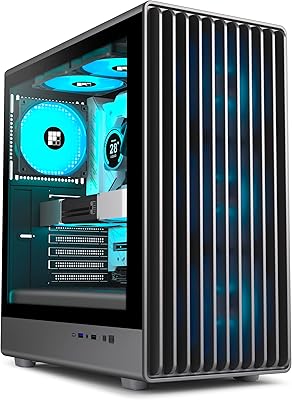
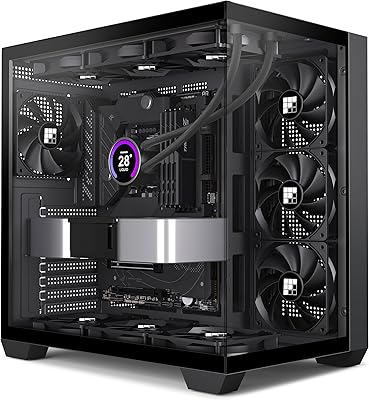
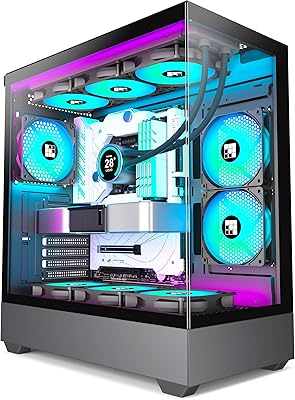
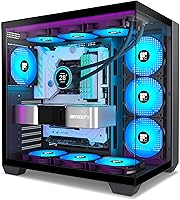
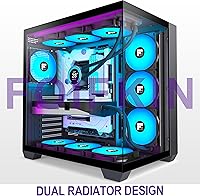
The FOIFKIN F600 enters a crowded mid-tower market with a clear pitch: give budget-conscious builders real visual impact without cutting corners on airflow. Its most striking structural decision is the dual-chamber design, which physically separates the PSU and cabling from the main component area — a layout you would normally expect at a higher price point. Three sides of panoramic tempered glass make it genuinely unusual at this tier; most cases offer one windowed panel, not three. FOIFKIN is a newer name in PC hardware, having launched this case in late 2024, so long-term reliability data is still thin. Worth considering alongside more established brands, but the value proposition here is hard to dismiss.

Features & Benefits

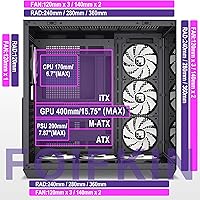
Opening the box, you already have seven 120mm ARGB PWM fans installed — that alone saves a meaningful chunk of a new build budget. Six run in reverse orientation to move air efficiently, while one handles forward exhaust. The triple 360mm radiator support is a genuine capacity claim rather than a tested performance guarantee, so water-cooling enthusiasts will appreciate the room without stepping up to a full tower. GPU clearance extends to 400mm, covering virtually every current high-end card including triple-fan models. The front I/O includes a USB-C port alongside two USB 3.0 connections, and the chassis accommodates ATX, Micro-ATX, and Mini-ITX motherboards without issue.

Best For

This glass PC case is a natural fit for first-time builders who would otherwise spend extra on fans before even powering on for the first time. If your desk setup keeps the PC on display rather than tucked out of sight, the three-sided glass really pays off visually. It is also a smart pick for anyone planning a 360mm AIO cooler or a modest custom loop, since the internal space supports that without demanding a larger chassis footprint. Those upgrading from an older single-panel case will feel the difference right away. Less ideal for builders chasing absolute silence or a clean, opaque industrial aesthetic.

User Feedback

With over 350 ratings and a 4.4-star average, the F600 has built a genuinely positive reception — it currently ranks in the top 35 of its category, though that reflects sales volume rather than independent expert testing. Buyers consistently praise the out-of-box fan count and the glass clarity. On the critical side, several reviewers flag that plastic accent trim pieces feel noticeably cheaper than the metal chassis, and cable routing space behind the motherboard tray can get tight with bulkier PSU cables. Fan noise under full load draws mixed reactions — PWM control helps, but quiet operation is not guaranteed. A handful of reviewers compare it to Lian Li and Phanteks, noting the F600 competes well on value but trails slightly on build refinement.

Pros

  • Seven ARGB PWM fans come pre-installed, saving meaningful cost compared to buying fans separately.
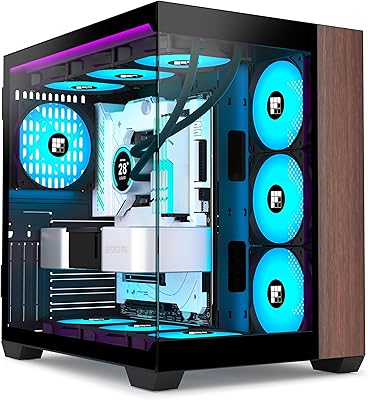
  • Three-sided panoramic tempered glass makes the interior genuinely visible from multiple angles.
  • Dual-chamber layout keeps PSU cables hidden from the display side of the build.
  • GPU clearance extends to 400mm, covering virtually every current high-end graphics card.
  • Front panel includes a USB-C port, which many competing cases at this price still omit.
  • Supports ATX, Micro-ATX, and Mini-ITX boards, giving the case real flexibility across build types.
  • Triple 360mm radiator support gives water-cooling builders serious room without going full tower.
  • Ranked in the top 35 of its category, reflecting strong early buyer adoption since its late 2024 launch.

Cons

  • Plastic accent trim pieces feel noticeably cheaper than the metal chassis during hands-on handling.
  • Cable routing space behind the motherboard tray is tight, especially with non-modular power supplies.
  • Dust filtration is incomplete — top and front intake areas lack dedicated filters.
  • Fan array at full speed is loud enough to be distracting in quieter room environments.
  • Only a single 3.5-inch HDD bay limits storage expansion for builders with large media libraries.
  • FOIFKIN has no long-term service history, making warranty and parts support an open question.
  • RGB synchronization requires a compatible motherboard or separate controller — nothing is bundled in.
  • At 17.61 lbs, the case is heavy enough that solo transport and repositioning requires care.

Ratings

The FOIFKIN F600 has been put through its paces by our AI rating engine, which analyzed hundreds of verified buyer reviews worldwide while actively filtering out incentivized, bot-generated, and low-quality submissions. What emerged is a clear picture of a mid-tower case that punches above its weight in several areas while showing some expected rough edges for a newer brand. Both the genuine strengths and the real frustrations are reflected transparently in the scores below.

Value for Money
91%
Buyers repeatedly highlight how much hardware comes pre-installed relative to the asking price. Seven ARGB PWM fans alone would cost a meaningful chunk of the case price if purchased separately, which makes the total package feel genuinely generous for a first or budget build.
The value equation holds up well on paper, but a few buyers note that some of the included components — particularly the plastic trim — reflect cost-cutting that becomes more obvious once competing cases at similar prices are handled side by side.
Airflow Performance
78%
22%
The reverse-fan orientation on six of the seven included fans is a thoughtful design choice that promotes strong intake pressure and keeps the component area well-ventilated. Builders running mid-range CPUs and GPUs report stable temperatures without adding any aftermarket fans.
The dual-chamber layout helps visually clean up airflow paths, but the case has not been independently benchmarked, so thermal claims should be treated as potential rather than proven. Builders pushing high-TDP components under sustained load may still want to verify temperatures carefully.
Build Quality
74%
26%
The metal chassis feels solid and does not flex noticeably during handling or installation. The tempered glass panels are thick and secure, and the overall structural rigidity is better than many buyers expected given the price point.
The plastic accent pieces are a recurring complaint. They feel noticeably lighter and cheaper than the metal frame, and at least some buyers report minor alignment issues with the front panel trim. It does not affect function, but it does affect perceived quality.
Aesthetics & RGB Lighting
93%
Three sides of panoramic tempered glass is a genuine differentiator at this tier, and the ARGB fans produce vibrant, consistent lighting that photographs well for desk setups. Builders who place their PC on a visible surface get real visual payoff here.
RGB customization depends entirely on the motherboard software or a compatible controller — there is no standalone hub bundled in the box. Buyers without ARGB-compatible boards may find syncing the lighting less straightforward than expected.
Cable Management
63%
37%
The dual-chamber design does a good job of routing the PSU and bulk cabling away from the primary viewing side, which keeps the glass-facing interior looking clean. Builders with modular PSUs report a noticeably tidier finished build.
The space behind the motherboard tray is tight, and several reviewers with thicker cable sets or non-modular PSUs found it difficult to close the back panel cleanly. This is a real frustration during the build process, especially for less experienced builders.
Cooling Capacity
86%
Support for three simultaneous 360mm radiators is an exceptional spec for a mid-tower, giving water-cooling enthusiasts serious flexibility without stepping up to a full tower footprint. An AIO in the 240mm to 360mm range installs without any clearance conflicts.
Radiator support is a capacity spec, not a performance guarantee. Actual thermal outcomes will vary significantly based on fan curves, radiator quality, and ambient conditions, so builders should not interpret the spec list as a substitute for testing.
Fan Noise Levels
69%
31%
PWM control means fan speeds can be dialed back at idle or light loads, and at lower RPMs the included fans are acceptably quiet for most desk environments. Builders running light gaming or productivity workloads will find the noise levels manageable.
At full speed, the seven-fan array is noticeably loud. Users sensitive to fan noise in quieter rooms have flagged this as a real issue, and the included fans are not individually replaceable without additional cost if quieter operation is a priority.
Hardware Compatibility
88%
A 400mm GPU clearance window covers virtually every current consumer graphics card, including triple-fan flagships. ATX, Micro-ATX, and Mini-ITX motherboard support gives this case genuine flexibility across a range of build types and budgets.
PSU support tops out at 200mm, which excludes some longer units. Builders using older or budget full-length PSUs should measure before purchasing, as the fit is not guaranteed for every model on the market.
Front I/O
82%
18%
The inclusion of a USB-C port on the front panel is a modern touch that many competing cases at this price still skip. Paired with two USB 3.0 ports, it covers the daily connectivity needs of most builders without requiring rear-panel reach-around.
There is only a single USB 2.0 port alongside the faster connections, which may feel limiting for builders who regularly connect multiple peripherals or USB receivers simultaneously. No headphone and microphone split — only a combo audio jack is included.
Installation Experience
76%
24%
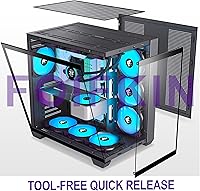
The tool-free panel release and clearly organized internal layout make the initial build process reasonably approachable. First-time builders generally report the experience as less intimidating than older cases with more cramped interiors.
A few builders ran into alignment snags with the front panel connectors and noted that the included documentation is minimal. The glass panel removal process requires some care, and one of the glass clips on some units has been reported as slightly stiff out of the box.
Storage Options
61%
39%
Two SSD mounting points are adequate for most modern builds that rely on NVMe drives for primary storage and may use a 2.5-inch SATA drive for secondary capacity. The SSD trays are accessible without fully dismantling the build.
Only a single 3.5-inch HDD bay is a real limitation for builders who use mechanical drives for large media libraries or backups. Anyone consolidating storage from an older system with multiple hard drives will likely find this insufficient.
Tempered Glass Quality
89%
The glass panels are thick, scratch-resistant, and noticeably clear compared to tinted or lower-hardness panels found in competing cases. The panoramic three-side coverage makes the interior feel genuinely on display rather than glimpsed through a small window.
The glass is heavy, which adds to the overall case weight and makes solo transport slightly awkward. Handling during initial setup requires care, and the glass is naturally susceptible to fingerprints that become very visible under RGB lighting.
Brand Reliability
64%
36%
The F600 launched in late 2024 and has already accumulated several hundred verified ratings, which is a respectable early track record. For a value-priced case, the initial quality consistency appears solid based on available feedback volume.
FOIFKIN lacks the long-term service history of established brands like Lian Li or Phanteks. Warranty support and long-term parts availability are unknowns that cautious buyers should factor in, particularly if they intend to reuse the case across multiple build cycles.
Dust Filtration
58%
42%
The bottom-mounted PSU area includes a basic filter that is accessible for cleaning without tools. For builders in average household environments, it provides a reasonable first line of defense against dust accumulation in the power supply intake.
Coverage is limited — the top and some front intake areas lack dedicated filtration, which means dust buildup on the fans and radiator mounts will require more frequent manual cleaning. Builders in dusty environments will feel this gap within a few months.

Suitable for:

The FOIFKIN F600 is a strong match for PC builders who want their setup to look as good as it performs, without blowing the budget before they even get to the CPU and GPU. If you are putting together your first build and dreading the extra cost of buying fans separately, the seven pre-installed ARGB units mean you can skip that line item entirely and redirect that money toward better components. Gamers and enthusiasts who keep their rig on a desk where it is actually visible will get real mileage out of the three-sided glass — this is not a one-small-window situation. Builders with AIO cooling plans in the 240mm to 360mm range will appreciate the generous radiator clearance without needing to size up to a full tower. It also suits anyone upgrading from an older, cramped case who wants modern front I/O, better internal organization, and a cleaner overall build experience.

Not suitable for:

The FOIFKIN F600 is probably not the right call if long-term brand support and proven reliability are high on your list — FOIFKIN is a newer name in the space, and unlike Lian Li or Phanteks, there is no established track record of multi-year warranty service or readily available replacement parts. Builders who work in dusty environments and need comprehensive dust filtration on all intake points will find the coverage here too limited for low-maintenance operation. If cable management is already a challenge for you, the tighter-than-ideal space behind the motherboard tray could add real frustration, especially with a non-modular power supply. Anyone planning to store more than one mechanical hard drive should look elsewhere, since there is only a single 3.5-inch bay. Finally, if fan noise sensitivity is a dealbreaker — say, you are building a quiet workstation for a recording space or a light office — the seven-fan setup at full load will not meet that bar without aftermarket replacements.

Specifications

  • Case Type: ATX Mid-Tower form factor designed to fit standard desktop builds on a typical desk or floor placement.
  • Dimensions: The case measures 420 x 285 x 430mm (16.5″ deep x 11.2″ wide x 17.3″ tall).
  • Weight: The unit weighs 17.61 lbs, which is on the heavier side for a mid-tower due to the triple-glass panel construction.
  • Motherboard Support: Compatible with ATX, Micro-ATX, and Mini-ITX motherboard form factors.
  • Included Fans: Seven 120mm ARGB PWM fans come pre-installed: six in reverse-mount orientation and one forward-facing.
  • Radiator Support: Supports up to three 360mm radiators simultaneously across the top, front, and bottom mounting positions.
  • GPU Clearance: Maximum GPU length supported is 400mm, accommodating current triple-fan flagship graphics cards.
  • PSU Clearance: Bottom-mounted PSU bay supports power supply units up to 200mm in length.
  • Storage Bays: Provides one 3.5-inch HDD bay and two 2.5-inch SSD mounting points.
  • Front I/O Ports: Front panel connectivity includes one USB-C port, two USB 3.0 ports, and one USB 2.0 port.
  • Audio I/O: A single combination audio jack on the front panel supports headsets with a shared headphone and microphone connector.
  • Panel Material: Three side panels are constructed from high-hardness tempered glass for scratch resistance and optical clarity.
  • Chassis Material: The main structural frame is built from steel with plastic used for accent trim and front panel components.
  • Cooling Methods: The case supports both air cooling with fans and liquid cooling with radiators up to 360mm per mount.
  • Chamber Design: A dual-chamber internal layout physically separates the PSU and cable management zone from the main component bay.
  • Fan Control: All seven included fans use PWM speed control, allowing the motherboard or fan controller to regulate RPM based on thermals.
  • Color: Available in Black, with ARGB fan lighting providing customizable color output through compatible motherboard headers or controllers.
  • Availability Date: The case was first made available in September 2024, making it a relatively recent market entry with a growing review base.

Related Reviews
FOIFKIN F300 PC Case
86%
91%
Value for Money
88%
Cooling Performance
85%
Build Quality
94%
Ease of Assembly
87%
Design & Aesthetics
More
FOIFKIN K6 PC Case
FOIFKIN K6 PC Case
84%
94%
Cooling Performance
89%
Ease of Installation
85%
Build Quality
70%
GPU Compatibility
88%
Design & Aesthetics
More
FOIFKIN M9 PC Case
FOIFKIN M9 PC Case
83%
93%
Cooling Performance
88%
Design & Aesthetics
90%
Build Quality
85%
Ease of Access
80%
Motherboard Compatibility
More
FOIFKIN F1 ATX Mid-Tower Gaming PC Case
84%
92%
Cooling Performance
88%
Ease of Assembly
90%
Aesthetics/Design
85%
Internal Space and Compatibility
89%
Airflow Efficiency
More

FAQ

It comes with all seven fans pre-installed straight out of the box. Six are mounted in reverse orientation for optimized airflow, and one handles forward exhaust. You do not need to purchase any additional fans to get a functional build up and running.

Yes, the case officially supports standard ATX, Micro-ATX, and Mini-ITX motherboards. Just confirm your board falls within standard ATX dimensions, as extended ATX (E-ATX) is not listed as supported.

GPU clearance is rated at up to 400mm, which covers virtually every triple-fan card currently on the market, including high-end models from NVIDIA and AMD. That said, always double-check your specific card length before purchasing.

The fans connect to your motherboard via ARGB headers, so lighting control runs through your motherboard software such as ASUS Aura Sync or MSI Mystic Light. There is no standalone hub or remote bundled in the box, so a compatible ARGB header on your motherboard is required for full control.

It depends on your setup. The dual-chamber layout keeps the PSU and bulk cabling out of the main viewing area, which helps a lot visually. The space behind the motherboard tray is on the tighter side though, and builders using a non-modular power supply with thick cable runs may need to plan ahead and take extra time routing everything cleanly.

At lower RPMs the fans are reasonably quiet, and PWM control helps keep noise down during light workloads. Under heavy load when all seven fans ramp up, the noise level is noticeable — this is not a case designed for silent operation. If you need a quiet build for a recording environment or noise-sensitive space, you would likely want to swap the fans for quieter aftermarket options.

Yes, the case supports 360mm radiators at the front, top, and bottom mount positions. A 360mm AIO is a very natural fit here and installs without clearance conflicts for most standard builds.

There is one 3.5-inch bay for a traditional hard drive and two 2.5-inch mounts for SSDs. If you are planning to migrate a lot of mechanical storage from an older build, one HDD bay may feel limiting.

The panels use high-hardness tempered glass, which is more scratch-resistant than standard acrylic side panels common in cheaper cases. That said, tempered glass is still glass — it is not fragile under normal use, but dropping a panel during installation would be a problem. Handle each panel carefully during the build, and keep in mind the glass shows fingerprints quite easily under RGB lighting.

It is a genuinely solid choice for a first build. The pre-installed fans remove one of the more confusing early decisions, the internal layout is fairly organized, and the panoramic glass makes it easy to see what you are doing while you build. The main challenge for newer builders is the tighter cable management space at the rear, so budgeting some extra time for routing is a good idea.