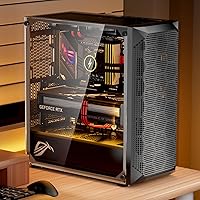
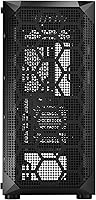
Overview

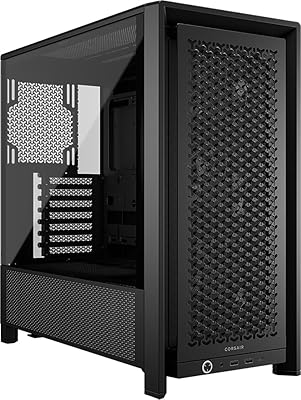
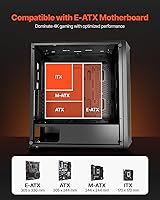
The VEVOR 230B Full-Tower PC Case launched in April 2025 and has already climbed to #39 in Amazon's Computer Cases category — a fast rise for a brand better known for tools and workshop gear than PC hardware. VEVOR has carved out a niche as a value-first hardware brand, and this chassis fits that mold: the price sits in mid-range territory, yet the spec sheet reads closer to what you'd expect at a higher tier. Support spanning E-ATX down to Mini-ITX means builders aren't boxed into a single platform, making it worth a serious look for anyone planning a flexible, long-term build.

Features & Benefits

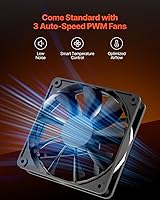
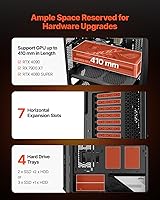
Three 140mm PWM fans come pre-installed, which is a legitimately useful starting point — most builders can skip the immediate fan-upgrade tax that cheaper cases often impose. The chassis accommodates GPUs up to 410mm long, so even the largest triple-fan cards from NVIDIA or AMD should fit without a fight. On the maintenance side, magnetic dust filters on the top and side panels pull away without tools, which becomes genuinely appreciated after a few months of real use. Storage covers up to four drives — a practical mix of SSDs and HDDs — while the SPCC steel frame keeps everything solid without adding unnecessary bulk.

Best For

This full-tower case makes the most sense for builders who want flexibility without paying a premium for it. If you're running a large AIB graphics card in the 380 to 410mm range, generous internal clearance removes a common planning headache. First-time builders will appreciate that broad form-factor support means no platform lock-in — start with ATX today, expand to E-ATX later. It's also a smart pick for anyone dealing with a dusty environment, since the tool-free filter design actually gets maintained when cleanup is this straightforward. Multi-drive users get real configuration flexibility too, which not every chassis at this price point delivers.

User Feedback

With 98 ratings and a 4.2-star average, buyer sentiment is cautiously positive — enough to signal a solid product, but not a large enough sample to call it settled consensus. The most consistent praise centers on airflow and build quality relative to the asking price, with several buyers highlighting how straightforward assembly was straight out of the box. On the critical side, the single USB 3.0 port draws friction from users with multiple peripherals, and a handful of reviewers note that cable management demands more patience than the design initially implies. No strong pattern emerges comparing it to rivals, but the overall tone reads as satisfied rather than enthusiastic.

Pros

  • Three 140mm PWM fans are included out of the box, saving you an immediate upgrade cost.
  • GPU clearance up to 410mm covers virtually every high-end consumer card currently available.
  • Broad motherboard support from Mini-ITX to E-ATX makes this gaming chassis genuinely future-flexible.
  • Magnetic dust filters on the top and side panels detach without tools for fast, painless cleaning.
  • The SPCC steel frame feels solid and resists flex during cable management and component installation.
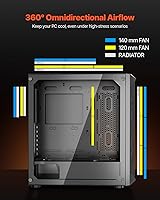
  • Fan expansion headroom is substantial, supporting up to nine 120mm fans if you need serious airflow.
  • Up to four storage drives can be installed, mixing SSDs and HDDs to suit varied build strategies.
  • The tempered glass side panel lets you show off your build without adding fragility to the overall structure.
  • Assembly is straightforward enough that first-time builders report getting through it without major frustration.
  • The price-to-feature ratio is competitive for a full-tower with pre-installed fans and magnetic filters.

Cons

  • Only one USB 3.0 port on the front I/O panel is limiting for users with multiple peripherals.
  • Cable management requires extra patience and planning — the routing options are functional but not generous.
  • VEVOR has a limited track record specifically in PC cases, which may concern buyers used to established brands.
  • At over 16 pounds, moving or transporting the fully built rig is genuinely inconvenient.
  • The review pool is still small at 98 ratings, making it harder to spot long-term reliability patterns.
  • Front panel aesthetics are understated — builders wanting bold RGB mesh designs may find it too plain.
  • Liquid cooling compatibility details are not clearly specified, requiring extra research before committing to an AIO build.
  • The two USB 2.0 ports feel dated in a 2025 chassis where USB 3.0 or Type-C would be more useful.

Ratings

Our AI rating engine analyzed verified global buyer reviews for the VEVOR 230B Full-Tower PC Case, actively filtering out incentivized, duplicate, and bot-generated submissions to surface what real builders actually experienced. The scores below reflect both the genuine strengths and the honest trade-offs that emerged from that process — nothing is smoothed over. Whether this chassis earns a place in your build or falls short of your needs, the breakdown ahead gives you a clear, unbiased picture.

Value for Money
88%
Buyers consistently flag the price-to-feature ratio as a standout reason they chose this full-tower case over pricier alternatives. Getting three pre-installed 140mm fans, magnetic dust filters, and E-ATX support at this price tier is unusual, and most reviewers acknowledge that directly.
A handful of buyers feel the value argument weakens slightly when they factor in the cost of adding more USB ports via a hub or upgrading the single USB 3.0 front connector situation. For some, those hidden extras chip away at the initial savings.
Airflow Performance
84%
The three included 140mm fans move a meaningful volume of air even before any upgrades, and builders running mid-to-high-end GPUs report stable thermals during extended gaming sessions. The mesh intake design keeps restriction low, which matters when you're pushing a power-hungry card.
At higher fan speeds, noise becomes a legitimate concern for users in quieter environments — a few reviewers note the fans aren't the quietest stock options available. Builders targeting near-silent operation will likely need to swap them out or invest in a quality fan controller.
Build Quality
79%
21%
The SPCC steel frame feels solid and doesn't flex noticeably during installation, which is reassuring when you're torquing down a heavy CPU cooler or wrestling with a stiff GPU power connector. For a value-tier chassis, the overall rigidity surprised a number of first-time builders.
Some buyers note that panel alignment isn't perfectly consistent out of the box, with minor gaps between the top filter housing and the chassis lip. It's cosmetic rather than functional, but it's the kind of detail that stands out against higher-end competitors.
Dust Filter Design
86%
The magnetic top and side filters are one of the most praised features across reviews — builders in dusty apartments or workshop-adjacent spaces specifically call them out for making monthly cleaning a two-second task rather than a screwdriver exercise. The convenience factor is real and not just marketing.
The front and bottom mesh filters are fixed rather than magnetic, which creates an inconsistency in the maintenance experience. Cleaning the bottom filter in particular requires moving the case, making it easy to ignore until dust buildup is already affecting airflow.
GPU Compatibility
91%
Supporting cards up to 410mm in length means virtually every consumer AIB GPU currently on the market fits without modification — builders running an RTX 5080 or a large RX 9070 XT triple-fan card can proceed without measuring twice and worrying. That kind of headroom is genuinely reassuring.
A small number of reviewers note that very thick, dual-slot-plus cards can make cable routing behind the GPU tight, particularly near the PCIe power connectors. It's a minor spatial issue rather than a hard incompatibility, but worth knowing before a cable-dense build.
Motherboard Compatibility
89%
Full support from Mini-ITX through E-ATX means this gaming chassis isn't locked to a single platform generation — builders who start on an ATX board today and want to upgrade their socket and platform years later don't need to replace the case. That flexibility carries real long-term value.
E-ATX support is listed but buyers should verify that their specific oversized board variant fits cleanly, since E-ATX is not a single rigid standard and edge cases exist. A small number of users with non-standard E-ATX layouts reported fitment being tighter than expected.
Cable Management
62%
38%
The case includes cable routing cutouts and basic tie-down anchor points that are sufficient for a straightforward build with a modular PSU. Builders who plan their cable runs before installation generally report acceptable results without excessive effort.
This is one of the more consistently criticized aspects across buyer reviews — the behind-panel clearance is tighter than the competition at similar prices, and builders using non-modular PSUs or thick aftermarket cable kits report real frustration. Getting a clean build takes significantly more patience than the design implies.
Front I/O Ports
58%
42%
The power button, audio jacks, and lighting control button all function reliably according to user feedback, and the overall panel layout is sensibly placed for typical desk setups. For casual users who rarely plug anything into the front panel, the existing ports cover basic needs.
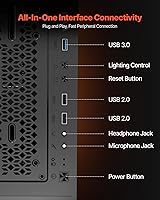
A single USB 3.0 port is the most frequently cited frustration in reviews, especially among users who connect external drives, capture devices, or audio interfaces regularly. The two USB 2.0 ports feel dated on a 2025 chassis, and the absence of a USB-C port is a noticeable omission at this tier.
Assembly Experience
82%
18%
First-time builders in particular highlight how accessible the assembly process felt, with enough internal space to work comfortably without constantly repositioning components. The included hardware is organized reasonably well, and the full-tower footprint makes CPU cooler installation far less cramped than a mid-tower equivalent.
The included instruction manual is minimal, which can leave newer builders uncertain about the correct fan mounting orientation or filter installation sequence. A few reviewers note that standoff placement for non-ATX boards isn't clearly marked inside the chassis.
Tempered Glass Panel
77%
23%
The glass panel is clear and scratch-resistant enough to show off a well-lit build effectively, and buyers report that it feels durable during removal and reinstallation. For a value-segment chassis, the glass quality meets expectations without feeling like a cost-cut.
The panel attachment mechanism on some units shows minor wobble when the case is moved, which creates a faint rattling sensation during transport. It doesn't affect the build during stationary use, but it's worth noting for anyone who moves their rig between locations regularly.
Storage Flexibility
81%
19%
The ability to mix SSDs and HDDs across four bays gives this full-tower case practical appeal for media creators and gamers who want fast boot drives alongside high-capacity storage for game libraries or recorded footage. The configuration options are genuinely flexible rather than token inclusions.
Drive mounting hardware and trays feel adequate rather than premium, and a couple of reviewers note that vibration isolation for HDDs is minimal. For a quiet build with spinning drives, the lack of rubber-dampened trays may result in faint resonance during heavy disk activity.
Fan Expansion Headroom
85%
Supporting up to nine 120mm fans or a mixed 140mm and 120mm configuration means thermal-obsessed builders have real room to grow without hitting a ceiling on their first upgrade cycle. That kind of expansion capacity is typically found in cases priced notably higher than this one.
Fan controller or hub integration isn't built in, so managing nine fans cleanly requires either a motherboard with enough headers or a third-party hub — an added cost and complexity that buyers should budget for upfront if they plan to max out the fan configuration.
Aesthetics
71%
29%
The clean black exterior and tempered glass combination works well for builders who want a functional, understated look without aggressive gamer styling. It fits comfortably on a desk or in a workspace without demanding visual attention in the way that heavily RGB-accented cases do.
Buyers seeking bold front-panel design, integrated RGB lighting, or high-contrast panel accents will find this chassis too plain. The front panel in particular is straightforward to the point of being unremarkable, which may feel underwhelming in a premium display build.
Brand Reliability
67%
33%
VEVOR's manufacturing standards appear consistent based on early buyer reports, and the structural components of the VEVOR tower — frame, panel, filter hardware — show no widespread defect patterns in the current review pool. Customer support responses have been noted as responsive by a few buyers who needed replacement parts.
With only 98 reviews and a product launched in April 2025, there simply isn't enough long-term data to speak confidently about reliability over a multi-year ownership period. Buyers who prioritize a proven track record in PC cases specifically may reasonably prefer a more established name.

Suitable for:

The VEVOR 230B Full-Tower PC Case is a strong fit for budget-conscious builders who refuse to compromise on internal space or component compatibility. If you're planning a build around a large triple-fan GPU — the kind that stretches past 350mm — the 410mm clearance gives you room to work with cards that would simply be off-limits in a mid-tower. First-time builders especially benefit from the broad motherboard support, since starting with an ATX board today and upgrading to E-ATX down the line doesn't require swapping the chassis. The included 140mm fans mean you're not immediately hunting for cooling upgrades, and the magnetic dust filters are a genuine quality-of-life feature for anyone who keeps their rig on or near the floor. Multi-drive enthusiasts — say, someone running two NVMe SSDs alongside a high-capacity HDD for media storage — will find the four-bay flexibility practical rather than theoretical.

Not suitable for:

Builders who prioritize a polished, premium feel in their workspace should look elsewhere, because the VEVOR 230B Full-Tower PC Case is honest about its value-tier positioning — the fit and finish won't match what you'd get from established case specialists at a higher price point. If your workflow depends heavily on USB connectivity at the front panel, the single USB 3.0 port will become a recurring frustration, particularly for creators or streamers who regularly plug in drives, cameras, or audio interfaces. Compact or small-form-factor enthusiasts have no use for a chassis this large, and the 16.5-pound weight makes it a poor choice for anyone who moves their rig frequently. Those who want liquid cooling as a primary thermal solution should also verify radiator mounting compatibility carefully before committing, since the airflow-focused design is optimized around fans rather than AIO or custom loop configurations. Finally, buyers who prefer a brand with a long, established track record in PC cases specifically may find VEVOR's newer presence in this category a reason to hesitate.

Specifications

  • Case Type: Full-tower form factor designed to house large, high-performance PC builds with room for extensive component upgrades.
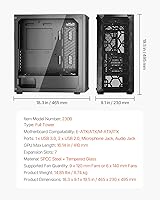
  • Motherboard Support: Compatible with E-ATX, ATX, M-ATX, and Mini-ITX motherboards, covering the full range of standard consumer form factors.
  • Frame Material: Constructed from SPCC (cold-rolled carbon) steel, providing structural rigidity and vibration dampening during operation.
  • Side Panel: Tempered glass side panel offers a clear view of internal components while maintaining durability against minor impacts.
  • Included Fans: Ships with 3 x 140mm PWM fans pre-installed, providing active airflow without requiring an immediate aftermarket upgrade.
  • Fan Capacity: Supports up to 9 x 120mm fans, or a combination of 6 x 140mm and 2 x 120mm fans across all mounting positions.
  • GPU Clearance: Accommodates graphics cards up to 410mm in length, covering most triple-fan AIB models currently on the market.
  • Storage Bays: Supports up to 4 drives total, configurable as 3 x SSD + 1 x HDD or 2 x SSD + 2 x HDD depending on your storage needs.
  • Dust Filters: Magnetic dust filters on the top and side panels allow tool-free removal, while mesh filters cover the front and bottom intakes.
  • PSU Mount: Power supply is bottom-mounted, helping lower the system center of gravity and separating PSU airflow from the main chamber.
  • Front I/O: Front panel includes 1 x USB 3.0 Type-A, 2 x USB 2.0 Type-A, a 3.5mm mic jack, a 3.5mm audio jack, a reset button, and a lighting control button.
  • Cooling Method: Designed exclusively for air cooling; no integrated liquid cooling pump mounts or reservoirs are included.
  • Weight: The chassis weighs 16.53 pounds unloaded, which is typical for a steel full-tower of this size.
  • Package Dimensions: Ships in a box measuring 22.83 x 21.97 x 13.07 inches, requiring adequate space for safe unboxing and assembly.
  • Color: Available in black with a uniform matte finish across both the steel panels and internal surfaces.
  • Model Number: Manufacturer model number is 230B, used to identify this specific chassis variant for support and parts inquiries.
  • Brand: Manufactured by VEVOR, a brand primarily known for workshop and industrial tools that has expanded into PC hardware.
  • Availability: First listed on Amazon in April 2025, making it a recent release with a growing but still limited user review base.

Related Reviews
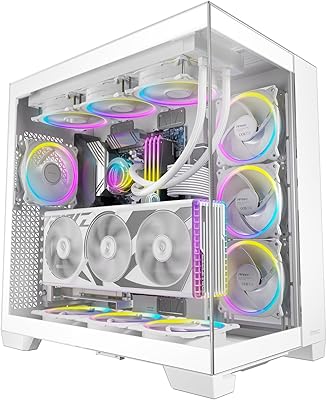
Antec C8 Full-Tower E-ATX PC Case
81%
93%
Build Quality
96%
Cooling Flexibility
89%
Cable Management
91%
Aesthetic Design
74%
Assembly Experience
More
Antec Flux Pro White Full-Tower E-ATX Case
83%
91%
Build Quality
89%
Airflow Performance
93%
Cooling Headroom & Radiator Support
88%
Fan Inclusion & Value
92%
Design & Aesthetics
More
darkFlash DY470 Full-Tower ATX PC Case
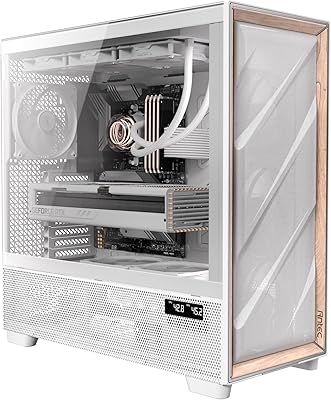
80%
93%
Cable Management
78%
Build Quality & Materials
84%
Cooling Potential
91%
Aesthetics & Visual Design
89%
GPU Compatibility & Mounting
More
Antec C8 ARGB Full-Tower PC Case
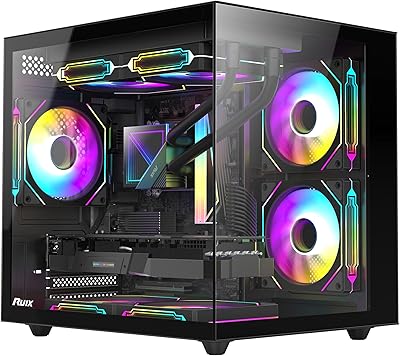
80%
83%
Build Quality
88%
Thermal Performance
93%
Cooling Flexibility
91%
Aesthetics & Visual Design
74%
Cable Management
More
VEVOR 230-14 Mid-Tower ATX PC Gaming Case
73%
88%
Value for Money
93%
Storage Capacity
76%
Airflow & Cooling Performance
63%
Build Quality & Materials
84%
Dust Filtration
More
RUIX OV502 mATX Mini-Tower PC Case
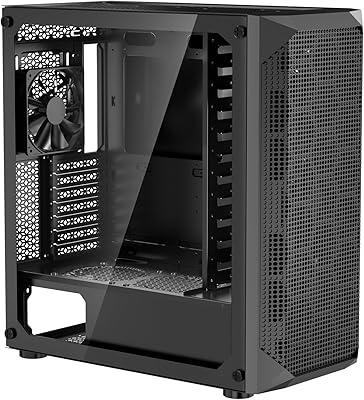
68%
83%
Value for Money
86%
Aesthetic Design
79%
Glass Panel Quality
84%
Component Compatibility
71%
Airflow & Cooling
More
SAMA V60 Mid Tower PC Case
80%
93%
Out-of-Box Cooling Value
78%
Airflow Performance
91%
AIO & Radiator Flexibility
88%
Tempered Glass & Aesthetics
71%
Build Quality & Materials
More
SAMA V Mesh Mid Tower PC Case
79%
91%
Airflow Performance
88%
Included Fans
86%
Value for Money
67%
Build Quality
83%
Ease of Assembly
More
Vetroo AL800 Mid Tower ATX PC Case
76%
78%
Build Quality
84%
Tempered Glass Panel
76%
Airflow Performance
61%
Fan Included & Expandability
69%
Cable Management
More
Zalman S3 ATX Mid-Tower PC Case
74%
83%
Value for Money
71%
Build Quality
58%
Airflow & Cooling Performance
86%
Ease of Assembly
67%
Acrylic Side Panel
More

FAQ

Yes, in most configurations. The VEVOR 230B Full-Tower PC Case supports GPUs up to 410mm in length, which covers the vast majority of triple-fan AIB cards from both NVIDIA and AMD. That said, always double-check the exact length of your specific card model before ordering, since some oversized partner variants can push past 400mm.

The three pre-installed 140mm PWM fans are enough to get a basic build up and running with decent airflow. For a high-end gaming system with a hot GPU and overclocked CPU, you'll likely want to add a few more fans over time, but there's no urgency on day one. The chassis supports up to nine 120mm fans total if you decide to max out coverage later.

No tools needed at all. The magnetic filters on the top and side panels simply pull away by hand, which makes monthly cleaning much more realistic than with screw-mounted designs. The front and bottom intake areas use fixed mesh filters, so those require a bit more effort to access, but the high-traffic spots are genuinely quick to clean.

For light users, it won't be. If you only plug in a USB drive occasionally, one port is fine. The issue tends to emerge for creators or streamers who regularly connect external drives, capture cards, or audio interfaces at the front of the case. In that scenario, you'll end up routing cables around to the rear motherboard ports, which is less convenient.

The case supports AIO radiators since it has extensive fan mounting positions — you can typically mount a 240mm or 360mm radiator in the top or front depending on configuration. However, VEVOR hasn't officially specified AIO mounting dimensions, so you'll want to verify your specific cooler's radiator size and thickness against the available mounting space before committing.

Most full-tower tempered glass panels at this price point use a thumbscrew or slide-and-lift mechanism, and this one follows that general pattern. It's manageable solo, though having a second pair of hands helps when initially seating components through the opening. The glass itself is sturdy enough for normal use but treat it carefully during removal — it's tempered, not shatterproof.

The routing options are functional but not particularly generous. There are cable management cutouts and tie-down points, but some reviewers note that getting everything looking clean takes more patience than the design initially implies. If you're doing a straightforward build with a modular PSU and good cable planning upfront, it's workable. A fully custom cable kit in a very tight configuration may test your patience.

Yes, E-ATX is explicitly supported out of the box. That's actually one of the stronger selling points of this full-tower case — most mid-towers cut off at ATX, so having native E-ATX support at this price tier is genuinely useful for builders planning a high-core-count workstation or HEDT platform build.

You can fit up to four drives total. The flexible configuration supports three SSDs and one HDD, or two SSDs alongside two HDDs, depending on your preference. M.2 NVMe drives mount directly to the motherboard and don't count toward the bay total, so realistically your drive count can go significantly higher when you factor those in.

VEVOR is a legitimate, established manufacturer — just better known for tools and workshop equipment than PC hardware. Their entry into this category is relatively recent, and the review pool for this chassis is still small, so there's less long-term reliability data than you'd have with brands like Fractal or Lian Li. That said, early buyer feedback is broadly positive, and the build quality appears solid for the price. If brand heritage in PC cases matters to you, it's worth weighing that against the value proposition on offer here.