Overview

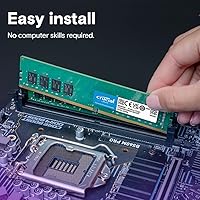
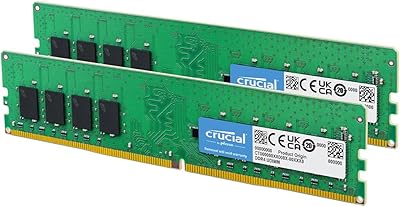
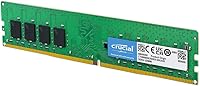
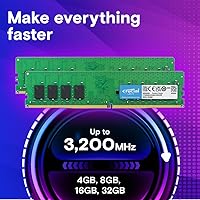
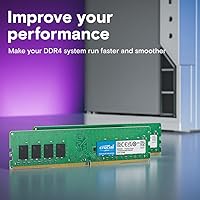
The Crucial 16GB DDR4 3200MHz Desktop RAM is about as straightforward a memory upgrade as you'll find — no frills, no gimmicks, just a solid stick from a brand that's been building memory under the Micron umbrella for over four decades. At 16GB, you're hitting the practical sweet spot for most desktop users today: enough headroom for heavy browser sessions, productivity software, and light creative work without overpaying for capacity you won't use. The 3200MHz speed is honest middle ground — it's the current baseline for DDR4, not a headline spec. This is not an overclocking showpiece; it's a reliable workhorse built for people who want their PC to run better, not to impress at a LAN party.
Features & Benefits

The Crucial CT16G4DFRA32A runs natively at 3200MHz but can downclock automatically to 2933MHz or 2666MHz if your motherboard doesn't support the higher speed — a practical touch that prevents compatibility headaches right out of the box. The 288-pin UDIMM form factor is the standard for modern desktop builds, and at just 1.2 volts it runs cooler than older DDR3 modules, which matters in systems with limited airflow. There's no heatspreader here, and that's actually a plus for compact builds where clearance is tight. Because Crucial manufactures its own memory through Micron, you get consistent component quality that many third-party brands simply can't guarantee. The compatibility checker on Crucial's website is genuinely useful before you buy.

Best For

This 16GB DDR4 module is the kind of upgrade that makes the most sense for someone coming from 8GB who keeps hitting a wall — too many browser tabs, a stuttering video call, or a slow-loading spreadsheet. It's a strong fit for everyday desktop users on both Intel and AMD Ryzen platforms who want things to just work without touching BIOS settings or fiddling with XMP profiles. The no-heatspreader design also makes it ideal for small form-factor or office-style desktops where RAM slot clearance is a real constraint. If you've never upgraded RAM before, Crucial's step-by-step guides make the process about as painless as swapping out a USB stick.

User Feedback

With well over 18,000 ratings and a score near the top of the category, the Crucial CT16G4DFRA32A has clearly found its audience. The most consistent praise centers on plug-and-play installation — buyers across a wide range of motherboard brands report the module being recognized without any manual configuration. Long-term owners frequently note that reliability holds up well over years of daily use. That said, the feedback isn't entirely without friction: a small number of users have flagged rare incompatibility issues with specific older boards, and a handful of shipping complaints appear in the lower ratings. Neither issue looks systemic, but running Crucial's compatibility tool beforehand is smart, especially for non-standard builds.

Pros

  • Installs without any BIOS tweaking — the module is detected and runs at rated speed automatically on most modern boards.
  • Micron's in-house manufacturing means component consistency that off-brand modules often can't match.
  • The slim, heatspreader-free profile fits in tight cases where clearance around the CPU cooler is limited.
  • Downclocking support to 2933MHz or 2666MHz makes it usable even on older motherboards that top out below 3200MHz.
  • Crucial's compatibility checker tools take the guesswork out of buying — genuinely useful for less experienced upgraders.
  • Long-term reliability is a recurring theme among owners who have run this 16GB DDR4 module for years without issues.
  • Low 1.2V operating voltage keeps thermals in check, which matters in systems with modest airflow.
  • With tens of thousands of verified ratings, real-world adoption data is unusually deep for a single memory SKU.
  • Works across a wide range of Intel and AMD Ryzen desktop platforms without platform-specific gotchas.

Cons

  • CL22 latency is on the looser end for 3200MHz RAM, and tighter-timed kits are available at comparable prices.
  • No XMP or overclocking headroom — what you see is what you get, which frustrates enthusiast builders.
  • A small but consistent thread of user reports points to incompatibility with certain older or budget motherboards.
  • Sold as a single stick, so reaching dual-channel performance requires purchasing a second module separately.
  • The plain green PCB design offers nothing visually for users building a windowed or open-air showcase system.
  • 3200MHz is a floor-level DDR4 speed in 2024, not a differentiator — faster kits exist at only marginally higher cost.
  • No heatspreader means the Crucial CT16G4DFRA32A has no thermal protection under sustained heavy workloads.
  • A handful of buyers have reported inconsistent packaging or shipping handling, resulting in DOA units on rare occasions.

Ratings

The scores below reflect our AI-driven analysis of thousands of verified global reviews for the Crucial 16GB DDR4 3200MHz Desktop RAM, with spam, bot activity, and incentivized feedback actively filtered out before scoring. Both the genuine strengths and the recurring frustrations are represented here — nothing has been glossed over. Where buyers consistently agreed, the scores reflect that consensus; where opinions diverged, the numbers and explanations make that tension clear.

Ease of Installation
93%
The overwhelming majority of buyers — including many who had never opened a desktop case before — reported the module seated correctly on the first attempt without any BIOS intervention. Users upgrading an older family PC or office workstation specifically called out how little friction was involved compared to other hardware upgrades they had attempted.
A small subset of users on certain AMD Ryzen boards reported needing to clear CMOS after installation before the system would post correctly, which caught first-timers off guard. This is not a module defect per se, but it does introduce a step that the otherwise smooth installation experience did not prepare them for.
Compatibility Range
88%
Buyers across a remarkably wide spread of motherboard brands — ASUS, MSI, Gigabyte, ASRock, and more — confirmed out-of-the-box recognition without manual speed configuration. The automatic downclocking behavior also earned consistent appreciation from users on older platforms who expected to need workarounds.
A recurring thread of complaints involves specific budget and older-generation boards where the module either required manual voltage adjustment or simply failed to initialize reliably. These cases are in the minority, but they are real enough that skipping Crucial's compatibility checker before purchasing is a genuine risk.
Real-World Performance
79%
21%
Users upgrading from 8GB consistently described a tangible improvement in day-to-day responsiveness — browser-heavy sessions, spreadsheet multitasking, and background application load all felt noticeably snappier. For the home office or student use case this module targets, the performance delta was meaningful and immediate.
Enthusiast buyers who expected a meaningful gaming or content creation performance jump were more measured in their praise, noting that 3200MHz at CL22 is a baseline spec rather than a competitive one. Those running memory-sensitive workloads like video encoding or large dataset processing found the latency ceiling more constraining than the raw capacity.
Long-Term Reliability
91%
Owners who have run this 16GB DDR4 module for two or three years without incident make up a notable share of the review pool, and the consistency of their positive feedback is hard to dismiss. Micron's in-house chip fabrication appears to translate into fewer random failures over time compared to modules built on sourced components.
The overall reliability picture is strong, but not spotless — DOA reports exist, and a handful of users experienced module failures within the first year. Whether these reflect shipping damage or genuine component defects is unclear from reviews alone, but they are present at a low but nonzero rate.
Value for Money
74%
26%
For buyers who prioritize brand trust, manufacturing pedigree, and a lifetime warranty, the pricing feels justified against the assurance it provides. The combination of Micron-fabricated chips and Crucial's compatibility tooling is a genuine differentiator that budget no-name alternatives cannot replicate.
At its listed price point, competing 3200MHz 16GB kits with tighter CL18 or CL16 timings are available from brands like G.Skill or Corsair — sometimes at comparable or lower cost. Purely on specs-per-dollar, this Crucial memory stick is not the most aggressive option in the market, and value-focused buyers know it.
Physical Design & Clearance
86%
The bare PCB design without a heatspreader is a practical advantage for compact and mini-ITX builds where aftermarket CPU coolers push uncomfortably close to RAM slots. Several users in small form-factor communities specifically mentioned this module fitting where taller, heatspreader-equipped sticks could not.
The no-frills green PCB is visually unremarkable, and for builders with windowed cases or open-air frames, it contributes nothing aesthetically. This is a deliberate design choice, not an oversight, but buyers who care about the interior look of their build will find nothing here to appreciate visually.
Thermal Performance
83%
Operating at 1.2V, the module generates noticeably less heat than older DDR3 sticks, and users running systems with modest airflow reported no thermal throttling or stability issues under sustained everyday workloads. For office PCs and home desktops without aggressive cooling setups, this is a genuine practical benefit.
Without a heatspreader, there is no passive thermal mass to help dissipate heat during prolonged intensive tasks. In rare edge cases involving sustained memory-heavy computation in warm environments, a small number of users noted occasional instability that resolved after improving case ventilation.
Speed & Latency
67%
33%
For general desktop use, 3200MHz is more than adequate and delivers a clean step up from 2400MHz or 2666MHz kits that often ship with pre-built systems. Users replacing stock OEM memory reported a perceptible improvement in application launch times and overall system snappiness.
The CL22 latency is the most frequently cited technical criticism among informed buyers. At this speed tier, CL16 kits are readily available and deliver meaningfully better memory access times, which matters for latency-sensitive workloads and AMD Ryzen systems where memory latency directly affects CPU interconnect performance.
Packaging & Shipping
71%
29%
Most buyers received the module in clean, intact anti-static packaging without issue, and the product arrived in working condition the large majority of the time. For a lightweight, compact component, the standard packaging handles routine shipping conditions adequately.
A consistent secondary thread in negative reviews relates to packaging that was insufficient to prevent damage during rougher handling in transit — bent pins, cracked PCBs, or static-protective bags that had clearly been compressed. These cases are a minority, but they account for a disproportionate share of one-star reviews.
Brand & Warranty Trust
92%
Crucial's reputation as a Micron subsidiary carries real weight with experienced buyers, who view the lifetime warranty and established RMA process as meaningful safety nets. Multiple reviewers mentioned choosing this module specifically because they had positive prior warranty experiences with Crucial products.
Some buyers reported that the warranty claims process involved more back-and-forth than expected, including requirements to prove the issue was not board-related before a replacement was approved. The coverage itself is strong on paper, but the practical experience of using it drew mixed responses.
Overclocking Headroom
41%
59%
For users who have no interest in overclocking and simply want rated-speed reliability, the lack of overhead is completely irrelevant — and that describes the majority of this module's actual buyers. The JEDEC-compliant design means it does exactly what it advertises without surprises.
Enthusiast buyers who expected any manual tuning potential were uniformly disappointed. There is no XMP profile, no support for aggressive primary timings, and little to no tolerance for pushing the module beyond its rated frequency — placing it firmly outside the consideration set for performance-oriented builders.
Documentation & Support
81%
19%
Crucial's website resources — compatibility scanner, upgrade selector, and step-by-step installation guides — were called out positively by first-time upgraders who would otherwise have had no guidance. The availability of these tools before and after purchase adds genuine value that is easy to underestimate.
Direct customer support response times drew some criticism from buyers who encountered installation issues and needed live assistance. The self-service tools are strong, but users who fell outside standard use cases found the path to a human support agent slower than they hoped.
Dual-Channel Scalability
69%
31%
Buyers who purchased two units to run in dual-channel mode reported smooth paired operation and confirmed that two sticks of the Crucial CT16G4DFRA32A work reliably together when placed in the correct slots. For those building a 32GB dual-channel configuration, the matched performance held up well in feedback.
The module is sold individually, which means achieving dual-channel requires a second purchase — and there is no guarantee that two separately ordered units will come from the same production batch or rank configuration. A small number of users reported stability quirks when mixing 1Rx8 and 2Rx8 rank variants purchased at different times.

Suitable for:

The Crucial 16GB DDR4 3200MHz Desktop RAM is a natural fit for everyday desktop users who have started to feel their current setup straining under the weight of modern computing habits — multiple browser tabs, video calls, office applications, and background processes all running at once. If you're sitting on 8GB and your PC regularly feels sluggish during ordinary tasks, this upgrade will make a noticeable difference without requiring any technical confidence. It works cleanly across both Intel and AMD Ryzen platforms, so whether you built your own machine or bought a pre-made desktop a few years ago, compatibility is rarely a concern. Home office workers, students, and light creative users will find 16GB gives them real breathing room. The no-heatspreader design is a quiet bonus for anyone running a compact or small form-factor case where taller RAM modules simply won't clear the CPU cooler.
Not suitable for:

The Crucial 16GB DDR4 3200MHz Desktop RAM is not the right choice for enthusiasts chasing high-frequency performance gains or those who want to push memory speeds beyond spec through manual overclocking — this module is not designed with that in mind, and you won't find XMP profiles tuned for aggressive timings here. Laptop users need not apply either; this is strictly a desktop UDIMM and won't physically fit a notebook slot. If your workflow involves memory-intensive professional tasks like 3D rendering, large video project timelines, or running multiple virtual machines simultaneously, 16GB may prove limiting sooner than you'd like, and stepping up to 32GB from the start would be the smarter investment. Buyers who want RGB lighting or a premium aesthetic to complement a high-end build will also find this Crucial memory stick visually underwhelming by design.
Specifications

  • Capacity: This module provides 16GB of memory, sufficient for modern multitasking, productivity software, and everyday computing workloads on desktop systems.
  • Memory Type: Uses DDR4 SDRAM technology, the standard for desktop platforms released from roughly 2014 onward and still widely supported today.
  • Clock Speed: Rated at 3200MHz (PC4-25600), representing the current baseline speed for mid-range DDR4 desktop memory kits.
  • Latency: Operates at CL22 timing, which is on the looser end for 3200MHz DDR4 but typical for value-oriented, non-enthusiast memory modules.
  • Form Factor: Standard UDIMM (Unbuffered DIMM) format with a 288-pin interface, compatible with the vast majority of consumer desktop motherboards.
  • Voltage: Runs at 1.2V, which is the standard low-voltage spec for DDR4 and runs cooler than the 1.5V typical of DDR3 modules.
  • ECC Support: Non-ECC, meaning it does not include error-correcting code functionality, which is expected for consumer desktop use cases.
  • Rank Config: Available in either 1Rx8 or 2Rx8 rank configuration depending on the production batch shipped, both of which are standard for consumer desktop memory.
  • Downclocking: Automatically downclocks to 2933MHz or 2666MHz on motherboards that do not support the full 3200MHz speed rating, preventing boot failures.
  • Compatibility: Officially compatible with Intel and AMD Ryzen desktop platforms; Crucial provides an online system scanner to verify fit before purchasing.
  • Dimensions: Measures 5.25 x 0.03 x 1.23 inches, with no heatspreader, making it suitable for compact cases with limited RAM slot clearance.
  • Weight: Weighs just 0.48 ounces, consistent with a bare PCB module without any additional heatspreader or aesthetic housing.
  • Manufacturer: Produced by Crucial, a brand owned by Micron Technology, one of only a handful of companies that fabricates its own DRAM chips.
  • Model Number: Official model identifier is CT16G4DFRA32A, useful for verifying exact compatibility documentation or submitting warranty claims.
  • Warranty: Crucial backs this module with a limited lifetime warranty, which is standard practice for their consumer memory product line.
  • RGB Lighting: No RGB lighting or decorative elements are included; the module ships as a plain green PCB focused entirely on function over aesthetics.
  • XMP Support: Does not include an XMP profile for enthusiast overclocking; the module runs at its rated speed under standard JEDEC specifications only.

Related Reviews

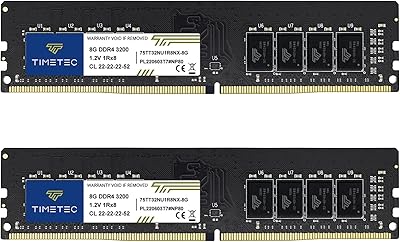
Timetec 16GB KIT DDR4 3200MHz Desktop RAM
81%
88%
Value for Money
93%
Installation Ease
82%
Compatibility
86%
Stability & Reliability
62%
Latency Performance
More
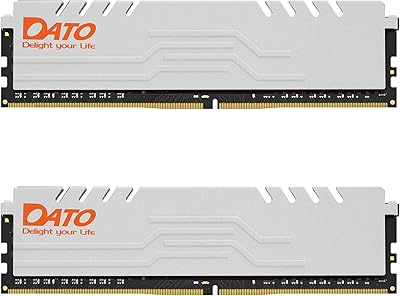
DATO DDR4 Extreme 16GB Desktop RAM Kit
80%
91%
Value for Money
93%
Installation Ease
78%
Performance at Rated Speed
74%
Thermal Management
81%
Build Quality
More
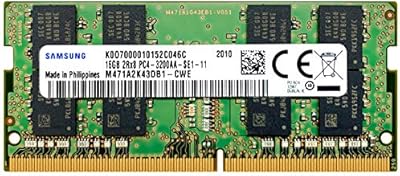
Samsung 16GB DDR4 3200MHz SODIMM Laptop RAM
82%
93%
Reliability & Longevity
91%
Installation Ease
83%
System Compatibility
78%
Real-World Performance
84%
Value for Money
More
Transcend JM3200HSB-16G 16GB DDR4 Laptop RAM
83%
88%
Value for Money
84%
Compatibility
92%
Installation Ease
86%
Performance Improvement
91%
Stability & Reliability
More
Crucial 16GB DDR4-2400 Desktop RAM Kit
81%
96%
Ease of Installation
93%
Compatibility
94%
Reliability & Stability
88%
Value for Money
86%
Performance – Everyday Use
More
Crucial 16GB DDR4-2666 SODIMM Laptop RAM Kit
86%
92%
Performance Gain
88%
Compatibility
91%
Value for Money
86%
Installation Ease
93%
Reliability & Longevity
More
LIYI DDR4 16GB (2x8GB) 3200MHz RAM
82%
88%
Performance
94%
Ease of Installation
78%
Compatibility
91%
Value for Money
85%
System Responsiveness
More
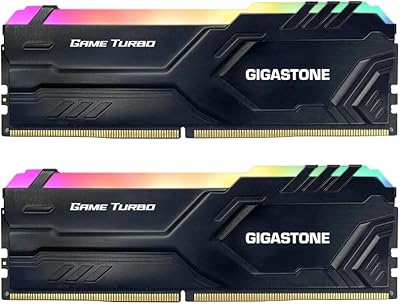
Gigastone Game TURBO 16GB DDR4 Desktop RAM
74%
88%
Value for Money
91%
Installation Ease
86%
XMP Activation
78%
RGB Lighting Quality
54%
RGB Software Compatibility
More
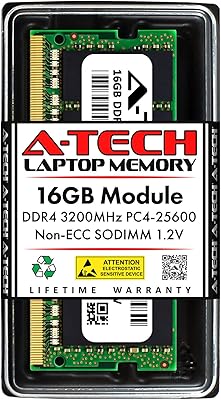
A-Tech 16GB DDR4 3200MHz SODIMM Laptop RAM
78%
83%
Compatibility
91%
Installation Ease
78%
Performance Uplift
86%
Value for Money
74%
Build Quality
More
KingSpec 32GB DDR4 3200MHz Desktop RAM
80%
91%
Value for Money
93%
Installation Ease
84%
Compatibility
87%
Stability & Reliability
78%
Performance at Rated Speed
More

FAQ

Yes, this 16GB DDR4 module is compatible with AMD Ryzen desktop platforms. That said, it is always worth running Crucial's free online compatibility scanner with your specific motherboard model before buying, since Ryzen systems can occasionally be picky about memory support depending on the board revision.

In most cases, no. The module is designed to run at its rated speed under standard JEDEC specifications, so your system should detect it automatically at boot. If your motherboard supports speeds higher than 2666MHz, you may need to enable an XMP or DOCP profile in BIOS to reach 3200MHz, but that is a one-time, straightforward setting.

Technically yes, but mixing memory modules from different brands or speeds can sometimes cause instability. For best results, it is recommended to run matched pairs. If you are mixing, ensure both sticks share the same voltage and that your motherboard can handle mixed configurations.

For most gaming scenarios, 16GB is still sufficient. You will not run into hard limits on the majority of current titles. However, some newer open-world games and titles with high-resolution texture packs are beginning to push past 16GB under certain conditions, so if you are building a dedicated gaming rig meant to last several years, 32GB is worth considering.

Yes, the Crucial 16GB DDR4 3200MHz Desktop RAM automatically downclocks to 2933MHz or 2666MHz on boards that cannot run the full 3200MHz speed. You will not need to do anything manually — the module negotiates the correct speed at startup.
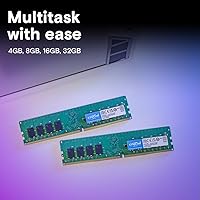
No. This is a desktop UDIMM with a 288-pin interface, which is physically incompatible with laptop memory slots. Laptops require SO-DIMM modules, which are a different form factor entirely. Make sure you check which type your system needs before ordering.

RAM is generally one of the easier hardware upgrades you can do. You power off the system, locate the memory slots on your motherboard, press the retention clips open, align the notch on the module with the slot, and press down firmly until it clicks. Crucial also provides step-by-step photo guides on their website that walk through the process clearly.

Under normal desktop workloads, no. DDR4 at 1.2V does not generate significant heat, and the bare PCB design is perfectly adequate for everyday use. You would only start to see thermal concerns if you were running sustained memory-intensive workloads in a poorly ventilated case for extended periods.

Crucial covers this module with a limited lifetime warranty, which is one of the better warranty terms in the consumer memory space. If the module fails under normal use conditions, you can contact Crucial's support for a replacement, though you would need to keep your proof of purchase.

The most reliable way is to use Crucial's System Scanner tool, which scans your PC and returns a list of guaranteed-compatible upgrades for your exact configuration. Alternatively, their Upgrade Selector lets you enter your motherboard or system model manually and browse compatible options. Both tools are free and available on the Crucial website.

Where to Buy