Overview

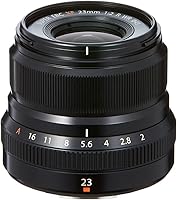
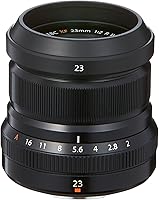
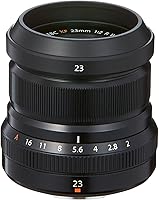
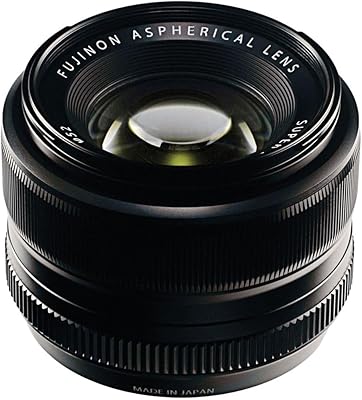
The Fujifilm XF23mmF2 R WR Wide-Angle Lens is the kind of lens that quietly becomes the one you reach for first. Sitting alongside the older XF23mm f/1.4 in Fujifilm's lineup, this 23mm prime carves out its own identity by being noticeably lighter, faster to focus, and built with weather and dust resistance — a feature that feels genuinely rare at this price tier. On a Fujifilm X-mount body, it delivers a roughly 35mm full-frame equivalent field of view, which suits the way most people actually see the world. Don't expect a low-light specialist or a shallow-depth-of-field showpiece. This is a workhorse wide-angle built for real-world use, plain and simple.
Features & Benefits

The XF23mm f/2 packs a lot into a small frame. At just 180g, it's light enough to forget it's on your camera, which matters more than most specs on a long day of shooting. The internal autofocus motor is impressively quick — on phase-detection-capable bodies, it locks on in fractions of a second with virtually no noise, making candid work far easier. Optically, the 10-element formula with two aspherical elements holds sharpness right into the corners, which isn't a given with wide-angle primes. The aperture ring has a satisfying, precise click action, and the weather sealing handles light rain and dusty conditions without complaint — though it's not a substitute for a fully waterproof housing.

Best For

Street photographers will feel immediately at home with this compact wide-angle — it's small enough not to intimidate subjects, quiet enough not to break a moment, and fast enough to catch one. Travel shooters will appreciate not needing a second lens in most situations; the 35mm equivalent perspective covers street scenes, interiors, and environmental portraits without feeling cramped or exaggerated. It's also a natural fit for documentary and photojournalist-style work, where the weather sealing adds real confidence in unpredictable conditions. And for anyone coming from 35mm film, the familiar field of view makes the transition to Fujifilm's X-mount system feel intuitive rather than technical.

User Feedback

Across a wide range of buyers, the patterns in feedback are consistent. The autofocus speed and silence come up repeatedly as a genuine highlight — people notice it immediately in real shooting conditions. Build quality and the feel of the aperture ring are also frequently praised, often favorably compared to lenses that cost significantly more. The most common criticism is the one-stop light disadvantage versus the f/1.4 version, which does show up in dimly lit indoor settings. A small number of users mention focus breathing, though most find it irrelevant for stills. The overall picture is of a lens people keep mounted and rarely swap out — which is about the highest endorsement a prime can earn.

Pros

  • Near-silent autofocus makes candid and street shooting noticeably less intrusive.
  • Weather sealing handles light rain and dusty conditions with genuine confidence.
  • At 180g, this 23mm prime stays on the camera all day without physical fatigue.
  • Corner-to-corner sharpness is consistently strong even at wide-open apertures.
  • The aperture ring clicks with a precise, mechanical feel that cheaper lenses simply lack.
  • A ~35mm full-frame equivalent field of view suits a wide range of everyday shooting scenarios.
  • Autofocus speed on phase-detection bodies is among the fastest in the XF lens lineup.
  • Build quality feels premium and holds up well to regular, heavy use over time.
  • The declickable aperture ring adds genuine flexibility for video exposure control.
  • Compact dimensions make it a natural fit for discreet, low-profile camera setups.

Cons

  • One stop slower than the f/1.4 sibling, which becomes a real limitation in low-light environments.
  • Focus-by-wire manual focusing lacks the tactile precision that experienced photographers often expect.
  • Focus breathing, while subtle, is noticeable enough during video rack focuses to be a practical concern.
  • The included lens hood feels noticeably cheaper than the rest of the lens in both material and fit.
  • Raw file shooters using third-party software must manually apply distortion correction profiles.
  • Autofocus performance drops significantly on older X-mount bodies without phase detection.
  • Limited to Fujifilm X-mount only, with no practical cross-system compatibility.
  • The small filter thread size can complicate setups that rely on standard screw-in filter systems.
  • Built-in microphone pickup of the focus motor is just audible enough to affect quiet video recordings.

Ratings

The Fujifilm XF23mmF2 R WR Wide-Angle Lens earns consistently high marks across verified buyer feedback worldwide, and the scores below reflect an AI-driven analysis of that data — filtered to exclude incentivized, bot-generated, and outlier reviews. The result is an honest picture of where this 23mm prime genuinely excels and where a small number of real-world frustrations surface. Both sides are represented here, because that is what actually helps you decide.
Autofocus Speed
93%
In real-world use — think someone crossing the street or a child mid-run — the autofocus on this lens locks on with a snappiness that feels noticeably ahead of most lenses in its class. Paired with a phase-detection body like the X-T2, it is the kind of AF that stops feeling like a limitation and starts feeling like an asset.
On older X-mount bodies without phase detection, the speed advantage shrinks considerably, and a handful of users report occasional hunting in very low-contrast scenes. It is not a weakness unique to this lens, but worth knowing if you are using it on an older Fujifilm body.
Image Sharpness
91%
Corner-to-corner consistency is where the optical design really earns its keep. Buyers shooting architecture, cityscapes, and wide environmental portraits frequently note that softness in the corners — a common complaint with wide-angle primes — is minimal here even at f/2.
A small number of users pushing the lens wide open in very demanding studio conditions note slightly reduced micro-contrast compared to the f/1.4 sibling. In everyday shooting this rarely surfaces, but pixel-peepers doing critical work at wide apertures may notice it.
Build Quality
89%
The physical quality of this lens surprises a lot of people given its compact size. The aperture ring feels precise and mechanical in a way that more plasticky lenses simply do not, and the overall chassis has a solidity that holds up well to daily carry and handling.
A few users coming from larger, heavier glass find the compact dimensions take some adjustment in terms of grip, and the lens hood included is on the smaller side. Nothing fails or rattles, but those expecting something weightier may need an adjustment period.
Weather Sealing
84%
For photographers who spend time outdoors, the sealing is a genuine confidence boost in light rain, dusty markets, and humid coastal environments. Multiple buyers specifically credit it for keeping them shooting in conditions where they would have otherwise packed their kit away.
It is important to be clear: this is weather resistance, not waterproofing. A few users who pushed it through genuinely heavy rain or submersion-adjacent situations reported problems. The sealing works well within its intended limits, but it is not a license to ignore the weather entirely.
Size & Portability
94%
At 180g, this is one of those lenses you stop noticing on the camera body, which turns out to matter a lot over a full day of walking and shooting. Travel photographers in particular highlight how it lets them carry a capable prime kit without the shoulder fatigue of heavier alternatives.
The compact size does mean a smaller front element and filter thread compared to larger primes, which can make attaching certain filter systems slightly more fiddly. A minor practical issue, but one that users who rely on screw-in ND or polarizing filters mention occasionally.
Low-Light Performance
67%
33%
At f/2, there is still a usable amount of light-gathering ability for indoor shooting in reasonably lit environments — restaurants, galleries, and street scenes at dusk tend to produce clean results at moderate ISO levels on modern Fujifilm bodies.
This is where the comparison to the f/1.4 version hurts most. That one stop of difference is genuinely meaningful in dark bars, evening events, or indoor concerts with mixed lighting. Buyers who shoot frequently in low light report needing to push ISO higher than they would prefer, and some wish they had gone for the larger sibling.
Bokeh & Background Rendering
74%
26%
For a lens at this focal length and aperture, the out-of-focus rendering is smoother than expected. The rounded aperture blades produce bokeh that avoids the harsh, geometric quality seen on older or lower-grade lenses, and portrait-distance subject separation is pleasant without being dramatic.
This is a 23mm f/2, not an 85mm f/1.4, and buyers who expect cinematic background blur will be disappointed. The field of view simply keeps too much in focus for that kind of look. It is best understood as a lens that renders backgrounds cleanly rather than obliterates them.
Autofocus Silence
92%
Street photographers and documentary shooters specifically mention this as a reason they chose this lens over others. The internal motor operates quietly enough that even in quiet environments, subjects rarely react to the sound of the camera locking focus, which is a real-world advantage that is hard to quantify but easy to feel.
Video shooters occasionally report that the focus motor sound is just audible enough to be picked up by the camera's built-in microphone in very quiet recording situations. For stills this is effectively a non-issue, but it is worth noting for hybrid shooters relying on internal audio.
Value for Money
82%
18%
Relative to what the lens actually delivers — weather sealing, fast autofocus, solid optics, and a premium feel — buyers broadly feel it justifies its price. The comparison point most cite is what you would pay for equivalent quality from other manufacturers, where the pricing is often considerably higher.
The one credible objection is that for a similar or modest additional outlay, the XF23mm f/1.4 becomes available, and some buyers in hindsight wish they had stretched the budget. If low-light shooting is a regular part of your work, that trade-off is worth thinking through before purchasing.
Aperture Ring Feel
88%
The physical click of the aperture ring is one of those tactile details that experienced photographers notice and appreciate. It moves with just the right amount of resistance — firm enough to avoid accidental changes when pulling the camera from a bag, smooth enough to adjust quickly one-handed.
The R-position, which declicks the ring for smooth video aperture pulls, is useful but takes a bit of getting used to. A couple of users mention accidentally knocking it into R-mode and not noticing until reviewing footage with inconsistent exposure. A small ergonomic quirk rather than a design flaw.
Compatibility & Mount Fit
91%
Mount fit on all tested X-series bodies is reported as tight and rattle-free, with no noticeable play between lens and body. Users switching between multiple Fujifilm bodies report a consistently secure, confidence-inspiring connection regardless of the body generation.
Compatibility is limited to Fujifilm X-mount, which is simply the nature of the system. Photographers with mixed-brand kits will need adapters, and while these generally work, autofocus speed and some electronic features may not perform identically to native mounting.
Focus Breathing
71%
29%
For still photography — which covers the vast majority of use cases for this lens — focus breathing is essentially a non-issue. Subjects stay proportionally consistent across focus distances, and most buyers shooting portraits or street work never encounter a situation where it becomes visible.
Video shooters doing slow focus pulls between subjects at different distances will notice some subject size change as focus shifts. It is not extreme, but it is there, and for professionally produced video work requiring controlled rack focuses, it is a limitation worth acknowledging.
Distortion Control
78%
22%
With in-camera or software correction applied — which happens automatically on most Fujifilm bodies using JPEG output — barrel distortion is well controlled and rarely a practical concern for the kinds of shooting this lens is designed for: street, travel, and documentary.
Users shooting raw files and processing outside of Fujifilm's own software need to apply a correction profile manually, and without it, some barrel distortion is visible at the edges. Not severe by wide-angle standards, but raw shooters using third-party editors should factor this into their workflow.
Lens Hood & Accessories
58%
42%
The included petal-style hood does its job in keeping direct light off the front element and adds minimal bulk to the overall package. Buyers appreciate that it reverses neatly for storage and does not require removal to access the filter thread.
The hood feels noticeably cheaper than the lens itself — thinner plastic, lighter weight, less secure click. Several users have replaced it with a third-party metal option for a better fit and feel. It functions adequately but does not match the quality impression the rest of the lens creates.
Manual Focus Usability
63%
37%
Manual focus is functional and usable for deliberate, methodical shooting — zone focusing for street work, for example, is a technique some experienced users apply with this lens to good effect, and the focus ring is smooth enough to support it.
The focus-by-wire implementation means there is no direct mechanical coupling between the ring and the focus elements, which frustrates photographers accustomed to true manual lenses. The feel lacks the tactile precision of a mechanically coupled ring, and very fine focus adjustments at short distances require patience.

Suitable for:

The Fujifilm XF23mmF2 R WR Wide-Angle Lens is built for photographers who want one reliable lens on their camera most of the time — and who shoot in the real world rather than a controlled studio. Street photographers will find the combination of quiet autofocus, compact size, and a natural 35mm-equivalent field of view genuinely well-suited to their work; the lens does not telegraph itself, and subjects rarely react to it the way they might to a larger, more conspicuous setup. Travel photographers carrying a single-body kit will appreciate how little weight this adds to a bag over a long day, without feeling like they have made a meaningful optical compromise. Outdoor and documentary shooters who occasionally face light rain, dust, or cold temperatures down to -10°C will find the weather sealing a practical reassurance rather than a marketing checkbox. It is also an excellent choice for photographers who learned to shoot on 35mm film and want a Fujifilm X-mount lens that feels immediately intuitive in terms of framing and perspective.
Not suitable for:

The Fujifilm XF23mmF2 R WR Wide-Angle Lens is the wrong tool if your primary concern is low-light performance. The one-stop difference between f/2 and the XF23mm f/1.4 is not trivial in dark venues, indoor events, or evening shooting without flash — and buyers who regularly work in those conditions will likely find themselves wishing they had stretched the budget. This lens is also not the right choice for photographers who need macro or close-up capability; the maximum magnification of 0.13x means it is firmly a standard shooting lens, not a detail or product photography tool. Video shooters who require smooth, clinically clean focus racks will be bothered by the focus-by-wire implementation and the modest focus breathing the lens exhibits. And photographers outside the Fujifilm X-mount ecosystem should look elsewhere entirely — there is no cross-system versatility here, and adapter-based workarounds typically forfeit the autofocus speed that is central to this lens's appeal.

Specifications

  • Focal Length: The lens has a fixed focal length of 23mm, equivalent to approximately 35mm on a full-frame sensor when used on a Fujifilm APS-C body.
  • Max Aperture: The maximum aperture is f/2, allowing a useful amount of light transmission for everyday and moderately low-light shooting situations.
  • Min Aperture: The minimum aperture is f/16, providing flexibility for long-exposure and bright-light scenarios requiring maximum depth of field.
  • Optical Formula: The lens comprises 10 elements arranged in 6 groups, including 2 aspherical elements designed to reduce aberrations and maintain edge-to-edge sharpness.
  • Angle of View: The diagonal angle of view is 63.4°, producing a natural, human-eye-like perspective well suited to street, travel, and documentary photography.
  • Autofocus Type: An internal focus motor drives autofocus operation, with phase-detection AF compatibility enabling focus acquisition in approximately 0.05 seconds on supported bodies.
  • Weight: The lens weighs 180g (approximately 6.35 oz), making it one of the lighter prime options available in the Fujifilm XF lineup.
  • Weather Sealing: The lens body is weather and dust resistant, with a sealed construction rated for operation in temperatures as low as -10°C (14°F).
  • Max Magnification: Maximum magnification is 0.13x, positioning this lens as a standard prime rather than a close-up or macro-capable optic.
  • Filter Thread: The front filter thread measures 43mm in diameter, which is on the smaller side and may require step-up rings for use with standard filter systems.
  • Aperture Ring: A physical aperture ring with clickable stops is included, featuring an R-position that declutches the ring for smooth, stepless aperture adjustment during video recording.
  • Compatible Mount: The lens is designed exclusively for the Fujifilm X-mount system and is not natively compatible with any other camera mount without the use of a third-party adapter.
  • Lens Construction: The barrel is constructed with a metal mount and durable external materials that contribute to its solid, premium feel without adding unnecessary weight.
  • Color Option: The lens is available in Black finish, with a design aesthetic consistent with the broader Fujifilm XF lens range.
  • Aperture Blades: The lens uses a rounded aperture diaphragm, designated by the R in its name, which contributes to smoother, rounder bokeh in out-of-focus areas.
  • Focus System: Manual focus is implemented via a focus-by-wire system, meaning the focus ring electronically controls focus elements rather than providing a direct mechanical coupling.
  • Min Focus Distance: The minimum focusing distance is approximately 22cm (roughly 8.7 inches), allowing reasonably close subject framing without the need for extension tubes in most situations.
  • 35mm Equivalent: On an APS-C Fujifilm X-mount body with a 1.5x crop factor, the 23mm focal length delivers a full-frame equivalent field of view of approximately 35mm.

Related Reviews
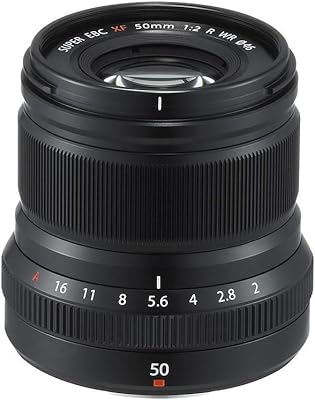
Fujifilm XF50mmF2 R WR Lens
86%
91%
Image Quality
94%
Build Quality
89%
Weather Resistance
85%
Portability
74%
Autofocus Speed
More
Fujifilm XF90mmF2 R LM WR Telephoto Lens
84%
96%
Optical Sharpness
93%
Bokeh Quality
91%
Autofocus Performance
94%
Build Quality
88%
Weather Sealing
More
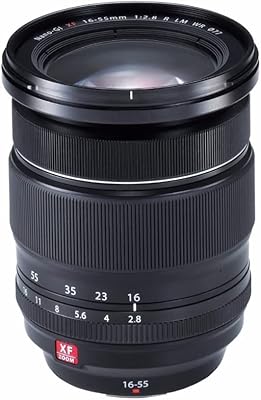
Fujifilm XF16-55mmF2.8 R LM WR
85%
92%
Autofocus Speed
90%
Image Sharpness
89%
Build Quality
87%
Low-Light Performance
91%
Weather Resistance
More
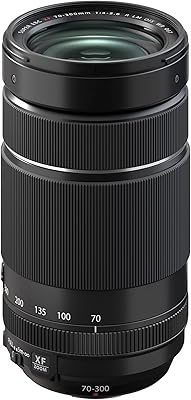
Fujifilm Fujinon XF70-300mm Telephoto Zoom Lens
83%
91%
Autofocus Speed & Accuracy
88%
Optical Image Stabilization
89%
Image Sharpness
87%
Build Quality & Weather Sealing
63%
Variable Aperture Handling
More
Rokinon 14mm F2.8 Wide Angle Lens
71%
83%
Optical Sharpness (Center Frame)
58%
Edge & Corner Sharpness
52%
Vignetting Control
61%
Chromatic Aberration
74%
Flare & Ghosting Resistance
More
Sony FE 16-35mm F2.8 GM Zoom Lens
82%
94%
Optical Sharpness
91%
Aperture Consistency
89%
Autofocus Performance
88%
Build Quality & Weather Sealing
86%
Distortion Control
More
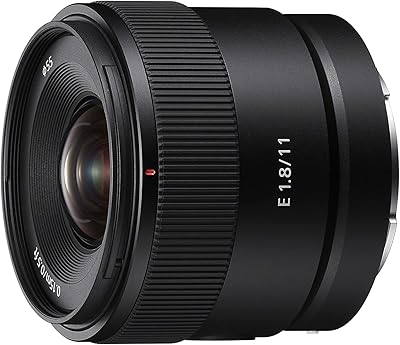
Sony E 11mm F1.8 APS-C Ultra-Wide-Angle Prime Lens
87%
93%
Autofocus Speed
91%
Image Quality
89%
Portability
74%
Low-Light Performance
88%
Build Quality
More
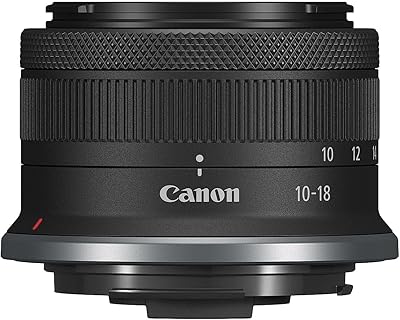
Canon RF-S10-18mm F4.5-6.3 IS STM Zoom Lens
83%
91%
Image Sharpness
84%
Autofocus Performance
88%
Image Stabilization
76%
Build Quality & Handling
93%
Vlogging Usability
More
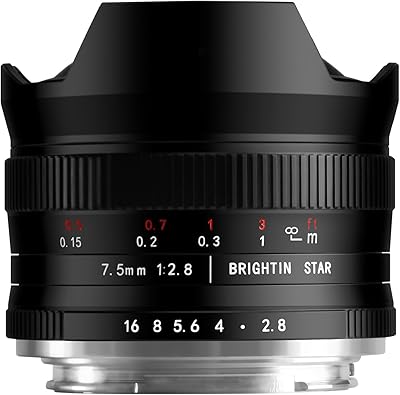
Brightin Star 7.5mm F2.8 III Fisheye Lens
75%
78%
Image Sharpness
88%
Value for Money
71%
Low-Light & Astrophotography Performance
82%
Build Quality & Construction
61%
Manual Focus Usability
More
Fujifilm XF35mmF2 R WR Prime Lens
84%
93%
Autofocus Speed
91%
Build Quality
89%
Weather Sealing
88%
Image Sharpness
84%
Bokeh Quality
More

FAQ

Yes, it is compatible with all Fujifilm X-mount bodies. That said, the fastest autofocus performance — around 0.05 seconds — is only achievable on bodies with phase-detection AF such as the X-T2, X-T3, X-Pro2, and later models. On older contrast-detection-only bodies, AF still works but is noticeably slower.

It really comes down to what you prioritize. The f/2 version is lighter, more compact, faster to focus, and weather sealed, which makes it the better everyday carry lens for most people. The f/1.4 offers one extra stop of light, which genuinely matters if you shoot frequently in dark venues or need shallower depth of field. If low-light work is central to what you do, consider the f/1.4 seriously — otherwise, most shooters find the f/2 covers their needs and prefer living with the smaller size.

Light rain, yes — the sealing handles drizzle and brief exposure to moisture reasonably well. However, it is not a waterproof lens, and shooting in sustained heavy rain or exposing it to water spray for extended periods is pushing beyond what the sealing is designed for. Think of it as reassurance against the elements rather than a license to shoot in any weather.

Not directly — the filter thread is 43mm, which is smaller than typical standard filter sizes. You can use a step-up ring (for example, 43mm to 58mm or 43mm to 67mm) to attach larger filters, but this adds a bit of bulk and means the lens hood will not fit simultaneously. Many users opt for drop-in filter holders or simply purchase filters in the native 43mm size.

Manual focus is focus-by-wire, meaning the focus ring sends an electronic signal rather than mechanically moving the focus elements directly. It functions well for deliberate, methodical focusing — zone focusing for street work, for example — but photographers accustomed to true mechanical manual lenses will notice the absence of tactile resistance and the slight lag in response. It is functional, just different.

It works reasonably well for handheld documentary and travel video, where its compact size, quiet autofocus, and weather sealing are real advantages. Two limitations are worth knowing: the focus-by-wire manual focus can make precise rack focuses tricky, and there is mild focus breathing visible during focus pulls between distances. For cinematic or professional video production, these are genuine considerations; for casual or run-and-gun video work, most users find them manageable.

The lens ships with a petal-style lens hood, front and rear lens caps, and a soft lens pouch. No optical filters or additional accessories are included. The lens hood is functional but feels noticeably less premium than the lens itself — a common observation among buyers.

The aperture ring clicks audibly when you rotate it between stops, which you will hear but subjects standing at normal shooting distances typically will not. The autofocus motor, on the other hand, is very quiet — quiet enough that it rarely draws attention even in relatively silent environments. For street and candid shooting, the overall acoustic footprint of this lens is about as low as you will find.

The minimum focus distance is around 22cm, which allows you to get reasonably close to a subject but is not close enough for detailed product or macro work. If food or product photography is a regular part of your workflow, you will likely want a dedicated macro lens or extension tubes. For environmental product shots or food photography where the dish is part of a wider scene, it works fine.

Fujifilm XF lenses generally hold their resale value better than many competing systems, and this particular lens — being weather sealed, widely used, and well regarded — tends to sell quickly on the used market. Keeping the original box, caps, and hood in good condition will help maximize what you get back. It is not a lens that loses half its value the moment you buy it, which is reassuring if you are on the fence about the investment.

Where to Buy