Overview

The Fosi Audio ZP3 Balanced Stereo Preamplifier sits in an interesting spot — it targets hobbyists who've outgrown a basic volume knob but aren't ready to spend on high-end separates. What differentiates it at this price tier is the 3-in-3-out architecture: two RCA inputs plus a balanced XLR input, all routing out through RCA, XLR, and subwoofer outputs. The whole unit measures just 5 x 4 x 2 inches, fitting comfortably on a desk or media shelf without dominating the space. Fosi Audio has a track record making affordable gear that overperforms its price, and the ZP3 keeps that streak going. One important clarification upfront: this is a preamp only — it shapes and routes signal, but you still need powered speakers or a separate amplifier to produce sound.
Features & Benefits

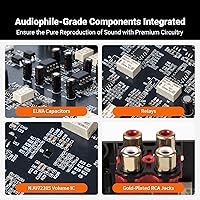
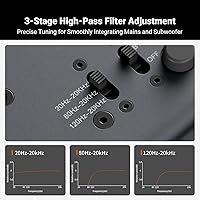
The ZP3 preamp's balanced XLR connectivity matters practically, not just on paper — balanced lines reject the interference that standard RCA cables pick up over longer runs, and you can hear that cleaner background in quieter passages. The three-level high-pass filter is designed for 2.1 setups: engage it and the main outputs carry only mids and highs to your speakers, while bass gets redirected through the dedicated Sub-Out. Internally, ELNA capacitors and a quality NJR volume IC keep the noise floor genuinely low — a 115 dB signal-to-noise ratio means hiss stays out of the picture at nearly any volume. The per-input volume memory is one of those features you don't realize you need until you have it; each source independently remembers its own level, so switching inputs doesn't mean scrambling for the knob.

Best For

This balanced preamp is a natural fit for 2.1 system builders pairing powered monitors with a subwoofer — the HPF and Sub-Out handle that crossover cleanly without extra hardware. It's equally well-suited to multi-source setups: connect a DAC, a CD player, and an XLR device simultaneously and switch between them with the remote. Home theater users who want straightforward analog control without committing to a full AV receiver will appreciate the compact footprint. One group worth flagging: if you're planning to connect a turntable directly, the ZP3 has no phono stage — you'll need a separate phono preamp in the chain. It also handles XLR-to-RCA and RCA-to-XLR signal conversion internally, which is quietly useful when mixing gear from different generations or brands.

User Feedback

With 144 ratings and a 4.4-star average, Fosi Audio's ZP3 lands well overall. The most common praise centers on build quality and a genuinely quiet background — owners note the noise floor stays impressively low even at higher volumes. The remote also gets credit for making input switching practical from the couch. That said, two issues come up regularly: the unit powers up at a high default volume on first use, which can catch you off guard — Fosi warns about this in the manual, so read it before first power-on. The HPF settings have a learning curve too; some buyers needed several sessions to dial in the crossover for their subwoofer. Value-for-money sentiment is generally positive, though a handful of reviewers feel competing preamps offer more at a similar price point.

Pros

  • Quiet, low noise floor makes a real, audible difference on sensitive powered monitors.
  • Three simultaneous inputs — two RCA and one XLR — cover most real-world source combinations without unplugging anything.
  • Dedicated Sub-Out with a three-level high-pass filter simplifies 2.1 system setup considerably.
  • Per-input volume memory prevents jarring level jumps when switching between sources at different output levels.
  • Fully balanced XLR path from input to output delivers cleaner signal over longer cable runs.
  • Compact 5 x 4 x 2-inch footprint fits easily on a crowded desk or into a media shelf.
  • Bypass mode on tone controls lets purists keep the signal path clean when coloration is unwanted.
  • Remote control makes input switching and volume adjustment practical from across the room.
  • Build quality feels more premium than the price tier typically delivers.
  • Internal components — ELNA capacitors, quality volume IC — back up the low noise claims with measurable results.

Cons

  • First-time power-up defaults to a dangerously high volume; read the manual before connecting speakers.
  • The three fixed HPF settings offer no fine-tuning for subwoofer crossover matching.
  • Remote is a basic infrared unit with no backlight, awkward in dim home theater rooms.
  • No digital inputs at all — no optical, coaxial, or Bluetooth — making it dependent on an external DAC.
  • Only three source inputs, which can feel limiting as a system grows.
  • Front panel knobs are tightly spaced; adjusting individual controls requires more precision than feels natural.
  • No phono stage means an extra purchase is mandatory for turntable users.
  • Occasional remote responsiveness issues reported, requiring repeated button presses.
  • No visual flat-position indicator on tone control knobs makes resetting to neutral less intuitive.
  • Very high-sensitivity speaker owners may still detect a faint residual hum in certain system configurations.

Ratings

The Fosi Audio ZP3 Balanced Stereo Preamplifier has been scored across 12 categories by our AI rating system, which analyzed verified global buyer feedback while actively filtering out incentivized reviews, bot activity, and spam submissions. The scores below reflect a balanced picture — where this balanced preamp genuinely earns its reputation and where real users have run into friction.

Build Quality
86%
Buyers consistently comment that the ZP3 preamp feels more substantial than its price suggests — the chassis has a solid, planted weight without flex, and the knobs turn with a satisfying resistance that doesn't feel cheap. For a desktop unit sitting next to premium powered monitors, it holds its own visually and physically.
A few users noted that the front panel labeling can feel slightly utilitarian up close, and the remote control's plastic construction lags behind the quality of the main unit. Nothing breaks, but the remote in particular feels like a cost-cut in an otherwise well-assembled package.
Noise Floor & Signal Clarity
91%
This is where Fosi Audio's ZP3 earns the most consistent praise. Owners running sensitive studio monitors report a genuinely dark, quiet background — switching from a lesser preamp to the ZP3 in a quiet room, the reduction in residual hiss is audible and immediate. The ELNA capacitors and quality volume IC are doing real work here.
A small number of buyers running very high-sensitivity horn speakers or ultra-efficient drivers noted a faint residual hum that the ZP3 could not fully eliminate. This appears to be an edge case tied to system sensitivity rather than a broad flaw, but it is worth flagging for those with particularly revealing speaker setups.
Connectivity & Input Flexibility
88%
The three-input layout — two RCA and one XLR — covers most realistic desktop or living room source combinations without forcing the user to unplug anything. Being able to keep a DAC, a CD transport, and a balanced source all connected simultaneously is a genuine convenience that separates the ZP3 from single-input competitors at this tier.
Three inputs is enough for most users but can feel limiting in more complex setups. There is no optical, coaxial, or Bluetooth input, so digital sources must pass through a DAC first. Users expecting an all-in-one hub may find themselves needing an external switcher as their systems grow.
Balanced XLR Performance
84%
Buyers who run XLR cables from a balanced DAC to the ZP3 preamp and out to XLR-equipped powered monitors describe a noticeably cleaner signal compared to the same chain via RCA — especially over cable runs longer than a couple of meters. The fully balanced path from input to output is a real technical advantage, not a marketing checkbox.
Some users felt the sonic gap between the XLR and RCA paths was smaller than expected in short-cable desktop scenarios, where interference is already minimal. The XLR implementation is solid, but buyers upgrading specifically for balanced noise rejection in very short runs may not notice a dramatic difference.
High-Pass Filter Usability
71%
29%
The three-level HPF is genuinely useful for 2.1 systems — engaging it lets main speakers focus on mids and highs without straining on bass, which translates to better clarity and reduced distortion at higher volumes. Buyers running a subwoofer with bookshelf monitors specifically called this feature out as one of the main reasons they chose the ZP3.
The learning curve is real. The HPF has only three fixed settings with no continuously variable crossover frequency, which means finding the right setting for a given subwoofer requires some trial and error. Several users wished for finer control, and those coming from AVRs with parametric EQ may find the coarse options frustrating at first.
Remote Control & Input Switching
79%
21%
Being able to switch sources and adjust volume from the couch without getting up is a quality-of-life improvement that living room users appreciate more than they expect to. The one-touch input switching works reliably, and the remote's range is adequate for most room sizes.
The remote itself is a basic infrared unit with no backlight, which makes it awkward to use in dim home theater environments. A few buyers also reported occasional missed button presses, requiring a second press — minor, but noticeable when it happens during critical listening.
Per-Input Volume Memory
87%
This feature gets specific praise from users managing multiple sources at very different output levels — a DAC running hot versus a CD player running conservatively, for example. Volume memory means each source recalls its own setting, so switching inputs never results in an unexpected blast of sound or an inaudible whisper.
The one caveat worth emphasizing — and Fosi Audio does document this — is that brand-new inputs default to a high volume level on first use. Users who don't read the manual before powering up for the first time have reported startling volume spikes. It is easy to avoid, but the default behavior is a genuine safety consideration.
Tone Controls & Bypass Mode
76%
24%
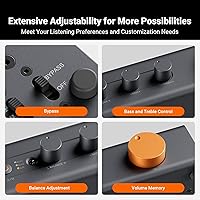
The bass and treble controls give casual listeners a practical way to compensate for room acoustics or speaker character without reaching for a separate EQ. The L/R balance knob is a thoughtful addition for rooms where asymmetric placement affects imaging. The bypass mode satisfies purists who want zero coloration in the signal path.
Audiophiles who rely primarily on bypass mode may feel the tone controls are unnecessary additions to the signal path. There is also no visual indicator showing the exact position of tone knobs relative to flat, which makes resetting to neutral by feel slightly imprecise.
Sub-Out Integration
83%
Users building 2.1 setups appreciate having a dedicated subwoofer output that works in tandem with the HPF — the low-end gets routed to the sub while the mains are relieved of bass duty. In practice, this produces a tighter, more defined low end compared to running the sub off speaker-level taps.
The Sub-Out carries a fixed full-range signal when the HPF is disengaged, which means the crossover management is entirely handled by the ZP3's three fixed HPF points. Users who prefer to set their own crossover slope on the subwoofer's built-in controls may find double-filtering creates phase or overlap issues.
Setup & First-Use Experience
67%
33%
The physical setup is straightforward — connections are clearly labeled, the unit is light enough to position easily, and the remote is paired out of the box. Buyers with some prior audio experience reported being up and running within minutes.
The high-volume-on-first-use behavior is the single most cited first-use frustration across reviews. Buyers who skipped the manual and powered up with speakers connected at normal listening levels reported dangerously loud output. This is a solvable problem, but the default behavior makes first impressions unnecessarily nerve-racking.
Value for Money
82%
18%
The ZP3 preamp offers a feature set — balanced I/O, HPF, Sub-Out, volume memory, remote — that would cost considerably more from established Western audio brands. For buyers building a serious 2.1 desktop system on a measured budget, it is difficult to find a competing preamp that matches this combination of inputs, outputs, and quality internals.
Some reviewers who compared the ZP3 directly against competing preamps in the same price bracket felt that certain rivals offered smoother tone controls or a more refined remote experience. The value proposition is strong, but it is not unchallenged, and buyers who prioritize one specific feature may find a narrower competitor a better fit.
Form Factor & Desk Footprint
89%
At 5 x 4 x 2 inches and 2.4 pounds, this balanced preamp slips into tight desk setups without demanding real estate. Buyers who run compact near-field monitoring rigs appreciate that it sits unobtrusively between a keyboard and a speaker without looking out of place.
The compact size means front-panel controls are tightly spaced, and users with larger hands occasionally noted that adjusting individual knobs — particularly the bass and treble controls — required more precision than felt natural. It is a minor ergonomic trade-off for the footprint savings.

Suitable for:

The Fosi Audio ZP3 Balanced Stereo Preamplifier is built for the serious hobbyist who has moved past a basic setup and wants real control over a multi-source audio system without spending on high-end separates. If you run powered studio monitors alongside a subwoofer and have been managing sources by unplugging cables, this preamp solves that problem cleanly — three inputs stay connected simultaneously, and the dedicated Sub-Out with high-pass filter handles the 2.1 crossover without extra hardware. It fits naturally into home theater setups where someone wants analog preamp control but has no interest in the complexity or cost of a full AV receiver. Users with a mix of XLR and RCA gear will appreciate that the ZP3 bridges both worlds natively, eliminating the need for adapters or signal converters. Compact enough for a desk but solid enough for a media console, it works equally well in a near-field listening corner or a living room rack.

Not suitable for:

The Fosi Audio ZP3 Balanced Stereo Preamplifier is not the right choice if you plan to connect a turntable directly — there is no phono stage built in, so vinyl users need a separate phono preamp in the chain, which adds cost and complexity. Buyers hoping for a fully self-contained digital hub will also be disappointed: there is no Bluetooth, optical, or coaxial input, meaning all digital sources must first pass through an external DAC. If you need more than three simultaneous sources, the input count will feel limiting and you may end up needing an additional switcher. Audiophiles with extremely sensitive, high-efficiency speakers — particularly horn-loaded designs — may encounter a residual noise floor that the ZP3 cannot fully suppress. And if you want continuously variable crossover control for your subwoofer rather than three fixed HPF steps, the tone management here will feel too coarse for precise room calibration.
Specifications

  • Dimensions: The unit measures 5 x 4 x 2 inches, making it compact enough for tight desktop setups or small media shelves.
  • Weight: At 2.4 pounds, the ZP3 is light enough to reposition easily but substantial enough to stay planted during normal use.
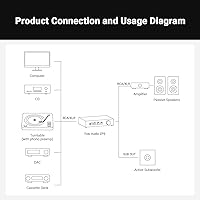
  • Inputs: Three analog inputs are provided: two RCA stereo pairs (RCA1 and RCA2) and one balanced XLR stereo input.
  • Outputs: Output options include one RCA stereo pair, one balanced XLR stereo pair, and one dedicated Sub-Out for subwoofer connection.
  • High-Pass Filter: The HPF offers three selectable fixed levels that roll off low frequencies from the main RCA and XLR outputs when a subwoofer is in use.
  • Signal-to-Noise Ratio: The rated SNR is 115 dB, indicating a very low noise floor relative to the signal level during normal listening.
  • Volume IC: Volume control is handled by an NJR NJU72315 integrated circuit, chosen for its low distortion and channel-tracking accuracy.
  • Capacitors: ELNA brand electrolytic capacitors are used in the signal path, a component associated with low leakage and stable audio performance.
  • Connectors: All RCA jacks are gold-plated to resist oxidation and maintain reliable contact quality over time.
  • Power Supply: The ZP3 runs on corded AC power via an included 12V DC power adapter; there is no battery operation mode.
  • Control Methods: The unit can be operated via front-panel push buttons or the included infrared remote control for volume and input switching.
  • Volume Memory: Each of the three inputs independently stores its own volume level, which is recalled automatically when that input is selected.
  • Tone Controls: Dedicated bass and treble knobs allow frequency shaping, with a bypass switch that removes both from the signal path entirely.
  • Balance Control: A left-right channel balance knob is provided on the front panel for compensating asymmetric room placement or speaker output differences.
  • Channel Config: The ZP3 supports both standard 2-channel stereo and 2.1-channel configurations when a subwoofer is connected via the Sub-Out.
  • Form Factor: The enclosure is a rectangular tabletop unit intended for horizontal placement on a desk, shelf, or inside an open equipment rack.
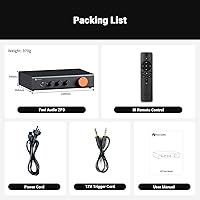
  • Included Accessories: The package includes the ZP3 preamp unit, a 12V power cord, an infrared remote control, a 12V trigger cord, and a printed user manual.
  • Warranty: Fosi Audio provides a limited warranty with the ZP3; buyers should confirm current warranty terms and duration directly with the manufacturer.

Related Reviews

Fosi Audio ZA3
Fosi Audio ZA3
83%
93%
Audio Clarity & Low Noise Floor
88%
Power Output & Headroom
91%
Build Quality & Chassis
94%
Connectivity & Input Options
82%
Op-Amp Rolling Experience
More
Fosi Audio TDA7498E
Fosi Audio TDA7498E
83%
88%
Sound Quality
93%
Value for Money
71%
Build Quality
74%
Power Output & Headroom
66%
Noise Floor & Background Hiss
More
Fosi Audio BT10A
Fosi Audio BT10A
81%
93%
Value for Money
82%
Sound Quality
91%
Noise Floor
84%
Bluetooth Performance
67%
Power Output
More
Fosi Audio BT30D
Fosi Audio BT30D
78%
83%
Sound Quality
88%
Subwoofer Performance
81%
Bluetooth Connectivity
91%
Value for Money
62%
Build Quality
More
Fosi Audio V3 Stereo Amplifier
81%
93%
Value for Money
91%
Audio Clarity & Noise Floor
67%
Real-World Power Output
74%
Build Quality & Finish
88%
Thermal Management
More
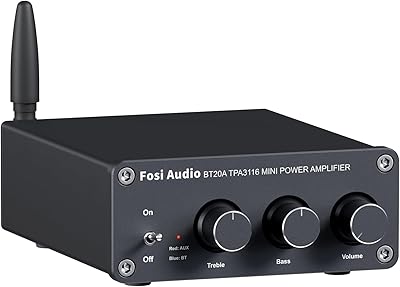
Fosi Audio BT20A
Fosi Audio BT20A
80%
93%
Value for Money
84%
Sound Quality
81%
Build Quality
96%
Ease of Setup
72%
Bluetooth Performance
More
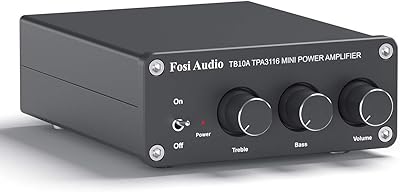
Fosi Audio TB10A
Fosi Audio TB10A
79%
83%
Sound Quality
86%
Build Quality
91%
Value for Money
71%
Power Output
93%
Setup & Ease of Use
More
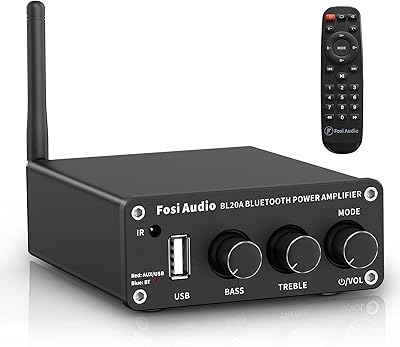
Fosi Audio BL20A
Fosi Audio BL20A
80%
86%
Sound Quality
91%
Value for Money
67%
Bluetooth Performance
78%
Build Quality
89%
Input Versatility
More
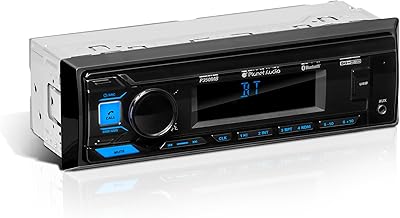
Planet Audio P350MB Single Din Car Stereo
74%
78%
Bluetooth Connectivity
86%
Ease of Installation
81%
Hands-Free Calling
74%
Voice Assistant Integration
62%
Audio Output Quality
More
Douk Audio KN102 2-IN-1-OUT XLR Switcher
80%
83%
Build Quality
78%
Signal Integrity
94%
Ease of Setup
89%
Value for Money
76%
Switch Modes & Functionality
More

FAQ

Yes, absolutely. The ZP3 preamp is a preamplifier only — it shapes, switches, and routes your audio signal but produces no power output on its own. To actually drive speakers, you need either powered (active) speakers with built-in amplification or a separate power amplifier connected downstream. If you already have powered monitors or an integrated amp, you are all set.

Not without an additional device. The Fosi Audio ZP3 Balanced Stereo Preamplifier does not include a phono stage, which is the specific circuit a turntable cartridge requires to bring its signal up to line level. You need a dedicated phono preamp between your turntable and the ZP3's RCA input. Some turntables have a built-in phono stage with a line-level output switch — if yours does, you can connect it directly.
Nothing is defective, but this is a known behavior worth taking seriously. Each input defaults to a high volume level the very first time it is used, before the unit has a chance to store a preference. Fosi Audio explicitly warns about this in the manual and recommends turning the volume knob three to four full counterclockwise rotations before powering on with speakers connected. Make a habit of lowering volume before switching to any input you have never used before.

The high-pass filter tells the main outputs to stop carrying low-frequency bass, routing that energy to the Sub-Out instead. If you use a subwoofer alongside your main speakers, engaging the HPF reduces strain on your main speakers and generally produces a cleaner, more defined sound. If you are running a stereo-only setup without a sub, leave the HPF off. The three fixed settings correspond to different crossover points — experiment to find which one best matches your subwoofer and room.

In desktop near-field setups with short cables, the difference is usually subtle. Where balanced XLR connections genuinely shine is over longer cable runs — typically two meters or more — where unbalanced RCA cables are susceptible to picking up interference and hum. If your DAC or source has both output types and you are running cables across a room, the XLR path is worth using. In a tight desktop setup, the improvement may be modest but still measurable in terms of noise floor.

Each of the three inputs remembers the last volume level you set while using it. So if your DAC on RCA1 runs hot and you set the volume low for it, and your CD player on RCA2 needs a higher level, the ZP3 will automatically recall those individual settings when you switch between them. It saves you from readjusting every time you change sources, which sounds minor until you have experienced accidentally switching to a louder input at high volume.

Yes, that is exactly what the bypass switch is for. When bypass is engaged, the bass and treble controls are taken entirely out of the signal path, so what you hear is the purest version of the source signal the ZP3 can deliver. It is a practical feature for anyone who wants casual listening flexibility without permanently coloring the sound.

Most users find the remote works well at typical room distances — across a living room or from a couch to a media unit. It is a standard infrared remote, so it requires rough line-of-sight and has no backlight, which makes it harder to use in dark environments. A small number of buyers have reported occasional missed presses, but this appears to be the exception rather than a consistent issue.

Yes. The ZP3 handles XLR-to-RCA and RCA-to-XLR signal conversion internally across all inputs and outputs simultaneously. This makes it genuinely useful for mixing older RCA-only gear with newer balanced equipment without needing external adapters or converters. Just be aware that converting an unbalanced RCA source to XLR output does not make it a true balanced signal — it repackages it for physical compatibility.

It works well in both contexts, with some caveats. For a home theater, the remote input switching and Sub-Out with HPF are genuinely useful, and the compact size fits neatly into a media console. The main limitation is that it handles only analog sources — if your home theater relies heavily on HDMI ARC, optical, or digital inputs, you will still need a separate device to handle those. As a pure analog preamp hub for a 2.1 or 2-channel home theater with a separate DAC or AV source, it performs well.

Where to Buy