Overview

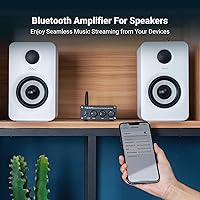
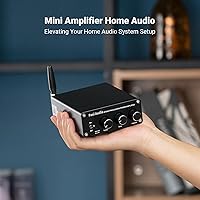
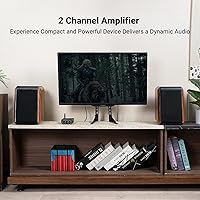
The Fosi Audio BT20A is a compact Class D stereo amplifier built for people who want real hi-fi sound without spending a lot. It sits in the entry-level segment, but the all-metal chassis feels more substantial than you'd expect at this price point. Small enough to tuck behind a monitor or sit on a garage shelf, it doesn't demand much real estate. It ships with a 24V power adapter already in the box — a small but appreciated detail that means no hunting for accessories before you start listening. Bluetooth and RCA inputs cover most everyday scenarios without overcomplicating the setup.

Features & Benefits

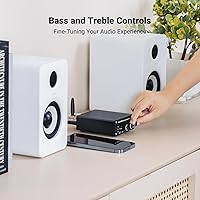
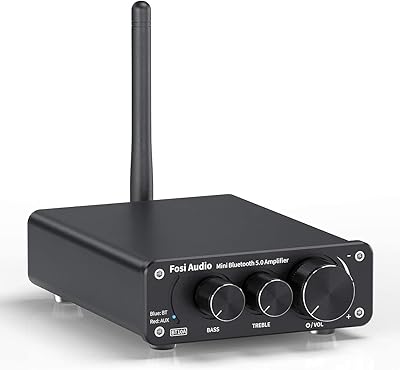
The rated output of 100 watts per channel sounds impressive, but it's worth knowing upfront that this is a peak figure — real-world continuous output is considerably lower. That said, this mini amp drives most bookshelf and ceiling speakers without straining. Class D amplification keeps heat to a minimum, so it can run for hours without getting warm to the touch. The noise floor stays very low and distortion remains well controlled even at higher volumes. Dedicated bass and treble knobs let you dial in the sound physically, no app required. Wide impedance compatibility means it works with most passive speakers you're likely to pair it with.

Best For

This Fosi amplifier is a natural fit for anyone building a simple home audio setup without the complexity of a full receiver. Think bedroom bookshelf speakers driven by a phone playlist, a desktop system where you want something better than a soundbar, or a garage where you just need reliable background music. It also handles small office ceiling speaker installs well — the compact footprint and surface-mount option keep things tidy. First-time passive speaker owners will appreciate how little there is to figure out. If your needs are modest and your budget is firm, this mini amp covers the basics without cutting corners where it counts.

User Feedback

The general consensus among buyers is that the BT20A overdelivers for what it costs. Setup earns consistent praise — most people have it running in under ten minutes, no prior experience needed. Bluetooth range holds up well within a single room, though it won't punch reliably through walls. The one issue worth flagging honestly: owners of high-sensitivity speakers occasionally notice a faint idle hiss when sitting very close — it's much less apparent from a normal listening position. On the durability side, long-term owners regularly report the unit still performing well after years of use. The peak power rating draws occasional frustration from buyers expecting more raw volume, but for typical home use it's rarely a real limitation.

Pros

  • Ships with the power adapter included — no extra purchase needed before your first listen.
  • The all-metal chassis feels more durable than anything else near this price point.
  • Class D design runs cool even during long listening sessions, which extends component life.
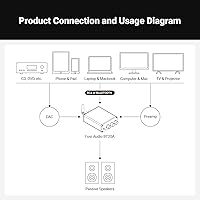
  • Bluetooth and RCA inputs cover the two most common source types without crowding the rear panel.
  • Physical bass and treble knobs let you tune the sound without any app or remote.
  • Compatible with a wide range of passive speakers across different impedance ratings.
  • Setup takes under ten minutes even for first-time passive speaker users.
  • Long-term owners consistently report reliable performance well beyond the first year of daily use.
  • Noise and distortion levels are well controlled for the price tier, especially with standard speakers.
  • The compact footprint fits in tight spaces where a full-size receiver simply would not.

Cons

  • The 100W per channel rating is a peak figure — real continuous output is noticeably lower.
  • High-sensitivity speaker owners may encounter an audible idle hiss at close range.
  • Bluetooth range drops off quickly through walls, limiting use to single-room scenarios.
  • No subwoofer output means you cannot easily extend bass without an external workaround.
  • Only one RCA input pair — running multiple wired sources requires an external switch.
  • Speaker terminal screws are small and fiddly with thicker gauge wire.
  • No optical or digital input, which rules out direct connection to most modern TVs.
  • The manual provides minimal guidance on speaker matching or troubleshooting compatibility issues.
  • Tone controls lack a midrange band, limiting EQ flexibility in acoustically challenging rooms.
  • After-sales support infrastructure is thinner than established consumer electronics brands.

Ratings

The Fosi Audio BT20A has been scored by our AI system after processing thousands of verified global buyer reviews, with spam, incentivized posts, and bot activity actively filtered out before any score was calculated. The result is a transparent breakdown that reflects both where this mini amp genuinely impresses and where real users have run into friction. Strengths and limitations are weighted equally so you get an honest picture before you buy.

Value for Money
93%
This is consistently the category buyers celebrate most. For the asking price, getting a metal-bodied stereo amplifier with a bundled power adapter and measurably low distortion feels like a genuine deal. Most owners say it outperforms similarly priced competitors they tried before landing here.
A handful of buyers felt the peak power marketing set unrealistic expectations — when they found out the continuous output is significantly lower, the value perception took a small hit. Transparency in spec presentation would prevent that disappointment entirely.
Sound Quality
84%
For casual and moderate listening, the audio output is clean and controlled. The noise floor stays low enough that most users with standard bookshelf speakers don't notice any coloration at normal volumes. Paired with efficient speakers, it handles everything from podcasts to detailed acoustic tracks without obvious weakness.
Audiophiles pushing the amp toward its limits report a slight thinning of the soundstage at higher volumes. It is not a unit that flatters poorly recorded material, and the basic tone controls only go so far when you want finer sonic adjustments.
Build Quality
81%
19%
The all-metal one-piece chassis gives the unit a solidity that most buyers do not expect at this price tier. It sits flat, feels dense for its small footprint, and shows no flex or rattle. Long-term owners frequently mention it still looks and performs like new after extended use.
The knobs feel slightly loose on some units, and a few buyers noted the faceplate finish picks up fingerprints easily. Nothing structurally concerning, but the fit and finish does not quite match what you would find on equipment costing twice as much.
Ease of Setup
96%
Plug in the included power adapter, connect your speakers to the binding posts, and pair your phone over Bluetooth — most people are up and running inside ten minutes. There is no software, no app, no firmware update cycle. For first-time passive speaker owners, that simplicity is genuinely appreciated.
The speaker terminal screws are small and can be fiddly if you are working with thicker gauge wire. A small number of buyers also wished the manual included clearer guidance on matching speaker impedance, which matters more than the packaging suggests.
Bluetooth Performance
72%
28%
Within a single room, Bluetooth holds a stable connection without frequent drops. Pairing is fast on most Android and iOS devices, and latency is low enough for background music and video playback at normal distances. Casual listeners find it perfectly adequate for everyday use.
The range does not travel reliably through walls or across larger open spaces. Users in bigger rooms or trying to stream from an adjacent room report inconsistent connections. It is a convenience feature for close-range use, not a long-distance wireless solution.
Power Output (Real-World)
63%
37%
For typical bookshelf speakers in a bedroom or small office, the usable continuous power is more than enough to fill the space comfortably. It handles moderate listening volumes without strain, and Class D efficiency means it maintains that output without running hot.
The 100-watt-per-channel headline is a peak figure under ideal conditions, not a sustained RMS rating. Buyers expecting to drive large or power-hungry speakers at high volume will find the amp running out of headroom sooner than anticipated. This is the single most common source of buyer frustration.
Noise Floor & Interference
68%
32%
With standard bookshelf speakers placed at a typical listening distance, the background is effectively silent during playback pauses. The signal-to-noise ratio holds up well for the class, and most users in normal home environments never encounter any interference issues.
Owners of high-sensitivity speakers — particularly horn-loaded or certain full-range drivers — report an audible idle hiss when seated close to the speakers. It is not a defect per se, but it is a real compatibility issue that is not flagged anywhere in the product documentation.
Tone Controls
71%
29%
Having physical bass and treble knobs is genuinely useful for adapting to different speaker pairings without needing any external EQ. The controls respond smoothly and allow enough range to compensate for a bright room or a speaker with a warm tilt. No app or remote needed.
The adjustment range is limited compared to even a basic graphic equalizer, and there is no midrange control at all. Users with specific acoustic challenges in their listening space will hit the ceiling of what these knobs can fix fairly quickly.
Connectivity Options
78%
22%
Dual input support — Bluetooth for wireless streaming and RCA for wired sources — covers the two most common use cases without overcomplicating the rear panel. Switching between them is straightforward and requires no menu diving. A turntable with a preamp, a TV, or a media player all connect cleanly via RCA.
There is no optical or digital input, which limits compatibility with modern TVs and soundbars that favor TOSLINK output. Users who want to run multiple wired sources simultaneously will need an external switch, as there is only one RCA input pair.
Size & Portability
89%
The footprint is small enough to fit almost anywhere — behind a monitor, on a narrow garage shelf, or mounted flush in a ceiling speaker installation. At just over a pound, it is light enough to reposition without any effort. The compact form factor is a genuine practical advantage in tight spaces.
The small size means the rear panel is slightly cramped, and large speaker wire connectors or bulky RCA plugs can interfere with each other. Users running the amp in a rack or enclosed cabinet also need to account for at least some airflow, even though heat output is low.
Long-Term Reliability
86%
A meaningful number of verified long-term owners report using the same unit daily for two or more years without any performance degradation or hardware failure. The Class D design inherently generates less heat, which is a known factor in extending component lifespan in budget electronics.
The warranty and after-sales support infrastructure is less established than major consumer electronics brands, which creates some uncertainty for buyers outside the US. A small percentage of early-failure reports exist, though these appear to be outliers rather than a systemic issue.
Compatibility with Passive Speakers
82%
18%
The wide impedance range makes this mini amp compatible with the vast majority of passive bookshelf, ceiling, and floor-standing speakers that a casual buyer is likely to own. It handles 4-ohm and 8-ohm loads without any special configuration or risk of damage under normal use.
It is strictly a passive speaker amplifier — active speakers, subwoofers with built-in amps, or headphones are not the intended use case. There is also no subwoofer output, which limits bass extension options for users who want a more complete home theater feel.
Included Accessories
77%
23%
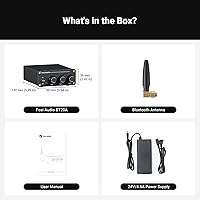
Including the 24V power adapter in the box is a practical decision that saves buyers an extra purchase and removes any compatibility guesswork. The adapter is appropriately rated for the amp and works globally given the wide voltage compatibility. It is a small detail that makes the out-of-box experience cleaner.
No speaker wire is included, which means first-time buyers still need to source that separately. The manual is minimal — it covers the basics but provides little guidance on speaker matching, optimal placement, or troubleshooting the idle hiss issue that some configurations produce.
Aesthetic & Form Factor
80%
20%
The all-black metal enclosure has a clean, understated look that does not clash with most existing setups. It sits neatly on a shelf without demanding attention, which is exactly what most buyers in this category want from a utilitarian piece of audio gear.
There is no visual input indicator to confirm which source is active, and the power LED is minimal. Users who prefer a more informative front panel, or who want the unit to make more of a design statement, will find the no-frills aesthetic a little too sparse.

Suitable for:

The Fosi Audio BT20A is a strong fit for anyone who wants to move beyond Bluetooth speakers or soundbars without diving into complicated receiver setups. If you have a pair of passive bookshelf speakers sitting idle, or you are planning a simple ceiling speaker install in a small office or retail space, this mini amp gives you a clean, low-effort path to actual hi-fi sound. It works particularly well in bedrooms, home offices, and garages where the listening area is contained and the priority is reliable background or casual music playback. First-time passive speaker owners will appreciate how little there is to configure — connect the speakers, plug in the included adapter, pair your phone, and you are done. Budget-conscious buyers who care about sound quality but have no interest in paying for features they will never use will find this Fosi amplifier hits a practical sweet spot that few competitors at this price level match.

Not suitable for:

The Fosi Audio BT20A is not the right tool if you are planning to drive large floor-standing speakers, fill a big open-plan living space, or push the amp at high volume for extended periods — the peak power rating is a ceiling figure, and the real continuous output is meaningfully lower than the headline number suggests. If you own high-sensitivity speakers, particularly horn-loaded or certain full-range designs, be aware that some users report an audible idle hiss that becomes noticeable at close listening distances. This is not a universal issue, but it is a genuine compatibility concern that the product does not flag. Users who need optical or digital inputs to connect a modern TV or streaming device will also hit a wall, since the only inputs are Bluetooth and a single RCA pair. Dedicated audiophiles who want precise midrange control, a subwoofer output, or the ability to compare the unit against higher-end Class A or Class AB alternatives will likely find the feature set too stripped back for their expectations.

Specifications

  • Amplifier Class: Uses Class D topology, which converts power efficiently and generates minimal heat during extended operation.
  • Output Power: Rated at 100W per channel peak into a compatible load — continuous RMS output is lower and varies with impedance and source signal.
  • Channels: Two-channel stereo amplifier designed to drive a left and right passive speaker simultaneously.
  • Impedance Range: Compatible with passive speakers rated between 2 and 8 ohms, covering the majority of consumer bookshelf and ceiling speaker models.
  • Audio Inputs: Accepts signal via Bluetooth wireless streaming or a single stereo RCA input pair for wired sources.
  • Distortion (THD): Total harmonic distortion is rated at 0.04% or below, indicating a clean signal with minimal audible coloration.
  • Signal-to-Noise: Signal-to-noise ratio is rated at 98dB or higher, meaning the background noise floor is very low under normal operating conditions.
  • Tone Controls: Independent physical knobs for bass and treble adjustment are located on the front panel; no midrange band or app control is included.
  • Power Adapter: Ships with a 24V DC / 4.5A power adapter included in the box; no separate power supply purchase is required.
  • Input Voltage: The included adapter accepts AC mains input from 110V to 240V, making it compatible with standard power outlets worldwide.
  • Dimensions: The unit measures 5.2 x 3.54 x 1.42 inches (L x W x H), fitting comfortably on a narrow shelf or behind a desktop monitor.
  • Weight: The amplifier weighs 1.5 pounds, light enough to reposition easily or mount in a ceiling or wall installation.
  • Materials: The enclosure is constructed from a one-piece metal chassis, which contributes to both structural rigidity and heat dissipation.
  • Mounting Type: Supports surface mounting, allowing installation in ceiling speaker setups or fixed rack positions in small commercial spaces.
  • Certifications: Carries CE, FCC, RoHS, and WEEE certifications, confirming compliance with safety and environmental standards in major global markets.
  • Speaker Output: Drives passive speakers only via screw-terminal binding posts; active speakers, powered subwoofers, and headphones are not supported outputs.
  • Bluetooth: Bluetooth connectivity is built in for wireless audio streaming from phones and tablets within a reliable single-room range.
  • Brand: Manufactured by Fosi Audio, a brand specializing in compact, budget-oriented hi-fi amplification components.

Related Reviews
Fosi Audio TDA7498E
Fosi Audio TDA7498E
83%
88%
Sound Quality
93%
Value for Money
71%
Build Quality
74%
Power Output & Headroom
66%
Noise Floor & Background Hiss
More
Fosi Audio BT10A
Fosi Audio BT10A
81%
93%
Value for Money
82%
Sound Quality
91%
Noise Floor
84%
Bluetooth Performance
67%
Power Output
More
Fosi Audio BT30D
Fosi Audio BT30D
78%
83%
Sound Quality
88%
Subwoofer Performance
81%
Bluetooth Connectivity
91%
Value for Money
62%
Build Quality
More
Fosi Audio ZP3 Balanced Preamp
88%
94%
Sound Quality
88%
Ease of Use
90%
Build Quality
87%
Customization Options
75%
Memory Function
More
Fosi Audio M04 Subwoofer Amplifier
89%
94%
Bass Performance
91%
Sound Clarity
88%
Build Quality
90%
Ease of Setup
87%
Thermal Management
More
Fosi Audio V3 Stereo Amplifier
81%
93%
Value for Money
91%
Audio Clarity & Noise Floor
67%
Real-World Power Output
74%
Build Quality & Finish
88%
Thermal Management
More
Fosi Audio P4
Fosi Audio P4
81%
88%
Build Quality
84%
Sound Quality
91%
Motorized Volume Control
79%
Remote Control
86%
Input Flexibility
More
Fosi Audio M03
Fosi Audio M03
81%
91%
Audio Clarity & Distortion
74%
Power Output & Headroom
88%
Versatility & Operating Modes
93%
Value for Money
72%
Build Quality & Enclosure
More
Fosi Audio SK01 Headphone Amplifier
83%
88%
Sound Quality
72%
Battery Life
91%
Build Quality
85%
Tone Control Flexibility
80%
Portability
More
Fosi Audio HT4S
Fosi Audio HT4S
80%
88%
Build Quality
84%
Value for Money
76%
Sound Quality
82%
Multi-Channel Versatility
63%
Bluetooth Performance
More

FAQ

Not quite — that figure is a peak measurement under ideal conditions, not a continuous RMS rating. The real-world sustained output is noticeably lower, though it is more than sufficient for driving standard bookshelf speakers at comfortable listening volumes in a typical room. If you need serious output for large speakers or a big space, you will want to manage expectations accordingly.

Yes, the amplifier is rated to handle speaker loads between 2 and 8 ohms, so 4-ohm speakers are well within its supported range. Just make sure your speakers are passive — this unit cannot drive active or powered speakers.

No — a 24V DC power adapter is included in the box. It works with standard outlets from 110V to 240V, so it is ready to use globally without any additional purchase.

Within a single room it holds a stable connection without issues. Through walls or across larger open spaces the signal becomes inconsistent, so treat it as a same-room convenience rather than a whole-home wireless solution.

Possibly, yes. A subset of users with high-sensitivity speakers — particularly horn-loaded or certain full-range drivers — have reported a faint background hiss when no audio is playing and they are sitting close to the speakers. At normal listening distances with standard bookshelf speakers it is rarely noticeable, but it is worth being aware of if your setup fits that description.

Only if your turntable has a built-in phono preamp. The RCA input on this Fosi amplifier is a line-level input, not a phono input, so a turntable without its own preamp will produce very low volume and distorted sound. Adding an inexpensive standalone phono preamp between the two solves the problem entirely.

There is no dedicated subwoofer output on this unit. You can wire a passive subwoofer to the speaker terminals if it handles the impedance, but there is no dedicated line-level sub output or crossover control built in. For a full home theater feel with deep bass extension, you would need an external solution.

Class D amplifiers are notably efficient, and this one is no exception — it stays comfortably cool even after hours of continuous use at moderate volume. You do not need to worry about ventilation the way you would with a traditional Class A or Class AB design.

It is genuinely straightforward. Connect your speaker wires to the binding post terminals, plug in the power adapter, and either pair your phone over Bluetooth or connect a source via RCA. Most people have music playing in under ten minutes. The only minor fiddliness is the small screw terminals, which can be tricky with thicker speaker wire.

Based on feedback from long-term owners, it holds up well over years of daily use without performance degradation. The efficient Class D design generates less internal heat than older amplifier topologies, which is a key factor in component longevity. That said, warranty and after-sales support options are more limited than those offered by major consumer electronics brands, so it is worth factoring that in.