Overview

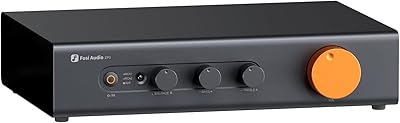
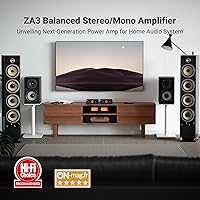
The Fosi Audio ZA3 arrived in late 2023 as a clear statement that compact desktop amps don't have to sacrifice connectivity or performance. Built around the well-regarded TPA3255 Class-D chip, this mini amplifier punches noticeably above its price tier, offering balanced input support that most rivals at similar price points simply skip. It operates in both stereo and mono modes, which is genuinely uncommon at this size and form factor. The op-amp rolling capability — five swappable slots, no soldering required — signals that Fosi is building this for enthusiasts, not just casual listeners looking for background audio.

Features & Benefits

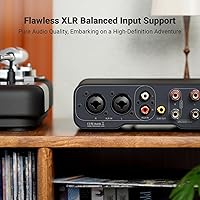
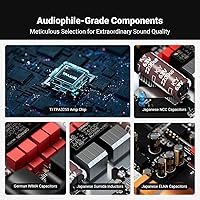
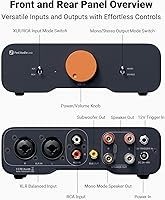
The balanced XLR and TRS combo input is the headline feature here. Running a balanced signal from a quality DAC or audio interface keeps the noise floor remarkably low, resulting in quiet, composed audio even at higher volumes. The 12V trigger-in is a small but practical touch — pair the ZA3 with compatible gear and everything powers on together without hunting for remotes. Strong SINAD and SNR figures mean the sound stays clean and distortion-free during demanding passages. Internally, Japanese NCC and ELNA capacitors alongside German WIMA film caps reflect component choices you'd expect from significantly pricier equipment.

Best For

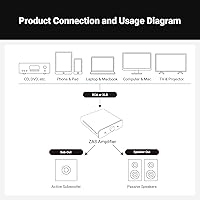
This desktop amp is a strong match for audiophiles running passive bookshelf speakers alongside a balanced DAC — that's the setup it's clearly optimized for. Home theater builders needing a compact, capable amp for satellite channels or a dedicated subwoofer feed will also find it well-suited. Tinkerers who enjoy op-amp swapping will appreciate the accessible DIP8 slots. Where it falls short is for listeners who rely on tone controls — there are none, which is a real limitation if your room acoustics or speakers need EQ correction. It's also not a Bluetooth amp, so wireless streaming isn't part of the picture.

User Feedback

Most owners highlight low background noise and the surprisingly authoritative output for such a small chassis. Build quality draws consistent praise, with the metal enclosure and side venting holding up well under extended listening. Op-amp rolling comes up frequently, with users noting audible — if subtle — character shifts between popular swaps. On the critical side, the absence of any tone adjustment frustrates buyers whose speakers or rooms need a bit of correction. A handful of users have questioned the bundled power supply cable quality. Those upgrading from entry-level Fosi or Aiyima models consistently describe this mini amplifier as a meaningful step forward in refinement and control.

Pros

  • Balanced XLR and TRS combo input delivers a genuinely low noise floor with a quality DAC.
  • Five op-amp slots let you tune the sound character without picking up a soldering iron.
  • 12V trigger support automates power on/off in multi-device setups — rare at this price tier.
  • Premium Japanese and German capacitors reflect above-average internal component quality.
  • Dual stereo and mono modes add real versatility for 2.0 and 2.1 speaker configurations.
  • Compact chassis takes up minimal desk or shelf space without feeling cheap or hollow.
  • Buyers upgrading from entry-level Class-D amps consistently describe it as a clear refinement step.
  • Dedicated subwoofer output makes 2.1 desktop builds straightforward without extra hardware.
  • Strong measured performance translates to clean, composed sound during complex or dynamic tracks.

Cons

  • No tone controls whatsoever — bass and treble adjustments must happen at the source or DAC level.
  • Bluetooth is completely absent, which surprises buyers expecting wireless input at this price.
  • No digital inputs means a separate DAC is a required additional purchase for most users.
  • The DC power cable included with the supply feels thin relative to the otherwise solid build.
  • Trigger cable is not included in the box despite the feature being prominently advertised.
  • Op-amp rolling yields subtle rather than dramatic sonic changes, which can disappoint expectant tinkerers.
  • Gets noticeably warm during extended high-volume sessions, requiring adequate airflow around the unit.
  • No onboard EQ means acoustically imperfect rooms or speaker pairings have no easy correction path.

Ratings

The Fosi Audio ZA3 scores below are generated by AI after analyzing thousands of verified global buyer reviews, with spam, bot-submitted, and incentivized feedback actively filtered out. Both the genuine strengths and the real frustrations buyers have reported are reflected transparently in every category. This analysis covers everything from audio performance and build quality to connectivity and long-term reliability.

Audio Clarity & Low Noise Floor
93%
Owners consistently describe the background silence as one of the first things they notice after setup — pairing the ZA3 with a balanced DAC produces a remarkably black noise floor even at high gain. Listeners using sensitive bookshelf speakers report no audible hiss during quiet passages, which is a real differentiator at this price tier.
A small number of users running unbalanced RCA sources noted a faint hum, suggesting the low-noise performance is most pronounced when the balanced input is actually used. Those without a balanced-output DAC may not fully experience this advantage.
Power Output & Headroom
88%
Users driving moderately efficient bookshelf and tower speakers report more than enough headroom for desktop and small-room listening, with clean dynamics that hold up under demanding orchestral or bass-heavy tracks. Switching to mono mode for dedicated subwoofer duty draws consistent praise for tight, controlled low-end output.
A few buyers with particularly inefficient or power-hungry floor-standing speakers found they needed to push the volume higher than expected before the amp felt authoritative. The rated wattage figures are best understood as peak rather than continuous numbers in real-world use.
Build Quality & Chassis
91%
The metal enclosure feels dense and purposeful for its compact footprint — buyers frequently contrast it favorably against plasticky rivals in the same segment. Side venting keeps temperatures reasonable even during extended sessions, and the overall fit and finish holds up after months of daily use according to long-term owners.
A handful of reviewers noted that the volume knob, while smooth, has a slightly loose feel compared to the solid chassis underneath it. The overall aesthetic is utilitarian rather than premium, which matters to buyers who care about desktop appearance.
Connectivity & Input Options
94%
The balanced XLR and quarter-inch TRS combo input is the standout connectivity feature, and users with audio interfaces or balanced DACs appreciate being able to skip an adapter entirely. Having RCA, XLR, and TRS all available on one unit means most users can connect whatever source they own without buying additional cables.
There is no digital input whatsoever — no optical, coaxial, or USB — so users without a separate DAC will need to factor that purchase into their setup. Bluetooth is also absent, which surprises buyers who expect wireless options at this price.
Op-Amp Rolling Experience
82%
18%
The five accessible DIP8 sockets genuinely invite experimentation, and enthusiast buyers who have tried swaps like the OPA2134 or MUSES02 report noticeable tonal shifts — a slightly warmer midrange here, a crisper top end there. Critically, no soldering is required, making this approachable for curious newcomers.
The sonic differences between op-amps are real but subtle, and buyers expecting a dramatic transformation may feel underwhelmed. Sourcing quality NOS or boutique op-amps adds cost and research time that casual users are unlikely to want to invest.
12V Trigger Functionality
86%
Buyers who have home theater or desktop setups built around 12V trigger ecosystems find this feature genuinely convenient — the amp powers on and off in sync with a receiver or DAC without any manual intervention. It is a rare inclusion at this price tier and draws specific praise from system-oriented buyers.
Users without existing 12V trigger gear will never use this feature, making it neutral rather than beneficial for a significant portion of buyers. The trigger cable is not included in the box, which caught several buyers off guard.
Value for Money
89%
Compared to rivals like the SMSL SA300 or Aiyima A07, the ZA3 offers a noticeably more complete feature set — balanced input, trigger, op-amp rolling, and premium capacitors — without a significant price premium. Buyers upgrading from entry-level Class-D amps consistently describe it as a worthwhile jump in refinement.
It is not the cheapest path to good desktop audio, and budget-focused buyers who do not need balanced connectivity might find simpler, less expensive options better suited to their needs. The value proposition is strongest only when the full feature set is actually utilized.
Heat Management
84%
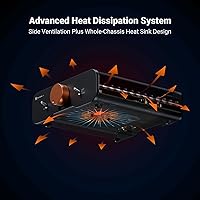
Under typical desktop listening conditions — a few hours at moderate volume — the chassis stays comfortably warm rather than hot, and the side vent placement handles airflow effectively without requiring a fan. Long-term owners running it for extended movie sessions report no thermal throttling or shutdowns.
At sustained high-volume output, particularly in mono mode driving a subwoofer hard, the unit does get notably warm to the touch. Users in warm climates or enclosed entertainment center shelves should ensure adequate airflow around the unit.
Ease of Setup
87%
The physical setup is refreshingly straightforward — connect a source, connect speakers, plug in the 48V supply, and the amp is ready. Most buyers report being up and running within minutes, and the mode switching between stereo and mono is handled via a clearly labeled rear switch.
The lack of any onboard EQ or tone controls means new users relying on the amp alone to compensate for a bright or bass-light speaker pairing will be left wanting. Some buyers also found the manual sparse on details about op-amp compatibility.
Tone Control & EQ Options
41%
59%
The absence of a tone stack keeps the signal path cleaner, and purist listeners who handle EQ at the source — through a DAC app or software — actively appreciate not having extra circuitry in the signal path. For well-matched speaker and room combinations, a flat response is genuinely preferable.
For the majority of real-world desktop setups, some degree of bass or treble adjustment is practically useful, and its total absence is a recurring complaint. Buyers coming from amps with even basic tone controls often feel constrained, particularly when dealing with acoustically imperfect rooms.
Subwoofer Output
81%
19%
Having a dedicated sub-out on a compact stereo amp is a genuine bonus for buyers building a 2.1 desktop or nearfield setup. Users pairing it with a passive subwoofer in mono mode report strong, well-defined bass performance that holds together at meaningful playback levels.
The subwoofer output lacks an adjustable crossover, so buyers need to manage crossover settings at the subwoofer or source level. This is workable but adds a step that some buyers did not anticipate.
Power Supply Quality
74%
26%
The included 48V brick powers the amp reliably under normal conditions, and the majority of buyers report no issues over months of regular use. Having the supply included in the box at this price tier is a practical convenience that competing kits sometimes skip.
A recurring complaint in user reviews targets the quality of the DC power cable connecting the supply to the amp — it feels thin relative to the robust chassis and has caused concern for some buyers. A small number of users replaced it with a heavier-gauge aftermarket cable for peace of mind.
Stereo Imaging & Soundstage
86%
Listeners using well-positioned bookshelf speakers report a clean, well-separated stereo image with convincing instrument placement. The low distortion figures translate to a presentation that stays composed and unforced even during complex multi-instrument passages.
The soundstage is accurate rather than expansive — buyers seeking an especially wide or enveloping presentation may find it sounds precise but somewhat matter-of-fact. Speaker placement and room acoustics will have more influence on this than the amp itself.
Compatibility with Passive Speakers
88%
The 2 to 8 ohm impedance range covers the vast majority of popular passive bookshelf, tower, and desktop speakers, and buyers report stable, confident performance across brands including Klipsch, Wharfedale, and ELAC. Most common speaker pairings work without any concerns.
Driving 4-ohm speakers at high volume for extended periods generates more heat than with 8-ohm loads, and users with lower-impedance speaker pairs should be mindful of ventilation. Very low-efficiency speakers may leave some buyers wanting more dynamic reserve.

Suitable for:

The Fosi Audio ZA3 is built for a specific kind of buyer, and for that buyer it delivers well: the desktop audiophile who already owns a balanced DAC or audio interface and wants to drive a pair of passive bookshelf speakers without a bulky receiver taking up half their desk. If your setup includes something like a Topping or SMSL DAC with XLR outputs, this mini amplifier is where that investment pays off — the balanced signal path keeps the noise floor low enough that even sensitive speakers stay dead quiet between tracks. Home theater enthusiasts building compact 2.1 systems will also find it a capable fit, particularly for handling a dedicated passive subwoofer in mono mode alongside satellite speakers. Tinkerers who enjoy experimenting with op-amp swaps will appreciate having five accessible sockets and no soldering iron required. And if your gear already uses 12V trigger for automated power control, the ZA3 slots into that ecosystem without any workarounds.

Not suitable for:

The Fosi Audio ZA3 is a harder sell for buyers who need tone controls baked into the amp itself — there are none, and if your speakers are bright, your room is boomy, or you simply like to adjust treble and bass on the fly, you will need to solve that problem elsewhere in your chain or look at alternatives like the SMSL SA300 that offer built-in EQ options. Anyone expecting Bluetooth or any wireless audio capability should look elsewhere entirely; this is a wired-only amp with no digital inputs of any kind, meaning a separate DAC is effectively required. Buyers on a tight budget who only use standard unbalanced RCA sources will not fully benefit from what makes this desktop amp distinctive, and simpler options like the Aiyima A07 may offer better value for that use case. Those planning to run demanding 4-ohm speaker loads at high volume for extended periods should also factor in the need for good ventilation, as the chassis can run warm under sustained stress.

Specifications

  • Amplifier Chip: The ZA3 is built around the TPA3255 Class-D amplifier chip, a high-efficiency design well-regarded for its low distortion and strong power output relative to its compact footprint.
  • Stereo Output: In stereo mode, the amp delivers up to 180W total across two channels, providing ample headroom for most desktop and small-room passive speaker setups.
  • Mono Output: Switched to mono mode, the amp consolidates power to a single channel output of up to 235W, making it well-suited for dedicated subwoofer or bridged speaker use.
  • Audio Inputs: Three input options are supported: RCA (unbalanced), XLR (balanced), and a quarter-inch TRS jack, all accessible via a combo connector on the rear panel.
  • Audio Outputs: The rear panel provides binding posts for passive speaker connections plus a dedicated subwoofer output, supporting both 2.0 and 2.1 speaker configurations.
  • SINAD Rating: The amp achieves a SINAD (Signal-to-Noise and Distortion) rating of up to 89dB, reflecting a low overall distortion and interference profile during real-world playback.
  • SNR: Signal-to-noise ratio is rated at up to 106dB, meaning the amp keeps background noise well below audible thresholds during normal and high-volume listening.
  • Noise Floor: The residual noise floor measures approximately 150 microvolts, which translates to dead silence between tracks even when using sensitive bookshelf speakers.
  • THD: Total harmonic distortion is rated below 0.006%, indicating the amp introduces virtually no audible coloration or distortion into the signal during typical use.
  • Impedance Range: The amp is rated for speaker loads between 2 and 8 ohms, covering the full range of common passive bookshelf, tower, and desktop speakers.
  • Power Supply: A 48V DC power adapter rated at 5A is included in the box, with the amp also accepting supply voltages down to 24V DC for lower-power configurations.
  • Op-Amp Slots: Five DIP8 dual op-amp sockets are fitted across left channel output, right channel output, balanced input stage, and subwoofer output, all swappable without soldering.
  • Trigger Input: A 12V trigger-in connector on the rear panel allows the amp to power on and off automatically in sync with compatible receivers or DACs in a multi-device system.
  • Capacitors: Internal filtering uses a combination of Japanese NCC and ELNA electrolytic capacitors alongside German WIMA film capacitors for low-noise power delivery and signal integrity.
  • Inductors: Japanese Sumida inductors are used in the output stage filtering, chosen for their tight tolerances and low-loss characteristics at Class-D switching frequencies.
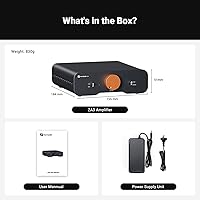
  • Dimensions: The chassis measures 6.1 x 7.24 x 2 inches (L x W x H), keeping the footprint compact enough for most desktop setups and small shelving configurations.
  • Weight: The unit weighs 3.85 pounds, reflecting a solid all-metal construction without being impractical to reposition or move between setups.
  • Certifications: The ZA3 carries FCC certification and is compatible with AC mains voltages from 110V to 240V worldwide via the included switching power adapter.
  • Mode Switching: Stereo and mono operating modes are selected via a physical switch on the rear panel, allowing quick reconfiguration without entering any software menu.
  • Date Available: The ZA3 was first made available for purchase in December 2023, positioning it as one of Fosi Audio's more recent and fully featured compact amplifier releases.

Related Reviews
Fosi Audio TDA7498E
Fosi Audio TDA7498E
83%
88%
Sound Quality
93%
Value for Money
71%
Build Quality
74%
Power Output & Headroom
66%
Noise Floor & Background Hiss
More
Fosi Audio BT10A
Fosi Audio BT10A
81%
93%
Value for Money
82%
Sound Quality
91%
Noise Floor
84%
Bluetooth Performance
67%
Power Output
More
Fosi Audio BT30D
Fosi Audio BT30D
78%
83%
Sound Quality
88%
Subwoofer Performance
81%
Bluetooth Connectivity
91%
Value for Money
62%
Build Quality
More
Fosi Audio HT4S
Fosi Audio HT4S
80%
88%
Build Quality
84%
Value for Money
76%
Sound Quality
82%
Multi-Channel Versatility
63%
Bluetooth Performance
More
Fosi Audio ZP3 Balanced Preamp
88%
94%
Sound Quality
88%
Ease of Use
90%
Build Quality
87%
Customization Options
75%
Memory Function
More
Fosi Audio P4
Fosi Audio P4
81%
88%
Build Quality
84%
Sound Quality
91%
Motorized Volume Control
79%
Remote Control
86%
Input Flexibility
More
Fosi Audio M03
Fosi Audio M03
81%
91%
Audio Clarity & Distortion
74%
Power Output & Headroom
88%
Versatility & Operating Modes
93%
Value for Money
72%
Build Quality & Enclosure
More
Fosi Audio M04 Subwoofer Amplifier
89%
94%
Bass Performance
91%
Sound Clarity
88%
Build Quality
90%
Ease of Setup
87%
Thermal Management
More
Fosi Audio V3 Stereo Amplifier
81%
93%
Value for Money
91%
Audio Clarity & Noise Floor
67%
Real-World Power Output
74%
Build Quality & Finish
88%
Thermal Management
More
Fosi Audio SK01 Headphone Amplifier
83%
88%
Sound Quality
72%
Battery Life
91%
Build Quality
85%
Tone Control Flexibility
80%
Portability
More

FAQ

You do need a separate DAC. The ZA3 only accepts analog inputs — RCA, XLR, or quarter-inch TRS — so there is no USB or optical connection to plug a computer into directly. A dedicated DAC sits between your computer and the amp, and that is actually where a lot of the sonic benefit comes from, especially if you use a balanced-output DAC with the XLR input.

Most standard passive bookshelf and tower speakers with impedances between 4 and 8 ohms pair well with it. Popular choices from brands like Klipsch, Wharfedale, and ELAC work without any issues. If you are running 4-ohm speakers, just make sure there is decent airflow around the unit since it runs a little warmer with lower-impedance loads.

Yes, that is actually a configuration Fosi Audio explicitly supports. You run each unit in mono mode, one handling the left channel and one handling the right, which gives each channel the full mono power output. It is a more expensive approach, but it makes sense for users who want maximum headroom for demanding speakers.

Op-amp rolling just means swapping out small chip components that influence how the audio signal is shaped before it hits the main amp stage. The ZA3 comes with stock op-amps already installed and sounds good out of the box — you absolutely do not need to swap them. It is purely an optional hobby for listeners who enjoy experimenting with subtle tonal differences, like a warmer midrange or a slightly more detailed top end.

Not within the amp itself — it has a completely flat signal path with no EQ or tone knobs. Your best options are to handle EQ digitally through software on your computer or source device, or to use a DAC that includes a built-in equalizer. Some buyers also add an outboard EQ unit between the DAC and the amp if they need regular frequency adjustments.

Under typical desktop listening at moderate volumes it runs warm but not concerning — similar to most Class-D amps of this output class. It gets noticeably hotter under sustained high-volume use, particularly in mono mode driving a subwoofer hard. The side vents handle heat reasonably well, but avoid placing it in an enclosed cabinet without airflow.

For most standard 12V trigger setups — common in AV receivers and some DAC-preamps — it works as expected, powering the amp on and off automatically in sync. It is worth noting that the trigger cable itself is not included in the box, so you will need a 3.5mm mono cable to connect it. Compatibility is broad but it is worth checking your source device's trigger voltage spec before relying on it.

The SMSL SA300 is a reasonable alternative if built-in Bluetooth and tone controls are priorities for you, though it lacks balanced input. The Aiyima A07 is a lower-cost option that works fine for simple unbalanced setups but does not offer XLR connectivity or op-amp rolling. This desktop amp sits above both in terms of input flexibility and component quality, which is reflected in its price — it makes the most sense when you actually need and will use the balanced input.

Yes, and that is one of its more practical use cases. In mono mode it can drive a passive subwoofer with considerable output, and the dedicated subwoofer output on the rear also allows a 2.1 configuration alongside your main speakers. Keep in mind there is no adjustable crossover built into the amp, so you will need to manage the crossover point at your source or at the subwoofer itself if it supports that.

The sockets accept standard DIP8 dual op-amps, and there are quite a few well-regarded options that fit. Popular choices among users include the OPA2134, OPA2604, LM4562, and MUSES02 for those who want a warmer or more detailed character. Fosi Audio also lists Sparkos SS3602 and several others as compatible. Stick to reputable sources when buying op-amps since counterfeit chips are unfortunately common in this hobby space.