Overview

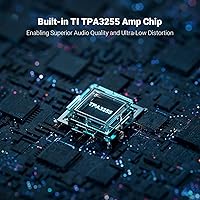
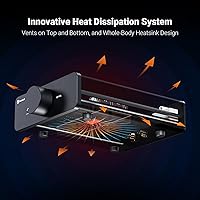
The Fosi Audio V3 Stereo Amplifier is a compact Class D unit built around Texas Instruments' TPA3255 chip, sitting comfortably in that budget-to-mid-range territory where serious listeners start outgrowing Bluetooth speakers but aren't ready to spend hundreds on a traditional receiver. It ships with a 32V power supply included, so you can plug in and listen on day one. The chassis uses a whole-body heatsink design with top and bottom vents — a meaningful improvement over earlier Fosi models that ran noticeably warm. Compared to its V-series predecessors, the pre-out circuit and op-amp socket have both been thoughtfully revised, making this iteration the most versatile the lineup has offered.
Features & Benefits

The TPA3255 chip is the star here. Peak power is rated at 300W per channel, but that figure assumes ideal conditions with a more powerful supply than the included 32V unit — in real-world desktop use, actual output is considerably lower, though still plenty for most bookshelf speakers. Where this mini amp genuinely impresses is noise performance: a 110dB signal-to-noise ratio and 140µV noise floor mean the background is essentially silent between tracks. The socketed NE5532 op-amp is a nice touch — swapping it for something like an OPA2134 takes two minutes and zero soldering. The volume-controlled pre-out makes adding a subwoofer clean and simple.

Best For

This Class D amplifier is a natural fit for desktop nearfield setups paired with passive bookshelf speakers a few feet away — that is where its real-world power output is perfectly matched to the task. Budget home theater builders who want a clean sub pre-out without paying receiver prices will find it equally useful. If you enjoy tinkering, the swappable op-amp socket is a low-risk entry point into op-amp rolling, no soldering iron required. Anyone downsizing from a bulky integrated receiver will appreciate the reduced heat and reclaimed shelf space. Bedroom or secondary-room systems where simplicity matters are another natural fit.

User Feedback

Buyers consistently point to value for money as the V3's standout quality — many note it competes sonically with Class A/B amps costing two or three times as much. The near-silent noise floor draws particular praise from owners using sensitive speakers. On the critical side, a recurring complaint is that the stock 32V supply limits headroom at higher volumes, with several users recommending an upgraded power brick for demanding speakers. A handful of buyers flag mild unit-to-unit variation, suggesting occasional quality control inconsistency. Build quality earns mostly positive marks for the price tier, though some find the volume knob feels less solid than expected.

Pros

  • The Fosi Audio V3 Stereo Amplifier delivers a genuinely quiet noise floor that embarrasses similarly priced competition.
  • Real-world audio clarity for nearfield desktop listening is well above what the price tag suggests.
  • Ships with a power supply included, so first-time buyers can be up and running immediately.
  • The whole-body heatsink keeps temperatures manageable even during long listening sessions.
  • Swapping the op-amp takes minutes and zero technical skill, making sound tuning approachable for beginners.
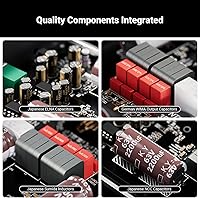
  • Premium passive components — WIMA caps, ELNA electrolytics, Sumida inductors — are rarely found at this price tier.
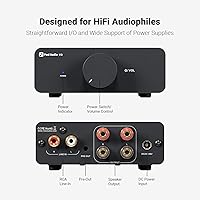
  • The volume-controlled pre-out makes adding a powered subwoofer clean and simple with a single knob.
  • The compact aluminum chassis looks and feels more expensive than it is, fitting neatly on any desk or shelf.
  • THD below 0.003% means distortion is effectively inaudible under normal listening conditions.

Cons

  • The bundled 32V power supply limits real-world headroom, and many users end up buying an upgrade separately.
  • Only one RCA input means switching between two sources requires an external selector switch.
  • Volume knob feels noticeably cheaper than the rest of the chassis on some units.
  • Unit-to-unit consistency is not perfectly reliable, with occasional reports of early channel or input failures.
  • Op-amp rolling results are highly subjective — some buyers hear little to no difference after upgrading chips.
  • The rear panel binding posts and input jacks are tightly spaced, making thick speaker cable awkward to connect.
  • No Bluetooth, optical, or USB input limits flexibility for buyers without a separate DAC already in their chain.
  • The included RCA cable is poor quality and should be replaced before any serious listening.
  • Customer support and warranty resolution can be slower and less predictable than established Western audio brands.

Ratings

The Fosi Audio V3 Stereo Amplifier scores are generated by an AI system that analyzed thousands of verified global user reviews, actively filtering out incentivized, bot-submitted, and low-quality feedback to surface what real buyers actually experience. This mini amp earned strong marks in several key areas while showing honest weaknesses that matter depending on your setup. Both the highs and the friction points are reflected transparently below.

Value for Money
93%
Buyers repeatedly describe a sonic performance that feels out of step with the price tag — in the best way. Desktop listeners who previously owned entry-level Class A/B amps from larger brands often report the V3 matching or exceeding them in perceived clarity, making the purchase feel like a genuine bargain.
A small segment of buyers feel the need to immediately purchase an upgraded power supply, which adds to the real cost of ownership and slightly erodes the out-of-box value proposition. For those on a strict budget, that hidden extra expense stings.
Audio Clarity & Noise Floor
91%
The near-silent background between tracks is one of the most praised qualities across reviews, particularly among users with efficient or sensitive bookshelf speakers. Listeners switching from older amplifiers notice the absence of hiss and hum almost immediately, and it translates directly into a cleaner, more focused stereo image.
A minority of users running the amp with certain op-amp combinations or near switching power supplies report faint interference artifacts. These cases appear setup-dependent rather than endemic to the unit itself, but they are worth noting for anyone in a noisy electrical environment.
Real-World Power Output
67%
33%
For desktop nearfield use with typical 85–89dB sensitivity bookshelf speakers, the included 32V supply delivers more than enough volume. Users in that specific context rarely complain about running out of headroom, and the amp handles dynamic transients in jazz or acoustic music with composure.
The 300W per channel peak figure is marketing math — real output with the bundled supply at 4Ω sits well below that, and buyers driving larger floor-standing or low-sensitivity speakers hit the ceiling faster than expected. Several users recommend a 48V supply upgrade almost immediately for anything beyond desktop listening.
Build Quality & Finish
74%
26%
The aluminum chassis feels noticeably more substantial than competing plastic-bodied amps at a similar price, and the machined top panel gives it a clean, professional appearance that fits well on a desk or open shelf. Most buyers consider the physical construction a strong point relative to cost.
The volume knob is a recurring minor complaint — it feels slightly loose or plasticky on some units, which clashes with an otherwise solid chassis. A handful of reviewers also report cosmetic inconsistencies like uneven panel gaps, suggesting quality control is good but not perfectly consistent across production batches.
Thermal Management
88%
The whole-body heatsink approach genuinely works. Users running the amp for extended listening sessions — four or more hours at moderate volume — report the chassis getting warm but never hot to the touch, which is a clear improvement over earlier Fosi models that throttled under sustained load.
In poorly ventilated enclosures or tight media cabinets, the passive cooling design needs breathing room to perform as intended. A small number of buyers who rack-mounted the unit without clearance reported warmer operating temperatures than expected.
Op-Amp Swappability
86%
The socketed op-amp design is a genuine differentiator at this price point. Hobbyists appreciate that swapping to an OPA2134 or MUSES02 requires nothing more than fingernails and two minutes — no soldering, no risk. Many describe it as their first meaningful step into audio customization, with audible results that encourage further experimentation.
The subjective nature of op-amp rolling means results vary widely by ear and speaker pairing. Some buyers report minimal or no perceived difference after swapping, leading to mild disappointment, particularly those who invested in premium op-amp chips expecting a dramatic transformation.
Connectivity & Inputs
58%
42%
The single RCA stereo input covers the most common use case cleanly — connecting a DAC, TV, or PC soundcard is plug-and-play. The pre-out with volume tracking is a genuinely useful addition for anyone adding a subwoofer to a desktop or small home theater setup.
Having only one input is a real limitation if you want to switch between a turntable and a streaming DAC without a separate selector switch. Multiple reviewers flag this as the most significant functional shortcoming, especially compared to budget receivers that offer three or four inputs at a similar price.
Setup & Ease of Use
92%
Unboxing to listening typically takes under five minutes. The included power supply removes one decision, the speaker terminals are clearly labeled, and the RCA input leaves little room for confusion. First-time amp buyers consistently describe the setup experience as stress-free.
The op-amp orientation requirement trips up a small percentage of first-time tinkerers who assume any 8-pin dual op-amp can be dropped in without checking pin alignment. The manual covers this briefly, but clearer visual guidance in the packaging would prevent the occasional swap-related mishap.
Component Quality
84%
Audiophile-familiar passive components — WIMA film capacitors, ELNA electrolytics, Sumida inductors — give the V3 credibility among buyers who know what to look for on a circuit board. These parts are typically found in amplifiers costing considerably more, and their presence here signals genuine engineering intent rather than spec-sheet padding.
While the passive components themselves are well-regarded, a few electronically-inclined reviewers note that the PCB layout and solder quality on some units shows minor inconsistencies under close inspection. These are unlikely to affect everyday performance but are worth mentioning for the technically fastidious buyer.
Size & Form Factor
89%
The footprint is roughly the size of a hardback novel, and weighing in at just under 2.5 pounds it sits unobtrusively on a desk without dominating the space. People upgrading from full-width receivers specifically mention how much desk or shelf real estate they reclaimed.
The compact dimensions are mostly a strength, but the low profile can make the speaker binding posts slightly awkward to tighten firmly, particularly if using thicker gauge speaker wire. A few users with larger hands found the rear panel connections fiddly to manage.
Long-Term Reliability
71%
29%
The majority of buyers who have owned the V3 for six months or longer report no functional issues, and Fosi Audio has a reasonable reputation for responding to warranty claims. The solid-state Class D design has inherently fewer failure points than tube or Class A/B circuits.
A visible minority of reviews describe early failures — most commonly related to the power input section or intermittent channel drop — which suggest the unit-to-unit consistency has room to improve. These failures appear to be a small fraction of total sales but are reported loudly enough to factor into long-term confidence.
Pre-Out Functionality
82%
18%
The volume-tracking pre-out is a meaningful upgrade over the fixed-level pre-out on earlier Fosi models. Users adding a powered subwoofer find that a single volume knob now controls the entire system cohesively, which dramatically simplifies daily use in a living room or desktop setup.
The pre-out signal level may be slightly low for some powered subwoofers with limited gain range, requiring their internal gain knob to be turned up higher than ideal. This is a minor calibration nuisance rather than a fundamental flaw, but it comes up consistently enough to be worth flagging.
Soundstage & Imaging
79%
21%
For a Class D design at this tier, the stereo imaging holds up well on acoustic recordings and well-mastered jazz or classical tracks. Nearfield desktop listeners in particular note good instrument separation that competes favorably with pricier integrated amps they have previously owned.
On highly compressed modern pop or bass-heavy electronic music, the soundstage can feel somewhat compressed and two-dimensional compared to higher-end amplification. This is partly a chip characteristic and partly a function of the power supply ceiling, and it becomes more apparent at higher listening volumes.
Packaging & Unboxing
77%
23%
The amp arrives in a snug, foam-padded box with the power supply, cable, and unit all neatly separated. Most buyers consider the packaging appropriate and sufficient, with nothing arriving damaged in the vast majority of reported experiences.
The accessory cables included are minimal in quality — the bundled RCA cable in particular is considered throwaway by most experienced buyers, who swap it out immediately. It works for initial testing but is not something you would want in a permanent setup.

Suitable for:

The Fosi Audio V3 Stereo Amplifier is an excellent match for anyone building a compact desktop listening station around a pair of passive bookshelf speakers — the kind of setup where you sit two or three feet from the speakers and rarely need concert-hall volume levels. If you are stepping up from a Bluetooth speaker or a cheap all-in-one system and want to understand what a proper stereo signal chain sounds like, this mini amp is one of the most accessible entry points available. Budget-conscious home theater builders who need a clean, volume-controlled pre-out for a powered subwoofer will find the integration genuinely straightforward. Hobbyists who are curious about op-amp rolling but have never done it before will appreciate that the process requires no soldering — just a careful swap — making it a low-risk way to start experimenting with sound tuning. Anyone downsizing from a bulky stereo receiver to reclaim shelf or desk space, without sacrificing meaningful audio quality, will find the trade-off very much in their favor.
Not suitable for:

Buyers who need to drive large floor-standing speakers or low-sensitivity models in a medium-to-large room should look elsewhere — the V3 paired with the included 32V supply simply does not have the sustained headroom for that task, and pushing it hard in that context leads to audible compression before satisfying volume levels are reached. If your setup involves multiple sources — a turntable, a streaming DAC, and a TV, for instance — the single RCA input becomes a genuine daily frustration, and you would need an external input selector to make it work, adding cost and complexity. Critical listeners who want the last word in dynamic range and tonal accuracy from a dedicated Class A or high-current Class A/B circuit will find the Class D character of the V3 a step short of their standards, particularly on demanding orchestral or high-resolution audio material. Those expecting the rated 300W per channel to reflect real-world output should be prepared for a significant reality check — the actual power delivery under normal operating conditions is a fraction of that figure. Finally, buyers who want a warranty-backed, brand-name product from a globally established audio manufacturer may feel less confident in Fosi Audio's after-sales infrastructure compared to household names.

Specifications

  • Amplifier Chip: Powered by the Texas Instruments TPA3255, a high-efficiency Class D chip widely used in audiophile-grade compact amplifiers.
  • Peak Power: Rated at up to 300W per channel at peak conditions, though real-world continuous output with the included 32V supply is considerably lower.
  • Speaker Impedance: Compatible with passive speakers rated between 2 and 8 ohms, covering the vast majority of bookshelf and tower speaker designs.
  • Distortion (THD): Total harmonic distortion is specified at below 0.003%, meaning audible coloration from the amplifier circuit itself is negligible under normal conditions.
  • Signal-to-Noise Ratio: SNR is rated at 110dB or higher, indicating an exceptionally clean signal path with very little background noise introduced by the amp.
  • Noise Floor: The residual noise floor measures approximately 140 microvolts, which translates to a silent background even with sensitive bookshelf speakers.
  • Audio Input: One stereo RCA input is provided, designed to accept a line-level signal from a DAC, TV optical adapter, or similar source component.
  • Audio Output: Includes spring-clip passive speaker binding posts for two channels plus a volume-controlled pre-out RCA jack for subwoofer or secondary amp integration.
  • Op-Amp: Ships with a socketed NE5532 dual op-amp that can be replaced with any compatible 8-pin dual op-amp without soldering.
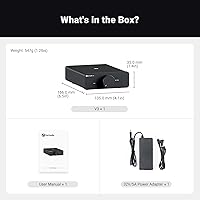
  • Power Supply: A 32V DC power supply is included in the box, providing a ready-to-use power source without any separate purchase required.
  • Dimensions: The chassis measures 6.54 × 4.13 × 1.38 inches, fitting easily on a crowded desk or inside a compact media shelf.
  • Weight: The complete unit weighs 2.47 pounds, light enough to reposition freely but substantial enough to feel well-constructed.
  • Cooling System: Uses a whole-body aluminum heatsink design combined with ventilation slots on both the top and bottom panels for passive thermal management.
  • Capacitors: The signal path uses a combination of Japanese NCC and ELNA electrolytic capacitors alongside German WIMA film capacitors for low-noise filtering.
  • Inductors: Japanese Sumida inductors are used in the power filtering stage, a component choice associated with low electromagnetic interference.
  • Chassis Material: The outer enclosure is machined aluminum, providing both structural rigidity and a secondary heat-dissipation surface.
  • Model Number: Officially designated as the V3, succeeding earlier Fosi Audio V-series amplifier models with updated circuitry and an improved pre-out stage.
  • Manufacturer: Designed and sold by Fosi Audio, a Chinese consumer electronics brand specializing in compact Class D amplifier products.

Related Reviews
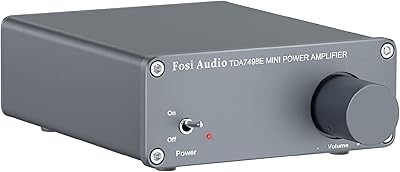
Fosi Audio TDA7498E
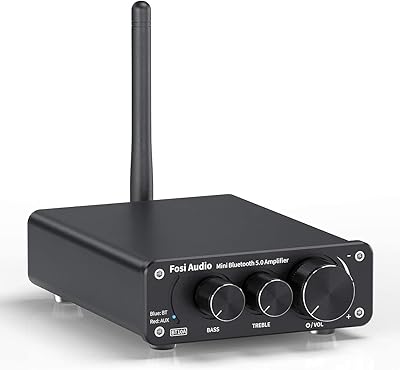
Fosi Audio TDA7498E
83%
88%
Sound Quality
93%
Value for Money
71%
Build Quality
74%
Power Output & Headroom
66%
Noise Floor & Background Hiss
More
Fosi Audio BT10A
Fosi Audio BT10A
81%
93%
Value for Money
82%
Sound Quality
91%
Noise Floor
84%
Bluetooth Performance
67%
Power Output
More
Fosi Audio BT30D
Fosi Audio BT30D
78%
83%
Sound Quality
88%
Subwoofer Performance
81%
Bluetooth Connectivity
91%
Value for Money
62%
Build Quality
More
Fosi Audio BT20A
Fosi Audio BT20A
80%
93%
Value for Money
84%
Sound Quality
81%
Build Quality
96%
Ease of Setup
72%
Bluetooth Performance
More
Fosi Audio ZA3
Fosi Audio ZA3
83%
93%
Audio Clarity & Low Noise Floor
88%
Power Output & Headroom
91%
Build Quality & Chassis
94%
Connectivity & Input Options
82%
Op-Amp Rolling Experience
More
Fosi Audio TB10A
Fosi Audio TB10A
79%
83%
Sound Quality
86%
Build Quality
91%
Value for Money
71%
Power Output
93%
Setup & Ease of Use
More
Fosi Audio BL20A
Fosi Audio BL20A
80%
86%
Sound Quality
91%
Value for Money
67%
Bluetooth Performance
78%
Build Quality
89%
Input Versatility
More
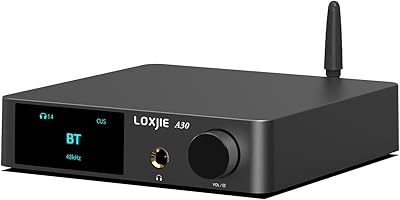
LOXJIE A30
LOXJIE A30
79%
86%
Sound Quality
82%
Build Quality
91%
Value for Money
89%
Input Versatility
63%
Bluetooth Performance
More
Douk Audio OK013 Mini 2.1 Channel HiFi Stereo Amplifier
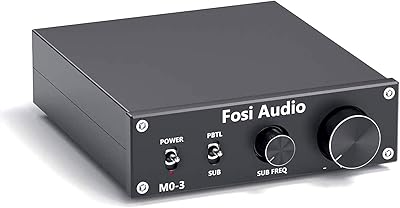
75%
83%
Value for Money
71%
Sound Output & Power
77%
Build Quality
88%
Ease of Installation
58%
Thermal Management
More
Fosi Audio M04 Subwoofer Amplifier
89%
94%
Bass Performance
91%
Sound Clarity
88%
Build Quality
90%
Ease of Setup
87%
Thermal Management
More

FAQ

A 32V power supply is included in the box, so you can connect your speakers and a source and start listening right away. That said, if you plan to drive larger or less sensitive speakers at higher volumes, many users recommend upgrading to a 48V supply separately for more headroom — but it is not required to get started.

Yes, the V3 is rated for speakers between 2 and 8 ohms, so 4-ohm speakers are fully supported. Just keep in mind that lower-impedance speakers draw more current, which means the included 32V supply will reach its ceiling sooner at high volumes compared to an 8-ohm load.

That instinct is correct — 300W per channel is a peak figure under ideal lab conditions, not what you will get in everyday use with the bundled power supply. In a typical desktop setup with average-sensitivity bookshelf speakers, the real-world output is more than sufficient for near-field listening, but it is not a room-filling powerhouse for large spaces. Think of the wattage spec as a ceiling that you will rarely approach, not a promise of constant output.

Op-amp rolling just means swapping out a small chip on the circuit board for a different one to subtly alter the sound character — think of it like changing the tone of the amp without touching any wiring. You absolutely do not need to do it; the stock NE5532 sounds perfectly good as shipped. It is simply an optional tweak for those who enjoy experimenting, and the socketed design means the stock chip pops back in if you ever want to reverse it.

Not directly, unless your turntable has a built-in phono preamp. A standard turntable outputs a phono-level signal that needs to be amplified and equalized before hitting a line-level input like the RCA on this amp. If your turntable has a built-in preamp or a line-level output switch, you are fine — otherwise you will need a separate phono stage between the turntable and the Fosi Audio V3 Stereo Amplifier.

Yes, and the pre-out on this unit is better implemented than on earlier Fosi models. The output level tracks the main volume knob, so when you turn the amp up or down, the signal going to your powered subwoofer adjusts in tandem — no need to manually match levels separately. Just connect an RCA cable from the pre-out to your subwoofer's line input and use the sub's own crossover to set the blend point.

The whole-body heatsink design handles continuous operation well, and Class D amplifiers are inherently more efficient than Class A/B designs, generating less waste heat. Users regularly run this mini amp for extended listening sessions without issue, as long as it has reasonable airflow around it. Avoid enclosing it in a tight cabinet with no ventilation, as passive cooling needs moving air to work effectively.

It works well in that role as long as your TV has an analog RCA audio output or you use an optical-to-analog converter between the TV and this amp. The single RCA input is all you need for a two-channel TV audio setup, and the result is typically a significant improvement over built-in TV speakers when paired with a decent pair of bookshelf speakers.

A budget receiver gives you more inputs, usually built-in Bluetooth, and sometimes a phono stage — so it wins on connectivity flexibility. This Class D amplifier, on the other hand, tends to offer a cleaner noise floor and lower operating temperature in a much smaller footprint. If you only need one source and value desk space and audio cleanliness over feature count, the V3 is usually the better pick. If you need to juggle multiple sources daily, a receiver is the more practical choice.

For most desktop nearfield setups with runs under 10 feet, standard 18 AWG speaker wire is perfectly adequate. If you are running longer cable lengths or using lower-impedance speakers, stepping up to 16 AWG reduces resistance and keeps signal transfer efficient. The spring-clip binding posts on this amp accept bare wire or pin connectors but can be slightly tight with very thick gauge wire, so anything heavier than 14 AWG may be awkward to connect cleanly.