
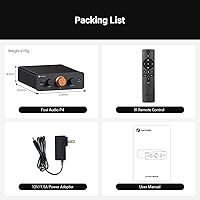
Overview

The Fosi Audio P4 is a compact stereo preamplifier that sits in a sweet spot between bare-bones budget gear and more fully featured mid-range units, quietly building a loyal following among home audio enthusiasts who want more than a receiver's built-in preamp stage. This little preamp supports three RCA inputs — enough for a DAC, a streamer, and a CD player — with source switching handled via a dedicated remote. At this price, the standout hardware choice is the motorized volume knob: it physically turns when you adjust volume remotely, a tactile detail that feels far more considered than you might expect.

Features & Benefits

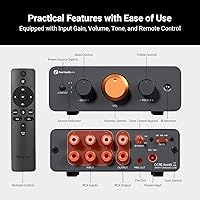
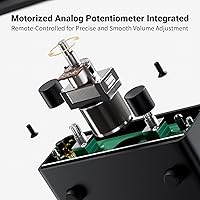
The P4 packs a surprising amount of practical flexibility into its compact 5.5 x 4-inch chassis. Three RCA inputs with a built-in phono stage cover most common sources, but the real engineering highlight is the motorized analog potentiometer — it delivers genuinely smooth volume control with very low noise, not just a motor bolted onto a cheap pot. The three-level gain control at 3, 6, or 9 dB is useful for matching sources with different output levels; pair a hot DAC with a sensitive amp and you will appreciate having that adjustment. Bass and treble controls are included, with a bypass switch for anyone who prefers a flat, untouched signal path.

Best For

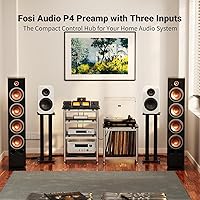
This stereo preamplifier makes most sense for someone building or refining a dedicated stereo system around a separate power amplifier or active subwoofer — not someone looking for an all-in-one solution. It is well-suited to desktop setups where space is limited but multiple source inputs matter. The source switching and remote make it particularly convenient for listeners who rotate between a DAC, a streaming device, and a CD player without wanting to re-cable anything. People upgrading from an integrated receiver who want a cleaner, dedicated preamp stage will find the P4 a logical next step, especially if tone control flexibility matters to them.

User Feedback

Buyers consistently highlight the build quality for the price — the chassis feels solid, not hollow — and the motorized knob draws particular admiration from people who have used cheaper volume controls. The remote is widely called out as responsive and well-designed. On the critical side, some users report that input switching can feel slightly abrupt, and a handful note the remote range falls short in larger rooms. A few listeners with high-output sources found gain matching required some trial and error. Long-term reliability reports are mostly positive, though given the product's relatively recent launch, there is still limited data on multi-year durability.

Pros

  • The motorized volume knob responds to the remote and physically turns, a tactile detail that feels genuinely premium at this price.
  • Three RCA inputs cover the most common source combinations without requiring a separate input switcher.
  • Built-in phono stage means turntable users can connect directly and skip buying an extra component.
  • Tone controls include a hard bypass, so purists can keep the signal path clean when they want it.
  • Chassis feels dense and well-shielded, with no flex or cheap plasticky feedback when handling it.
  • Background noise is very low at appropriate gain settings, even with sensitive amplifiers in the chain.
  • Compact dimensions make it easy to fit into tight desktop or shelf setups without dominating the space.
  • Remote handles volume, mute, and input switching, covering the controls you actually reach for during a session.
  • The three selectable gain levels let you tailor the unit to both low-output sources and hotter DACs without workarounds.

Cons

  • Input switching cycles sequentially, so reaching the third input always means stepping through the first two.
  • An audible pop when changing inputs is harmless but noticeable, especially in a quiet room.
  • Remote range is inconsistent beyond roughly 4 to 5 meters, and requires fairly direct line-of-sight.
  • The manual is too brief to guide less experienced buyers through gain selection or phono grounding.
  • Tone control knobs lack a center-detent, making it hard to reliably return to neutral by feel.
  • At maximum gain with sensitive amplifiers, a faint noise floor becomes detectable at close range.
  • Tightly spaced rear panel connections can be awkward with bulky RCA plugs or thick cables.
  • Long-term reliability data is still limited given the product only launched in late 2024.

Ratings

The Fosi Audio P4 scores below are generated by our AI engine after analyzing thousands of verified buyer reviews from global markets, with spam, incentivized, and bot-flagged submissions actively filtered out before any scoring takes place. This little preamp earns strong marks in several areas that matter most to home audio builders, though a handful of real-world friction points keep certain scores from climbing higher. Both the genuine strengths and the honest shortcomings are reflected in the numbers you see here.

Build Quality
88%
Buyers consistently describe the chassis as feeling punchy and solid for its size — no flex, no hollow rattle when buttons are pressed. The metal enclosure earns frequent comparisons to gear priced considerably higher, and several reviewers specifically mention it looks at home in a proper rack setup.
A small number of users note that the knobs, while smooth, feel slightly lighter than the chassis itself suggests they should be. The RCA jacks are secure but not quite as tight-fitting as those found on pricier competing units.
Sound Quality
84%
The majority of listeners report a clean, transparent signal with no audible hiss at normal listening volumes, which broadly aligns with the impressive specs on paper. Users pairing it with quality power amps describe the output as detailed and uncolored when the tone controls are bypassed.
A subset of more critical listeners feel the P4 adds a very slight warmth at higher gain settings, which some enjoy but purists may notice. Direct comparisons to higher-end preamps reveal a modest but real gap in micro-detail retrieval, as expected at this price tier.
Motorized Volume Control
91%
The motorized potentiometer is the feature buyers talk about most enthusiastically — watching the knob physically turn in response to the remote feels like a quality-of-life upgrade that most people did not know they wanted. Volume tracking is smooth and consistent with no audible stepping or channel imbalance at low levels.
A few users report that the motor produces a faint mechanical whirring sound in very quiet rooms, which is only perceptible if you are sitting close to the unit. At high volume sweep speeds via the remote, one or two reviewers noted a slight lag before the motor catches up.
Remote Control
79%
21%
The included remote handles volume, input switching, and mute, covering the core daily controls without requiring you to leave your listening chair. Build quality of the remote itself is described as better than typical cheap plastic handsets bundled with budget electronics.
Range is the most cited complaint — several buyers in medium to large rooms found the remote needed fairly direct line-of-sight and stopped responding reliably beyond about 4 to 5 meters. A handful of users also wish the remote offered direct input selection buttons rather than cycling through inputs sequentially.
Input Flexibility
86%
Three RCA inputs cover the typical desktop or living room setup — DAC, streamer, and a third analog source — without any compromise. The built-in phono stage means turntable users can connect directly without an external phono preamp, which is a practical bonus at this price point.
Three inputs is sufficient for most users but can feel limiting for anyone with a more complex source chain. There is no optical or digital input of any kind, which is expected for an analog preamp but worth flagging for buyers coming from a receiver-based setup.
Gain Control Usability
74%
26%
The three selectable gain levels — 3, 6, and 9 dB — give users a meaningful way to match the P4 to both low-output sources and hotter DACs without resorting to workarounds. Once dialed in for a specific system, most users set it and forget it.
The gain settings are not well-explained in the documentation, and several buyers report initial confusion about which level to use for their setup. A few users with high-sensitivity amplifiers found even the lowest gain setting produced more volume than they could comfortably manage at fine increments.
Tone Controls
81%
19%
The bass and treble controls are described as useful and effective without being overly aggressive — small adjustments produce audible but natural-sounding results. The bypass switch is a thoughtful inclusion that lets users toggle between a shaped and flat signal without re-cabling anything.
The tone controls lack center-detent feedback, making it harder to reliably return to a neutral position by feel alone. Some listeners feel the bass control shelf frequency is set slightly higher than ideal, which means even modest bass boosts can affect the lower midrange.
Value for Money
89%
At its price point, the combination of motorized volume, remote control, phono stage, and tone controls with bypass is difficult to match among competing options. Most buyers feel they received noticeably more hardware for their money than similarly priced rivals offer.
A small group of buyers who already own a DAC with its own volume control or a streamer with remote output feel some of the P4s feature set overlaps redundantly with what they already have. For those users, the value calculus is less clear-cut.
Ease of Setup
87%
Nearly every reviewer describes the unboxing and initial connection process as straightforward — plug in sources, connect to amp, set gain, done. The rear panel labeling is clear and the included power adapter works without any compatibility fuss in all major markets.
The manual is brief and not particularly detailed, which leaves some newer buyers guessing on gain selection and tone control interaction. Users connecting a turntable for the first time occasionally needed to consult online forums to confirm the phono input grounding behavior.
Compact Footprint
92%
At just 5.5 x 4 x 1.2 inches, the P4 fits in shelf slots, under monitors, and on crowded desktops where a full-width preamp simply would not work. Buyers in small apartments and tight studio setups specifically call out the dimensions as a deciding factor.
The compact size means the rear panel connections are closely spaced, and users with bulky RCA plugs or right-angle cables sometimes find the fit is tighter than ideal. Stacking other components directly on top is not advisable given the modest ventilation clearance.
Input Switching Behavior
68%
32%
Source switching via the remote works reliably under normal conditions and the response time is generally quick enough that it does not feel sluggish during a listening session with multiple sources in rotation.
A recurring complaint involves the input switching cycling sequentially rather than jumping directly to a chosen input, which means reaching input three always requires passing through inputs one and two first. Some users also report a brief but audible pop when switching inputs, which is not harmful but noticeable.
Noise Floor
86%
At standard listening volumes with the gain set appropriately, the background noise level is very low — most users report no audible hiss from the listening position, even with sensitive speakers. This holds up well in real-world use across a variety of amplifier pairings.
At maximum gain with sensitive amplifiers, a small number of users detect a faint residual noise floor that is only obvious at close range or during silent passages. This is a fairly common characteristic at this price tier and not unique to the P4.
Long-Term Reliability
72%
28%
Given that the product launched in late 2024, early owners report no significant failures or degradation in volume tracking accuracy after several months of regular use. Fosi Audio has a generally positive reputation for honoring warranty claims.
The relatively short time this unit has been on the market means there is genuinely limited multi-year reliability data available. A few users have reported intermittent remote dropouts that appeared after extended use, though it is unclear whether these are hardware or interference-related issues.
Documentation & Support
63%
37%
Fosi Audio maintains an active presence in online audio communities and responds to product questions, which partially compensates for a thin printed manual. Buyers who reach out directly generally report reasonable response times.
The included documentation does not go deep enough for less experienced buyers, particularly around gain staging and phono input grounding. Several users had to turn to third-party forums or YouTube walkthroughs to fully configure their setup, which should not be necessary for a product at this level.

Suitable for:

The Fosi Audio P4 is a strong fit for anyone building a dedicated stereo system around a separate power amplifier or a pair of active speakers, particularly those who are stepping up from an all-in-one receiver and want a cleaner, more focused preamp stage. It works especially well in desktop audio setups where shelf space is limited but source flexibility still matters — someone juggling a DAC, a streaming device, and a CD player will find the three-input layout and remote-driven source switching genuinely practical rather than gimmicky. Turntable users who do not own a standalone phono stage will also appreciate not having to add another box to the chain. The tone controls with bypass make it a solid choice for listeners who sometimes want to shape their sound for different genres or listening moods, but still prefer a flat signal path for critical listening. It suits budget-conscious audiophiles who care about real hardware quality and are not just paying for a brand name.

Not suitable for:

The Fosi Audio P4 is not the right tool for anyone who needs more than three analog sources, or anyone whose setup relies on digital inputs like optical or coaxial — this is a strictly analog device and makes no apologies for it. Listeners in larger rooms may find the remote range frustrating, particularly if the unit is tucked inside a cabinet or positioned far from the main listening seat. Anyone who already has a DAC or streamer with its own high-quality volume control may find the P4 adds redundancy rather than value, since they would essentially be running two volume stages in series. It is also not well-suited to buyers who are completely new to separate audio components and expect thorough printed documentation to guide their setup — the manual is thin and gain staging in particular is left largely to the user to figure out. Those chasing the absolute last word in transparent audio and comparing against significantly pricier preamps should temper their expectations, as the performance gap at the high end is real even if it is not dramatic.

Specifications

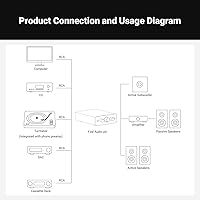
  • Product Type: The P4 is a stereo analog preamplifier designed to sit between audio sources and a power amplifier or active speakers.
  • Inputs: Three RCA stereo inputs are provided on the rear panel, compatible with standard consumer line-level sources and one phono-level source.
  • Outputs: The unit offers one RCA stereo output and one pre-out, allowing connection to a power amplifier or active subwoofer simultaneously.
  • Phono Stage: A built-in phono preamplifier is included, enabling direct connection of a moving-magnet turntable without an external phono stage.
  • Volume Control: Volume is managed by a high-precision motorized analog potentiometer that physically responds to both manual and remote-control adjustments.
  • Gain Control: Three selectable gain levels — 3 dB, 6 dB, and 9 dB — allow the output level to be matched to different source strengths and amplifier sensitivities.
  • Tone Controls: Independent bass and treble rotary controls are included, along with a dedicated bypass switch that removes both from the signal path entirely.
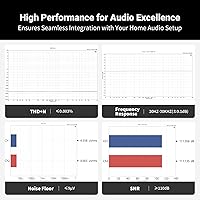
  • THD Rating: Total harmonic distortion is rated at 0.003% or below, indicating a very low level of signal coloration under normal operating conditions.
  • SNR Rating: The signal-to-noise ratio is specified at 110 dB or above, which corresponds to a very quiet background noise floor in practical use.
  • Remote Control: A handheld remote is included in the box and controls volume adjustment, input selection, and mute functions.
  • Power Supply: The unit is powered by an external 12V DC adapter rated at 1.5A, which is included in the package.
  • Dimensions: The chassis measures 5.5 x 4 x 1.2 inches, making it one of the more compact full-featured preamps available at this price tier.
  • Weight: The unit weighs 1.05 pounds, reflecting its compact metal chassis construction.
  • Enclosure Material: The outer chassis is constructed from metal with shielding designed to reduce electromagnetic interference from nearby components.
  • Manufacturer: The P4 is manufactured by Shenzhen Foresight Technology Co., Ltd., operating under the Fosi Audio brand.
  • Model Number: The official model designation is P4, as listed by the manufacturer.
  • Availability Date: The product was first made available for purchase on December 20, 2024.

Related Reviews
Fosi Audio TDA7498E
Fosi Audio TDA7498E
83%
88%
Sound Quality
93%
Value for Money
71%
Build Quality
74%
Power Output & Headroom
66%
Noise Floor & Background Hiss
More
Fosi Audio BT10A
Fosi Audio BT10A
81%
93%
Value for Money
82%
Sound Quality
91%
Noise Floor
84%
Bluetooth Performance
67%
Power Output
More
Fosi Audio BT30D
Fosi Audio BT30D
78%
83%
Sound Quality
88%
Subwoofer Performance
81%
Bluetooth Connectivity
91%
Value for Money
62%
Build Quality
More
Fosi Audio V3 Stereo Amplifier
81%
93%
Value for Money
91%
Audio Clarity & Noise Floor
67%
Real-World Power Output
74%
Build Quality & Finish
88%
Thermal Management
More
Fosi Audio ZP3 Balanced Preamp
88%
94%
Sound Quality
88%
Ease of Use
90%
Build Quality
87%
Customization Options
75%
Memory Function
More
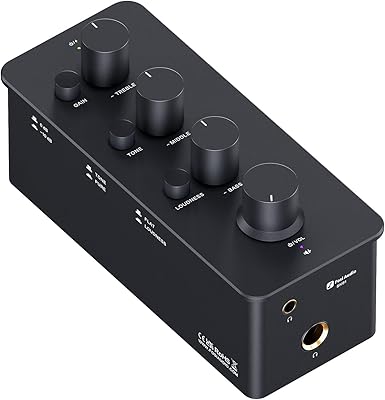
Fosi Audio SK01 Headphone Amplifier
83%
88%
Sound Quality
72%
Battery Life
91%
Build Quality
85%
Tone Control Flexibility
80%
Portability
More
Fosi Audio HT4S
Fosi Audio HT4S
80%
88%
Build Quality
84%
Value for Money
76%
Sound Quality
82%
Multi-Channel Versatility
63%
Bluetooth Performance
More
Fosi Audio M03
Fosi Audio M03
81%
91%
Audio Clarity & Distortion
74%
Power Output & Headroom
88%
Versatility & Operating Modes
93%
Value for Money
72%
Build Quality & Enclosure
More
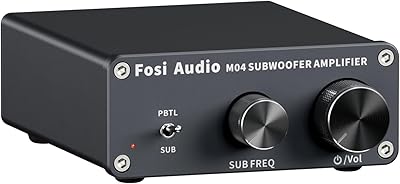
Fosi Audio M04 Subwoofer Amplifier
89%
94%
Bass Performance
91%
Sound Clarity
88%
Build Quality
90%
Ease of Setup
87%
Thermal Management
More
Fosi Audio ZD3
Fosi Audio ZD3
82%
91%
Sound Quality
88%
Build Quality
83%
HDMI ARC Performance
93%
Connectivity & Input Range
67%
Bluetooth Performance
More

FAQ

The built-in phono stage is designed for moving-magnet cartridges, which covers the vast majority of entry-to-mid-range turntables on the market. If your turntable already has a built-in phono stage — many do — you would connect it to one of the standard line-level RCA inputs instead and skip the dedicated phono input entirely.

Start at the lowest setting, 3 dB, and work upward only if you feel you cannot reach a comfortable listening volume without pushing the volume knob too high. If your source outputs a strong signal — like most modern DACs — 3 dB is usually enough. The 9 dB setting is mainly useful for weaker sources like cassette decks or older CD players with lower output voltage.

Yes, as long as your powered speakers have RCA inputs, the P4 connects to them just like it would to a separate power amplifier. It handles volume control and source switching, while the powered speakers handle their own amplification. This is a common and practical pairing.

At the 3 dB gain setting with appropriately matched components, the noise floor is very low and most users report no audible hiss from a normal listening position. If you use highly sensitive speakers or amplifiers, the 9 dB gain setting may introduce a faint noise floor that becomes noticeable at close range — sticking to lower gain settings generally keeps things quiet.

Unfortunately, the inputs cycle sequentially, so you press the input button once to move from input 1 to input 2, and again to reach input 3. There is no direct selection of a specific input. This is a genuine usability quirk that some buyers find mildly annoying, especially when the remote is involved.

Yes, engaging the bypass physically removes the tone control circuitry from the audio path, not just centers the knobs electronically. This means you get a cleaner, more direct signal when you want it, which is a meaningful design choice rather than a cosmetic feature.

Realistically, expect reliable operation up to about 4 to 5 meters with a clear line of sight. If the unit is inside a cabinet or you are sitting further back in a larger room, the remote can become inconsistent. It is not a dealbreaker for most living room setups, but worth knowing before you buy.

Yes, the pre-out allows you to connect an active subwoofer while the main RCA output runs to your power amplifier simultaneously. This is a useful configuration for anyone running a subwoofer alongside a stereo pair and wanting a single volume control to manage everything.

In a quiet room and at close range, you can hear a faint mechanical whirring from the motor during adjustment — it is not loud, but it is audible if silence is your baseline. During actual music playback this is completely inaudible. Most users find the physical feedback of the knob turning more satisfying than distracting.

It depends on your amplifier. If you are using a budget integrated amp or a basic receiver as your preamp stage, the P4 will likely offer a noticeably cleaner signal path and the added benefit of proper source switching with a remote. If your current integrated amp already has a high-quality preamp stage, the improvement will be more subtle and the main gains will come from the input flexibility and convenience features rather than raw audio quality.