Overview

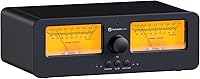
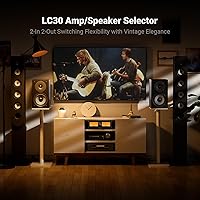
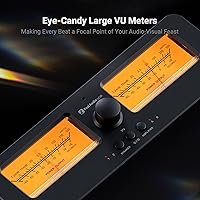
The Fosi Audio LC30 is a speaker selector and amplifier switcher that doubles as a visual centerpiece for any serious HiFi shelf — two large VU meters glow behind its all-aluminum alloy front panel, giving it an unmistakably retro character that most utilitarian switch boxes completely lack. The core problem it solves is straightforward: if you own two amplifiers and two pairs of passive speakers, rewiring every time you want to compare them gets old fast. This amp and speaker selector handles that routing cleanly, sitting at a mid-range price point that feels reasonable for the niche. First impressions lean heavily on build quality — it feels dense and well-machined, not hollow.

Features & Benefits

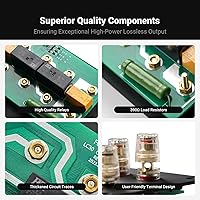
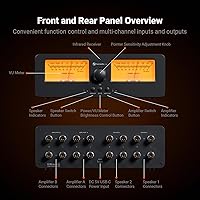
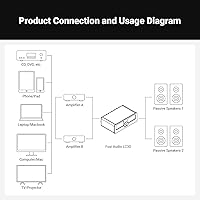
The switching matrix supports two amplifier inputs and two pairs of passive speakers, giving you four possible routing combinations — useful whether you are doing a proper A/B amp comparison or simply sending audio to different rooms. Signal integrity specs are legitimately impressive for a passive switcher: THD under 0.001% and an SNR at or above 108dB mean this VU meter switcher adds essentially nothing audible to the signal path. The 390Ω protective resistors and thickened copper traces help protect your amplifiers during switching. Backlight brightness adjusts across five levels, and needle sensitivity is tunable to match your amplifier's output level. The USB-C power input is a thoughtful touch — a standard phone charger runs it, no proprietary adapter required.

Best For

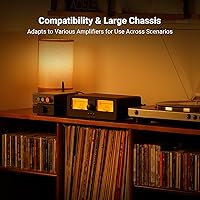
This amp and speaker selector makes the most sense for audiophiles who already own two separate amplifiers — say, a tube amp for late-night listening and a punchy Class D unit for daytime energy — and want to switch between them from the couch without touching a single cable. It is equally practical if you are driving two pairs of passive speakers in the same room and need clean, instant routing. Fosi Audio compact amp owners get added value since the enclosure top is sized to stack their units neatly. The glowing VU meters make this a natural fit for desktop HiFi setups where aesthetics genuinely matter alongside performance.

User Feedback

Among buyers, the LC30 has earned a strong early reputation — build quality and the visual impact of the VU meters are the most consistently praised qualities, with remote-controlled switching cited as a genuine convenience rather than a gimmick. On the critical side, some users arrive expecting the meters to track audio levels dynamically the way a studio meter would; they do not operate that way, so managing expectations before purchase is worthwhile. A faint relay click during switching is another noted point — it is normal behavior for relay-based designs and not a defect. Most buyers report no audible degradation with the unit in the signal path, which ultimately matters most.

Pros

  • Solid all-aluminum chassis feels premium and matches the quality of mid-to-high-end audio components it sits beside.
  • Relay-based switching introduces no audible coloration — most listeners cannot detect it in the signal path.
  • Remote control makes amp and speaker switching effortless from across the room during a listening session.
  • USB-C power means any standard phone charger runs it — no proprietary adapter to lose or replace.
  • Four routing configurations from a 2-in/2-out matrix cover the most common multi-amp and multi-speaker scenarios.
  • THD under 0.001% and SNR at or above 108dB are genuinely strong specs for a passive switcher at this price.
  • Adjustable VU meter needle sensitivity lets you tune the visual display to match your specific amplifier output.
  • Five backlight brightness levels suit everything from a dim evening listening room to a bright daytime desk setup.
  • Top-deck design accommodates stacking compatible compact amplifiers, keeping the overall footprint tidy.
  • Early buyer reception is strong, with most reporting no reliability issues in the months since launch.

Cons

  • VU meters are decorative indicators, not dynamic level meters — buyers with studio expectations will be let down.
  • An audible relay click occurs at every switching event, which can startle users who are not expecting it.
  • The bundled remote feels noticeably cheap compared to the quality of the machined aluminum enclosure.
  • No source-level switching means a second device is still needed if you manage multiple audio inputs upstream.
  • Binding post spacing can make attaching thick-gauge cables or oversized banana plugs slightly awkward.
  • Backlight dimming is stepped rather than continuous, leaving some users unable to land on their preferred brightness.
  • At nearly 9.5 inches deep, it can be a tight fit in shallow shelving units or compact audio furniture.
  • Long-term reliability data is still limited given the product only launched in early 2024.
  • No line-level or source input support limits the unit strictly to the amplifier-to-passive-speaker stage.
  • Users with high-efficiency speakers and resolving systems may notice a very slight noise floor increase in the path.

Ratings

The scores below for the Fosi Audio LC30 were generated by our AI system after analyzing verified buyer reviews from multiple global markets, with spam, bot-submitted, and incentivized feedback actively filtered out. Ratings reflect the full picture — where this amp and speaker selector genuinely earns its place in a HiFi setup, and where real buyers have run into friction.

Build Quality
91%
The all-aluminum alloy enclosure consistently draws praise from buyers who have handled cheaper plastic switchers before. It sits on the shelf with real authority — no flex, no rattle, no lightweight feel that undermines confidence in a component sitting between expensive amplifiers and speakers.
A small number of buyers noted minor cosmetic inconsistencies on the front panel finish, such as slightly uneven brushing near the edges. Nothing structural, but worth mentioning for those who care deeply about fit and finish at this price tier.
Signal Transparency
88%
Most listeners report that routing audio through this VU meter switcher introduces no perceptible coloration or loss — the THD and SNR specs hold up in practice. Buyers who did direct A/B comparisons between patching through the unit and hardwiring their speakers generally could not detect a difference.
A small subset of highly sensitive listeners using revealing high-efficiency speakers noted a very slight noise floor increase. It is unlikely to affect most systems, but those running particularly resolving setups should factor this in.
VU Meter Aesthetics
86%
The dual large meters with adjustable backlight are the unit's most talked-about visual feature — buyers routinely describe them as the best-looking element of their entire audio shelf. Five brightness levels let you dial from subtle ambient glow to a bold retro display that works well in dimly lit listening rooms.
Buyers who expected studio-style dynamic metering are often surprised to find the needles do not track real-time audio levels in the traditional sense. This is a decorative indicator, not a precision meter, and that distinction is important to understand before purchasing.
Switching Convenience
89%
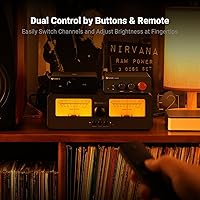
Being able to switch between two amplifiers or two speaker pairs from across the room using the included remote is genuinely useful during seated listening sessions. Buyers doing amp comparisons — for instance, toggling between a tube amp and a Class D unit mid-track — find the one-tap operation exactly as frictionless as advertised.
The relay mechanism produces an audible click at the moment of switching, which some buyers initially mistook for a malfunction. It is completely normal behavior for relay-based designs, but the lack of upfront documentation about this has generated a handful of unnecessary concern in reviews.
Ease of Setup
84%
Connecting two amplifiers and two speaker pairs is straightforward thanks to clearly labeled binding posts and a logical rear-panel layout. Most buyers report being up and running within fifteen minutes, with no need to consult any manual for basic operation.
The binding posts, while premium-feeling, are spaced in a way that makes attaching thicker gauge speaker cables slightly awkward if you are using large banana plugs or heavy-gauge bare wire terminations. Not a dealbreaker, but a minor ergonomic note.
Remote Control Quality
73%
27%
The included remote works reliably at typical room distances and covers all key functions — source switching, speaker switching, and backlight adjustment. For a bundled accessory in this category, buyers generally consider it a welcome addition rather than an afterthought.
The remote itself feels noticeably lightweight and budget-grade compared to the premium chassis of the unit. Several buyers mentioned it feels out of place next to the machined aluminum body, and a few reported needing to point it precisely rather than casually from an angle.
Power Solution
87%
USB-C power at 5V DC is an unexpectedly practical choice for an audio component. Buyers appreciate that any modern phone charger or USB hub port can power the unit, eliminating the need for yet another proprietary wall adapter cluttering up an already busy equipment rack.
A handful of buyers raised questions about whether powering the unit from a low-quality USB source could introduce electrical noise into the signal path. Using a clean, well-regulated USB-C adapter is advisable, though most buyers report no issues with standard chargers.
Value for Money
79%
21%
For a switcher that handles genuine relay-based signal routing, offers a remote, and looks this good on a shelf, most buyers feel the pricing is fair for the niche. The combination of solid specs and visual appeal makes it hard to find a direct competitor at the same price.
Buyers who need strictly utilitarian switching without any interest in the VU meter aesthetics will find cheaper, more basic options available. The premium here is partly for the visual design, and those who do not value that element may feel they are overpaying for core functionality.
Compatibility Range
83%
Support for Class A, Class B, Class AB, Class D, and tube amplifiers makes this amp and speaker selector broadly usable across a wide range of HiFi setups. The 250W per channel ceiling covers virtually all home audio use cases, and the 4-ohm terminating impedance handles most common passive speaker loads.
The unit is strictly a passive switcher for amplifier-to-speaker routing — it does not handle source switching at the line level, so buyers hoping to manage multiple source components will need a separate solution upstream of their amplifiers.
Backlight & Display Control
77%
23%
Five discrete brightness steps give enough range to suit both bright daytime environments and dark evening listening rooms. The ability to also adjust needle sensitivity is a genuinely useful touch that lets you tune the visual response to your specific amplifier's output characteristics.
The brightness adjustment is stepped rather than continuously variable, so some buyers find the gap between adjacent levels slightly too coarse for their preferred ambient setting. A smooth dimming curve would serve the experience better.
Footprint & Placement
81%
19%
At just under 9.31 inches deep and 5.65 inches wide, the unit fits comfortably on a standard audio shelf or equipment rack without dominating the space. The flat top surface being sized to accept Fosi Audio compact amplifiers is a clever design choice that appeals to owners building a matched stack.
The depth of nearly 9.5 inches can be a snug fit in shallow shelving units or wall-mounted audio furniture. Buyers with tight rack depth constraints should measure carefully before purchasing.
Documentation & Support
66%
34%
Fosi Audio has a reasonably active customer support presence and their products generally come with enough basic documentation to get started. Buyers familiar with the brand report positive experiences reaching out directly for technical questions.
The included documentation does not adequately explain the VU meter behavior or the relay click during switching — two of the most common sources of buyer confusion in reviews. Clearer out-of-box guidance on these points would prevent a meaningful share of negative feedback.
Long-Term Reliability
74%
26%
Given the product launched in April 2024, early indications from buyers are positive — no widespread reports of relay failures, binding post degradation, or backlight burnout. The protective load resistors and relay-based switching architecture are proven, durable design choices in the category.
The relatively short time on market means long-term durability data is still limited. Buyers making a purchase with a five-plus year horizon should factor in that the track record for this specific model is still being established.

Suitable for:

The Fosi Audio LC30 is built for the kind of hobbyist who has accumulated more than one amplifier and is tired of crawling behind their rack to swap speaker cables every time they want to compare how a tube amp sounds against a Class D unit on the same track. It makes equal sense for anyone running two pairs of passive speakers in a single room — a desktop set and a bookshelf pair, for instance — who wants to switch between them instantly without powering anything down. Buyers already invested in the Fosi Audio ecosystem will find the matching aesthetic and top-deck amp-mounting design a particularly satisfying fit. The remote control makes this amp and speaker selector genuinely practical for seated, relaxed listening sessions rather than just a technical convenience. If you also care about how your equipment looks — the VU meters add a warm, retro glow that most utilitarian switch boxes simply do not offer — this unit rewards that preference without sacrificing signal quality.

Not suitable for:

The Fosi Audio LC30 is strictly a passive switcher between amplifiers and passive speakers — it does not handle source-level switching, so buyers hoping to manage multiple streaming devices, turntables, or DACs will need a separate solution upstream. Anyone expecting the VU meters to behave like precision studio meters that track real-time audio dynamics will be disappointed; the meters are visual indicators, not calibrated measurement tools, and that distinction matters if metering accuracy is part of your workflow. Listeners running active powered speakers rather than passive speaker pairs will find no use for this unit at all, since it is designed specifically for the amplifier-to-passive-speaker signal path. Buyers who want the simplest, lowest-cost switching solution and have no interest in the visual design element will likely feel they are paying a premium for aesthetics they do not need. Finally, if your shelving or equipment rack is shallow, the nearly 9.5-inch depth requires careful measurement before committing.

Specifications

  • Configuration: Accepts two amplifier inputs and routes to two pairs of passive speakers, enabling four distinct input-output combinations.
  • Max Power: Supports up to 250W of power transmission per channel, covering virtually all home audio amplifier outputs.
  • THD: Total harmonic distortion is rated below 0.001%, indicating a transparent signal path with negligible added coloration.
  • SNR: Signal-to-noise ratio is rated at or above 108dB, reflecting a very clean, low-noise signal passage through the unit.
  • Impedance: Terminating impedance is rated at 4 ohms, compatible with the majority of standard passive home speakers.
  • Load Resistors: Integrated 390Ω protective load resistors safeguard connected amplifiers from open-circuit conditions during switching.
  • Circuit Board: Internal PCB uses thickened copper foil traces to minimize resistance and support high-current signal transmission.
  • Switching Type: Relay-based switching mechanism provides clean, electronically controlled signal routing between inputs and outputs.
  • VU Meters: Dual large analog-style VU meters with five discrete backlight brightness levels and adjustable needle sensitivity.
  • Power Input: Powered via USB-C connector at DC 5V, compatible with any standard USB-C phone charger or powered USB hub port.
  • Controls: Operated via front-panel buttons and an included infrared remote control for source, speaker, and backlight adjustments.
  • Body Material: Full enclosure is constructed from all-aluminum alloy for structural rigidity and a premium tactile finish.
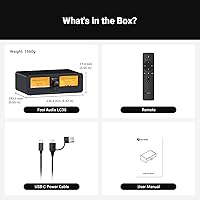
  • Dimensions: Unit measures 5.65″ wide by 3.05″ tall by 9.31″ deep, sized to fit standard audio shelving and equipment racks.
  • Weight: Assembled unit weighs 3.97 pounds, giving it a solid, stable feel on a shelf without being unwieldy to position.
  • Amp Compatibility: Fully compatible with Class A, Class B, Class AB, Class D, and tube amplifiers without requiring any additional adapters.
  • Top Deck: The flat top surface is dimensioned to physically accommodate two Fosi Audio compact amplifiers stacked on top.
  • Launch Date: First made available for purchase in April 2024, making it a relatively recent addition to the speaker switcher category.
  • Manufacturer: Designed and manufactured by Fosi Audio, a brand specializing in compact and affordable HiFi audio components.

Related Reviews
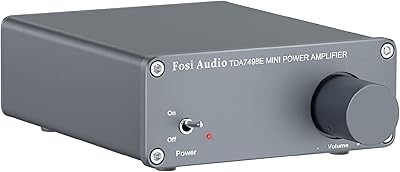
Fosi Audio TDA7498E
Fosi Audio TDA7498E
83%
88%
Sound Quality
93%
Value for Money
71%
Build Quality
74%
Power Output & Headroom
66%
Noise Floor & Background Hiss
More
Fosi Audio BT10A
Fosi Audio BT10A
81%
93%
Value for Money
82%
Sound Quality
91%
Noise Floor
84%
Bluetooth Performance
67%
Power Output
More
Fosi Audio BT30D
Fosi Audio BT30D
78%
83%
Sound Quality
88%
Subwoofer Performance
81%
Bluetooth Connectivity
91%
Value for Money
62%
Build Quality
More
Fosi Audio M03
Fosi Audio M03
81%
91%
Audio Clarity & Distortion
74%
Power Output & Headroom
88%
Versatility & Operating Modes
93%
Value for Money
72%
Build Quality & Enclosure
More
Fosi Audio ZP3 Balanced Preamp
88%
94%
Sound Quality
88%
Ease of Use
90%
Build Quality
87%
Customization Options
75%
Memory Function
More
Fosi Audio HT4S
Fosi Audio HT4S
80%
88%
Build Quality
84%
Value for Money
76%
Sound Quality
82%
Multi-Channel Versatility
63%
Bluetooth Performance
More
Fosi Audio SK01 Headphone Amplifier
83%
88%
Sound Quality
72%
Battery Life
91%
Build Quality
85%
Tone Control Flexibility
80%
Portability
More
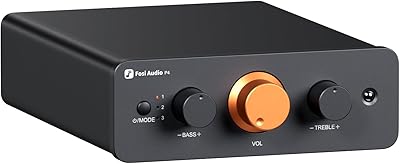
Fosi Audio P4
Fosi Audio P4
81%
88%
Build Quality
84%
Sound Quality
91%
Motorized Volume Control
79%
Remote Control
86%
Input Flexibility
More
Fosi Audio M04 Subwoofer Amplifier
89%
94%
Bass Performance
91%
Sound Clarity
88%
Build Quality
90%
Ease of Setup
87%
Thermal Management
More
Fosi Audio V3 Stereo Amplifier
81%
93%
Value for Money
91%
Audio Clarity & Noise Floor
67%
Real-World Power Output
74%
Build Quality & Finish
88%
Thermal Management
More

FAQ

It is designed to be a transparent passive switcher, not an amplifier or tone-shaping device. The vast majority of users report no audible difference when comparing audio routed through the unit versus a direct connection, and the THD and SNR specs back that up. If you are running very high-efficiency speakers in a highly resolving system, you might theoretically detect a marginal noise floor change, but for most home audio setups it is effectively inaudible.

This is one of the most common points of confusion, so it is worth being direct: the VU meters on this unit are visual indicators rather than precision calibrated meters that dynamically track your audio signal level in the traditional studio sense. They add a warm, animated retro aesthetic to your shelf, and needle sensitivity is adjustable, but they should not be compared to the metering on a mixing console or audio interface. If dynamic level metering accuracy matters to your workflow, this is not the right tool for that.

Nothing is wrong — that click is the relay mechanism engaging, and it is completely normal behavior for any relay-based switcher. The relay is what makes the switching electrically clean and reliable, but it does produce a small mechanical click sound as a byproduct. Many buyers are surprised by it initially, but once you know it is expected, it stops being a concern.

No — this amp and speaker selector is designed specifically for the signal path between an amplifier output and passive speakers. It routes speaker-level signals, not line-level signals. Active or powered speakers with their own built-in amplification connect at the line level and would require a different type of source switcher upstream of your amplifiers.

The unit runs on DC 5V via a standard USB-C connection, so any decent USB-C phone charger or powered USB port will work. Whether a USB-C cable or adapter is included in the box can vary by region and listing, so it is worth confirming at the time of purchase — but given how universally available USB-C chargers are, sourcing one is never a problem.

Yes, compatibility extends across Class A, Class B, Class AB, Class D, and tube amplifiers. That mixed tube-and-solid-state pairing is actually one of the most common and well-suited use cases for this switcher — being able to toggle between a warm tube amp and a clean Class D unit mid-session without touching any cables is exactly what it was designed for.

The switching matrix is fixed at two inputs and two outputs — there is no way to expand it to a third amplifier or a third speaker pair within this unit. If you need to manage three or more amplifiers or speaker pairs, you would need either a different switcher with greater channel count or a secondary switching unit in the chain.

The included remote uses standard infrared, so it requires a reasonably direct line of sight to the front of the unit. Most users find it works reliably at typical room distances — from a listening chair or sofa across a living room. It covers source switching, speaker switching, and backlight brightness adjustment. The remote itself is functional but feels lightweight compared to the aluminum chassis of the unit.

Yes, the top deck is intentionally sized to physically support two Fosi Audio compact amplifiers sitting on top of the unit. It is a deliberate design choice to let you build a tidy, matched stack rather than having components spread across a shelf. Just be mindful of ventilation if your amplifiers run warm during extended sessions.

There are five discrete brightness steps, ranging from a very dim, subtle glow up to a bright display. It is stepped rather than continuously variable, which means you cycle through set levels rather than smoothly dimming to an exact point. Most users find a comfortable setting within the five options, though a small number of buyers have noted they wished the steps were finer for their specific ambient lighting conditions.