
Overview

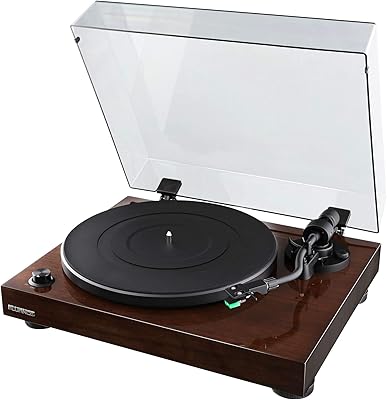
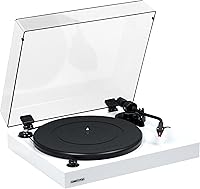
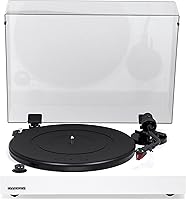
The Fluance RT83 occupies a genuinely interesting position in the turntable market — not a beginner toy, not a boutique luxury item, but a seriously considered mid-range deck built for listeners who have outgrown cheap all-in-one players. Fluance isn't a brand chasing trends; vinyl has been their focus for years, and this record player reflects that commitment through its Piano White MDF plinth and deliberate component choices. One thing buyers should know upfront: there is no built-in phono preamp. That's an intentional audiophile decision, not an omission — this deck is designed to shine when paired with a quality preamp and speakers.

Features & Benefits

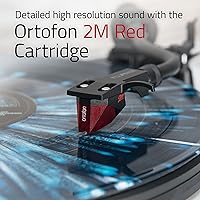
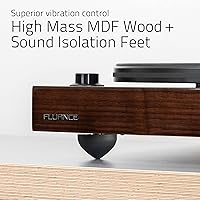
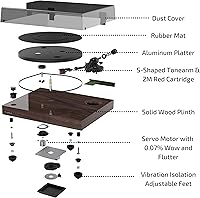
The Ortofon 2M Red cartridge bundled here is a genuine highlight — at this price tier, most decks ship with generic styli that smear the stereo image and add distortion; the 2M Red does neither. Its elliptical stylus traces grooves more accurately, and the improved channel separation means instruments actually sit where the recording placed them. The isolated speed control motor keeps wow and flutter at 0.07%, so piano notes don't drift and sustained strings hold their pitch. The high-mass MDF plinth and vibration-isolation feet physically absorb resonance before it colors the sound, while the passive S-shaped tonearm keeps the signal path completely free of added electronics.

Best For

This Fluance turntable makes the most sense for vinyl collectors upgrading from an entry-level all-in-one — the kind with a built-in speaker or a flimsy plastic tonearm that actively damages records. If you already have a stereo receiver with a phono stage, or you're willing to add an affordable external preamp, this record player will reward you with noticeably more detail and warmth than anything in the tier below. The Piano White finish makes it a living room centerpiece rather than a piece of gear you tuck away. It's also worth noting that the 2M Red stylus is upgradeable within Ortofon's lineup, giving you a clear upgrade path later.

User Feedback

Across well over a thousand reviews, sound quality and build are what buyers mention first — warm, detailed playback that genuinely surprises people stepping up from budget decks, and a physical build that feels solid rather than hollow. Setup is consistently described as straightforward, with the included accessory kit covering most first-timer needs. The recurring criticism is predictable but worth repeating: buyers who didn't research the phono preamp requirement found themselves stalled at first use. A handful of owners have flagged minor quality control variations — a dust cover hinge slightly off, occasional cosmetic inconsistencies — but these appear isolated. Against similarly priced competitors, this Fluance turntable wins on sound and overall value.

Pros

  • The Ortofon 2M Red cartridge is a genuinely thoughtful inclusion, delivering real channel separation that entry-level styli cannot match.
  • Sound quality earns consistent praise across a large review base — warm, detailed playback that surprises first-time upgraders.
  • The high-mass MDF plinth physically deadens resonance, keeping your listening environment's vibrations out of the signal.
  • Speed consistency is tight at 0.07% wow and flutter, so sustained notes and piano chords hold pitch reliably.
  • The Piano White finish looks considerably more expensive than the price tag suggests, making it a strong visual anchor in any room.
  • Ortofon's 2M stylus upgrade ecosystem means better performance is one stylus swap away when your budget and ear are ready.
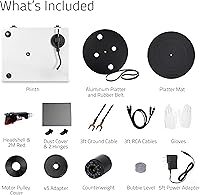
  • The accessory kit is comprehensive — RCA cables, ground wires, gloves, a bubble level, and a 45 adapter all come in the box.
  • Two-year direct manufacturer warranty and lifetime customer support set this Fluance turntable apart from many competitors at this tier.
  • Universal voltage compatibility makes it a practical choice for international buyers or those who move between countries.

Cons

  • No built-in phono preamp means an additional purchase is required before you can hear a single record — this surprises too many buyers.
  • The dust cover hinges feel noticeably flimsier than the rest of the build, with hinge failures appearing consistently in long-term reviews.
  • Minor quality control inconsistencies — small cosmetic variations, occasional plinth finish irregularities — surface often enough to be a pattern.
  • The Piano White high-gloss finish attracts fingerprints and visible dust, requiring more upkeep than matte or wood-grain alternatives.
  • Belt-drive maintenance is an eventual reality; Fluance could communicate the belt replacement timeline and process more proactively.
  • Calibrating the counterweight and anti-skate accurately really benefits from a stylus force gauge, which is not included in the box.
  • Speed switching between 33 and 45 RPM requires a brief platter settling period — buyers used to direct-drive tables may find this slow.
  • The true cost of entry is meaningfully higher than the deck price alone once a quality phono preamp is factored into the budget.

Ratings

The Fluance RT83 scores here reflect a synthesis of verified global buyer reviews, processed by AI to filter out incentivized submissions, bot activity, and outlier noise — leaving a clear picture of what real owners consistently experience. Strengths like sound quality and build craftsmanship score high, while friction points around setup requirements and minor quality control variation are reported honestly. Both sides of the ownership experience are represented, so you can make a fully informed decision.

Sound Quality
91%
Buyers who pair this record player with a decent preamp and bookshelf speakers consistently describe a warm, layered soundstage that genuinely surprises them coming from budget decks. Instruments have separation and air around them — something entry-level cartridges simply cannot deliver.
A small number of listeners with high-end reference systems note that the 2M Red, while excellent for the price, does show its limits on very demanding pressings — some top-end shimmer and micro-detail gets smoothed over compared to pricier stylus options.
Cartridge & Stylus Performance
88%
Including the Ortofon 2M Red at this price point is genuinely generous. Most competing decks bundle anonymous OEM cartridges that distort sibilants and blur the stereo image. The 2M Red tracks grooves accurately and handles dynamic passages — jazz brushwork, orchestral swells — with composure.
The 2M Red is an entry-level audiophile cartridge, not a reference one, and experienced listeners will notice. More importantly, buyers who eventually want to upgrade will need to factor in stylus or full cartridge replacement costs, which are an additional investment beyond the deck itself.
Build Quality & Materials
86%
The high-mass MDF plinth feels genuinely substantial — knocking on it produces a dull thud, not the hollow resonance you get from cheaper decks. The metal platter spins with smooth, consistent inertia, and the overall fit of components gives a reassuring sense of considered construction.
A recurring thread in buyer feedback involves minor inconsistencies: dust cover hinges that feel slightly loose out of the box, or cosmetic variations in the plinth finish on isolated units. These appear to be quality control edge cases rather than systemic issues, but they do surface with enough regularity to note.
Speed Consistency & Motor Performance
89%
The isolated AC motor with electronic speed control keeps wow and flutter at 0.07%, which in practice means piano sustains hold their pitch and long string notes decay naturally without wavering. Buyers who previously used decks with cheap synchronous motors notice the difference almost immediately.
Some owners report a brief settling period when first switching speeds between 33 and 45 RPM, where the platter takes a few rotations to stabilize fully. This is minor and typical of belt-drive designs, but buyers used to direct-drive tables may find the transition slightly slower than expected.
Tonearm Quality
84%
The S-shaped tonearm tracks well across the record surface and holds its anti-skate and counterweight settings reliably once dialed in. Buyers describe initial setup as straightforward, and the lack of any electronics in the signal path is a genuine technical advantage that keeps the audio chain clean.
The tonearm does not offer the same rigidity or bearing precision found on dedicated audiophile arms costing significantly more. A minority of buyers note that achieving optimal tracking force requires careful calibration, and the included tools for that process are functional but basic.
Vibration & Resonance Isolation
83%
The combination of a high-mass MDF plinth and adjustable isolation feet does meaningful work in real listening rooms. Buyers who place this record player on furniture near speakers report far less acoustic feedback compared to lightweight decks, letting them play music at realistic volumes without the cartridge picking up floor vibration.
The isolation feet are adjustable but relatively simple in design. In rooms with significant foot traffic or near subwoofers running at high levels, some buyers note that skipping can still occur — a proper isolation platform or wall shelf would be a worthwhile addition for those setups.
Setup & Out-of-Box Experience
81%
19%
The included accessory kit is unusually complete: RCA cables, ground wires, a 45 RPM adapter, cotton gloves, and a bubble level all come in the box. Buyers who have assembled turntables before describe the setup process as logical and the manual as clear enough to follow without frustration.
First-time turntable owners occasionally find counterweight setup and anti-skate adjustment less intuitive than expected, particularly without a stylus force gauge. The manual covers the steps, but a short setup video from Fluance would eliminate the hesitation that some buyers experience at that stage.
Phono Preamp Requirement Transparency
61%
39%
For buyers who understand what a phono preamp is — or who have a receiver with a built-in phono stage — the absence of one on the deck is entirely correct. It keeps the signal path clean and lets you choose a preamp that matches your system rather than being locked into a mediocre built-in one.
This is the single most cited pain point across buyer reviews. A meaningful portion of purchasers did not realize a separate phono preamp is required until the deck arrived. The product listing could communicate this requirement more prominently; it catches too many buyers off guard and creates unnecessary frustration at unboxing.
Aesthetics & Design
87%
The Piano White finish photographs beautifully and holds up well in living room and study environments where the turntable is on display. Buyers frequently mention that it looks more expensive than it is — the real wood veneer and glossy plinth attract compliments from guests who have no idea what a turntable costs.
The high-gloss Piano White finish attracts fingerprints and fine dust visibly, requiring more frequent wiping than matte or walnut alternatives. A few buyers in warmer or more humid climates also noted minor surface micro-scratches appearing over months of regular use, suggesting the finish benefits from careful handling.
Value for Money
85%
When buyers factor in the Ortofon 2M Red cartridge — which alone retails for around 100 dollars separately — the overall package feels legitimately generous for the price tier. Compared to competing decks with generic cartridges and plastic platters, the RT83 consistently wins value comparisons in user discussions.
The hidden cost of a phono preamp means the true entry price is higher than the sticker suggests. Buyers who need to purchase a standalone preamp to get started should factor that into their budget comparison, which slightly diminishes the raw value calculation depending on their starting setup.
Cartridge Upgrade Path
82%
18%
The Ortofon 2M mounting standard means buyers can swap in a 2M Blue, Bronze, or Black stylus down the line without replacing the entire cartridge body. This is a meaningful long-term advantage — experienced listeners can grow into better performance as their ear and budget develop.
The upgrade path, while real, does require spending meaningfully more. The jump from a 2M Red to a 2M Blue stylus, for example, roughly doubles the cartridge investment. Some buyers expected more from the Red before feeling that pull to upgrade, which arrived sooner than anticipated.
Warranty & Customer Support
86%
A two-year direct manufacturer warranty backed by lifetime customer support is genuinely above average for this product category. Buyers who reached out to Fluance with setup questions or minor component issues describe the support experience as responsive and solution-focused rather than deflective.
A handful of buyers report slower response times during peak periods, and the warranty process — while ultimately effective — requires dealing directly with Fluance rather than through a local retailer, which adds a step for those who prefer in-person service options.
Dust Cover Quality
72%
28%
The included dust cover does its primary job well — keeping the record surface and stylus clean when the deck is not in use. The hinges allow it to stay open at a wide angle during playback without risk of falling forward, which buyers who leave records playing unattended appreciate.
The dust cover hinges are the most consistently flagged quality concern in user reviews. Several buyers describe them as feeling fragile relative to the otherwise solid deck, and a small number report hinge failure within the first year of regular use — enough to be a pattern worth flagging.
Platter & Drive Mechanism
84%
The metal platter with rubber mat combination provides stable, consistent record support. Its mass helps maintain inertia between belt pulses, reducing speed fluctuation in real-world conditions. Buyers notice records sit flat and spin without wobble, which is not always guaranteed on plastic-platter alternatives.
Belt replacement is an eventual maintenance reality for any belt-drive turntable, and some buyers feel Fluance could communicate this more proactively. Sourcing a replacement belt is straightforward but does require a brief period without the deck — not a major issue, but worth knowing upfront.

Suitable for:

The Fluance RT83 is genuinely well-matched for vinyl collectors who have outgrown their first turntable and want a meaningful step up in sound quality without committing to boutique-level pricing. If you already own a stereo receiver with a built-in phono stage, or you are comfortable adding an affordable standalone preamp to your setup, this deck will immediately reward you with warmer, more detailed playback than anything in the tier below it. It also works well for listeners setting up a dedicated listening space — a home office, study, or living room — where the Piano White MDF plinth and clean industrial design actually contribute to the room rather than hiding in a corner. The included Ortofon 2M Red cartridge is a legitimate audiophile starting point, and because it sits within Ortofon's upgrade ecosystem, this turntable can grow with your ear over time without requiring a full cartridge replacement. Buyers who value purchasing from a brand with real warranty backing and accessible customer support will also find Fluance a more reliable long-term choice than many gray-market alternatives at similar prices.

Not suitable for:

If you are shopping for a turntable expecting a fully self-contained plug-and-play experience, the Fluance RT83 is likely to frustrate you — it requires a separate phono preamp, and that is a firm requirement, not an optional accessory. Complete beginners who have never set up a turntable before and do not have a knowledgeable friend or retailer to lean on may find the counterweight calibration and anti-skate adjustment more intimidating than expected, especially without a dedicated stylus force gauge. Listeners who already own a high-end reference system with a premium tonearm and moving-coil cartridge will also find this deck a step backwards — the 2M Red is an entry-level audiophile cartridge and will bottleneck a serious system. Budget-conscious buyers who cannot absorb the added cost of a phono preamp should factor that into their total spend before purchasing, since the real cost of entry is higher than the deck price alone suggests. Finally, if you need a turntable for a high-traffic environment — a dorm room, shared common space, or near a subwoofer running at high volume — the isolation system, while good, may not be enough to prevent skipping without an additional platform.

Specifications

  • Brand & Model: Manufactured by Fluance under the model designation RT83, with the Piano White variant carrying the specific model code RT83WH.
  • Drive Type: Belt-drive mechanism, which physically isolates the motor's rotational vibration from the platter to reduce noise in the signal.
  • Playback Speeds: Supports both 33-1/3 and 45 RPM playback speeds, covering standard LPs and 7-inch singles.
  • Cartridge: Ships pre-fitted with an Ortofon 2M Red elliptical stylus cartridge, mounted on a removable headshell.
  • Tonearm: Balanced S-shaped tonearm with no active electronics in the signal path, designed to minimize signal coloration from source to output.
  • Motor: AC motor with isolated mounting and electronic speed control, rated at 0.07% wow and flutter for consistent platter velocity.
  • Plinth Material: High-mass MDF (medium-density fiberboard) construction with a real wood veneer finish in Piano White, chosen for its resonance-dampening properties.
  • Platter: Metal platter paired with a rubber mat, providing stable record support and consistent rotational inertia during playback.
  • Built-in Preamp: No phono preamp is included on the unit; a separate external phono preamplifier or a receiver with a built-in phono stage is required.
  • Isolation Feet: Four adjustable vibration isolation feet allow leveling on uneven surfaces and help decouple the plinth from surface-borne resonance.
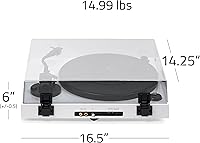
  • Dimensions: The unit measures 14.25 x 16.5 x 6 inches (length x width x height), providing a compact but stable footprint for most shelving setups.
  • Weight: The turntable weighs approximately 14.99 pounds, with the mass contributing to physical stability during playback.
  • Power Supply: Includes a universal 100–240V (50/60Hz) AC power adapter, making it compatible with standard outlets across North America, Europe, and most international markets.
  • Connectivity: Outputs via a standard RCA stereo pair; a 3-foot RCA cable and two 3-foot ground wires are included in the box.
  • Dust Cover: A hinged dust cover is included to protect the platter, record surface, and stylus when the deck is not in active use.
  • Included Accessories: The package includes a bubble level, headshell with Ortofon 2M Red cartridge pre-installed, counterweight, metal platter with belt, rubber mat, 45 RPM adapter, motor pulley cap, and cotton gloves.
  • Warranty: Covered by a 2-year direct manufacturer warranty, supplemented by Fluance's stated lifetime customer support policy.
  • Cartridge Compatibility: The removable headshell and standard Ortofon 2M mounting footprint allow stylus upgrades within the 2M range (Blue, Bronze, Black) without replacing the cartridge body.

Related Reviews
Fluance RT81
Fluance RT81
84%
88%
Sound Quality
74%
Build Quality
83%
Ease of Setup
91%
Cartridge & Stylus Performance
86%
Vibration & Isolation
More
Fluance RT85
Fluance RT85
80%
91%
Sound Quality
94%
Included Cartridge Value
88%
Build Quality & Materials
79%
Speed Consistency & Motor Stability
62%
Setup & Ease of Use
More
Fluance XL8SW Bookshelf Speakers
87%
90%
Sound Quality
84%
Bass Response
91%
Clarity of Midrange
87%
Ease of Installation
88%
Design & Build Quality
More
Fluance Ai41 Powered Bookshelf Speakers
82%
88%
Sound Quality
73%
Bass Performance
84%
Treble Clarity
91%
Build Quality
87%
Connectivity & Inputs
More
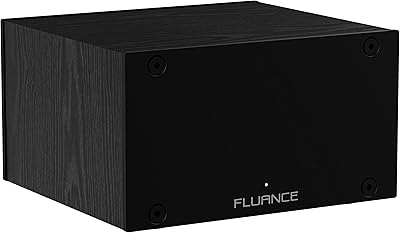
Fluance Elite SX6WH Bookshelf Speakers
84%
87%
Sound Quality
91%
Build Quality
72%
Bass Performance
89%
Value for Money
82%
Ease of Setup
More
Fluance RT80
Fluance RT80
81%
83%
Sound Quality
79%
Build Quality
91%
Ease of Setup
88%
Value for Money
77%
Cartridge Performance
More
Fluance PA10 High Fidelity Phono Preamp
88%
89%
Sound Quality
92%
Build Quality
91%
Ease of Setup
85%
Noise Reduction
88%
Design & Aesthetics
More
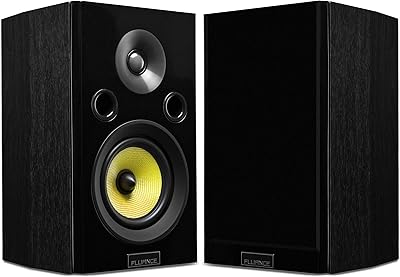
Fluance Signature HiFi Bookshelf Speakers (HFSW)
89%
94%
Sound Clarity
87%
Bass Performance
90%
Build Quality
92%
Value for Money
85%
Ease of Setup
More
Fluance Ai81 Elite Powered Floorstanding Speakers
86%
94%
Sound Quality
90%
Bass Performance
88%
Ease of Setup
85%
Build Quality
93%
Connectivity Options
More
Fluance XL8F Reference High Performance Floorstanding Speakers
85%
94%
Sound Quality
90%
Bass Performance
85%
Build Quality
92%
Value for Money
88%
Design & Aesthetics
More

FAQ

Yes — the Fluance RT83 does not include a built-in phono preamp, so you will need either a receiver or amplifier with a dedicated phono input, or a separate standalone phono preamp. This is a deliberate design choice that keeps the signal path cleaner, but it does mean the deck alone is not plug-and-play out of the box. Budget around 40 to 100 dollars for a decent entry-level phono preamp if your receiver does not already have one.

Most first-timers describe setup as manageable, especially with the included manual. The main steps — attaching the platter, setting the counterweight, and adjusting anti-skate — take about 20 to 30 minutes. The trickiest part is dialing in the tracking force accurately; a stylus force gauge (not included) is worth picking up for around 15 dollars if you want to be precise. Fluance also has setup guides and customer support available if you get stuck.

It is genuinely good for the price tier — not a reference cartridge, but a real step up from the anonymous OEM styli bundled with most competing decks. The elliptical stylus tracks grooves more accurately than a spherical one, which translates to better channel separation and less distortion on sibilants. Think of it as an honest starting point, not the endpoint of your cartridge journey.

Yes, and this is one of the smarter aspects of this record player. The Ortofon 2M cartridge body accepts all 2M series styli — so you can swap in a 2M Blue, Bronze, or Black stylus down the line without touching the cartridge body or headshell mounting. It is a straightforward upgrade path that lets you grow into better performance as your ear and budget develop.

In most typical home listening setups, vibration isolation is solid enough that normal foot traffic does not cause skipping. The high-mass plinth and isolation feet do meaningful work here. That said, if your turntable sits on the same shelf as your speakers, or if you are running a subwoofer at high levels in a small room, you may encounter occasional skipping. A dedicated wall shelf or isolation platform is worth considering in those scenarios.

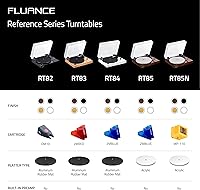
The RT82 sits one step below, using an Ortofon OM10 cartridge and an aluminum platter rather than the 2M Red and metal platter found here. The RT85 steps above this record player with an Ortofon 2M Blue cartridge and an acrylic platter for improved resonance characteristics. If you are starting out and want the best value entry into the Ortofon 2M ecosystem, this turntable is the logical middle choice — the RT82 saves a little money but gives you noticeably less cartridge, and the RT85 is worth the extra spend only if your system can actually reveal the difference.

Look at the back panel of your receiver or amplifier for a set of RCA inputs labeled specifically as PHONO — not just AUX, CD, or LINE. If you see a PHONO input with a separate ground screw terminal nearby, you are set. If your inputs are only labeled as line-level sources, you will need an external phono preamp between the turntable and your receiver.

It is worth being aware of, but not a reason to avoid the deck. The hinges work fine for most buyers, but they are not as robust as the rest of the build suggests they should be. Handle them with a bit of care — open and close the cover gently rather than letting it drop — and they hold up well for most users. A small number of buyers have reported hinge issues after extended use, but it is isolated rather than universal.

Wow refers to slow speed fluctuation in the platter; flutter refers to faster micro-variations. Both cause pitch instability — the most audible sign is a piano note that wavers slightly instead of holding steady. At 0.07%, the RT83's speed control is tight enough that this instability is essentially inaudible under normal listening conditions, which is a meaningful improvement over budget decks that can measure 0.2% or worse.

The high-gloss finish looks beautiful but does require some care. It attracts fingerprints visibly and will show fine surface scratches over time if you are not careful with cleaning. Use a soft microfiber cloth when wiping it down, and avoid anything abrasive. If low-maintenance aesthetics are a priority, the walnut or bamboo finish options in the same lineup may suit you better.