Overview

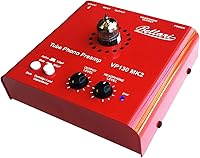
The Bellari VP130 Tube Phono Preamplifier is a compact, tube-driven phono stage that has quietly held its ground in the vinyl world since 2004 — a longevity that says something real about its staying power. Backed by Music Hall, a respected name in analog audio, this tube preamp occupies an interesting middle ground: not an entry-level throwaway, but not a boutique audiophile extravagance either. At its core sits a 12AX7 vacuum tube, which shapes the unit's character toward warmth and natural harmonic richness rather than analytical precision. What sets it apart at this price point is the built-in headphone output — a practical addition that most competing phono stages skip entirely.

Features & Benefits

The Bellari phono stage is built around RIAA equalization matched specifically to moving magnet and high-output cartridges — so right out of the box, your records should sound balanced and accurate rather than thin or boomy. The variable-level headphone output is genuinely useful; it means you can listen privately without routing signal through a full amplifier chain. Physically, the unit is compact enough to sit on a crowded desk without dominating it, and the bold red chassis makes it look intentional rather than incidental. At just over two pounds, it feels solid without being cumbersome. Connectivity is refreshingly plug-and-play simple — no menus, no software, just cables and a power switch.

Best For

This vinyl headphone combo makes the most sense for listeners who want genuine tube character without assembling a full separates system from scratch. If you spin records late at night and need to keep the volume private, the headphone output removes the need for a standalone amp entirely. It also suits anyone connecting a turntable to a stereo amplifier that lacks its own phono input — a surprisingly common situation. That said, if clinical accuracy and absolute silence between tracks are your priority, a solid-state alternative might suit you better. Tube sound is a preference, not an objective upgrade, and this unit is built for people who already know which side they're on.

User Feedback

With a 3.8-star average across 87 ratings, the Bellari phono stage lands in honest, realistic territory — well-liked but not universally loved. Buyers consistently praise its warm, musical character and retro styling, and many note the setup required no prior experience. The recurring criticism, however, deserves acknowledgment: a noticeable number of users report hum or background noise, which appears to vary by unit and listening environment. Some have found that swapping the stock tube for a higher-quality 12AX7 improves the noise floor meaningfully. A portion of reviewers also prefer solid-state alternatives at a similar price for outright cleanliness. For a product launched in 2004, the fact it still has an active buyer base speaks well of its long-term durability.

Pros

  • Genuine 12AX7 tube stage delivers warm, natural sound that solid-state alternatives at this price rarely match.
  • Built-in headphone output with variable control makes late-night vinyl listening genuinely convenient.
  • Has been in continuous production since 2004, suggesting reliable long-term parts and support availability.
  • Compact enough to fit a tight desktop setup without sacrificing build quality or connectivity.
  • RIAA equalization is well-implemented for moving magnet cartridges right out of the box.
  • Plug-and-play setup means most users are up and running within minutes, no configuration required.
  • The bold red chassis looks intentional and distinctive rather than generic on a desk or shelf.
  • Compatible with a wide range of downstream devices, from integrated amps to laptops and powered speakers.
  • Music Hall's backing gives the brand more credibility than most single-product audio boutiques.
  • Tube rolling with an upgraded 12AX7 is a real and accessible path to improved performance for enthusiasts.

Cons

  • Hum and background noise complaints appear consistently enough across user reviews to warrant caution.
  • No support for low-output moving coil cartridges, limiting long-term upgrade paths for some users.
  • The stock tube may underperform compared to a quality replacement, adding an unplanned extra cost.
  • At this price, several solid-state competitors offer a quieter noise floor for analytical listening.
  • No loading or gain adjustment options, which limits fine-tuning for different cartridge outputs.
  • The red color, while eye-catching, is a single fixed option and may not suit every setup aesthetically.
  • Older circuit design means it lacks features like subsonic filtering found on newer competing units.
  • With only 87 ratings and a 3.8-star average, the user feedback pool is relatively small for confident trend analysis.

Ratings

The scores below reflect our AI-driven analysis of verified global buyer reviews for the Bellari VP130 Tube Phono Preamplifier, with spam, bot submissions, and incentivized feedback actively filtered out before scoring. Each category is evaluated on real-world usage patterns — what actual listeners noticed after weeks of regular use, not just first impressions. Both the strengths that keep buyers recommending this tube preamp and the friction points that push others toward alternatives are represented transparently here.

Sound Character
83%
Listeners who specifically sought tube warmth consistently report that the 12AX7 stage delivers on that promise — records sound full-bodied, slightly rounded, and musical in a way that a solid-state box at this price rarely achieves. For late-night headphone sessions with jazz or classic rock, multiple reviewers describe the sonic character as genuinely enjoyable rather than merely functional.
Buyers expecting neutrality or analytical precision are often disappointed; the tube coloration that delights some listeners actively bothers others. A portion of reviewers coming from flat solid-state references found the warmth felt like a veil rather than an enhancement, particularly on well-recorded classical or acoustic material.
Noise Floor
54%
46%
In well-grounded setups with properly shielded cables, a meaningful segment of users report acceptable background noise levels that do not intrude on quiet musical passages. Some owners attribute clean performance to careful placement away from power supplies and other electronics.
Hum and noise floor complaints are the single most recurring criticism across the review base, making this a genuine risk factor rather than an edge case. Several users report that the issue persisted even after addressing grounding, pointing to possible variability between individual units or sensitivity to local electrical environments.
Headphone Output
72%
28%
The built-in headphone stage with variable level control is a practical feature that most competing phono stages skip entirely, and users who primarily listen through headphones appreciate not needing a separate amp in the chain. The tube character carries through to headphone listening, giving the output a warmer, more organic feel than a typical op-amp-based headphone out.
High-impedance or particularly demanding headphones may feel underpowered at the top of the volume range, and the output does not approach the performance of a dedicated standalone headphone amplifier. Listeners using planar magnetic or low-sensitivity dynamic headphones in particular noted the output struggled to reach satisfying listening levels.
Build Quality
74%
26%
The red metal chassis feels reassuringly solid for the price tier — at 2.45 pounds it has enough heft to suggest real construction rather than a hollow shell. The front panel controls have a tactile quality that users describe as purposeful, and the overall fit and finish reads as mid-range audio gear rather than budget electronics.
A few reviewers noted that input and output jacks felt slightly loose over time, which can introduce intermittent connection issues. The unit does not feel boutique-level in hand, and buyers coming from higher-priced gear may find the internal component quality underwhelming when they investigate further.
Ease of Setup
88%
Nearly every reviewer regardless of experience level comments on how straightforward the initial setup is — connect the turntable, run a line out to your amp or speakers, attach the ground wire, and you are done. No firmware, no menus, and no configuration make this approachable even for first-time phono stage buyers.
The simplicity is also a limitation for users who want to fine-tune loading or gain for different cartridges, since the VP130 offers no adjustable settings beyond the headphone volume knob. A small number of buyers were caught off guard by the grounding requirement and needed to troubleshoot hum before the setup felt truly complete.
Tube Quality (Stock)
61%
39%
The included 12AX7 is functional and sufficient for casual listening, and for buyers who never investigate tube rolling, it gets the job done without obvious defects out of the box. The standard tube format means replacement options are plentiful and affordable whenever the time comes.
A notable number of experienced users recommend replacing the stock tube almost immediately, suggesting the factory-installed component is a cost-optimized choice rather than a performance one. Some reviewers specifically credit a tube swap with resolving noise issues and improving clarity, which implies the stock tube may contribute to some of the noise complaints.
Value for Money
69%
31%
For buyers who specifically want tube amplification and a headphone output in a single compact unit, the price represents a reasonable entry point that would cost significantly more to replicate with separate components. The product has remained commercially viable since 2004, which suggests it delivers enough satisfaction to sustain ongoing demand.
At the same price, several solid-state phono preamps offer demonstrably lower noise floors and more cartridge-loading flexibility, making the value case entirely dependent on whether tube sound is a priority for the buyer. Reviewers who expected high-fidelity neutrality rather than tube coloration frequently concluded they overpaid relative to their actual listening preferences.
Design & Aesthetics
81%
19%
The red chassis is polarizing in the best way — it reads as a deliberate stylistic statement rather than a default choice, and buyers who wanted something visually distinctive on their desktop consistently call it out as a highlight. The retro-inspired look fits naturally alongside a turntable and vintage-style audio gear.
The single color option means buyers who want to match a neutral or dark-themed setup are out of luck, and a few reviewers describe the red as too bold for their taste. The overall visual design has not been updated since the product launched, which some find charmingly classic and others find simply dated.
Cartridge Compatibility
66%
34%
For the large majority of turntable users running moving magnet cartridges — which covers most entry-level and mid-range tables from Audio-Technica, Rega, Pro-Ject, and others — the compatibility is seamless and requires no special consideration. High-output moving coil users are also supported, broadening the practical range somewhat.
The complete absence of low-output moving coil support is a real ceiling for buyers who plan to upgrade their cartridge over time, since many audiophile-grade MC cartridges fall below the supported output threshold. There are also no adjustable loading options, which limits optimization even within the supported MM cartridge range.
Longevity & Durability
77%
23%
The product has been on the market continuously since 2004, and a portion of reviewers specifically mention owning units for multiple years without hardware failures — a credible signal that the underlying design is reasonably robust. Tubes are user-replaceable with no special tools, which meaningfully extends the product's serviceable lifespan.
Long-term durability data in the review base is limited relative to the product's age, since most reviewers are not writing years after purchase. A small number of users report that quality consistency between units feels uneven, suggesting manufacturing tolerances may have shifted over the product's long production run.
Headphone Volume Control
71%
29%
Having a dedicated volume knob for the headphone output rather than sharing it with the main line output is a practical design choice that most users appreciate — you can adjust listening level without affecting the signal going to your amplifier or speakers simultaneously.
A few users note the pot feels imprecise at lower volume settings, with channel imbalance creeping in at very quiet listening levels — a common limitation of budget potentiometers in audio equipment. The control range could also benefit from finer gradation at the lower end for sensitive in-ear monitors.
RIAA Accuracy
78%
22%
Users who have compared the output to known reference recordings generally describe the frequency balance as convincingly accurate, with no obvious bass bloat or high-frequency roll-off that would indicate a poorly calibrated equalization curve. The tube stage adds warmth without appearing to distort the underlying RIAA response significantly.
Without published measurement data from the manufacturer, objective verification of RIAA accuracy is difficult, and a small number of technically inclined reviewers noted brightness or warmth that may indicate slight deviations from the standard curve. This is unlikely to matter to casual listeners but could bother measurement-oriented buyers.
Packaging & Unboxing
73%
27%
Most buyers report the unit arrives well-protected and that the packaging feels appropriate for a mid-range audio component — nothing excessive, but sufficient to prevent transit damage. The included documentation is clear enough for first-time phono stage owners to get up and running without external research.
The accessory package is minimal, and buyers expecting premium unboxing touches like quality interconnects or a robust printed manual may find the contents feel sparse relative to the price. A few users noted the power supply feels utilitarian compared to the rest of the unit.

Suitable for:

The Bellari VP130 Tube Phono Preamplifier is a strong match for vinyl listeners who want real tube warmth without building an expensive separates rig from scratch. If your stereo amplifier or receiver lacks a dedicated phono input — which is common on modern integrated amps — this tube preamp fills that gap cleanly while adding genuine sonic character rather than just signal boosting. It works especially well for late-night listening sessions where a built-in headphone output with volume control means you can enjoy records privately without routing through additional gear. Desktop audiophiles with limited space will appreciate that this vinyl headphone combo pulls double duty in a footprint small enough to sit beside a turntable without crowding a shelf. Buyers who are intentional about preferring the harmonic richness of tube-amplified sound over solid-state precision will feel right at home here.

Not suitable for:

The Bellari VP130 Tube Phono Preamplifier is not the right call for listeners who prioritize a dead-quiet noise floor above all else. A meaningful number of real-world users have reported hum or background noise, and while some trace this to environment or setup, it is a pattern consistent enough to take seriously if your listening space is acoustically revealing. This tube preamp is also not designed for moving coil cartridges, so if your turntable runs a low-output MC, you will need to look elsewhere. Anyone expecting solid-state levels of clinical transparency and extended frequency response should understand that tube coloration is the whole point here — it is a feature to some and a flaw to others. Finally, buyers hoping for a truly set-and-forget unit should know that tube rolling, while optional, is something a portion of owners end up doing to get the most out of this vinyl headphone combo.

Specifications

  • Brand: Manufactured by Music Hall and sold under the Bellari sub-brand, which specializes in tube-based analog audio components.
  • Model: The VP130 is the specific model designation for this tube phono preamplifier with integrated headphone output.
  • Output Tube: Uses a single 12AX7 dual-triode vacuum tube as the core amplification stage for both phono and headphone output.
  • Equalization: Applies standard RIAA equalization curve, which is required to accurately reproduce audio from vinyl records.
  • Cartridge Type: Compatible with moving magnet and high-output moving coil cartridges only; low-output moving coil cartridges are not supported.
  • Headphone Output: Includes a dedicated headphone output jack with a front-panel variable level control for independent volume adjustment.
  • Dimensions: The unit measures 14 × 8.9 × 3.9 inches (length × width × height), making it suitable for most desktop setups.
  • Weight: Weighs 2.45 pounds, giving it a solid feel without being difficult to reposition or transport.
  • Color: Available in a distinctive red chassis finish; no alternative color options are listed by the manufacturer.
  • Compatible Devices: Designed to connect with amplifiers, headphones, laptops, personal computers, and powered speakers via standard analog outputs.
  • Power Source: Operates on standard AC wall power via an included power supply, as typical for tube-based phono stage components.
  • Availability: First listed in April 2004 and confirmed as not discontinued by the manufacturer, indicating ongoing production and parts availability.
  • Amazon Rating: Holds a 3.8 out of 5 star average based on 87 customer ratings as of the most recent listing data.
  • Category Rank: Ranked #176 in Audio Component Preamplifiers on Amazon, placing it in the upper tier of a competitive sub-category.
  • Tube Replaceability: The 12AX7 tube is a standard, widely available format, making user-replaceable tube rolling straightforward and affordable.

Related Reviews
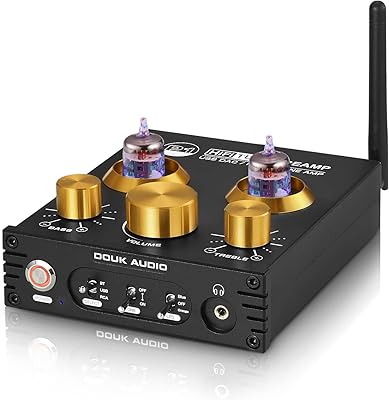
Douk Audio T4 Plus
Douk Audio T4 Plus
78%
78%
Sound Quality
81%
Phono Stage Performance
74%
Headphone Amplifier
88%
Value for Money
76%
Build Quality & Construction
More
Bellari PA550 Preamplifier
88%
94%
Sound Quality
92%
Value for Money
88%
Setup & Installation
86%
Design & Build Quality
93%
Performance with Moving Coil Cartridges
More
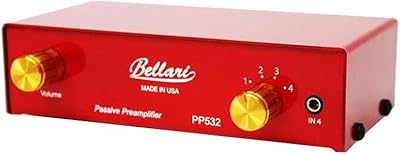
Bellari PP532 Passive Preamplifier
80%
93%
Signal Purity
88%
Input Versatility
91%
Ease of Setup
74%
Build Quality
61%
Volume Control Feel
More
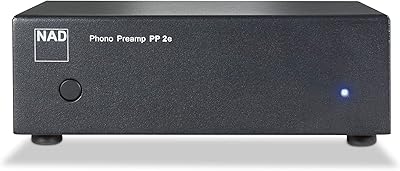
NAD PP 2e Phono Preamplifier
84%
88%
Sound Quality
86%
Noise Floor
84%
MM Cartridge Performance
91%
MC Cartridge Performance
77%
Build Quality
More
ART DJPRE II Phono Preamplifier
80%
88%
Signal Clarity & Noise Floor
91%
Value for Money
74%
Build Quality
93%
Variable Gain Control
86%
Cartridge Loading Flexibility
More
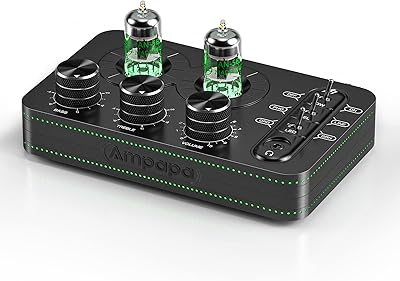
AMPAPA A1
AMPAPA A1
82%
88%
Sound Quality
83%
Phono Stage Accuracy
72%
Headphone Amplifier Performance
91%
Build Quality
86%
Tone Controls
More
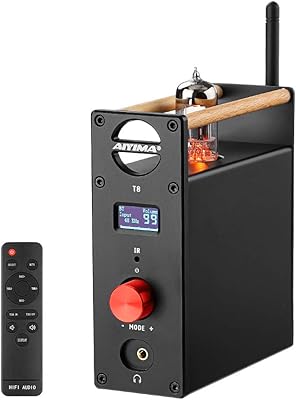
AIYIMA T8 Tube Preamplifier Headphone Amp
80%
83%
Sound Quality
88%
Build Quality
81%
Bluetooth Performance
79%
DAC Performance
82%
Headphone Compatibility
More
Douk Audio T9 Tube Phono Preamp
82%
83%
Sound Quality
78%
Phono Stage Accuracy
76%
Headphone Amplifier Performance
88%
Build Quality
81%
Tube Rolling Flexibility
More
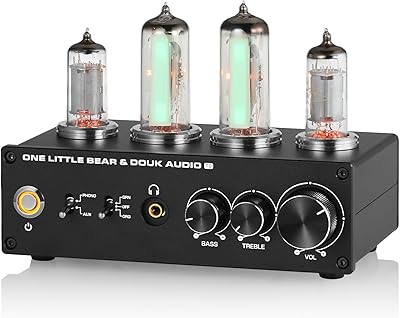
Pro-Ject Phono Box E Phono Preamplifier
79%
83%
Sound Quality
88%
Noise Floor
74%
Build Quality
91%
Ease of Setup
86%
Value for Money
More
Douk Audio P1 Vacuum Tube Preamplifier
79%
83%
Sound Quality
78%
Bluetooth Performance
81%
USB DAC Quality
61%
Headphone Amplifier Power
74%
Build Quality
More

FAQ

It works with any turntable that uses a moving magnet cartridge or a high-output moving coil cartridge. If your turntable has a built-in phono stage already, you would want to bypass it or check whether running through two phono stages causes any signal issues. Most entry-level and mid-range turntables ship with MM cartridges, so compatibility is rarely a problem for the typical buyer.

Yes, that is actually one of the more practical use cases for the Bellari phono stage. The line-level output can feed powered speakers, a receiver without a phono input, or even a laptop with a line-in jack for recording purposes. Just make sure your powered speakers accept a line-level RCA signal.

It sits somewhere in between. The headphone amp is genuinely usable and benefits from the same tube character as the main output, which gives it a warmer, more musical quality than many built-in headphone stages. That said, it is not a dedicated high-end headphone amplifier, so listeners with very demanding or low-impedance headphones may find it lacking in drive compared to a standalone headphone amp.

It does come up enough to take seriously. In many cases, hum traces back to grounding issues between the turntable and the preamp — most turntables have a ground wire that needs to be connected to the ground terminal on the phono stage, and skipping that step is the most common cause of buzz. Other contributors can include proximity to other electronics or cheap interconnect cables. If you follow proper grounding procedure and use decent cables, many users find the noise is either minimal or absent entirely.

Yes, the 12AX7 is one of the most common tube formats in existence and swapping it requires no soldering — just pull the old one out and press the new one in. Whether it makes a noticeable difference depends on the quality of the stock tube, but a fair number of owners report that moving to a well-regarded 12AX7 from brands like Mullard or Electro-Harmonix tightened up the noise floor and improved overall clarity.

That is genuinely a matter of preference rather than objective performance. A solid-state alternative at this price will typically offer a quieter noise floor and more neutral frequency response. The Bellari VP130 Tube Phono Preamplifier leans into tube coloration — a slight warmth and harmonic richness that many vinyl listeners actively want. If you are trying to measure or record with maximum accuracy, solid-state may serve you better. If you want records to sound full and musical through headphones or speakers, tube character is worth the trade-off for many people.

The unit itself does not include turntable interconnects in the box — you will need RCA cables to connect your turntable to the input. Most turntables either have a captive cable or include basic RCA interconnects, so in practice this rarely means an added purchase, but it is worth checking your specific turntable setup before ordering.

Yes, as long as those tables are running a moving magnet cartridge, which most Rega Planar 1 and 2 models, entry-level Pro-Ject tables, and Audio-Technica LP120 variants do as standard. Always confirm the cartridge type on your specific table if you are unsure, but the vast majority of popular beginner and mid-range turntables are MM and will work fine with this tube preamp.

A quality 12AX7 under normal use can last anywhere from 5,000 to 10,000 hours or more — so for most casual listeners spinning a few records a week, the stock tube could last well over a decade before any degradation becomes audible. The fact that this vinyl headphone combo has been on the market since 2004 and still has an active user base suggests the hardware holds up reasonably well over time.

Yes, like most tube equipment, it benefits from a few minutes of warm-up time after powering on — typically five to fifteen minutes. During that period, you may notice the sound is slightly leaner or less stable than it will be once the tube reaches operating temperature. It is a minor consideration but worth keeping in mind if you are evaluating the sound immediately after switching it on for the first time.

Where to Buy