

Overview

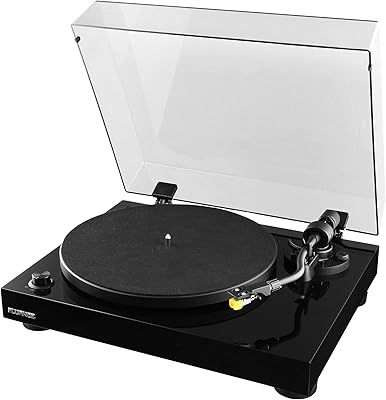
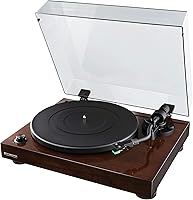
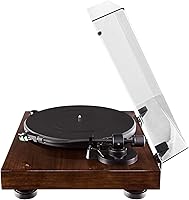
The Fluance RT81 sits in a comfortable middle ground — well above the suitcase-style players that frustrate serious listeners, but honest enough not to pretend it competes with high-end decks costing twice as much. Fluance, a Canadian audio brand with a loyal following among value-conscious buyers, has built a reputation for squeezing real performance out of sensible price points. The walnut MDF plinth looks genuinely good on a shelf — warm-toned, substantial, and far less plasticky than most rivals at this tier. And for anyone without a phono preamp already, the built-in preamp means you can connect it to almost any speaker setup right out of the box.

Features & Benefits

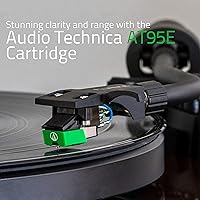
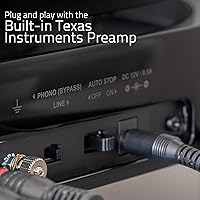
The Audio-Technica AT95E cartridge is one of the strongest components here. Unlike a conical stylus, the elliptical tip makes contact with more of a record groove's surface, pulling out detail that a cheaper stylus would simply miss. The aluminum S-type tonearm pairs with an adjustable counterweight, so you can dial in proper tracking force — which matters more than most beginners realize, since incorrect pressure quietly wears down records over time. Belt-drive keeps motor vibration away from the platter, and the high-mass MDF plinth with isolation feet further absorbs outside interference. The built-in Texas Instruments phono stage is genuinely usable, though audiophiles can bypass it and run an external preamp through the ground terminal if they prefer.

Best For

This Fluance turntable makes the most sense for two types of buyers: someone stepping up from a cheap portable player who wants real sound without a complicated setup, and someone who already owns bookshelf speakers or a stereo receiver and just needs a plug-and-play turntable to connect. The walnut finish also helps — it looks intentional in a living room, not like an afterthought. Rebuilding a vinyl collection? You'll appreciate that the stylus tracks gently and won't be harsh on older pressings. That said, if you're already deep into the hobby and itching to swap tonearms or experiment with boutique cartridges, this belt-drive record player isn't really built for that level of tinkering.

User Feedback

Across a large pool of buyers, sound quality straight from setup is what gets mentioned most — warm, full playback that immediately sounds better than whatever budget player people traded up from. Setup earns mostly positive marks too, though some owners note that getting the counterweight calibrated correctly takes patience on first use. The more scattered complaints involve build consistency: a small number of units have had issues with dust cover hinges or how snugly the platter seats. Nothing widespread, but worth knowing. On the positive side, long-term owners find real value in the AT95 cartridge family — the upgradeable stylus gives the RT81 a useful lifespan well beyond its initial configuration.

Pros

  • The Audio-Technica AT95E cartridge delivers noticeably warm, detailed sound straight out of the box.
  • Built-in phono preamp means no extra purchases required to start listening immediately.
  • The walnut MDF plinth looks genuinely furniture-grade — a real differentiator at this price.
  • Adjustable counterweight lets you set proper tracking force, protecting your records over time.
  • Belt-drive mechanism keeps motor vibration well away from the platter during playback.
  • The RT81 supports stylus upgrades within the AT95 family, extending the deck's useful lifespan.
  • Isolation feet and the high-mass plinth do a solid job absorbing external vibrations in real-room conditions.
  • Universal 100V-240V power adapter is a practical touch for travelers or international buyers.
  • Two-year warranty and lifetime customer support back the purchase with meaningful long-term coverage.
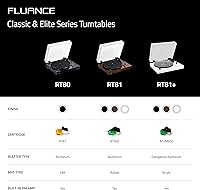
  • Available in three finishes — Walnut, Piano Black, and Piano White — to suit different room aesthetics.

Cons

  • Dust cover hinges feel noticeably cheaper than the quality of the plinth they sit on.
  • The counterweight calibration guide lacks enough detail to reliably walk a first-timer through the process.
  • A small but consistent share of buyers report platter fit and cover alignment issues on arrival.
  • The included RCA cable is only three feet long, limiting placement flexibility in larger setups.
  • No stylus pressure gauge is included despite proper tracking force being critical to record health.
  • The built-in preamp imposes a ceiling on sound quality that the AT95E cartridge is capable of exceeding.
  • Belt wear over time is an inevitable maintenance reality that first-time owners are rarely warned about upfront.
  • Tonearm compatibility is narrow — buyers hoping to experiment with non-AT95 cartridges will hit limits quickly.
  • Speed drift has been reported by a minority of long-term owners after extended regular use.
  • Production consistency is not airtight — unit-to-unit variation means some buyers get a better sample than others.

Ratings

The Fluance RT81 has been put through its paces by thousands of vinyl enthusiasts worldwide, and our AI has analyzed verified buyer feedback while actively filtering out incentivized reviews, bot activity, and spam to surface what real users actually experience. Scores reflect both where this belt-drive record player genuinely delivers and where it falls short — nothing is glossed over. Strengths and frustrations are weighted equally so you can make an informed call before buying.

Sound Quality
88%
For its price tier, the RT81 consistently impresses first-time serious listeners. The AT95E elliptical stylus pulls warmth and mid-range detail out of well-pressed records in a way that budget players simply cannot replicate. Buyers returning to vinyl after years away frequently describe the listening experience as immediately satisfying.
Seasoned audiophiles will notice the ceiling fairly quickly — the built-in preamp softens some high-frequency clarity that a dedicated external stage would preserve. The sound is pleasing and full-bodied, but not clinically precise, which matters if you listen critically at high volumes.
Build Quality
74%
26%
The high-mass MDF plinth feels dense and planted on a shelf, and the aluminum platter has a satisfying heft that cheaper all-plastic decks lack entirely. Most units arrive well-assembled, and the walnut finish holds up well to normal handling and dust without showing wear quickly.
A consistent minority of buyers have flagged specific weak points — dust cover hinges that feel flimsy or misaligned, and the platter occasionally seating less snugly than expected. These issues are not universal, but they appear often enough across verified reviews to suggest some variability in production consistency.
Ease of Setup
83%
The vast majority of buyers have the RT81 playing records within 20 to 30 minutes of opening the box, which is genuinely good for a turntable at this level. The quick-start guide is clear, and the built-in preamp means there is no need to source a separate phono stage before your first listen.
Calibrating the counterweight trips up a noticeable slice of newcomers — the process is not difficult, but the guide does not explain it with quite enough detail for someone who has never touched a tonearm. A few buyers admitted to running the stylus at incorrect tracking force for weeks before realizing it.
Cartridge & Stylus Performance
91%
The Audio-Technica AT95E is a legitimate highlight and arguably punches above what this price tier typically includes. The diamond elliptical stylus tracks record grooves with precision, reducing distortion on inner grooves noticeably compared to entry-level conical styli. Long-term owners particularly appreciate that the entire AT95 stylus family is interchangeable, making future upgrades straightforward.
The AT95E is a strong starter cartridge, but buyers who want to move up to a higher-output or moving-coil cartridge will find the tonearm's compatibility range somewhat limiting. It rewards stylus upgrades within the AT95 family, but the deck is not truly built for broader cartridge experimentation.
Vibration & Isolation
86%
The combination of belt-drive mechanics, rubber isolation feet, and the dense MDF plinth does a solid job of keeping unwanted resonance out of the signal path. Buyers who place the RT81 near bookshelf speakers report minimal feedback issues, which is a real practical advantage in smaller rooms or apartment listening setups.
The isolation is good for the price, not exceptional. Users with subwoofers nearby or who place the turntable on a hollow or resonant surface report occasional issues. The rubber feet help, but the deck is sensitive enough that a dedicated isolation platform makes a noticeable difference if your setup has vibration sources nearby.
Built-in Phono Preamp
79%
21%
Having a Texas Instruments phono stage built in removes a real barrier for beginners — you can connect directly to powered speakers or a receiver without hunting for a separate preamp. The signal is warm and clean enough that most casual listeners will not feel a compelling reason to replace it for a year or more.
Audiophiles who bypass the internal preamp in favor of a dedicated external stage consistently report a noticeable improvement in clarity and soundstage width. The built-in unit is convenient, but it does impose a ceiling on what the AT95E cartridge is actually capable of delivering at its best.
Tonearm Quality
82%
18%
The S-type aluminum tonearm feels well-balanced and tracks confidently once the counterweight is properly set. Buyers who take the time to dial in the correct vertical tracking force report clean playback across a wide range of record conditions, including older or slightly warped pressings.
The tonearm adjustment process requires more patience than the manual implies, and there is no anti-skate scale printed on the unit — buyers have to rely on feel or external resources to set it correctly. It is functional and stable, but it lacks the tactile refinement of tonearms found on decks at higher price points.
Aesthetic Design
93%
The walnut-finish plinth is one of the most frequently praised aspects across all reviews, and it earns those compliments. It looks intentional and furniture-grade in a way that few turntables at this price do — buyers routinely mention it as the reason they chose this deck over a competitor with similar specs.
The dust cover, while functional, is noticeably thinner and cheaper-looking than the plinth it sits on. In a few finishes, the cover's plastic shows scratches more visibly over time. The overall look is still excellent, but the mismatch between the plinth quality and the dust cover quality is a small aesthetic letdown.
Value for Money
89%
For buyers moving up from sub-100-dollar portable players, the RT81 represents a dramatic jump in real-world performance for a price that still feels manageable. The inclusion of the AT95E cartridge, a working built-in preamp, and quality accessories like the rubber platter mat and ground wire means the out-of-box value is genuinely strong.
Compared to direct competitors like the Audio-Technica LP120X, some buyers feel the build consistency issues and the tonearm limitations slightly undercut the value proposition. The price is fair for what most units deliver, but a small percentage of buyers who received units with quality control issues felt less satisfied with the exchange.
Speed Accuracy & Consistency
77%
23%
Under normal conditions, the RT81 maintains stable platter speed on both 33 and 45 RPM without audible wow or flutter. Most buyers who listen to a variety of records — from classical to jazz to rock — report consistent pitch and tempo across extended listening sessions.
Belt-drive mechanisms inherently require maintenance over time, and a handful of long-term owners have reported slight speed drift after a year or more of regular use — the belt stretches gradually. It is an honest trade-off of the format, but buyers should know that belt replacement is an eventual reality.
Record Protection
87%
When the counterweight is properly calibrated, the RT81 handles records gently and consistently. The rubber platter mat protects the vinyl surface during playback, and the elliptical stylus tracks with enough precision that groove wear on repeated plays is minimal — an important consideration for buyers with vintage or irreplaceable pressings.
The risk here is almost entirely front-loaded: buyers who skip counterweight calibration can inadvertently run higher tracking force than intended, which does cause measurable groove wear over time. The deck itself is not the problem — the setup guidance around this critical step just is not thorough enough.
Accessories & Inclusions
84%
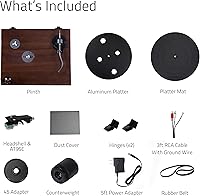
The box includes everything a new buyer needs to start listening immediately — a rubber platter mat, 45 RPM adapter, RCA cable with ground wire, and a universal power adapter rated for 100 to 240 volts. The universal power supply is a small but appreciated detail for buyers who travel or who purchased from international sellers.
The included RCA cable is functional but on the short side at three feet, which limits placement flexibility in larger setups. A few buyers also noted they would have appreciated a basic stylus pressure gauge in the box given how important proper tracking force is to both sound quality and record longevity.
Warranty & Customer Support
81%
19%
Fluance backs the RT81 with a two-year manufacturer warranty and lifetime customer support, which stands out in a category where some competitors offer far shorter coverage. Buyers who have contacted Fluance directly generally describe the support experience as responsive and genuinely helpful rather than dismissive.
A small group of buyers encountered delays during peak periods when requesting replacement parts — particularly dust covers and belts. Lifetime support is only as good as the company backing it, and while Fluance has a solid track record, there is always some uncertainty in that long-term promise for a mid-sized brand.

Suitable for:

The Fluance RT81 is a strong fit for anyone taking their first serious step into vinyl — specifically the kind of buyer who has outgrown a cheap portable player and wants something that actually does the format justice without requiring an engineering degree to operate. If you already own a pair of passive bookshelf speakers or a stereo receiver, the built-in phono preamp removes the usual friction of getting started; just connect, calibrate the counterweight once, and you are listening within the hour. It also makes a lot of sense for people returning to vinyl after years away — those who have a box of records in storage and want a dependable, good-looking deck to rediscover them on. The walnut finish is a genuine consideration too: this belt-drive record player looks at home in a modern living room or a mid-century setup in a way that most similarly priced competitors simply do not. Long-term value is real here as well, since the AT95 stylus family is upgradeable, meaning the deck can grow with you as your ear develops and your standards rise.

Not suitable for:

The Fluance RT81 is not the right tool for buyers who are already deep into the audiophile hobby and want a platform they can endlessly modify. The tonearm is functional and well-balanced, but it is not designed for frequent cartridge swapping or compatibility with boutique moving-coil cartridges — it rewards upgrades within the AT95 family and not much beyond that. Anyone who already owns a quality external phono preamp will get more out of a deck at this price that skips the built-in stage entirely and puts that budget toward a better platter bearing or tonearm. The belt-drive format is also worth understanding honestly: belts stretch and eventually need replacing, which is a minor but real maintenance commitment that direct-drive buyers never face. If production consistency is a dealbreaker for you — if receiving a unit with a slightly misaligned dust cover or a platter that seats imperfectly would genuinely frustrate you — this may not be the most reliable choice at the price, given the scattered but recurring quality control feedback from verified buyers.

Specifications

  • Drive Type: Belt-drive mechanism isolates the motor from the platter to minimize vibration transfer during playback.
  • Speeds: Supports both 33⅓ and 45 RPM playback speeds, with a 45 RPM adapter included in the box.
  • Cartridge: Fitted with an Audio-Technica AT95E moving-magnet cartridge featuring a diamond elliptical stylus for precise groove tracking.
  • Tonearm: Balanced aluminum S-type tonearm with an adjustable counterweight for setting accurate vertical tracking force.
  • Plinth Material: High-mass MDF (medium-density fiberboard) construction with a walnut veneer finish and integrated rubber isolation feet.
  • Platter: Aluminum platter paired with a rubber mat to protect record surfaces and further dampen resonance during play.
  • Built-in Preamp: Texas Instruments phono preamplifier is built in and can be bypassed via the ground terminal when using an external phono stage.
  • Outputs: Gold-plated RCA line outputs and a dedicated ground terminal, with a 3-foot RCA cable with ground wire included.
  • Dimensions: The unit measures 13.75 × 16.5 × 5.5 inches including the plinth and tonearm assembly.
  • Weight: The turntable weighs 14.1 pounds, reflecting the density of its high-mass MDF construction.
  • Power Supply: Ships with a universal 100V–240V (50/60 Hz) AC power adapter, compatible with outlets in most regions worldwide.
  • Finish Options: Available in three finishes: Natural Walnut, Piano Black, and Piano White to suit different room aesthetics.
  • Dust Cover: Hinged clear acrylic dust cover is included to protect the platter and cartridge when the deck is not in use.
  • Isolation Feet: Four rubber isolation feet are integrated into the plinth base to decouple the turntable from surface-borne vibrations.
  • Warranty: Backed by a two-year manufacturer warranty and lifetime customer support provided directly by Fluance.
  • Manufacturer: Designed and sold by Fluance, a Canadian consumer audio brand established in 1999 and focused on high-value home audio products.
  • Date Available: The RT81 model was first made available for purchase in May 2016 and remains an active, non-discontinued product.
  • Included Items: Package includes the turntable, dust cover, 45 RPM adapter, rubber platter mat, 3-foot RCA cable with ground wire, power adapter, and a quick-start guide.

Related Reviews
Fluance RT83
Fluance RT83
83%
91%
Sound Quality
88%
Cartridge & Stylus Performance
86%
Build Quality & Materials
89%
Speed Consistency & Motor Performance
84%
Tonearm Quality
More
Fluance RT85
Fluance RT85
80%
91%
Sound Quality
94%
Included Cartridge Value
88%
Build Quality & Materials
79%
Speed Consistency & Motor Stability
62%
Setup & Ease of Use
More
Fluance XL8SW Bookshelf Speakers
87%
90%
Sound Quality
84%
Bass Response
91%
Clarity of Midrange
87%
Ease of Installation
88%
Design & Build Quality
More
Fluance Ai41 Powered Bookshelf Speakers
82%
88%
Sound Quality
73%
Bass Performance
84%
Treble Clarity
91%
Build Quality
87%
Connectivity & Inputs
More
Fluance RT80
Fluance RT80
81%
83%
Sound Quality
79%
Build Quality
91%
Ease of Setup
88%
Value for Money
77%
Cartridge Performance
More
Fluance Elite SX6WH Bookshelf Speakers
84%
87%
Sound Quality
91%
Build Quality
72%
Bass Performance
89%
Value for Money
82%
Ease of Setup
More
Fluance Ai81 Elite Powered Floorstanding Speakers
86%
94%
Sound Quality
90%
Bass Performance
88%
Ease of Setup
85%
Build Quality
93%
Connectivity Options
More
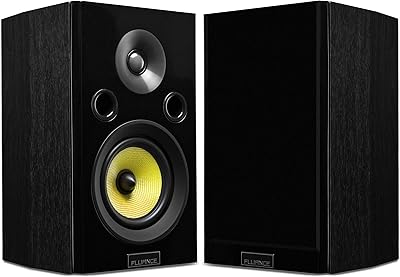
Fluance Signature HiFi Bookshelf Speakers (HFSW)
89%
94%
Sound Clarity
87%
Bass Performance
90%
Build Quality
92%
Value for Money
85%
Ease of Setup
More
Fluance PA10 High Fidelity Phono Preamp
88%
89%
Sound Quality
92%
Build Quality
91%
Ease of Setup
85%
Noise Reduction
88%
Design & Aesthetics
More
Fluance XL8F Reference High Performance Floorstanding Speakers
85%
94%
Sound Quality
90%
Bass Performance
85%
Build Quality
92%
Value for Money
88%
Design & Aesthetics
More

FAQ

No — the RT81 has a built-in phono preamp, so you can connect it directly to powered speakers or any receiver with an AUX input right away. If you already own a dedicated external phono stage and prefer to use it, you can bypass the internal one through the ground terminal on the back of the unit.

Most first-time buyers get it running within 30 minutes. The main step that requires care is setting the counterweight on the tonearm to the correct tracking force — the quick-start guide covers it, but it helps to watch a short video walkthrough online if you want more confidence. Everything else, from attaching the belt to connecting the cables, is straightforward.

It depends on what type of speakers you have. If they are powered speakers with their own built-in amplifier, you can connect directly using the RCA outputs. If they are passive speakers that require a separate amplifier or receiver, you will need that receiver in the chain — but the turntable handles the phono stage on its own, so no additional preamp is necessary.

The Audio-Technica AT95E cartridge is replaceable, and the stylus itself can be swapped out independently without replacing the entire cartridge body. The AT95 stylus family includes several upgrade options — including the AT95EX and aftermarket elliptical variants — so this belt-drive record player has genuine long-term upgrade potential without requiring you to change the tonearm.

Not directly — the turntable outputs a wired RCA signal only. To connect to a Bluetooth speaker, you would need a separate RCA-to-Bluetooth transmitter adapter, which are widely available and inexpensive. It works fine in practice, though purists would argue a wired connection preserves more sound quality.

The Audio-Technica AT95E cartridge is specified for a tracking force of 2 grams. The most reliable way to verify this is with an inexpensive digital stylus force gauge, which costs around 15 to 20 dollars and takes the guesswork out of counterweight adjustment entirely. Running the stylus at too high a force is one of the most common ways to accelerate record wear, so it is worth the small investment to check.

Belt wear is a normal part of owning any belt-drive turntable — over time, the rubber stretches and can cause slight speed inconsistencies. Replacement belts for the Fluance RT81 are inexpensive (typically under 15 dollars) and easy to install yourself in a few minutes. Most users find they need a replacement after two to four years of regular use, depending on how often they listen.

It is better to leave the dust cover open or removed during playback. A closed cover can trap resonance and, on some setups, the vibration from the speakers can cause the cover to feed vibration back into the platter. Keeping it open while listening and closed when the deck is idle is the standard recommendation.

The plinth is constructed from MDF with a walnut veneer finish — it is not solid hardwood, but it is also not a printed plastic wrap. The result looks genuinely warm and furniture-grade in person, which is a significant reason buyers choose this deck over competitors with similar specs but cheaper-looking enclosures.

The two decks are frequently compared, and both are strong choices, but they suit different buyers. The LP120X is direct-drive, which some prefer for consistent speed and DJ-style use, and its tonearm is more cartridge-compatible for those who want to experiment. The Fluance turntable wins on aesthetics and arguably on vibration isolation, and its belt-drive suits pure listening setups well. If you plan to stay within the AT95 cartridge family and prioritize sound over upgradability, this deck holds its own at the price.