
Overview

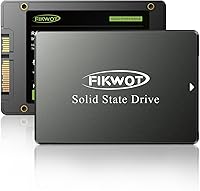
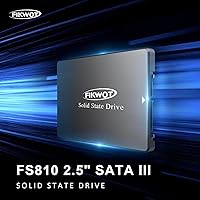
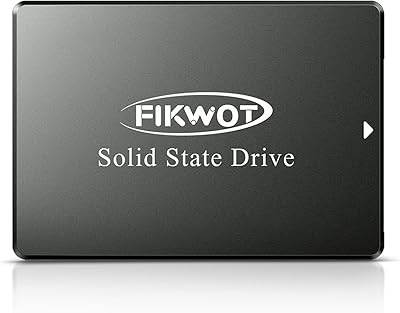
The Fikwot FS810 4TB Internal SSD is a high-capacity 2.5-inch SATA drive built for one straightforward purpose: giving budget-conscious users a serious storage upgrade without the NVMe price tag. Fikwot is a relatively new name in the SSD space, but this high-capacity SATA SSD has quietly built a solid following on Amazon. The 4TB capacity is the real draw here — that's still uncommon in the 2.5-inch SATA form factor and makes it genuinely useful for aging laptops and desktops that lack M.2 slots. Just go in with clear eyes: SATA III has a natural speed ceiling, and this drive is firmly about storage volume, not raw throughput.

Features & Benefits

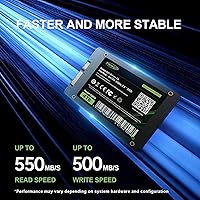
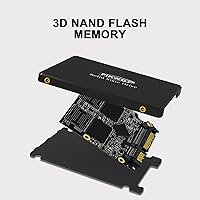
The SATA III interface gives this 2.5-inch solid state drive sequential read speeds up to 560MB/s — which, in practical terms, means snappy application launches, fast OS boots, and smooth media playback without the lag you'd expect from a spinning disk. Where the drive earns real respect is its flash type: 3D NAND TLC memory is meaningfully more durable than the cheaper QLC alternative used in many budget drives, translating to a longer usable lifespan under regular read/write cycles. It covers a wide range of operating systems out of the box, handles backward compatibility with older SATA II ports, and includes hardware encryption — a quiet but useful feature for anyone carrying sensitive data on a laptop.

Best For

The Fikwot 4TB drive is an obvious pick for anyone looking to breathe new life into an older laptop or desktop that has a 2.5-inch SATA bay but no M.2 slot — think pre-2017 machines that still run fine but crawl under a mechanical drive. It also works well as a secondary storage drive, whether that's a desktop media archive, a photo library overflow, or a bulk data backup solution. Content creators juggling large video projects will appreciate the price-per-gigabyte advantage over NVMe options at this capacity. And if you need a budget console upgrade, dropping this into a USB enclosure for PS4 or PS5 external storage is a perfectly reasonable use case.

User Feedback

With over 4,300 ratings averaging 4.5 stars, the reception for this high-capacity SATA SSD is hard to ignore. The most consistent praise centers on drop-in installation ease and the immediate improvement over aging hard drives — buyers upgrading old laptops report a noticeably faster feel without any compatibility headaches. On the other side of the ledger, some users have raised questions about long-term reliability, which is a fair concern with any emerging brand. A smaller subset has noted that sustained write speeds can dip under heavy load — not unusual for a drive at this price point, but worth knowing if you plan to move large files frequently. The 3-year warranty offers some cushion, though Fikwot's customer support track record is still developing.

Pros

  • Offers a rare 4TB capacity in the 2.5-inch SATA form factor, making it one of the more practical bulk storage options at this price tier.
  • Drops straight into any standard SATA bay — no adapter, no driver installation, no configuration headaches.
  • 3D NAND TLC flash provides meaningfully better write endurance than the cheaper QLC memory used in many competing budget drives.
  • Works out of the box across Windows, macOS, and Linux without any compatibility fuss or extra setup steps.
  • Delivers a noticeable real-world improvement over aging mechanical hard drives, especially for everyday boot times and app loading.
  • Hardware encryption support is a quiet but practical addition for laptop users who carry sensitive files on the go.
  • Backward compatible with older SATA II ports, which broadens its usability across a wide range of legacy hardware.
  • Over 4,300 Amazon ratings averaging 4.5 stars provides a reasonable confidence baseline for buyers considering a newer brand.
  • At just over 2 ounces, it is light enough to install without any concern in either a laptop or desktop chassis.
  • Three-year warranty coverage offers a standard safety net that is consistent with what established competitors provide at this capacity.

Cons

  • Fikwot is a relatively new brand with a limited long-term reliability track record compared to well-established SSD manufacturers.
  • No publicly disclosed TBW (terabytes written) or MTBF rating, making it nearly impossible to benchmark expected endurance objectively.
  • Sustained write speeds can throttle under heavy continuous workloads, a known pressure point for TLC NAND at budget price points.
  • The SATA III speed ceiling means this drive will feel noticeably slow beside any modern NVMe installed in the same machine.
  • Some users report inconsistent benchmark results across different host systems, which may point to variability in the drive controller.
  • Customer support responsiveness for a newer brand like Fikwot is less proven than what you would get from a major manufacturer.
  • The 3-year warranty is industry-standard at best — competing premium brands often provide 5-year coverage at similar capacity tiers.
  • Cannot be used as a PS5 internal storage expansion; console users are limited to an external USB enclosure workaround only.

Ratings

Our scores for the Fikwot FS810 4TB Internal SSD were generated by AI analysis of thousands of verified global buyer reviews, with algorithmic filtering applied to remove suspected bot submissions, incentivized feedback, and duplicate entries. Every category reflects what real users experienced across a wide range of setups — from aging laptops and home desktop builds to media archiving rigs — with both genuine strengths and recurring frustrations transparently represented in each score.

Value for Money
88%
At 4TB capacity in the 2.5-inch SATA format, very few drives undercut this price point, and buyers overwhelmingly cite cost-per-gigabyte as the deciding factor. For users upgrading old laptops or building secondary desktop storage, the financial case is hard to argue against.
The value proposition depends entirely on the drive lasting several years, which remains an open question given Fikwot's limited long-term reliability history. Some users pointed out that name-brand alternatives occasionally go on sale, narrowing the gap enough to warrant comparison shopping before committing.
Storage Capacity
93%
Four terabytes of solid-state storage in a 2.5-inch SATA housing is still genuinely uncommon, and users consolidating sprawling photo libraries, video project archives, or game collections onto a single internal drive find this capacity a practical and compelling solution. The headline size alone is the primary reason most buyers chose this drive.
A handful of users noted that formatted usable space is technically slightly below the advertised 4TB, which is standard industry behavior but still catches some buyers off guard. The 4TB variant is also the ceiling of the FS810 series, leaving no higher-capacity option within the same product line for future upgrades.
Read Speed
71%
29%
For everyday tasks this drive is actually built for — booting Windows, loading applications, streaming locally stored video — the 560MB/s sequential read ceiling delivers a satisfying and immediately noticeable jump over mechanical hard drive speeds. Users upgrading from HDDs consistently praised the responsiveness improvement in daily use.
Against any modern NVMe drive running in the same system, the SATA speed ceiling becomes apparent quickly, especially during large-file transfers or sustained sequential reads. Users who arrived expecting NVMe-adjacent performance were often disappointed, which points to the importance of setting clear expectations before purchase.
Write Speed
62%
38%
For light to moderate write tasks — saving documents, copying photo batches, or installing software — write performance is adequate and unlikely to cause visible frustration in routine day-to-day use. Most casual users working with typical file sizes reported no noticeable bottleneck during ordinary operations.
Under sustained write workloads, such as moving large video libraries or running disk-intensive backup sessions, a meaningful portion of users reported noticeable speed throttling attributed to the SLC write cache filling and handing off to the slower TLC cells. This is a legitimate concern for anyone planning to use the drive as a frequent bulk transfer target.
Installation Ease
91%
Drop-in simplicity is one of the most consistently praised aspects across buyer reviews — users of varying technical skill levels described swapping out an old hard drive for this 2.5-inch solid state drive as needing nothing more than a screwdriver and roughly fifteen minutes. No special adapters, drivers, or firmware steps were needed in the vast majority of cases.
A small subset of users encountered snug-fit issues in ultra-thin laptop models where drive bay clearance was tighter than the standard spec allows, requiring extra care to avoid damaging the connector. A few also noted that drive cloning software behaved inconsistently depending on the host system, though this is rarely attributable to the drive itself.
Long-term Reliability
57%
43%
Within the review window available, the majority of buyers report the drive functioning without issue, and the 3D NAND TLC construction provides a stronger endurance baseline than QLC flash, reducing early wear concerns for users running read-dominant workloads like media access or OS operation.
The complete absence of published TBW or MTBF endurance ratings makes objective long-term reliability assessment impossible, and Fikwot lacks the multi-year field data that Samsung, WD, or Crucial have accumulated. Several users flagged this directly in their reviews, noting that purchasing from a newer brand carries an inherent and unquantified calculated risk.
Build Quality
74%
26%
The drive feels solid and rattle-free in hand, with a lightweight casing that sits securely in both laptop bays and desktop towers without flex or play. Buyers reported it passed visual and physical inspection confidently, with no loose components or misaligned connectors out of the box.
There is nothing premium about the construction — it is a utilitarian housing that does the job without distinguishing itself. A few users noted the casing felt thinner and less substantial than drives from established brands, though none reported structural failure or physical damage under normal handling and installation conditions.
OS Compatibility
89%
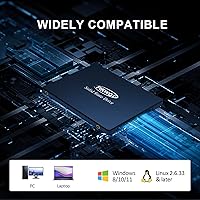
Support for Windows 7 through 10, macOS 10.4 and later, and Linux kernel 2.6.33 and later means this high-capacity SATA SSD works across virtually every mainstream operating system without driver installation or manual configuration. Most users across all three platforms reported immediate plug-and-play recognition on first boot.
A handful of Linux users reported needing to manually partition the drive during initial setup, and a few Mac users encountered a formatting step before the drive functioned optimally as a macOS volume. Neither issue is specific to this drive, but first-time builders may find the extra step unexpected.
Flash Endurance
76%
24%
TLC NAND is a proven and widely adopted flash technology, and for read-dominant workloads like OS booting, media access, and routine file operations, users are unlikely to approach meaningful wear thresholds within a typical three-to-five-year device ownership cycle. Its advantage over QLC in write durability is genuine and well-established.
Without a published TBW rating, buyers have no concrete benchmark for how many write cycles the drive can handle before performance degradation sets in, which is a frustrating and avoidable omission. Users running write-heavy workflows — frequent large-file backups, download staging, or active video production — have no official guidance on expected lifespan under their specific usage patterns.
Thermal Performance
72%
28%
Rated for stable operation between 0 and 60 degrees Celsius, the Fikwot 4TB drive handles typical internal laptop and desktop environments without issue, and users running it as a secondary media drive or primary OS disk reported no thermal-related slowdowns during standard everyday workloads.
During sustained sequential write sessions involving several hundred gigabytes at once, a portion of users noted the casing became noticeably warm and that performance throttling coincided with heat buildup. No heatsink is included or available as an accessory, which limits suitability for thermally constrained enclosures or ambient-heat-heavy environments.
Brand Confidence
53%
47%
With over 4,300 Amazon ratings averaging 4.5 stars and no widespread reports of early mass failure, Fikwot has built a more credible public track record than many anonymous budget brands at this price tier, offering cautious buyers at least a reasonable data point in lieu of longer brand history.
Fikwot remains largely unknown outside of Amazon's marketplace, with limited independent third-party benchmark testing, no established customer support infrastructure, and no failure-rate data comparable to major SSD manufacturers. For buyers who prioritize brand accountability and documented post-purchase support, this gap is a legitimate and reasonable hesitation.
Device Compatibility
86%
The 2.5-inch SATA standard is among the most universally supported storage interfaces in consumer electronics, and backward compatibility with SATA II ports means this drive slots into a wide range of older systems without any compromise beyond the host interface ceiling. The overwhelming majority of users reported zero compatibility issues across diverse laptop and desktop hardware.
A small number of ultra-slim laptop owners found the drive bay clearance too tight for standard installation without risk to the connector, and users with proprietary Mac blade connectors found the drive incompatible without an adapter. USB enclosure compatibility was also flagged as inconsistent across a small percentage of reported external use cases.
Everyday Performance
83%
For the workloads most buyers actually run — booting Windows, browsing local files, loading photos, and accessing stored media — the jump from a mechanical hard drive to this 2.5-inch solid state drive is immediately and meaningfully noticeable. Users who had been tolerating sluggish HDD speeds described the real-world improvement as genuinely satisfying in daily use.
Users who compared this drive directly against an NVMe installed in the same machine found application launch times and large-file handling noticeably slower, reinforcing the reality that this is a capacity-focused product rather than a performance-first one. Heavy multitasking and sustained sequential throughput tasks are where the SATA ceiling makes itself most clearly felt.
Warranty Coverage
66%
34%
A 3-year warranty is consistent with what most mid-range competitors offer at this price tier, and it provides a meaningful baseline safety net for buyers concerned about early failure from a newer brand. Knowing there is a formal recourse window for manufacturing defects makes the overall purchase feel somewhat less risky.
Three years is the minimum expectation for this class of SSD rather than a differentiator — Samsung and Western Digital routinely offer five-year warranties on comparable products, setting a higher standard this drive does not reach. The practical warranty claim experience with Fikwot is also considerably less documented than with established manufacturers, leaving buyers with few reference points.

Suitable for:

The Fikwot FS810 4TB Internal SSD is purpose-built for anyone whose storage needs have outpaced their hardware budget without requiring bleeding-edge transfer speeds. It is a natural fit for users with older laptops or desktops — machines from the mid-2010s that lack M.2 slots but still have a perfectly functional 2.5-inch SATA bay waiting to be used. Content creators who need a reliable home for large photo libraries or video footage archives will find a compelling case here, especially when NVMe options at the 4TB mark carry a noticeably steeper price premium. The same logic applies to home desktop builders who want a high-capacity secondary drive for media storage, local backups, or long-term archival use. Budget-conscious users replacing sluggish mechanical hard drives will notice a real, immediate improvement in boot times and application responsiveness. It also suits anyone looking for an affordable 4TB solid-state option to drop into a USB enclosure for PS4 or PS5 external game storage.

Not suitable for:

The Fikwot FS810 4TB Internal SSD is the wrong choice for anyone who puts raw throughput at the top of their priority list. If your machine has an available M.2 slot and you handle workloads that demand sustained high-speed transfers — 4K video editing timelines, heavy database operations, or rapid movement of large file batches — a modern NVMe drive will leave this one behind by a wide margin. The SATA III interface caps sequential reads at 560MB/s, which is simply the ceiling of the standard, not a fault of this specific drive, but it is a hard real-world limitation worth understanding before you buy. Brand-conscious buyers who want the long-term assurance of an established name like Samsung, Crucial, or Western Digital may feel uneasy here, since Fikwot's multi-year reliability track record is still being built. Anyone running prolonged, write-intensive workloads should also proceed with caution, as TLC flash — while better than QLC — can see performance dip under sustained pressure. Finally, this is not a fit for PS5 internal bay expansion, which requires an M.2 NVMe drive entirely.

Specifications

  • Capacity: Offers 4TB of storage, making it one of the higher-capacity options available in the standard 2.5-inch SATA form factor.
  • Form Factor: Follows the standard 2.5-inch profile, fitting the majority of laptops, desktop drive bays, and compatible external enclosures.
  • Interface: Uses a SATA III (6Gb/s) connection and is backward compatible with SATA II (3Gb/s) ports found on older host systems.
  • Read Speed: Sequential read speed reaches up to 560MB/s under optimal conditions on a SATA III host controller.
  • Flash Type: Built with 3D NAND TLC flash memory, which provides greater write endurance and longevity compared to QLC-based alternatives at a similar price point.
  • Dimensions: Measures 5.87 x 3.4 x 0.43 inches, conforming to the standard 2.5-inch SSD dimensional footprint.
  • Weight: Weighs 2.12 ounces, light enough for comfortable laptop installation without adding meaningful chassis bulk.
  • OS Support: Compatible out of the box with Windows 7, 8, 8.1, and 10, macOS 10.4 or later, and Linux kernel 2.6.33 or later.
  • Encryption: Supports hardware-level encryption, providing a layer of data protection for users storing sensitive files on a portable device.
  • Shock Resistance: Rated for shock resistance, offering a degree of protection against vibration and minor impacts during portable or mobile use.
  • Hot-Swappable: Supports hot-swapping on compatible host controllers, allowing connection or disconnection without a full system power cycle.
  • Op. Temperature: Rated for stable operation within a temperature range of 0 to 60 degrees Celsius under active workload conditions.
  • Warranty: Covered by a 3-year manufacturer warranty addressing defects in materials and workmanship from the date of purchase.
  • Model Number: Carries the designation FS810-4TB, identifying it as the 4TB capacity variant within the Fikwot FS810 product series.
  • Installation: Designed for internal installation using standard SATA data and power connectors, requiring no proprietary adapters or tools beyond a basic screwdriver.
  • Color: Ships in a matte black finish consistent with the standard aesthetic of internal SSD hardware.

Related Reviews
Fikwot FS810 500GB SSD
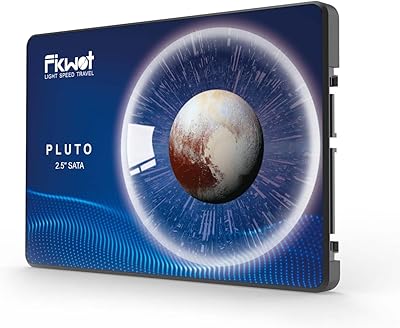
85%
89%
Performance
94%
Ease of Installation
92%
Value for Money
85%
Durability
87%
Speed (Read/Write)
More
Fikwot FX815 4TB Internal SATA SSD
78%
88%
Value for Money
74%
Read & Write Performance
91%
Installation Ease
87%
Boot & Load Times
72%
Build Quality
More
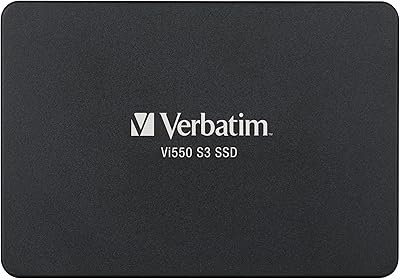
Verbatim Vi550 4TB 2.5″ Internal SSD
77%
88%
Value for Money
93%
Storage Capacity
74%
Sequential Read Speed
62%
Sustained Write Performance
91%
Installation & Setup
More
Fikwot FX550 4TB NVMe M.2 SSD
79%
93%
Storage Capacity Value
88%
Sequential Read Speed
61%
Sustained Write Performance
91%
Value for Money
89%
Installation & Compatibility
More
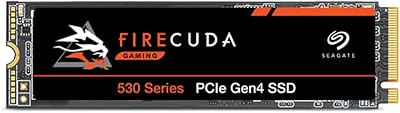
Seagate FireCuda 530 4TB M.2 NVMe SSD
82%
93%
Sequential Read Performance
91%
Sequential Write Performance
62%
Thermal Management
84%
PS5 Compatibility
96%
Endurance & Longevity
More
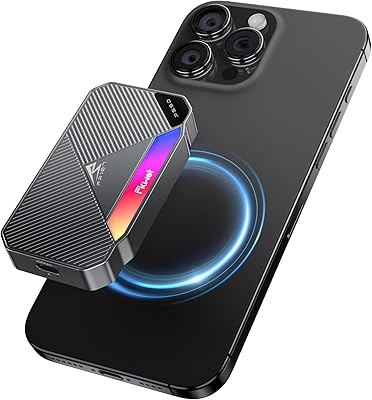
Fikwot FP107 4TB Portable SSD
77%
88%
Transfer Speed
91%
Magnetic iPhone Attachment
84%
Build Quality
79%
Value for Money
71%
Heat Management
More
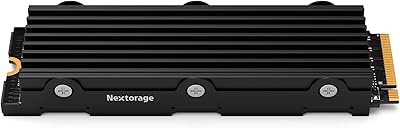
Nextorage NEM-PAB 4TB M.2 NVMe SSD
84%
91%
Installation Experience
84%
Real-World Load Times
88%
Thermal Management
67%
Value for Money
89%
Build Quality
More
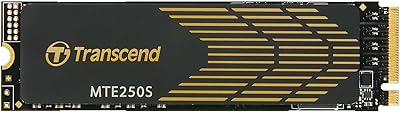
Transcend MTE250S 4TB NVMe M.2 SSD
81%
92%
Read Performance
81%
Write Performance
88%
Thermal Management
74%
Capacity Value
89%
PS5 Compatibility
More
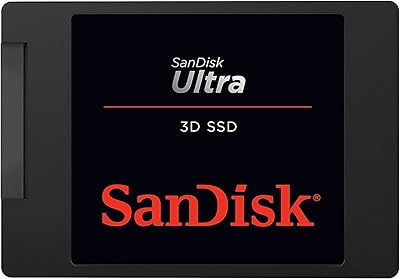
SanDisk Ultra 3D NAND 4TB Internal SSD
91%
94%
Sequential Read Speed
91%
Sequential Write Speed
96%
Endurance & Reliability
88%
Ease of Installation
90%
Compatibility
More
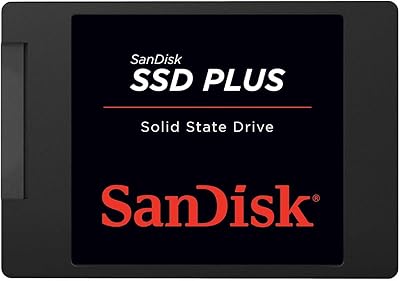
SanDisk SSD Plus 2TB Internal SSD
82%
88%
Read Speed Performance
74%
Write Speed Performance
94%
Installation & Compatibility
91%
Value for Money
86%
Long-Term Durability & Reliability
More

FAQ

Almost certainly yes, assuming your laptop uses a standard 2.5-inch drive bay, which covers the vast majority of laptops built in the last fifteen or so years. The Fikwot FS810 4TB Internal SSD shares the exact same physical footprint as a traditional 2.5-inch mechanical hard drive, so it slots straight in using the same mounting points and SATA connector. Just confirm your laptop uses a SATA interface rather than an older IDE or a proprietary connector before purchasing.

It is compatible with macOS 10.4 and later, which covers essentially every Intel-based Mac that has a 2.5-inch SATA drive bay. If you plan to use it as a primary Mac drive, you will need to format it as APFS or Mac OS Extended using Disk Utility first, since it may arrive formatted for Windows. No driver installation is required.

On paper, the gap is significant — this high-capacity SATA SSD tops out around 560MB/s sequential reads, while a mid-range NVMe can hit 3,000MB/s or beyond. In everyday use, the difference is real but often less dramatic than the numbers suggest: booting Windows, launching apps, and opening files all feel snappy compared to a mechanical hard drive. Where NVMe genuinely pulls ahead is under sustained heavy workloads like 4K video editing, large database operations, or moving hundreds of gigabytes at once.

Yes, meaningfully so. TLC flash stores three bits of data per memory cell, while QLC stores four — and more bits per cell generally means fewer supported write cycles before wear accumulates. For typical home, office, or media storage workloads, TLC offers a lifespan that the average user is very unlikely to exhaust. It is a well-established and trusted flash type that has powered mainstream SSDs for years, which makes it a better long-term bet than QLC at this price tier.

Yes, but with an important distinction. Placed in a USB enclosure, the Fikwot 4TB drive works well as extended external storage for a PS4 or for storing and running PS4 games on a PS5. What it cannot do is serve as the PS5's internal NVMe expansion, which requires an M.2 PCIe SSD installed in the dedicated internal slot. So for offloading your PS4 library or storing media, it is a practical option — just do not expect it to replace the PS5 internal upgrade slot.

No drivers or special software are needed. Windows, macOS, and most Linux distributions will detect it automatically as a standard SATA storage device. If the drive arrives unformatted or you are doing a fresh OS install, you will need to initialize it first — that takes about a minute in Windows Disk Management or macOS Disk Utility. Beyond that, it is genuinely plug-and-play.

The drive carries a 3-year warranty, which is standard for this class of SSD. In practice, warranty support from a newer brand like Fikwot is harder to evaluate than from an established manufacturer — the process typically involves contacting their support team by email and arranging a return shipment. It is worth saving your purchase confirmation and noting Fikwot's support contact at the time you buy, since customer service responsiveness from newer brands can vary and is not as well-documented as that of industry veterans.

It works perfectly as a primary boot drive — in fact, replacing an old mechanical hard drive with this 2.5-inch solid state drive as the system disk is one of the most impactful uses for it. Boot times improve significantly, and application loading becomes noticeably more responsive. You can either clone your existing drive using free tools like Macrium Reflect, or do a clean operating system installation directly onto it.

On paper specifications, the three drives occupy similar territory — all are 2.5-inch SATA III SSDs with comparable maximum read speeds. The meaningful difference is track record: Samsung and Crucial publish full TBW (terabytes written) endurance ratings and MTBF figures, have well-documented long-term reliability histories, and offer more established customer support. The Fikwot 4TB drive carries strong Amazon ratings but has a shorter public reliability record. If long-term confidence matters as much as upfront cost, the name-brand options are worth the premium — though that premium at 4TB capacity can be substantial.

The FS810 series is available in multiple capacities — smaller variants such as 1TB and 2TB exist within the same product line and share the same form factor and SATA interface. The 4TB option tends to attract the most attention because high-capacity 2.5-inch SATA SSDs at that size are still relatively uncommon. If you need less storage, the smaller capacities offer the same physical compatibility at a lower price point.