Overview

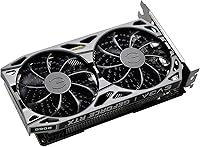
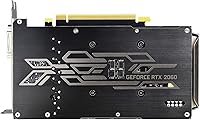
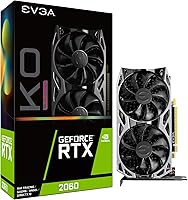
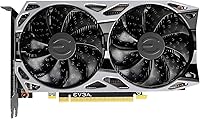
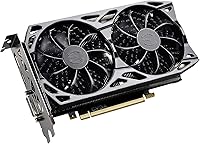
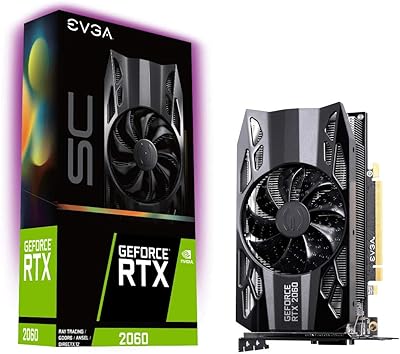
The EVGA RTX 2060 KO Ultra Graphics Card sits in a comfortable spot for PC builders who want solid 1080p performance without chasing the top of the market. The KO Ultra variant steps above the base RTX 2060 with a higher boost clock and a dual-fan cooling setup that keeps thermals in check during long sessions. It isn't built to compete with flagship cards, and it doesn't pretend to be. What stands out physically is the all-metal backplate — pre-installed and noticeably sturdy — which signals a level of build quality you don't always find at this price tier. For mid-range buyers, that attention to detail matters.
Features & Benefits

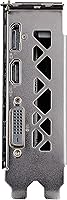
Ray tracing is the headline feature here, and it's worth being straightforward about what that means in practice. The dedicated RT cores handle effects like realistic reflections and shadows in supported games, but with 6GB of GDDR6 VRAM, you'll want to dial settings back in newer, texture-heavy titles — ultra ray tracing modes can push memory limits fast. The 1,680 MHz boost clock handles 1080p gaming comfortably across most current titles, and the dual-fan cooler runs quietly enough that you'll barely notice it under moderate load. EVGA's Precision X1 software lets you tune fan curves and push a modest overclock without needing anything extra. HDMI, DisplayPort, and DVI outputs also cover a wider range of monitor setups.

Best For

This mid-range Nvidia card is an especially good fit for anyone gaming at 1080p who wants to dip into ray tracing without spending flagship money. Its roughly 8-inch length makes it a practical choice for standard ATX and mid-tower cases with no clearance drama. If you're coming from a GTX 10-series card, the jump in performance and the addition of hardware-accelerated ray tracing will feel significant. Light video editing and streaming also benefit from NVENC hardware encoding, which offloads that work from your CPU efficiently. And if post-sale support matters to you — it should — EVGA's 3-year warranty and reputation for responsive customer service make this a lower-risk purchase than buying from lesser-known brands.

User Feedback

With over 3,000 ratings averaging 4.7 out of 5, the KO Ultra has clearly earned its standing among real buyers. The most consistent praise centers on quiet operation under load, straightforward installation, and temperatures that stay reasonable even during extended play. Where feedback turns more critical is predictable: the 6GB VRAM ceiling becomes noticeable in texture-heavy modern games when you push beyond 1080p or crank settings to maximum. A handful of users also note that the RTX 2060 generation is showing its age against newer mid-range options. That said, buyers who have used this card for two or more years consistently report no reliability issues, and those who contacted EVGA support describe the experience positively.

Pros

  • Handles the vast majority of 1080p games with smooth, consistent frame rates.
  • Hardware ray tracing works well in supported titles at moderate settings.
  • The dual-fan cooler runs noticeably quiet under typical gaming loads.
  • Pre-installed all-metal backplate adds rigidity and a premium feel right out of the box.
  • EVGA Precision X1 makes fan tuning and light overclocking accessible without extra software.
  • HDMI, DisplayPort, and DVI outputs cover a wide range of monitor setups, including older displays.
  • Installation is straightforward — most owners report a plug-and-play experience.
  • EVGA's 3-year warranty is among the better coverage offers in this GPU segment.
  • NVENC hardware encoding is a genuine bonus for streamers and video editors on a budget.
  • Long-term reliability reports from multi-year owners are consistently positive.

Cons

  • 6GB VRAM becomes a real constraint in texture-heavy titles, especially beyond 1080p.
  • Ray tracing at ultra quality settings is largely impractical given the memory ceiling.
  • The RTX 2060 generation is aging, and current mid-range cards offer better performance-per-dollar.
  • No support for newer features like DLSS 3 or Frame Generation, which require later-generation hardware.
  • Power consumption is higher than equivalent-performance cards from newer GPU architectures.
  • Limited upgrade headroom — buyers with long-term plans may outgrow this card sooner than expected.
  • The KO Ultra can run warm in poorly ventilated cases despite the dual-fan design.
  • Finding this card at a genuinely competitive price is harder as the used GPU market shifts.

Ratings

The scores below reflect an AI-driven analysis of thousands of verified global purchases for the EVGA RTX 2060 KO Ultra Graphics Card, with spam, incentivized, and bot-flagged reviews actively filtered out before any scoring was applied. Every category captures what real buyers actually experienced — the genuine strengths that kept satisfaction high and the recurring friction points that pulled scores down. Nothing here is polished to look good; it's an honest read of the full picture.

1080p Gaming Performance
88%
At 1080p, the KO Ultra delivers confidently across a wide range of titles — from competitive shooters to story-driven RPGs — with frame rates that stay smooth without constant tinkering. Buyers upgrading from older GTX cards consistently describe the jump as immediately noticeable in everyday play.
Performance headroom shrinks in the most demanding modern titles, particularly those with dense open-world environments or heavy post-processing. A handful of users report needing to drop settings below high to maintain stable frame rates in the latest releases.
Thermal Management
86%
The dual-fan setup keeps the card running at reasonable temperatures during long gaming sessions, and users in mid-tower builds with decent airflow report GPU temps staying comfortably under load. Most buyers found the card never throttled during normal use.
In smaller cases with restricted airflow, temperatures climb noticeably and fans spin up more aggressively than expected. A subset of users in compact builds noted the card running warmer than anticipated when ambient room temperatures are elevated.
Noise Level
84%
Compared to blower-style cards, the dual-fan design is a clear step up in acoustic comfort — most users describe it as barely audible during light-to-moderate gaming. Those coming from older single-fan budget cards were particularly impressed by how quiet it stays.
Under sustained heavy load — long render sessions or demanding titles pushed to max settings — the fans do ramp up to a level some users find distracting. It's not loud by GPU standards, but it is noticeable in a quiet room with an otherwise silent build.
Ray Tracing Capability
69%
31%
Hardware RT cores make ray tracing genuinely functional in a range of supported titles, and buyers who primarily play games from 2019 to 2022 with ray tracing support found the feature added real visual depth without becoming a slideshow.
The 6GB VRAM ceiling is the hard constraint here — newer ray-traced titles demand more memory than the card can supply at quality settings, forcing users to choose between ray tracing and higher texture resolution. In the most recent releases, enabling ray tracing often means accepting a noticeable frame rate penalty.
VRAM Adequacy
61%
39%
For 1080p gaming in titles from the card's launch era through roughly 2022, 6GB of GDDR6 memory is sufficient and rarely becomes a visible bottleneck in day-to-day play. Buyers focused on esports titles or older games had no complaints about memory capacity.
This is the most cited limitation across the entire review pool. Texture-heavy modern games at high settings regularly push against the 6GB limit, causing stuttering, pop-in, or forced resolution drops. Buyers who tried to push the card harder than 1080p high settings frequently ran into this wall sooner than expected.
Build Quality
91%
The pre-installed all-metal backplate is a standout for a card in this price tier — it feels solid immediately out of the box and gives the card a premium physical impression that buyers consistently comment on. The overall construction feels deliberate rather than cost-cut.
A small number of buyers noted minor cosmetic inconsistencies in the shroud finish on arrival, though these were aesthetic rather than functional. At this price tier, some buyers expected RGB lighting as standard, which the KO Ultra does not include.
Installation Ease
93%
First-time builders and veterans alike found the installation process genuinely painless — the card slots in cleanly, the single 8-pin power connector is standard on virtually all modern PSUs, and driver installation through NVIDIA's site is straightforward. Multiple users described it as the easiest part of their entire build.
A very small number of buyers encountered driver conflicts on systems with outdated motherboard firmware, requiring a BIOS update before the card was recognized properly. This is rare, but worth noting for anyone running older hardware.
Value for Money
74%
26%
At its target price point, the KO Ultra offered a competitive package at launch — hardware ray tracing, a quality cooler, and EVGA's warranty in a single purchase. Buyers who found it at the right price consistently rated it as good value within its generation.
As newer mid-range GPUs have come to market offering more VRAM and better performance per dollar, the value equation has shifted. Buyers comparing it against current alternatives at the same price find the KO Ultra harder to justify, particularly given the VRAM constraint.
Software Experience
82%
18%
EVGA Precision X1 is a well-regarded utility that gives users genuine control over fan curves, power limits, and overclocking without the bloat of third-party tools. Buyers who explored overclocking reported modest but stable gains with the built-in tools.
Some users found that Precision X1's fan curve controls reset after driver updates, requiring manual reconfiguration. A handful of buyers also reported minor UI instability on certain Windows configurations, though nothing that affected core GPU function.
Long-Term Reliability
89%
Buyers who have owned the KO Ultra for two or more years are notably positive about its durability — hardware failures are rarely cited, and the card continues to perform consistently for those using it within its intended workload range. The all-metal backplate likely contributes to long-term PCB integrity.
A small percentage of buyers reported fan bearing noise emerging after extended ownership — not universal, but worth factoring in for buyers planning to keep the card for four or more years without maintenance.
Warranty & Support
87%
EVGA's 3-year warranty is among the more generous offerings in the GPU market, and buyers who needed to use it describe the RMA and support process as genuinely responsive — not the typical frustrating runaround. This alone drove repeat brand loyalty among multiple reviewers.
Some international buyers noted longer wait times for support resolution compared to US-based customers. Additionally, EVGA has since exited the GPU business, which raises reasonable questions about long-term warranty servicing capacity for new buyers.
1440p Gaming Performance
58%
42%
In lighter esports titles and games with moderate graphical demands, the card handles 1440p at medium settings well enough for buyers who occasionally step up from 1080p. Some users reported perfectly playable experiences in older game libraries at this resolution.
1440p is effectively outside the comfortable operating range for this card in demanding titles — VRAM runs short before the GPU itself maxes out, leading to stuttering and visual artifacting. Buyers who purchased primarily for 1440p gaming expressed the most disappointment in their reviews.
Compatibility
92%
The dual-slot footprint, standard 8-pin power requirement, and support for HDMI, DisplayPort, and DVI make this one of the more broadly compatible cards available — it works with older monitors, mainstream PSUs, and virtually any ATX case without adapter gymnastics.
The card does not support USB-C or VirtualLink output, which limits compatibility with certain VR headsets and newer display types. Buyers with Mini-ITX cases also flagged occasional clearance concerns despite the relatively compact card length.
NVENC Encoding
83%
Content creators and streamers using OBS or DaVinci Resolve found NVENC hardware encoding a practical bonus — it offloads video compression from the CPU efficiently and handles 1080p streaming without breaking a sweat alongside active gaming.
For 4K video editing or high-bitrate encoding workflows, the combination of NVENC capabilities and 6GB VRAM becomes limiting. Buyers doing more than casual streaming or light video work consistently found themselves wanting more memory bandwidth for heavier creative tasks.
Future-Proofing
47%
53%
For buyers with modest gaming expectations who play at 1080p in a curated library of current and classic titles, the KO Ultra still holds up adequately and is not approaching obsolescence in any immediate functional sense.
The RTX 2060 generation is visibly aging against the broader GPU landscape — no DLSS 3 support, no Frame Generation, limited VRAM, and a performance ceiling that newer mid-range cards surpass at comparable or lower prices. Buyers planning a 3-to-5-year ownership window should weigh this carefully before purchasing.

Suitable for:

The EVGA RTX 2060 KO Ultra Graphics Card is a strong pick for PC gamers who primarily play at 1080p and want access to hardware ray tracing without stretching their budget to flagship territory. If you're still running a GTX 1060 or 1070, the performance jump here is real and noticeable — faster frame rates, better shader performance, and a generational leap in visual capability. The roughly 8-inch card length fits comfortably in most mid-tower and standard ATX cases, so compatibility headaches are rare. Part-time content creators and streamers will also find value in the NVENC hardware encoder, which handles video compression efficiently and takes pressure off the CPU. Buyers who care about post-sale peace of mind will appreciate EVGA's 3-year warranty and a customer support team that owners consistently describe as actually responsive.
Not suitable for:

Buyers chasing high-refresh 1440p or 4K gaming should look elsewhere — the EVGA RTX 2060 KO Ultra Graphics Card simply doesn't have the headroom in its 6GB of VRAM or raw compute power to handle those resolutions comfortably in demanding modern titles. If you plan to play the latest open-world or texture-heavy games at maximum settings, you'll run into memory pressure sooner than you'd expect, and that frustration compounds as games continue to grow in VRAM demand. Enthusiasts who want to enable ray tracing at ultra quality in newer releases will find that 6GB sets a hard ceiling on what's actually playable. This card is also aging relative to current-generation mid-range GPUs, so anyone building a system they hope to keep competitive for five or more years without upgrading may want to consider newer architectures. If compact form factors like Mini-ITX are your priority, the dual-slot, 8-inch design may also be tighter than ideal.
Specifications

  • GPU Chip: Powered by the NVIDIA GeForce RTX 2060 processor built on the Turing architecture, which introduced hardware-accelerated ray tracing to the mid-range segment.
  • VRAM: Equipped with 6GB of GDDR6 memory running at an effective 14,000 MHz, offering fast bandwidth suitable for 1080p gaming workloads.
  • Boost Clock: The card reaches a real boost clock of 1,680 MHz, which EVGA rates for sustained in-game performance rather than a theoretical peak burst.
  • Memory Bus: Uses a 192-bit memory bus, which is standard for the RTX 2060 class and provides adequate throughput for the card's target resolution range.
  • Cooling System: A dual-fan active cooling solution keeps operating temperatures in check during extended sessions, running quieter than single-fan or blower-style designs.
  • Backplate: An all-metal backplate comes pre-installed from the factory, adding structural rigidity and protecting the PCB from flex during transport and installation.
  • Card Length: The card measures 7.96 inches (approximately 202 mm) in length, making it compatible with most standard mid-tower and full-tower ATX cases.
  • Slot Width: Occupies two expansion slots at 1.54 inches wide, which is standard dual-slot sizing and works with virtually all modern ATX and Micro-ATX motherboards.
  • Display Outputs: Offers three video outputs: one HDMI port, one DisplayPort, and one DVI port, allowing connection to a broad range of monitors including older DVI-only displays.
  • Max Resolution: Officially supports output up to 3840x2160 (4K UHD), though gaming at that resolution at smooth frame rates is beyond the card's practical performance range.
  • Ray Tracing: Includes dedicated RT cores for hardware-accelerated ray tracing, enabling real-time lighting, shadow, and reflection effects in supported game titles.
  • NVENC Encoder: Features NVIDIA's NVENC hardware video encoder, which offloads streaming and video export tasks from the CPU for more efficient content creation workflows.
  • API Support: Supports DirectX 12 Ultimate, Vulkan, and OpenGL 4.6, ensuring compatibility with current game engines and graphics APIs.
  • Software: Compatible with EVGA Precision X1, a first-party utility that provides fan curve control, overclocking tools, and real-time monitoring without requiring third-party software.
  • Power Connector: Requires a single 8-pin PCIe power connector from the system power supply, which is a standard requirement for cards in this performance tier.
  • TDP: The card has a thermal design power of approximately 160W, meaning a quality 550W or higher power supply is recommended for a complete system build.
  • Warranty: Covered by EVGA's 3-year limited manufacturer warranty, which includes access to the company's customer support team for hardware defects and failure claims.
  • Item Weight: Weighs approximately 1.5 pounds, which is typical for a dual-fan card of this size and does not require additional GPU support brackets in most cases.
  • Model Number: The official EVGA model identifier is 06G-P4-2068-KR, which distinguishes the KO Ultra variant from other cards in the RTX 2060 KO product line.
  • User Rating: Holds a 4.7 out of 5 star average across more than 3,300 verified Amazon ratings, ranking among the top-selling cards in the graphics card category.

Related Reviews
KAER RX590 8GB Graphics Card
70%
71%
1080p Gaming Performance
63%
Value for Money
74%
Thermal Performance
69%
Fan Noise
83%
Driver & Software Support
More
MSI GeForce RTX 2060 VENTUS 6G OC Graphics Card
86%
91%
Performance at 1080p
87%
Performance at 1440p
90%
Ray Tracing and DLSS Support
89%
VR Performance
88%
Cooling and Noise Levels
More
EVGA GeForce RTX 2070 XC Gaming 8GB GDDR6 Graphics Card
85%
91%
Gaming Performance
88%
Cooling Efficiency
75%
Ease of Installation
78%
Power Consumption
85%
Build Quality
More
ASUS RTX 2060 Dual EVO 6GB Graphics Card
77%
88%
Gaming Performance at 1080p
91%
Thermal Management
93%
Noise Level
61%
VRAM Adequacy
89%
Build Quality
More
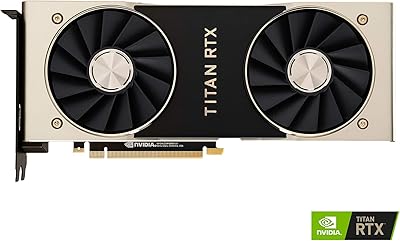
NVIDIA Titan RTX 24GB Graphics Card
76%
96%
VRAM Capacity
83%
Compute Performance
78%
AI & Machine Learning Suitability
74%
Ray Tracing Capability
67%
Thermal Management
More
EVGA GeForce RTX 2060 SC 6GB GDDR6
84%
91%
Performance for 1080p Gaming
88%
Cooling Efficiency
92%
Value for Money
86%
Ray Tracing & DLSS Features
85%
Performance for 1440p Gaming
More
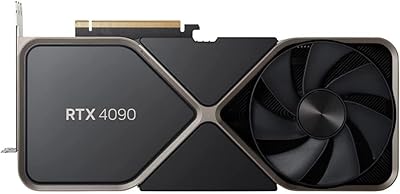
NVIDIA GeForce RTX 4090 Founders Edition Graphics Card
84%
96%
Gaming Performance
94%
Ray Tracing & Visual Fidelity
62%
Power Consumption
89%
Build Quality & Design
93%
VR Compatibility
More
EVGA RTX 3070 FTW3 Ultra Graphics Card
77%
94%
Thermal Performance
91%
Noise Level
93%
Build Quality
88%
Gaming Performance at 1440p
67%
Gaming Performance at 4K
More
EVGA GeForce RTX 2080 XC Ultra Gaming 8GB
86%
91%
Gaming Performance
87%
Ray Tracing and Visuals
89%
Cooling Efficiency
80%
Noise Levels
93%
Build Quality
More
EVGA RTX 3090 FTW3 Ultra Graphics Card
79%
91%
Raw Gaming Performance
94%
VRAM Capacity
83%
Thermal Management
89%
Build Quality
67%
Noise Level
More

FAQ

In most cases, yes. The KO Ultra measures just under 8 inches long and takes up two slots, which is a standard footprint that fits the overwhelming majority of mid-tower and full-tower cases. Just check your case specs for GPU clearance — anything listed at 200mm or more should work without issue.

EVGA recommends at least a 550W power supply for a system built around this GPU. The card draws around 160W under load and uses a single 8-pin PCIe connector. If your current PSU is rated below 500W or is from an off-brand manufacturer, it's worth upgrading before installing the card.

It can run 1440p, but with caveats. In less demanding or older titles you'll get playable frame rates, but in modern open-world games or anything with high texture demands, the 6GB VRAM limit becomes a real issue at 1440p with settings pushed up. Most buyers will get the best experience treating this as a 1080p card.

It's genuinely usable in some games — titles like Control, Minecraft RTX, and older ray-traced games run reasonably well with ray tracing enabled at medium settings. The honest caveat is that 6GB of VRAM puts a ceiling on what's practical. Newer releases with demanding ray tracing implementations will push the card hard, and you may need to choose between ray tracing and higher texture quality.

Pretty quiet compared to blower-style single-fan designs. The dual fans ramp up gradually, and most users report the card staying at a comfortable noise level even in extended gaming sessions. In a closed case with decent airflow, it's unlikely to be the loudest component in your system.

It works perfectly fine with AMD CPUs. The KO Ultra connects through a standard PCIe slot on any modern motherboard, and there's no CPU brand restriction — pairing it with a Ryzen processor is completely normal and very common.

The card has one HDMI port, one DisplayPort, and one DVI port. That covers most modern monitors and even older DVI-only displays, which is a nice touch that not every GPU in this range includes. You can run up to three monitors simultaneously across those outputs.

EVGA offers a 3-year limited warranty on the KO Ultra. If the card develops a defect within that window, you contact EVGA's support team directly — not the retailer — and they handle the replacement or repair process. Reviews of their support experience are generally positive, with users noting responsive communication and relatively fast turnaround on claims.

It depends on your budget and how long you plan to keep the card. If current-generation mid-range GPUs are out of reach and you primarily play at 1080p, the KO Ultra still delivers a solid experience in most games. However, if you can stretch to a newer GPU — even a used RTX 3060 — you'll get more VRAM headroom and better long-term performance. The RTX 2060 is a capable card that's simply aging against a more competitive market.

The card will work out of the box once you install the standard NVIDIA display drivers, which you can download directly from NVIDIA's site. EVGA's Precision X1 software is optional but worth installing if you want to tweak fan curves or push a mild overclock — it's a clean, well-maintained utility that doesn't require any technical expertise to use.

Where to Buy