Overview

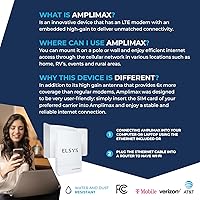
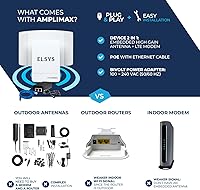
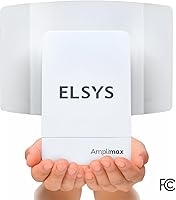
The ELSYS Amplimax Outdoor 4G LTE Modem takes a practical approach to rural connectivity by packing both a high-gain antenna and an LTE modem into one weatherproof enclosure you mount outside. That single-unit design matters because it eliminates the cable runs and signal loss you'd get from pairing separate indoor modems with external antennas. It's FCC certified and works with AT&T, T-Mobile, and Verizon, making it a realistic option whether you need a primary internet source or a failover backup. One thing to know upfront: this is a modem, not a router. You'll need a separate Wi-Fi router if you want wireless coverage inside your home or RV.

Features & Benefits

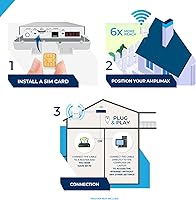
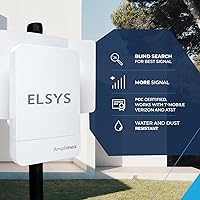
The antenna-modem combo's headline claim is a signal range of up to 25 miles from a cell tower — a figure worth treating with some skepticism, since real-world performance depends heavily on terrain, obstructions, and local tower density. That said, the quad-band LTE radio does cover the frequency bands used by all major US carriers, which is genuinely useful. The Blind Search feature is a standout: it lets you scan for the strongest available carrier signal at your location before you commit to buying a SIM plan. Hardware setup is straightforward — plug in the included Ethernet cable, insert a SIM, and you're connected. Security runs on WPA2-PSK, which is standard for this category.

Best For

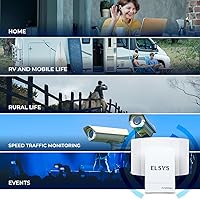
This outdoor LTE modem was clearly designed with specific, underserved use cases in mind. Rural homeowners who have exhausted DSL and cable options will find it most compelling as a primary home internet solution, provided local LTE signal is strong enough. RV owners and campers who move between locations also benefit from its portability and carrier flexibility. Vacation rental operators will appreciate the low-maintenance installation — mount it once and largely forget it. It also works well as a cellular failover backup for small businesses or home offices where downtime is costly. Fringe-coverage users, specifically those who get a weak indoor signal but something usable outdoors, are perhaps the most natural fit.

User Feedback

Across nearly 100 ratings, the Amplimax unit averages 3.9 stars — a score that reflects a real split in buyer experience. Positive reviews consistently mention a noticeable signal improvement over any indoor modem they had previously used, and many users found the physical installation easy enough. The negatives are harder to ignore: a fair number of buyers ran into frustration with APN configuration, particularly on less common carriers, where the documentation falls short. Some purchasers were also caught off guard by the absence of built-in Wi-Fi — they expected a complete solution and received a modem only. Build quality gets mixed marks, with a few users raising questions about long-term durability in harsh outdoor conditions.

Pros

  • Combines antenna and modem in one outdoor unit, eliminating the need for separate components and extra cabling.
  • Works with AT&T, T-Mobile, Verizon, and other US carriers, giving you genuine flexibility when choosing a data plan.
  • The Blind Search feature lets you test carrier signal strength at your location before committing to a SIM.
  • Weatherproof housing handles rain, dust, and UV exposure, making it a reliable year-round outdoor installation.
  • Quad-band LTE support means it can connect across a wide range of frequency bands used by US networks.
  • Setup for a direct Ethernet-to-PC connection is genuinely straightforward — insert SIM, plug in cable, done.
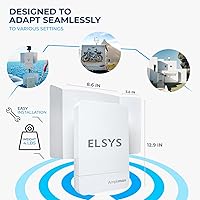
  • Pole-mount and wall-mount options give you flexibility in positioning the unit for the best signal.
  • FCC certified and carrier-qualified, so you are not risking interference issues or carrier rejection.
  • Ethernet cable is included in the box, so you can get connected without an immediate extra purchase.
  • Useful as a cellular failover backup, keeping small offices or remote properties online during ISP outages.

Cons

  • No built-in Wi-Fi — a separate router is required for wireless sharing, adding cost and complexity many buyers do not anticipate.
  • Real-world signal range depends heavily on local terrain and tower proximity; the 25-mile claim is a best-case figure.
  • APN configuration for certain smaller or regional carriers can be confusing, and the included documentation does not cover edge cases well.
  • Only one Ethernet port limits direct wired connections to a single device or upstream router.
  • User experience varies significantly by location — buyers in marginal LTE coverage zones report inconsistent results.
  • Long-term outdoor durability has been questioned by some users, particularly regarding the mounting hardware over time.
  • The proprietary ELSYS operating system offers limited customization compared to more open modem firmware options.
  • No cellular signal strength indicator or display on the unit itself makes initial antenna aiming a trial-and-error process without additional tools.

Ratings

Our editorial team fed verified purchase reviews for the ELSYS Amplimax Outdoor 4G LTE Modem through our AI scoring system, which actively filters out incentivized, bot-generated, and single-use reviewer accounts to surface what genuine long-term buyers actually experienced. The scores below reflect both the real strengths that keep satisfied users recommending this antenna-modem combo and the recurring frustrations that pushed others toward one-star reviews. Nothing has been smoothed over — if a category divided buyers, the score shows it.

Signal Performance
74%
26%
Users living in fringe coverage areas consistently reported meaningful signal gains compared to any indoor modem they had previously tried — in several cases unlocking usable LTE where none existed before. For the right location, the integrated high-gain antenna genuinely delivers on its core promise.
Results vary so dramatically by geography that signal performance is almost impossible to predict before installation. Buyers in areas with marginal LTE coverage from the outset report little to no improvement, and the 25-mile range claim draws frequent skepticism from users in hilly or tree-dense terrain.
Ease of Setup
68%
32%
For the basic use case — plugging directly into a single computer via Ethernet — most buyers describe the initial connection as genuinely quick. Inserting the SIM and powering up the unit tends to go smoothly when using a major carrier with standard APN defaults.
Users on less common carriers or MVNOs frequently hit a wall with APN configuration, and the included documentation does not provide enough guidance to resolve it independently. Several reviewers with limited technical background described the setup process as confusing and time-consuming once anything deviated from the standard flow.
Build Quality
71%
29%
The outer enclosure feels solid and purpose-built for outdoor installation, and most buyers who mounted it in exposed locations report that it handles rain, sun, and temperature swings without obvious deterioration in the short term.
Longer-term durability raises some concern among buyers who have owned the unit for a year or more, with questions about how the mounting hardware and cable entry points hold up under sustained UV exposure and moisture. A handful of reviewers noted cosmetic and structural issues emerging within the first twelve months.
Carrier Compatibility
81%
19%
Quad-band LTE coverage across AT&T, T-Mobile, and Verizon means the unit works without modification for the vast majority of US buyers. The Blind Search feature adds practical value by helping users identify their strongest local carrier before locking into a data plan.
Smaller regional carriers and some MVNOs require manual APN entry that is not well documented, leaving users to search online for settings independently. A small number of reviewers reported that certain carrier configurations were simply never confirmed to work reliably with the unit.
Value for Money
63%
37%
For rural homeowners with genuinely no wired broadband alternative, the consolidated 2-in-1 design justifies the mid-range price point better than buying a separate outdoor antenna and indoor modem. When it works as intended, buyers generally feel the investment paid off.
Buyers who also need to purchase a separate Wi-Fi router to enable wireless sharing feel the total system cost adds up quickly. Those in locations where LTE signal does not improve meaningfully after installation are left with an expensive unit that underdelivered relative to expectations.
Documentation Quality
44%
56%
The basic getting-started guide is sufficient for technically confident users connecting to one of the three major carriers, and the physical installation steps are illustrated clearly enough to follow without prior networking experience.
Beyond the basics, the documentation falls short in almost every direction — APN configuration guides are thin, troubleshooting steps are minimal, and non-English original materials show through in the translation quality. This is one of the most consistently cited pain points across negative reviews.
Wi-Fi Capability
29%
71%
When paired with a capable upstream router, the Ethernet output from this outdoor LTE modem provides a clean, stable wired handoff that lets a good router do the wireless heavy lifting effectively.
The unit has no built-in Wi-Fi whatsoever, and this surprises a significant portion of buyers who assumed connectivity was included. For those who purchased expecting an all-in-one wireless hotspot, the disappointment is considerable and the additional router cost feels like an unwelcome surprise.
Antenna Range
61%
39%
In flat, open rural environments with clear line of sight to a tower, several reviewers confirmed connection quality well beyond what any indoor antenna could achieve, which is the core scenario this unit was engineered for.
The headline 25-mile claim reads as aspirational rather than typical, and buyers in terrain with hills, forests, or buildings between them and the nearest tower find real-world range substantially lower. Expectations set by the marketing language are a recurring source of post-purchase frustration.
Mounting & Installation
72%
28%
Both pole-mount and wall-mount options give buyers meaningful flexibility in positioning the unit for the best available signal, and the physical installation process is straightforward for anyone comfortable with basic outdoor hardware.
The included mounting hardware is considered minimal by some reviewers, and users mounting on non-standard poles or surfaces often need to source supplementary brackets independently. Antenna aiming is a manual process with no on-device signal indicator, which can make fine-tuning placement a slow trial-and-error effort.
Weather Resistance
76%
24%
Short to medium-term outdoor exposure across rain, heat, and direct sun has not caused reported functional issues for the majority of users, and the sealed enclosure design appears to do its job in typical US climate conditions.
Extended exposure in particularly harsh environments — heavy coastal moisture, prolonged ice loading, or extreme desert heat cycles — has produced mixed feedback, with some users reporting degraded cable connections or enclosure stress after eighteen months or more.
Network Security
67%
33%
WPA2-PSK support is a competent baseline security protocol for this device category, and for most residential or small-business users connecting through a downstream router, it offers adequate protection against unauthorized access.
The proprietary ELSYS operating system offers no advanced firewall configuration, VLAN support, or user-accessible security customization, which will leave network-conscious buyers wanting more. IT-minded users managing business failover connections may find the security feature set too limited.
Blind Search Feature
79%
21%
This is a genuinely practical differentiator — being able to scan carrier signal strength before purchasing a SIM card saves buyers from committing to the wrong plan for their location, especially in rural areas where coverage maps are often inaccurate.
The feature works as described but the readout and interface for interpreting results are not well explained in the documentation, leaving some less technical users unsure how to act on the information the scan provides.
Reliability Over Time
66%
34%
Buyers who report favorable location conditions — good LTE signal, moderate climate, stable mounting — tend to describe the unit as dependably on without frequent reboots or connection drops once it is properly configured.
In less ideal conditions, particularly where signal is marginal or the unit is exposed to temperature extremes, long-term consistency is less certain. A subset of reviewers report that performance degraded noticeably after six to twelve months of continuous outdoor operation.

Suitable for:

The ELSYS Amplimax Outdoor 4G LTE Modem was built for people who have genuinely run out of wired internet options — rural homeowners, off-grid cabin dwellers, and anyone whose address sits beyond the reach of cable or DSL infrastructure. RV owners and full-time travelers will find it particularly practical, since the quad-band radio works across AT&T, T-Mobile, and Verizon without locking you into a single carrier's coverage map. Vacation rental operators and property managers managing remote locations will appreciate having a low-touch installation they can mount once and largely leave alone. It also makes a credible failover solution for small businesses or home offices where even a few hours of downtime carries real cost — just keep a data-enabled SIM ready and it can take over automatically when your primary ISP goes down. If you already know your location gets a reasonable outdoor LTE signal, this antenna-modem combo gives you a clean, consolidated way to make the most of it.

Not suitable for:

The ELSYS Amplimax Outdoor 4G LTE Modem is not the right choice if you are expecting a complete out-of-the-box Wi-Fi solution — it is a modem only, and you will need to budget for and connect a separate router if you want wireless coverage inside your home or vehicle. Urban and suburban buyers who already have reliable cable, fiber, or DSL service will find little value here, since the hardware cost is hard to justify when faster, more stable wired options are available. Anyone in an area with genuinely poor LTE coverage should also think carefully before buying: no antenna, however capable, can conjure a strong signal from a tower that is too far away or obstructed by heavy terrain. Users who are uncomfortable with basic network configuration — specifically setting APN parameters for less common carriers — may find the setup process frustrating, as the documentation does not always fill in the gaps. Finally, buyers expecting a set-and-forget experience with zero technical involvement should be aware that real-world tuning, such as antenna aiming and carrier selection, can take some patience to get right.

Specifications

  • Brand: Manufactured by ELSYS Equipamentos Electronicos, a Brazilian electronics company specializing in cellular connectivity hardware.
  • Model: The Amplimax is ELSYS's integrated outdoor LTE modem and antenna solution designed specifically for the US market.
  • Form Factor: A 2-in-1 outdoor unit that houses both a high-gain antenna and an LTE modem inside a single weatherproof enclosure.
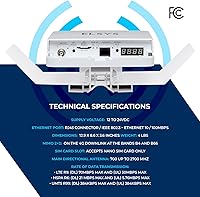
  • Dimensions: The unit measures 14.4 x 3.6 x 8.6 inches, making it a mid-sized outdoor device suitable for pole or wall mounting.
  • Weight: At 3.99 pounds, the unit is light enough for single-person installation on a standard outdoor pole or wall bracket.
  • Antenna Type: Fixed high-gain integrated antenna, rated to capture LTE signals from cell towers up to 25 miles away under ideal line-of-sight conditions.
  • Frequency Bands: Quad-band LTE radio covering multiple frequency bands used by AT&T, T-Mobile, Verizon, and other US cellular carriers.
  • Connectivity: Single RJ-45 Ethernet port for wired output to a PC, laptop, or upstream Wi-Fi router; an Ethernet cable is included in the box.
  • SIM Card Slot: Built-in SIM card slot accepts a standard data SIM from any compatible US carrier; no SIM card is included with the unit.
  • Operating System: Runs ELSYS's proprietary embedded OS, which handles modem management and network configuration through a browser-based interface.
  • Security Protocol: Supports WPA2-PSK encryption when used in conjunction with a downstream Wi-Fi router for wireless network protection.
  • Weather Resistance: The enclosure is rated for outdoor use with protection against water ingress, dust, and prolonged UV ray exposure.
  • Mounting Options: Designed for pole-mount or wall-mount installation; mounting hardware compatibility should be verified separately as specific bracket specs are not published.
  • Carrier Compatibility: Qualified and tested for use on AT&T, T-Mobile, and Verizon networks, and compatible with many additional US carriers operating on supported LTE bands.
  • Certification: FCC certified for use in the United States, confirming compliance with federal radio frequency emission and interference standards.
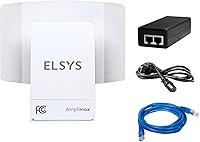
  • Included Accessories: Package includes one Ethernet cable; a SIM card, Wi-Fi router, and mounting hardware are not included and must be sourced separately.
  • Blind Search: Built-in Blind Search function scans available LTE carriers at your location and identifies which delivers the strongest signal, aiding SIM card selection.
  • Power Input: The unit is powered via an included power adapter; the exact voltage and wattage specifications should be confirmed in the product manual before installation.

Related Reviews
NETGEAR LM1200 4G LTE Broadband Modem
70%
83%
Ease of Setup
88%
Failover Reliability
71%
Carrier Compatibility
63%
Real-World Speeds
79%
Build Quality
More
Cudy LT700E 4G LTE Modem Router
82%
88%
Performance
85%
Wi-Fi Speed & Range
90%
Ease of Setup
87%
Value for Money
80%
VPN Functionality
More
NETGEAR 4G LTE Broadband Modem LB1120
82%
92%
Ease of Setup
89%
Connection Stability
84%
Carrier Compatibility
88%
Performance in Rural Areas
90%
Compact Design
More
Cudy LT500 4G LTE Modem Router
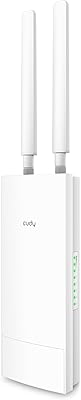
76%
88%
Ease of Setup
82%
4G LTE Signal Performance
79%
WiFi Coverage & Speed
74%
VPN Functionality
71%
Carrier Compatibility
More
Cudy LT700 Outdoor 4G LTE Modem Router
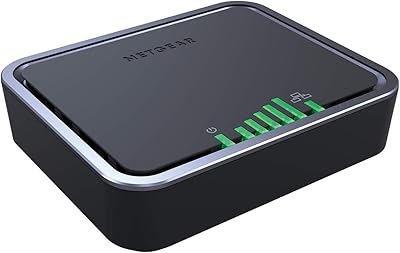
78%
83%
Build Quality & Weatherproofing
76%
Cellular Signal Performance
81%
Antenna System & Upgradability
78%
Installation & Setup
71%
Carrier & Band Compatibility
More
LIWAN 4G LTE Cellular Security Camera Outdoor
83%
88%
Overall Performance
91%
Image Quality (Night Vision)
84%
Ease of Setup
85%
Motion Detection Accuracy
89%
Weatherproof Durability
More
TUOSHI LT15F 4G LTE Modem Router
69%
83%
Setup & Ease of Use
71%
Carrier Compatibility
78%
Signal Reception & Antenna Performance
66%
LTE Speed & Performance
72%
Wi-Fi Coverage & Range
More
Vosker V300 Ultimate Outdoor Security Camera
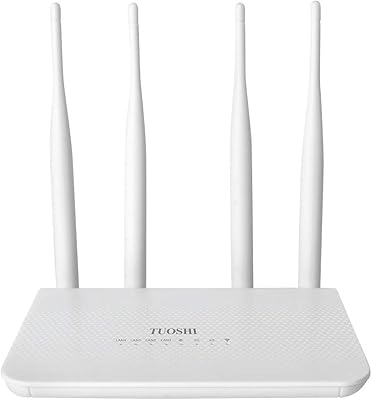
63%
72%
Off-Grid Autonomy
81%
Cellular Connectivity
74%
Video Quality
63%
Motion Detection Accuracy
78%
Installation & Setup
More
Cudy N300 WiFi Unlocked 4G LTE Modem Router LT400
84%
85%
Performance & Speed
91%
Ease of Setup
88%
VPN Functionality
78%
Range & Coverage
70%
Signal Reliability in Rural Areas
More
Vosker VKX Solar Cellular Security Camera
73%
83%
Solar Reliability
86%
Cellular Connectivity & Setup
51%
Subscription Cost & Value
74%
Video Quality
67%
Night Vision Performance
More

FAQ

It does not have built-in Wi-Fi. The ELSYS Amplimax Outdoor 4G LTE Modem is a modem only, so if you want wireless internet access inside your home or RV, you will need to connect a separate Wi-Fi router to its Ethernet port. This is probably the most common surprise buyers encounter, so it is worth factoring a router into your budget before purchasing.

It has been tested and qualified on AT&T, T-Mobile, and Verizon, which covers the vast majority of US LTE networks. Many smaller regional carriers that piggyback on those networks should also work, as long as they operate on the LTE frequency bands supported by the unit's quad-band radio. That said, it is always a good idea to confirm band compatibility with your specific carrier before buying a SIM plan.

Yes, a SIM card with an active data plan is required — the unit cannot connect to the internet without one. No SIM is included in the box, so you will need to purchase one from your chosen carrier separately. The Blind Search feature can help you figure out which carrier offers the best signal at your specific location before you commit to a plan.

For the basic use case — connecting the unit directly to a single computer via Ethernet — the setup is fairly simple: mount the unit outdoors, insert your SIM, run the included Ethernet cable to your computer, and power it on. Connecting it to a router for shared access is also straightforward. Where things can get trickier is APN configuration, particularly if you are using a smaller or less common carrier. The documentation does not always cover those edge cases well, so you may need to look up your carrier's APN settings online.

That figure represents a best-case scenario under ideal, open line-of-sight conditions. In practice, hills, dense trees, buildings, and atmospheric conditions all reduce effective range. Most users in moderately rural areas see meaningful improvement over indoor modems, but if your nearest tower is genuinely 20-plus miles away with obstructions in between, temper your expectations. The antenna is genuinely more capable than a typical indoor unit, just not miraculously so.

It is designed for semi-permanent outdoor mounting, either on a pole or a wall, but nothing stops you from using it in an RV setup. Many RV owners mount it on a temporary exterior pole or bracket and disconnect it when moving. The unit is weatherproof, so outdoor exposure is not a concern. Just keep in mind that every time you change location, you may need to re-aim the antenna toward the nearest tower for best signal.

Blind Search is a built-in scanning mode that checks which cellular carrier delivers the strongest LTE signal at your exact location. This is genuinely useful if you have not yet chosen a carrier, because LTE coverage varies significantly from one address to the next. You can run a scan before buying a SIM plan and make a more informed decision rather than guessing based on coverage maps, which are not always accurate in rural areas.

The enclosure is rated for outdoor installation with protection against water, dust, and UV exposure, so it is built to handle normal weather conditions across seasons. That said, some user reviews raise questions about how the unit holds up over multiple years of continuous outdoor exposure, particularly the mounting hardware. If you live somewhere with extreme weather — heavy ice, hurricane-force winds, or intense desert heat — it is worth monitoring the unit and connections periodically.

Yes, this is actually one of the more practical use cases for this antenna-modem combo. You would connect it to a router that supports dual-WAN or failover switching, and configure the LTE connection as the backup link that activates when your primary ISP goes down. The setup requires a compatible router with that capability, but once configured, failover can happen automatically. Having an active SIM with a data plan ready is of course a prerequisite.

It works with both prepaid and postpaid data SIMs, as long as the plan includes LTE data and the carrier is compatible with the unit's frequency bands. Many rural users pair this antenna-modem combo with a prepaid data-only SIM as a cost-effective approach, especially if internet usage is moderate or seasonal. Just make sure the SIM plan you choose does not restrict data to hotspot devices, as some carriers apply those limits to modem connections.