Overview

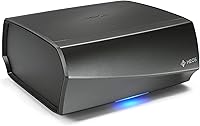
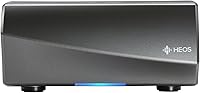
The Denon HEOS Link Series 2 Wireless Pre-Amplifier is essentially a translator — it takes your existing wired stereo setup and gives it a place in a modern, wireless audio network. Denon's century-long background in audio engineering shows in the build: the unit feels solid for its compact size, and the internal components reflect a brand that takes signal integrity seriously. That said, it's worth being clear about what this device actually does. It's a pre-amp streamer, not an amplifier. You still need a receiver, integrated amp, or powered speakers in the chain. The Series 2 upgrade added Alexa voice control, which genuinely expands how you interact with the system day-to-day.
Features & Benefits

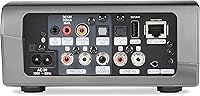
The back panel of the HEOS Link is more versatile than its compact footprint suggests. Dual-band Wi-Fi keeps the connection stable even in homes crowded with wireless devices, while Bluetooth adds a quick fallback for phone playback. The pre-amp and subwoofer outputs let you slot this wireless pre-amp into virtually any existing audio chain — connect it to your integrated amp and your current speakers do all the heavy lifting. Plug in a USB drive loaded with FLAC or AIFF files and the unit handles playback up to 24-bit/192kHz, which is a meaningful spec if you have a quality downstream amp. A 12V trigger rounds things out by letting the unit wake connected gear automatically.

Best For

This wireless pre-amp is squarely aimed at people who have already invested in quality audio gear and don't want to start over just to stream music wirelessly. If you own a capable integrated amplifier or receiver that's been gathering dust because it lacks network connectivity, Denon's streaming pre-amplifier gives it a second life without touching your speaker cables. It also makes strong sense for anyone building a HEOS ecosystem across multiple rooms — the value compounds when you have several zones. Alexa users who want voice-controlled playback through their existing wired setup will find it genuinely useful. It's a poor fit, though, for anyone expecting a plug-and-play solution without additional amplification hardware.

User Feedback

Owner reviews paint a fairly consistent picture, with multi-room audio sync and overall sound fidelity drawing the most praise — people who use it daily inside the HEOS ecosystem tend to be satisfied. The complaints, though, are worth noting. App reliability comes up repeatedly: the HEOS app has a history of quirks, from occasional login issues to a navigation structure that takes time to learn. Wi-Fi stability in dense network environments has also been flagged, with some users reporting dropouts that required router adjustments to resolve. Long-term owners generally report solid hardware durability, but first-time setup is described as less than intuitive, particularly for buyers who aren't comfortable configuring network audio gear.

Pros

  • Adds wireless streaming to any existing amplifier or receiver without replacing a single component.
  • Dual-band Wi-Fi delivers a noticeably more stable connection than single-band alternatives in busy homes.
  • Multi-room audio sync across HEOS zones works accurately, with no audible delay between rooms.
  • USB hi-res playback up to 24-bit/192kHz gives local file listeners a genuine quality advantage over streaming.
  • Alexa voice control is genuinely useful for hands-free source switching and volume adjustment.
  • The 12V trigger automates power-on for connected gear, cutting down on manual steps in a complex setup.
  • A wide range of inputs — optical, RCA, and 3.5mm aux — means it integrates with almost any source device.
  • Compatible with Spotify, Tidal, Amazon Music, SiriusXM, and several other major streaming platforms out of the box.
  • Compact, rack-friendly footprint keeps installations clean and unobtrusive.
  • Long-term hardware reliability is well-regarded among owners who have used the HEOS Link for multiple years.

Cons

  • Requires a separate amplifier or powered speakers — passive speaker users face additional purchase costs.
  • The HEOS app has recurring complaints about login glitches, slow loading, and an unintuitive interface.
  • Wi-Fi stability can become unreliable in homes with crowded 2.4GHz or 5GHz networks.
  • Initial setup is more involved than expected, especially for buyers without a background in networked audio.
  • The full value proposition only materializes if you invest in multiple HEOS zones — single-room users overpay.
  • No built-in DAC display or hardware controls; nearly all interaction depends on the app.
  • Streaming service support, while broad, is locked to the HEOS app and cannot be expanded by third-party integrations.
  • Voice control via Alexa requires a separately owned Echo device — it is not built into the unit itself.
  • Bluetooth range and priority handling can be inconsistent when multiple devices are paired.
  • Customer support responsiveness for firmware or app-related issues has received criticism in owner reports.

Ratings

Our AI rating engine analyzed thousands of verified global owner reviews for the Denon HEOS Link Series 2 Wireless Pre-Amplifier, actively filtering out incentivized, bot-generated, and duplicate submissions to surface what real buyers actually experience. The scores below reflect a transparent synthesis of both the genuine strengths and the recurring frustrations reported across long-term users worldwide. Where sentiment was divided, the scores reflect that division honestly rather than averaging toward false optimism.

Audio Fidelity
88%
Owners consistently praise the clean, neutral signal this wireless pre-amp passes to their downstream amplifiers, with many noting that switching from a standard analog connection to the HEOS Link introduced no perceivable degradation. Hi-res USB playback in particular draws strong praise from listeners running FLAC libraries through high-end integrated amps.
A minority of users with especially resolving systems report that the digital processing chain introduces a very subtle coloration compared to a direct source connection, though this is contested and likely system-dependent. Those expecting analog warmth from the pre-amp stage itself may find the sound character slightly clinical.
Multi-Room Sync
83%
When the network environment is favorable, the HEOS ecosystem's room synchronization is one of its most praised capabilities — owners describe walking from the living room to the kitchen and hearing the same track continue without any audible lag or echo. Groups of three or more zones are reported to sync reliably under stable Wi-Fi conditions.
Synchronization quality is directly tied to network health, and users in apartments with congested Wi-Fi channels report occasional sync drift between zones. Re-grouping rooms via the app after a dropout can be clunky and occasionally requires restarting devices to restore proper timing.
App Experience
57%
43%
The HEOS app covers the functional bases — source switching, streaming service integration, volume control, and zone grouping are all accessible from one interface on both Android and iOS. Users who invest time learning its layout generally report that day-to-day operation becomes manageable.
This is the most consistently criticized aspect of ownership. Login failures, sluggish response times, and an interface structure that feels dated compared to rivals like Sonos surface repeatedly across user cohorts. Several long-term owners describe the app as the single biggest barrier to recommending the product to friends.
Wi-Fi Stability
67%
33%
Dual-band support gives users the option to connect on 5GHz, which meaningfully reduces dropout frequency for those whose routers are within reasonable range of the unit. Owners in homes with dedicated audio networks or less congested Wi-Fi environments report very few connectivity complaints.
In dense urban environments or homes with many competing wireless devices, connection stability becomes a real issue. Multiple users report needing to adjust router channel settings, relocate the unit closer to the access point, or invest in a Wi-Fi extender just to achieve reliable baseline performance.
Setup & Onboarding
61%
39%
For users with prior experience in networked audio or AV systems, the initial configuration is straightforward — the HEOS app walks through the basic steps and most hardware connections are clearly labeled on the rear panel. Tech-comfortable buyers generally report being up and running within 20 to 30 minutes.
Non-technical buyers frequently describe setup as frustrating, with several reporting that connecting the unit to their network required multiple attempts. The process of linking streaming service accounts inside the HEOS app adds additional steps that aren't always well explained in the included documentation.
Build Quality
82%
18%
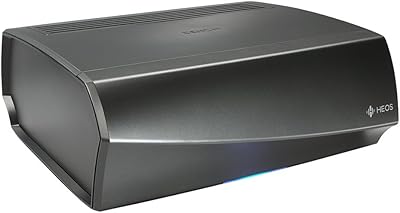
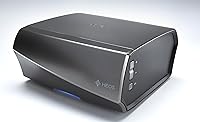
The chassis feels dense and well-constructed for its compact size, with a black and silver finish that sits comfortably alongside premium AV gear without looking out of place. Long-term owners regularly comment that the hardware itself remains in excellent physical condition after years of daily use.
The unit runs slightly warm under extended operation, which some owners in enclosed cabinet installations have flagged as a minor concern. Ventilation clearance is worth planning for if you're mounting it in a tight AV rack.
Streaming Service Range
79%
21%
Coverage of the major platforms — Spotify, Tidal, Amazon Music, Pandora, SiriusXM, TuneIn, and iHeartRadio — satisfies the majority of users without requiring any workarounds. Spotify Connect integration in particular is well-implemented, letting users control playback directly from the Spotify app rather than switching to HEOS.
The streaming catalogue is locked to what Denon has officially integrated into the HEOS platform, and newer or niche services are not supported. Users of Apple Music, YouTube Music, or Qobuz cannot access those platforms natively and must rely on Bluetooth or analog input as a workaround.
Alexa Integration
74%
26%
For owners who already have Amazon Echo devices in their homes, Alexa voice control adds a genuinely useful layer of convenience — asking Alexa to play a specific playlist through a specific room works reliably once the skill is configured. It's a feature that gets used daily by those already embedded in the Amazon ecosystem.
Setup of the Alexa skill requires linking accounts and some troubleshooting for users unfamiliar with Alexa routines, and voice control is limited in scope compared to full app control. Users outside the Amazon ecosystem get no benefit from this feature at all.
Input Versatility
85%
The combination of optical, analog RCA, 3.5mm aux, and USB inputs means Denon's streaming pre-amplifier can accept signal from virtually any consumer audio source without adapters. Turntable users with a phono preamp, TV users with an optical out, and smartphone users with a cable can all feed into it simultaneously.
There is no HDMI input, which limits integration for users who want to route home theater audio through the unit. Those expecting to connect multiple digital sources simultaneously may also find the input count restrictive compared to a full AV receiver.
Value for Money
69%
31%
For buyers who are committed to the HEOS ecosystem and already own quality amplification hardware, this wireless pre-amp delivers a meaningful capability upgrade at a price that avoids replacing functional existing gear. The hi-res USB playback and multi-room sync justify the investment for those who will use both features.
For a single-room user or someone entering the networked audio space without other HEOS devices, the price is difficult to justify against capable competitors that offer more polished app experiences. The value calculation changes significantly depending on how many HEOS zones you plan to run.
Long-Term Reliability
77%
23%
Hardware longevity is one of the more consistent positives in long-term owner feedback — users who have run the HEOS Link daily for two or more years report no significant hardware degradation or failure rates outside normal expectations for consumer electronics at this tier.
Firmware and software reliability is a different story, with some owners experiencing regressions after app updates that temporarily broke features or required factory resets. Dependency on continued HEOS platform support from Denon is a legitimate long-term consideration.
Ecosystem Compatibility
81%
19%
Integration with the broader Denon and Marantz product lineup is tight and well-supported, making the HEOS Link a natural fit for owners of those brands' amplifiers and AV receivers. Adding additional HEOS-compatible devices to an existing setup is genuinely straightforward within the app.
Outside the HEOS and Denon/Marantz universe, compatibility narrows considerably. Users invested in Sonos, Apple AirPlay 2, or Google Cast ecosystems will find little cross-platform flexibility, making this a committed ecosystem choice rather than a neutral streamer.
Physical Footprint
89%
At 6 x 6.1 x 3 inches and just 3 pounds, this unit disappears into an AV rack or sits unobtrusively on a shelf without demanding attention. Owners frequently cite the compact form factor as a practical advantage when space in an existing setup is limited.
The small size means there are no front-panel controls beyond a basic button, so all management is app-dependent — a minor but real inconvenience if your phone is unavailable or the app is unresponsive.
12V Trigger Functionality
80%
20%
For users with automation-capable amplifiers, the 12V trigger output is a clean and reliable way to power connected gear on and off automatically alongside the HEOS Link, reducing the need to manually manage multiple components in a complex AV chain.
This feature only benefits users with compatible external hardware, and its niche nature means many owners never use it. Those expecting broader smart-home automation integration beyond the trigger and Alexa will find the options limited.

Suitable for:

The Denon HEOS Link Series 2 Wireless Pre-Amplifier is the right call for anyone who has already built a solid wired audio setup and wants to bring it into a wireless, multi-room world without scrapping their existing gear. If you have a quality integrated amplifier or AV receiver sitting in your rack, this unit plugs directly into it and immediately adds network streaming, Bluetooth, and Alexa voice control — no new speakers, no new amp required. It makes particular sense for HEOS ecosystem builders: the more zones you add, the more useful the synchronized multi-room playback becomes, whether that means the same Tidal playlist running through the house or different streams in different rooms simultaneously. Hi-res audio enthusiasts will also appreciate the USB input, which handles local files up to 24-bit/192kHz and lets you bypass lossy streaming when fidelity is the priority. Compact enough to disappear into an AV cabinet, this wireless pre-amp suits buyers who want capability without visual clutter.
Not suitable for:

The Denon HEOS Link Series 2 Wireless Pre-Amplifier is a hard pass for anyone expecting a standalone audio solution — it produces no sound on its own and requires a separate amplifier or powered speakers to function at all, which adds cost and complexity that first-time buyers sometimes overlook. If you are new to home audio and hoping for something you can unbox and connect directly to passive speakers, this is not that device. Buyers who are sensitive to app-dependent ecosystems should also think carefully: core functions like source switching, volume, and multi-room grouping all route through the HEOS app, and that app has a mixed reputation for reliability and ease of use. Anyone whose home network is congested or whose router sits far from the listening room may encounter frustrating Wi-Fi dropouts that require technical troubleshooting to resolve. Finally, if you have no plans to expand beyond a single listening zone, the multi-room capabilities that justify much of the price go largely unused.
Specifications

  • Dimensions: The unit measures 6 x 6.1 x 3 inches, making it compact enough to fit discreetly into a standard AV rack or cabinet.
  • Weight: At 3 pounds, the HEOS Link is lightweight and easy to position without adding meaningful load to a shelf or rack.
  • Wireless Connectivity: Dual-band Wi-Fi (2.4GHz and 5GHz) plus Bluetooth are built in, providing flexible and stable wireless connection options.
  • Audio Inputs: The rear panel includes optical digital, analog RCA stereo, and a 3.5mm auxiliary input for connecting a variety of source devices.
  • Audio Outputs: Outputs consist of a stereo pre-amp output and a dedicated subwoofer output for integration with external amplifiers and powered subs.
  • USB Playback: A USB port supports local hi-res audio file playback at up to 24-bit/192kHz resolution for lossless listening from a flash drive or external storage.
  • Voice Assistant: Amazon Alexa compatibility is built into the Series 2, enabling voice-controlled playback and source management via a connected Echo device.
  • Trigger Output: A 12V trigger output allows the unit to automatically power on compatible connected devices such as amplifiers or projectors.
  • App Control: The HEOS app, available for both Android and iOS, provides full control over playback, source selection, volume, and multi-room grouping.
  • Multi-Room Audio: The unit integrates into the HEOS multi-room ecosystem, enabling synchronized or independent audio playback across multiple zones.
  • Streaming Services: Supported streaming platforms include Spotify, Tidal, Pandora, Amazon Music, SiriusXM, TuneIn, and iHeartRadio, accessible directly through the HEOS app.
  • Series Generation: This is the Generation 2 (Series 2) iteration of the HEOS Link, adding Amazon Alexa compatibility over the original model.
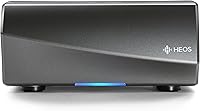
  • Color Finish: The unit ships in a Black with Silver finish designed to blend with standard consumer electronics and AV rack aesthetics.
  • Manufacturer: Manufactured by Denon Electronics USA LLC, a brand with over a century of history in consumer and professional audio equipment.
  • Model Number: The official model number is HEOS LINK, with ASIN B00VKCGZNI identifying this specific Series 2 variant on retail platforms.
  • Device Type: This is a wireless streaming pre-amplifier, meaning it processes and passes audio signal but does not amplify it — a separate amp or powered speakers are required.
  • Platform Support: The HEOS app is compatible with both Android and iOS smartphones and tablets for full remote control functionality.

Related Reviews

Denon HEOS Amp Wireless Amplifier
86%
91%
Sound Quality
89%
Connectivity Options
94%
Ease of Setup
87%
Multi-Room Performance
78%
App Usability
More
Orion CBA2500.2 2-Channel Car Amplifier
73%
82%
Value for Money
63%
Power Output
67%
Build Quality
88%
Ease of Installation
71%
Sound Quality
More
Pyle PDA33BU 2.1 CH Wireless Stereo Power Amplifier
81%
82%
Sound Quality
88%
Ease of Setup
75%
Bluetooth Connectivity
67%
Bass Performance
92%
Value for Money
More
TP-Link CPE210 Outdoor Wireless Access Point
75%
88%
Long-Range Performance
91%
Value for Money
83%
Build Quality
58%
Ease of Setup
86%
Antenna & Signal Focus
More
VIZIO M512a-H6 5.1.2 Sound Bar
78%
89%
Value for Money
84%
Dialogue Clarity
86%
Wireless Subwoofer
78%
Bass Performance
67%
Atmos & Height Audio
More
Soundstream ST2.1000D 2-Channel Car Amplifier
73%
74%
Sound Quality
61%
Build Quality
77%
Value for Money
58%
Power Output
69%
Thermal Management
More
Belva BXA5002 2-Channel Car Amplifier
72%
83%
Value for Money
87%
Ease of Installation
76%
Sound Quality
58%
Power Output Accuracy
67%
Build Quality
More
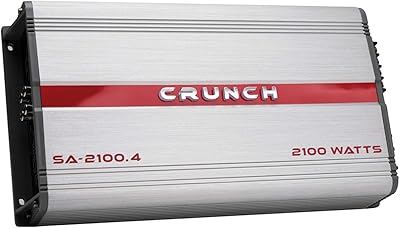
Crunch SA-2100.4 4-Channel Car Amplifier
72%
88%
Value for Money
74%
Sound Quality
81%
Ease of Installation
62%
Build Quality
53%
Thermal Management
More
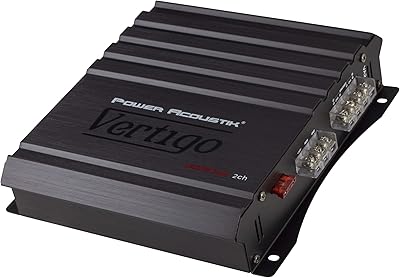
Power Acoustik VA2-1400D Vertigo Series 1,400-Watt 2-Channel Amplifier
83%
91%
Value for Money
88%
Power Output
85%
Ease of Installation
92%
Size and Portability
81%
Build Quality
More
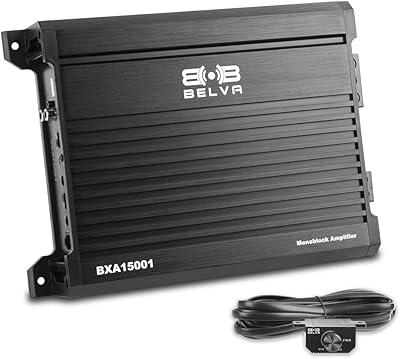
Belva BXA15001 1500W Monoblock Car Amplifier
78%
86%
Value for Money
67%
Power Output
89%
Ease of Installation
91%
Remote Bass Control
71%
Build Quality
More

FAQ

You do need a separate amplifier or powered speakers — the Denon HEOS Link Series 2 Wireless Pre-Amplifier is a pre-amp streamer, not a power amplifier. It sends a line-level signal out through its pre-amp outputs, which then needs to go into an integrated amp, AV receiver, or powered speaker system. Passive speakers connected directly will produce no sound.
Once you have multiple HEOS-compatible devices set up on the same network, you can group them inside the HEOS app and push the same audio stream to all of them simultaneously. The synchronization is handled digitally, so you won't hear an echo effect moving between rooms. You can also run different sources in different zones if you prefer.

Honestly, it's a mixed experience. The core functions — choosing a source, adjusting volume, grouping rooms — are manageable once you've spent some time with it. But the initial setup can feel fiddly, and some users report occasional login issues or slow response times. If you're comfortable with smartphone apps in general, you'll figure it out, but it's not as intuitive as something like the Sonos app.

Yes, Spotify is supported through the HEOS app, and Spotify Connect is also available, which means you can control playback directly from the Spotify app and cast it to the HEOS Link without switching applications. This is one of the more convenient integration points for Spotify users.

You need a separately owned Amazon Echo device — the Alexa microphone is not built into the HEOS Link itself. Once your Echo is on the same network and linked to your Amazon account, you can use voice commands to play music, switch sources, and control volume through the HEOS skill in the Alexa app.

Yes, the USB port on the back supports playback of locally stored audio files, including hi-res formats up to 24-bit/192kHz. Common supported formats include FLAC, WAV, AIFF, and MP3. Just plug in a compatible USB storage device and the files will appear in the HEOS app for browsing and playback.

This wireless pre-amp supports dual-band Wi-Fi, so it can connect to either 2.4GHz or 5GHz networks. If you're in a home with a lot of competing devices on the 2.4GHz band, connecting to 5GHz can noticeably improve stability — though keep in mind that 5GHz has shorter range, so placement relative to your router matters.

The 12V trigger sends a low-voltage signal to compatible devices — typically amplifiers or projectors — telling them to power on or off automatically when the HEOS Link activates. It's a convenience feature for people with more complex AV setups who don't want to manually switch multiple components on and off. Most casual users won't need it, but it's a welcome addition for those building a more automated system.

Both devices do a similar job — turning an existing wired amp into a network streamer — but they belong to different ecosystems. The HEOS Link integrates naturally with Denon and Marantz receivers and components, while the Sonos Port is the better pick if you're building or already have a Sonos-based home. The Sonos app is generally considered more polished. However, if you own other Denon or Marantz gear, staying in the HEOS family adds meaningful value through tighter integration.

As of the time of writing, the HEOS Link is listed as not discontinued by the manufacturer, and Denon has continued to issue firmware updates for the HEOS platform. That said, it's worth checking Denon's official support site before purchasing, as software support timelines can change and the platform's long-term roadmap depends on Denon's product strategy decisions.