Overview

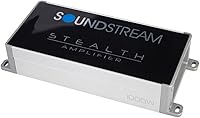
The Soundstream ST2.1000D 2-Channel Car Amplifier is part of Soundstream's Stealth Series — a budget-to-mid-range line aimed at buyers who want real amplification without a major spend. Before anything else, it's worth addressing the 1000W headline figure: that's a peak rating, not sustained output — real RMS delivery sits at 140W per channel at 4 ohms. About the size of a thin hardcover novel, at 6.5 x 3 x 1.5 inches, this Stealth Series amp ships with wiring, hardware, a remote, and a manual. It's a reasonably self-contained starter package that's been on the market since 2017 and has accumulated enough real-owner feedback to paint a realistic picture.
Features & Benefits

Class D is the right topology for an in-car install — it runs cool and draws less current than older Class AB designs, which matters when your alternator and wiring are already working hard. The ST2.1000D leans into that efficiency with a hybrid aluminum alloy heatsink that dissipates heat without adding chassis bulk. The military-grade SMT PCB is a genuine selling point in a vehicle context, where vibration and temperature swings chew through cheaper circuit boards over time. Bridging the two channels delivers 250W RMS into a single 4-ohm load — a meaningful push for a compact subwoofer. The remote gain knob is a practical convenience that keeps you from crawling under your seat every time you want to dial back the bass.

Best For

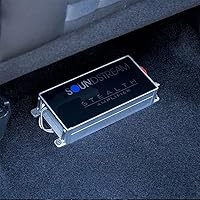
This compact 2-channel amplifier is a natural fit for anyone working with a tight install space — think under a front seat, behind a rear bench, or tucked into the corner of a compact trunk. It also makes sense as a second-system build: adding rear fill to a vehicle that already has a primary sub amp, where the ST2.1000D's low current draw won't strain your existing electrical setup. DIY buyers will appreciate that the box includes wiring, hardware, and a remote, so there's no separate parts-store run to get started. That said, if you're chasing high sustained output or plan to run demanding 2-ohm loads continuously, look at a more robust amplifier.

User Feedback

With 85 ratings sitting at 3.8 out of 5 stars, the Stealth Series amp occupies honest middle ground — neither a clear win nor an obvious avoid. Buyers doing tight installs tend to praise the fit and the size-to-power ratio. Stereo mode clarity also earns positive mentions at this price level, with owners noting acceptable audio quality for daily use. The concerns are real though: a pattern of early unit failures and scattered DOA reports points to inconsistency in build quality that's difficult to overlook. Thermal behavior at sustained high volume divides opinion — some owners never have an issue, others find the amp running noticeably warm. Go in with that trade-off in mind.

Pros

  • Extremely compact footprint makes it viable for installs where a larger amp simply will not fit.
  • Class D topology keeps current draw low and heat manageable, especially in enclosed or ventilation-limited spaces.
  • Bridges to 250W RMS at 4 ohms, giving a compact subwoofer a credible and usable power source.
  • Hybrid aluminum alloy heatsink handles thermal dissipation without adding meaningful bulk to the chassis.
  • Remote gain control lets you fine-tune output from the driver's seat without disturbing the install.
  • Ships with wiring, hardware, and a manual, so there are fewer add-on purchases needed before first use.
  • Military-grade SMT PCB construction offers reasonable resilience against the vibration and temperature cycling typical of in-car environments.
  • Stereo mode sound clarity earns consistent positive mentions from owners at this price level.
  • Weighing under two pounds, the ST2.1000D adds virtually no mass to any mounting surface.
  • Two-channel design supports stereo speaker pairs or a bridged mono subwoofer config, giving installers real flexibility.

Cons

  • The 1000W rating is peak power, not RMS — actual sustained output is considerably more modest than the headline suggests.
  • Scattered reports of DOA units and early failures point to real inconsistency in production quality control.
  • Thermal performance under sustained high-volume use divides owners, with a meaningful subset reporting the unit runs noticeably warm.
  • At 140W RMS per channel at 4 ohms, output headroom is limited for anyone expecting serious volume or dynamic range.
  • A 3.8-star average across a relatively small review pool does not inspire confidence in long-term durability.
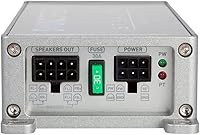
  • No 2-ohm stereo power rating is published, which restricts load flexibility for buyers with lower-impedance speaker setups.
  • Quality control variability means individual unit experience can differ enough to matter — one owner may have no issues while another faces early failure.
  • Not well-suited as the sole amplifier for a demanding or high-output daily-driver audio system.

Ratings

Our rating scores for the Soundstream ST2.1000D 2-Channel Car Amplifier are generated by AI after analyzing verified purchase reviews from buyers worldwide, with spam, incentivized feedback, and bot-generated content actively filtered out before scoring. The results reflect a genuinely balanced picture — real performance strengths in size and install usability sit alongside honest shortcomings in power output and long-term reliability. Both sides of the buyer experience are represented here so you can make an informed decision rather than relying on cherry-picked praise.
Sound Quality
74%
26%
Owners running the amp in stereo mode for daily commuting consistently describe audio clarity as a solid step up from a factory head unit, particularly in the midrange. For casual everyday listening at moderate volumes, the output sounds clean and well-defined without obvious coloration or distortion.
When pushed toward higher output levels — especially in bridged mono mode driving a subwoofer — some buyers notice the sound character becomes less refined. Reviewers who compared the ST2.1000D directly against mid-tier amplifiers in the same vehicle reported the gap in sonic detail becomes apparent under sustained loud listening.
Build Quality
61%
39%
The military-grade SMT PCB and aluminum alloy construction give the unit a more substantial feel than you might expect at this price tier, and several owners note the chassis holds up well to the vibration and heat cycling of a daily driver install. For a budget-conscious entry into named-brand audio, the physical impression is acceptable.
DOA arrival reports and early failure patterns scattered across verified reviews suggest quality control at the manufacturing level is inconsistent. Buyers who received a problematic unit reported the amp failing within the first few months of moderate use — hard to reconcile with the military-grade PCB description on the packaging.
Value for Money
77%
23%
For buyers who need a compact amplifier from a recognizable brand without committing to flagship pricing, this Stealth Series amp hits a reasonable balance. The inclusion of wiring, hardware, and a remote gain control in the box reduces the additional out-of-pocket cost of getting an install finished, which reviewers specifically call out as a genuine advantage at this price tier.
The value equation takes a real hit once reliability risk is factored in — an amplifier that fails early or arrives non-functional delivers zero value regardless of how affordable it was upfront. Buyers who had to replace or return their unit felt the initial savings were fully negated by the hassle and potential cost of a second purchase.
Power Output
58%
42%
In real-world stereo installs for rear fill or a secondary vehicle system, 140W RMS per channel at 4 ohms is sufficient to produce noticeably louder, cleaner audio than a factory head unit alone. The bridged 250W RMS mono configuration gives a compact subwoofer an adequate signal to deliver meaningful low-end presence.
The 1000W headline figure misleads a significant share of buyers who expect something closer to peak-rated output in actual daily use, and the resulting disappointment is a recurring theme across critical reviews. For anyone planning a primary system install or hoping to power demanding speakers to real volume, the actual RMS ceiling falls well short of what the packaging implies.
Thermal Management
69%
31%
Class D efficiency means less wasted energy converted to heat compared to Class AB designs, and the hybrid aluminum alloy heatsink handles everyday listening sessions without issue. Owners who maintain moderate volume levels and ensure some airflow around their install location consistently report no heat-related concerns during routine use.
Under sustained high-volume use — long highway drives or extended sessions pushing the amp hard — thermal performance becomes divisive. A meaningful number of reviewers describe the unit running noticeably warm in these conditions, and those who mounted it in poorly ventilated or fully enclosed spaces reported the issue significantly more often.
Install Friendliness
83%
The compact form factor makes physically placing this amp far easier than typical installs — it slides into mounting spots most amps simply cannot reach, and the included hardware reduces the number of extra parts-store runs needed to finish the job. DIY installers with basic car audio experience consistently rate the physical setup process as approachable and manageable.
First-time installers unfamiliar with gain setting or the RMS versus peak power distinction can run into real confusion, and the included instructions are functional but thin on explanatory depth. Buyers who needed help configuring the amp specifically for bridged mono mode noted the documentation leaves meaningful gaps for less experienced builders.
Size & Footprint
91%
This is the single most praised attribute across the review base, and for good reason — at 6.5 x 3 x 1.5 inches and under two pounds, the ST2.1000D fits in mounting locations most amps simply cannot reach. Buyers doing under-seat installs in compact cars and smaller SUVs specifically credit the physical dimensions as the deciding factor in their purchase.
The tradeoff for that compact footprint is, inevitably, limited power headroom — the chassis simply does not have room for the larger components required for higher sustained output. Buyers who prioritized size and then later wanted more volume found themselves needing a second, more capable amplifier sooner than they originally planned.
Reliability & Longevity
47%
53%
The majority of buyers who received a fully functioning unit and operated it within its intended parameters — moderate volume, adequate ventilation, appropriate load impedance — reported the amp working reliably for their intended use. Some owners have logged solid months of regular daily use without any operational issues.
Reliability is the weakest point of this product and the primary driver of its below-4-star overall rating. A consistent pattern of early unit failures and dead-on-arrival reports appears across verified reviews, pointing to production-level quality control variability that careful use alone cannot offset — the experience some buyers have may simply depend on the specific unit they receive.
In-Box Contents
79%
21%
Shipping with wiring, mounting hardware, a manual, and a remote gain control is a genuine differentiator at this price point — most competing amps in the same segment require a separate accessory purchase just to complete a basic install. Buyers consistently single out the out-of-the-box completeness as one of the more positive aspects of their overall purchase experience.
The included wiring is basic in both quality and length, and more experienced installers often swap it out for heavier-gauge alternatives before finishing their build. A number of buyers also noted that the manual covers only bare essentials, leaving meaningful gaps for anyone attempting a bridged configuration or a more involved install for the first time.
Gain Control Usability
82%
18%
The remote gain knob is a practical feature that owners consistently appreciate after the amp is tucked somewhere inaccessible — being able to dial the output back at a traffic stop or during a late-night drive without reaching under a seat is a comfort that adds genuine, repeatable value in daily use. Setup and connection are both straightforward.
The remote itself is functional but basic — the knob offers no detents, printed markings, or level indicators, making it difficult to return to a precise setting after adjusting. Buyers with a more critical ear noted that fine-tuning the gain for optimal performance required meaningful trial and error that a calibrated or marked control would have simplified considerably.
Configuration Versatility
76%
24%
The ability to operate in two-channel stereo or bridged mono mode without additional hardware gives this compact 2-channel amplifier real flexibility across different install scenarios. Buyers who started with stereo speaker use and later transitioned to a bridged subwoofer setup appreciated not needing a different amplifier to make that change.
Two channels is the hard ceiling — buyers who later wanted to power four speakers plus a dedicated sub found themselves needing to add a separate amplifier, which complicates both the electrical planning and the mounting strategy. No confirmed 2-ohm stereo load rating also limits compatibility with certain lower-impedance speaker configurations.
Electrical Efficiency
81%
19%
Class D topology is genuinely well-matched to vehicle electrical system constraints — it draws considerably less current than a Class AB amp at comparable output levels, which reduces stress on the alternator and battery in vehicles without upgraded electrical hardware. Buyers running stock electrical setups specifically noted this as a meaningful practical advantage for their builds.
While Class D is efficient by design, the low RMS output ceiling means buyers who want meaningful volume in a larger vehicle will push the amp closer to its limits more often. That sustained high-draw operation reduces the efficiency advantage and may accelerate thermal stress on the unit over extended periods.
Brand Confidence
67%
33%
Soundstream has been a recognizable name in car audio for decades, which provides a degree of reassurance over unbranded alternatives at the same price point. Buyers familiar with the brand often cited that name recognition as the primary reason they chose this Stealth Series model over cheaper no-name alternatives with similar specifications on paper.
The Stealth Series sits considerably below Soundstream's higher-end product lines in terms of component quality and consistency, and the reliability issues documented in verified reviews have eroded confidence among buyers who associated the brand with a higher build standard. Several reviewers expressed disappointment that the Soundstream name did not translate into better production consistency at this tier.

Suitable for:

The Soundstream ST2.1000D 2-Channel Car Amplifier is best suited for car audio enthusiasts who are genuinely constrained by space — think under-seat installs, tight trunk-corner builds, or secondary system upgrades in compact vehicles where a conventional amplifier simply won't fit. Budget-conscious DIYers will find it particularly appealing, since the box already includes wiring, a remote gain control, and hardware, which cuts down the extra cost and hassle of sourcing accessories separately. It also works well as a second amp in a more layered build — powering rear fill speakers, for example, while a more capable unit handles the primary subwoofer duty. Buyers running the amp in stereo mode for everyday listening, rather than pushing it continuously at high volume, tend to report the most satisfaction. If your priority is getting a named-brand Class D amp into a cramped location without breaking the bank, this Stealth Series amp delivers a reasonable return on that specific ask.

Not suitable for:

The Soundstream ST2.1000D 2-Channel Car Amplifier is not the right choice for anyone expecting serious, sustained output — the 1000W figure on the packaging refers to peak power, and the real RMS delivery is 140W per channel at 4 ohms, which is respectable for the price tier but falls well short of what a performance-focused or competition build demands. Buyers planning to run demanding 2-ohm loads continuously, or those building a primary system intended for loud, extended listening sessions, should budget for a more capable amplifier with greater thermal headroom. Reliability-focused buyers also need to go in clear-eyed: the 3.8-star average across 85 reviews, alongside recurring feedback about early failures and occasional DOA units, indicates that quality control is not consistent enough to treat this as a set-and-forget install. If this compact 2-channel amplifier is destined for a daily driver where dependability matters more than initial cost savings, the risk of ending up with a short-lived unit is real and worth factoring into the decision.
Specifications

  • Amplifier Class: Uses Class D topology for high efficiency and lower heat generation compared to traditional Class AB amplifier designs.
  • Channels: Two-channel design operates in stereo mode for speaker pairs or can be bridged to a single mono output for subwoofer use.
  • Stereo RMS Power: Rated at 140W RMS per channel into a 4-ohm load when operating in standard stereo mode.
  • Bridged RMS Power: Delivers 250W RMS into a single 4-ohm load when both channels are configured in bridged mono mode.
  • Peak Power Rating: Carries a 1000W total peak power rating, representing maximum instantaneous output rather than continuous RMS delivery.
  • Dimensions: Physical footprint measures 6.5 x 3 x 1.5 inches (L x W x H), sized for under-seat and space-restricted vehicle installs.
  • Weight: Unit weighs 1.9 pounds, adding negligible mass to any mounting surface or vehicle structure.
  • Operating Voltage: Designed to run on a standard 12V DC automotive electrical system.
  • Heatsink Design: Incorporates a hybrid aluminum alloy heatsink engineered to dissipate thermal energy without increasing the overall chassis dimensions.
  • PCB Construction: Internal circuitry is built on a military-grade surface-mount technology (SMT) PCB for durability under vibration and temperature cycling.
  • Gain Control: Includes a wired remote gain control unit that allows output level adjustment from the driver's seat after installation.
  • In-Box Contents: Package contains the amplifier, remote gain control, wiring, mounting hardware, and an owner's manual.
  • Mounting Type: Freestanding mount design is compatible with under-seat, trunk floor, and custom enclosure installation positions.
  • Build Materials: Chassis and heatsink use aluminum alloy construction; internal board combines PCB substrate and aluminum alloy components.
  • Product Series: Part of Soundstream's Stealth Series, a line of compact budget-to-mid-range car amplifiers aimed at space-conscious installs.

Related Reviews
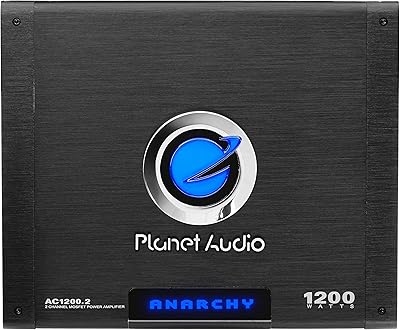
Planet Audio AC1200.2 2-Channel Car Amplifier
72%
84%
Value for Money
67%
Power Output
88%
Ease of Installation
71%
Sound Quality
58%
Thermal Performance
More
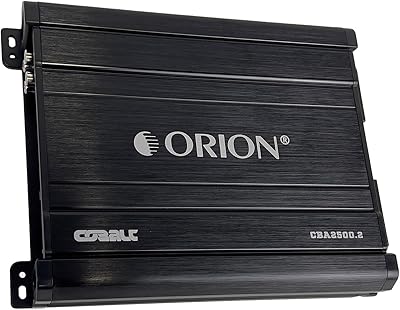
Orion CBA2500.2 2-Channel Car Amplifier
73%
82%
Value for Money
63%
Power Output
67%
Build Quality
88%
Ease of Installation
71%
Sound Quality
More
Pyle PLA2378 2-Channel Car Amplifier
72%
83%
Value for Money
51%
Power Output Accuracy
67%
Build Quality
88%
Ease of Installation
58%
Heat Management
More
Pyramid PB715X 1000W 2-Channel Car Amplifier
68%
83%
Value for Money
74%
Sound Performance
88%
Ease of Installation
57%
Build Quality
52%
Thermal Management
More
Rockville RVT-1 2-Channel Car Amplifier
68%
83%
Value for Money
67%
Power Output
58%
Build Quality
61%
Thermal Management
72%
Audio Clarity
More
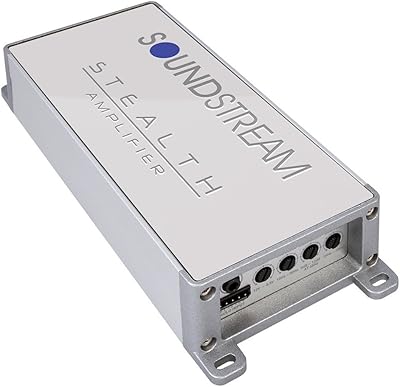
Soundstream SM4.1000D 4-Channel Marine Amplifier
71%
74%
Sound Quality
71%
Marine Durability
42%
Power Output Accuracy
88%
Ease of Installation
77%
Value for Money
More
Lanzar VIBE2102N 2-Channel Car Stereo Amplifier
86%
91%
Power Output
88%
Sound Quality
85%
Ease of Installation
87%
Durability
72%
Thermal Performance
More
Blaupunkt AMP2002 2-Channel Car Amplifier
65%
71%
Value for Money
83%
Ease of Installation
38%
Power Accuracy
74%
Sound Quality
52%
Thermal Management
More
Rockville dB25 2-Channel Car Amplifier
72%
84%
Value for Money
67%
Power Output
58%
Build Quality
73%
Audio Clarity
81%
Ease of Installation
More
Rockville RVF-2 4-Channel Car Amplifier
84%
88%
Audio Quality
91%
Power Output
85%
Build Quality
72%
Thermals (Heat Management)
80%
Installation Ease
More

FAQ

Not quite, and this is one of the most common points of confusion with car amplifiers. The 1000W figure is a peak rating, meaning the maximum the unit can draw in very brief bursts under ideal conditions. The number that reflects real-world, sustained performance is the RMS rating, which is 140W per channel at 4 ohms in stereo mode, or 250W when bridged to mono at 4 ohms. For everyday use, the RMS figures are what you should be comparing against other amps.

Yes, and it works well in that role for compact setups. When bridged, the ST2.1000D combines both channels into a single mono output rated at 250W RMS into a 4-ohm load — enough to drive a smaller subwoofer with authority. The key thing to watch is impedance: make sure your sub is rated at 4 ohms when wired for the bridged configuration, since dropping below that in bridged mode puts excessive strain on the amplifier.

For most vehicles, yes — but take a minute to measure before ordering. The unit is 6.5 inches long, 3 inches wide, and just 1.5 inches tall, which is roughly the profile of a slim paperback book lying flat. Most front and rear seats have enough ground clearance for something that thin, but fit can vary depending on the seat rail design and floor angle in your specific vehicle.

The box covers the basics — you get wiring, mounting hardware, a remote gain control, and a manual alongside the amp itself. That said, you will still need a power cable routed from your battery with an inline fuse, and depending on your head unit you may need RCA interconnect cables as well. It is a decent starting kit for a first-time install, but having a few extra supplies ready before you start is always a good idea.

As a 2-channel amplifier, it supports two independent speaker outputs in stereo mode — you can wire one speaker or a parallel speaker pair to each channel. If you bridge it to mono, you get a single output channel best suited for one subwoofer. It is not designed to power a full four-speaker surround setup on its own, so if that is your goal you would need a 4-channel amplifier instead.

The Soundstream ST2.1000D 2-Channel Car Amplifier fits that use case reasonably well. It adds meaningful power over what a factory head unit can provide, the stereo clarity is well-regarded at this price tier, and the compact size means it disappears neatly into a simple install. If you are not chasing high output or competition-level volume and simply want a clear, noticeable improvement for daily driving, this amp is a practical option to consider.

Under normal, moderate listening conditions it manages heat well — Class D topology is inherently more efficient than older amplifier designs, so less energy is wasted as heat to begin with. The hybrid aluminum heatsink also helps. Where it becomes more of a concern is during extended high-volume sessions, where some owners have noted the unit running noticeably warm. If your install location has limited airflow, try to leave a few inches of clearance around the amp and avoid covering it completely.

It is worth taking seriously. The overall rating sits at 3.8 out of 5 stars, and within the critical reviews there is a consistent thread of early unit failures and occasional dead-on-arrival units. It is not the experience every buyer has — many owners report no issues at all — but the pattern appears often enough to be honest about. If this amp is going into a primary daily-driver system where reliability matters, that variability is a genuine risk to factor into your decision.

The published RMS rating specifies 4-ohm loads per channel in stereo mode. There is no confirmed 2-ohm stereo rating in the official specifications, so running lower-impedance speakers in stereo is not advisable for sustained use. Sticking to 4-ohm speakers keeps the amp operating within its rated range and reduces the risk of heat-related stress or premature failure over time.

The remote gain control is a small knob that wires to the amplifier and mounts somewhere within easy reach of the driver — typically near the center console or dashboard. It lets you raise or lower the amp's output level without physically touching the main unit, which is especially useful once the amp is tucked under a seat or installed deep in a trunk. You do not strictly need it to operate the amp, but once you have used one you will not want to go without it.