Overview

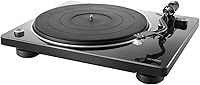
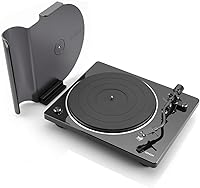
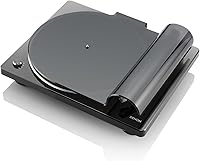
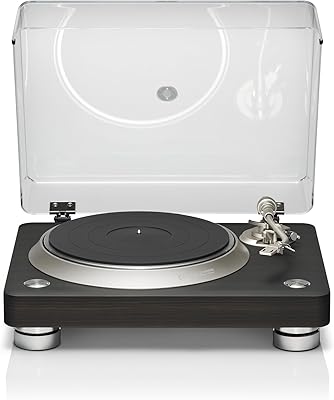
The Denon DP-400 is Denon's answer to a genuinely underserved question: what does a well-built turntable look like when it doesn't demand you sacrifice convenience for quality? Denon has been crafting audio gear for decades, and that experience shows in the way this Denon deck carries itself — clean lines, a sleek black finish, and a distinctively curved tonearm that catches the eye before you even drop a needle. It's semi-automatic, which means the arm lifts itself at the end of a record, a small feature that makes a real difference day to day. This is not an entry-level deck dressed up in premium clothing.

Features & Benefits

The belt-drive mechanism sits at the core of what this Denon deck does well — it isolates motor noise from the stylus, letting the music come through clean. A weighted platter adds rotational stability, and the speed auto sensor keeps your records spinning at exactly 33 1/3, 45, or 78 RPM without you having to second-guess it. That 78 RPM support is worth calling out; not every deck at this level bothers. The built-in phono equalizer means you can plug straight into an amp or powered speakers without hunting for a separate preamp. Cartridge compatibility with both MM and MC types leaves room to upgrade later.

Best For

This semi-automatic record player is a strong match for anyone who stepped away from vinyl years ago and wants to come back without fussing over setup. Pull it out of the box, place the platter, connect a cable, and you are playing records — that out-of-box accessibility matters more than people give it credit for. Home audio fans who already own an integrated amp or a pair of powered speakers will appreciate that no external preamp is required to get going. The 78 RPM capability makes it relevant for collectors with older shellac pressings, not just modern LPs. And honestly, it looks good enough to sit on a shelf without hiding.

User Feedback

Owners of the DP-400 turntable consistently mention two things first: sound quality that punches above what they expected, and how painless the initial setup was. The auto-stop feature draws particular appreciation — nobody wants to leave a stylus riding a locked groove. That said, a handful of buyers have flagged occasional inconsistencies with platter speed over time, and a few noted the stock cartridge, while functional, is a natural first upgrade candidate for more critical listeners. Long-term reliability appears solid for most, though some users report needing to troubleshoot the auto-lift mechanism after extended use. Overall, sentiment tilts strongly positive, with criticism concentrated in areas that are fixable rather than fundamental.

Pros

  • Setup takes minutes — the cartridge is pre-mounted and the platter simply drops into place.
  • The auto-lift tonearm stops the stylus automatically at the end of a record, protecting both needle and vinyl.
  • 78 RPM support is a genuine rarity at this price point, making it a real find for shellac collectors.
  • The built-in phono preamp removes the need for a separate component when connecting to modern amps or powered speakers.
  • Belt-drive isolation keeps motor noise out of the signal, resulting in a noticeably clean audio background.
  • MM and MC cartridge compatibility means upgrading your stylus later does not require replacing the whole deck.
  • Sound quality consistently surprises owners who arrive with modest expectations for this tier.
  • The curved tonearm and minimalist black finish make this Denon deck a visually confident addition to any listening space.
  • Speed auto sensing keeps pitch accurate across all three RPM settings without manual adjustment.
  • Out-of-box usability is one of the strongest aspects owners cite — it just works from the start.

Cons

  • The stock cartridge is widely seen as the first upgrade most serious listeners will want to make.
  • Plastic chassis construction feels less premium than metal-bodied rivals in the same price bracket.
  • No USB output means digitizing your record collection requires sourcing a separate audio interface.
  • Speed drift during extended listening sessions has been flagged by pitch-sensitive owners.
  • The auto-stop mechanism can occasionally trigger slightly early, clipping the final moments of an album side.
  • Documentation is thin for complete beginners who need guidance on setting tonearm tracking force correctly.
  • The built-in phono preamp, while convenient, noticeably limits sonic performance compared to a quality outboard unit.
  • Long-term reliability concerns around the tonearm mechanism surface after roughly eighteen months of heavy use.
  • Glossy surfaces attract fingerprints and dust more readily than a matte finish would.
  • Color options are limited to black, which may not suit every room or personal preference.

Ratings

The Denon DP-400 scores here reflect AI-driven analysis of verified buyer reviews sourced globally, with spam, bot activity, and incentivized feedback actively filtered out before scoring. Across hundreds of real owner experiences, this Denon deck earns consistent praise in several areas while revealing a handful of recurring pain points that prospective buyers deserve to know about upfront. Both sides of the picture are reflected honestly in the categories below.

Sound Quality
86%
Most owners describe the audio reproduction as noticeably cleaner and warmer than what they expected at this tier. The belt-drive setup keeps motor rumble out of the signal path, and listeners report a satisfying sense of depth and instrument separation when connected to a decent integrated amp.
Critical ears — particularly those coming from higher-end decks — find the stock cartridge holds the overall sound back. A small but vocal group noted the soundstage lacks the last degree of resolution that audiophile-grade setups in a similar price range can deliver.
Build Quality
78%
22%
The overall construction feels solid and purposeful for a deck at this level. The weighted platter has a satisfying heft, and the tonearm mechanism operates with a precision that suggests genuine engineering attention rather than cost-cutting.
The plastic chassis is the most common source of criticism. While it does not rattle or flex noticeably, it gives the deck a lighter feel than some rivals, and a few buyers felt it looked less premium up close than in product photos.
Ease of Setup
93%
This is where the DP-400 turntable earns its strongest marks across the board. The cartridge arrives pre-mounted, the platter drops on in seconds, and most buyers reported being in the middle of their first record within fifteen minutes of opening the box.
A small number of users found the tonearm counterweight adjustment unclear without referencing external guides. The included documentation, while adequate, leaves some room for improvement for complete beginners setting tracking force for the first time.
Tonearm Performance
84%
The curved tonearm design is not purely cosmetic — owners note it tracks grooves smoothly and the auto-lift at the end of a side works reliably, preventing stylus wear from extended run-out groove contact. Record collectors in particular appreciated this thoughtful detail.
A handful of buyers reported the auto-lift mechanism behaving inconsistently after several months of regular use, occasionally lifting earlier than expected or requiring a manual nudge. It is not widespread, but worth monitoring over time.
Speed Accuracy
81%
19%
The speed auto sensor keeps 33 1/3 and 45 RPM playback tight enough that pitch-sensitive listeners rarely complained. The 78 RPM support is a genuine differentiator that collectors of older shellac pressings praised repeatedly — it is uncommon at this price point.
Some owners flagged subtle speed drift during extended listening sessions, particularly noticeable on sustained piano or vocal passages. It does not affect casual listeners much, but those with a trained ear found it worth noting as a limitation.
Built-in Phono Preamp
79%
21%
The integrated phono equalizer removes a real barrier for buyers who do not own a receiver with a dedicated phono input. Connecting directly to powered speakers or a modern amp is genuinely convenient, and the preamp keeps the signal clean enough for everyday listening.
Serious listeners who bypassed the built-in preamp for an external unit reported a meaningful improvement in overall audio clarity. The onboard preamp is functional but represents a compromise for anyone building a higher-resolution system.
Cartridge Quality
67%
33%
The pre-mounted cartridge handles everyday listening duties without obvious problems. For someone just returning to vinyl after years away, it delivers a pleasant, balanced sound that gets the hobby going without any extra investment upfront.
Enthusiasts consistently flagged the stock cartridge as the first component worth upgrading. Tracking pressure consistency and channel balance have been questioned by more critical users, and the cartridge is widely seen as the weakest link in an otherwise capable chain.
Value for Money
74%
26%
For buyers who use the full feature set — particularly the 78 RPM speed, the built-in preamp, and the MM/MC cartridge compatibility — the price feels well justified. The Denon heritage and the semi-automatic convenience add genuine perceived value that pure-spec comparisons can miss.
At this price point, competition is stiff and some rivals offer better-built chassis or superior stock cartridges. Buyers who will not use 78 RPM or who plan to add an external preamp anyway may find the value proposition slightly harder to defend.
Platter & Drive Mechanism
82%
18%
The weighted platter spins with a stability that makes a noticeable difference to sound consistency. Belt-drive purists appreciate the reduced motor noise, and the platter itself seats securely without any wobble or eccentricity issues reported by the majority of owners.
Belt replacement will eventually become necessary, as with any belt-drive design, and a few long-term owners mentioned the belt showing wear after a couple of years of heavy use. Replacement belts are accessible, but it is a maintenance reality worth knowing.
Aesthetic Design
88%
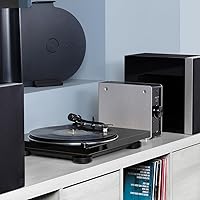
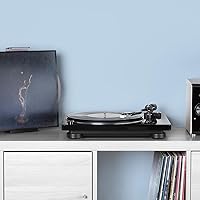
The minimalist black finish and curved tonearm give this semi-automatic record player a genuinely modern look that sits comfortably in a contemporary living room setup. Buyers frequently mentioned it draws compliments as a display piece, not just a functional audio component.
Color options are limited to black, which will not suit every interior. A few buyers also noted that fingerprints and dust show up readily on the gloss surfaces, requiring more frequent wiping than a matte finish would.
Compatibility & Connectivity
85%
MM and MC cartridge support gives this deck meaningful flexibility for future upgrades without requiring a new turntable. Output compatibility with a wide range of amplifiers, receivers, and powered speakers makes it easy to fit into an existing home audio setup.
There is no USB output for digitizing records, which some buyers expected at this tier. Those looking to archive their vinyl collection to a computer will need a separate audio interface, which adds cost and complexity to the overall setup.
Auto-Stop Function
77%
23%
For the majority of owners, the auto-lift and stop function works exactly as promised — the arm rises cleanly at the end of a record and returns without drama. This kind of passive protection against stylus wear is something many users said they did not appreciate until they had it.
A recurring minority complaint involves the auto-stop triggering slightly early, cutting off the last few seconds of an album side. It appears to be a calibration variance rather than a universal defect, but it came up often enough across reviews to warrant mentioning.
Noise Floor & Vibration Control
80%
20%
Belt-drive isolation does its job well here. Background noise during quiet passages is low enough that most listeners never consciously notice it, and the deck pairs well with isolation pads if placed near speakers — a setup combination owners frequently recommended.
On less stable furniture or when placed close to subwoofers, some owners noticed feedback creeping into the signal. The chassis does not offer dedicated anti-vibration feet, so environmental placement matters more than it might with a heavier, better-isolated design.
Long-term Reliability
73%
27%
The majority of verified buyers who have owned this Denon deck for over a year report it continuing to perform without significant issues. Denon's service reputation adds a layer of confidence for buyers who factor post-purchase support into their decision.
A visible cluster of longer-term reviews flags tonearm mechanism wear and occasional motor inconsistency appearing after eighteen months to two years of regular use. Not alarmingly common, but enough to suggest this is not a set-it-and-forget-it deck for heavy daily use over many years.

Suitable for:

The Denon DP-400 is an ideal match for anyone who grew up with vinyl and wants to return to it without spending an afternoon reading setup guides or sourcing additional components. If your receiver or integrated amp lacks a phono input, the built-in preamp solves that problem instantly, letting you connect directly and start listening the same day. Collectors with a mixed library spanning decades of pressings — including older 78 RPM shellac records — will find the three-speed support genuinely useful rather than a spec-sheet novelty. Home audio enthusiasts who want a deck that looks considered and intentional on a shelf, rather than hidden away, will appreciate that this semi-automatic record player holds its own aesthetically in a modern living room. The auto-lift tonearm makes it particularly well suited to listeners who sometimes walk away mid-side without worrying about stylus wear — a small convenience that adds up meaningfully over time.

Not suitable for:

The Denon DP-400 is not the right choice for buyers who are building a serious audiophile system and expect every component to perform at a reference level out of the box. The stock cartridge, while functional, is widely considered a starting point rather than a destination — factoring in an early upgrade is a realistic part of the ownership cost for critical listeners. If you are looking to digitize your record collection via USB, this deck will leave you short; there is no built-in analog-to-digital conversion, meaning you will need additional hardware. Budget-conscious shoppers who will not take advantage of the 78 RPM speed, MM/MC flexibility, or the built-in preamp may find comparable decks at a lower price that cover their actual needs. And buyers prioritizing heirloom-grade build quality should note that the plastic chassis, while sturdy enough for regular use, does not carry the same long-term confidence as a metal-bodied competitor at a similar price.

Specifications

  • Drive Type: Belt-drive mechanism isolates the motor from the platter to minimize vibration and noise transfer to the stylus.
  • Platter: Weighted platter provides rotational stability for consistent playback across all supported speeds.
  • Tonearm Shape: Specially designed curved tonearm reduces harmonic distortion by maintaining an optimized horizontal tracking angle across the record surface.
  • Tonearm Features: Auto-lift and auto-stop functionality raises the tonearm and halts platter rotation automatically at the end of a record side.
  • Supported Speeds: Plays records at 33 1/3, 45, and 78 RPM, covering standard LPs, singles, and vintage shellac pressings.
  • Speed Detection: Built-in speed auto sensor verifies and maintains accurate rotational speed throughout playback without manual calibration.
  • Cartridge Compatibility: Accepts both Moving Magnet (MM) and Moving Coil (MC) cartridges, allowing future stylus upgrades without replacing the deck.
  • Phono Preamp: Integrated phono equalizer enables direct connection to amplifiers or powered speakers that lack a dedicated phono input stage.
  • Included Cartridge: Arrives with a pre-mounted headshell and cartridge, requiring no stylus installation before first use.
  • Dimensions: The unit measures 13.46 x 16.3 x 4.13 inches (L x W x H), suitable for most standard audio shelving and furniture.
  • Weight: Complete unit weighs 11.03 pounds, making it stable on a surface without being difficult to reposition.
  • Chassis Material: Housing is constructed from black plastic, providing a lightweight and contemporary exterior finish.
  • Power Supply: Powered via an included AC adapter with an attached 59″ DC cord, compatible with standard household outlets.
  • Compatible Outputs: Connects to AV receivers, integrated amplifiers, mini components, and powered speakers via standard RCA output cables.
  • Included Accessories: Package includes the turntable with tonearm, platter, felt mat, headshell with pre-mounted cartridge, and AC power adapter.
  • Color: Available exclusively in black with a modern matte and gloss finish combination.
  • Manufacturer: Designed and manufactured by Denon Electronics USA LLC, a brand with decades of experience in home audio equipment.
  • Model Number: Official model designation is DP400, first made available in September 2018 and currently in active production.

Related Reviews
Denon DP-3000NE Fully Automatic Turntable
87%
88%
Ease of Setup
92%
Sound Quality
90%
Build Quality
94%
Automatic Operation
89%
Vibration Control
More
Raspberry Pi 400
Raspberry Pi 400
84%
89%
Performance for DIY Projects
91%
Value for Money
85%
Build Quality
84%
Ease of Setup
88%
Connectivity Options
More
AOMEKIE 40/400 Refractor Telescope
67%
72%
Optical Clarity
67%
Build Quality
88%
Ease of Assembly
54%
Tripod Stability
61%
Magnification Range
More
Denon DCD-900NE CD Player
86%
94%
Sound Quality
90%
Build Quality
85%
Connectivity Options
78%
Ease of Use
88%
Vibration Resistance
More
Denon AVR-1612
Denon AVR-1612
67%
84%
Audio Quality
81%
Build Quality
67%
HDMI Connectivity
58%
Ease of Setup
53%
Remote Control
More
HP 400 Backlit Wired Keyboard
86%
89%
Backlighting Performance
87%
Typing Comfort
82%
Ergonomics
91%
Build Quality
85%
Portability
More
Sennheiser MKE 400 Shotgun Microphone
85%
88%
Audio Quality
94%
Battery Life
90%
Portability
86%
Build Quality
82%
Ease of Use
More
Denon HEOS Amp Wireless Amplifier
86%
91%
Sound Quality
89%
Connectivity Options
94%
Ease of Setup
87%
Multi-Room Performance
78%
App Usability
More
Denon Home 550 Wireless Soundbar
86%
91%
Sound Quality
87%
Ease of Setup
90%
Build Quality
94%
Wireless Connectivity
88%
Alexa Integration
More
Denon DCD-600NE
Denon DCD-600NE
78%
91%
Sound Quality
78%
Build Quality
88%
Vibration & Interference Control
86%
Pure Direct Mode Effectiveness
84%
AL32 Processing
More

FAQ

No, the Denon DP-400 has a built-in phono equalizer, so you can connect it directly to an amplifier, receiver, or powered speakers that do not have a phono input. If your amp already has a phono stage and you want to use that instead, you can bypass the built-in preamp — just check your connection options before plugging in.

It is genuinely straightforward. The cartridge comes pre-mounted on the headshell, the platter simply drops onto the spindle, and the mat lays on top. Most first-time owners are playing a record within ten to fifteen minutes of opening the box. The one area where beginners sometimes pause is setting the tonearm counterweight for proper tracking force, which is worth looking up a short guide for if the manual feels thin.

Yes, and that is one of the things that genuinely sets this deck apart at its price point. The speed auto sensor supports 33 1/3, 45, and 78 RPM, so if you have older shellac pressings from the pre-LP era, this semi-automatic record player can handle them. Keep in mind that 78 RPM records typically require a dedicated stylus, so factor that into your setup if you plan to spin them regularly.

The included cartridge is perfectly capable for casual and returning listeners — it tracks cleanly and delivers a pleasant sound right out of the box. That said, if you are a more critical listener or you are pairing the deck with a quality amplifier and speakers, upgrading the cartridge is a reasonable early step. It is one of the most commonly cited improvements owners make within the first few months.

No, the auto-lift and auto-stop function handles it for you. When the stylus reaches the run-out groove at the end of a side, the tonearm lifts automatically and the platter stops spinning. This protects both your stylus and your records from unnecessary wear, which is especially appreciated if you tend to walk away during playback.

Not directly — the DP-400 turntable outputs an analog RCA signal, so it requires a wired connection to an amplifier or powered speakers. If you want to use it with a Bluetooth speaker, you would need an intermediary device such as a Bluetooth transmitter that accepts RCA input. That adds a step, but it is doable if wireless playback is important to your setup.

Almost certainly, yes. The deck is compatible with a wide range of amplifiers, AV receivers, mini components, and powered speakers via standard RCA outputs. If your amp has a phono input, you can connect there directly. If it does not, the built-in preamp takes care of the signal level adjustment for you. It is one of the more flexible connection options available at this tier.

Belt-drive setups put a physical buffer — the belt — between the motor and the platter, which keeps motor noise and vibration from reaching the stylus. The practical effect is a quieter background during quiet musical passages. Direct-drive decks offer faster startup and are preferred by DJs for their torque, but for home listening and record preservation, belt-drive is generally considered the more musical choice.

The housing is plastic, and that is worth being upfront about. It does not rattle or flex in normal use, and the overall construction feels considered rather than flimsy. However, if you are comparing it side by side with a metal-chassis deck at a similar price, the difference in perceived solidity is noticeable. For most home listeners it is a non-issue, but it is a fair point of comparison if build materials matter to you.

The speed auto sensor monitors accuracy during playback, which gives reasonable confidence for everyday listening. If you want to verify it more precisely, a free strobe disc app on your phone paired with a printed strobe pattern disc is a quick and reliable method. Most owners find the speed consistent straight out of the box, though a small number have reported minor drift that becomes more noticeable after extended use over time.