Overview

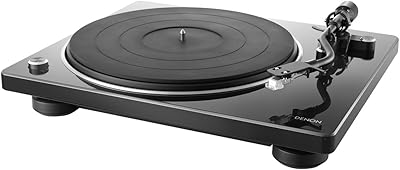
The Denon DP-3000NE Fully Automatic Analog Turntable is not built for someone dipping their toes into vinyl — it is built for those who have already committed. Denon has been engineering turntables since the 1970s, and the DP-3000NE carries that lineage forward with modern precision. At over 40 pounds, the diecast aluminum construction signals intent immediately; this is not a lightweight shelf-filler. The dark ebony finish looks naturally at home anchoring a dedicated listening room or a high-end theater rack. If you are considering this Denon deck, go in with eyes open — it is a serious financial commitment, but one that rewards listeners who demand both performance and operational ease.
Features & Benefits

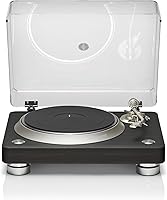
The S-shaped tonearm is one of the more thoughtful design choices here — that curved geometry helps the cartridge track the groove more accurately as it moves toward the center of a record, which cuts down on inner-groove distortion in a way a straight tonearm simply cannot match. Platter stability comes from a direct-drive motor paired with a hologram vibration analysis system that monitors and corrects inconsistencies in real time, keeping speed tight and background noise low. The fully automatic mechanism handles cueing without any human intervention, which is genuinely useful for records you care about. A built-in MM phono equalizer rounds things out, meaning you can plug directly into an integrated amp with no separate phono stage required.

Best For

This automatic turntable is a strong match for dedicated vinyl collectors who have accumulated enough records to care deeply about how each one is treated. The automatic tonearm return removes a real point of anxiety — no more worrying about an arm stuck in the runout groove. It also suits people building or upgrading a proper hi-fi system who want a turntable that integrates cleanly without requiring a separate phono preamp. The three-speed support, including 78 RPM, makes it a practical choice for anyone with older shellac records in their collection. It is less suited to someone just getting started with vinyl who might not yet have a system capable of justifying this level of investment.

User Feedback

Across its ratings, the DP-3000NE earns consistent praise for build quality and soundstage, with many buyers noting how composed and detailed the presentation feels compared to their previous decks. The automatic mechanism draws particular appreciation — several owners specifically mention the tonearm's smooth, unhurried movement as a genuine confidence-builder when playing valuable records. That said, opinions divide on value. Some users feel the built-in phono stage is a step below what the rest of the hardware deserves and have bypassed it entirely in favor of an external preamp. A smaller segment questions whether the asking price holds up against similarly priced manual turntables that offer broader cartridge flexibility. Packaging integrity has also surfaced occasionally among less satisfied reviewers.

Pros

  • Fully automatic tonearm operation actively protects records from accidental drops and runout groove wear.
  • The direct-drive motor delivers rock-solid speed consistency, with impressively low wow and flutter in practice.
  • Built-in MM phono equalizer lets you connect to almost any amp or receiver straight out of the box.
  • 78 RPM support makes this Denon deck one of the few high-end options that genuinely covers vintage shellac collections.
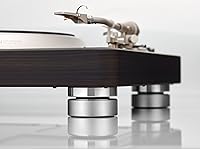
  • At over 40 pounds, the heavy chassis and sound-insulating feet provide excellent mechanical isolation from external vibration.
  • The S-shaped tonearm geometry reduces inner-groove distortion, resulting in cleaner tracking on complex, demanding pressings.
  • Dark ebony finish and refined build quality hold up as a visual centerpiece in a dedicated listening room.
  • Setup is straightforward for a turntable at this performance level, with most buyers operational within an hour.
  • The hologram vibration analysis system actively monitors platter stability, adding engineering precision rarely seen at this tier.

Cons

  • The built-in phono preamp is functional but not exceptional — many serious listeners swap it out for a dedicated external unit.
  • The fixed tonearm design limits cartridge upgrade options compared to rival decks at a similar price point.
  • Buyers have reported inconsistent packaging quality, with occasional cosmetic damage on units arriving from shipping.
  • The price is hard to justify for anyone without an amplification setup already capable of revealing the difference in performance.
  • No Bluetooth or wireless output means integration into a modern wireless speaker system requires additional hardware investment.
  • Some buyers transitioning from manual decks find the automatic cueing removes a tactile engagement they specifically sought out.
  • The included cartridge is considered by experienced users to be a functional starting point, not a long-term keeper.
  • Size and weight make repositioning or relocating the turntable a real physical effort, ruling out any flexible placement.

Ratings

The scores below for the Denon DP-3000NE Fully Automatic Analog Turntable were generated by AI after analyzing verified owner reviews from global markets, with active filtering applied to exclude incentivized, bot-generated, and duplicate submissions. The methodology surfaces patterns from hundreds of real-world accounts, capturing both the areas where this Denon deck consistently impresses and the specific pain points that come up often enough to take seriously. The result is a transparent, category-by-category breakdown designed to help you make a genuinely informed purchase decision.
Build Quality
93%
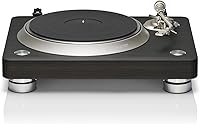
Buyers consistently describe the chassis as feeling substantially engineered — a reaction that becomes immediate the moment you lift it out of the box. The diecast aluminum platter shows no wobble or flex under regular use, and the overall assembly tolerances are tight enough that nothing rattles, creaks, or shifts over months of listening sessions.
A portion of buyers reported cosmetic imperfections on arrival, including fine marks on the dark ebony finish that appeared to originate from the factory rather than transit. The finish also attracts fingerprints and light surface scratches from regular handling, which can frustrate owners expecting showroom condition to hold up long term.
Sound Performance
88%
Most owners report a noticeably wider soundstage and quieter noise floor compared to the belt-drive or entry-level direct-drive decks they replaced. Midrange clarity and bass definition hold up well on dense orchestral recordings and jazz pressings alike, and the speed accuracy produces a stable, grounded presentation that does not wander on sustained notes.
Buyers running more resolving downstream systems note that the included cartridge and built-in phono stage set a ceiling on what the hardware can actually reveal. Listeners with high-end external amplification will want to budget for cartridge and preamp upgrades before they hear the deck performing at its genuine ceiling.
Value for Money
67%
33%
For buyers who specifically need a high-performing fully automatic turntable, the DP-3000NE occupies a rare position — very few decks combine direct drive, automatic operation, and genuine audiophile-grade engineering at any price. Those who prioritize record safety alongside sound quality often conclude the premium is justified once they hear the difference in daily use.
The price is a persistent friction point in buyer feedback, especially among those comparing it against similarly priced manual turntables offering broader cartridge and tonearm upgrade paths. Several reviewers felt they were partly paying for the automatic convenience feature itself, which is a trade-off that does not align with every listener's priorities.
Tonearm Performance
91%
The S-shaped tonearm tracks consistently across a wide range of record conditions, and buyers report noticeably less sibilance and inner-groove breakup on worn or older pressings compared to straight-arm alternatives they previously used. The headshell connection is solid with no perceptible play, and the arm feels mechanically precise without being fragile.
The fixed tonearm design limits experimentation — there is no straightforward path to swapping tonearm tubes or exploring different geometries, which matters to a certain class of audiophile. Several buyers at this price point specifically wanted more upgrade flexibility and felt the S-arm configuration narrowed their long-term tuning options more than expected.
Automatic Mechanism
89%
Owners who care about their collections consistently single out the automatic cueing as one of the most appreciated aspects of daily use — the tonearm placement is smooth, controlled, and repeatable in a way hand-cueing simply is not. There is genuine peace of mind in knowing the arm will return cleanly to rest at the end of every side.
A minority of buyers who migrated from manual decks miss the tactile ritual of cueing by hand, finding the automatic system removes an engagement they specifically valued. Some reviews mention the auto-return taking slightly longer than expected on shorter records, though outright mechanism failures are not a recurring complaint in the feedback pool.
Phono Preamp Quality
71%
29%
For buyers connecting to a mid-range integrated amp or receiver without their own phono stage, the built-in equalizer delivers a clean, balanced signal that does not embarrass the rest of the hardware. Listeners new to higher-end vinyl setups will find it entirely adequate for daily listening without any additional investment required.
Experienced listeners running resolving systems consistently identify the internal phono stage as the weakest element in the chain, noting a slightly congested presentation on complex passages. Many owners at this level eventually bypass it in favor of a dedicated external unit, which raises the effective system cost beyond the initial purchase price.
Speed Accuracy
94%
Speed stability is where the direct-drive motor and hologram vibration analysis system most visibly justify their engineering — buyers switching from belt-drive tables frequently note how much more locked-in sustained notes sound, particularly on piano and strings where pitch drift is most audible in longer listening sessions.
At high playback volumes in acoustically live rooms, a small number of users reported minor pitch instability attributed to acoustic feedback reaching the platter through the supporting surface, suggesting the isolation feet have limits in more challenging placement scenarios. This was not widespread but emerged consistently enough to flag.
Vibration Isolation
87%
The combination of the heavy chassis and sound-insulating feet keeps external rumble out of the signal path effectively under typical home listening conditions. Buyers in apartments with foot traffic or shared flooring note the deck is measurably more resistant to skipping and feedback interference than lighter tables they previously owned.
The isolation system performs well in controlled environments but meets its limits when the turntable sits on hollow furniture or near floor-standing speakers at higher volumes. In those scenarios, several buyers found an aftermarket isolation platform made a meaningful difference, indicating the stock feet are good but not the final answer in every room.
Cartridge Quality
73%
27%
The included MM cartridge is a functional, well-matched starting point that tracks cleanly and produces an even tonal balance across a range of record conditions. For buyers not yet ready to invest in an upgrade, it provides a genuinely listenable result that does reasonable justice to the rest of the hardware beneath it.
Most experienced buyers treat the included cartridge as a temporary solution rather than a permanent keeper, and this sentiment appears consistently across feedback from listeners with more revealing systems. It becomes an early upgrade target, adding cost to a purchase already at the upper edge of many buyers budgets.
Aesthetic Design
92%
The dark ebony finish and low-profile chassis read as a deliberate design statement rather than an afterthought, and buyers regularly comment on how confidently it anchors a dedicated listening space or home theater setup. The overall visual proportions are clean without the plasticky appearance that undercuts cheaper tables attempting a similar look.
The finish is prone to showing dust and fine surface marks, requiring more regular maintenance than some owners anticipated to keep it looking sharp. A few buyers also noted the control buttons feel slightly underwhelming at this price point — the aesthetics are strongest when viewed from across the room rather than up close.
Compatibility
84%
The standard RCA output and built-in phono equalizer make this automatic turntable compatible with a wide range of existing audio systems without requiring adapters or interface equipment. Buyers have connected it successfully to vintage receivers, modern integrated amps, and powered speakers, with satisfying results reported across all three configurations.
The absence of any digital output — USB, optical, or Bluetooth — means the deck is entirely analog-only, which limits its usefulness for buyers who want to digitize their vinyl collection. Those hoping to connect to wireless speakers must add a separate Bluetooth transmitter, introducing its own signal quality and latency considerations.
Record Safety
96%
This is arguably where the DP-3000NE earns its most unambiguous praise — the controlled, motorized tonearm placement consistently protects records from the mis-cueing and runout groove wear that catches manual users off guard. Collectors with irreplaceable or high-value pressings frequently cite record safety as the primary reason they chose this deck over a manual alternative.
There is little to criticize here by design, though a small number of buyers noted the auto-return mechanism slightly overshot the rest position before proper calibration was completed. This reinforces the importance of finishing the counterweight setup correctly on first use, rather than skipping straight to playback.
Ease of Setup
82%
18%
Most buyers found the initial assembly manageable within an hour, aided particularly by the included dummy headshell, which makes counterweight calibration considerably less error-prone than on decks that leave you guessing. The quick-start guide covers the core steps clearly enough for someone without prior high-end turntable experience to follow successfully.
Getting anti-skate and tracking force precisely dialed in still rewards patience and a dedicated stylus force gauge — neither of which is included in the box. A handful of buyers also found the documentation thin on the phono preamp bypass process, requiring outside research to execute correctly without risking a misconnection.
Documentation & Support
76%
24%
The quick-start guide covers fundamental assembly clearly enough for a first-time high-end turntable owner to complete setup without outside help. The included dummy headshell for calibration is a practical touch reflecting genuine consideration for the process, and Denon's customer support has received positive mentions for responsiveness on technical queries.
The manual lacks depth on certain adjustments — notably the phono preamp bypass procedure and fine anti-skate calibration — leaving buyers who want to optimize beyond the defaults searching online forums for answers. Several reviewers felt the documentation level did not match the engineering sophistication present in the rest of the product.
Packaging
62%
38%
When the packaging performs correctly, the turntable arrives in excellent condition and components are organized and clearly protected, with accessories easy to locate and identify during the unboxing and assembly process. Buyers who received clean deliveries described the experience as appropriate for a product of this caliber.
Inconsistent packaging quality is one of the more recurring criticisms across buyer feedback, with a notable number of owners reporting dented outer boxes, cosmetic damage to the finish, or loose accessories on arrival. For a product at this price point, several reviewers felt the protective packaging did not inspire the confidence the hardware itself deserves.

Suitable for:

The Denon DP-3000NE Fully Automatic Analog Turntable is purpose-built for the serious vinyl enthusiast who has already invested in a proper hi-fi system and wants a turntable capable of keeping up with it. If you have a sizable record collection and the thought of a tonearm carelessly dropping onto a valuable first pressing makes you anxious, the fully automatic operation is less a convenience feature and more a practical safeguard for your library. Collectors who own shellac-era 78 RPM records alongside modern pressings will appreciate genuine three-speed flexibility without needing a secondary deck. It also integrates cleanly for home theater owners who want a premium analog source without the added cost or complexity of a separate phono preamp. Upgraders stepping off a budget or mid-range belt-drive table will hear a meaningful difference in speed stability and background noise, particularly on wide-dynamic-range recordings.
Not suitable for:

The DP-3000NE is a poor fit for someone still deciding whether vinyl is a hobby worth pursuing — the price demands a committed listener, not a curious one. Audiophiles who enjoy experimenting with cartridges and tonearm combinations may find the fixed S-shaped arm limiting compared to rivals at a similar price point that offer broader upgrade paths. Anyone who already owns a high-quality external phono preamp will be paying for a built-in equalizer they will almost certainly bypass. The Denon DP-3000NE Fully Automatic Analog Turntable is also a difficult choice for tight spaces — at over 40 pounds and nearly 20 inches deep, it needs a dedicated, stable surface with room around it. Finally, listeners who genuinely enjoy the hands-on ritual of cueing a needle manually may find the automatic mechanism strips away something they actually value.
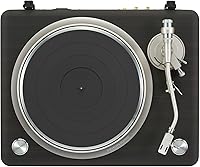
Specifications

  • Drive Type: Direct drive motor couples the platter directly to the motor shaft, delivering consistent rotational speed without the stretch and wear associated with belt-drive systems.
  • Operation: Fully automatic: the tonearm raises, tracks across to the start of the record, sets down, plays, and returns to its rest position without any manual input required.
  • Tonearm Shape: An S-shaped tonearm geometry is employed to reduce lateral tracking error and minimize inner-groove distortion as the cartridge traces toward the center of the record.
  • Cartridge Type: Fitted with a Moving Magnet (MM) cartridge mounted on a standard-mount headshell, compatible with the phono inputs found on the vast majority of amplifiers and receivers.
  • Playback Speeds: Supports three selectable rotation speeds — 33 1/3 RPM for standard LPs, 45 RPM for singles, and 78 RPM for vintage shellac records.
  • Phono Equalizer: A built-in MM phono equalizer is integrated into the unit, allowing direct connection to amplifiers or receivers that do not have a dedicated phono input stage.
  • Platter Material: The platter is machined from diecast aluminum, providing the rotational mass and structural rigidity required for stable, resonance-resistant playback.
  • Dimensions: The unit measures 15.5 x 19.7 x 7.3 inches (W x D x H), and requires a dedicated surface with sufficient depth to accommodate the tonearm sweep arc.
  • Weight: At 40.78 pounds, the substantial chassis mass directly contributes to mechanical stability and the suppression of external vibration during playback.
  • Finish: Finished in dark ebony over a wood-based cabinet construction, designed to present as a visual centerpiece in a dedicated home audio or theater environment.
  • Vibration Analysis: Denon's hologram vibration analysis system monitors platter and motor behavior in real time to detect and reduce speed deviation and mechanical resonance at the source.
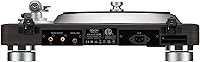
  • In the Box: Includes a 45 RPM adapter, counterweight, sub-counterweight, standard headshell, dummy headshell for calibration, an RCA cable, and a screwdriver.
  • Output Connectivity: Audio signal is delivered via standard RCA outputs, compatible with stereo receivers, integrated amplifiers, powered speakers, and computers equipped with an RCA-capable audio interface.
  • Model Number: The official model designation is DP3000NE, first made available in September 2023 as part of Denon's premium analog turntable lineup.
  • Isolation Feet: Sound-insulating feet are fitted at each corner of the base to mechanically decouple the chassis from the surface beneath it, reducing the transmission of environmental vibrations into the signal path.

Related Reviews

Denon DP-400
Denon DP-400
81%
86%
Sound Quality
78%
Build Quality
93%
Ease of Setup
84%
Tonearm Performance
81%
Speed Accuracy
More
Dual CS 429
Dual CS 429
82%
91%
Automatic Tonearm Operation
88%
Build Quality
84%
Sound Quality
86%
Vibration & Interference Isolation
83%
Speed Consistency
More
Audio-Technica AT-LP60X
78%
94%
Ease of Setup
78%
Sound Quality
72%
Build Quality
91%
Automatic Operation
88%
Value for Money
More
Pro-Ject Automat A1 Fully Automatic Turntable
72%
91%
Ease of Setup
83%
Automatic Operation
74%
Sound Quality
71%
Build Quality
54%
Quality Consistency
More
Victrola Automatic Bluetooth Turntable
77%
93%
Ease of Setup
91%
Automatic Operation
78%
Sound Quality (Wired)
67%
Bluetooth Performance
63%
Build Quality
More
Audio-Technica AT-LPW50PB
82%
91%
Sound Quality
88%
Cartridge & Stylus Performance
89%
Build Quality
87%
Speed Accuracy & Stability
78%
Ease of Setup
More
Terived 4-Port DisplayPort KVM Switch
77%
88%
Build Quality
91%
Video Performance
67%
Ease of Setup
72%
Hotkey Switching
58%
Audio Performance
More
Fluance RT85
Fluance RT85
80%
91%
Sound Quality
94%
Included Cartridge Value
88%
Build Quality & Materials
79%
Speed Consistency & Motor Stability
62%
Setup & Ease of Use
More
Fluance RT83
Fluance RT83
83%
91%
Sound Quality
88%
Cartridge & Stylus Performance
86%
Build Quality & Materials
89%
Speed Consistency & Motor Performance
84%
Tonearm Quality
More
Tech-Play Commander Turntable with CD Player Amplifier
68%
81%
Ease of Setup
61%
Turntable Sound Quality
54%
Build Quality
63%
CD Player Performance
58%
USB Recording Feature
More

FAQ

No — the Denon DP-3000NE Fully Automatic Analog Turntable includes a built-in MM phono equalizer, so you can plug it directly into any amplifier or receiver, including those without a dedicated phono input. That said, if you already own a high-quality standalone phono stage, you can bypass the internal one for potentially better results by connecting the RCA output directly to your external preamp.
Yes, the DP-3000NE supports all three standard playback speeds including 78 RPM. However, it is worth knowing that shellac records have wider grooves than standard vinyl, so you will need a dedicated 78 RPM stylus for proper playback — the included MM cartridge is optimized for vinyl grooves and will not track shellac correctly over time.

Setup is manageable for most people, even without prior experience with high-end turntables. A screwdriver is included in the box, and Denon provides a dummy headshell specifically to assist with counterweight and anti-skate calibration before you mount the real cartridge. Most buyers report being up and running within an hour following the quick-start guide, though taking your time on the counterweight balance is worth it.

Yes, the headshell uses a standard mounting format, so you can install virtually any compatible MM cartridge — or even an MC cartridge if your phono stage supports it. Many experienced buyers treat the included cartridge as a capable starting point and upgrade when they are ready, which is a reasonable approach given how well the rest of the hardware scales with better sources.

For most mid-range amplifier and receiver setups, the built-in preamp is more than adequate and delivers a clean, listenable signal without obvious colorations. Listeners who own a dedicated external phono stage — something in the range of a Pro-Ject Phono Box S3 or better — will likely notice a quieter noise floor and improved micro-detail by bypassing the built-in unit. If you are not already committed to a separate preamp, there is no urgent reason to rush that upgrade.

No, this automatic turntable is a purely wired device with standard RCA analog outputs only — there is no Bluetooth, USB audio, or Wi-Fi. If you want to send audio to wireless speakers, you would need to add a separate Bluetooth transmitter that accepts an RCA input signal, which is a common and inexpensive workaround.

Given its weight of just over 40 pounds, this Denon deck needs a solid, level, non-resonant surface — a dedicated audio rack or a heavy, rigid shelf unit is ideal. Avoid hollow furniture, wobbly shelves, or surfaces positioned close to your speakers, as airborne vibration from bass frequencies can still introduce noise even with the isolation feet working as intended.

The motorized cueing system lowers and raises the tonearm at a controlled, consistent rate every single time, which eliminates the risk of hand-slip mis-cueing — one of the most common ways vinyl collectors accidentally scratch a record. At the end of the side, the arm lifts and returns to rest on its own, so there is no chance of the needle sitting in the runout groove for hours if you fall asleep or walk away.

Honestly, probably not as an entry point. The DP-3000NE is engineered for listeners who are already serious about analog audio and have a system ready to match it — the investment only makes full sense in that context. For someone just starting out, a well-regarded mid-range deck will sound excellent and cost a fraction of the price, leaving room to build the rest of the system first. Once you are certain vinyl is a long-term commitment, stepping up to something at this level is a very different and well-justified decision.

At this tier, both technologies are well-implemented, and the differences are more about design philosophy than outright quality. Direct drive offers superior platter torque and more consistent speed accuracy across all three playback speeds, which matters especially for 78 RPM records and for listeners who prioritize speed stability above everything. The hologram vibration analysis system built into this deck also addresses the traditional criticism of direct drive — motor noise transmitting into the platter — making this a more refined implementation than older direct-drive designs.