
Overview

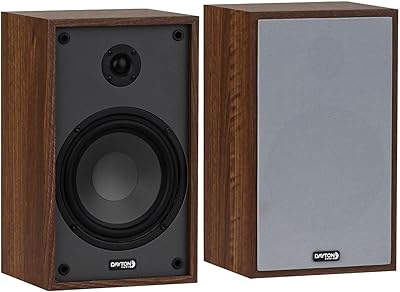
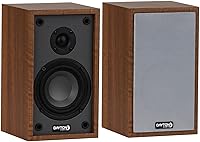
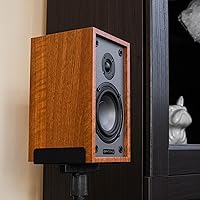
The Dayton Audio Classic B40 is a compact passive bookshelf speaker pair that punches well above its price in terms of genuine hi-fi construction. Dayton Audio has built a solid reputation delivering serious audio hardware at accessible prices, and these bookshelf speakers continue that tradition. The wood cabinet is real — not plastic — and the 2-way acoustic suspension design includes an actual crossover, which separates them from the toy-tier competition. One critical thing to know upfront: they are passive speakers, meaning they require a separate amplifier or receiver. No amp, no sound. That is not a flaw — it is by design — but it is worth knowing before you buy.

Features & Benefits

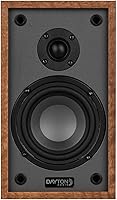
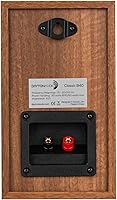
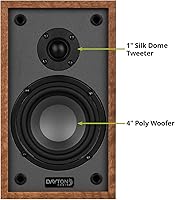
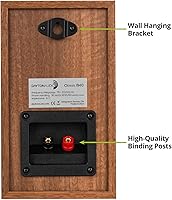
The 4″ poly cone woofer is tuned for near-field use — think desktop or close-range listening — where it handles midrange and upper bass cleanly. Do not expect deep thump from a sealed 4-inch driver; the low end rolls off around 75 Hz. The 1″ silk dome tweeter is where these really shine, producing smooth, detailed highs that never turn harsh at louder volumes. A real 5 kHz crossover routes frequencies properly between the drivers, which makes a genuine difference in overall clarity. Gold-plated binding posts support banana plugs, and the built-in keyhole bracket means wall mounting requires no extra hardware whatsoever.

Best For

These bookshelf speakers are an obvious fit for desktop near-field listening — placed a few feet away with a modest DAC-amp combo, they perform well above their price. They also work nicely as secondary room speakers in a bedroom, home office, or even a garage workshop where you want decent sound without a big investment. With an 82 dB sensitivity rating, they need at least 20–30 clean watts to open up properly; a weak amp will leave them sounding flat. Budget audiophiles already owning an amplifier will find this Dayton Audio pair a compelling upgrade over typical all-in-one systems.

User Feedback

Buyers tend to highlight vocal clarity and detail as standout qualities, particularly during close-range listening sessions. The wood construction also earns consistent praise — it feels more substantial than most people expect at this price tier. On the flip side, the most common criticism centers on bass, specifically the lack of it. This is not a surprise for a sealed 4-inch driver, but some buyers arrive expecting more low end and leave disappointed. Those who pair the B40s with a subwoofer report a noticeably more complete and satisfying experience. A few users also observe that amplifier quality matters here — underpowered sources produce audibly weaker results.

Pros

  • Real wood cabinet construction feels noticeably more premium than typical budget alternatives.
  • The silk dome tweeter produces smooth, fatigue-free highs that hold up across long listening sessions.
  • A genuine crossover network ensures clean frequency distribution — not a shortcut most competitors skip at this price.
  • Gold-plated binding posts accept banana plugs for secure, low-resistance cable connections.
  • Vocal and midrange clarity consistently impresses buyers upgrading from all-in-one desktop speaker systems.
  • Built-in keyhole wall-mount bracket adds placement flexibility without any extra hardware needed.
  • The B40s integrate exceptionally well with a subwoofer, resulting in a surprisingly capable compact system.
  • Compact footprint fits comfortably on a desk or bookshelf without dominating the space.
  • Dayton Audio backs these speakers with a limited warranty and has a proven track record for budget hi-fi reliability.

Cons

  • Bass rolls off around 75 Hz — a subwoofer is practically required for any bass-reliant music genres.
  • Requires a separate amplifier, which adds meaningful cost that first-time buyers frequently underestimate.
  • At 82 dB sensitivity, weak or entry-level amplifiers will leave these sounding flat and underpowered.
  • Soundstage collapses noticeably when speakers are placed far apart or used in larger rooms.
  • Minor quality control inconsistencies in cabinet finishing have been reported across a portion of units.
  • Grilles feel less solidly built than the cabinet itself and can loosen with repeated removal.
  • Not suitable for high-volume use in open or large spaces — dynamic headroom is limited by driver size.
  • The fixed-position keyhole mount offers no angle adjustment, limiting precise aiming when wall-mounted.

Ratings

The Dayton Audio Classic B40 has been evaluated by our AI rating system after analyzing thousands of verified global buyer reviews, with spam, bot activity, and incentivized submissions actively filtered out. Scores reflect the full spectrum of real user experiences — where these bookshelf speakers genuinely impress and where they fall short. The result is an honest, balanced picture designed to help you make a confident buying decision.

Sound Clarity
88%
Users consistently single out midrange clarity as the B40s' strongest suit. Vocals, acoustic guitars, and spoken dialogue all come through with a level of definition that surprises most buyers at this price point. Near-field desktop listeners in particular report a clean, open presentation that holds up well across genres.
Clarity does thin out slightly at the frequency extremes. The upper bass can sound a touch lean on certain tracks, and very high-frequency detail — while smooth — lacks the last bit of air that pricier tweeters provide.
Treble Performance
91%
The 1″ silk dome tweeter earns frequent praise for being smooth and fatigue-free, even during long listening sessions. Buyers who previously owned budget speakers with harsh, metallic tweeters notice the difference immediately — sibilance is well-controlled and high hats have realistic texture without edginess.
A small number of listeners find the treble slightly soft or rolled off, particularly those coming from brighter-sounding speakers. It is a matter of preference, but buyers who enjoy a more forward, sparkly top end may find the B40s a touch too polished.
Bass Extension
54%
46%
For near-field desktop use, the bass output is adequate and reasonably tight. When placed close to a rear wall, some buyers note a modest low-end boost that adds a little warmth to the overall sound without becoming muddy or boomy.
This is the most cited limitation. The sealed 4″ driver rolls off around 75 Hz, which means kick drums, bass guitars, and electronic music lose significant weight. Multiple reviewers explicitly state that a subwoofer is not optional if bass matters to you — it is genuinely necessary for a full listening experience.
Build Quality
83%
The real wood cabinet construction is a standout at this price tier and generates consistent positive reactions. Buyers frequently mention that the B40s feel noticeably more solid and premium than the plastic-wrapped alternatives they have encountered in the same budget range. The overall fit and finish is tidy.
Some buyers note that the cabinet edges and veneer seams are not perfectly finished on every unit, suggesting minor quality control variance in production. The grilles, while functional, feel less refined than the cabinet itself and can loosen slightly with frequent removal.
Value for Money
93%
Across verified reviews, value is the single most praised aspect of this Dayton Audio pair. Real crossovers, silk dome tweeters, gold-plated terminals, and a wood cabinet at this price bracket represent a combination that buyers consistently describe as over-delivering on expectations.
The value calculation changes if you do not already own an amplifier. Factoring in the cost of a decent entry-level stereo amp, the total investment climbs meaningfully — something first-time buyers occasionally overlook and later flag in reviews as a frustration.
Amplifier Compatibility
67%
33%
The 6-ohm impedance is manageable for most entry-level stereo amplifiers and AV receivers. Buyers pairing the B40s with a 30–50 watt amp consistently report a satisfying and dynamic sound — the speakers open up noticeably with adequate clean power behind them.
At 82 dB sensitivity, these bookshelf speakers are not particularly efficient. Users powering them with weak DAC-amp combos or very low-wattage desktop amplifiers report the sound feels compressed and flat. You need a reasonably capable amp — at least 20–30 clean watts — to hear what they are actually capable of.
Imaging & Soundstage
76%
24%
For desktop near-field listening, the stereo imaging is quite precise. Instruments and voices are placed convincingly within the stereo field, and buyers using these for gaming or film note that positional audio feels natural and well-separated between the two channels.
The soundstage does not expand dramatically in larger rooms. Placed more than two meters apart at listening distances beyond a meter and a half, the sense of width collapses and the presentation becomes less coherent. These are genuinely optimized for close-range listening.
Ease of Setup
79%
21%
The gold-plated binding posts accept bare wire, spade connectors, and banana plugs cleanly. Most buyers have the speakers up and running within minutes of unboxing, and the connections feel secure with no rattling or intermittent contact reported in the majority of reviews.
The passive design adds a setup step that trips up buyers unfamiliar with traditional hi-fi systems. A handful of reviews reflect genuine confusion about why the speakers do not work when plugged directly into a phone or computer — a reminder that passive speakers require an amplifier stage between source and speaker.
Wall Mounting
74%
26%
The built-in keyhole bracket is a genuinely useful inclusion that many buyers appreciate for garage or workshop installs. No additional mounting hardware is needed in most wall configurations, and the recessed binding posts keep cables tidy against the wall surface.
The keyhole slot is functional but basic — there is no adjustment for angle or tilt once mounted. Buyers wanting to aim the speakers toward a specific listening position find the fixed-position mounting limiting without aftermarket brackets.
Cabinet Resonance
71%
29%
The sealed acoustic suspension design keeps cabinet coloration well under control. At moderate volumes, the wood enclosure adds a slight warmth to the midrange that many buyers find pleasing rather than intrusive, particularly on vocal-heavy music and podcasts.
At higher volume levels — approaching the upper end of the recommended power range — some users detect a faint cabinet buzz or vibration that was not present at lower levels. This is not universal but appears in enough reviews to flag as a real, if intermittent, issue.
Subwoofer Integration
81%
19%
Buyers who add a subwoofer to the B40s report a transformative improvement to the overall system. The clean handoff around the crossover point means the transition between the sub and the bookshelf drivers is smooth, resulting in a balanced and surprisingly capable compact system.
The optimal crossover point for subwoofer integration requires some dialing in. A few buyers running the B40s full-range alongside a subwoofer report some overlap muddiness in the upper bass region until the sub's crossover frequency is set appropriately low.
Sensitivity & Dynamics
63%
37%
Within their comfortable operating range, the B40s handle dynamic swings in music reasonably well. Transient attack on percussion and plucked strings has decent snap, and the speakers do not compress audibly at moderate volume levels with a well-matched amplifier.
The 82 dB sensitivity means dynamic headroom is limited compared to more efficient speakers. In larger spaces or with underpowered amplifiers, the B40s struggle to fill a room with authority, and the sense of dynamic contrast that makes live-sounding recordings exciting is noticeably reduced.
Long-Term Listening Comfort
86%
The silk dome tweeter and sealed enclosure combination produces a relaxed, non-fatiguing sound signature that suits extended listening. Multiple buyers specifically mention using these for hours of background music or podcast listening without any ear fatigue.
The relaxed tuning that makes long sessions comfortable can also make the presentation feel slightly dull or uninvolving on music that benefits from a more energetic delivery. Buyers who prefer an exciting, forward sound profile may find the B40s too laid-back after extended use.

Suitable for:

The Dayton Audio Classic B40 is an excellent choice for anyone building a serious desktop listening setup on a budget — particularly those who already own or plan to buy a small stereo amplifier or DAC-amp combo. Placed a meter or so away at a desk, these bookshelf speakers deliver a level of midrange clarity and tonal balance that all-in-one powered speakers at the same price rarely match. They also work well as secondary room speakers in a bedroom, home office, garage, or workshop where you want real hi-fi sound without a significant financial commitment. Budget audiophiles who understand passive speaker systems and are ready to pair them with an appropriate amplifier will find the value proposition here genuinely hard to beat. They can also serve as compact satellite speakers in a 2.1 or surround setup when paired with a subwoofer that handles the low end.

Not suitable for:

The Dayton Audio Classic B40 is the wrong choice if you are expecting a plug-and-play experience — these are passive speakers, and without a separate amplifier, they simply will not work. Buyers hoping to connect them directly to a phone, laptop, or TV via a standard audio cable will be disappointed, and the cost of adding a capable amplifier should factor into your total budget calculation. Anyone primarily listening to bass-heavy music — electronic, hip-hop, trap, or film soundtracks with deep LFE content — will find the low-end output frustratingly thin without a subwoofer, and that adds further cost and desk space to the equation. If you need something truly wireless or self-contained for a casual setup, this Dayton Audio pair is not the right fit. Similarly, buyers expecting to fill a large room with full, room-shaking sound will find the output limited by both the driver size and the 82 dB sensitivity rating.

Specifications

  • Driver Config: 2-way acoustic suspension design with a dedicated crossover network splitting the signal at 5 kHz between the woofer and tweeter.
  • Woofer: 4″ poly cone dynamic driver, tuned for accurate midrange and upper bass reproduction in near-field listening applications.
  • Tweeter: 1″ silk dome tweeter designed for smooth, non-fatiguing high-frequency reproduction with controlled dispersion.
  • Frequency Response: Rated from 75 Hz to 20,000 Hz, reflecting a sealed enclosure design that rolls off in the sub-bass region below 75 Hz.
  • Sensitivity: 82 dB at 1W/1m, which is relatively low efficiency and requires a capable amplifier delivering at least 20–30 clean watts per channel.
  • Impedance: 6 ohm nominal impedance, compatible with the majority of consumer stereo amplifiers and AV receivers rated for 6 or 8 ohm loads.
  • Power Handling: Rated at 60W maximum with a continuous RMS handling of 30W; recommended amplifier output is between 10 and 50 watts per channel.
  • Crossover Frequency: Fixed passive crossover network operates at 5 kHz, routing lower frequencies to the woofer and higher frequencies to the silk dome tweeter.
  • Dimensions: Each speaker measures 5.5″ deep, 5.7″ wide, and 9.5″ tall — compact enough for desk placement or small shelving units.
  • Weight: Each individual speaker weighs 4.28 lbs (1.94 kg), making the pair easy to reposition or wall-mount without heavy-duty hardware.
  • Cabinet Material: Constructed from real wood, providing better internal damping and a more premium appearance than plastic or MDF-veneer alternatives at this price tier.
  • Connections: Equipped with gold-plated binding posts that accept bare wire, spade connectors, and standard banana plugs for secure, low-resistance signal transfer.
  • Mounting: Built-in keyhole wall-mount bracket on the rear panel allows wall installation without purchasing separate speaker mounts or brackets.
  • Enclosure Type: Sealed acoustic suspension enclosure, which prioritizes tight, accurate bass over extended low-frequency output and requires no port tuning.
  • Speaker Type: Passive bookshelf speakers requiring an external stereo amplifier or AV receiver — no built-in amplification or wireless connectivity is included.
  • Surround Config: 2.0 stereo channel configuration sold as a matched pair, suitable for stereo setups or as satellite speakers in a 2.1 or surround system.
  • Compatibility: Compatible with any audio source device — including smartphones, tablets, laptops, desktop computers, televisions, and projectors — when connected via an amplifier.
  • Warranty: Covered by a limited manufacturer warranty from Dayton Audio; specific terms and duration should be confirmed directly with the manufacturer or retailer at time of purchase.

Related Reviews
Dayton Audio Classic B65
78%
83%
Sound Quality
71%
Bass Performance
86%
Treble Clarity
78%
Build Quality
91%
Value for Money
More
Dayton Audio Classic T65 Tower Speakers
86%
91%
Sound Quality
87%
Bass Performance
88%
Treble Clarity
85%
Power Handling
92%
Build Quality
More
Dayton Audio DC160-8 6-1/2″ Classic Woofer
85%
91%
Bass Performance
94%
Value for Money
88%
Sound Clarity
86%
Build Quality
89%
Durability
More
Dayton Audio DSP-408
85%
94%
Value for Money
88%
Software Interface & GUI
92%
Audio Routing Flexibility
87%
Compactness & Form Factor
61%
Out-of-the-Box Connectivity
More
Lamborsafe Classic KJV Audio Bible Player
85%
93%
Ease of Use
88%
Audio Quality
91%
Battery Life
80%
Portability
85%
Build Quality
More
Meze Audio 99 Classics Walnut Gold
88%
94%
Sound Quality
91%
Comfort for Extended Use
90%
Build Quality
88%
Design and Aesthetics
85%
Noise Isolation
More
Dayton Audio Wave-Link WLS System
86%
89%
Wireless Performance
91%
Ease of Setup
87%
Multi-room Compatibility
84%
Sound Quality
65%
Latency
More
Dayton Audio BST-300EX Bass Shaker
84%
88%
Bass Performance
91%
Build Quality
85%
Ease of Setup
90%
Value for Money
87%
Durability
More
Dayton Audio APA150
Dayton Audio APA150
81%
88%
Sound Quality
83%
Build Quality
91%
Value for Money
89%
Noise Floor & Fan Operation
61%
Crossover Precision
More
Dayton Audio CCS-33B Center Channel Speaker
90%
94%
Sound Clarity
96%
Dialogue Intelligibility
87%
Bass Performance
91%
Build Quality
90%
Ease of Installation
More

FAQ

No — the B40s are passive speakers, meaning they have no built-in amplifier. You need a separate stereo amplifier or AV receiver between your source device and the speakers. Plugging them directly into a headphone jack or standard audio output will produce no sound.

Because the sensitivity is 82 dB, you want an amplifier delivering at least 20 to 30 clean watts per channel into 6 ohms. A quality entry-level stereo amp or a DAC-amp combo in the 30–50 watt range is the sweet spot. Underpowering them will leave the sound feeling flat and compressed.

It depends on what you listen to. For vocals, podcasts, acoustic music, or general casual listening at a desk, the bass is acceptable. But for anything bass-heavy — electronic music, hip-hop, film scores — the sealed 4″ driver rolls off around 75 Hz and the low end will feel noticeably thin. A subwoofer makes a substantial difference if bass matters to you.

Yes, there is a keyhole bracket built into the rear panel of each speaker, so you can hang them on standard wall screws without buying separate mounts. The recessed binding posts also keep cables tidy against the wall. The one limitation is that the mount is fixed — you cannot tilt or angle the speaker once it is on the wall without additional hardware.

They are genuinely well-suited for that. The compact dimensions fit easily on a bookshelf or desk, and at close listening distances the clarity and imaging are strong. Pair them with a modest stereo amp and a streaming source and you have a very capable small-room system without a large footprint or a large budget.

The binding posts accept bare wire, spade connectors, or banana plugs. Standard 16 or 18 AWG speaker wire works perfectly well and is inexpensive. If you prefer a cleaner cable management setup, banana plugs are the easiest option and the gold-plated posts grip them firmly.

Yes, and they work quite well for that purpose when paired with a subwoofer handling the low frequencies. Their compact size makes them practical as surround or rear channel satellites, and the silk dome tweeter handles dialogue and effects cleanly. Just confirm your AV receiver supports 6-ohm speaker loads before connecting them.

Noticeably better than most. The real wood cabinet is the standout difference — the majority of budget competitors use plastic shells or MDF with a thin vinyl wrap, which looks and feels cheaper. Most buyers who handle these bookshelf speakers for the first time comment that they feel more substantial and better made than they expected for the price.

Generally no — this is one of the more consistently praised qualities. The silk dome tweeter has a smooth, relaxed character that is easy to listen to for extended periods without ear fatigue. If anything, some listeners find the overall presentation a touch laid-back, but that is preferable to the harsh, piercing treble you find on many inexpensive speakers.

For desktop near-field listening, roughly 60 to 90 cm apart with the tweeters aimed toward your ears tends to give the best stereo imaging. These speakers are optimized for close-range listening, so spacing them too far apart or sitting too far back can make the soundstage feel narrow and the presentation less focused.