Overview

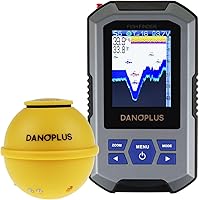
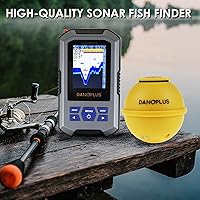
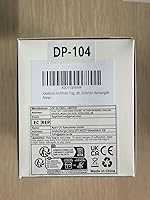
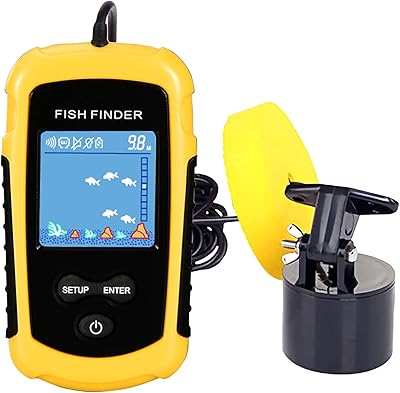
The DANOPLUS DP-104 Castable Fish Finder is a compact, wireless sonar unit built for recreational anglers who want useful underwater data without hauling around expensive gear. You cast the sensor out, and it wirelessly transmits depth, water temperature, bottom contour, and fish activity to a 2.4-inch color LCD you hold in your hand. It works across a solid range of environments — kayaks, canoes, ice holes, rivers, and open lake fishing all fall within its wheelhouse. Just keep expectations realistic: this is an entry-level tool, not a replacement for dedicated marine electronics or chart plotters used by serious tournament anglers.

Features & Benefits

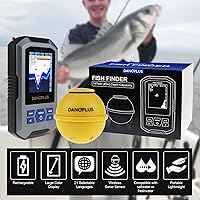
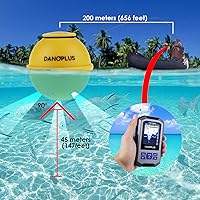
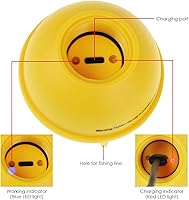
The sonar sensor covers a 90-degree detection angle and reads down to 147 feet — plenty for most freshwater lakes and rivers. Once it hits the water, an attract lamp automatically switches on; the idea is that the light draws fish closer to the sensor rather than just passively waiting for them to swim by. When fish do enter the detection zone, the display triggers both a visual icon and an audible alarm, showing approximate fish size and depth. The sensor recharges over USB, and the handheld display runs on standard batteries, so you can top both up without hunting for proprietary accessories.

Best For

This castable fish finder hits a sweet spot for kayak and canoe anglers who fish without a permanent sonar setup. It is equally at home dropped through an ice fishing hole, where its compact size and wireless convenience genuinely shine. Beginners who are curious about fish-finding technology but not ready to commit to a full console unit will find the DP-104 approachable — no complicated installation, no transducer mount to drill, no wiring. It also makes a solid gift for a hobbyist angler. Just note it is best suited to shallower water given the 147-foot depth ceiling.

User Feedback

Buyers tend to appreciate how quickly this wireless sonar unit gets up and running — most report being on the water within minutes of opening the box. The display earns decent marks for readability in overcast conditions, and portability is consistently praised. On the critical side, some users note that casting distance limits how far the sensor can reach, and the wireless connection can occasionally hiccup when the sensor drifts. A handful of buyers flag that fish size icons do not always match reality, which is typical of entry-level sonar. Battery life on the display draws mixed responses, and a few users have raised durability questions about the display unit.

Pros

  • Completely wireless setup means no drilling, no mounting brackets, and no tangled cables.
  • Compact and lightweight enough to fit in a jacket pocket or small tackle bag.
  • The built-in attract lamp is a genuinely useful touch — it actively draws fish toward the sensor.
  • Covers kayak, canoe, ice, river, lake, and sea fishing with a single portable unit.
  • The sensor recharges over USB, so keeping it topped up between trips is straightforward.
  • Fish alarm feature lets you stay relaxed and respond only when activity is detected.
  • The color display reads depth, temperature, bottom contour, and fish data simultaneously.
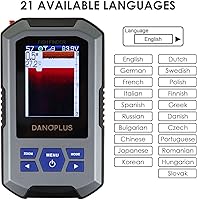
  • Available in 21 interface languages, making this wireless sonar unit accessible to a wide range of buyers.
  • One-year warranty offers reasonable peace of mind at this price tier.
  • Setup time is minimal — most anglers are fishing within minutes of first use.

Cons

  • Wireless range between the sensor and display can be inconsistent, especially with drift.
  • Fish size icons are rough estimates and do not reliably reflect the actual size of catches.
  • The handheld display is not designed for submersion, raising durability questions in wet conditions.
  • Screen visibility can struggle under intense direct sunlight, requiring the angler to shade the display.
  • Battery life on the display unit draws mixed reviews and may require mid-trip swaps on longer outings.
  • Casting distance is inherently limited by the wireless connection range, restricting how far you can deploy the sensor.
  • Bottom contour readings can feel imprecise in areas with complex or rapidly changing underwater terrain.
  • The 2.4-inch screen, while functional, feels cramped when trying to read multiple data points at once.
  • No GPS, mapping, or chartplotting capability limits usefulness for exploring unfamiliar water bodies.
  • ABS plastic construction feels lightweight in a way that may concern buyers seeking a more rugged build.

Ratings

The DANOPLUS DP-104 Castable Fish Finder has been evaluated by our AI rating system after analyzing thousands of verified buyer reviews from global markets, with spam, bot activity, and incentivized feedback actively filtered out. Scores reflect the honest consensus of real anglers across diverse fishing environments, from weekend kayak trips to winter ice sessions. Both the strengths that keep buyers coming back and the friction points that temper enthusiasm are transparently baked into every category below.

Ease of Setup
91%
Buyers consistently highlight that getting this wireless sonar unit running takes almost no effort — charge the sensor, load batteries into the display, and you are fishing. First-time fish finder owners in particular report that the lack of wiring or mounting steps makes the whole experience surprisingly stress-free.
A small number of users note that the initial wireless pairing between the sensor and display can occasionally take a couple of attempts before locking in, which is mildly frustrating when you are already on the water and eager to start.
Portability
93%
Weighing just 0.33 pounds, the DP-104 slips into a jacket pocket or small tackle bag without adding any meaningful bulk. Kayak and canoe anglers especially appreciate being able to bring functional sonar capability without dedicating any deck space to permanent hardware.
The lightweight ABS plastic construction that makes portability possible also leads some buyers to question long-term durability, particularly when the unit gets knocked around in a tackle box or dropped on a rocky shore over multiple seasons.
Sonar Accuracy
67%
33%
For shallow freshwater fishing — ponds, rivers, and calm lakes — the 90-degree sonar cone does a reasonable job of picking up fish presence and giving a general sense of bottom contour. Anglers fishing in clear, uncomplicated water report results that are good enough to make informed decisions about where to cast.
Accuracy drops noticeably in deeper or more complex underwater environments, and the sensor can struggle to return clean readings in areas with dense vegetation or rocky, irregular bottoms. Users comparing this castable fish finder to mid-range units consistently flag that the sonar interpretation requires patience and realistic expectations.
Fish Size Detection
54%
46%
The on-screen fish icons give a rough, at-a-glance indication of whether something small or relatively larger is in the detection zone, which is useful for deciding whether a spot is worth staying at. Beginners tend to find this feature engaging and genuinely motivating when they see activity beneath them.
Experienced anglers who compare icon readings to actual catches report significant inconsistencies — a large icon does not reliably correspond to a large fish, and smaller fish are sometimes missed entirely. This is a known limitation of entry-level sonar processing, but it is worth knowing before you put too much confidence in what the screen shows.
Display Readability
72%
28%
Under overcast skies or shaded conditions, the 2.4-inch color LCD is clear and easy to interpret, with color-coded data that makes depth, temperature, and fish icons distinguishable at a glance. Most buyers fishing from kayaks or shaded riverbanks find it perfectly functional.
In strong direct sunlight, the screen can wash out enough to make the data hard to read without shading it with your hand or body. This is a recurring complaint among buyers who fish on open water during midday, where glare is hardest to manage.
Wireless Range
61%
39%
For close-range fishing scenarios — dropping the sensor through an ice hole, fishing the edge of a kayak, or casting a short distance from a canoe — the wireless connection performs reliably and the data updates feel reasonably responsive. These are exactly the use cases the DP-104 is designed around.
Users who cast further out report that the connection becomes unstable or drops intermittently as the sensor drifts beyond a certain distance, which limits how effectively the unit can be used for longer casts in open water. This is arguably the most cited technical frustration across buyer reviews.
Attract Lamp
78%
22%
The automatic water-activated attract lamp is a feature that genuinely differentiates this wireless sonar unit from simpler competitors at similar price points. Ice anglers and low-light evening fishers in particular mention that the lamp appears to increase activity around the sensor, adding an active element to what would otherwise be purely passive detection.
Results are inconsistent in bright daylight or murky water, where the lamp's visibility underwater is reduced. Some buyers feel the benefit is hard to attribute specifically to the lamp versus general fishing conditions, making it a welcome bonus rather than a reliable performance driver.
Fish Alarm
81%
19%
The audible and on-screen fish alarm is one of the more appreciated practical features, letting anglers focus on other tasks rather than staring at the screen continuously. Ice fishers report it is especially handy when they are managing multiple lines or keeping warm away from the hole.
The alarm sensitivity cannot be fine-tuned, which means occasional false triggers from debris, weeds, or bubbles passing through the detection zone. A few buyers mention it becomes more of a nuisance in weed-heavy environments where false positives fire frequently.
Battery Life
63%
37%
For casual half-day fishing trips, both the rechargeable sensor and the battery-powered display unit generally hold up without needing attention. The USB charging system for the sensor is convenient and compatible with standard power banks, making mid-day top-ups easy for prepared anglers.
Full-day users and anglers on multi-hour sessions report that the display battery drains faster than expected under heavy use, and the sensor charge can also deplete within a few hours of continuous operation. Carrying spare batteries for the display is a sensible precaution that multiple buyers recommend.
Build Quality
58%
42%
The unit feels appropriately constructed for its market tier, and the ABS plastic housing keeps it light without feeling completely insubstantial in hand. For careful users who store it properly after each session, it holds up reasonably well across a fishing season.
The overall build inspires limited confidence under rougher handling, and the display housing shows wear — scuffs and minor cracking — faster than buyers expect given the price. Durability concerns become more pronounced for anglers who fish frequently in demanding conditions like rocky shorelines or saltwater spray.
Water Resistance
55%
45%
The sonar sensor itself is designed for submersion and handles water exposure without issue, which is naturally required for it to function at all. Buyers fishing in calm, dry conditions report no problems with the display holding up to the normal handling moisture that comes with fishing.
The handheld display unit carries no submersion rating, and buyers fishing in rain or near splashing water have reported moisture-related issues over time. This is a meaningful limitation for anyone fishing in unpredictable weather without a protective solution for the display.
Value for Money
82%
18%
When evaluated against what it actually delivers — wireless portability, multi-environment versatility, fish alarms, attract lamp, and a readable color display — the DP-104 offers a genuinely strong value package for recreational anglers and beginners. Buyers who enter with calibrated expectations consistently feel they got a fair return on their spend.
Buyers who compare this castable fish finder against higher-end units or expect professional-grade sonar accuracy tend to feel let down, which skews some ratings unfavorably. The value perception is strongly tied to understanding what this unit is and is not designed to do.
Temperature Accuracy
74%
26%
Water temperature readings are generally considered reliable by users who have cross-checked the display against independent thermometers in freshwater settings. For anglers who use temperature as a basic proxy for fish activity and seasonal positioning, the readings are useful and sufficiently consistent.
A minority of buyers report slight calibration drift in extreme cold — particularly relevant for ice fishing — where readings can be a degree or two off in very low water temperatures. It is not a dealbreaker but worth noting for anglers making precise temperature-based decisions.
Multi-Environment Versatility
86%
Few castable fish finders at this price point work equally comfortably across kayak fishing, ice fishing, river angling, and lake use, and the DP-104 genuinely earns its claim here. Users across very different fishing styles report that the core functionality adapts well without requiring any configuration changes between environments.
Performance in saltwater and high-current river environments is less consistent than in calm freshwater, and the depth ceiling of 147 feet means it simply cannot be used for deep-sea or large reservoir applications where water columns run much deeper.

Suitable for:

The DANOPLUS DP-104 Castable Fish Finder is a natural fit for casual and recreational anglers who want a simple, no-installation way to read what is happening beneath the surface. Kayak and canoe fishers benefit most, since there is no mounting hardware required and the whole unit slips easily into a tackle bag. Ice anglers will also find it genuinely useful — drop the sensor through the hole, set it nearby, and let the alarm do the work while you stay warm. Beginners exploring fish-finding technology for the first time will appreciate that setup takes minutes, not hours, and the color display is readable enough to interpret without a manual in hand. It also covers anglers working shallower freshwater environments like ponds, rivers, and mid-sized lakes, where the 147-foot depth range covers essentially everything they will encounter. As a gift for a hobbyist fisher, it checks all the right boxes: practical, portable, and interesting without being intimidating.

Not suitable for:

The DANOPLUS DP-104 Castable Fish Finder is not the right tool for anglers who fish deep offshore waters, large reservoirs, or any environment where depth regularly exceeds 147 feet. Serious or tournament-level fishers who rely on precise sonar imaging, GPS mapping, or side-scan technology will find this unit far too basic for their needs. The fish size indicators are an approximation at best, so anyone making consequential decisions based on sonar accuracy should look elsewhere. Anglers who cast long distances may run into wireless connectivity limits between the sensor and the handheld display. The display unit is not rated for submersion, so those fishing in heavy rain or rough water conditions should consider a more rugged alternative. If you are comparing this against dedicated console-mounted fish finders with larger screens and advanced signal processing, the gap in capability is significant.

Specifications

  • Brand: Manufactured by DANOPLUS under the model designation DP-104.
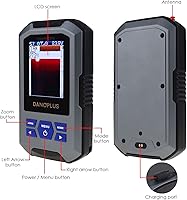
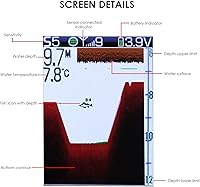
  • Display: Features a 2.4-inch color LCD that simultaneously shows fish icons, depth readings, water temperature, and bottom contour.
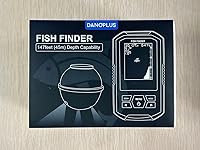
  • Max Depth: The sonar sensor detects underwater targets at depths of up to 147 feet (45 meters).
  • Sonar Angle: The sensor broadcasts a 90-degree detection cone, providing broad underwater coverage below and around the sensor.
  • Connection: Operates wirelessly between the castable sonar sensor and the handheld display unit with no cables required.
  • Power Source: The sonar sensor is rechargeable via USB, while the handheld display unit runs on standard batteries.
  • Attract Lamp: An integrated light on the sonar sensor activates automatically upon water contact to draw fish toward the detection zone.
  • Fish Alarm: When fish enter the sonar coverage area, the unit triggers both an audible alert and an on-screen notification with size and depth indicators.
  • Languages: The display interface supports 21 operating languages for broad international usability.
  • Material: The housing is constructed from ABS plastic, keeping overall weight low and suited to casual outdoor use.
  • Item Weight: The display unit weighs 0.33 pounds, making it light enough to hold comfortably for extended fishing sessions.
  • Dimensions: The display unit measures 4.92″L x 2.87″W x 0.98″H, compact enough to slip into a jacket pocket.
  • Package Weight: The complete package, including sensor and accessories, weighs approximately 0.52 kilograms.
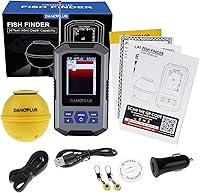
  • In the Box: Each package includes the fish finder display, wireless sonar sensor, user manual, and both USB and AC charging adapters.
  • Warranty: DANOPLUS covers the unit with a one-year manufacturer warranty from the date of purchase.
  • Use Cases: Designed for use across kayak, canoe, ice, river, lake, and sea fishing environments.
  • Display Data: The screen displays fish icons with approximate size indicators, fish depth, water temperature, and underwater bottom contour in real time.
  • Suggested Users: Intended for adult anglers of any experience level, from first-time buyers to regular recreational fishers.

Related Reviews
Lixada Wired Fishing Finder Sonar Sensor
70%
88%
Ease of Setup
76%
Display Clarity
63%
Depth Detection Accuracy
72%
Bottom & Structure Detection
58%
Audible Fish Alarm
More
RICANK F12 Fish Finder
86%
89%
Ease of Use
92%
Portability
91%
Water Resistance
87%
Fish Location Accuracy
82%
Battery Life
More
Venterior VT-FF005 Portable Castable Fish Finder
80%
91%
Ease of Setup
78%
Sonar Accuracy
84%
Display Readability
77%
Wireless Range & Connectivity
73%
Battery Life
More
Deeper START Castable Fish Finder
75%
88%
Ease of Setup
93%
Portability & Form Factor
67%
App Experience
71%
Sonar Accuracy & Fish Detection
76%
Battery Life
More
Venterior VT-FF001 Portable Fish Finder
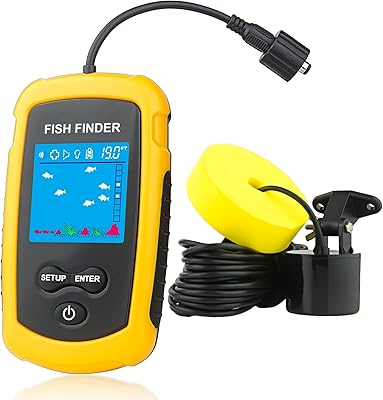
76%
93%
Ease of Setup
91%
Portability
62%
Sonar Accuracy
67%
Display Readability
58%
Battery Life
More
RICANK TL88EK Portable Fish Finder
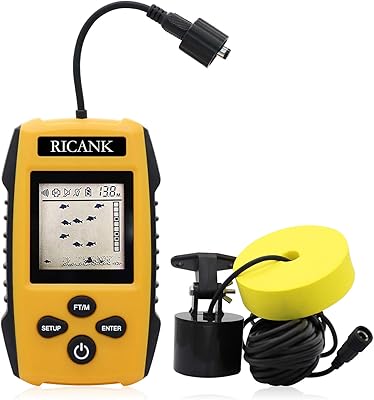
70%
88%
Ease of Setup
67%
Sonar Accuracy
79%
Display Quality
63%
Battery Life
84%
Portability & Design
More
Humminbird PiranhaMAX 4 Fish Finder
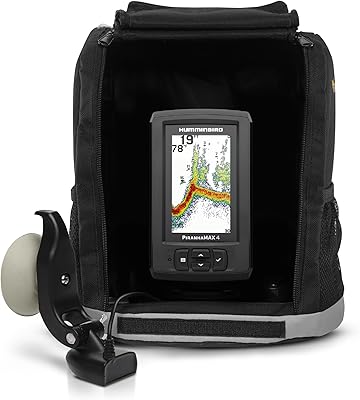
87%
90%
Ease of Use
92%
Portability
85%
Battery Life
87%
Display Clarity
83%
Sonar Accuracy
More
Garmin Striker 4cv 3.5-inch Fish Finder
79%
88%
Sonar Image Quality
91%
Value for Money
87%
Ease of Installation
93%
Ice Fishing Performance
61%
Screen Visibility
More
Atibin Handheld Portable Fish Finder
69%
88%
Portability & Form Factor
84%
Ease of Setup
76%
Sonar Accuracy (Shallow Water)
51%
Sonar Accuracy (Deep Water)
58%
Screen Legibility
More
HawkEye Fishtrax 1C Fish Finder
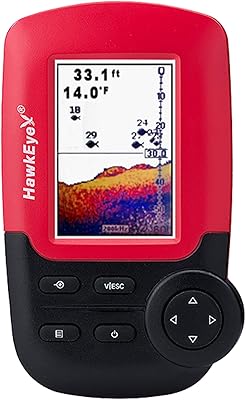
83%
91%
Portability
87%
Sonar Accuracy
89%
Ease of Use
72%
Screen Size
68%
Battery Life
More

FAQ

Setup is genuinely straightforward. You charge the sensor via USB, load batteries into the handheld display, and the two units connect wirelessly on their own. Most people are fishing within five to ten minutes of opening the box, with no tools, no drilling, and no wiring involved.

Casting range is one area where buyers should set realistic expectations. The wireless connection between the sensor and display works best at shorter to moderate cast distances, and some users report signal hiccups when the sensor drifts further out. It is not designed for long-range offshore casting — think pond edges, kayak fishing, or controlled ice hole drops rather than big-water distance casts.

Yes, and it actually works quite well in that setting. The sensor is small enough to lower through an ice hole, and the wireless display can sit on the ice nearby. The attract lamp activates automatically once the sensor hits water, which is a nice bonus when fishing in low-light ice conditions.

Treat them as rough guides rather than precise measurements. The sonar estimates fish size based on signal return strength, and the icons give you a general sense of whether something small or larger is passing through. Buyers who have compared the icons to actual catches report that they are directionally useful but not consistently precise — which is typical of entry-level sonar technology.

The display unit is not rated for submersion, so it should not be dropped in water. Light rain splashes are unlikely to cause immediate damage given the ABS housing, but fishing in heavy rain or rough surf without some protection is a risk. A small dry bag or pocket cover is worth considering if you fish in wet conditions regularly.

The attract lamp is a small light built into the sonar sensor that switches on automatically when it touches water. The idea is that the light draws smaller baitfish and insects toward the sensor, which in turn can pull larger fish into the detection zone. Whether it makes a measurable difference depends on water clarity and conditions, but it is a thoughtful design touch that adds potential value without complicating the device.

Battery life varies depending on usage and conditions, and user feedback on this point is mixed. Some anglers report solid performance across a full fishing session, while others find they need to recharge after a few hours of active use. Carrying a small USB power bank as a backup is a sensible precaution for longer trips.

The manufacturer lists sea fishing among its supported use cases, so saltwater exposure is within the intended scope. That said, it is worth rinsing the sensor thoroughly with fresh water after each saltwater outing to prevent corrosion over time, which is standard practice for any fishing electronics.

The 2.4-inch screen is a solo-viewing display — it is sized for the angler holding it, not for a group to glance at from a distance. In overcast or shaded conditions it reads clearly, but in intense direct sunlight you may need to angle or shade it to see the data comfortably.

It is actually one of the more thoughtful gift options in this category. The wireless design means the recipient does not need to modify their boat or gear, the setup is minimal, and the core display is intuitive enough to understand quickly. Just be honest with them that it is an entry-level unit — it will genuinely help locate fish in shallower water, but it is not packed with the advanced features found on higher-end sonar systems.