Overview

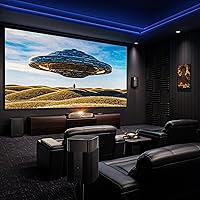
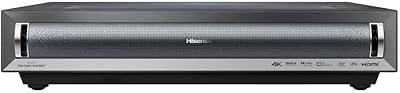
The Hisense L9Q Ultra Short Throw Laser Projector sits at the top of Hisense's projector lineup, competing directly with the most capable ultra short throw options on the market. What separates it from most rivals is the triple laser light source — the LPU Digital Laser Engine 2.0 — rather than the single or dual-laser setups common at lower price points. This is a premium buy aimed at home theater enthusiasts and living room users who refuse to compromise on image quality. The unit itself is compact and low-profile enough to sit on a TV console without looking out of place. That said, even 5,000 lumens has its limits — expect the best results in rooms where you have at least some control over ambient light.

Features & Benefits

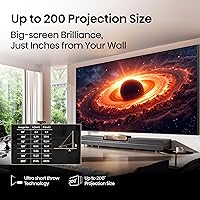
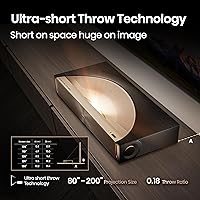
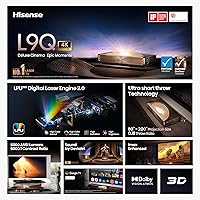
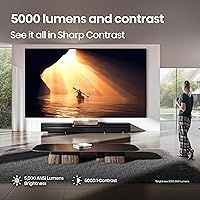
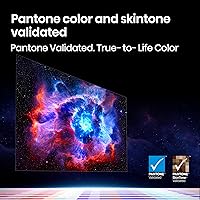
The headline spec is 5,000 ANSI lumens, which is genuinely impressive for an ultra short throw — in a moderately lit living room, images hold up well where most projectors would wash out. The throw ratio ranges from 0.18 to 0.25, meaning the unit can produce screens from 80″ up to a cavernous 200″ while sitting just inches from the wall. Native 4K resolution pairs with Dolby Vision and Dolby Atmos support, so premium streaming content looks and sounds the part. Pantone validation covering 110% of BT.2020 is more than a marketing badge — skin tones and saturated colors in sports and film hold a natural accuracy that cheaper projectors simply cannot match. Google TV handles the smart platform duties capably, and the Devialet-tuned speakers are a genuine step above typical built-in audio, though serious listeners will still want an external system.

Best For

This ultra short throw projector is a natural fit for anyone who has ruled out a ceiling-mounted setup but still wants to watch movies on a screen that dwarfs any flat panel. It works particularly well in living rooms where furniture placement makes a long-throw arrangement impractical — the cabinet-sitting form factor is a genuine advantage here. Color-critical viewers — anyone watching a lot of film, live sports, or doing creative work — will notice the difference that Pantone-validated accuracy makes over a standard projector. It also suits buyers who want a single cohesive setup rather than a TV plus streaming stick plus soundbar combination. If you are upgrading from a large flat-panel TV and want something more cinematic without tearing apart the room, this is a logical path forward.

User Feedback

With a 4.6-star average across 71 ratings, early sentiment for the L9Q is positive — but the review pool is still relatively small, and early buyers of premium products tend to skew enthusiastic, so take the consensus with that in mind. Recurring praise centers on daytime usability and color richness, with several buyers specifically noting how well the image holds up with lights on. On the critical side, some users point out that deep blacks do not approach what an OLED panel delivers, and a handful report a learning curve getting Google TV dialed in alongside the projector's alignment tools. Fan noise draws occasional mentions at peak brightness. Compared to rival UST projectors at similar price points, most buyers feel the color performance and build quality justify the investment.

Pros

  • Five thousand ANSI lumens of triple laser brightness holds up well in moderately lit living rooms.
  • A throw ratio as low as 0.18 lets you place the unit inches from the wall and still fill a massive screen.
  • Pantone-validated color accuracy makes skin tones and saturated hues look natural rather than oversaturated.
  • Native 4K resolution with Dolby Vision support means premium streaming content is displayed as intended.
  • Google TV is a full-featured smart platform — no external streaming stick required.
  • Screens up to 200″ are achievable without ceiling mounting or complex installation.
  • The compact, low-profile chassis fits neatly on a media console and looks intentional when powered off.
  • Devialet-tuned built-in audio is a genuine step above the afterthought speakers found on most projectors.
  • AI-driven real-time picture processing handles HDR optimization and noise reduction without manual tweaking.
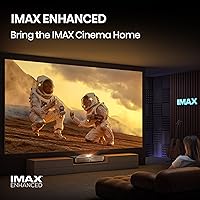
  • IMAX Enhanced certification adds meaningful credibility for buyers who care about studio-approved presentation.

Cons

  • Black levels cannot match an OLED display — dark scenes reveal the inherent limitations of laser projection technology.
  • The review pool is still small at 71 ratings, making it harder to assess long-term reliability with confidence.
  • Fan noise at peak brightness settings draws enough user mentions to be worth considering in quiet viewing environments.
  • Initial setup — keystone alignment, Google TV configuration, and placement optimization — takes more effort than plugging in a TV.
  • Serious home theater listeners will likely still want a dedicated external audio system despite the Devialet integration.
  • At this price tier, buyers have high expectations, and any firmware or app instability feels more frustrating than it would on a budget unit.
  • Bright, uncontrolled rooms with direct sunlight will still wash out the image despite the strong lumen output.
  • The unit weighs 28.4 pounds, making repositioning or adjusting placement less casual than with a lighter projector.

Ratings

The scores below reflect our AI-driven analysis of verified global buyer reviews for the Hisense L9Q Ultra Short Throw Laser Projector, with spam, bot-generated, and incentivized feedback actively filtered out before scoring. Each category is weighted against real-world usage patterns reported by confirmed purchasers — not manufacturer claims — so both the standout strengths and the genuine frustrations are reflected transparently. With a still-growing review base, scores will continue to be refined as more long-term feedback emerges.

Image Brightness
93%
Buyers consistently report that the triple laser output holds up impressively in rooms where other projectors give up — afternoon light, table lamps on, curtains half-open. Several users specifically switched from single-laser UST projectors and described the brightness jump as immediately noticeable rather than marginal.
A small number of users in south-facing rooms with large unshaded windows found that even 5,000 lumens was not enough to fully defeat direct sunlight. The gap between the rated spec and real-world output in extreme bright conditions is a recurring thread in more critical reviews.
Color Accuracy
91%
The Pantone validation is not just a badge — users watching sports report grass greens and kit colors that look broadcast-accurate rather than oversaturated. Film enthusiasts note that skin tones in particular avoid the orange push that plagues many competing projectors, which makes extended viewing feel less fatiguing.
Out-of-the-box calibration is not perfect for everyone — a handful of users noted that the default color mode leaned slightly cool and required manual adjustment to hit the most natural presentation. Those without calibration experience may not realize the image can be meaningfully improved from factory settings.
Black Level & Contrast
67%
33%
The 5,000:1 contrast ratio delivers better shadow detail than many single or dual-laser UST rivals, and in mixed-light conditions the image retains a sense of depth that entry-level projectors simply cannot achieve. Dark scenes in well-lit rooms look acceptably punchy for everyday streaming.
Side-by-side with a premium OLED television, the black level limitations become hard to ignore — deep shadows show a grey-ish lift that no firmware update will fully resolve due to the fundamental physics of projection. Buyers migrating from high-end OLED panels should set expectations carefully before purchase.
Setup & Installation
74%
26%
Physical placement is genuinely straightforward — the unit sits on a media console and requires no wall brackets, ceiling mounts, or structural work. Most buyers report getting a watchable image within 20 minutes of unboxing, which compares favorably to traditional long-throw projector installs.
Getting the image truly dialed in — precise keystone correction, lens alignment, and Google TV initial configuration — takes considerably longer and trips up less technical users. Several reviewers mentioned spending 45 minutes or more before feeling fully satisfied with the geometry and app setup.
Smart Platform (Google TV)
82%
18%
Having a full Google TV interface built in means buyers can access virtually every major streaming platform without plugging in an external device. The interface is familiar to anyone who has used an Android TV product, and app updates arrive reliably over Wi-Fi.
A subset of users report occasional sluggishness in the UI and one or two app crashes during the first weeks of use — issues that sometimes improve with firmware updates but are frustrating at this price point where polish is expected from day one.
Built-in Audio
78%
22%
The Devialet-tuned speakers outperform what most buyers expect from a projector's built-in system — dialogue clarity is good, and the soundstage feels wider than a typical single-bar speaker arrangement. For casual streaming and daytime use, a large portion of buyers report not needing an external soundbar at all.
At higher volumes or during action-heavy content, the limitations of a compact built-in system become apparent — bass lacks the physical weight that a dedicated subwoofer provides. Serious home cinema users will still reach for a proper audio setup despite the Devialet branding.
Throw Distance Flexibility
94%
A throw ratio floor of 0.18 is exceptional even within the ultra short throw category, giving buyers meaningful flexibility to fine-tune screen size without moving furniture. Users in apartments with limited depth report achieving 100″-plus screens with the unit sitting comfortably on a standard TV stand.
At the widest screen sizes — approaching 180″ to 200″ — ceiling height and room geometry become limiting factors that the throw ratio alone cannot solve. A small number of buyers in low-ceiling rooms found the maximum advertised screen size was not achievable in their actual space.
Build Quality & Design
86%
The chassis has a premium, furniture-grade feel — the matte finish and low-profile silhouette make it look deliberate rather than utilitarian when sitting on a console. Several buyers specifically mention that partners who were skeptical about a projector in the living room were won over by the aesthetics.
At 28.4 pounds, repositioning the unit is a two-person job, which limits spontaneous placement changes. A few users noted that the ventilation grilles collect dust noticeably over weeks of use and require regular light cleaning to maintain airflow and appearance.
HDR Performance
83%
Dolby Vision content on compatible streaming services looks genuinely impressive — highlights pop with real intensity and the AI tone-mapping handles the transition between bright and dark areas more gracefully than the manual HDR modes on competing projectors. IMAX Enhanced content benefits noticeably from the wide color volume.
HDR gains are most apparent in mixed-light viewing — in very bright rooms, some of the HDR headroom is consumed compensating for ambient light rather than delivering the full intended artistic effect. HDR performance is strong, but room control remains a variable the hardware cannot fully override.
Value for Money
71%
29%
Buyers who prioritize color accuracy, brightness, and an all-in-one living room solution genuinely feel the premium is justified — particularly those who priced out the alternatives and factored in the cost of a separate streaming device and soundbar. The feature density at this tier is legitimately high.
At this price point, buyers arrive with zero tolerance for software roughness or calibration friction, and a meaningful minority feel the out-of-box experience does not fully match what the investment implies. Those who simply want a big screen without caring deeply about color science may find better value elsewhere in the UST market.
Gaming Performance
69%
31%
Console gaming on a 100″-plus screen is a visually immersive experience that flat panels cannot replicate at this price, and casual or single-player gaming users report being very satisfied. The image quality and size combination for story-driven games and sports titles draws consistent praise.
Input lag figures for this projector are not class-leading, which matters to competitive or reflex-dependent gamers who will notice the response difference versus a gaming monitor or a display with a dedicated low-latency mode. It is a living room gaming projector, not an esports display.
Fan & Operational Noise
63%
37%
At standard brightness modes, the cooling fan sits in the background and does not intrude on typical viewing. Users who run the unit at moderate output — which covers most streaming scenarios — report the noise level as acceptable and easy to ignore.
At maximum brightness, the fan ramp-up is noticeable enough that several reviewers specifically flag it in quiet scenes, late-night viewing, or small room setups where the unit is closer to seating. It is one of the more common recurring criticisms across the review base and worth factoring in if silence matters to you.
Connectivity
88%
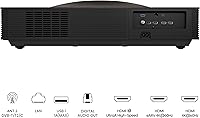
The port selection covers all practical bases — HDMI for consoles and Blu-ray players, USB for media drives, Ethernet for wired network stability, and Bluetooth for wireless headphones or speakers. Wi-Fi connectivity is consistently reported as stable by buyers using the unit for 4K streaming.
Some users note that the physical port layout makes cable management less elegant than the unit's design deserves — rear-facing ports can be awkward to access once the projector is positioned close to a wall. A dedicated cable management channel would improve the overall setup experience.
Long-term Reliability
77%
23%
Laser light sources at this level are engineered for multi-year use without brightness degradation, and early buyers report consistent performance over the initial months of ownership. The absence of a replaceable lamp removes one of the traditional ongoing maintenance concerns of projector ownership.
The product is relatively new to market with a review base that has not yet had time to surface long-term durability data — any reliability score at this stage reflects early sentiment rather than confirmed multi-year performance. Buyers should monitor firmware update frequency as a proxy for manufacturer support commitment.

Suitable for:

The Hisense L9Q Ultra Short Throw Laser Projector is built for a very specific kind of buyer, and if you fit the profile, it is hard to argue with what it offers. It is the right call for living room enthusiasts who want a genuinely large image — think 120″ or more — without the installation headaches of a ceiling-mounted long-throw setup. If your room has reasonable light control for evening viewing but is not a dedicated dark home theater, the triple laser brightness gives you meaningful flexibility that single-laser UST projectors simply cannot match. Color-focused viewers — those who care how a film actually looked on the director's monitor, or how a soccer pitch's green renders during a live match — will appreciate the Pantone-validated accuracy in a way casual viewers might not consciously notice but will still feel. It also suits buyers ready to consolidate their setup: the integrated Google TV and Devialet-tuned speakers mean fewer boxes, fewer remotes, and a cleaner room overall.
Not suitable for:

If your priority is absolute black-level performance, the Hisense L9Q Ultra Short Throw Laser Projector will not satisfy you the way a high-end OLED television would — laser projectors at any price point still struggle to match the infinite contrast of self-emissive panels in dark scenes. Buyers on a tighter budget should also be clear-eyed: this sits at a premium price point, and there are capable UST projectors available for considerably less if raw image accuracy and peak brightness are less critical to you. Those planning to use it in a fully bright, sun-drenched room with no curtains should temper expectations — 5,000 lumens is strong, but it is not daylight-proof. Hardcore audiophiles who already own a high-quality surround sound system may find the built-in Devialet speaker integration redundant rather than a bonus. Finally, buyers who dislike any initial calibration work — alignment, keystone correction, Google TV setup — should know there is a modest but real learning curve before everything is dialed in.
Specifications

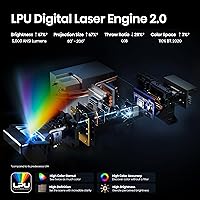
  • Light Source: Triple laser engine using Hisense's LPU Digital Laser Engine 2.0, combining three primary laser colors for extended color volume and longevity.
  • Brightness: Rated at 5,000 ANSI lumens, placing it among the brightest ultra short throw projectors currently available for home use.
  • Contrast Ratio: 5,000:1 native contrast ratio, delivering meaningful separation between bright highlights and darker shadow areas in the image.
  • Resolution: Native 4K UHD resolution at 3840×2160 pixels for sharp, detailed images at any supported screen size.
  • Throw Ratio: Adjustable throw ratio from 0.18 to 0.25, allowing the unit to project large images while positioned just inches from the wall.
  • Screen Size Range: Supports projected image sizes from 80″ up to 200″ depending on distance and surface configuration.
  • Color Gamut: Covers 110% of the BT.2020 color space and carries both Pantone and Pantone SkinTone validation for color and skin tone accuracy.
  • HDR Support: Compatible with Dolby Vision, HDR10, and IMAX Enhanced for broad coverage of premium HDR content formats.
  • Audio System: Built-in speaker system tuned by Devialet with Dolby Atmos support for three-dimensional audio from streaming and compatible sources.
  • Smart Platform: Runs Google TV, providing access to the full Google Play app ecosystem including Netflix, Disney+, YouTube, and other major streaming services.
  • Connectivity: Includes HDMI, USB, Ethernet, Wi-Fi, and Bluetooth ports and wireless protocols for flexible device and network integration.
  • AI Processing: Onboard AI picture quality engine performs real-time contrast refinement, noise reduction, resolution upscaling, and HDR tone mapping automatically.
  • Dimensions: The unit measures 24.6 × 12.5 × 6.5 inches, sized to sit on a standard media console without overhanging most furniture edges.
  • Weight: Weighs 28.4 pounds, which is substantial enough to require a stable surface but manageable for initial placement by two people.
  • Availability Date: First listed for sale on August 13, 2025, making it a recent addition to the premium ultra short throw projector category.

Related Reviews

Hisense PX3-PRO Ultra Short Throw Projector
79%
93%
Picture Quality
94%
Color Accuracy
49%
Ambient Light Handling
88%
Gaming Performance
71%
Value for Money
More
Epson LS800 Ultra Short Throw Laser Projector
79%
88%
Picture Quality
83%
Brightness & Ambient Light
91%
Ultra Short Throw Design
84%
Gaming Performance
67%
Built-in Audio
More
NOMVDIC P2000 Ultra Short Throw Projector
75%
91%
Image Quality
73%
Brightness Performance
89%
Color Accuracy
93%
Ultra Short Throw Placement
77%
Built-in Audio
More
Formovie Theater Ultra Short Throw 4K Laser Projector
86%
94%
Picture Quality
88%
Ease of Setup
85%
Audio Performance
77%
Brightness
90%
Connectivity
More
Optoma ML1080ST Ultra-Portable Short Throw Full HD Laser Projector
84%
91%
Display Quality
94%
Portability
88%
Ease of Setup
85%
Connectivity Options
92%
Gaming Performance
More
Epson EpiqVision Ultra Short Throw LS300 3LCD Smart Laser Projector
84%
93%
Brightness
89%
Picture Quality
85%
Setup & Installation
82%
Sound Quality
90%
Connectivity & Smart Features
More
Samsung The Premiere LSP7T 120″ Laser Projector
75%
83%
Picture Quality
61%
Brightness Performance
93%
Ultra-Short Throw Design
81%
Smart TV Platform
67%
Built-In Audio
More
Optoma GT1090HDR Short Throw Laser Projector
82%
89%
Brightness & Ambient Light Performance
82%
Image Quality
93%
Short-Throw Convenience
91%
Laser Longevity & Maintenance
73%
Value for Money
More
ViewSonic X1000-4K Ultra-Short Throw Projector
87%
92%
Image Quality
70%
Brightness in Well-Lit Rooms
85%
Sound Quality
95%
Space-Saving Design
88%
Ease of Setup
More
AWOL VISION LTV-2500 UST Laser Projector
78%
93%
Picture Quality
91%
Color Accuracy
88%
HDR Performance
63%
Setup & Installation
61%
Screen Compatibility & Requirements
More

FAQ

Yes, but with realistic expectations. At 5,000 ANSI lumens, the L9Q performs better in ambient light than most ultra short throw competitors, and many users report usable images in typical daytime living rooms. That said, direct sunlight hitting the projection surface will still wash out the image significantly, so some light management — curtains or blinds — helps a lot in truly bright rooms.

That is one of the L9Q's real strengths. With a throw ratio as low as 0.18, you can sit the unit just a few inches from the wall and still get a 100″ or larger image. A 120″ screen typically requires roughly 15 to 20 inches of distance from the wall, which means it fits naturally on most media consoles without eating into your room.

A smooth, flat white wall works and many users start there. However, to get the best out of an ultra short throw projector — especially for contrast and anti-glare performance — a dedicated UST ambient light rejecting (ALR) screen makes a noticeable difference. It is an added expense, but at this tier of projector, the pairing is worth considering.

The Devialet-tuned built-in speakers are genuinely better than what you find in most projectors — for casual streaming and everyday viewing, many users find them satisfying. If you are a serious music listener or you want true surround sound for movie nights, an external system will still outperform them. Think of the built-in audio as a strong default rather than an end solution for audiophiles.

In terms of sheer screen size, the projector wins by a wide margin — no OLED panel gets close to 120″ at a comparable price. However, OLED televisions produce deeper blacks and higher native contrast in dark scenes because each pixel generates its own light. The L9Q looks excellent in most content, but in very dark scenes side by side with a top-tier OLED, the difference in black levels is visible.

The physical placement is straightforward since the unit just sits on a surface — no ceiling mounting required. The initial software setup through Google TV is similar to setting up an Android TV device, which most people manage fine. The main area that takes a bit of patience is the lens alignment and keystone correction to make sure the image is perfectly rectangular on your wall or screen. The built-in tools help, but budget 30 to 45 minutes for the first setup.

Yes, Google TV includes Netflix, Disney+, YouTube, Apple TV, and most other major platforms directly from the home screen. You do not need an external streaming stick or box. The app availability is effectively the same as any Google TV device, and the store is available for additional apps beyond the pre-installed ones.

At moderate brightness settings, fan noise is generally not intrusive during content playback. A handful of users note that at peak brightness the fan becomes more audible, which can be noticeable during quiet dialogue-heavy scenes or when watching in a very small, quiet room. If fan noise sensitivity is a concern for you, it is worth checking recent user reviews for the latest firmware behavior, as manufacturers sometimes address this through updates.

Absolutely — the HDMI ports handle external sources like PlayStation, Xbox, and 4K Blu-ray players without any issue. For gaming specifically, check the current listed input lag specifications, as ultra short throw projectors vary in their responsiveness and competitive gamers in particular will want to verify this before committing.

Laser light sources used in projectors at this level are typically rated for 20,000 hours or more of use, which translates to many years of regular viewing before any meaningful brightness degradation. Unlike traditional lamp projectors, there is no bulb to replace on a yearly schedule. Hisense's specific rated lifespan for the L9Q's laser module is worth confirming in the official documentation, but longevity is a genuine advantage of triple-laser technology over lamp-based alternatives.

Where to Buy