Overview

The DALI Oberon 3 Bookshelf Speakers come from a Danish hi-fi manufacturer with a reputation built over four decades of serious loudspeaker engineering. These aren't lifestyle accessories dressed up as audio gear — DALI has always prioritized what you actually hear. The Oberon 3 sits in the mid-range segment, where the competition is fierce, but the cabinet's wood, fabric, and aluminium construction immediately signals that corners weren't cut. It's worth noting upfront: these DALI bookshelf speakers are passive, meaning you'll need a separate amplifier or receiver to drive them. That's not a flaw — it's the point. A 4.8-star rating from verified buyers suggests most people who understood that going in haven't looked back.

Features & Benefits

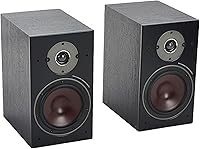
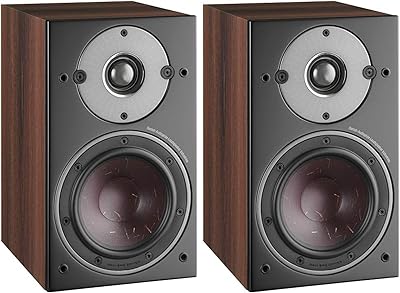
The engineering behind the Oberon 3 pair is where things get interesting. A 7-inch wood-fibre woofer handles the low and mid frequencies with enough surface area to produce genuinely full-bodied sound, while the 1.13-inch soft-dome tweeter extends high-frequency detail all the way to 26kHz — beyond what standard audio formats even deliver. That Hi-Res Audio certification isn't just a badge; it means the drivers are built to resolve fine musical detail that compressed formats simply discard. With a sensitivity rating of 87dB and a recommended power window of 25 to 150 watts, these hi-fi standmounts will pair happily with a wide range of amplifiers. The included rubber feet and optional grille keep things practical and tidy.

Best For

These DALI bookshelf speakers are an ideal step up for anyone who has outgrown Bluetooth or entry-level passive speakers and wants to hear what a proper stereo setup actually sounds like. They work best in small to medium rooms — a home office, a dedicated listening corner, or a living room where the speakers can breathe a little. Acoustically rich material like jazz, acoustic guitar, and classical recordings tends to reward you most, though the woofer handles heavier genres competently too. They also work well as front-channel speakers in a modest home theater rig. Just make sure your amplifier meets the 25-watt minimum — underpowering them is the most common setup mistake.

User Feedback

Buyers who have spent time with the Oberon 3 pair consistently point to two things: soundstage width and midrange clarity that punches above the price. Several reviewers note a break-in period — the drivers reportedly open up and smooth out after 20 to 40 hours of use, so don't judge them cold out of the box. On the critical side, a handful of users mention that a weak or budget amplifier holds these speakers back noticeably; they respond well to quality upstream gear. Packaging feedback has been largely positive, with most buyers reporting careful shipping protection. A few comparisons to rival bookshelf speakers at similar price points tend to land in the Oberon 3's favor for natural tonal balance.

Pros

  • Midrange clarity and soundstage width that consistently impress listeners moving up from budget audio
  • Hi-Res Audio certification means fine musical detail is preserved, not flattened
  • The 7-inch wood-fibre woofer delivers full-bodied bass that surprises given the cabinet size
  • Wide amplifier compatibility — anything from 25W to 150W works, giving buyers real flexibility
  • Build quality feels premium: wood, aluminium, and fabric rather than cheap plastic throughout
  • Included rubber feet and grille make for a tidy, living-room-friendly installation
  • Drivers reportedly open up and improve noticeably after a proper break-in period
  • Wired passive design keeps the signal path clean with no compression from wireless transmission
  • Strong buyer satisfaction rating reflects consistent real-world performance, not just spec-sheet appeal
  • Placement flexibility on shelf or stand suits a wide range of room setups

Cons

  • Requires a separate amplifier or receiver, adding cost and complexity to the total setup
  • An underpowered or budget amplifier will hold back performance noticeably — upstream gear matters
  • No built-in wireless or Bluetooth connectivity for those wanting a simpler, cable-free system
  • At 18 pounds for the pair, they are not easy to reposition frequently once installed
  • Bass extension may feel limited in larger rooms without adding a subwoofer
  • The break-in period means out-of-the-box impressions can be misleading — patience is required
  • Sensitivity of 87dB means they need a reasonably capable amplifier to reach satisfying volume levels
  • Not a good fit for desk setups with very limited depth due to their 12-inch cabinet depth

Ratings

The scores below for the DALI Oberon 3 Bookshelf Speakers were generated by our AI engine after systematically analyzing verified buyer reviews from multiple global markets, actively filtering out incentivized, bot-generated, and duplicate submissions to surface only genuine user experiences. The results reflect both the strengths that keep buyers recommending these speakers to friends and the real friction points that caused some to hesitate or complain. Nothing has been softened — the ratings represent the full picture, good and bad.

Sound Quality
93%
Buyers consistently describe a listening experience that feels open and layered rather than flat or boxed-in — the kind of soundstage that makes familiar recordings feel newly discovered. The midrange in particular draws repeated praise, with vocalists and acoustic instruments sounding natural and present rather than processed. For the price tier, reviewers frequently note being surprised at just how much detail these hi-fi standmounts resolve.
A small number of buyers found the high frequencies slightly forward during the first hours of use before break-in, which can initially read as brightness. Those coming from warm-sounding or bass-heavy speakers may also find the tonal balance more neutral than they expected, requiring some adjustment in listening preferences.
Bass Performance
74%
26%
For a bookshelf speaker, the 7-inch woofer does a respectable job of producing bass with weight and texture rather than just a thin suggestion of low-end. In smaller rooms, listeners report that bass-heavy tracks like jazz double bass or orchestral kettle drums come across with satisfying body. Placement away from walls tends to tighten up the low end noticeably.
Buyers who listen primarily to electronic music, hip-hop, or heavy rock frequently note that sub-bass extension hits a physical ceiling — which is expected for a sealed or ported bookshelf cabinet, but still a real limitation. Without a subwoofer in the chain, very low frequencies simply are not there, and some buyers felt that expectation was not clearly set at purchase.
Build Quality
91%
The combination of wood, fabric, and aluminium sets these speakers apart from plastic-bodied competitors at similar price points, and buyers notice it immediately on unboxing. The cabinet feels dense and inert, with no detectable flex or resonance when tapped. Several reviewers explicitly mention that the build quality was a key reason they trusted the brand enough to buy without a local audition.
A handful of buyers noted minor finish inconsistencies on the fabric sections, particularly around the edges of the baffle. The grille attachment points, while functional, feel slightly less premium than the rest of the cabinet — a small but noticeable detail for buyers paying close attention to fit and finish.
Value for Money
82%
18%
Among buyers who understood they were purchasing passive speakers requiring additional amplification, the consensus is that the Oberon 3 pair overdelivers for what it costs compared to comparable options. Several reviewers who had previously owned budget bookshelf speakers described the jump in perceived quality as disproportionately large relative to the price difference. Competing models at similar prices rarely match the driver quality or cabinet construction.
The value equation shifts significantly once you factor in the cost of a quality amplifier for buyers starting from scratch — the total system cost can realistically double the initial outlay. Buyers who did not fully account for this upfront sometimes felt the overall spend was harder to justify, even if the speakers themselves were fairly priced.
Amplifier Dependency
61%
39%
For buyers who already own a decent integrated amplifier or AV receiver, the pairing process is straightforward and rewarding — the speakers respond clearly and predictably to better upstream gear, which experienced audiophiles appreciate. The wide 25W to 150W compatibility window gives buyers genuine flexibility in choosing a matching amplifier across a broad price range.
This is the most common friction point across buyer reviews: many first-time hi-fi buyers underestimated the requirement for a separate amplifier, and some paired the speakers with underpowered or poor-quality units that left them underwhelmed. The speakers themselves are not at fault, but the passive-only design creates a real barrier for buyers unfamiliar with how traditional hi-fi systems are assembled.
High-Frequency Detail
88%
The 1.13-inch soft-dome tweeter consistently earns praise for extending treble without introducing the harshness or listening fatigue that cheaper metal-dome designs can cause. Buyers who listen for extended periods — weekend afternoon sessions or late-night music listening — frequently cite the non-fatiguing high end as a meaningful comfort advantage. Strings, cymbals, and breathy vocals all come through with convincing air and separation.
A minority of buyers with systems on the brighter side of neutral found the tweeter could occasionally feel a touch too present with poorly mastered recordings or overly bright source components. This is less a flaw in the speaker and more a sign that it is transparent enough to reveal what is upstream — which can work against you if the rest of the chain is harsh.
Soundstage & Imaging
89%
Width and depth of soundstage are among the most frequently praised attributes across buyer reviews, with listeners describing instruments as occupying distinct positions in space rather than collapsing into a wall of sound. This quality is especially appreciated for classical and jazz recordings where the original recording space is part of the musical experience. Proper placement on stands or a deep shelf significantly enhances this effect.
In rooms where the speakers must be placed very close to the side walls or back wall, the imaging precision narrows considerably and the soundstage depth flattens. Buyers in tighter spaces who could not achieve even modest separation between the speakers reported a noticeably less immersive experience compared to those with more placement flexibility.
Ease of Setup
58%
42%
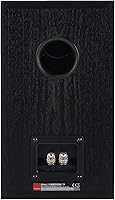
For buyers already familiar with passive speaker setups, the process is entirely routine — connect speaker cables from an amplifier to the binding posts, place on shelf or stand, apply rubber feet, and listen. The included manual covers the basics adequately, and the binding posts accept both bare wire and banana plugs without any complications.
For newcomers to passive hi-fi, the setup process represents a real learning curve — selecting an amplifier, sourcing appropriate speaker cables, and understanding impedance matching are not trivial tasks for a first-time buyer. Several reviews reflect frustration from buyers who expected something closer to plug-and-play and had to do significant additional research before getting sound out of the speakers.
Room Compatibility
76%
24%
In small to medium rooms, these speakers fill the space with surprising authority given their bookshelf format, and buyers in apartments and home offices consistently report satisfying results at moderate volumes. The sensitivity rating and amplifier flexibility mean the volume and tonal balance can be dialed in effectively for most domestic listening environments without needing extensive acoustic treatment.
Buyers in larger open-plan rooms sometimes found the speakers struggling to project convincingly at the room scale, with the low end especially thinning out as listening distance increased. Performance in a large living room without subwoofer support or careful room treatment received noticeably more mixed feedback than performance in more compact dedicated listening spaces.
Break-In Period
66%
34%
Buyers who were patient through the initial hours of use consistently reported that the sound became more relaxed, spacious, and cohesive after 20 to 40 hours of moderate-volume playback. Those who knew to expect this experience from prior hi-fi ownership were not bothered by it and even found tracking the improvement rewarding over the first week of ownership.
For buyers unaware of break-in as a concept, the out-of-box sound — particularly the slightly tight bass and forward treble — led to early negative impressions that did not always get revised once the drivers settled. A few reviews reflect disappointment that was likely attributable to premature judgment rather than a permanent flaw, which represents a genuine communication gap.
Packaging & Unboxing
84%
The majority of buyers report receiving their speakers in excellent condition, with the dual-layer packaging doing its job of absorbing transit stress effectively. The unboxing experience feels considered rather than rushed — foam inserts are well-fitted, the grilles are protected separately, and included accessories are neatly organized rather than thrown in loose.
A small percentage of buyers reported cosmetic damage on arrival, which while infrequent is frustrating at this price level. Given that these are shipped as relatively heavy, bulky items, occasional handling damage in transit is not surprising — but the absence of any damage reporting mechanism or clear insurance instructions in the packaging left some buyers uncertain about next steps.
Aesthetics & Design
87%
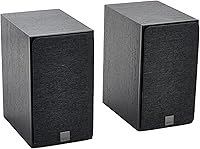
The black finish with fabric grille reads as clean and intentional rather than generic, fitting naturally into most living room and home office environments without demanding attention. Buyers frequently mention that the speakers look more expensive than many rivals at the same price, which reinforces the sense of getting genuine value. The option to listen with or without the grille gives some flexibility in styling.
The speakers are not small — at nearly 14 inches tall — and on a standard bookshelf they can feel physically imposing or crowd nearby items. Buyers with limited shelf space or who expected a more compact footprint occasionally expressed that the actual dimensions in person were more substantial than the product listing photographs suggested.
Long-Term Durability
83%
DALI's track record as a manufacturer and the quality of materials used suggest a product built to last considerably longer than typical consumer electronics. Buyers who have owned previous DALI speakers often mention brand loyalty based on longevity, and the wood-and-aluminium cabinet construction shows no signs of degradation over years of ownership in normal indoor conditions.
Long-term reviews are necessarily limited given that sustained multi-year feedback is harder to capture, and the limited warranty terms mean buyers bear more risk beyond the covered period. Driver surround longevity in particular is a question that cannot be definitively answered from the available review data, leaving some buyers uncertain about very long-term ownership costs.

Suitable for:

The DALI Oberon 3 Bookshelf Speakers are built for listeners who are ready to graduate from convenience-first audio into something that actually rewards careful listening. If you already own a decent stereo amplifier or AV receiver — or are budgeting for one — these speakers will give you a genuinely satisfying return on that investment. They work particularly well in small to medium-sized rooms where placement on a shelf or dedicated stand lets them project a proper soundstage without fighting the acoustics. Music lovers who spend serious time with jazz, classical, folk, or acoustic recordings will notice the midrange clarity and high-frequency extension that most entry-level speakers simply cannot match. They also serve as strong front-channel speakers in a compact home theater setup, especially for buyers who prioritize stereo music first and movie audio second.

Not suitable for:

The DALI Oberon 3 Bookshelf Speakers will frustrate anyone expecting a plug-and-play experience — these are passive speakers, and without a separate amplifier or receiver, they will not make a single sound. Buyers on a tight overall budget need to factor in the additional cost of capable amplification; pairing them with a weak or entry-level amp significantly undermines what they can do. They are not the right choice for very large rooms, where their driver size and bass extension may leave the low end feeling thin without subwoofer support. Anyone who wants wireless streaming built directly into the speaker — no extra boxes, no extra cables — should look at active or powered alternatives instead. Similarly, if portability or outdoor use is a priority, these 18-pound passive standmounts are clearly the wrong tool for the job.

Specifications

  • Frequency Range: The speakers reproduce audio from 47Hz to 26,000Hz (±3dB), covering deep bass through extended high-frequency detail well beyond standard CD-quality limits.
  • Sensitivity: Rated at 87dB at 2.83V/1m, meaning the speakers produce a moderate output level for a given input power, requiring a reasonably capable amplifier to perform at their best.
  • Amplifier Power: DALI recommends pairing these speakers with an amplifier rated between 25W and 150W per channel for optimal and safe performance.
  • Woofer Driver: Each cabinet houses a 7-inch wood-fibre cone dynamic driver responsible for delivering midrange and low-frequency reproduction with natural texture and body.
  • Tweeter Driver: A 1.13-inch soft-dome tweeter handles high-frequency content, chosen for its ability to extend detail smoothly without harshness or fatigue over long listening sessions.
  • Cabinet Materials: The enclosures are constructed from a combination of wood, fabric, and aluminium, providing structural rigidity while contributing to the speaker's acoustic damping properties.
  • Dimensions: Each speaker measures 13.8″ in height, 7.9″ in width, and 12.4″ in depth, making them a substantial bookshelf unit that benefits from a dedicated stand or deep shelf.
  • Weight: The pair weighs approximately 18 pounds in total, so individual units are manageable but sturdy enough to feel solidly built during placement.
  • Hi-Res Audio: These speakers carry official Hi-Res Audio certification, confirming their drivers can faithfully reproduce source material with sampling rates and bit depths beyond standard CD specifications.
  • Connectivity: The Oberon 3 pair uses wired passive connectivity via speaker terminals, with no built-in wireless, Bluetooth, or amplification of any kind.
  • Output Mode: Configured for stereo output, the pair is sold as a matched set of two individual passive speaker cabinets.
  • Placement Type: Designed for shelf or stand mounting, with a stable footprint supported by the included rubber feet to reduce vibration transfer to the mounting surface.
  • Included Items: Each purchase includes a pair of speakers, rubber feet for vibration isolation, removable fabric grilles, and a printed user manual.
  • Speaker Type: These are passive bookshelf loudspeakers, meaning they require an external amplifier or AV receiver to produce sound.
  • Manufacturer: DALI, which stands for Danish Audiophile Loudspeaker Industries, is a Danish speaker manufacturer founded in 1983 with a long-standing focus on high-fidelity home audio.
  • Model Name: The model is officially designated the Oberon 3, sitting as the mid-range option within DALI's Oberon series lineup.
  • Warranty: The speakers are covered by a limited manufacturer warranty; buyers should confirm specific terms and duration with the seller or DALI directly at time of purchase.
  • Color: Available in black in this listing, with the fabric grille and cabinet finish designed to integrate cleanly into most home listening environments.

Related Reviews
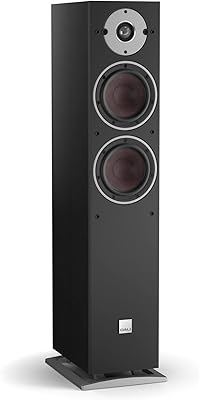
DALI Oberon 5 Floorstanding Speakers
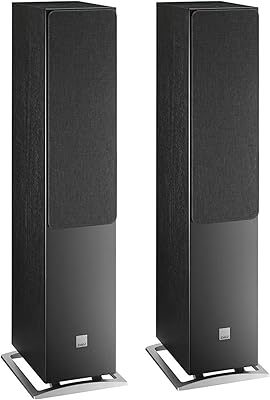
80%
93%
Sound Naturalness
91%
Midrange Clarity
74%
Bass Extension & Control
89%
High-Frequency Smoothness
88%
Soundstage & Imaging
More
DALI Oberon 7 Floorstanding Speaker
79%
91%
Sound Quality
79%
Bass Performance
86%
Treble Clarity
88%
Soundstage & Imaging
93%
Build Quality
More
ELAC Debut 3.0 DB53-BK Bookshelf Speakers
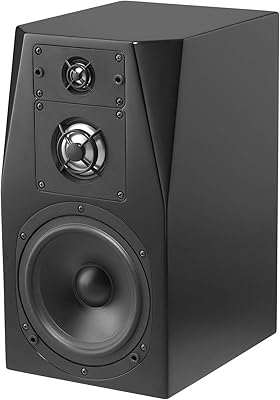
82%
91%
Sound Clarity & Detail
88%
Soundstage & Imaging
89%
Midrange Performance
67%
Bass Response
84%
Amplifier Compatibility
More
NHT C-3
NHT C-3
78%
93%
Sound Clarity & Midrange Detail
89%
Soundstage & Imaging
74%
Bass Accuracy & Low-End Extension
91%
Build Quality & Cabinet Finish
66%
Amplifier Compatibility
More
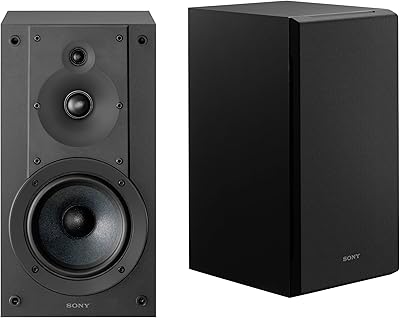
Sony SS-CS5M2 (2025)
81%
88%
Sound Quality
91%
Treble & High-Frequency Detail
72%
Bass Performance
89%
Soundstage & Imaging
83%
Build Quality & Materials
More
Pyle PCB3BK 3″ Mini Cube Bookshelf Speakers
71%
78%
Sound Clarity
41%
Bass Response
83%
Value for Money
57%
Build Quality
86%
Ease of Setup
More
Dayton Audio SAT-BK Satellite Speaker Pair
75%
86%
Sound Clarity
47%
Bass Response
91%
Value for Money
62%
Build Quality
88%
Magnetic Shielding
More
DALI Oberon 1
DALI Oberon 1
80%
91%
Sound Quality
63%
Bass Performance
88%
Soundstage & Imaging
89%
Build Quality
58%
Amplifier Compatibility
More
KEF Q350 Bookshelf Speakers
86%
93%
Sound Quality
80%
Bass Performance
88%
Build Quality
91%
Design and Aesthetics
85%
Ease of Setup
More
Orroplus OR-02 Powered Bookshelf Speakers
77%
83%
Sound Clarity & Midrange
61%
Bass Performance
91%
Connectivity & Input Range
78%
Bluetooth Performance
72%
Setup & Ease of Use
More

FAQ

No, the DALI Oberon 3 Bookshelf Speakers are fully passive — they have no internal amplifier, no Bluetooth, and no wireless capability of any kind. You will need a separate stereo amplifier or AV receiver connected via speaker cables to get any sound out of them. If you want a self-contained wireless solution, you will need to look at active or powered speaker alternatives.

DALI recommends an amplifier rated between 25W and 150W per channel. In practice, a clean 40W to 80W stereo amplifier is more than enough for most listening rooms. The key is quality over raw wattage — a well-built integrated amplifier from brands like Cambridge Audio, NAD, or Yamaha will let these speakers perform at their best far more than a cheap high-wattage unit will.

Yes, small to medium rooms are actually where the Oberon 3 pair tends to shine. In a compact space, you do not need to push them hard to fill the room with sound, which means even a modest amplifier paired correctly can deliver an impressive result. Just give them a few inches of clearance from the back wall if possible — it helps with bass definition.

There is a general consensus among owners that the drivers loosen up and the sound smooths out after roughly 20 to 40 hours of use at moderate volumes. Fresh out of the box, the high frequencies can sound slightly forward and the bass a little tight. Give them time before making any serious judgments about their sound character.

They work very well as front left and right channels in a home theater setup. However, they are a stereo pair and not designed as surround or rear speakers — for a full surround system you would need additional matched speakers and a center channel. Many buyers use them primarily for music and treat the home theater role as a secondary bonus.

The fabric grilles attach and detach easily without tools — they are held on by small pins and pull off cleanly. Most audiophiles prefer to listen with the grilles off, as removing them typically allows slightly more high-frequency air and detail through. That said, the difference is subtle, and the grilles are there if you prefer the look or want to protect the drivers.

These speakers are not bass-light, but a 7-inch woofer in a bookshelf cabinet has physical limits. Bass-heavy genres are handled competently, but if you want real sub-bass impact for electronic music or hip-hop, adding a subwoofer is worth considering. Set your amplifier or AV receiver to roll off the low bass to the sub and you will get a much more satisfying full-range result.

A bookshelf works fine, especially with the included rubber feet in place to absorb vibration. That said, dedicated speaker stands at ear height tend to improve soundstage imaging noticeably by getting the tweeters closer to your ear level when seated. It is not a requirement, but if you are serious about getting the best out of these speakers, stands are worth considering down the line.

Packaging feedback from buyers has generally been positive — the speakers are typically double-boxed with foam inserts that protect the cabinet finish and drivers during transit. Most buyers report receiving them in perfect condition, though as with any large shipped item, it is worth inspecting them carefully on arrival before discarding the packaging.

As of the information available, these speakers are not discontinued by the manufacturer. DALI has continued to support the Oberon series, though stock availability can vary by retailer. If you are considering a purchase, it is worth checking current availability directly with the seller to confirm lead times.

Where to Buy