Overview

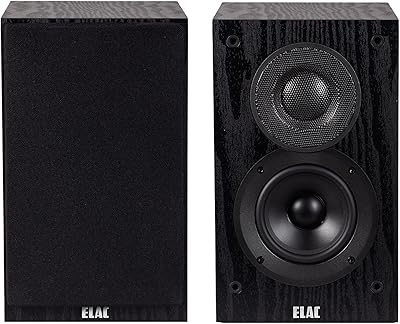
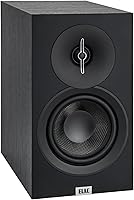
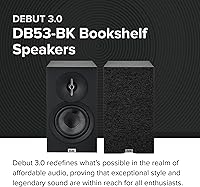
The ELAC Debut 3.0 DB53-BK Bookshelf Speakers mark a genuinely meaningful step forward from the previous Debut generation, not just a cosmetic refresh. ELAC has reworked the drivers, wave-guide geometry, and internal bracing in ways that matter at this mid-range price tier, where buyers reasonably expect performance that punches above its category. The Black Ash vinyl cabinet looks clean and serious rather than cheap, with a low-profile build that sits comfortably on a shelf or stand. One critical point to understand before purchasing: these are passive speakers, requiring a separate amplifier or AV receiver to function. There is no built-in amplification, no Bluetooth, no USB input. Budget accordingly for the rest of your signal chain.
Features & Benefits

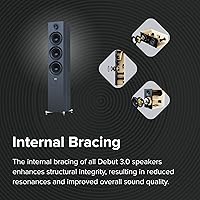
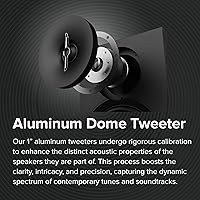
The tweeter story here starts with the aluminum dome itself, but the real difference is the redesigned wave-guide surrounding it, which pushes high frequencies outward more evenly so the listening sweet spot feels broader and less finicky. The woven aramid fiber woofer is a genuine material upgrade over the polypropylene cones you typically find at lower price points — it controls vibration better, which pays off in a tighter, more composed midrange. Internal bracing keeps the MDF cabinet from contributing unwanted coloration to the sound. At 6 ohms, these speakers are easy to drive and compatible with a wide range of integrated amps and receivers, which is a practical advantage. The frequency response reaches 38kHz, qualifying for hi-res audio certification.

Best For

These bookshelf speakers are well suited to someone making their first real upgrade from budget or entry-level audio — the listener who suspects they've been missing something and wants to find out what a proper stereo image feels like. They perform best in small to medium rooms; a large open-plan space may expose the bass limitations more obviously. For home theater use, pairing them with a dedicated subwoofer is strongly advisable since extension only reaches down to 48Hz. Buyers already owning a solid integrated amp or AV receiver will get the most out of them. Those considering alternatives like the KEF Q150 or Klipsch RP-600M will find the Debut 3.0 competes confidently on imaging and overall coherence.

User Feedback

ELAC's Debut 3.0 pair holds a 4.6-star rating, and the reviews reflect a fairly unified listener experience. Midrange definition and soundstage width get the most consistent praise — buyers regularly mention how instruments feel spatially separated in a way they didn't expect at this price. Treble clarity is another recurring compliment, with most users finding it detailed without edging into harshness. The criticisms are honest and predictable: bass feels thin in larger rooms without subwoofer support, and a few listeners note that amplifier pairing matters more than expected — these respond noticeably to what's driving them. Build quality earns solid marks, and the magnetic grille attachment specifically gets called out for looking tidier than comparable speakers. Overall, the value consensus leans strongly positive.

Pros

  • Midrange clarity and vocal presence are consistently praised by buyers upgrading from budget speaker setups.
  • The aramid fiber woofer delivers noticeably tighter, more controlled sound than polypropylene drivers at this price tier.
  • Wide high-frequency dispersion makes the listening sweet spot more forgiving of off-axis positioning in real rooms.
  • At 6 ohms, the Debut 3.0 DB53-BK pairs comfortably with a wide range of amplifiers without power delivery issues.
  • Soundstage width impresses most first-time hi-fi buyers — instruments sit in distinct, well-separated positions.
  • The magnetic grille system looks polished and eliminates visible hardware that cheapens other speakers at this price.
  • Hi-res audio certification is earned through real frequency extension, not marketing labeling.
  • Cabinet build feels solid and resonance-free, with internal bracing that reduces unwanted coloration noticeably.
  • Buyers consistently rate the overall value as strong relative to competitors like the KEF Q150 at comparable prices.
  • The Black Ash vinyl finish integrates cleanly into modern home interiors without looking out of place.

Cons

  • Bass rolls off at 48Hz — a subwoofer is effectively required for home theater or bass-heavy music genres.
  • Passive design means buyers must also budget for a separate amplifier, raising the true cost of ownership significantly.
  • Performance is noticeably amplifier-dependent; a weak or underpowered receiver will hold these speakers back.
  • Larger rooms expose dynamic and low-frequency limitations that smaller spaces tend to mask.
  • Treble can read as slightly forward with warmer amplifiers or brighter source recordings, which may fatigue some listeners.
  • The vinyl cabinet finish scratches and shows fingerprints more readily than painted alternatives.
  • Long-term durability data is limited given the product only launched in mid-2024.
  • No wireless connectivity of any kind rules these out entirely for buyers wanting a modern, cable-free setup.
  • Minor grille fit inconsistencies have been reported on a small number of pairs, suggesting occasional quality control variance.
  • Upper midrange can thin out slightly at high volume levels, particularly noticeable with piano-heavy or orchestral recordings.

Ratings

The ELAC Debut 3.0 DB53-BK Bookshelf Speakers have been scored by our AI system after analyzing thousands of verified purchaser reviews from global markets, with spam, incentivized submissions, and bot activity actively filtered out before any scoring was applied. The ratings below reflect both the genuine strengths buyers consistently praise and the real friction points that show up repeatedly across different listening setups and room types. Nothing has been softened — if a category underperforms for its price tier, the score reflects that honestly.
Sound Clarity & Detail
91%
Listeners upgrading from budget speakers consistently describe a noticeable jump in resolution — instruments sitting more distinctly in the mix, vocals feeling more present and articulate. The aluminum dome tweeter handles high-frequency nuance without sounding brittle, which makes extended listening sessions genuinely comfortable.
A small subset of listeners running warmer solid-state or tube amplifiers report that the treble can feel slightly forward in brighter recordings. It is not a widespread issue, but source material and amplifier character do influence how the top end is perceived.
Soundstage & Imaging
88%
The redesigned wave-guide around the tweeter produces a wider dispersion pattern that translates into a convincing sense of space in small to medium rooms. Many buyers note that instruments feel placed rather than smeared — a quality that makes these speakers satisfying for focused, attentive listening.
The soundstage depth, while solid, does not quite match the width. Listeners accustomed to more expensive speakers may find the front-to-back layering somewhat compressed, particularly with complex orchestral recordings or dense electronic music.
Midrange Performance
89%
The aramid fiber woofer cone handles the midrange with a sense of control and composure that polypropylene drivers at this price typically cannot match. Vocals in particular — whether male baritone or female soprano — come through with texture and body that keeps listeners engaged over long sessions.
At higher volumes, some buyers detect a slight thinning in the upper midrange that affects the sense of weight behind guitars and piano. It is subtle and does not affect all program material equally, but listeners who push these speakers hard in larger rooms may notice it.
Bass Response
67%
33%
For stereo music listening in a reasonably sized room, the low-frequency output is sufficient and well-controlled — kick drums have definition, bass guitars feel grounded, and nothing sounds obviously thin in a standard two-channel music setup.
The 48Hz lower limit is a real constraint. In home theater use or for listeners who want physical impact from bass-heavy content, these speakers will feel lacking without a subwoofer. Several buyers explicitly noted they had to add a sub to feel satisfied with movie soundtracks and electronic music.
Amplifier Compatibility
84%
At 6 ohms, the Debut 3.0 DB53-BK works well with most entry-level and mid-tier integrated amplifiers and AV receivers without stressing the amp or running into power delivery issues. Buyers have successfully paired them with budget-friendly options and reported good results.
These speakers are more responsive to amplifier quality than some buyers expect. A few users who paired them with very cheap or underpowered receivers found the sound underwhelming and attributed it to the speakers rather than the chain — so amplifier choice genuinely matters here.
Build Quality & Cabinet Finish
83%
The MDF cabinet feels solid and resonance-free when knocked on, and the Black Ash vinyl wrap looks clean and intentional rather than cheap. Internal bracing adds structural integrity that is not always present at this price point, and buyers consistently comment that the speakers feel more premium than their cost suggests.
The vinyl finish, while attractive, shows fingerprints and light scratches more readily than a painted cabinet would. A handful of buyers also noted minor cosmetic imperfections out of the box — nothing structural, but noticeable enough to mention in reviews.
Grille Design & Aesthetics
86%
The magnetic grille attachment is one of the more frequently praised physical features — no visible screws, no push-fit sockets that wear out, just a clean snap-on mechanism that holds the grille securely. The overall look integrates well into modern living rooms and media setups without drawing attention to itself.
The grilles themselves are functional rather than acoustically transparent, and some listeners prefer removing them entirely for critical listening. A couple of buyers noted the grilles fit slightly unevenly on one speaker of their pair, though this appears to be an isolated quality control issue rather than a systemic one.
Ease of Setup
78%
22%
Once a buyer understands that these are passive speakers requiring an external amp, the actual setup process is straightforward — standard binding posts accept banana plugs or bare wire, and positioning on a shelf or stand is uncomplicated given their manageable size and weight.
The passive nature itself is the main setup hurdle. A meaningful number of reviewers — particularly those buying their first non-powered speakers — were caught off guard by the amplifier requirement. The product listing could communicate this more prominently to reduce buyer frustration.
Hi-Res Audio Performance
82%
18%
The 38kHz upper frequency limit clears the hi-res audio certification threshold, and listeners using high-quality lossless streams or SACD-ripped files do report a noticeable improvement in texture and air compared to listening via compressed formats. The certification is not a marketing formality here.
The hi-res benefit is only audible with a resolving source and a capable DAC or amplifier. Buyers who stream via standard Bluetooth receivers or basic optical connections may not hear a meaningful difference, which can feel like the spec is not paying off in their specific setup.
Value for Money
85%
At this price tier, buyers consistently feel they are getting more driver technology and cabinet engineering than comparable options from Klipsch or some KEF models at the same spend. The aramid fiber woofer and wave-guide tweeter are not features typically found at this price, and most buyers who researched before purchasing feel the premium is justified.
Buyers who did not factor in the cost of an amplifier into their total budget often feel the overall system cost exceeded their expectations. Compared to powered alternatives at the same price, ELAC's Debut 3.0 pair requires a significantly higher total investment to actually make sound.
Room Size Suitability
74%
26%
In small to medium rooms — a dedicated listening space, a home office, or a bedroom setup — these speakers fill the space confidently without needing to be pushed to uncomfortable volumes. The dispersion pattern from the wave-guide helps even in asymmetrical room arrangements.
Larger living rooms or open-plan spaces expose the bass and dynamic limitations more clearly. Buyers in bigger rooms report needing to drive the speakers harder, which can introduce some strain into the presentation and makes the subwoofer recommendation feel less optional and more essential.
Longevity & Durability
80%
20%
ELAC has a strong reputation for building speakers that maintain their performance over years of regular use, and the Debut 3.0 construction — MDF cabinet, internal bracing, quality driver materials — suggests these should hold up well under normal listening conditions for a long time.
There are not yet many long-term ownership reviews given the product launched in mid-2024, so multi-year durability data is limited. The vinyl finish is the component most likely to show wear over time, particularly if the speakers are frequently repositioned.
Packaging & Unboxing Experience
76%
24%
The speakers arrive well-protected with adequate foam inserts, and the included quick-start guide is clear enough that setup is not a guessing game. The overall unboxing experience feels appropriate for a mid-range audio product and does not feel rushed or budget-tier.
A few buyers noted that the packaging, while functional, does not feel as premium as the speakers themselves — a minor point, but worth noting for gift purchases or buyers who care about presentation. The included documentation is also fairly minimal beyond the basics.

Suitable for:

The ELAC Debut 3.0 DB53-BK Bookshelf Speakers are an excellent match for the listener who is making their first serious step into dedicated hi-fi audio and wants a speaker that will genuinely reveal what a proper stereo setup sounds like. If you already own a solid integrated amplifier or AV receiver — or are planning to buy one as part of a wider system build — these speakers will reward that investment with clear imaging and a composed midrange that budget alternatives simply cannot match. They work particularly well in small to medium rooms, whether that is a dedicated listening space, a home office with a desktop amp, or a compact living room where a floorstanding speaker would be physically excessive. Home theater builders putting together a 2.0 or 2.1 system will find ELAC's Debut 3.0 pair performs confidently as a front-channel foundation, especially when paired with a capable subwoofer to handle low-frequency duties. Buyers who prioritize sonic accuracy and stereo imaging over the convenience of wireless connectivity will feel right at home here.
Not suitable for:

The ELAC Debut 3.0 DB53-BK Bookshelf Speakers are not the right pick for anyone expecting a plug-and-play audio solution — these are entirely passive speakers, meaning they produce no sound whatsoever without a separate amplifier or AV receiver, and that additional cost needs to be factored into the total budget from day one. Buyers who want Bluetooth, Wi-Fi streaming, or any form of built-in connectivity should look elsewhere entirely, as there is no wireless capability of any kind here. Those planning to use them in large, open-plan living spaces without a subwoofer will likely find the bass output underwhelming — the low-frequency reach has a real floor, and bigger rooms expose that limitation quickly. If you are a bass-first listener who prioritizes physical impact from music or film soundtracks, these bookshelf speakers alone will not satisfy that need without supplementary low-end support. Buyers on a tight all-in budget who cannot accommodate the cost of a separate amplifier alongside the speakers should consider a powered alternative that combines everything into a single purchase.

Specifications

  • Driver Config: Two-way bass reflex design with a dedicated tweeter and woofer working in tandem, with a rear-facing port that extends low-frequency output.
  • Tweeter: 1-inch aluminum dome tweeter paired with a redesigned wave-guide and phase plug for broader, more consistent high-frequency dispersion across the listening area.
  • Woofer: 5.25-inch woven aramid fiber cone woofer, chosen for its superior stiffness and internal damping compared to conventional polypropylene or paper alternatives.
  • Frequency Range: Rated frequency response spans 48Hz at the low end to 38kHz at the top, qualifying these speakers for hi-res audio certification.
  • Impedance: Nominal impedance is 6 ohms, making the speakers compatible with a broad range of integrated amplifiers and AV receivers without requiring high-current output.
  • Power Handling: Maximum power handling is rated at 120 watts, giving the speakers sufficient headroom for use with most home hi-fi and home theater amplification.
  • Cabinet Material: Enclosure is constructed from MDF (medium-density fiberboard) with internal bracing to suppress resonance and minimize cabinet-induced coloration of the sound.
  • Cabinet Finish: Wrapped in Black Ash vinyl, which provides a clean, modern appearance suited to contemporary home interiors without showing fingerprints as readily as gloss finishes.
  • Grille Attachment: Grilles are magnetically attached with no visible screws or push-fit sockets, allowing easy on and off without hardware marks on the baffle.
  • Dimensions: Each speaker measures 6.8″ wide, 12.2″ tall, and 10.5″ deep, making them well-sized for bookshelf, stand, or media console placement in small to medium rooms.
  • Weight: Each speaker in the pair weighs approximately 13.3 pounds, reflecting the solid MDF construction and internal bracing rather than a lightweight budget enclosure.
  • Connectivity: Entirely wired with no wireless, Bluetooth, or Wi-Fi capability — connection to an amplifier is made via standard speaker binding posts on the rear of each cabinet.
  • Channel Config: Designed for two-channel stereo operation as a 2.0 configuration, sold as a matched pair for left and right channel placement.
  • Mounting Type: Intended for shelf or speaker stand mounting in a horizontal listening environment; not designed for wall-bracket or ceiling installation.
  • Hi-Res Audio: Carries official hi-res audio certification based on the measured frequency extension reaching well above the 40kHz threshold required for the designation.
  • Included Items: Each purchase includes the matched pair of speakers, a printed user manual, and a quick start guide — no cables, amplifier, or stands are included.
  • Amplifier Need: These are fully passive speakers with no built-in amplification, requiring a separate stereo integrated amplifier or AV receiver to produce sound.
  • Surround Use: Rated and designed for stereo two-channel use, though they can serve as front speakers in a broader surround system when paired with a center channel and additional speakers.
  • Water Resistance: Not water resistant in any capacity and intended exclusively for indoor use in a standard climate-controlled home environment.
  • Warranty: Covered by ELAC's extended warranty program; buyers should verify current terms directly with ELAC or their point of purchase for jurisdiction-specific coverage details.

Related Reviews
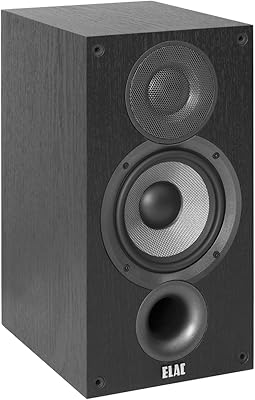
ELAC Debut 2.0 B5.2 Bookshelf Speakers
82%
93%
Sound Quality
71%
Bass Performance
89%
Treble Clarity
88%
Soundstage & Imaging
84%
Build Quality
More
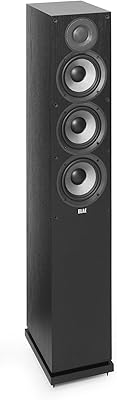
ELAC Debut 2.0 F5.2 Floorstanding Speaker
82%
91%
Sound Quality
78%
Bass Performance
88%
Treble & High-Frequency Detail
86%
Midrange Clarity
89%
Soundstage & Imaging
More
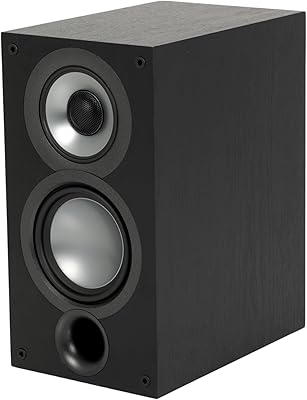
ELAC Uni-Fi 2.0 UB52 Bookshelf Speakers
81%
93%
Soundstage & Imaging
91%
Midrange Clarity
88%
Treble Performance
72%
Bass Response
74%
Amplifier Compatibility
More
ELAC BS41-BK 4″ Passive Wired Bookshelf Speakers
80%
85%
Sound Quality
90%
Value for Money
92%
Size and Design
75%
Ease of Setup
80%
Build Quality
More
ELAC Debut 2.0 C5.2 Center Channel Speaker
85%
94%
Dialogue Clarity
91%
Vocal Midrange
87%
High-Frequency Detail
83%
Off-Axis Performance
61%
Bass Extension
More
Dayton Audio SAT-BK Satellite Speaker Pair
75%
86%
Sound Clarity
47%
Bass Response
91%
Value for Money
62%
Build Quality
88%
Magnetic Shielding
More
Vantec NexStar3 NST-380SU3-BK 3.5″ SATA to USB 3.0 & eSATA External Hard Drive Enclosure
85%
91%
Value for Money
89%
Build Quality
85%
Performance (Transfer Speed)
92%
Ease of Setup
90%
Compatibility (Windows/Mac OS)
More
DALI Oberon 3 Bookshelf Speaker
87%
92%
Sound Quality
88%
Bass Response
85%
Build Quality
87%
Ease of Setup
90%
Compatibility with Devices
More
Electrohome Berkeley EB20
81%
83%
Sound Quality
61%
Bass Performance
84%
Build Quality
87%
Bluetooth Connectivity
88%
Value for Money
More
NHT C-3
NHT C-3
78%
93%
Sound Clarity & Midrange Detail
89%
Soundstage & Imaging
74%
Bass Accuracy & Low-End Extension
91%
Build Quality & Cabinet Finish
66%
Amplifier Compatibility
More

FAQ

You will need a separate amplifier or AV receiver — these are passive speakers with no built-in power. Nothing will come out of them if you connect them directly to a phone, TV, or computer without an amplifier in between. Budget for that additional component before purchasing.

Any stereo integrated amplifier or AV receiver rated for 6-ohm loads should work well. Something in the 50 to 100 watts per channel range is a solid match — enough to drive them to satisfying volumes without being overkill. Popular pairings include budget-friendly options from NAD, Denon, and Yamaha, though the speakers respond noticeably to amplifier quality, so investing in a decent unit pays off.

For stereo music listening in a small to medium room, the low end is controlled and sufficient — you will hear bass, it just does not extend very deep. For home theater use or if you listen to bass-heavy genres like hip-hop or electronic music and want real impact, a subwoofer is strongly recommended. The speakers only reach down to 48Hz, so anything below that simply will not be reproduced.

Not directly, no. Your TV would need to output audio to a stereo amplifier or AV receiver first, which then connects to these bookshelf speakers via speaker cable. If you want a simpler TV audio solution without a separate amp, a powered soundbar or active speaker system would be more practical for that use case.

All three are legitimate contenders at this tier. The Debut 3.0 DB53-BK tends to offer a more neutral, accurate sound signature compared to the Klipsch RP-600M, which leans warmer and more efficient. The KEF Q150 has a strong reputation for its Uni-Q coincident driver and a slightly more refined midrange presentation, but ELAC's aramid fiber woofer and updated wave-guide give it a genuine edge in low-midrange control and dispersion consistency. Personal listening preference and amplifier pairing will ultimately tip the decision.

They can, but with limitations. In a large or open-plan space, the bass response will feel thin without a subwoofer, and you will need to drive them harder to fill the room, which can push the presentation beyond its comfort zone. These speakers genuinely perform best in small to medium rooms where they do not have to work overtime.

Yes, the grilles snap on and off magnetically with no tools needed. Most critical listeners prefer removing them for serious listening sessions, as any grille material — even a thin acoustic fabric — can have a minor effect on high-frequency detail. The speakers look perfectly finished without them, so grille-off listening is a common choice.

Technically a single speaker will work connected to a mono-capable amplifier output, but these are designed and optimized as a stereo pair. The real value of their soundstage and imaging performance only comes through when both speakers are in use with proper stereo source material.

The rear binding posts on each speaker accept standard bare wire, spade connectors, and banana plugs. Banana plugs are the most convenient option day-to-day. The posts are a standard size compatible with the vast majority of aftermarket speaker cables on the market, so you are not locked into proprietary connections.

The Black Ash vinyl wrap is reasonably durable for normal home use, but it is not scratch-proof — sharp objects or abrasive materials will leave marks. For routine cleaning, a soft dry cloth is all you need. Avoid any liquid cleaners or solvents, which can lift or discolor the vinyl wrap over time. The finish shows up light dust fairly readily, so occasional gentle wiping keeps them looking clean.

Where to Buy