Overview

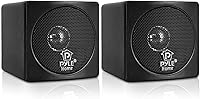
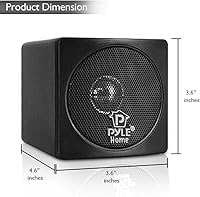
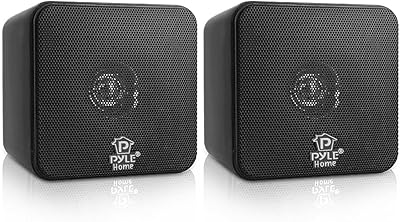
The Pyle PCB3BK 3″ Mini Cube Bookshelf Speakers are a compact passive speaker pair that has quietly held its ground since 2007 — a remarkably long run for a budget audio product. These mini cube speakers sit in a small cube enclosure measuring roughly 3.6″ x 3.6″ x 4.6″, making them easy to tuck onto a shelf or desktop without sacrificing space. One thing worth flagging upfront: passive speakers produce no sound on their own, so you will need an external amplifier or AV receiver to power them — a detail many first-time buyers overlook. With over 1,700 customer ratings accumulated across nearly two decades, the long track record here is genuinely reassuring.

Features & Benefits

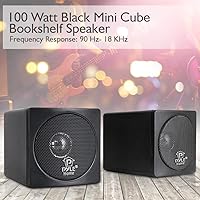
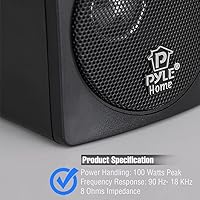
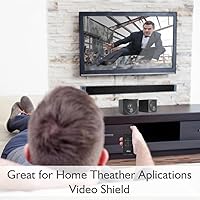
The Pyle PCB3BK pair handles up to 100W peak at 8 Ohm impedance, which pairs cleanly with most entry-level AV receivers. Frequency response runs from 90Hz to 18kHz — solid coverage of mids and highs, but there is no pretending a 3-inch driver will fill a room with bass. Low-end extension is limited, and pairing these with a subwoofer is strongly advisable for any full-sounding system. The video shielding is a practical touch if you are placing these near an older CRT display, preventing magnetic interference from distorting the picture. They ship as a matched pair in an understated black finish that blends into most setups without drawing attention.

Best For

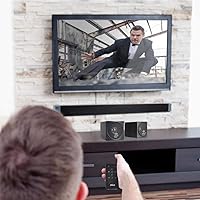
These compact bookshelf speakers are a solid pick for anyone assembling a budget home theater setup and needing small satellite speakers to fill out surround channels. They shine particularly well as rear surround speakers in a 5.1 configuration, where compact size and easy placement matter more than raw output. Desktop users with a spare stereo amplifier will also find them a reasonable fit. If you have a CRT television in a secondary room, the video shielding makes placement near the screen a non-issue. First-time buyers stepping up from built-in TV audio will notice a real improvement, provided they already own or plan to purchase a compatible amplifier.

User Feedback

Owners of these mini cube speakers consistently highlight midrange clarity as the standout strength — voices and instruments come through cleanly at moderate volumes. The most common criticism is limited bass output, which is expected for a 3-inch driver but still catches some buyers off guard. Build quality is described as lightweight, though most reviewers accept this as fair given the budget positioning. Notably, a good portion of buyers use them specifically as rear surrounds rather than primary speakers, and that use case draws the strongest satisfaction. A handful of reviewers also point out that these speakers respond noticeably to cleaner amplification, so the quality of your receiver does make a difference here.

Pros

  • Midrange clarity punches noticeably above what you would expect from a 3-inch driver.
  • The cube form factor fits into tight spaces where larger bookshelf speakers simply cannot go.
  • Standard 8 Ohm impedance plays nicely with virtually any home theater receiver on the market.
  • Sold as a matched pair, so you get consistent tonal balance right out of the box.
  • Video shielding makes placement near CRT displays safe without any picture distortion.
  • Unobtrusive black finish blends quietly into shelves, desks, and AV racks alike.
  • These mini cube speakers have a documented track record spanning nearly two decades of steady sales.
  • Work exceptionally well as rear surround channels where compact size is a practical advantage.
  • Binding posts accept bare wire and banana plugs, keeping the setup flexible and straightforward.

Cons

  • Bass output is genuinely thin without a subwoofer — this is not a minor gap, it is a noticeable one.
  • Build materials feel lightweight in hand, raising questions about resilience over heavy long-term use.
  • Paper cone drivers can degrade in humid environments, according to some long-term owners.
  • Amplifier quality has a bigger impact on sound than you might expect at this price tier.
  • No accessories are included — no speaker wire, no mounting hardware, nothing beyond the speakers themselves.
  • Stereo imaging narrows quickly at greater listening distances, limiting usefulness in larger rooms.
  • The overall design has not been refreshed since 2007, and the dated aesthetic shows up close.
  • Volume headroom is limited; pushing these hard produces audible strain and listener fatigue.
  • Light weight means the cabinets shift easily on smooth surfaces unless secured with pads or stands.

Ratings

The Pyle PCB3BK 3″ Mini Cube Bookshelf Speakers have accumulated well over 1,700 verified ratings since their debut, giving us a substantial base to work from. The scores below were generated by AI after analyzing genuine buyer feedback from multiple global sources, with spam, incentivized reviews, and bot activity actively filtered out. Both the standout strengths and the honest frustrations are reflected here, so you get a clear picture before you buy.

Sound Clarity
78%
22%
Most buyers are genuinely surprised by how clean the midrange sounds coming out of such a small enclosure. Voices in movies and acoustic instruments in music come through with decent definition, especially at moderate listening volumes in small to medium rooms.
Clarity starts to break down at higher volumes, where the small driver struggles to stay composed. Some users report a slightly harsh top end when pushed hard, which gets fatiguing during extended listening sessions.
Bass Response
41%
59%
For users running these as rear surround channels in a 5.1 setup, bass expectations are naturally lower, and in that context they perform adequately. The focused midrange actually benefits from not being muddied by an overworked bass driver.
This is the most consistent complaint across the review base — the 3-inch paper cone simply cannot produce meaningful low-end on its own. Without a subwoofer in the mix, music and movie soundtracks sound noticeably thin, and no amount of receiver EQ fully compensates.
Value for Money
83%
For buyers who need a functional pair of passive satellite speakers without spending much, these mini cube speakers deliver a reasonable return. The fact that you get a matched stereo pair at this price point, with decent midrange output and video shielding included, is hard to argue with.
The value proposition depends heavily on already owning an amplifier or receiver. Buyers who factor in the cost of a required amp plus a subwoofer often find the total system cost climbs quickly, making the initial price feel less impressive in context.
Build Quality
57%
43%
The cabinets are solid enough for shelf or desktop placement and do not rattle at normal volumes. For a budget passive speaker, the fit and finish is acceptable, and the classic black enclosure looks tidy in most setups.
The housing feels noticeably lightweight in hand, and the overall material quality reflects the price tier. A few buyers mentioned the binding posts feel flimsy, and there is a general sense that these are not built for rough handling or frequent repositioning.
Ease of Setup
86%
Connecting these compact bookshelf speakers to an existing receiver is straightforward — standard binding posts accept bare wire or banana plugs, and the compact size means placement options are plentiful. Most buyers report having them up and running within minutes.
The passive design catches some first-time buyers off guard, as there is no built-in amplification whatsoever. If you expect plug-and-play convenience like a powered desktop speaker, you will be disappointed without that external amp already in place.
Size & Placement Flexibility
91%
The cube form factor is one of the most practical aspects of the Pyle PCB3BK pair. At roughly 3.6″ on each side, they tuck into tight shelf spaces, sit cleanly on a desk corner, or mount unobtrusively as rear surrounds in a home theater configuration.
The small footprint can also work against stability on smooth surfaces, where the light weight means they shift easily if a cable gets tugged. A few users noted they needed adhesive pads or small stands to keep them reliably in position.
Video Shielding
77%
23%
For anyone still running a CRT television — in a retro gaming setup or a secondary bedroom, for example — the magnetic shielding here is a genuinely useful feature that prevents picture distortion when the speakers are placed close to the screen.
For the vast majority of buyers using modern flat-panel displays, video shielding is simply irrelevant. It adds no harm, but it also means this frequently listed feature offers no practical benefit to most current buyers.
Frequency Range Coverage
66%
34%
The 90Hz to 18kHz response handles the mid and upper frequencies that matter most for dialogue clarity and instrument presence. In a properly configured surround system with a dedicated subwoofer handling everything below, this range is actually sufficient.
The 90Hz lower limit leaves a significant chunk of the audible spectrum unaddressed. Standalone use without bass reinforcement reveals a hollow character in music, and even some cinema effects that dip below that threshold simply disappear.
Amplifier Compatibility
74%
26%
The 8 Ohm impedance is a standard, safe load that virtually any home theater receiver or stereo amp can drive without strain. Budget receivers pair with these just fine for casual listening and surround duty.
Several reviewers noted these speakers are more sensitive to amplifier quality than expected at this price tier. Pairing them with a cheap or underpowered amp produces noticeably flat, uninspiring sound, while a cleaner source brings out noticeably better performance.
Aesthetic Design
72%
28%
The understated cube shape and matte black finish blend into most living room or office environments without drawing attention. Buyers appreciate that they do not look cheap or out of place next to other components on an AV shelf.
There is nothing visually distinctive here, which will disappoint buyers who want speakers that make a style statement. The design has not been updated since 2007, and it shows — no modern touches, no grille options, and nothing that stands out.
Stereo Imaging
69%
31%
When positioned correctly and fed a clean signal, these compact bookshelf speakers produce a reasonably defined stereo image for their size. Buyers using them for near-field desktop listening at close range report a surprisingly decent sense of width.
The small driver limits soundstage depth, and the imaging collapses quickly as listening distance increases. In larger rooms or wide speaker placements, the stereo presentation feels narrow and lacks the sense of space that even slightly larger drivers provide.
Durability Over Time
62%
38%
Numerous buyers note owning these for several years without any failures, which speaks to at least baseline long-term reliability for a passive, low-stress application like rear surround duty. Low power draw in typical use reduces wear on the components.
The lightweight construction raises questions about longevity under heavier use. Some long-term owners report driver degradation — particularly a loosening or crinkling of the paper cone — after extended periods, especially in humid environments.
Packaging & Unboxing
68%
32%
Both speakers arrive securely wrapped and protected, and most buyers confirm they received units without cosmetic damage. The no-frills packaging is practical and gets the job done for a budget product.
There are no accessories included — no mounting hardware, no speaker wire, and no documentation beyond a basic spec sheet. Buyers new to passive speakers may find the bare-bones unboxing experience slightly disorienting when they realize nothing is plug-ready.

Suitable for:

The Pyle PCB3BK 3″ Mini Cube Bookshelf Speakers are a practical choice for anyone already equipped with an AV receiver or stereo amplifier who needs a compact, affordable pair of passive speakers to fill out a surround setup. They work especially well as rear satellite speakers in a budget 5.1 home theater system, where small size and clean midrange matter more than full-range output. Desk users with limited space who have a spare amp on hand will also find these a reasonable upgrade over integrated laptop or monitor speakers. Retro enthusiasts and secondary-room setups with older CRT displays benefit from the built-in video shielding, which prevents picture interference without needing to reposition equipment. First-time speaker buyers taking their first step away from built-in TV audio will notice a real and immediate improvement, provided they pair these with a decent receiver and a subwoofer to compensate for the limited low end.

Not suitable for:

Buyers expecting a plug-and-play experience should look elsewhere — these compact bookshelf speakers produce no sound without an external amplifier, and that requirement catches a surprising number of people off guard. Anyone hoping for deep, room-filling bass will be consistently frustrated, as the 3-inch driver has a hard ceiling on low-frequency output that no equalizer setting can truly fix. If your primary use case is music listening at higher volumes, or if you want speakers that can serve as the sole audio source in a medium to large room, the Pyle PCB3BK pair will fall short of expectations. Audiophiles or buyers with mid-range to premium audio standards will find the lightweight build and limited frequency extension hard to accept, regardless of the attractive price. Those without a subwoofer already in their system and no plans to add one should reconsider whether these speakers will actually satisfy their needs in practice.

Specifications

  • Configuration: Sold as a matched stereo pair of passive bookshelf speakers requiring an external amplifier or AV receiver to operate.
  • Driver Size: Each speaker uses a 3-inch paper cone full-range driver to handle the audible frequency spectrum.
  • Peak Power: Each speaker handles up to 100W peak power, with a continuous RMS rating of 50W per unit.
  • Impedance: Both speakers present an 8 Ohm nominal impedance load, compatible with the vast majority of home theater receivers and stereo amplifiers.
  • Frequency Response: The speakers cover a frequency range of 90Hz to 18kHz, providing midrange and high-frequency reproduction without significant low-end extension.
  • Signal-to-Noise Ratio: Rated at 90dB signal-to-noise ratio, indicating a clean audio output with minimal background noise at normal operating levels.
  • Dimensions: Each speaker measures 3.6″ (H) x 3.6″ (W) x 4.6″ (D), making it a true compact cube suitable for tight shelf or desktop placement.
  • Weight: Each individual speaker unit weighs approximately 16 oz, reflecting the lightweight cabinet construction.
  • Connectivity: Passive wired connection via standard speaker binding posts, compatible with bare wire and banana plug terminations.
  • Video Shielding: Both enclosures incorporate magnetic video shielding to prevent interference with CRT display picture tubes when placed in close proximity.
  • Mounting Type: Designed for shelf or tabletop placement; no integrated wall-mount keyhole or bracket system is included.
  • Color: Available in classic matte black, providing a neutral finish suitable for most home theater and desktop environments.
  • Cabinet Material: Enclosures are constructed from lightweight composite material with a paper cone driver, consistent with the budget passive speaker category.
  • Amplifier Compatibility: Compatible with standard home theater AV receivers and stereo amplifiers outputting into 8 Ohm speaker loads.
  • Warranty: Covered by a limited manufacturer warranty; buyers should confirm current warranty terms directly with the seller at the time of purchase.
  • Country of Origin: Manufactured and distributed by Sound Around, the parent company behind the Pyle brand, with standard retail packaging.
  • First Available: This model has been available for purchase since January 2007, making it one of the longer-running SKUs in the budget bookshelf speaker category.

Related Reviews
Pyle Home PCB4BK Mini Cube Bookshelf Speakers
81%
85%
Sound Quality
92%
Value for Money
65%
Bass Performance
80%
Build Quality
90%
Size/Compactness
More
Pyle PBKSR40 Bookshelf Speaker Set
77%
88%
Value for Money
74%
Sound Quality
91%
Connectivity Options
83%
Bluetooth Performance
67%
Build Quality
More
DALI Oberon 3 Bookshelf Speaker
87%
92%
Sound Quality
88%
Bass Response
85%
Build Quality
87%
Ease of Setup
90%
Compatibility with Devices
More
NHT C-3
NHT C-3
78%
93%
Sound Clarity & Midrange Detail
89%
Soundstage & Imaging
74%
Bass Accuracy & Low-End Extension
91%
Build Quality & Cabinet Finish
66%
Amplifier Compatibility
More
ELAC Debut 3.0 DB53-BK Bookshelf Speakers
86%
89%
Sound Quality
85%
Bass Response
90%
Build Quality
88%
Aesthetics
92%
Value for Money
More
Pyle PL53BL 5.25” 3-Way Car Speakers
83%
84%
Sound Quality
92%
Value for Money
88%
Ease of Installation
89%
Durability
75%
Bass Performance
More
Pyle PLG41.3 Car Three-Way Speaker System
85%
88%
Sound Quality
72%
Bass Performance
94%
Ease of Installation
85%
Build Quality
80%
Durability
More
Pyle PHQBS62 6.5″ Bookshelf Speakers
76%
78%
Sound Clarity
61%
Bass Performance
67%
Build Quality
83%
Value for Money
88%
Setup & Connectivity
More
Pyle PLMR24 3-Way Indoor & Outdoor Speaker System
84%
85%
Sound Quality
92%
Value for Money
90%
Waterproof Performance
75%
Bass Response
89%
Ease of Installation
More
Pyle PL513BK 5.25″ 3-Way Triaxial Car Speakers
83%
85%
Sound Quality
68%
Bass Performance
92%
Ease of Installation
80%
Build Quality
82%
Durability
More

FAQ

No, and this is the most important thing to understand before buying. These are passive speakers, meaning they have no built-in amplifier whatsoever. You need a separate AV receiver, stereo amplifier, or powered speaker switcher between your source device and these speakers — without one, you will get no sound at all.

Any standard home theater AV receiver or stereo amplifier with 8 Ohm speaker outputs will work fine. You do not need anything powerful or expensive — even a basic entry-level receiver rated at 20 to 50 watts per channel will drive these mini cube speakers comfortably for most listening situations.

Honestly, not if bass matters to you. The 3-inch driver rolls off below around 90Hz, which means kick drums, bass guitar, and low movie sound effects will sound noticeably thin. These speakers really do need a subwoofer in the mix to sound complete — that is not a workaround, it is a genuine requirement for satisfying results.

You can, but it depends on your expectations. For a small room at moderate volumes — a bedroom, office, or dorm — they work reasonably well for casual listening. In a living room or for critical music listening, the limited bass and modest output will leave most people wanting more.

Yes, and this is actually where they tend to perform best. As rear surrounds in a 5.1 system, you are mostly asking them to reproduce ambient effects and directional audio cues rather than full-range content. Their compact size, neutral midrange, and easy placement make them a practical and cost-effective choice for that specific role.

Standard 16 or 18 AWG speaker wire is perfectly appropriate for these compact bookshelf speakers, especially at typical home listening distances. You do not need anything heavier — thicker wire would offer no audible improvement at the power levels and distances involved here.

It prevents the magnetic field from the speaker driver from distorting the picture on an old CRT television when the speaker is placed nearby. For anyone using a modern flat-panel display — LCD, OLED, or QLED — it makes absolutely no difference, since those screens are not affected by magnetic fields. It is only relevant for retro setups or secondary rooms with older tube-based TVs.

They are reasonably reliable for light to moderate use over several years, and many buyers report owning them for a long time without issues. That said, the paper cone driver can show wear in humid conditions, and the lightweight cabinet construction is not designed for heavy handling or frequent repositioning. Treat them gently and they should last well.

There are no integrated mounting keyholes or brackets built into the enclosures, so wall mounting is not straightforward out of the box. Some buyers use small universal speaker wall-mount brackets sold separately, but you would need to verify the bracket fits the cabinet dimensions before purchasing.

No, nothing beyond the two speaker units themselves is included in the box. You will need to supply your own speaker wire, and if your amplifier uses binding posts rather than spring clips, you may also want banana plugs for a cleaner connection. Budget a small amount for wire if you do not already have some on hand.