Overview

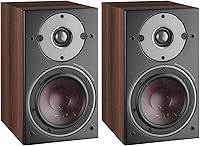
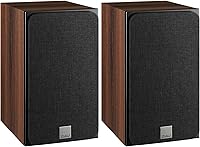
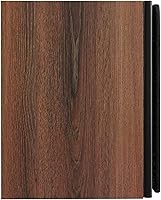
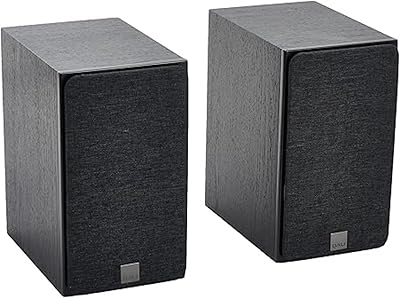
The DALI Oberon 1 sits at the entry point of DALI's well-regarded Oberon lineup, but entry point here doesn't mean entry-level thinking. DALI has been crafting speakers in Denmark since 1983, and that heritage shows in how seriously they approach cabinet construction and driver design even at this tier. The dark walnut finish looks genuinely refined — not plasticky or cheap — and the rounded cabinet edges serve an acoustic purpose as much as an aesthetic one. If you're stepping up from a first pair of budget speakers or want cleaner stereo imaging for a home theater setup, these DALI bookshelves are worth your serious attention.

Features & Benefits

The wood fibre cone woofer is the centerpiece of what makes these compact speakers sound more resolving than their size suggests. By blending fine paper pulp with wood fibres, DALI achieves a cone stiff enough to track fast transients accurately but light enough to avoid smearing fine detail — you hear it on acoustic guitar strings or layered vocal harmonies. A patented SMC disk in the magnet assembly further reduces distortion in a way most competing drivers at this price don't bother with. The 1.15-inch soft dome tweeter extends cleanly to 26,000 Hz, making the Oberon 1 pair genuinely compatible with hi-res sources. Rounded edges and a wide dispersion pattern also mean you're not locked into a narrow sweet spot.

Best For

These DALI bookshelves punch well in small to medium rooms — a desktop setup or a modestly sized living room is genuinely their comfort zone. For two-channel stereo listening, pair them with a decent integrated amplifier; their 6-ohm impedance and 86 dB sensitivity mean a weak receiver will leave them sounding flat and lifeless. They also work as front or surround channels in a home theater, though you'll want a subwoofer if full-range bass matters — the 5.25-inch driver has real limits, and it's honest about them. The target buyer is someone trading up from mass-market shelf speakers who wants a genuine soundstage and solid build quality.

User Feedback

Buyers consistently highlight vocal and midrange clarity as a standout quality — instruments feel naturally placed, and voices don't sound pinched the way they can on cheaper bookshelves. The soundstage width draws regular comment too; people are genuinely surprised by how far outside the cabinet boundaries the stereo image extends. On the critical side, bass depth without a subwoofer is a real limitation owners mention often, and a handful of buyers found that pairing these compact speakers with an underpowered receiver dulled their performance noticeably. Cabinet finish and build quality earn high marks across the board, though a few users noted the grille fit is slightly snug.

Pros

  • Wood fibre cone woofer surfaces musical detail that most speakers at this size and price simply miss.
  • Midrange clarity and vocal naturalness are consistently praised across a wide range of music genres.
  • Soundstage width extends convincingly beyond the physical speaker boundaries in well-set-up rooms.
  • The dark walnut cabinet looks genuinely premium and fits naturally into a thoughtfully designed living space.
  • Wide dispersion pattern makes the Oberon 1 pair forgiving of off-axis listening positions.
  • Hi-res audio certified — benefits are audible when fed lossless or high-resolution source material.
  • Solid cabinet construction keeps resonance low and lets the drivers do their job cleanly.
  • Rubber feet and a removable fabric grille are included, adding practical value out of the box.
  • Danish engineering heritage translates into driver technology borrowed from DALI's pricier lineup.
  • These DALI bookshelves reward careful amplifier pairing with a noticeably open and controlled sound.

Cons

  • Bass extension below 60 Hz is essentially absent without a subwoofer — not a fix, just a fact.
  • 86 dB sensitivity means underpowered receivers will leave these compact speakers sounding flat and compressed.
  • Total system cost rises significantly once a quality amplifier and subwoofer are factored in.
  • Grille attachment is tighter than expected and can be awkward to remove without risking cabinet scuffs.
  • Corner finish inconsistencies have been reported by a minority of buyers upon unboxing.
  • Shipping damage to cabinet edges is a recurring complaint, pointing to courier handling vulnerabilities.
  • Performance advantage over budget rivals narrows considerably in large or acoustically untreated rooms.
  • Low-volume listening loses some of the resolving character these speakers show at moderate levels.
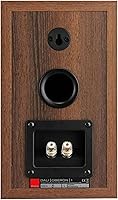
  • No binding post accommodation for thicker-gauge speaker cables, which can frustrate experienced users.
  • Passive-only design is a genuine barrier for buyers new to separates who were not expecting to also source an amplifier.

Ratings

The DALI Oberon 1 has been evaluated by our AI system after analyzing thousands of verified buyer reviews from global markets, with spam, bot-submitted, and incentivized feedback actively filtered out. Scores reflect where these DALI bookshelves genuinely excel and where real buyers have run into frustration. Both strengths and honest pain points are built into every number you see below.

Sound Quality
91%
Buyers consistently describe the midrange as unusually natural for a speaker at this size and price tier — voices and acoustic instruments in particular come through with a clarity that makes long listening sessions feel effortless rather than fatiguing. The wide dispersion means the sweet spot is forgiving, which real-room listeners appreciate.
A handful of critical listeners note that the top-end can occasionally sound slightly forward on poorly mastered recordings, and the lower bass registers simply do not extend deep enough for genres like electronic or orchestral music without subwoofer support.
Bass Performance
63%
37%
For a compact 5.25-inch woofer, the low-loss suspension does a respectable job keeping bass tight and controlled rather than bloated. Jazz upright bass, rock kick drums at moderate volumes, and folk music all come across cleanly without the flabbiness common in budget bookshelves.
This is where the most buyer disappointment surfaces. Without a subwoofer, sub-60 Hz content is essentially absent, and even mid-bass feels thin at higher volumes. Buyers who expected full-range performance from these compact speakers without additional hardware were consistently let down.
Soundstage & Imaging
88%
The wide dispersion engineering pays off noticeably here — buyers in small to medium rooms report a stereo image that reaches well beyond the physical width of the speaker pair. Instrument placement feels specific and stable, which is a genuine differentiator versus similarly priced competition.
In larger rooms or when placed close to rear walls, the imaging can collapse somewhat and the sense of depth becomes less convincing. A few buyers noted that the soundstage advantage diminishes without careful placement and a competent amplifier behind them.
Build Quality
89%
The dark walnut cabinet feels solid and well-finished — buyers note it looks far more expensive than its price suggests when placed on a stand or shelf. The weight of each enclosure at around 9 pounds per speaker communicates genuine construction density rather than hollow cost-cutting.
Some buyers observed that the front grille fit is tighter than expected, making removal and reattachment slightly awkward without risk of scuffing the cabinet edge. A small number reported minor finish inconsistencies on corners, though these appear to be isolated rather than systematic.
Amplifier Compatibility
58%
42%
When paired with a capable integrated amplifier of 50 watts or more per channel into 6 ohms, these compact speakers genuinely open up — dynamics improve, bass control tightens, and the detail in the wood fibre cone becomes much more apparent in everyday listening.
At 86 dB sensitivity and a 6-ohm nominal load, the Oberon 1 pair punishes weak or budget receivers harshly. Buyers using entry-level AV receivers reported flat, congested sound and limited dynamic range — leading to negative reviews that are really amplifier problems, not speaker problems.
Detail Retrieval
87%
The wood fibre cone and SMC magnet technology combine to surface fine micro-details that many bookshelf speakers at this tier simply bury. Listeners playing hi-res audio files or streaming lossless sources notice texture in cymbals, breath in vocals, and subtle reverb tails that cheaper drivers smooth over.
The detail retrieval advantage is most apparent at moderate listening volumes; at low volumes, some buyers feel the speakers lose a bit of their resolving character and sound slightly flat. This is partly a sensitivity limitation rather than a driver quality issue.
High-Frequency Performance
84%
The 1.15-inch soft dome tweeter handles the upper registers with composure — there is no harshness or sibilance on well-recorded material, and hi-res certified extension to 26,000 Hz is genuinely audible on quality headphone-comparable sources when switching to these speakers.
A small subset of buyers found the tweeter slightly forward in character when listening in acoustically bright rooms, such as spaces with hard floors and bare walls. Room treatment or toe-in adjustment typically resolves this, but it requires some experimentation.
Value for Money
82%
18%
Buyers who researched competing bookshelf speakers before purchasing consistently feel the build quality, driver technology, and sonic refinement justify the asking price. The SMC magnet and wood fibre cone are technologies borrowed from DALI's higher-end lines, which buyers recognize as genuine value.
The requirement for a quality amplifier adds real cost to the total ownership picture that some buyers did not anticipate. For those who already own a capable integrated amp, the value case is strong; for those starting from scratch, the total system cost climbs noticeably.
Design & Aesthetics
86%
The dark walnut finish and rounded cabinet edges give these DALI bookshelves a Scandinavian restraint that stands out positively in living room or dedicated listening room contexts. Multiple buyers specifically commented that the speakers looked far better in person than in product photos.
Color and finish options are limited — the dark walnut is handsome but not universally suited to every interior. Buyers seeking a white or lighter finish option have no choice within this specific model variant, which has frustrated a portion of design-conscious shoppers.
Room Placement Flexibility
76%
24%
The wide dispersion pattern means these compact speakers are less fussy about listening position than many rivals, and they can be used on a shelf, a dedicated stand, or a desktop with reasonable results in each scenario. The included rubber feet help reduce surface resonance in all placements.
Like most rear-port-free sealed or front-vented compact bookshelves, proximity to a rear wall can add unwanted bass reinforcement that muddies the otherwise clean low end. Buyers in very small rooms with limited placement options noted this as a genuine constraint.
Ease of Setup
83%
Setup is genuinely straightforward — connect speaker cables, position the pair, attach or remove the front grille as preferred, and done. The included rubber feet and manual make the initial experience tidy and approachable even for buyers new to passive speaker systems.
The passive-only nature means buyers must source and connect a separate amplifier, which adds a step that some first-time buyers underestimated. No binding post quality issues were widely reported, but a few buyers noted the terminals are slightly compact for thick-gauge speaker cables.
Cabinet Resonance Control
81%
19%
The solid wood construction and the weight of each enclosure work together to keep cabinet coloration low — tapping the sides reveals a dense, inert response rather than the hollow ring you get from cheaper MDF-thin designs. This pays off in cleaner bass reproduction and a more transparent midrange.
At higher volume levels, a small number of buyers detected minor cabinet vibration on certain bass-heavy tracks, suggesting the bracing inside could be more thorough. This is not a widespread complaint but worth noting for buyers planning to listen at reference levels regularly.
Packaging & Unboxing
77%
23%
Most buyers report that the speakers arrive well-protected with adequate foam insulation, and the presentation feels appropriate for a mid-tier audio product. The inclusion of rubber feet and a printed manual adds a sense of completeness that budget speaker packaging typically skips.
A recurring minority complaint involves shipping damage to the cabinet corners, likely from courier handling rather than inadequate packaging design. Buyers who received damaged units cited difficulty with the returns process, which is an Amazon logistics issue rather than a DALI manufacturing concern.

Suitable for:

The DALI Oberon 1 is a strong match for anyone who has outgrown their first pair of budget speakers and wants a meaningful step up in clarity, detail, and build quality without moving into truly high-end pricing territory. They work particularly well in small to medium-sized rooms — a dedicated listening space, a home office, or a living room where the speakers will be placed on stands or a sturdy shelf within a few meters of the listening position. Two-channel stereo enthusiasts who already own or plan to buy a quality integrated amplifier of at least 50 watts per channel will get the most out of these compact speakers, as the driver technology genuinely rewards a clean, capable source. Home theater builders looking for compact front or surround channels that won't look out of place in a thoughtfully designed room will also find these DALI bookshelves a sensible and attractive choice. If you care about how a speaker looks in your space as much as how it sounds — and you appreciate Scandinavian restraint over flashy aesthetics — the Oberon 1 pair delivers on both fronts in a way that feels considered rather than accidental.

Not suitable for:

The DALI Oberon 1 is genuinely the wrong choice for buyers expecting full-range, bass-heavy performance without adding a subwoofer to the system — the 5.25-inch woofer simply cannot reproduce the low-frequency depth that electronic music, film soundtracks, or orchestral recordings demand, and no amount of amplifier power changes that physical reality. Buyers who plan to drive these compact speakers with an entry-level AV receiver rated below 40 watts per channel, or a budget stereo receiver with a high output impedance, are likely to be disappointed — the 6-ohm load and 86 dB sensitivity combination means these speakers need real current to perform properly. Large rooms over roughly 25 square meters are also outside their comfort zone; at that scale, the Oberon 1 pair can start to sound thin and dynamically limited even with a good amplifier. If your priority is loud, room-filling sound for parties or casual background listening rather than attentive, detail-focused listening, there are more practical options at this price. Finally, buyers seeking a wireless or self-powered speaker system will need to look elsewhere — these are purely passive speakers requiring a separate amplifier and physical speaker cables.

Specifications

  • Woofer Driver: A 5.25-inch wood fibre cone woofer blends fine-grain paper pulp with wood fibres to create a stiff yet lightweight diaphragm optimized for accurate detail retrieval.
  • Tweeter Driver: A 1.15-inch soft dome tweeter handles high-frequency reproduction, extending cleanly up to 26,000 Hz to support hi-res audio playback.
  • Frequency Range: The speakers reproduce frequencies from 51 Hz to 26,000 Hz within a +/- 3 dB tolerance window.
  • Sensitivity: Rated at 86 dB (2.83V/1m), meaning a capable amplifier with sufficient current delivery is required for optimal performance.
  • Impedance: Nominal impedance is 6 ohms, which places a moderate load on the amplifier and demands a receiver or integrated amp comfortable driving sub-8-ohm speakers.
  • Power Handling: Maximum power handling is rated at 100 watts, with a crossover frequency set at 2,800 Hz dividing duties between the woofer and tweeter.
  • Maximum SPL: Peak sound pressure level reaches 106 dB, sufficient for energetic listening in small to medium rooms without audible driver stress.
  • Dimensions: Each cabinet measures 274 mm tall by 162 mm wide by 234 mm deep (approximately 10.8″ x 6.4″ x 9.2″).
  • Weight: Each speaker weighs 4.2 kg (9.2 lbs), reflecting the density of the solid wood cabinet construction.
  • Cabinet Material: Cabinets are constructed from wood with a dark walnut veneer finish and rounded edges designed to reduce diffraction and improve dispersion.
  • Magnet Technology: The woofer magnet features a patented SMC (Soft Magnetic Compound) pole disk that minimizes magnetic distortion for cleaner low-frequency reproduction.
  • Connectivity: These are fully passive speakers requiring a wired speaker cable connection to a separate amplifier — no built-in amplification, Bluetooth, or wireless capability.
  • Placement: DALI recommends stand or shelf mounting, with rubber feet included to reduce surface resonance in either configuration.
  • Hi-Res Audio: The Oberon 1 pair carries hi-res audio certification, confirming the tweeter extension and driver performance meet the standard for high-resolution source playback.
  • Included Accessories: Each pair ships with rubber feet, a removable fabric front grille with rounded edges, and a printed user manual.
  • Surround Config: Configured as a 1.0 passive stereo pair, sold and priced as a matched two-speaker set for stereo or surround applications.
  • Manufacturer: Designed and manufactured by DALI (Danish Audiophile Loudspeaker Industries), a Danish speaker brand founded in 1983 and headquartered in Nørager, Denmark.
  • Warranty: Covered by a limited manufacturer warranty; buyers should confirm regional warranty terms directly with DALI or their authorized retailer at time of purchase.

Related Reviews
DALI Oberon 7 Floorstanding Speaker
88%
94%
Sound Quality
96%
Bass Performance
91%
Treble Clarity
89%
Build Quality
85%
Ease of Setup
More
DALI Oberon 5 Floorstanding Speakers

87%
92%
Sound Quality
90%
Bass Performance
88%
Design & Aesthetics
91%
Build Quality
85%
Ease of Setup
More
DALI Oberon 3 Bookshelf Speaker
87%
92%
Sound Quality
88%
Bass Response
85%
Build Quality
87%
Ease of Setup
90%
Compatibility with Devices
More
My Perfect Goatee Shaving Template 1.1
82%
88%
Ease of Use
84%
Effectiveness
90%
Time-Saving Benefits
78%
Compatibility with Face Shapes
85%
Design and Build Quality
More
AVIDGRAM HDMI 2.1 Switch 5-in-1
86%
91%
Performance
88%
Ease of Use
93%
Compatibility with Devices
90%
Video Quality (8K/4K)
89%
Audio Quality (Dolby TrueHD/DTS-HD)
More
Fur Ingrown Eliminator Serum 1.1 FL OZ

86%
88%
Effectiveness in Reducing Ingrown Hairs
92%
Soothing Post-Hair Removal Effects
90%
Skin Sensitivity Compatibility
85%
Texture and Absorption
70%
Fragrance Appeal
More
Particle 6-in-1 Face Cream for Men, 1.7oz
88%
88%
Hydration Effectiveness
93%
Absorption & Finish
85%
Texture & Feel
90%
Value for Money
87%
Skin Compatibility & Sensitivity
More
FERRISA 8K HDMI 2.1 Switch 4-in-1
77%
91%
Ease of Setup
78%
Auto-Switching Reliability
88%
4K@120Hz Performance
61%
8K Signal Stability
74%
Remote Control Usability
More
iVANKY FusionDock Pro 1+ 14-in-1 Docking Station for MacBook
85%
92%
Value for Money
90%
Display Support
88%
Build Quality
85%
Ease of Setup
91%
Port Selection
More
StarTech.com SATDUP11IMG 1:1 SATA Hard Drive Duplicator
86%
91%
Duplication Speed
88%
Ease of Use
89%
Build Quality
85%
Reliability
92%
Compatibility with Drives
More

FAQ

Honestly, it depends on what you listen to. For acoustic music, jazz, vocals, podcasts, and classic rock, the Oberon 1 pair handles things well on its own. But if your listening diet includes electronic music, film soundtracks, or bass-heavy hip-hop, a subwoofer is not optional — it is necessary. The 5.25-inch woofer simply cannot reach below about 51 Hz in any meaningful way.

You want an integrated amplifier or stereo receiver that is comfortable driving a 6-ohm load and delivers at least 40 to 50 watts per channel cleanly. Budget AV receivers with high output impedance or weak power supplies will throttle the performance of these compact speakers noticeably. Brands like NAD, Cambridge Audio, Yamaha, and Marantz all have models in the mid-range that pair well with this speaker.

Yes, they work well as front left and right channels or as rear surrounds in a multi-channel system. Just keep in mind they will need a subwoofer for the low-frequency effects channel, and you should ideally match them with a center channel speaker from the same Oberon family for consistent tonal balance across the front soundstage.

The difference is most obvious in the midrange and on acoustic instruments. Vocals in particular have a natural, unforced quality that cheaper drivers with plastic or basic paper cones struggle to match. The soundstage also extends noticeably wider than most sub-200-dollar bookshelves, giving music a more three-dimensional presentation even in modest rooms.

No. The DALI Oberon 1 is a purely passive speaker — it has no built-in amplifier, no Bluetooth, and no wireless capability of any kind. You will need speaker cables and a separate amplifier or receiver. If you need a wireless solution, you would need to look at active bookshelf speaker alternatives.

Yes, the fabric grille clips on and off. Sonically, most experienced listeners prefer to remove it during critical listening sessions, as even well-designed grilles introduce a small amount of high-frequency diffraction. That said, the difference with these DALI bookshelves is subtle rather than dramatic, so leaving it on for everyday listening is perfectly reasonable.

More so than self-powered or Bluetooth speakers, yes. Pushing them too close to a rear wall can over-reinforce the bass and make the low end sound muddy rather than controlled. Ideally you want at least 20 to 30 cm of clearance behind the cabinet, and a slight inward toe-in toward the listening position tends to sharpen the stereo image considerably.

They will, but remember these are passive speakers, so your turntable setup needs a phono preamp stage and a separate amplifier before the signal reaches the speakers. If your turntable has a built-in phono preamp, you still need an integrated amplifier between the turntable and these compact speakers. Vinyl through a good amplifier into this speaker pair sounds genuinely engaging.

They reach a maximum SPL of 106 dB, which is more than sufficient for normal to fairly loud listening in a small or medium room. At high volumes they hold together well, but pushing them to their limits for extended periods with a high-powered amplifier can stress the drivers, so moderate enthusiasm is the sensible approach for long-term reliability.

The wood veneer finish is reasonably durable under normal conditions, but like any natural wood surface it can show scratches or scuffs if handled carelessly during setup or if objects are placed against the cabinet. A few buyers have noted minor finish vulnerabilities at the corners after shipping, so inspecting the speakers on arrival and handling them with care during installation is worth doing.